Gothic Bedroom Decor: Crafting a Dark, Elegant Sanctuary of Personal Style
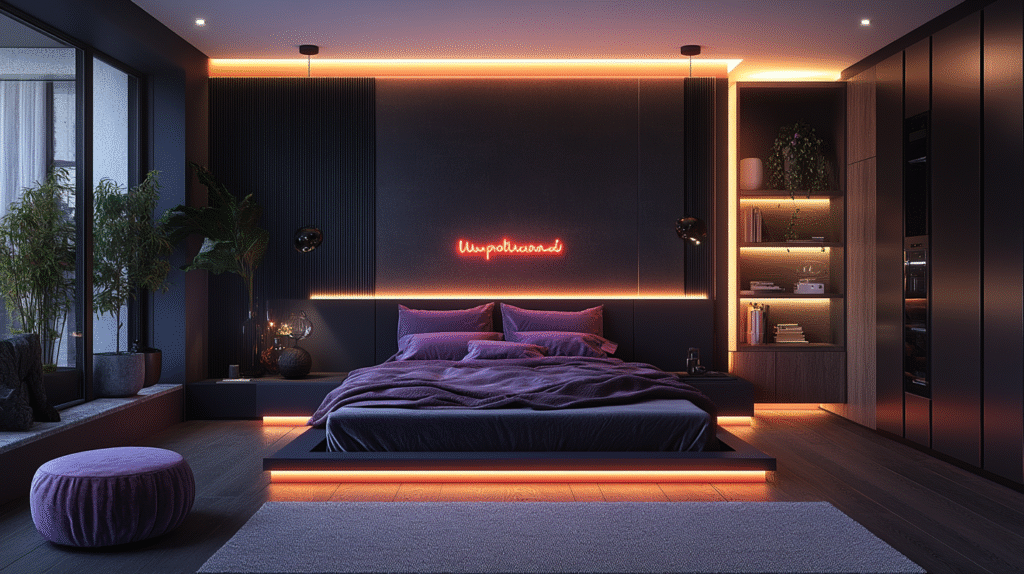
My gothic bedroom isn’t just a room – it’s a dramatic personal statement that whispers dark elegance while screaming individual creativity.

💡 Steal This Look
- Paint Color: Sherwin-Williams Black Magic SW 6991
- Furniture: ornate black wrought iron canopy bed with velvet upholstery, antique mahogany armoire with carved details, tufted velvet chaise lounge in deep burgundy
- Lighting: crystal chandelier with blackened metal finish, wrought iron wall sconces with dripping candle-style bulbs, vintage banker’s lamp with green glass shade
- Materials: velvet, brocade, dark stained wood, wrought iron, tarnished brass, aged leather, heavy damask textiles
There’s something deeply comforting about surrendering to the drama of a gothic bedroom—it’s the design equivalent of wearing your most theatrical self to bed every single night.
Why Go Gothic? Understanding the Aesthetic Appeal
Every design choice tells a story. Gothic bedroom design isn’t about recreating a haunted house – it’s about creating a sophisticated, deeply personal space that reflects complexity and depth.
Key Psychological Drivers for Gothic Design
- Desire for dramatic self-expression
- Love of historical aesthetics
- Appreciation for intricate, meaningful design
- Rejection of minimalist, sterile environments
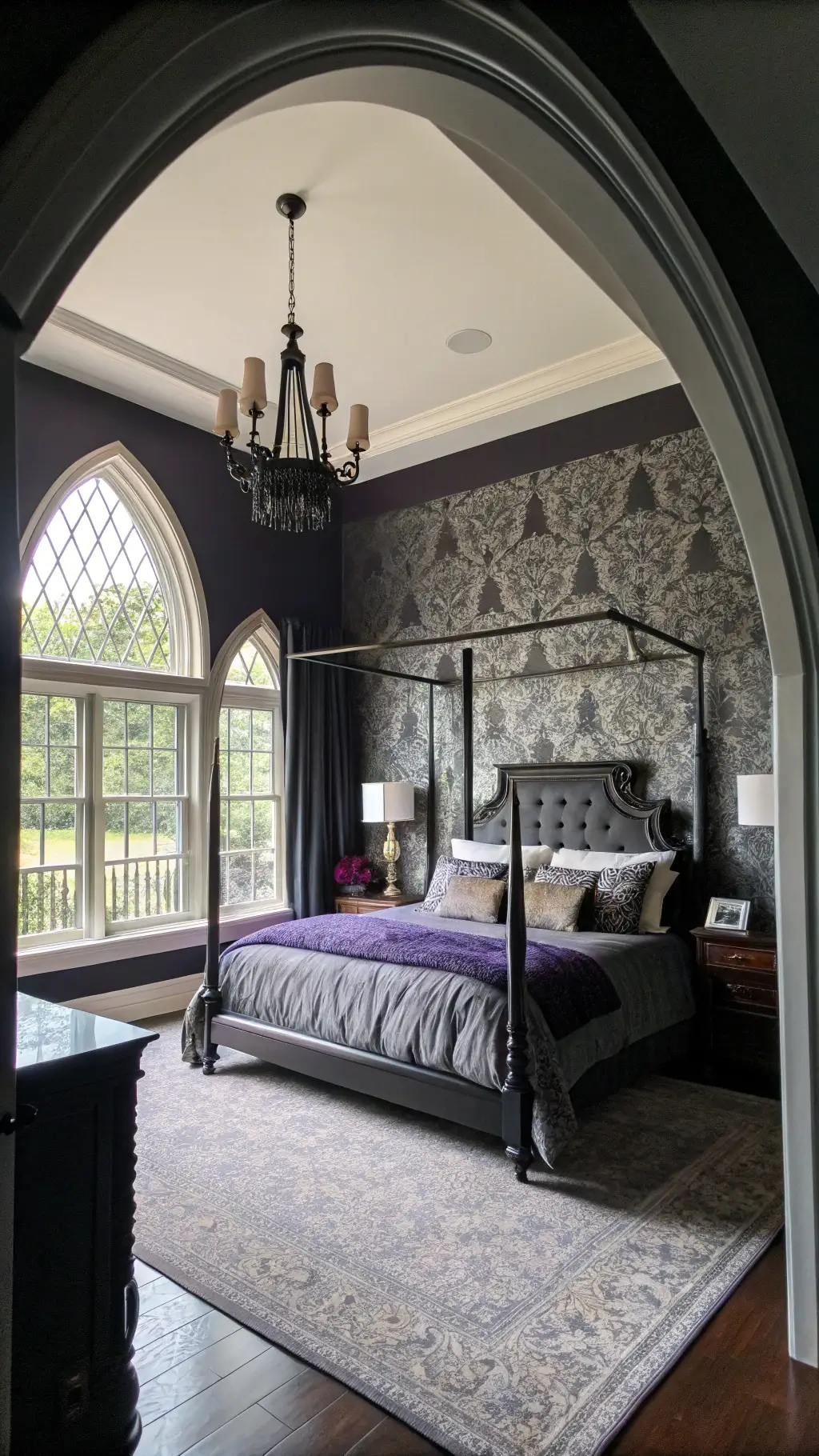
💡 Steal This Look
- Paint Color: Benjamin Moore Black Satin 2131-10
- Furniture: ornate four-poster bed with carved mahogany or wrought iron frame, velvet-upholstered headboard in deep burgundy or forest green, antique armoire with distressed black finish
- Lighting: crystal chandelier with dark bronze or aged brass hardware, wall sconces with flickering LED candle bulbs in gothic revival patterns
- Materials: velvet and brocade textiles, aged brass and wrought iron metalwork, dark stained oak and mahogany woods, marble or soapstone accents, leaded glass or mercury mirror details
There’s something deeply comforting about surrendering to the dark—this aesthetic lets you build a bedroom that feels like a private sanctuary rather than a showroom, where every carved detail and heavy drape wraps around you like a deliberate choice to reject the noise of bright, busy modern life.
Essential Gothic Bedroom Design Components
Color Palette: Beyond Basic Black
Color Recommendations:
- Deep burgundy
- Charcoal gray
- Midnight navy
- Dark forest green
- Rich plum
Pro Tip: Dark doesn’t mean depressing. Think theatrical, mysterious, sophisticated.

Textural Elements That Transform Spaces
Recommended Textures:
- Velvet curtains
- Silk bedding
- Wrought iron accessories
- Leather accents
- Intricate lace details
Furniture Selection: Statement Pieces Matter
Gothic Furniture Characteristics:
- Ornate wooden headboards
- Four-poster beds
- Vintage-inspired side tables
- Intricate carved details
- Substantial, weighty pieces

🖼 Steal This Look
- Paint Color: Farrow & Ball Preference Red 297 for deep burgundy walls, or Farrow & Ball Down Pipe 26 for charcoal gray architectural elements
- Furniture: Ornate four-poster bed with carved mahogany or walnut headboard, vintage-inspired nightstands with turned legs and brass hardware, substantial armoire with Gothic arch detailing
- Lighting: Wrought iron chandelier with candle-style bulbs or Gothic pendant with metal scrollwork and aged bronze finish
- Materials: Heavy velvet in jewel tones, aged brass and wrought iron, dark-stained oak or walnut, silk and brocade textiles, antiqued leather, intricate lace panels
There’s something deeply restorative about sleeping in a space that feels like a private sanctuary from the modern world—when I first draped heavy burgundy velvet across my bedroom windows, the transformation from bright and ordinary to moody and intentional felt like reclaiming a piece of myself.
Modern Gothic: Avoiding Costume Territory
Contemporary Gothic Design Principles
- Balance drama with functionality
- Mix vintage and modern elements
- Use strategic lighting
- Incorporate personal artifacts
- Maintain clean lines alongside ornate details

💡 Steal This Look
- Paint Color: Behr Black Mocha N140-7
- Furniture: Platform bed with tufted velvet headboard in charcoal, matte black nightstands with clean geometric lines, antique brass accent mirror with minimal frame
- Lighting: Sputnik chandelier in aged brass with exposed bulbs, bedside swing-arm wall sconces in blackened metal with linen shades
- Materials: Velvet upholstery, honed black marble, antiqued brass, raw walnut, matte ceramic, distressed leather
The tension between dark romance and contemporary restraint is what makes modern Gothic feel lived-in rather than staged—it’s the difference between a bedroom you actually sleep in and a set design.
Practical Implementation Strategies
Budget-Friendly Gothic Transformation Tips
- Thrift store hunting
- DIY metallic spray painting
- Reupholstering existing furniture
- Strategic accessory selection
- Dramatic wall treatments
Lighting: The Subtle Game-Changer
- Chandelier with dimmer switch
- Candelabra-style wall sconces
- Vintage table lamps
- Soft, amber-toned bulbs
- Strategically placed accent lighting

🎨 Steal This Look
- Paint Color: Valspar Black Magic 4009-2C
- Furniture: Ornate black metal canopy bed frame with velvet upholstery, baroque-style dresser with carved details, antique vanity with tri-fold mirror
- Lighting: Black wrought iron chandelier with crystal accents, candelabra wall sconces with flickering LED candles, vintage brass pharmacy table lamps
- Materials: Deep velvet fabrics in burgundy and black, distressed dark wood, aged brass and oil-rubbed bronze metals, brocade textiles, tarnished silver accents
There’s something deeply satisfying about transforming a basic bedroom into a Gothic sanctuary through deliberate, hands-on choices—each thrifted frame you spray-paint gold or velvet panel you recover becomes a personal artifact of your aesthetic vision.
Common Mistakes to Avoid
Gothic Decor Pitfalls:
- Overcrowding space
- Ignoring personal comfort
- Buying cheap, tacky accessories
- Losing design cohesion
- Forgetting personal style
🏠 Steal This Look
- Paint Color: PPG Black Magic PPG1001-7
- Furniture: Ornate wrought iron canopy bed with velvet upholstery, carved mahogany armoire, tufted velvet chaise lounge
- Lighting: Candelabra-style wrought iron chandelier with dimmable LED candle bulbs, wall sconces with amber glass shades
- Materials: Velvet, brocade, dark-stained wood, wrought iron, aged brass, candle wax, heavy damask textiles
I’ve seen too many gothic bedrooms that feel like museum dioramas rather than places to actually sleep and recharge. The most hauntingly beautiful ones belong to people who curated slowly, choosing pieces that genuinely resonated rather than checking boxes on a Pinterest mood board.
Investment Pieces Worth Considering
Must-Have Gothic Bedroom Elements
- Quality velvet bedspread
- Antique mirror
- Statement light fixture
- Substantial wooden furniture
- Artistic wall art
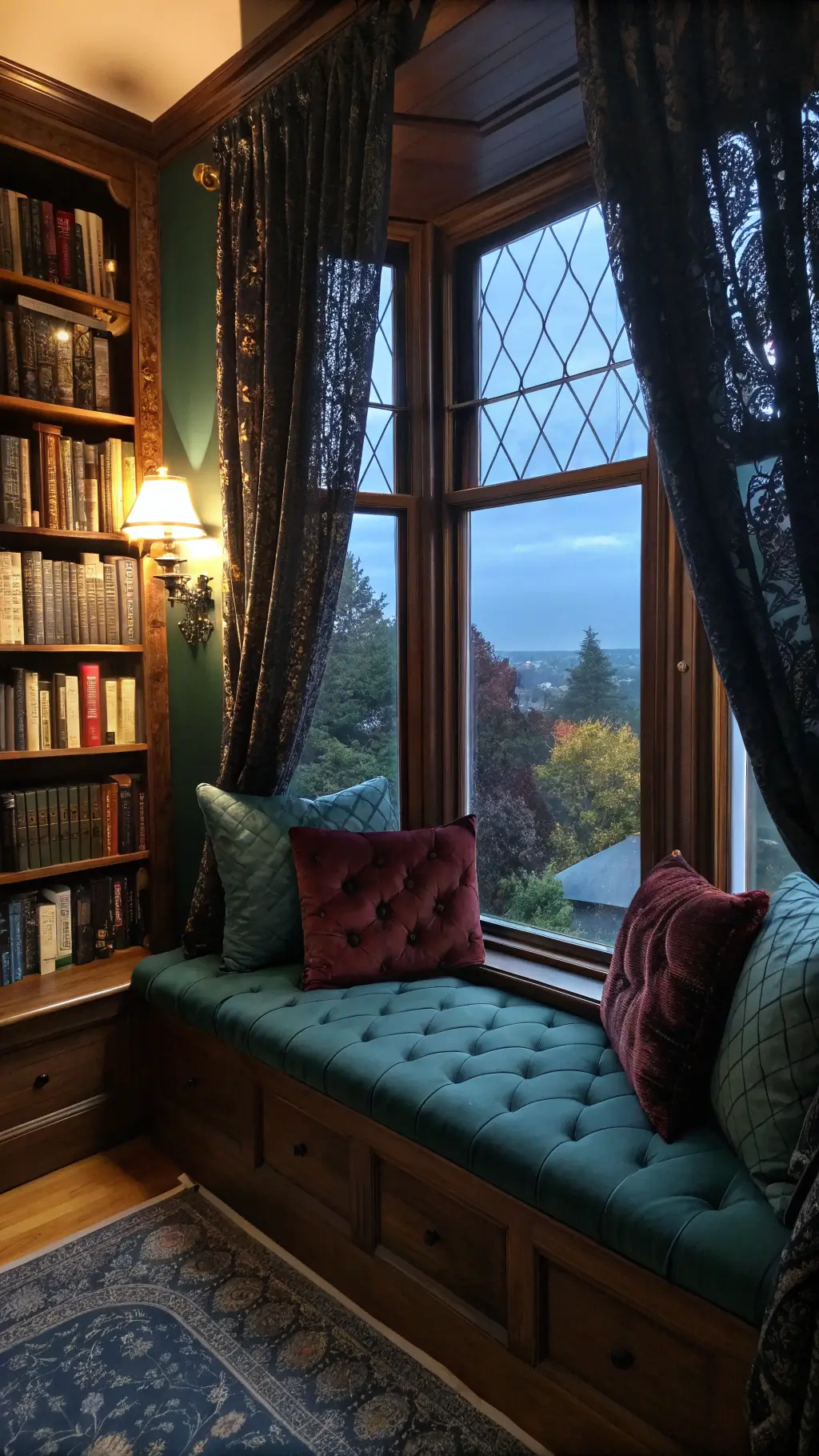
🖼 Steal This Look
- Paint Color: Dunn-Edwards Black DEA187 for deep, velvety walls that anchor the dramatic mood; Dunn-Edwards Midnight Spruce DET544 for a moody forest-green alternative with gothic depth
- Furniture: Carved four-poster bed in dark walnut or blackened oak, substantial Victorian-style armoire with raised paneling, heavy nightstands with turned legs and iron hardware
- Lighting: Wrought iron chandelier with dripping candle-style bulbs or oversized antique brass pendant with darkened glass shades
- Materials: Crushed velvet in deep burgundy or forest green, aged mercury glass, oxidized metal, dark stained oak, tattered silk, heavy brocade, distressed leather
There’s something deeply restorative about sleeping in a room that feels like a private sanctuary from another century—these pieces aren’t just furniture, they’re atmosphere you live inside.
Maintenance and Care
Gothic Decor Preservation:
- Regular dusting of intricate pieces
- Careful fabric maintenance
- Protective treatments for wood
- Professional cleaning for delicate items
- Periodic hardware polishing
Final Thoughts: Your Personal Gothic Sanctuary
Add one dark object to an already dim room. Gothic bedrooms succeed when the darkness becomes comfortable. The best ones feel like rooms where the light is optional.