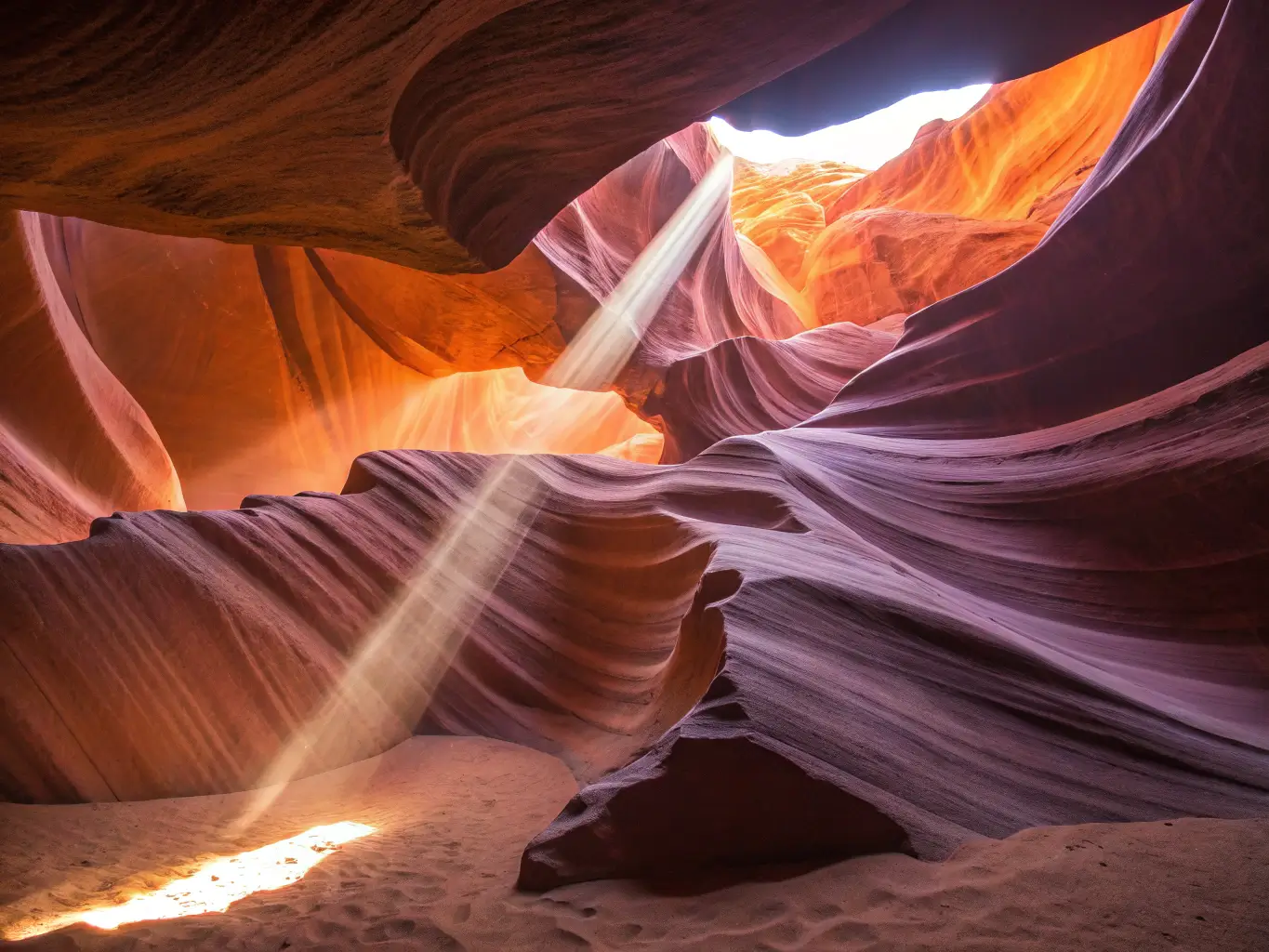
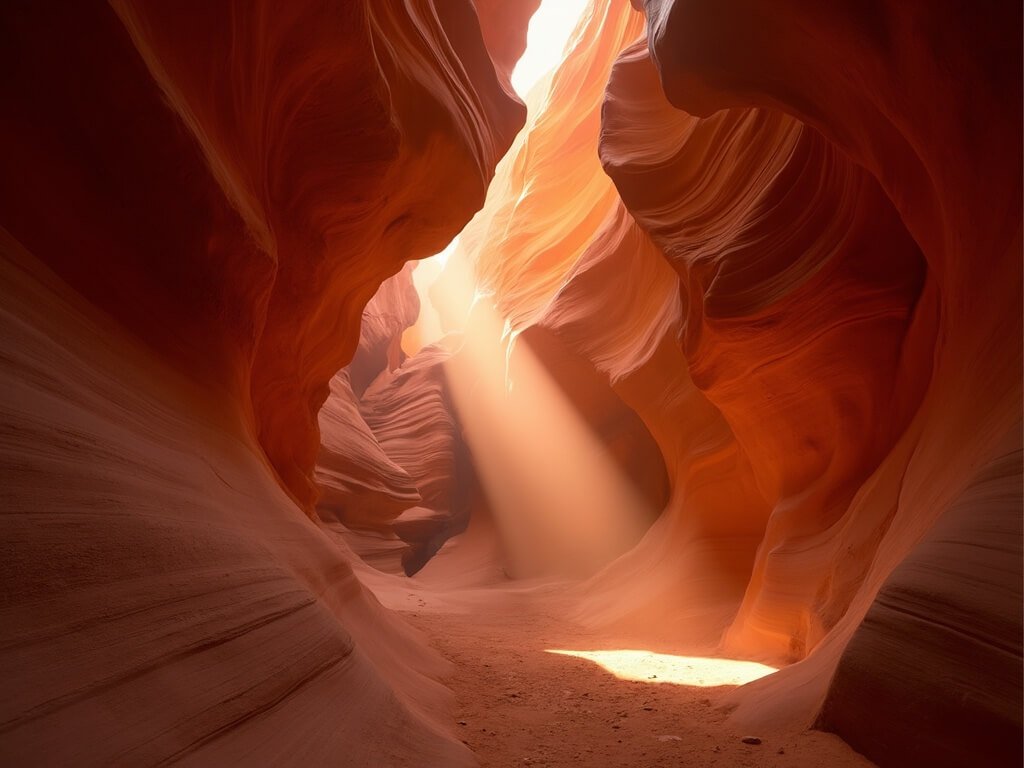
Picture this: You’re standing in a narrow, twisting passage where sunlight dances across wave-like sandstone walls, painting impossible colors that seem more like an artist’s dream than geological reality.
Welcome to Antelope Canyon, Arizona’s breathtaking slot canyon that’s not just a landscape, but a living, breathing geological wonder.
The Hidden Gem of the Navajo Nation
Nestled near Page, Arizona, on Navajo Nation land, Antelope Canyon isn’t just another tourist spot. It’s a sacred landscape that tells a 190-million-year story of water, wind, and persistent transformation.
The Navajo people call it “Hasdestwazi” – meaning “spiral rock arches” – and trust me, that name barely scratches the surface of its magical essence.
How Geological Magic Happens
Ever wondered how nature creates something so impossibly beautiful? Let me break it down.
This canyon is a masterpiece crafted by flash floods – those sudden, violent water surges that carve through rock like a sculptor’s chisel. Imagine ancient desert sand dunes, compressed and cemented over millions of years, being slowly reshaped by water and wind.
Key geological ingredients:
- Navajo sandstone (Jurassic-era rock)
- Relentless water erosion
- Powerful wind forces
- Extreme desert climate

The Dance of Light and Stone
What makes Antelope Canyon truly extraordinary are its natural light beams – a phenomenon that photographers worldwide dream about.
During summer months, typically between May and September, sunlight pierces through narrow openings, creating magical spotlights. The suspended sand particles catch and refract light, transforming the canyon into a living canvas of oranges, reds, and purples.
Pro tip: Midday is your golden hour. That’s when the light beams are most dramatic.
A Personal Canyon Encounter
I’ll never forget my first visit. Standing in Upper Antelope Canyon, watching sunlight slice through the narrow passageways, I felt incredibly small. The walls, some reaching 120 feet high, seemed to breathe and flow like liquid stone.
The canyon whispers geological stories – each curve, each shadow a testament to millions of years of patient sculpting.

Navigating This Natural Wonder
Important heads up: You can’t just wander into Antelope Canyon. Due to safety and preservation concerns, guided tours are mandatory.
Tour options:
- Upper Antelope Canyon: Easier access, wider corridors
- Lower Antelope Canyon: More challenging, dramatic swirling shapes
Photography Paradise
For photographers, this is the ultimate playground. But a word of advice: book your tour in advance and be prepared for carefully managed group experiences.
The canyon’s fragility means strict preservation protocols are in place. Your Instagram shot comes with a responsibility to protect this natural masterpiece.
Safety First
Flash floods aren’t just a geological feature – they’re a real risk. Tours can be cancelled during rainfall, so flexibility is key.
Narrow spaces, uneven ground, and potential sudden weather changes demand respect and caution.
The story of Antelope Canyon is still being written – by water, by wind, by the delicate dance between geological forces that continue to reshape this extraordinary landscape…
Explore More Natural Design Inspiration:
The Ecosystem: More Than Just Rocks
Let’s talk about something most tourists overlook – the incredible microenvironment thriving within Antelope Canyon.
This isn’t just a geological wonder. It’s a complex ecosystem where survival is an art form.
Limited sunlight means plant and animal life operate on razor-thin margins. Tiny organisms – lichens, microscopic bacteria, occasional small reptiles – have adapted to these extreme conditions.
Think of it like nature’s most exclusive, most challenging survival challenge.

Conservation: Protecting a Fragile Masterpiece
The Navajo Nation doesn’t just manage this landscape – they protect it.
Tour limits aren’t bureaucratic red tape. They’re a carefully crafted preservation strategy.
Conservation insights:
- Strict visitor numbers
- Guided-only access
- Educational programs about geological preservation
- Active research partnerships with geological institutions
Climate Change: The Invisible Threat
Here’s a sobering reality: Antelope Canyon isn’t immune to global environmental shifts.
Changing rainfall patterns could dramatically alter flash flood frequencies. More intense monsoons or prolonged droughts could accelerate erosion or slow the canyon’s geological evolution.
Scientists are watching closely. This natural wonder might be our canary in the geological coal mine.
Beyond Tourism: A Living Laboratory
For geologists, Antelope Canyon isn’t just beautiful. It’s a research goldmine.
Researchers study:
- Sedimentary rock formation processes
- Flash flood mechanics
- Desert erosion patterns
- Climate adaptation in extreme environments
The Human Connection
Every geological marvel tells a human story.
For the Navajo, this isn’t just a tourist destination. It’s a sacred space where geological time and cultural memory intersect.
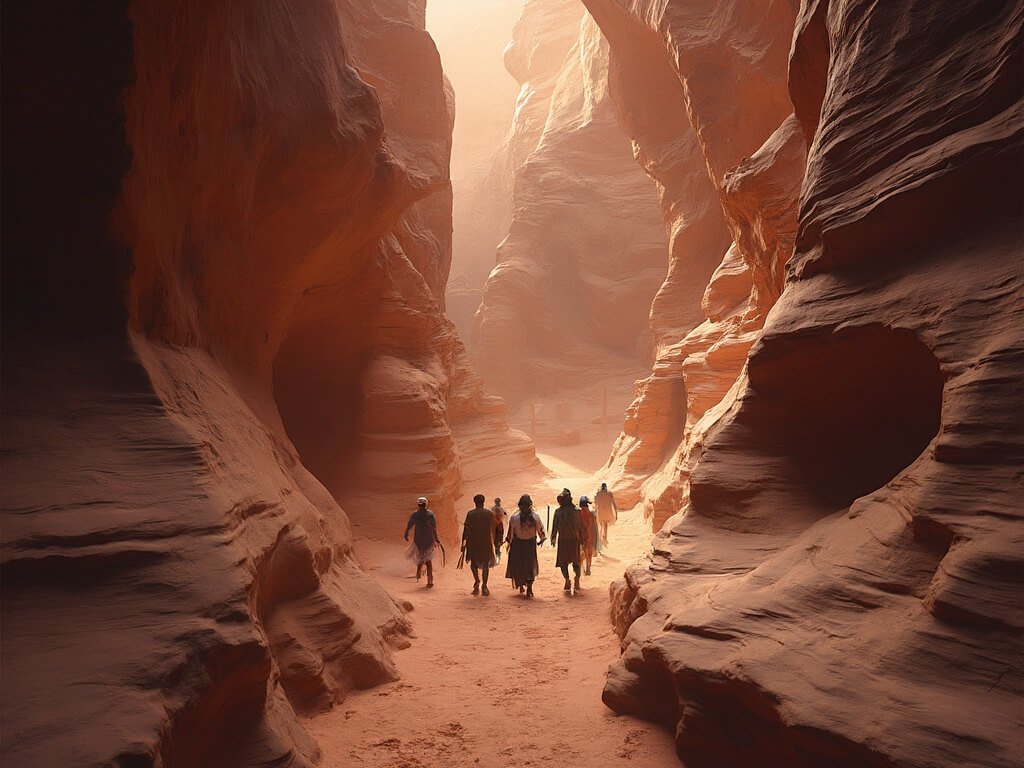
Generations have walked these narrow passages, understanding that rocks aren’t just static formations – they’re living narratives.
Future Horizons
What’s next for Antelope Canyon?
The challenge is balance. How do we preserve this natural wonder while allowing human connection?
Emerging trends look promising:
- Sustainable, low-impact tourism models
- Enhanced cultural interpretation programs
- Advanced geological monitoring technologies
- Climate resilience strategies
A Personal Reflection
Standing in those twisting passages, watching light dance across ancient stones, I’m reminded: We’re not just observers of nature. We’re participants in an ongoing geological symphony.
Antelope Canyon whispers an essential truth – beauty is born through patient, persistent transformation.
Final Takeaway
Whether you’re a photographer, geologist, or curious traveler, Antelope Canyon offers more than visual spectacle.
It’s a living testament to nature’s incredible sculptural power – where water, wind, and time collaborate to create something beyond human imagination.
Come prepared. Respect the landscape. Listen to its stories.
Welcome to Antelope Canyon – where every rock has a story, and every beam of light reveals a million-year secret.
Related Reading:
- Natural landscape inspiration
- Outdoor gathering spaces
- Architectural outdoor elements
- Nature-inspired outdoor design
- Scenic outdoor spaces