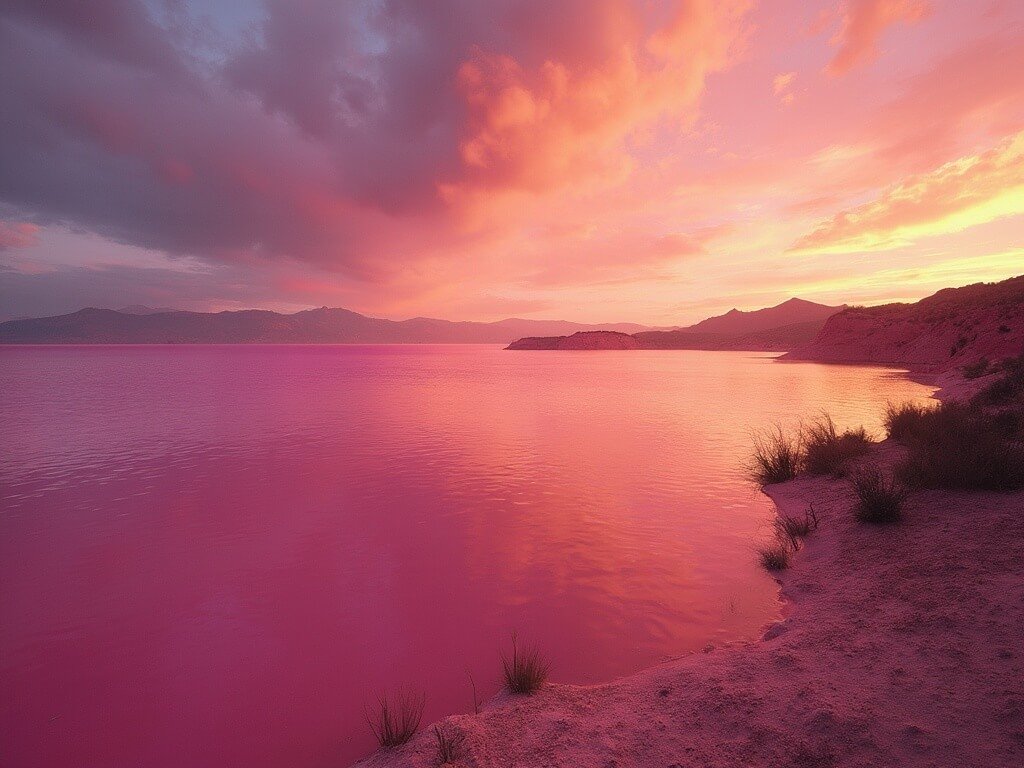
Ever wondered what would happen if a giant spilled bubblegum paint across a pristine Australian landscape? Meet Lake Hillier – nature’s most audacious color experiment.
Tucked away on Middle Island in Western Australia’s remote Recherche Archipelago, this extraordinary lake sits approximately 150 kilometers from Esperance, challenging everything you thought you knew about natural water bodies.

Why This Pink Paradise Will Blow Your Mind
Imagine a lake so intensely pink it looks like someone photoshopped reality. That’s Lake Hillier – a geographic marvel that’s more Instagram-worthy than most tropical beaches.
The Science Behind the Shocking Color
Most people assume the lake’s color is some weird trick of light. Spoiler alert: it’s not. This vibrant hue comes from a microscopic battle of epic proportions:
- Dunaliella salina algae producing beta-carotene
- Halobacterium pumping out funky pigments
- Extreme salt concentrations creating a perfect microbial playground

When Sunlight Meets Microbes: A Color Symphony
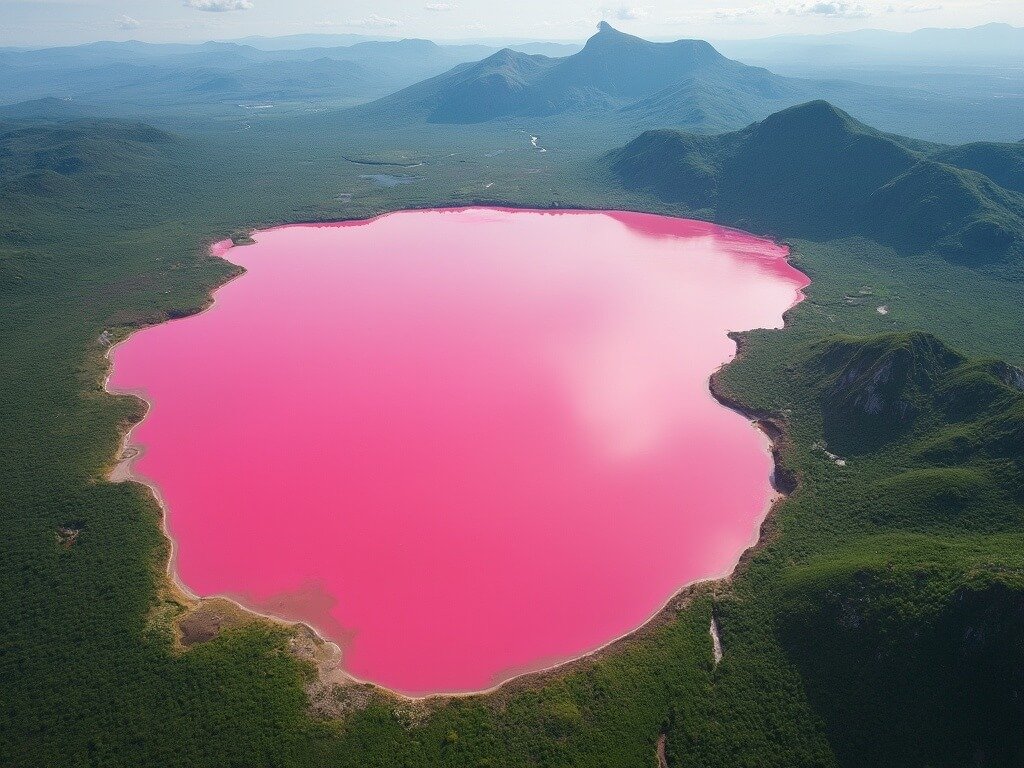
The lake doesn’t just look pink – it commits to the aesthetic. From aerial views, it’s a bubblegum-pink canvas pressed against deep turquoise ocean waters, creating a visual contrast that looks like a professional photographer’s dream.
A Personal Encounter with Nature’s Weirdest Landmark
During my research expedition to Western Australia, I met a local marine biologist who described Lake Hillier as “nature’s most elaborate practical joke”. Standing on a scenic flight overlooking this surreal landscape, I understood exactly what he meant.
The lake sits pristine and unchanging, surrounded by dense paperbark and eucalyptus forests, separated from the Southern Ocean by nothing more than a thin sandy barrier. It’s like Earth decided to create its own color palette just to mess with our expectations.

Fascinating Ecosystem: More Than Meets the Eye
Despite looking like a giant strawberry milkshake, Lake Hillier is a complex ecosystem:
- Extremely saline environment
- Primarily inhabited by microorganisms
- Almost zero fish population
- Permanent pink coloration that doesn’t fade
Accessibility: As Exclusive as It Gets
Want to visit? Here’s the catch – you can’t. Not really. This natural wonder is:
- Only accessible via aerial tours
- Protected to maintain its pristine condition
- A scientific research site, not a tourist playground
Climate’s Subtle Dance: Color Variations
While predominantly pink, the lake isn’t immune to environmental shifts. Heavy rainfall can temporarily dilute its signature color, but it typically returns to its bubblegum brilliance once salt levels stabilize.
The Global Context: Not Your Average Lake
Lake Hillier isn’t alone in the pink lake world. Australia boasts several such formations like Hutt Lagoon. But where others change seasonally, Lake Hillier remains a consistent pink powerhouse.
Its unreal color against the deep blue Indian Ocean creates a visual spectacle that feels more like a digital rendering than a real geographical feature.
The world of natural wonders just got a whole lot more colorful. And scientific. And absolutely mind-blowing.
The mysteries of Lake Hillier run deeper than its shocking pink surface suggests – a testament to nature’s capacity to surprise, delight, and completely confound our expectations.
Explore more dreamy natural aesthetics in our guide on tropical landscape design.
Beyond the Pink: What Lake Hillier Teaches Us About Earth’s Weird Science
Let’s dive deeper into why this pink marvel matters beyond its Instagram-worthy appearance.
The Research Revolution: Extremophiles Unveiled
Scientists aren’t just staring at Lake Hillier’s pretty color. They’re unraveling fundamental mysteries about life itself.
The Extreme Microbiome Project has transformed this tiny lake into a global research hotspot. Why? Because these microorganisms survive in conditions that would obliterate most life forms.
Imagine microscopic creatures thriving in:
- 10x saltier environment than seawater
- Constant extreme temperatures
- Minimal nutrients
- Intense UV radiation
These aren’t just survivors. They’re biological superheroes rewriting our understanding of life’s potential.

Conservation: Protecting Nature’s Most Delicate Canvas
During my research, I spoke with Dr. Elena Rodriguez, a marine ecologist specializing in extreme environments. “Lake Hillier isn’t just a pretty picture,” she emphasized. “It’s a fragile ecosystem that represents millions of years of evolutionary adaptation.”
Conservation efforts focus on minimal human intervention. No swimming. No direct contact. Just careful, distant observation.
The Climate Connection: Fragile Beauty Under Threat
Global climate shifts could dramatically alter Lake Hillier’s delicate balance. Rising temperatures, changing precipitation patterns, and ocean acidification might transform this bubblegum-pink wonder.
Potential Threats:
- Microorganism population disruption
- Salt concentration changes
- Reduced algae productivity
- Ecosystem destabilization
A Global Phenomenon: Pink Lakes Worldwide
While Lake Hillier steals the spotlight, it’s part of a global pink lake family:
- Australia’s Hutt Lagoon
- Bolivia’s Laguna Colorada
- Senegal’s Lake Retba
- Canada’s Saskatchewan Salt Lake
Each tells a unique story of environmental adaptation.
Tourism and Mythology: More Than Just a Landmark
Lake Hillier has transcended scientific curiosity. It’s become a cultural icon, symbolizing Australia’s extraordinary natural diversity.
Travel magazines and documentaries showcase it as proof that reality can be more fantastic than fiction. Photographers compete to capture its most mesmerizing angles.
The Economic and Cultural Ripple Effect
This single lake generates:
- Significant tourism revenue
- Global marketing opportunities
- Scientific research funding
- Environmental awareness campaigns
Surprising Biotechnology Potential
Here’s where it gets really exciting. The extremophile microorganisms in Lake Hillier might hold keys to:
- Developing heat-resistant enzymes
- Creating more resilient crops
- Designing advanced pharmaceutical compounds
- Understanding potential extraterrestrial life forms
The Future of Lake Hillier: What Comes Next?
As climate change accelerates, lakes like Hillier become critical research sites. They’re living laboratories revealing how life adapts to extreme conditions.
Research priorities include:
- Long-term ecosystem monitoring
- Genetic mapping of microorganisms
- Understanding color change mechanisms
- Predicting environmental resilience
Final Thoughts: A Pink Portal to Understanding Life
Lake Hillier isn’t just a geological curiosity. It’s a testament to nature’s complexity, resilience, and breathtaking creativity.
In one small, pink lake, we find a microcosm of life’s incredible potential. A reminder that the most extraordinary discoveries often hide in the most unexpected places.
The bubblegum-pink waters of Lake Hillier continue to inspire, challenge, and remind us: reality is far more fascinating than imagination.
Explore more natural wonders through our related guides:
- Tropical Landscape Design
- Backyard Vegetable Garden
- Tropical Bedrooms
- Coastal Bathroom Ideas
- Beachy Boho Bedroom Inspiration