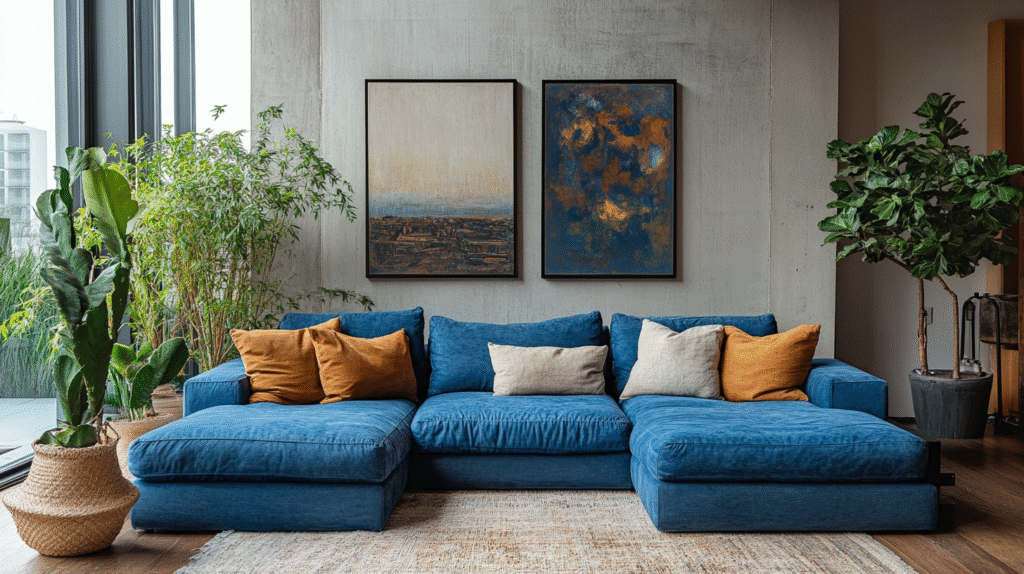
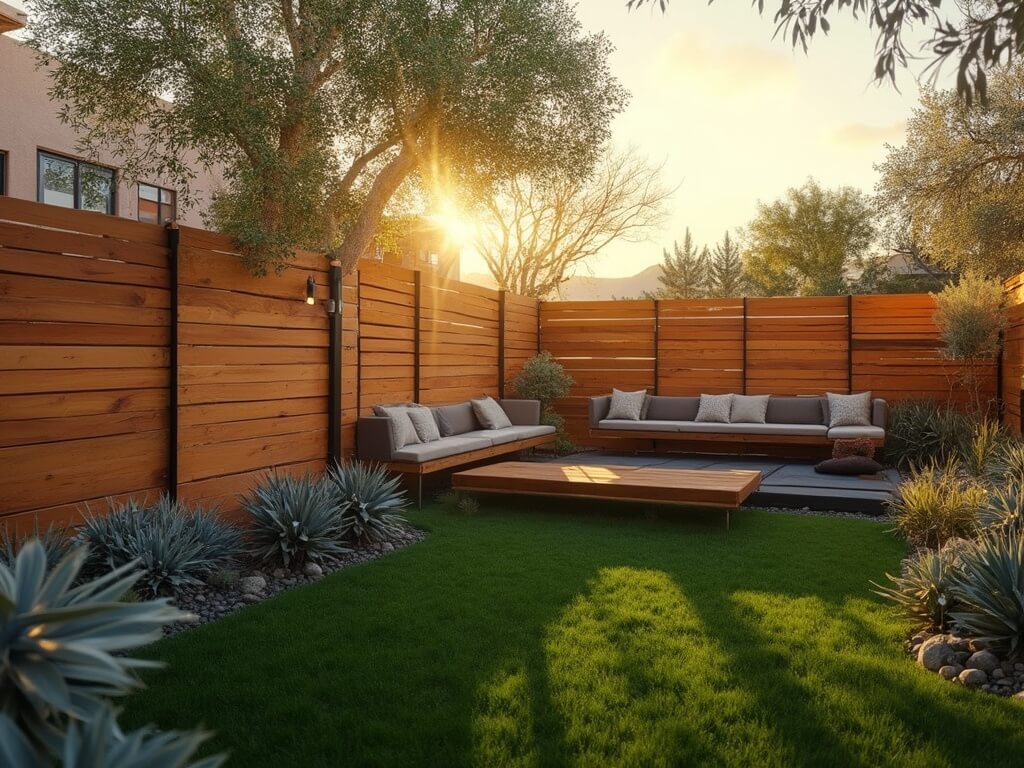
Imagine walking into a living room that instantly transports you back to the groovy era of mid-century design—where bold colors dance with geometric patterns and vintage furniture tells a story of timeless style.
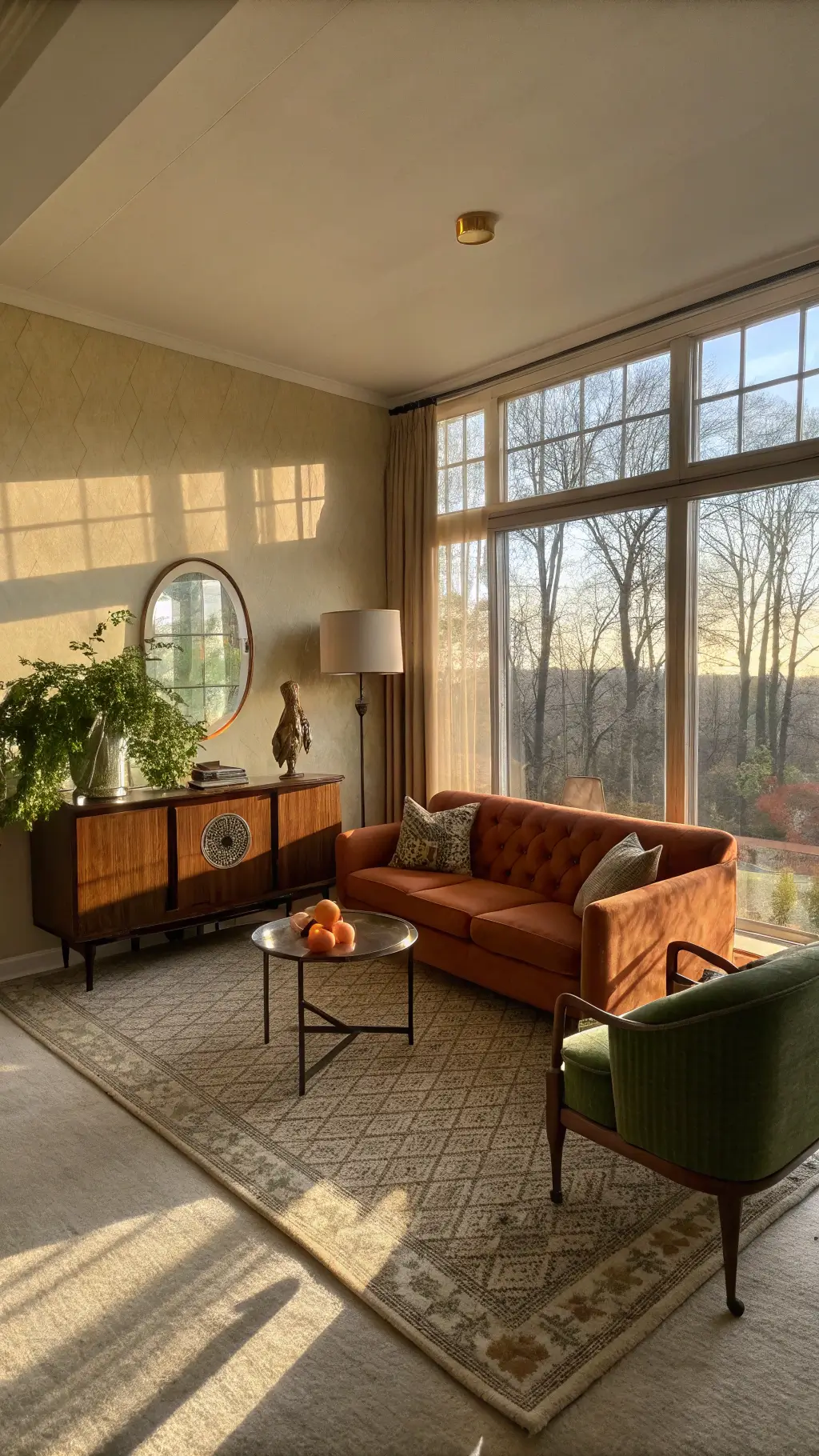
🖼 Steal This Look
- Paint Color: Sherwin-Williams Tangerine SW 6641
- Furniture: Low-profile teak credenza with tapered legs, curved boucle armchair in mustard yellow, walnut coffee table with hairpin legs
- Lighting: Sputnik chandelier in brass finish, arched floor lamp with fiberglass shade
- Materials: Walnut wood, brass metal accents, textured boucle and tweed upholstery, geometric patterned wool rugs, ceramic table lamps
There’s something deeply satisfying about a retro living room that feels lived-in rather than staged—like you’ve inherited your coolest aunt’s impeccable taste. The best spaces whisper stories of cocktail parties and vinyl records, not scream ‘I bought this entire look online yesterday.’
Why Retro Living Rooms Are Making a Massive Comeback
Retro living rooms aren’t just a design trend—they’re a celebration of nostalgic charm and modern sophistication. Here’s why everyone’s falling in love with this style:
Key Retro Design Elements
- Bold Color Palettes: Earthy browns, vibrant oranges, sage greens
- Statement Furniture: Low-profile sofas, sculptural chairs
- Textural Experiences: Velvet, rattan, leather surfaces
- Geometric Patterns: Playful prints that make your space pop
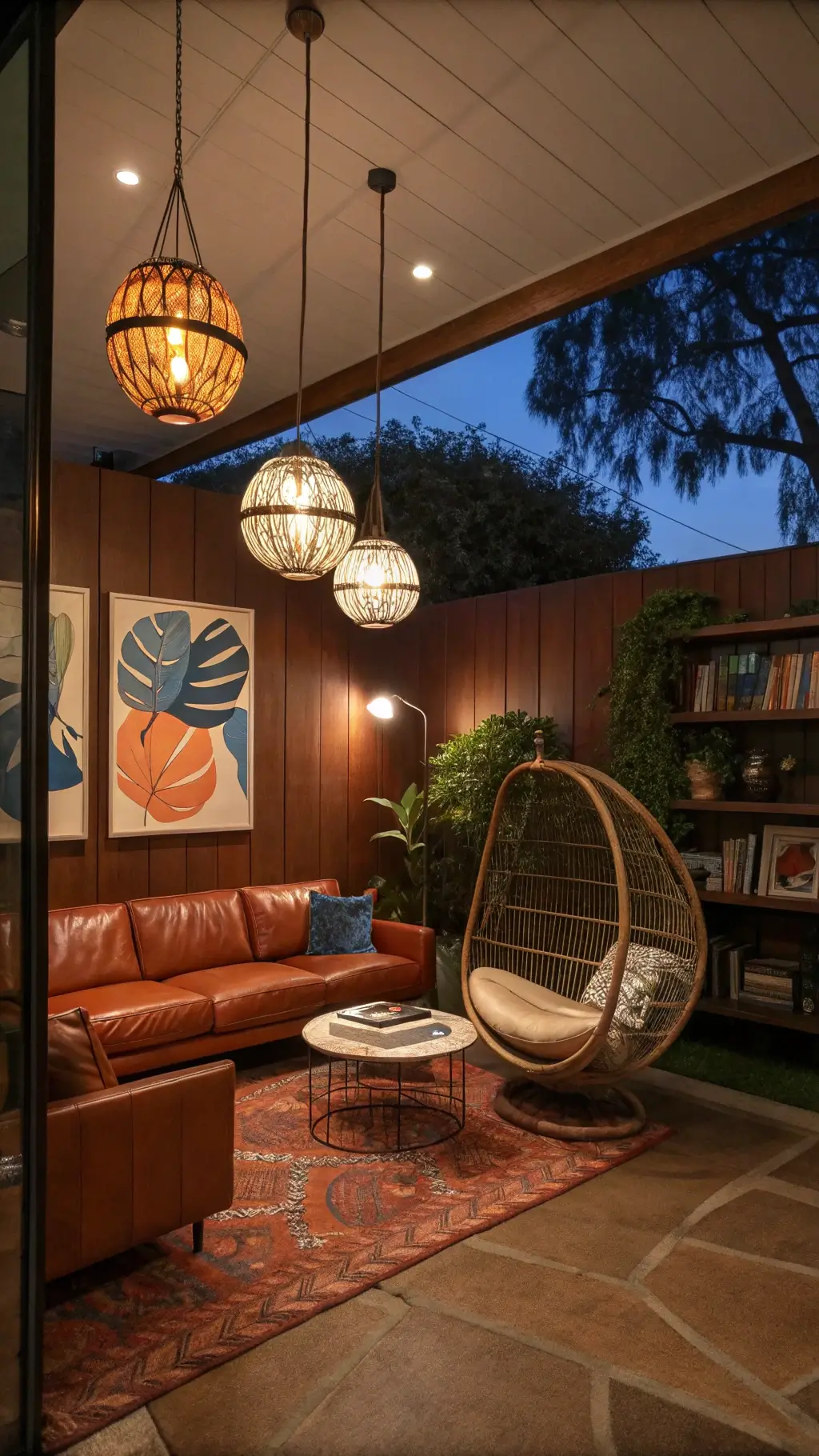
🌟 Steal This Look
- Paint Color: Benjamin Moore Harvest Moon 2168-40
- Furniture: Low-profile teak credenza with tapered legs, sculptural womb chair in burnt orange wool, modular sectional with thin arms
- Lighting: Arc floor lamp with marble base and brass finish, sputnik chandelier with smoked glass globes
- Materials: Walnut veneer, nubby wool upholstery, cane webbing, terrazzo, brushed brass
There’s something deeply comforting about walking into a space that feels like it holds stories—retro living rooms tap into that emotional warmth while still feeling fresh enough for everyday life.
Creating Your Perfect Retro Living Room: A Step-by-Step Guide
1. Choose Your Color Foundation
Retro color schemes aren’t for the faint of heart. Think:
- Warm terracotta tones
- Deep cobalt blues
- Burnt orange accents
- Muted sage greens
Pro Tip: Balance bold colors with neutral backgrounds to prevent visual overload.
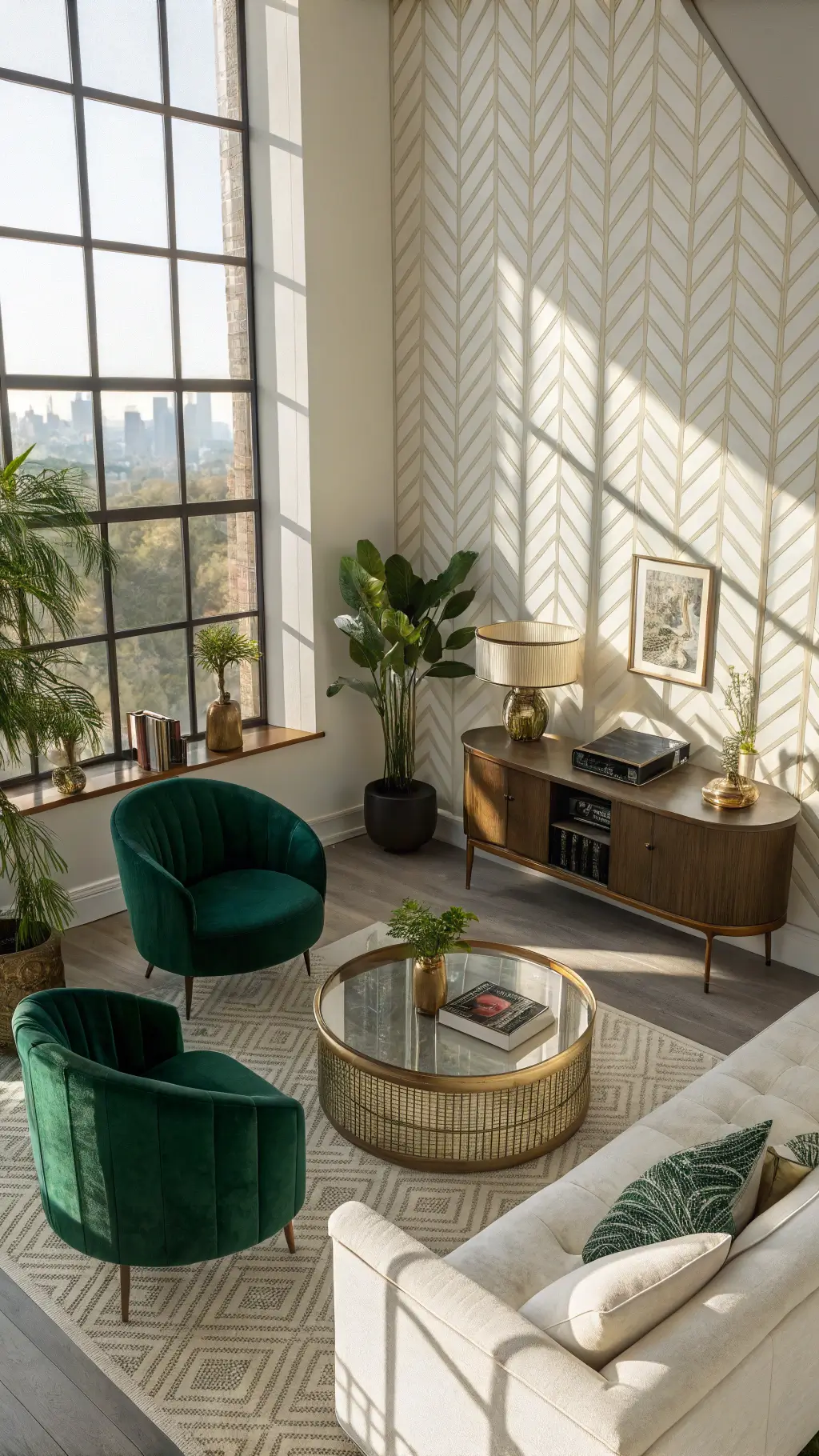
2. Select Iconic Furniture Pieces
Your furniture tells the story. Look for:
- Low-profile velvet sofas
- Egg-shaped chairs
- Chrome or wooden-legged side tables
- Geometric coffee tables with interesting silhouettes
3. Layer Textures Like a Design Pro
Texture is the secret sauce of retro design:
- Velvet throw pillows
- High-pile wool rugs
- Knitted blankets
- Rattan accent pieces
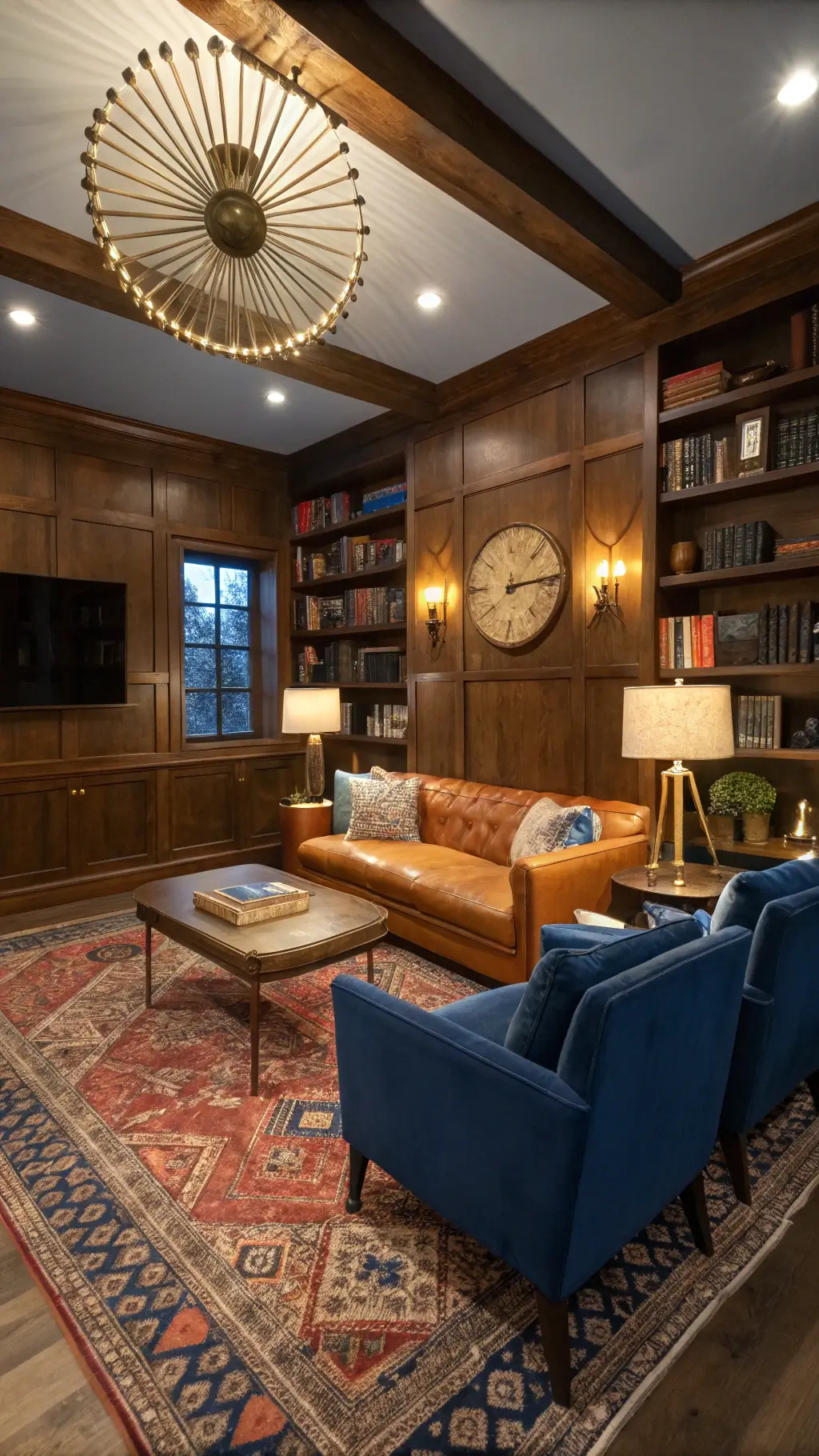
4. Accessorize with Vintage Charm
Curate accessories that scream vintage:
- Sunburst wall clocks
- Ceramic table lamps
- Framed geometric art
- Vintage record players
- Houseplants in ceramic planters

💡 Steal This Look
- Paint Color: Farrow & Ball Charlotte’s Locks 268
- Furniture: Low-profile velvet sofa with tapered wooden legs, egg-shaped swivel chair in burnt orange upholstery, geometric walnut coffee table with hairpin legs
- Lighting: Ceramic table lamp with drum shade in warm cream, brass arc floor lamp with adjustable head
- Materials: Velvet upholstery, high-pile wool, warm walnut wood, chrome accents, rattan weave, glazed ceramic
There’s something deeply satisfying about sinking into a velvet sofa that feels like it has stories to tell—retro living rooms reward the brave color choices that modern minimalism often fears.
Budget-Friendly Retro Design Hacks
Not everyone has thousands to drop on vintage furniture. Here are smart strategies:
- Thrift Store Treasure Hunting: Find unique pieces at fraction of retail prices
- DIY Upholstery: Reupholster existing furniture in retro fabrics
- Removable Wallpapers: Add instant mid-century flair without permanent commitment
- Marketplace Finds: Check Facebook Marketplace and Craigslist for vintage gems
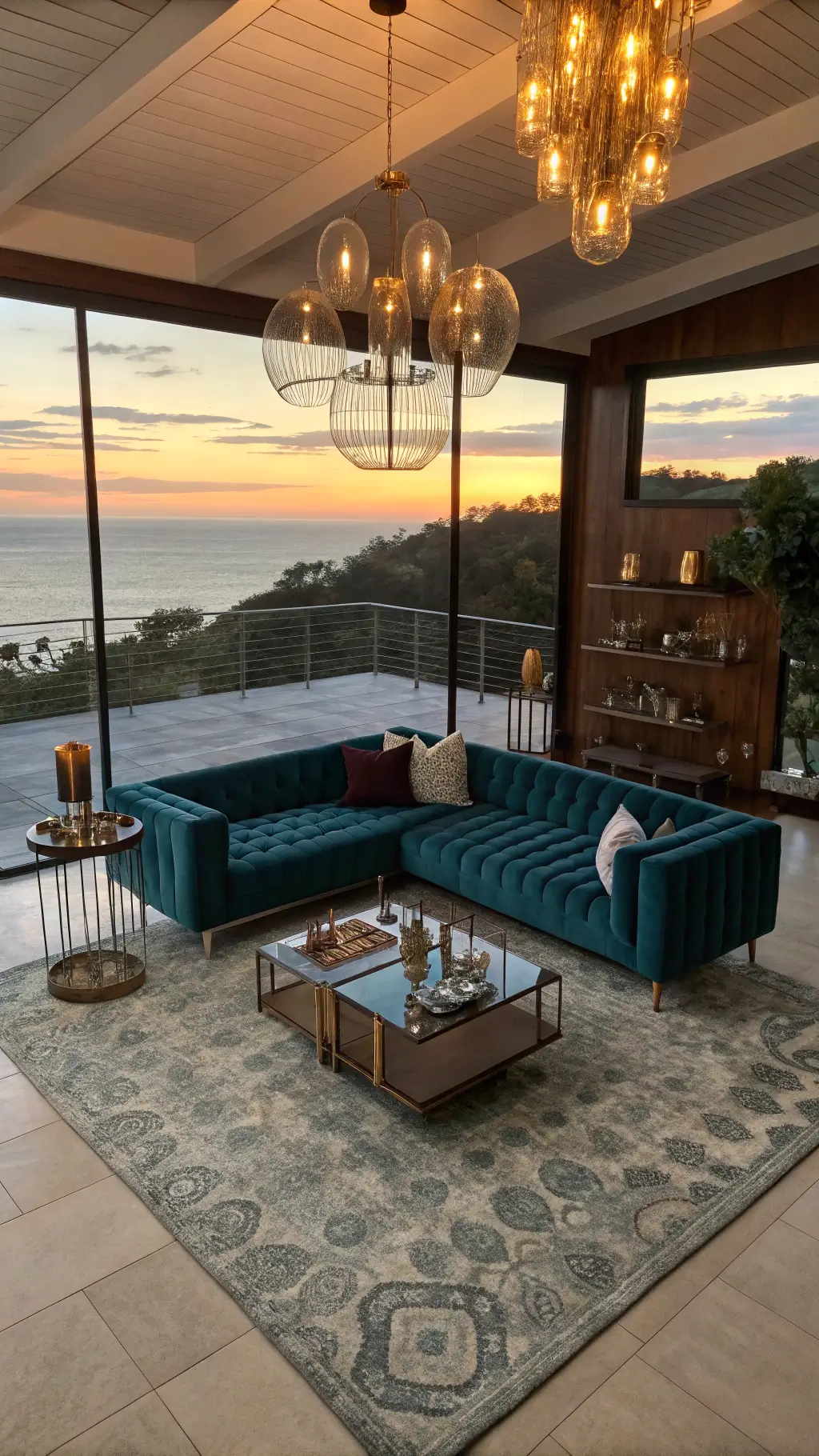
🎨 Steal This Look
- Paint Color: Behr S-H-170 Retro Avocado PPU10-03
- Furniture: Thrifted teak sideboards with tapered legs, reupholstered barrel-back chairs in atomic starburst fabrics, and low-slung credenzas with hairpin legs
- Lighting: Sputnik chandeliers and arc floor lamps with brass finishes
- Materials: Walnut veneer, nubby textured tweed upholstery, geometric laminate surfaces, and chrome accents
There’s something deeply satisfying about pulling a forgotten 1960s credenza from a dusty corner and watching it anchor your living room with authentic character no reproduction can match.
Common Mistakes to Avoid
Don’t:
- Overcrowd your space
- Mix too many competing patterns
- Ignore modern comfort for pure aesthetic
- Forget lighting’s transformative power
Do:
- Create breathing room
- Balance vintage with contemporary elements
- Prioritize comfort
- Use layered, warm lighting
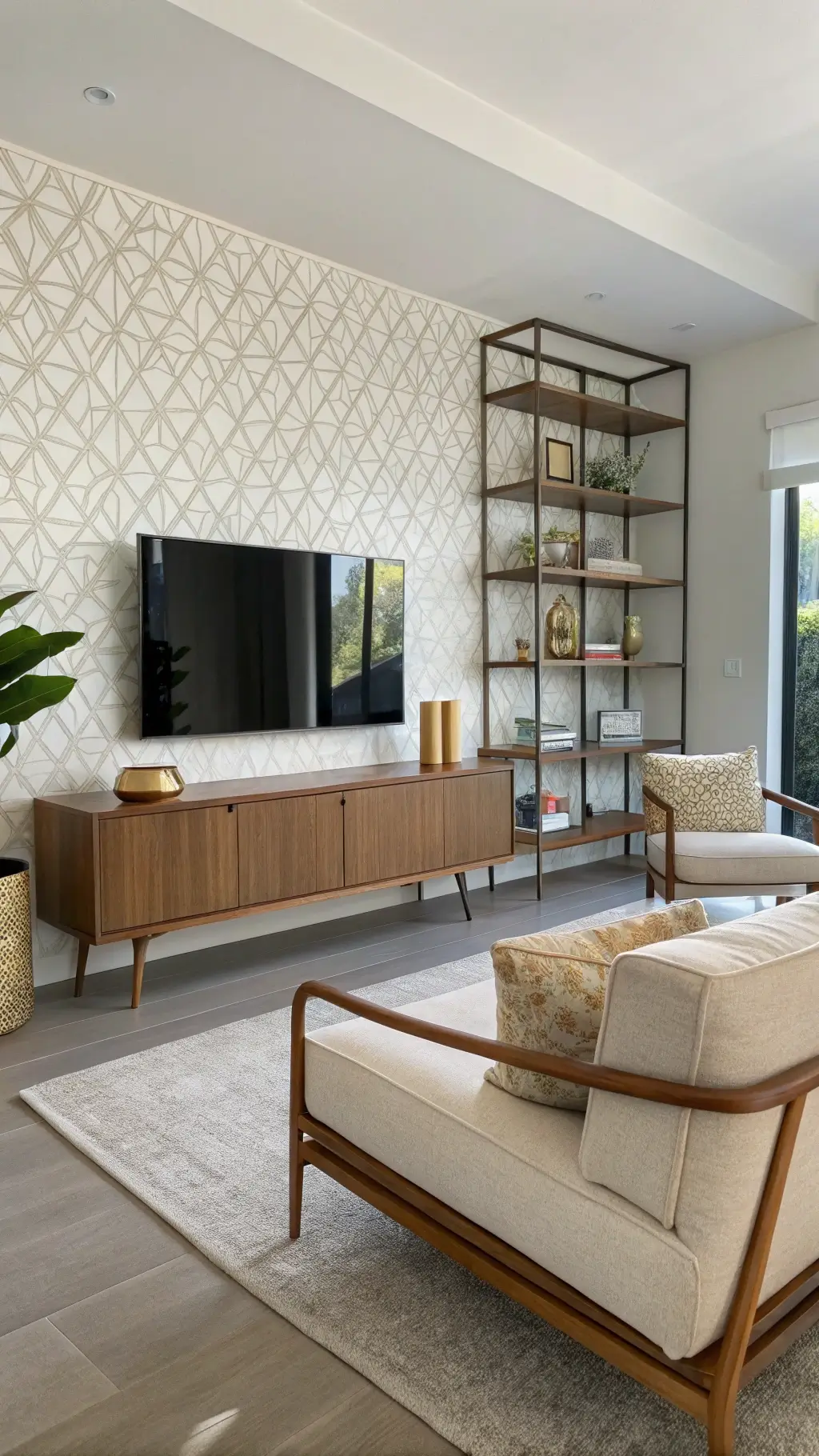
🖼 Steal This Look
- Paint Color: Valspar Retro Avocado 6005-6C
- Furniture: low-profile teak credenza with tapered legs, curved boucle armchair in mustard yellow, oval glass-top coffee table with brass base
- Lighting: arched brass floor lamp with linen drum shade, tiered Sputnik chandelier in aged brass, ceramic table lamps with geometric bases
- Materials: walnut wood grain, nubby wool textiles, smoked glass, brushed brass, textured ceramics, vinyl record accents
I’ve walked into too many retro living rooms that feel like museum dioramas you can’t actually sit in—remember, the best spaces from this era were designed for cocktail parties and lazy Sunday reading, not just photographing.
Photography and Styling Tips
Want to capture your retro living room perfectly?
- Shoot during golden hour for warm tones
- Use natural, soft lighting
- Experiment with different angles
- Focus on creating visual stories
Final Thoughts: Your Retro Living Room Journey
Find one object from your childhood and place it where guests will ask about it. Retro living rooms succeed when the past is personal enough to explain. The best ones feel like rooms that have been given permission to remember.