The Look and Who It’s For
A shabby chic kitchen is what I landed on after two rentals, one very regrettable glossy black cabinet phase, and a slow realization that I wanted a kitchen that looked like my grandmother had lived in it — not one that looked like a showroom. If you’re here, you probably want the same: something soft, lived-in, a little romantic, and cheap enough to build slowly out of thrifted bits and paint.
Good news. That’s exactly the style’s whole point.
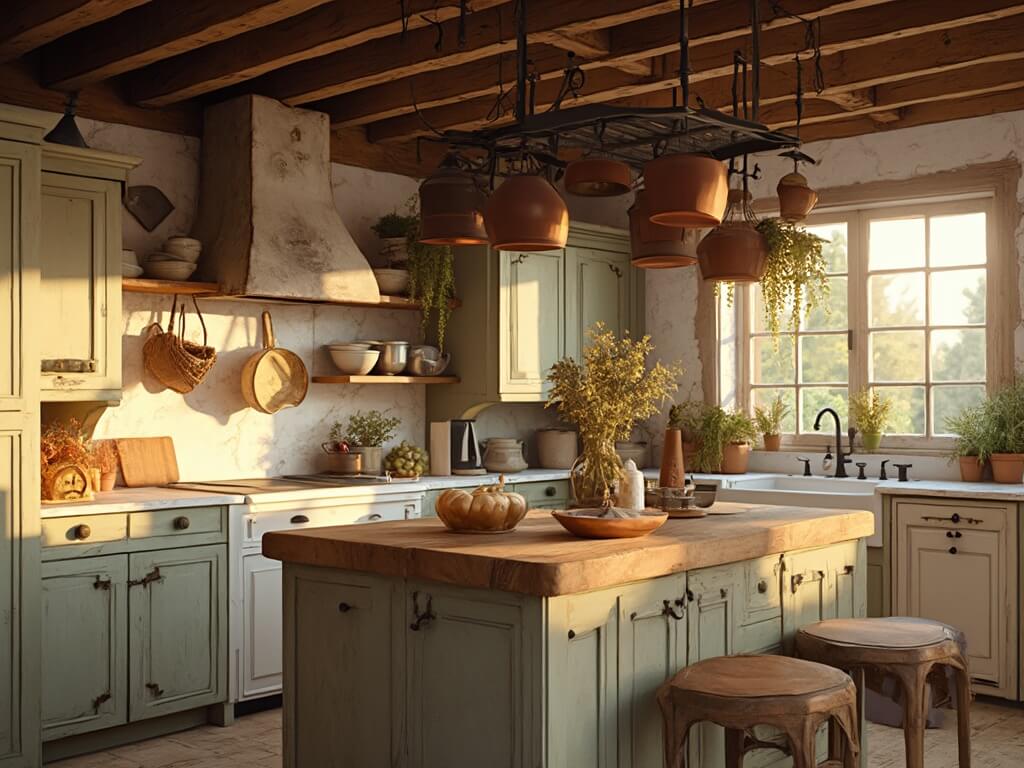
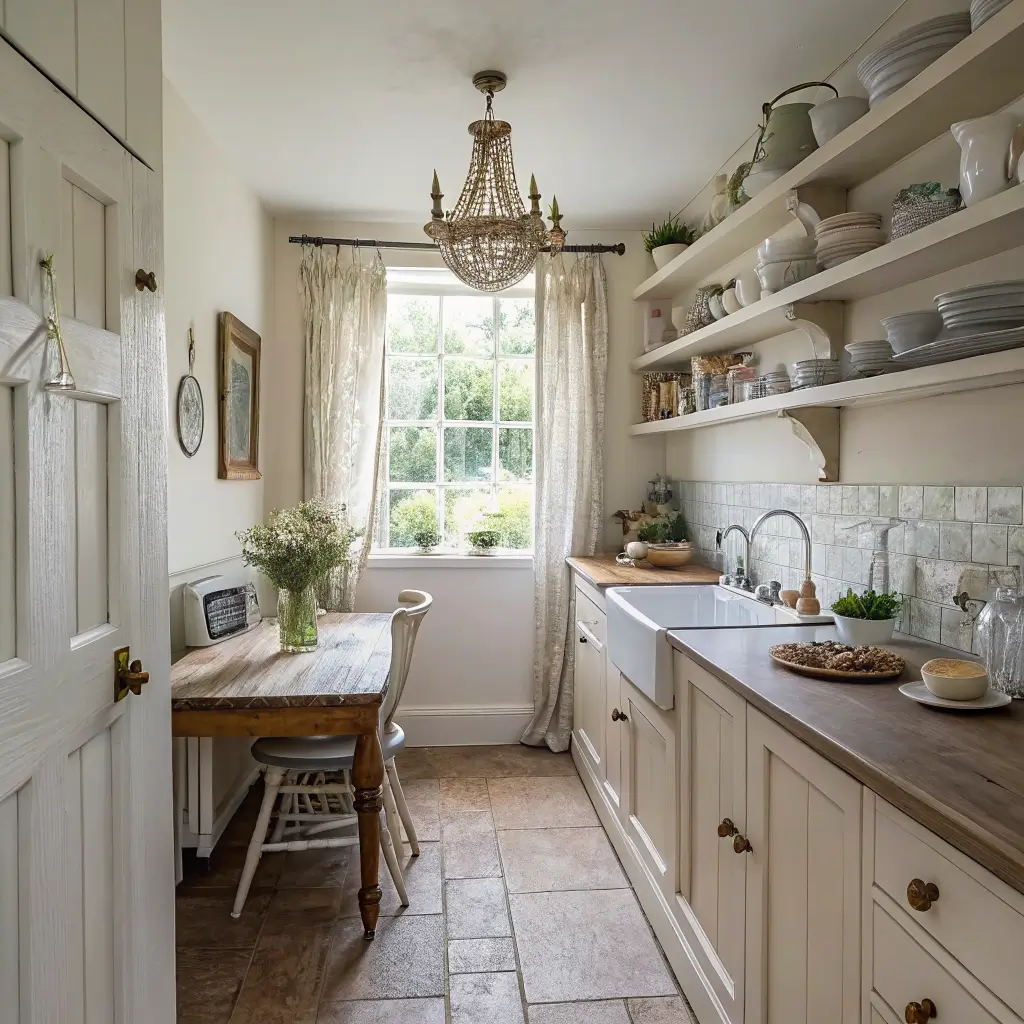
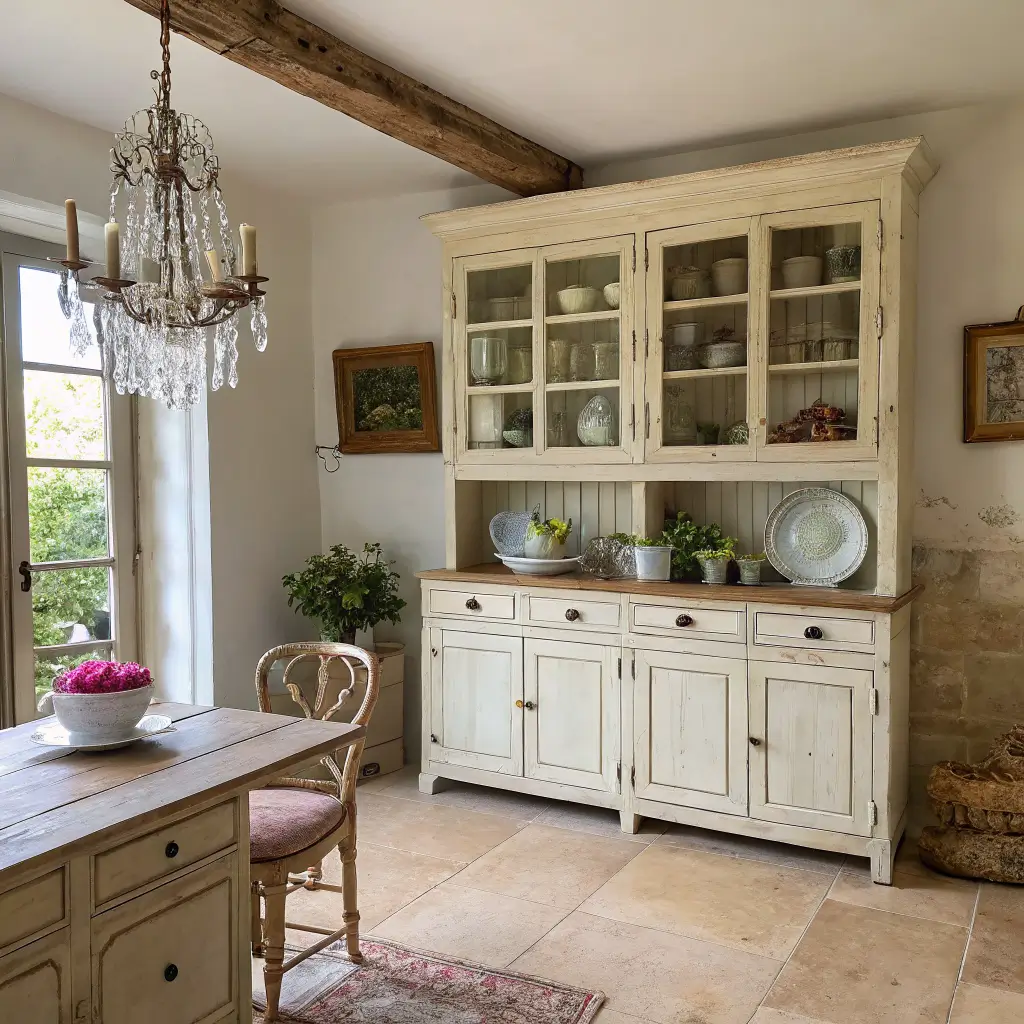
Shabby chic sits somewhere between country kitchen, cottage, and French country, but lighter and more feminine than rustic farmhouse. Think chalky pale cabinets, a scrubbed wood table, a glass chandelier that probably shouldn’t be in a kitchen but absolutely is, and open shelves stacked with mismatched ironstone.
It works best if you want a kitchen that feels collected over years, not delivered in a van. And it’s kind to small kitchens — my current galley is barely 90 square feet, and the pale palette plus open shelving is the only reason it doesn’t feel like a closet.
Who it suits:
– Renters and homeowners working with older cabinetry that needs disguising more than replacing
– Anyone who genuinely enjoys a thrift store and doesn’t need everything to match
– Small to medium kitchens, breakfast nooks, pantries, and eat-in corners
– People who cook — the style is rooted in working kitchens, not staged ones
Time, Cost, and Skill Level
Here’s what I’ve actually spent and how long things took.
– A styling refresh (new textiles, open shelf styling, some thrifted accessories, a coat of paint on a chair or two): a weekend, roughly $150–$400.
– A bigger overhaul (chalk-painted cabinets, new open shelves, pendant swap, a freestanding dresser or small table): two to four weekends, $800–$3,000 depending on whether you find a dresser for $60 on Marketplace or $600 at an antique shop.
– Skill level: Beginner for decor and paintwork. Intermediate if you’re tackling cabinet doors properly. Expert if you’re removing upper cabinets and installing floating shelves into plaster (ask me how I know).
The Color Palette That Actually Works
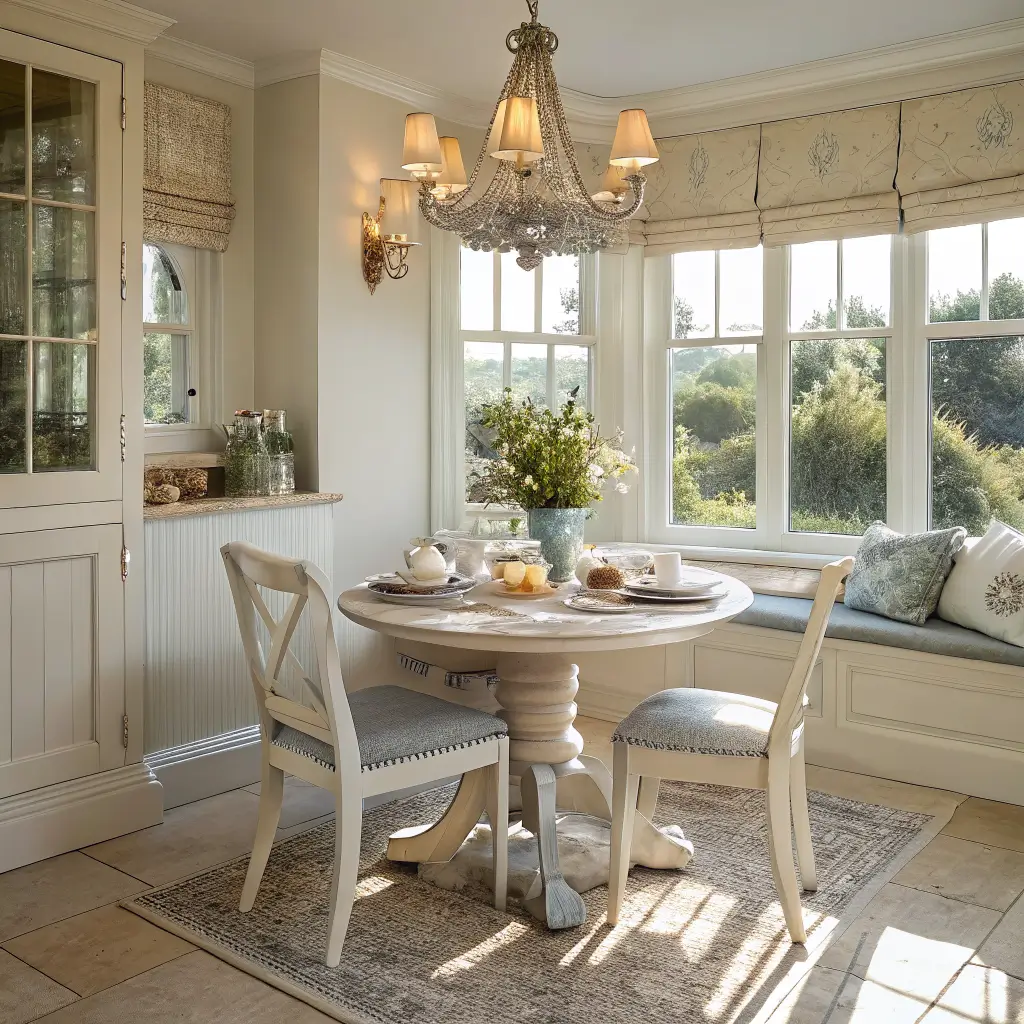
The palette is the thing most people get wrong. Shabby chic isn’t just white — a room that’s only white reads as builder-grade, not romantic.
Build from a soft base and add one or two muted accents:
– Base colors: soft white, cream, stone, oyster, warm off-white, pale dove grey
– Muted accents: sage green, powder blue, smoky blue, blush pink, primrose yellow, mint
– Sparing contrast: charcoal, deep raspberry, aged brass, dark walnut wood
I painted my lower cabinets in Farrow & Ball’s Shaded White and left the uppers cream. That two-tone move is the single biggest reason the kitchen doesn’t feel like a dentist’s office.
Rule of thumb: if you can see three saturated colors from where you stand, dial one back.
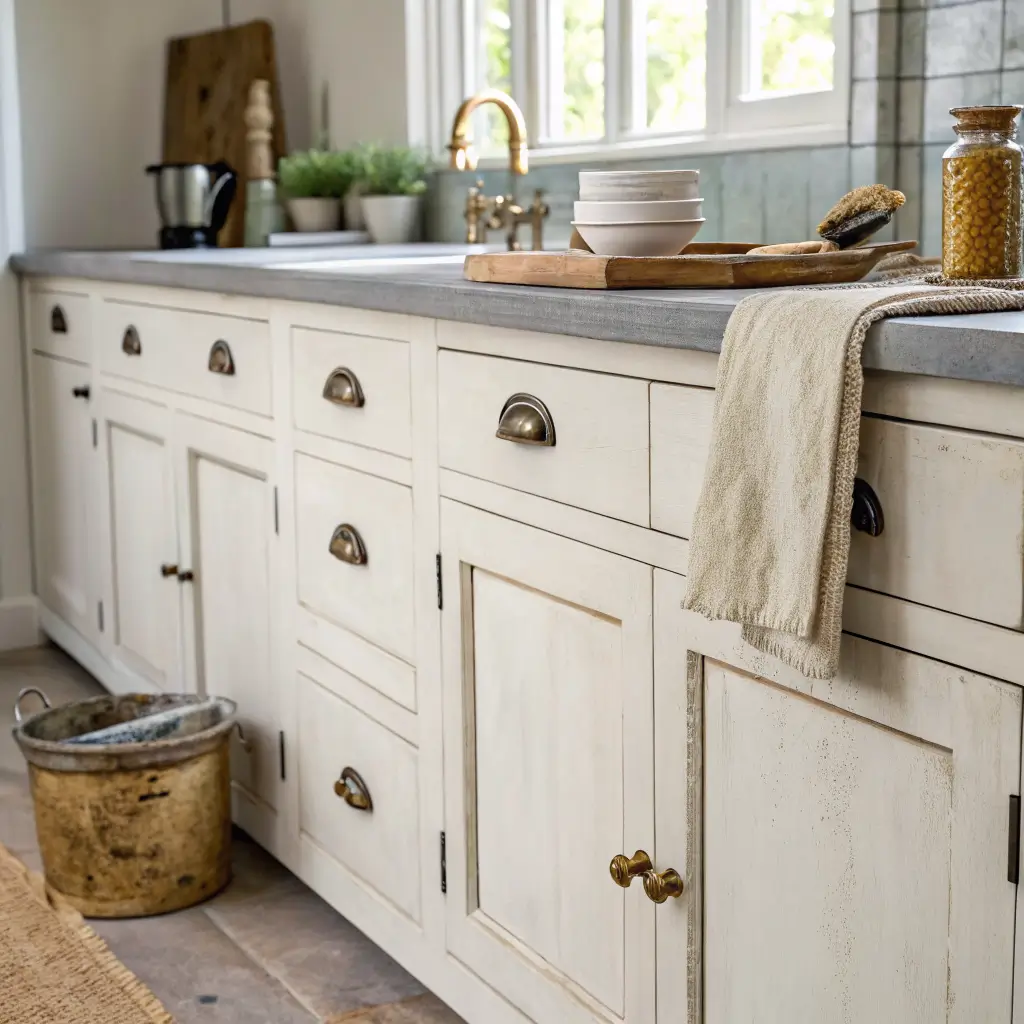
The Finish That Sells the Style: Chalk Paint
If you do one thing, it’s this. Chalk paint in a matte or eggshell finish is what gives cabinets and furniture that soft, powdery, slightly aged look. Full gloss kills it instantly.
For cabinets I use Annie Sloan Old White or Rust-Oleum’s chalked line (cheaper, holds up fine on lower-traffic pieces). Two coats, light sanding on the edges with 220-grit to expose a hint of the wood underneath, then a clear soft wax to seal. Do not skip the wax on anything you’ll wipe down.
If you want a properly distressed edge, sand harder along corners, drawer pulls, and the bottom rail of doors — the places that would naturally wear over decades.
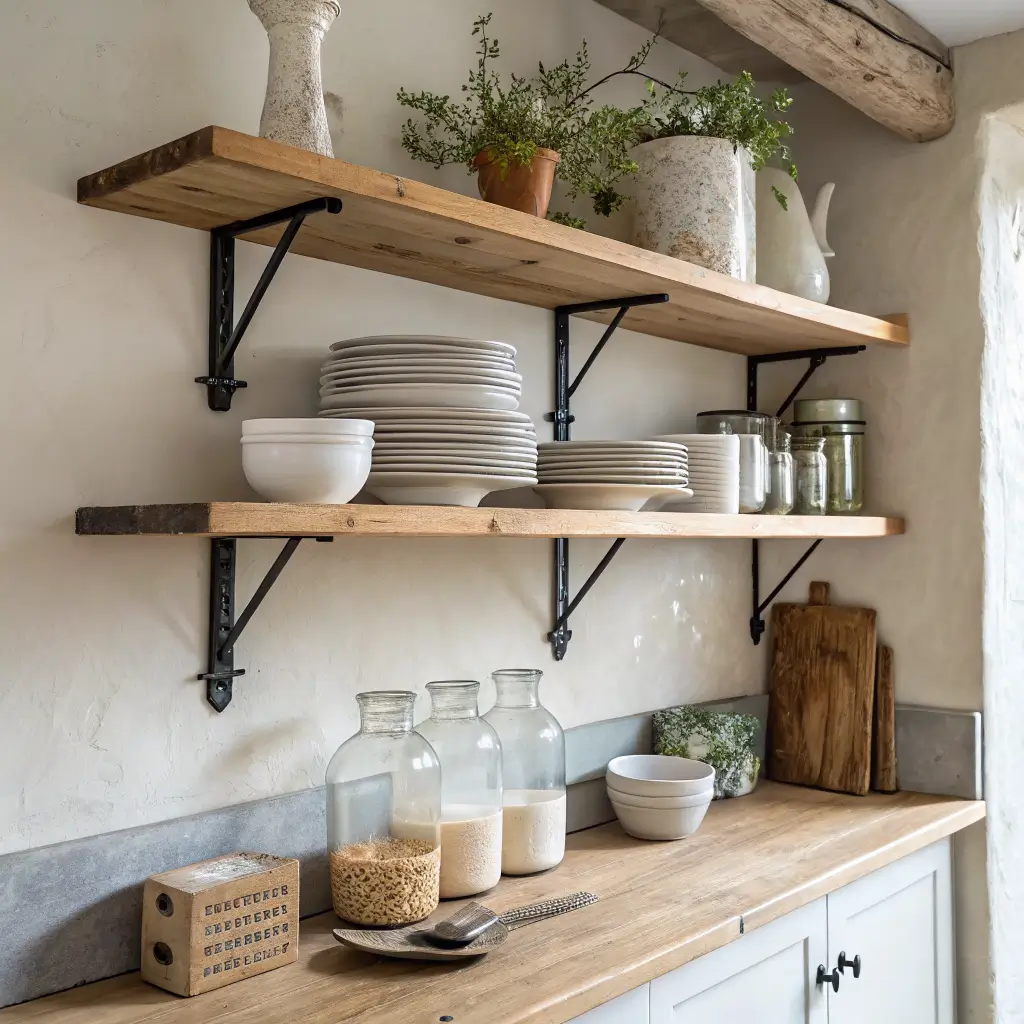
Key Pieces That Make the Whole Thing Work
You don’t need all of these, but the more of them you get in, the more the room reads as intentional rather than just “white kitchen.”
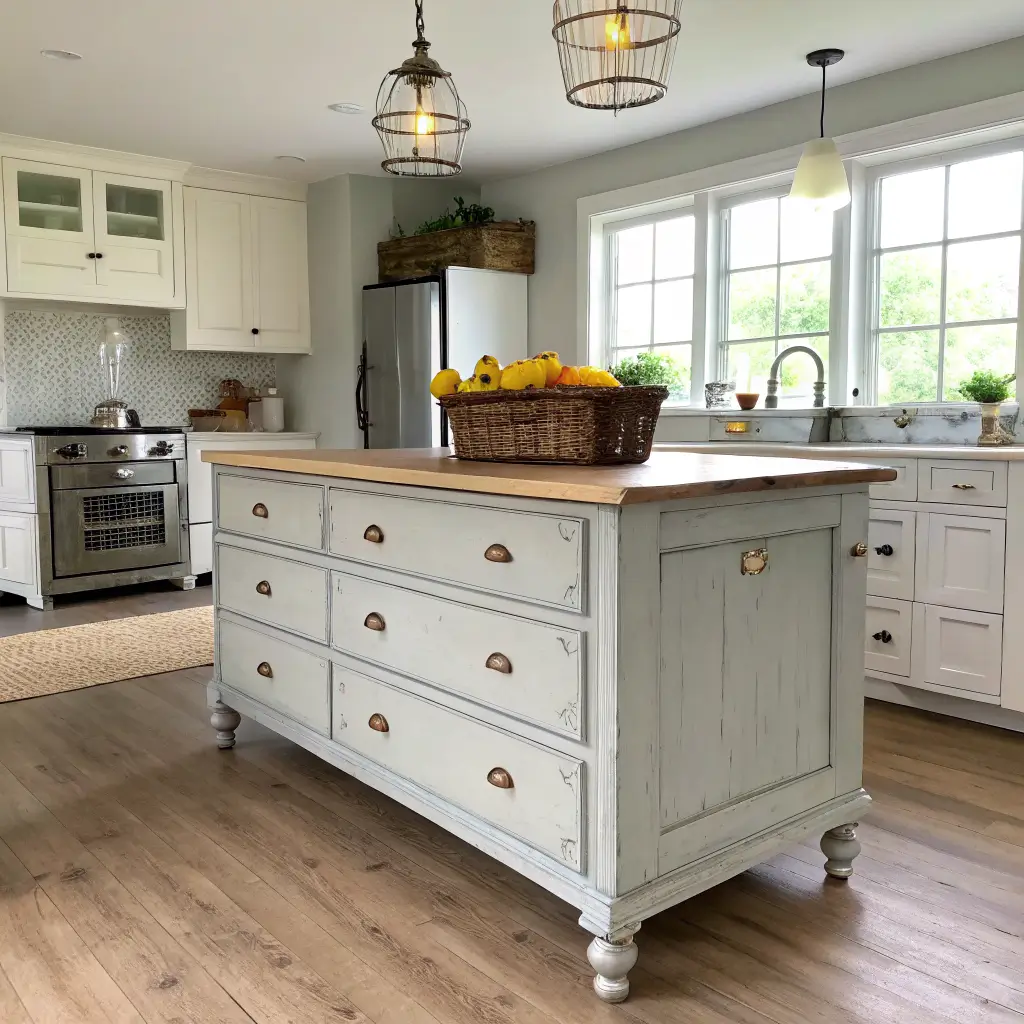
Freestanding or unfitted-look cabinetry. The signature move. If ripping out fitted cabinets isn’t in the cards, add turned legs to a base cabinet, or build a recessed kickboard to fake the effect. My kitchen has a $90 secondhand chest of drawers standing in for a proper island, and it’s the piece everyone comments on.
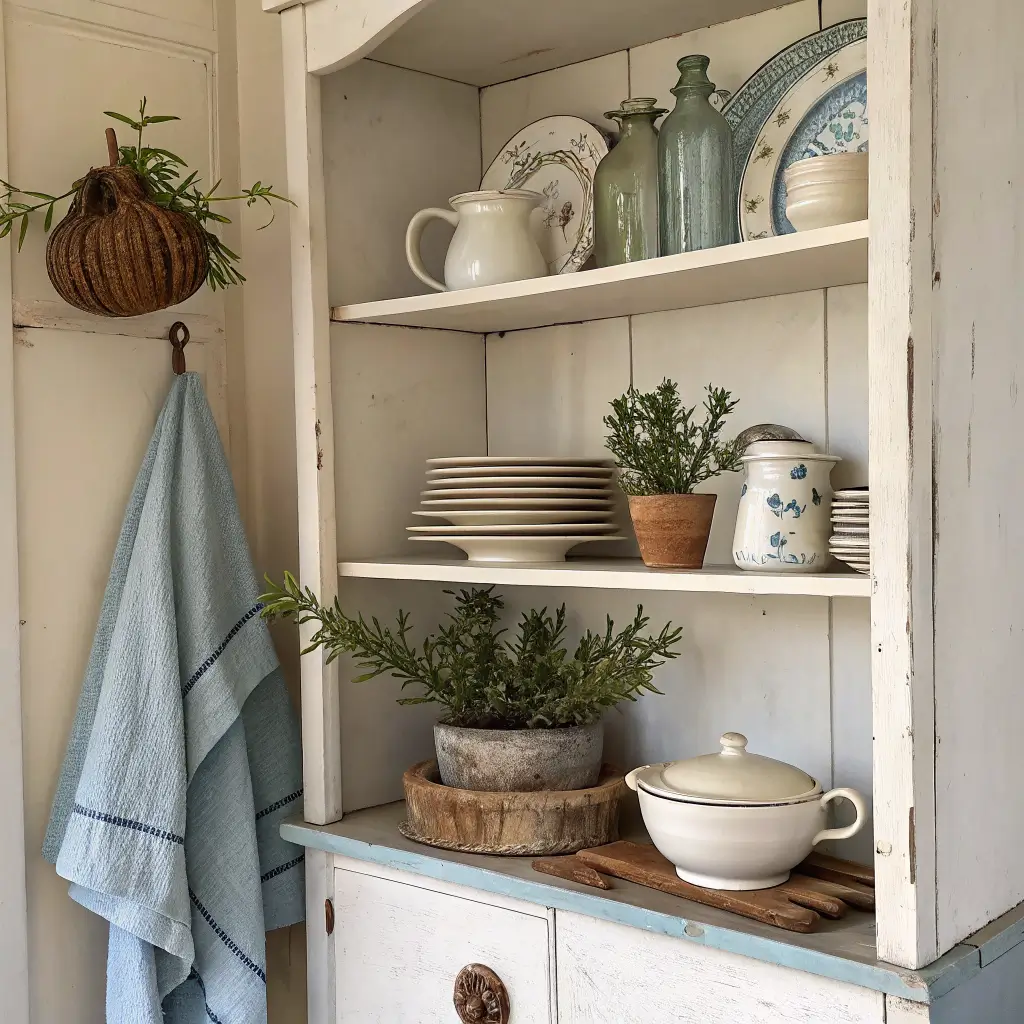
Open shelving. Break up cabinet runs with two or three wood shelves, painted or raw. I used 1×10 pine, sealed with hardwax oil, mounted on black iron brackets. Total: about $70.
A scrubbed wood table. Even a small one. A round pedestal table tucked into a corner does more for the vibe than any accessory.
Decorative lighting. This is where shabby chic gets fun. A small glass or crystal chandelier over the sink or table is the classic move — the contrast between a fancy fixture and a working kitchen is the whole point. Enamel pendants also work if crystal isn’t your speed.
Vintage storage. Woven baskets on top of cabinets, glass jars for flour and sugar, enamelware canisters, a bread bin. Function first, then charm.
How to Style Open Shelves Without It Looking Like a Yard Sale
Open shelving is where people either nail this or completely lose the plot. My first attempt looked like I’d emptied a cupboard onto a shelf. Which, technically, I had.
What works:
– Stack, don’t line up. Plates in short piles, not standing on edge in a row.
– Mix daily-use with decorative. A stack of everyday white plates next to one pretty ironstone pitcher.
– Leave breathing room. Aim for about a third of the shelf to be empty air.
– Repeat one material across shelves — clear glass, or white ceramic, or wood — so it looks curated instead of chaotic.
– One tall thing per shelf. A pitcher, a bottle, a bud vase with a sprig of rosemary from the pot on the windowsill.
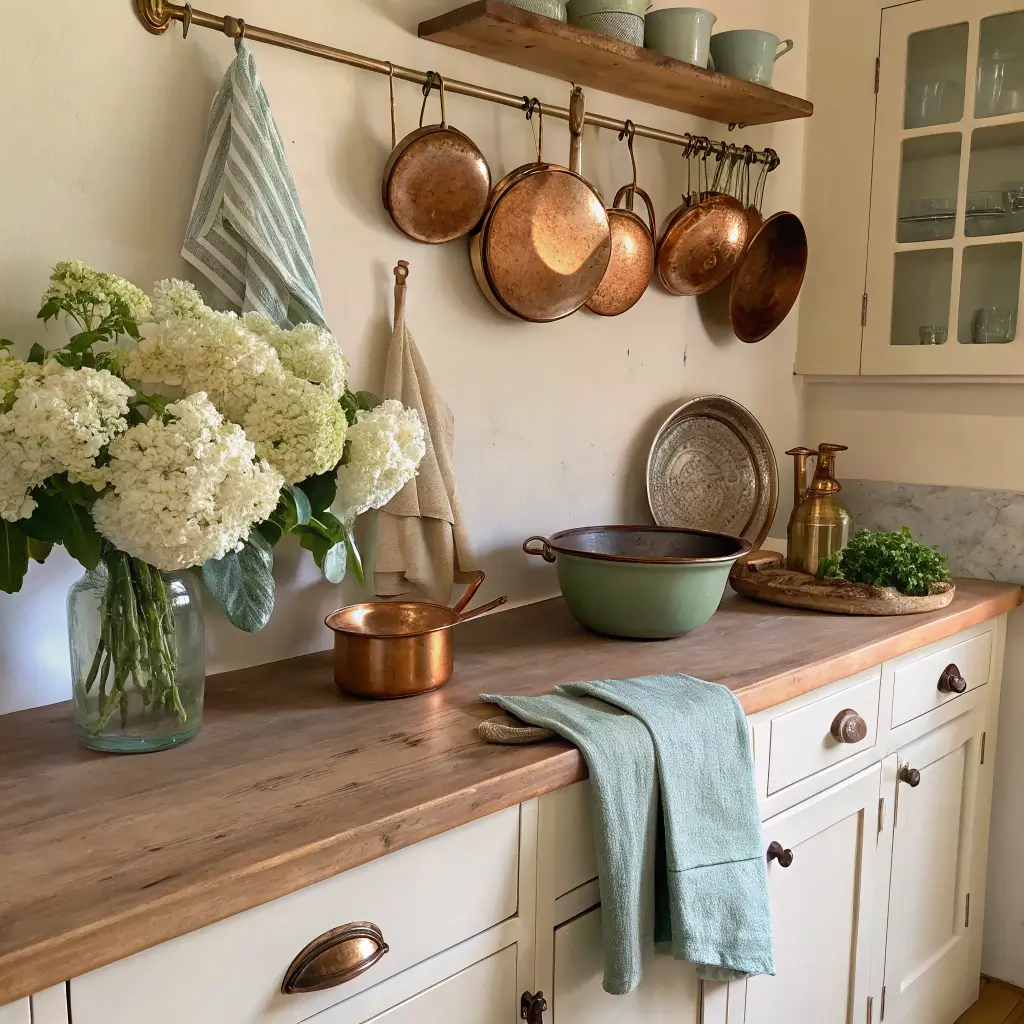
Layering Textures So It Doesn’t Read Flat
The biggest failure mode of shabby chic is “all white, all matte, all boring.” The room needs friction.
Layer at least four of these:
– Wood (raw shelves, a butcher block, a wooden spoon crock)
– Glass (pressed vases, apothecary jars, the chandelier)
– Linen (café curtains, tea towels, a runner on the table)
– Ceramic (ironstone, ironstone, more ironstone — and mixing bowls)
– Metal (copper pans hung on a rail, a galvanized bucket for firewood or produce, aged brass hardware)
My copper saucepan lives on the stove permanently because it’s the warm-tone anchor the whole room needs.
Where to Spend vs. Where to Save
Spend on:
– Cabinet paint and prep (cheap paint on cabinets is a false economy — it chips within months)
– Lighting — one good chandelier or pendant elevates everything around it
– A single anchor piece of furniture (a real vintage dresser, hutch, or farmhouse table)
Save on:
– Accessories — Goodwill, estate sales, and Facebook Marketplace. I paid $4 for a stack of six ironstone plates a woman was clearing from her mother’s house.
– Textiles — plain linen tea towels from IKEA or H&M Home look identical to boutique ones after one wash
– Open shelving — plain pine boards cost a fraction of anything sold as “floating shelves”
– Storage jars — Ball jars and secondhand apothecaries beat matching sets from Target
Common Mistakes (I’ve Made Most of Them)
Overcrowding every surface. Shabby chic reads as collected, not hoarded. Edit ruthlessly. If a shelf has more than seven objects on it, take two off.
Matching everything. A perfectly coordinated set of anything undoes the whole style. The charm comes from a chair that doesn’t quite match the table that doesn’t quite match the bench.
Going too dark. One charcoal or smoky blue accent piece is a contrast. Three of them and you’ve made a moody farmhouse kitchen, which is fine, just not this.
Skipping the aged finish. If the paint is flat white and perfectly applied, it’s not shabby chic — it’s just a white kitchen. You need chalky, matte, and a little worn.
Forgetting the kitchen actually has to work. Don’t put the wooden salt cellar six feet from the stove because it looks nice there. Real cooking wears grooves into a kitchen, and this style is at its best when it’s used.
Seasonal Swaps That Cost Almost Nothing
Because most of the styling is textiles and small objects, seasonal changes are cheap.
– Spring: a jar of white cosmos or sweet peas on the table, pale blue linen tea towels, potted basil on the sill
– Summer: hydrangeas in a pitcher, sheer café curtains, a bowl of lemons or stone fruit as the centerpiece
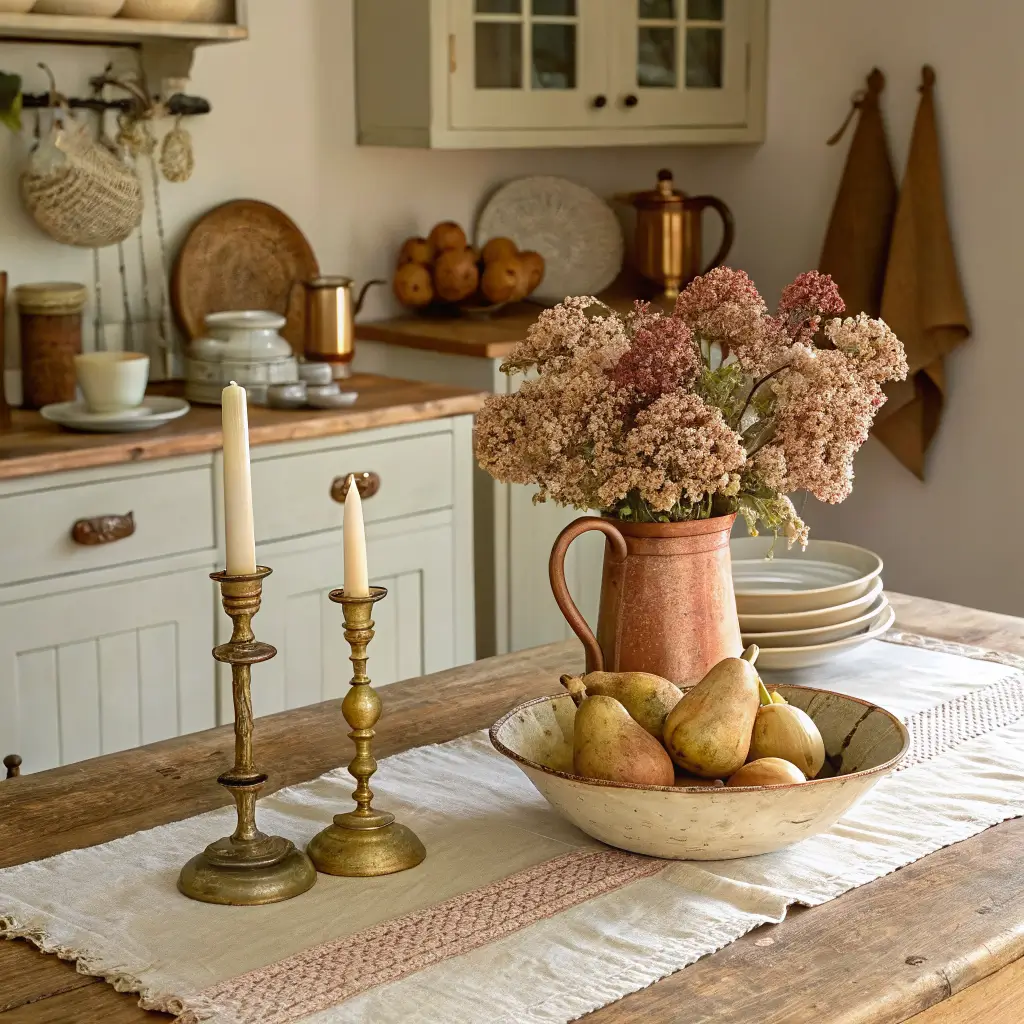
– Autumn: copper polished up and hung visibly, a linen runner in oatmeal, dried hydrangeas going papery in a jug
– Winter: greenery clippings in glass bottles, a heavier linen tablecloth, brass candlesticks with beeswax tapers
Cross-Style Variations
If pure shabby chic feels too sweet, tilt it.
– Shabby chic + farmhouse: lean into scrubbed wood, big baskets, cast iron, and less floral
– Shabby chic + cottagecore: more florals, herbs drying from a hook, botanical prints framed on the wall
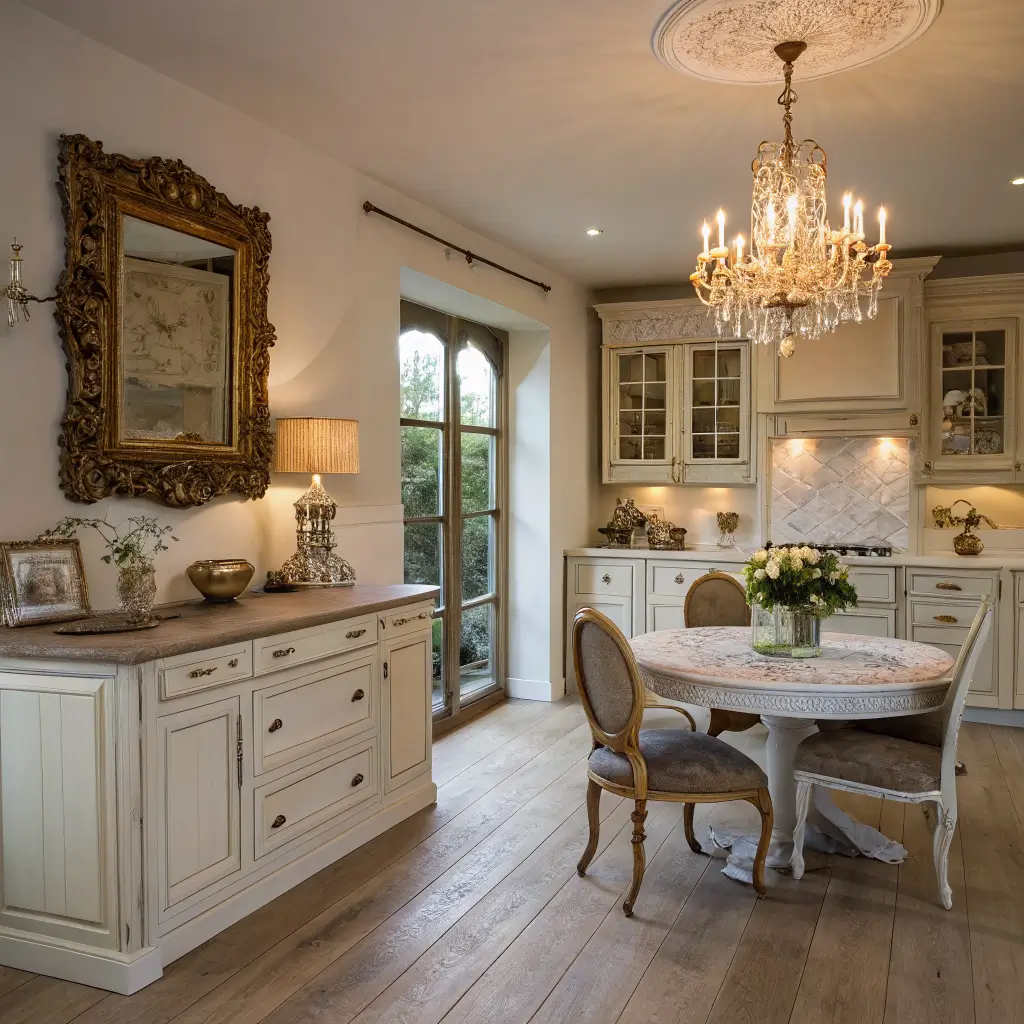
– Shabby chic + French country: ornate mirror over the sideboard, a proper crystal chandelier, toile in small doses
The style bends easily because it’s built from real, old things — and real, old things always look like they belong together in the end.
Is Shabby Chic Still In Style?
The strict 2005 version — pastel everything, distressed within an inch of its life, ruffled skirts on the sink — has cooled off. The current version is more restrained: soft palette, unfitted look, mixed vintage, better lighting, and enough texture and metal to keep it from feeling twee. That version isn’t going anywhere, because it’s just a well-loved old kitchen, and well-loved old kitchens have been in style for about 200 years.
Start with paint and one thrifted piece. See how you feel about it in a month. That’s how mine happened, and I’m not touching it again.