Wabi-Sabi Furniture: How to Actually Get the Look Without It Feeling Like a Beige Showroom
The wabi sabi furniture I keep has the dents left in. The piece that looks handled reads warmer than anything factory-fresh on the floor.
Wabi-sabi furniture is what I turned to after I got tired of my living room looking like a Pinterest board — too matched, too clean, too nothing. If you’ve ever stared at a room full of new furniture and thought, “why does this feel so flat?” — this is the fix. It’s the Japanese-rooted style built on imperfection, honest materials, and the quiet beauty of things that have aged a little.
Here’s how I put it together, what I got wrong the first time, and where to spend versus where to thrift.
What Wabi-Sabi Furniture Actually Is (And Who It’s For)
Strip it down and wabi-sabi is minimalism with a soul. Where Scandi minimalism prizes crisp edges and Japandi splits the difference, wabi-sabi leans into age, irregularity, and materials that look like themselves — a knot in the oak, a lip that isn’t quite level on a hand-thrown bowl, a linen sofa that wrinkles the second you sit on it.
It’s for people who want fewer, better pieces. If you like the idea of a room you’d never need to redecorate — just slowly refine over years — this is the style.
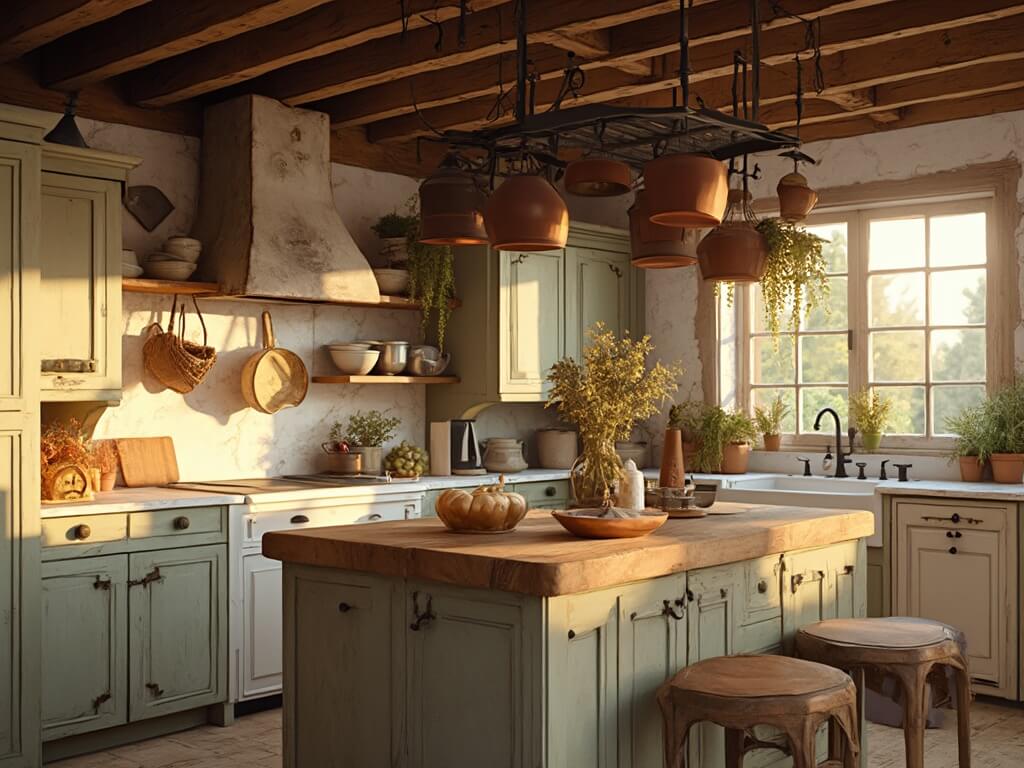
Where it works best: living rooms, bedrooms, dining rooms, entryways, and reading corners. It also translates to kitchens through stools, open shelving, and ceramics rather than heavy cabinetry ornament.
Space-wise: small to medium rooms benefit most because restraint reads as intentional. But open-plan homes work too — the sparse layouts and strong focal points keep big spaces from feeling empty.
The Quick Snapshot
Setup time: A styling refresh takes a few hours. A full room edit — sourcing wood pieces, ceramics, linen — runs 1–2 days.
Cost range: $300–$800 for a thrifted budget build, $1,500–$5,000 for a solid midrange room, and considerably more if you’re commissioning artisan tables or custom joinery.
DIY level: Beginner-friendly for styling. Intermediate-to-expert if you’re refinishing or building furniture, because the whole point rests on surface treatment and joinery.
Seasonality: Year-round. Swap textiles and branches by season; the bones don’t change.
The Palette: Warm Neutrals With Actual Depth
The colors are the part everyone gets half-right. It’s not just “beige.” Flat beige without texture is what makes a room feel like a rental listing.
The palette I keep coming back to:
– Warm white on walls (I use Farrow & Ball’s Slipper Satin or a similar off-white — nothing cool or blue-toned)
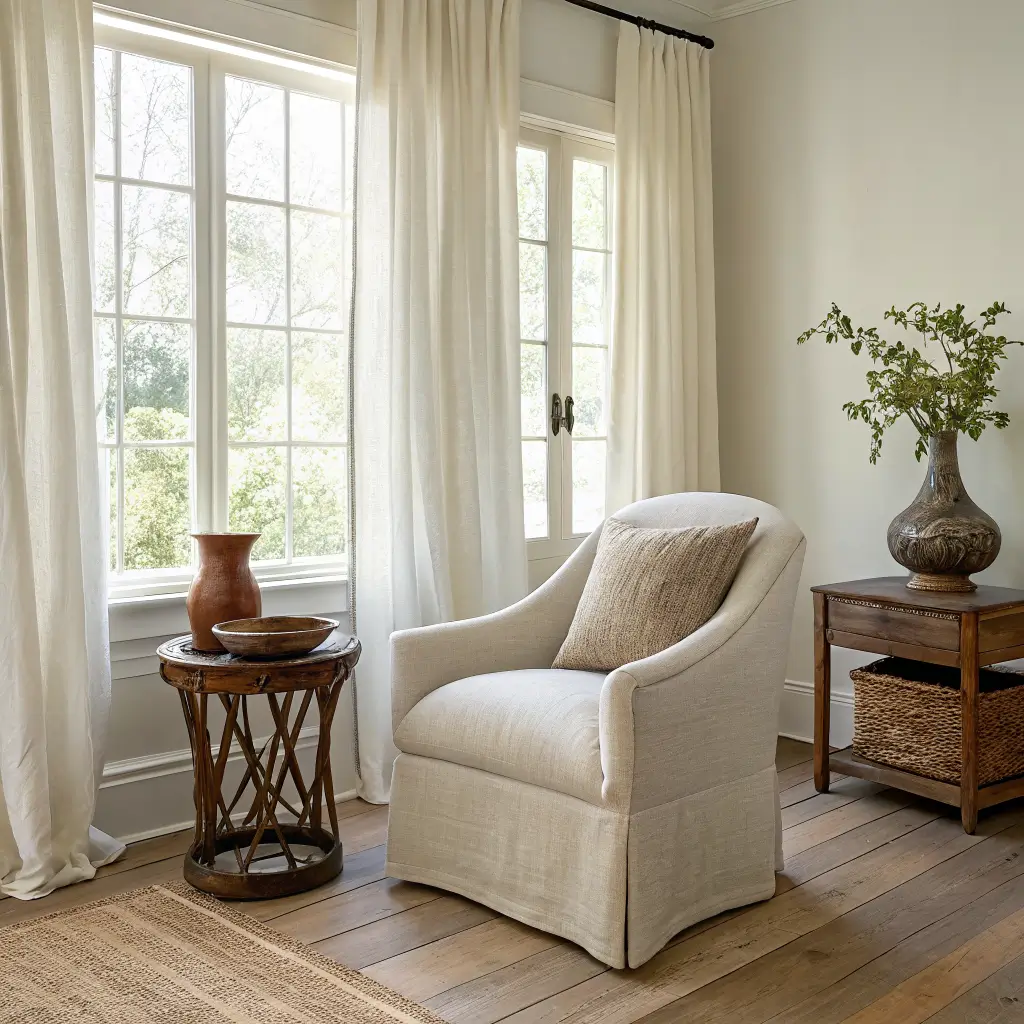
– Oatmeal, flax, and sand for upholstery and curtains
– Taupe, mushroom, and clay for accents
– Muted brown and earthy charcoal as grounding tones — one darker anchor keeps everything from floating
The rule I follow: low contrast, but not zero contrast. A charcoal ceramic on a beige linen sofa gives your eye somewhere to land. All-beige-everything reads like a hotel lobby.
Key Materials That Do the Heavy Lifting
Wabi-sabi lives or dies on materials. Here’s what belongs:
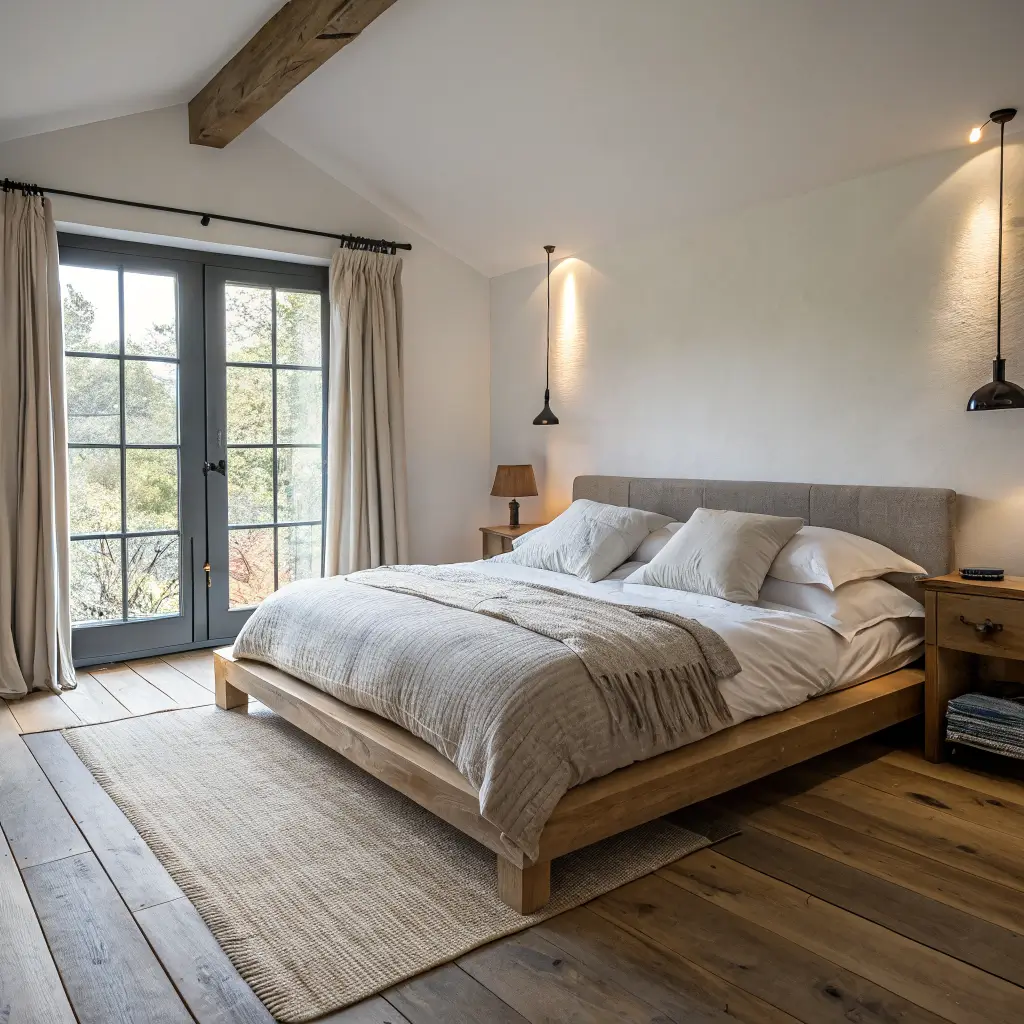
– Solid wood — oak, ash, walnut, teak, reclaimed timber. Visible grain, knots, live edges, or softly irregular shapes. Matte or oiled finish, never glossy.
– Stone, clay, concrete — side tables, lamp bases, planters, bowls
– Handcrafted ceramics — uneven glaze, asymmetry, slight wobble
– Linen, wool, cotton — nothing shiny, nothing synthetic-slick
– Aged metals — bronze, brass, copper, iron with patina, not polish
– Marble with visible veining — used sparingly, as a small counter or a tray
If it looks like it came off a factory line perfectly identical to ten thousand others, it’s probably wrong for this style.
The Hero Pieces to Build Around
You don’t need all of these. You need two or three that pull weight.
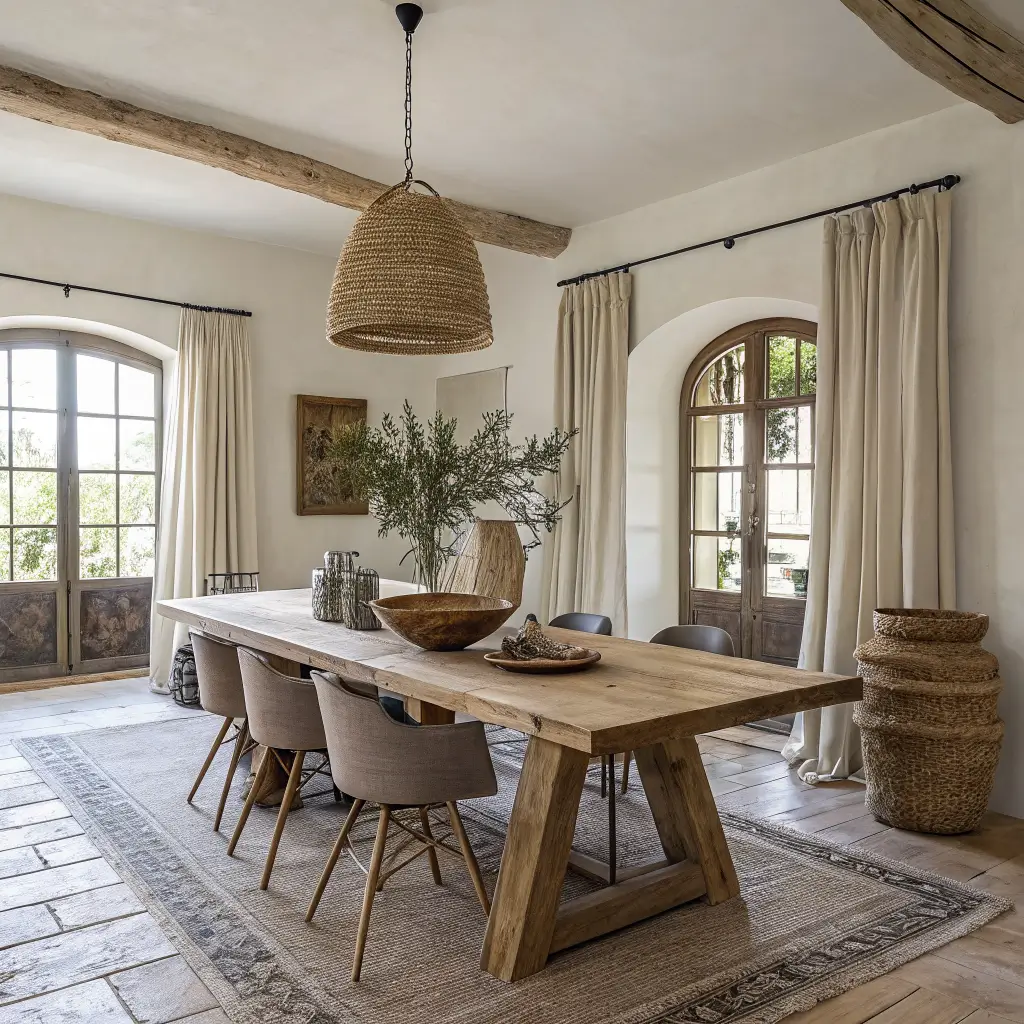
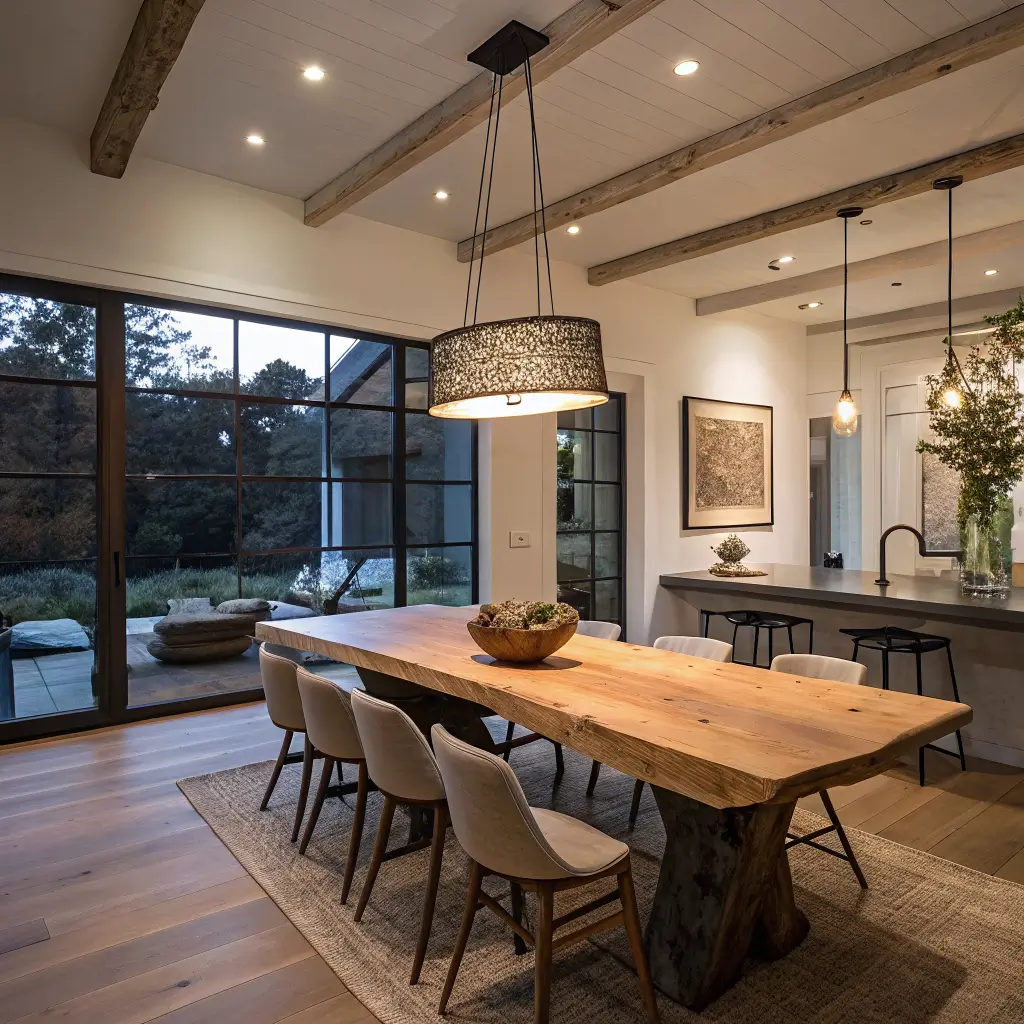
– A solid wood dining or coffee table with visible grain and a matte or unfinished top. Live-edge if you like it; softly irregular if live-edge feels too on-the-nose.
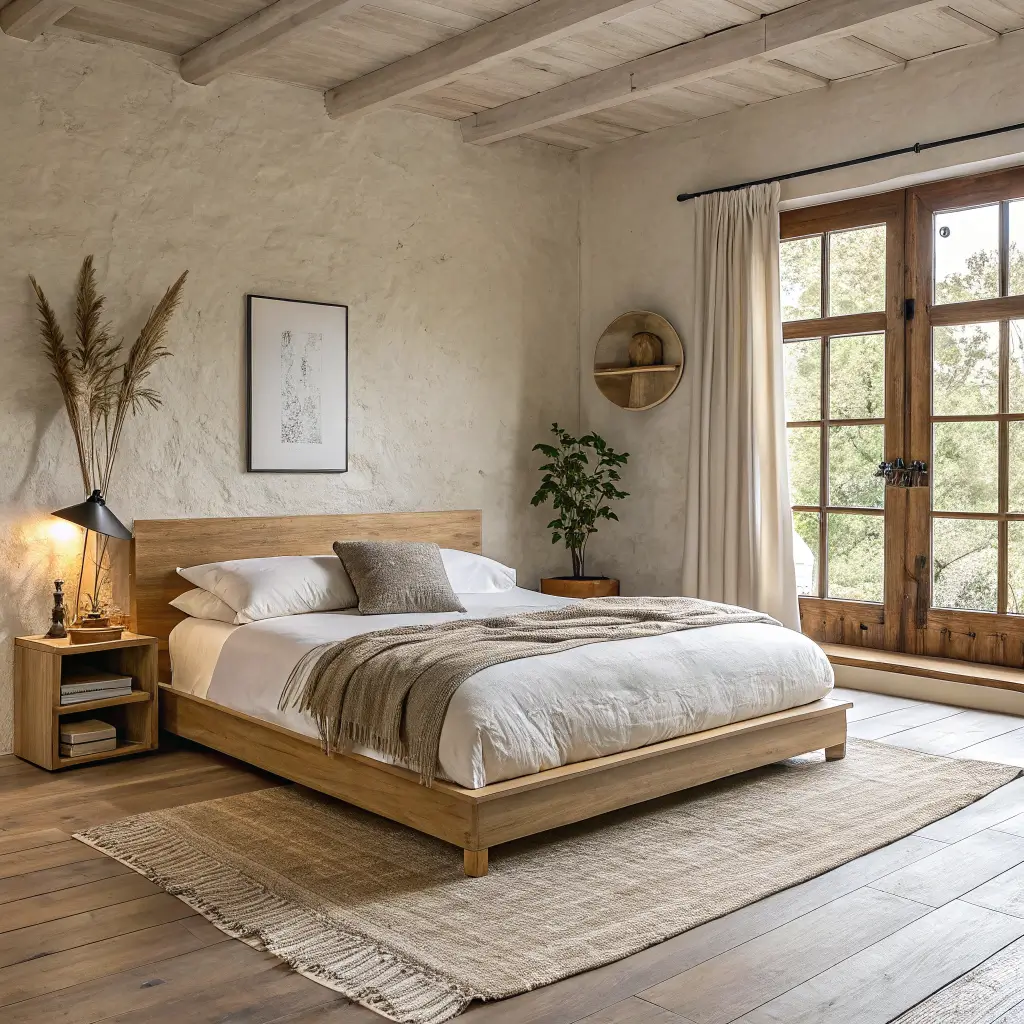
– A low-profile wood bed frame in oak, ash, walnut, or reclaimed wood. Platform beds sit best because they read grounded and quiet.
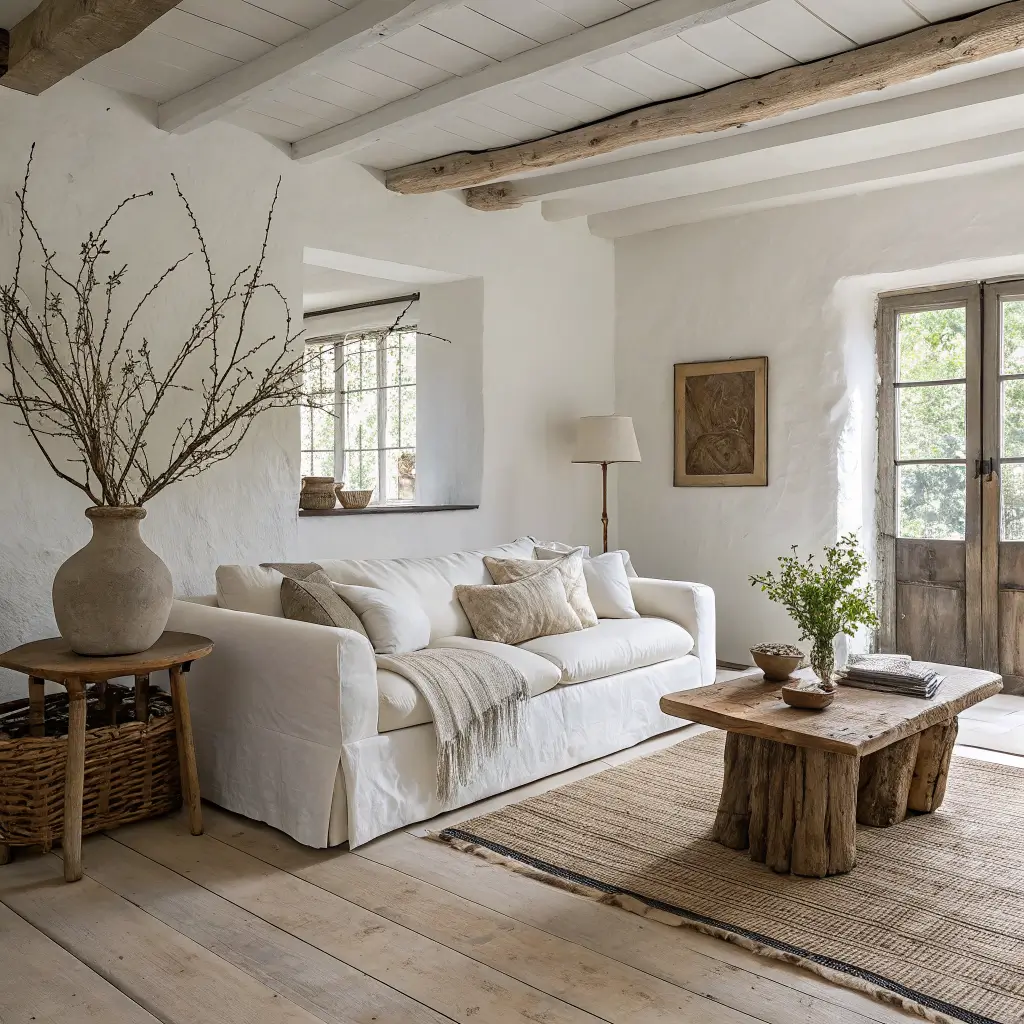
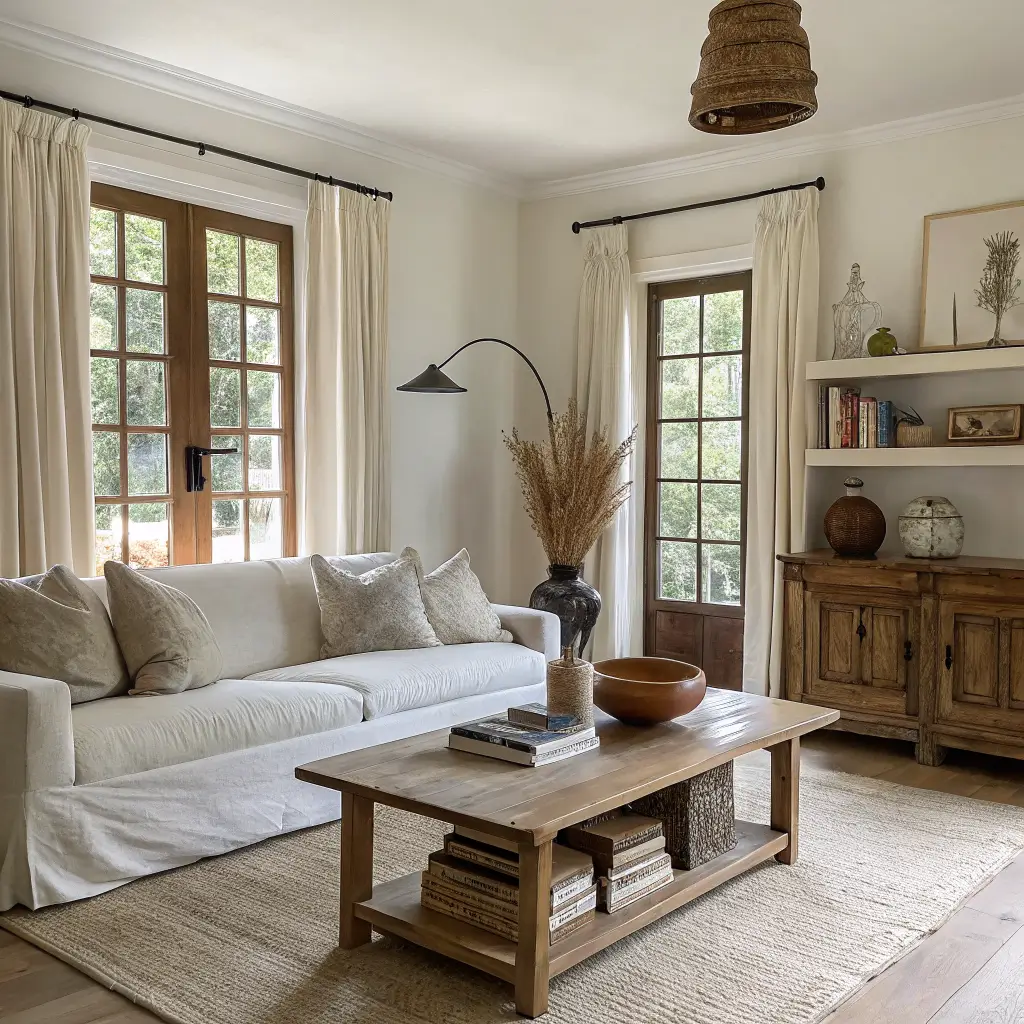
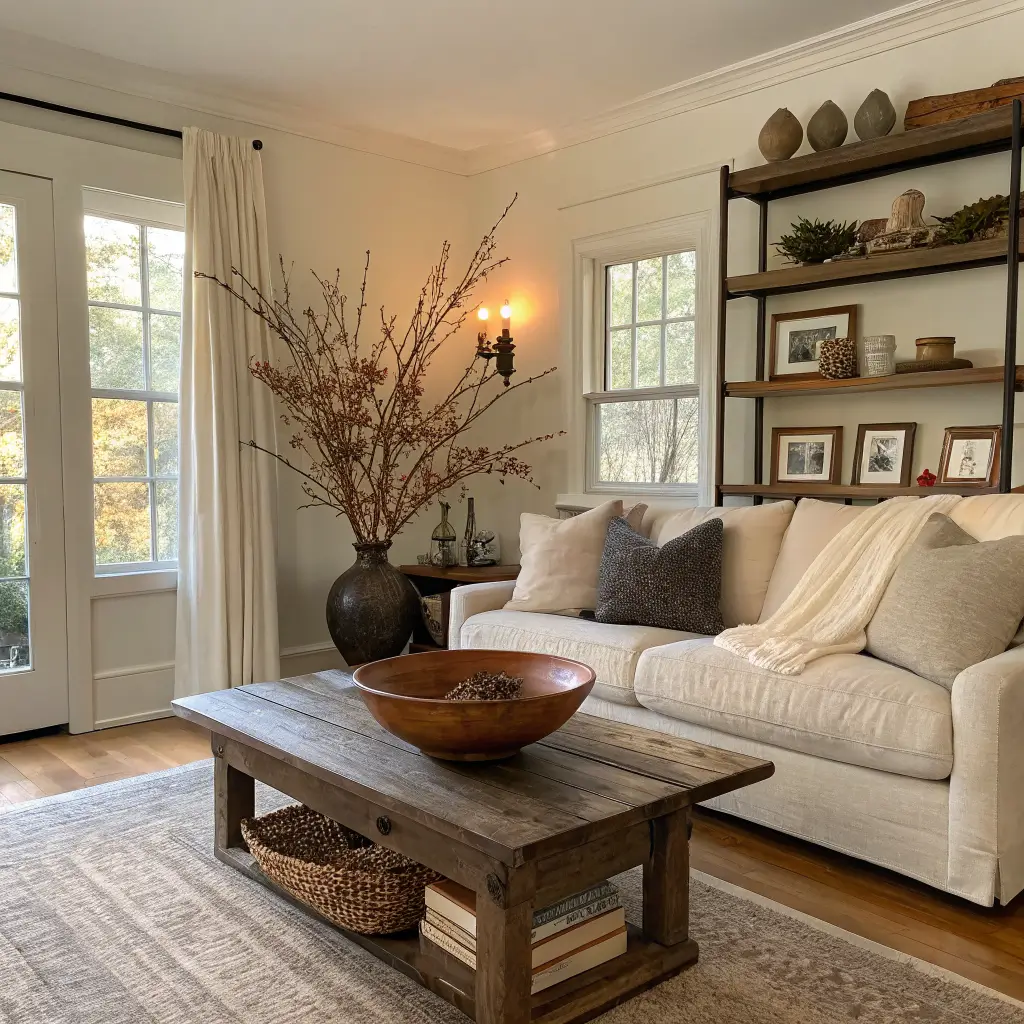
– A linen sofa in oatmeal, flax, or greige. Slipcovered is even better because the wrinkling is the point.
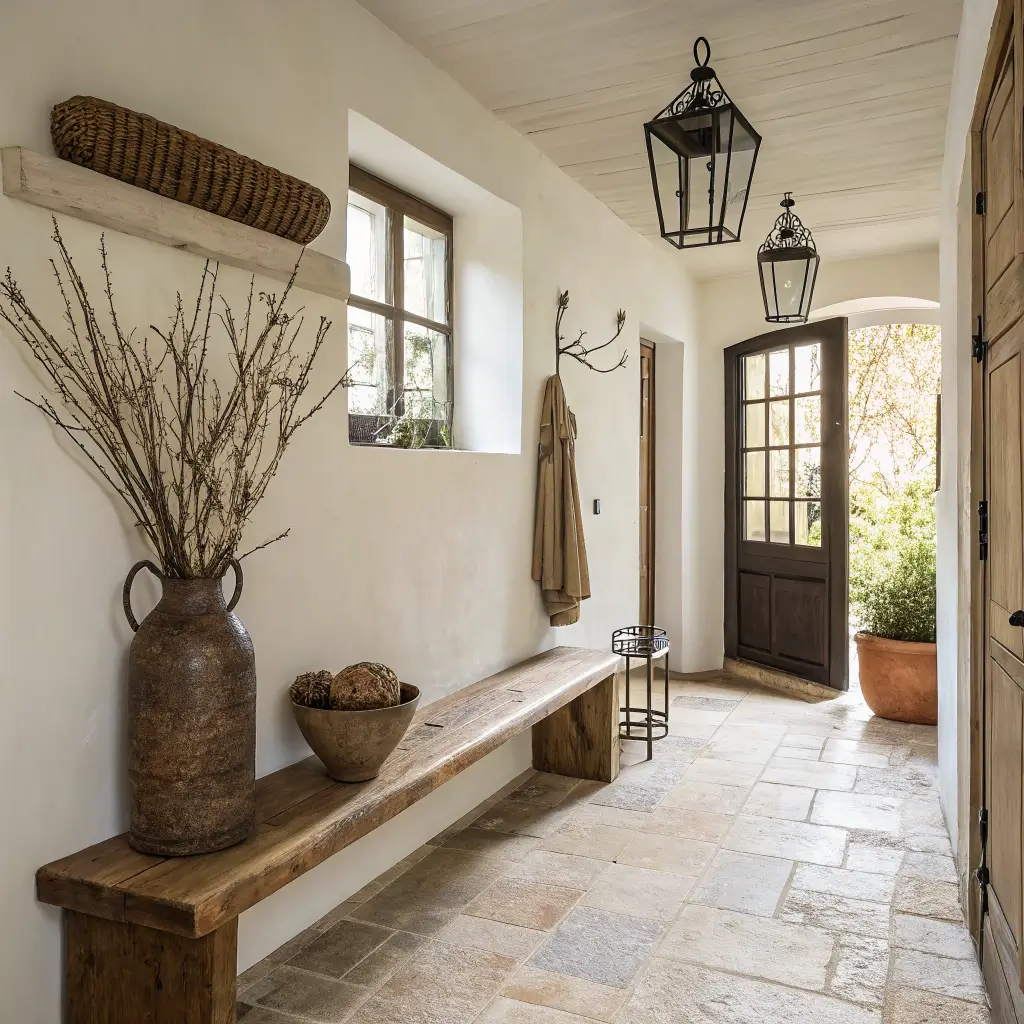
– Wooden stools or benches with simple silhouettes and visible joinery
– One statement ceramic vessel — floor vase, large bowl, or lamp base
I made the mistake early on of buying a matching wood coffee table and side table set. Same finish, same shape, same wood. It killed the whole feeling. I sold the side table and replaced it with a chunky travertine stump I found at a warehouse sale for $90. The room finally started to breathe.
How to Actually Put It Together
Here’s the order I work in, and it matters:
Step 1: Place your anchor piece first. Usually the wood table, bed, or sofa. Everything else answers to it.
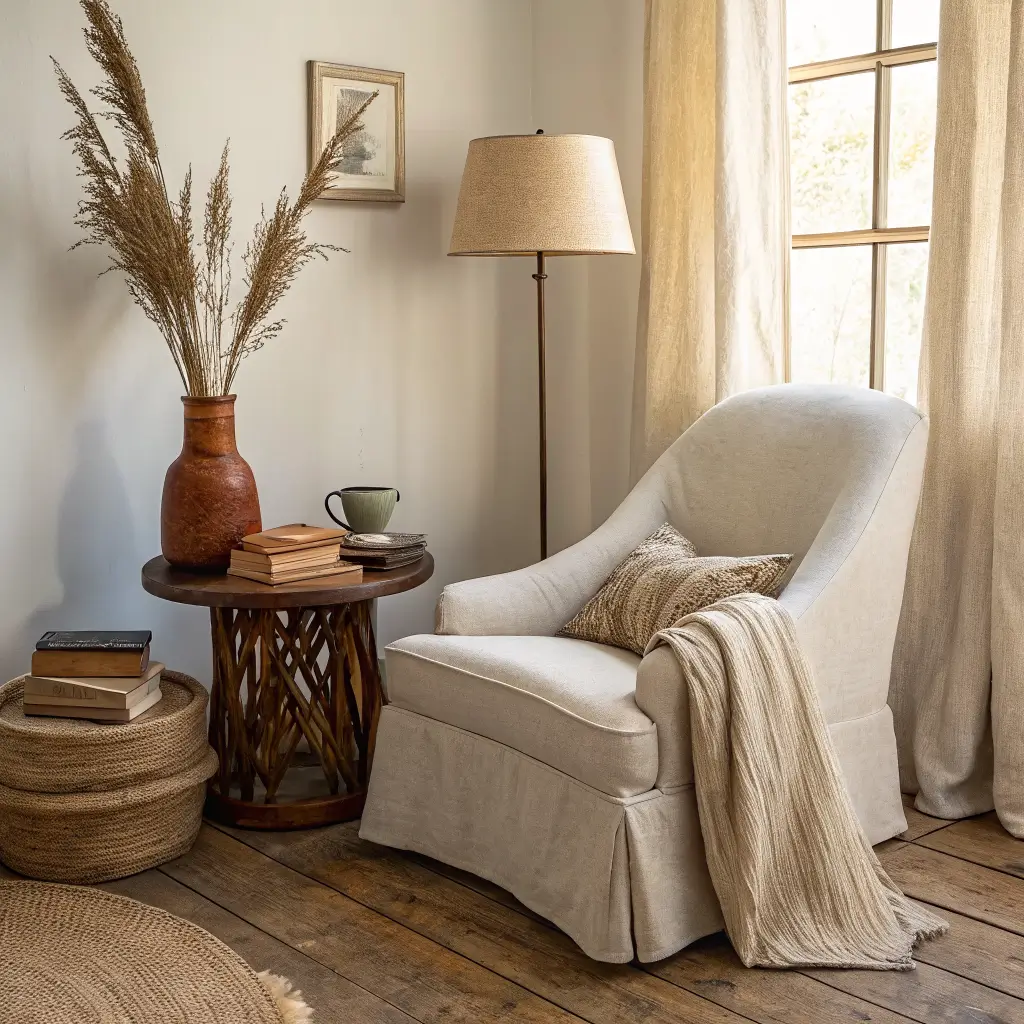
Step 2: Add one soft layer. Linen slipcover, wool throw, cotton bedding. Muted tones that don’t quite match — flax curtains with an oatmeal sofa reads richer than flax on flax.
Step 3: Introduce one ceramic or stone object as a focal accent, then repeat that material once more in the room. One clay vase on the coffee table, one clay lamp base across the room. That’s how it feels intentional instead of random.
Step 4: Style asymmetrically. One vase, not a pair. A chair angled slightly off-square. A throw tossed, not folded. Rigid symmetry is the enemy here.
Step 5: Leave things alone. Patina, small scratches, uneven glaze — those stay. Don’t sand out the knot. Don’t buff the brass.
The Rule of Two-Material Repetition
If you take one thing from this article: repeat every core material at least twice. Wood in the table and the shelving. Linen in the sofa and the curtains. Ceramic in a vase and a lamp base. Two-touch repetition is what makes the room feel composed rather than accidental.
Where to Spend vs. Where to Save
Spend on:
– The wood anchor piece (table or bed). A good solid oak coffee table runs $600–$1,500 and lasts decades.
– The sofa. A well-made linen slipcover sofa is $1,800–$3,500 and will look better in five years, not worse.
– One or two handcrafted ceramics from an actual maker. $60–$200 each, and they carry the room.
Save on:
– Side tables, stools, and small wood objects — thrift stores and estate sales are full of them. My favorite piece in my apartment is a $22 wooden stool from a barn sale that I rubbed with tung oil.
– Textiles. Linen curtains from IKEA or H&M Home work perfectly well if you wash them and let them wrinkle.
– Dried branches and foraged stems. Free, and they beat anything from a florist for this look.
The Mistakes I See (And Made)
Confusing wabi-sabi with rustic clutter. This is the biggest one. Wabi-sabi is sparse. If your shelves are full and every surface has something on it, you’re doing farmhouse, not wabi-sabi. Editing down is 80% of the work.
Glossy finishes. High-shine lacquer, polished chrome, mirror-finish anything — all of it fights the style. Matte, oiled, waxed, brushed. Every finish should absorb light, not bounce it.
Beige without texture. Painting your walls Accessible Beige and calling it wabi-sabi doesn’t work. The color needs linen weave, wood grain, clay, and patina behind it or it just reads as blank.
Matching sets. Bed frame + matching nightstands + matching dresser is exactly what this style rejects. Mix woods. Mix eras. Let one piece be older and darker than the rest.
Skipping craft. A cheap flat-pack piece in a neutral tone isn’t wabi-sabi just because it’s minimal. The look depends on visible craftsmanship — joinery, grain, hand-thrown irregularity. That’s what separates it from generic minimalism.
Seasonal and Budget Updates That Don’t Require Redoing the Room
Small swaps keep it alive without spending much:
– Fall/winter: wool throws in charcoal or oatmeal, dried branches (magnolia, eucalyptus, curly willow), deeper clay-toned ceramics
– Spring/summer: lightweight linen, one bunch of fresh grasses or foraged greens, lighter cotton bedding
– Anytime: swap a single pillow cover or throw instead of overhauling. The room shouldn’t need much.
Long-term, the best move is slow replacement. Every year or two, swap one mass-produced accent for a handcrafted piece — a hand-thrown vase, a live-edge tray, a hand-forged iron hook. The style rewards patience.
Wabi-Sabi vs. Japandi (Because Everyone Asks)
They overlap, but they’re not the same. Japandi is a hybrid — Japanese minimalism plus Scandinavian function, usually cleaner-lined and more polished. Wabi-sabi is older, quieter, and specifically about imperfection and age. A Japandi room can feel new. A wabi-sabi room should feel like it’s already lived through something.
If you love Japandi but it feels a little too crisp, wabi-sabi is where you go next. It also blends well with organic modern, restrained boho (as long as the palette stays quiet), and Scandinavian minimalism if you swap out the brighter whites for warmer ones.
Quick Answers to the Questions That Come Up Most
What wood is best? Oak, ash, walnut, and teak are the go-tos. Reclaimed timber of almost any species works because the age is already there.
Can wabi-sabi be modern? Yes. Contemporary wabi-sabi keeps the materials and restraint but uses cleaner silhouettes. Think a straight-edged oak table with a raw finish, not a gnarled farmhouse slab.
Is it expensive? It can be, but it doesn’t have to be. My whole living room came in under $1,200, and most of that was the sofa. The style actively rewards thrifting because worn pieces already have the patina you’d otherwise pay for.
How do you make existing furniture look wabi-sabi? Strip glossy finishes and re-oil with tung or linseed oil. Swap hardware for aged brass or blackened iron. Replace cushion covers with washed linen. Remove half your accessories.
The whole thing comes down to this: buy less, choose carefully, and let things age. That’s the entire style.