The Look and Who It’s For
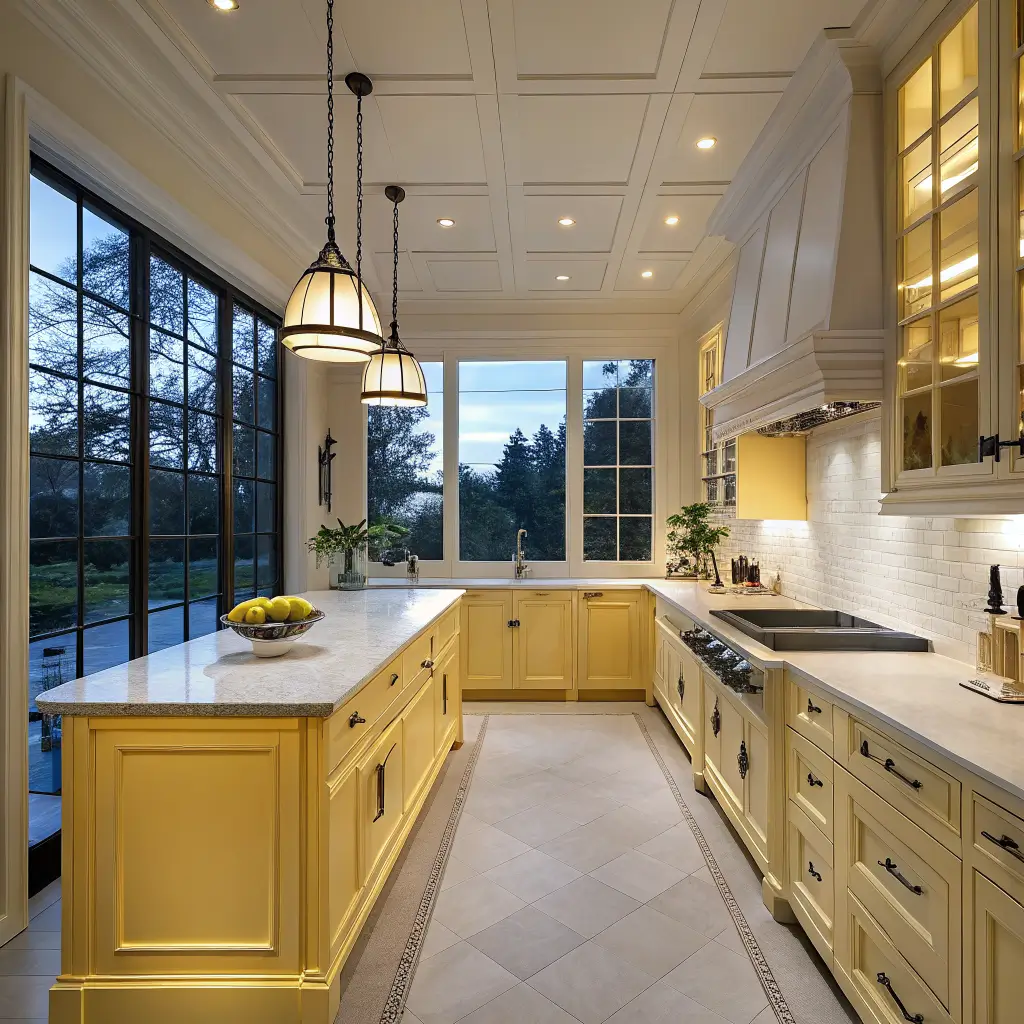
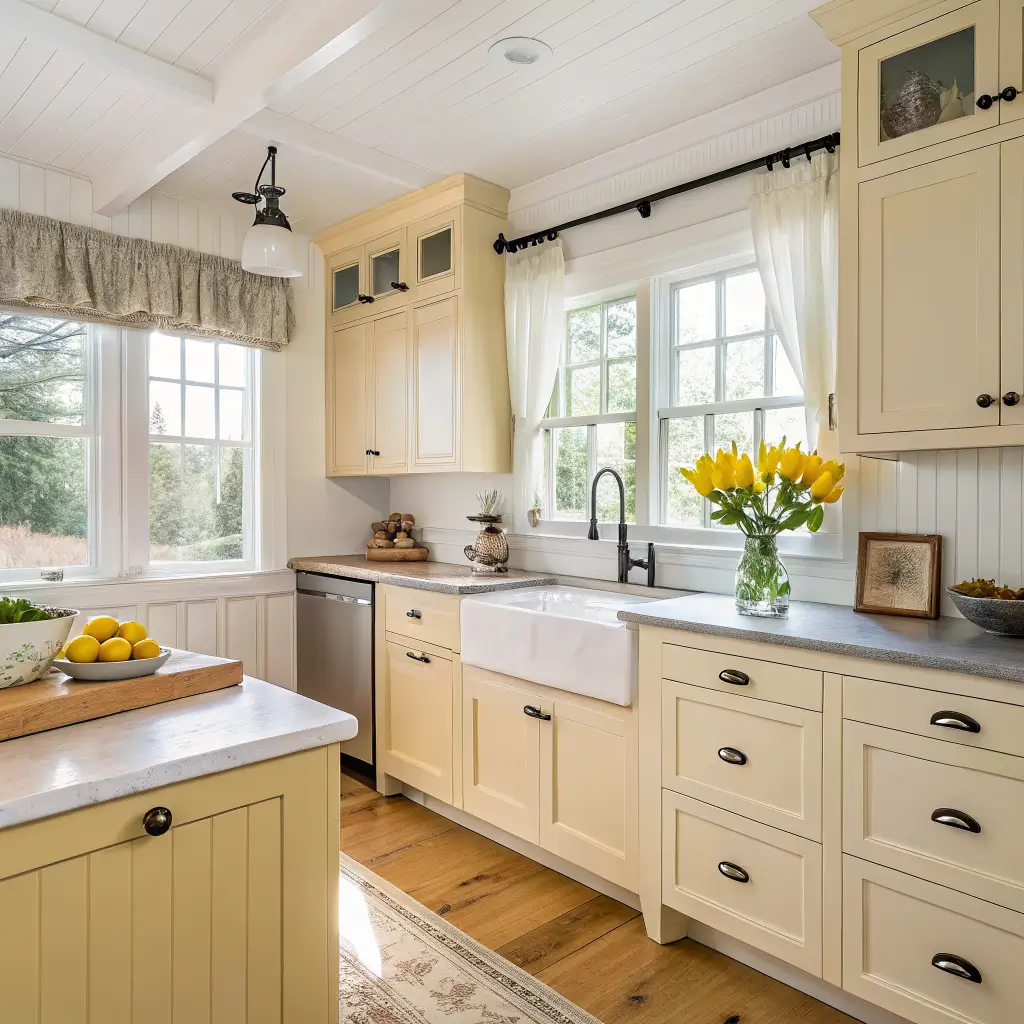
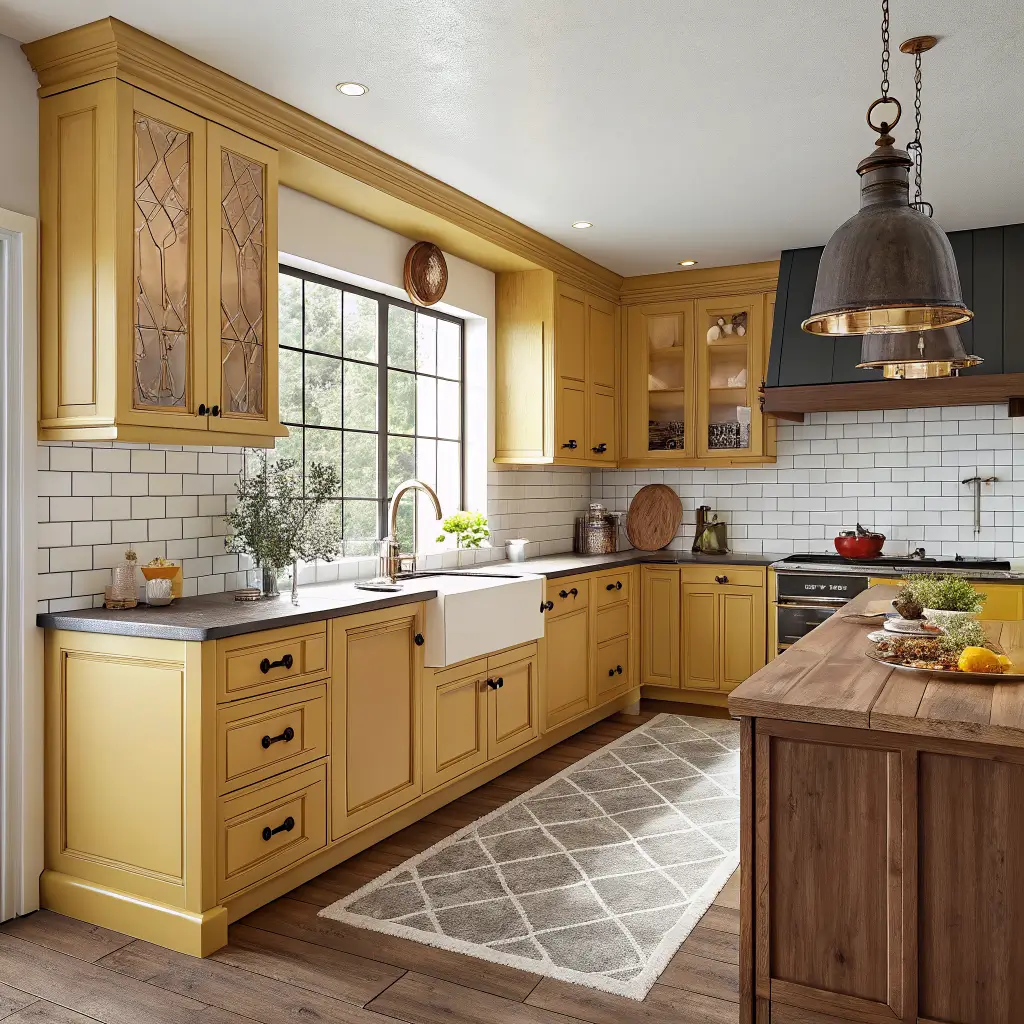
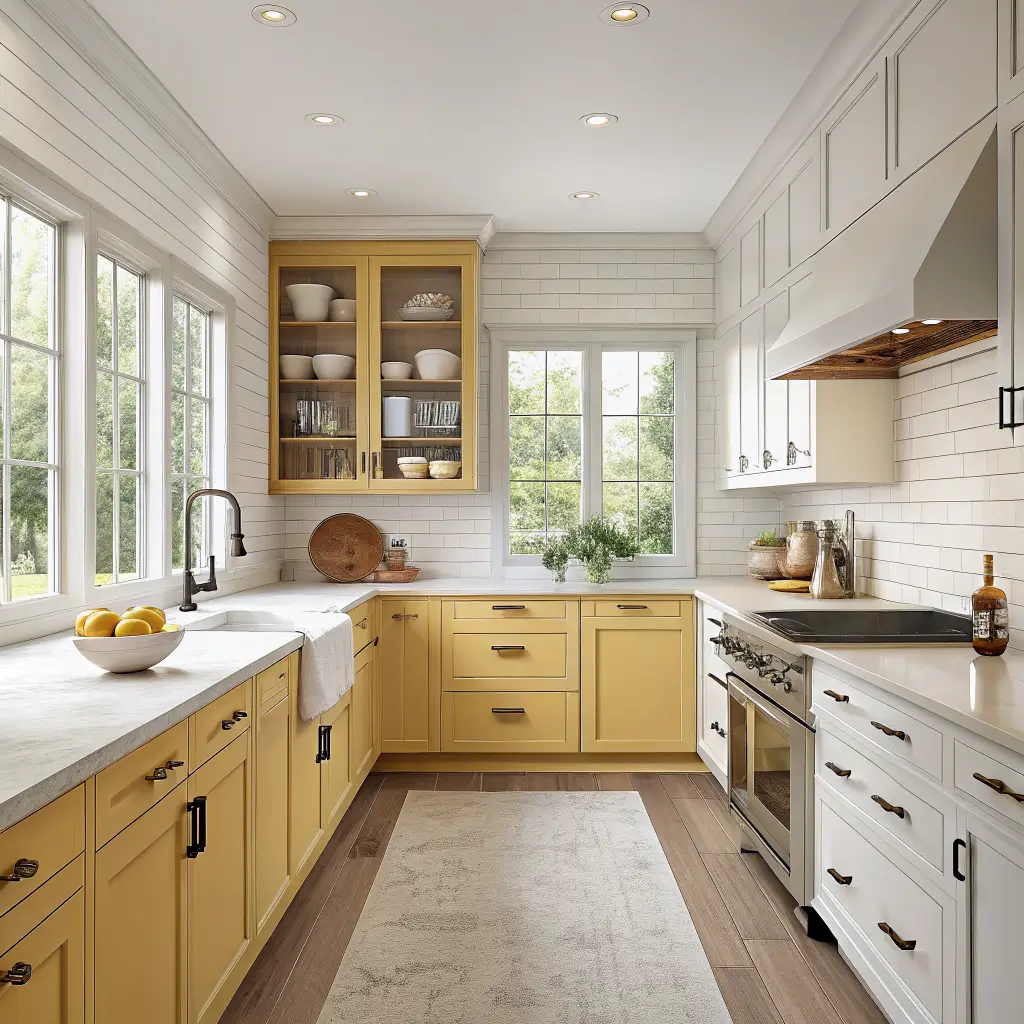
The yellow kitchen cabinets were the color I feared and then could not give up. A muted mustard on the lower row made the room feel lit from inside.
Yellow kitchen cabinets are the color choice people either fall hard for or overthink themselves out of — usually because they’ve seen one bad mustard kitchen from 2003 and can’t unsee it. I get it. I painted my own lower cabinets a soft butter yellow two summers ago after a solid month of taping paint chips inside the cabinet doors, and it’s still the best decision I’ve made in that room. But I also picked the wrong yellow first. More on that in a minute.
Here’s how to actually pull this off — the shades that work, what to pair them with, what it costs, and the mistakes that trip people up.
Picking the Right Shade (This Is Where People Blow It)
Yellow cabinetry lands somewhere between cottage, modern retro, farmhouse, mid-century, and the current dopamine decor wave — the trend of using saturated, mood-lifting color instead of another round of greige. If you’re tired of white, sage, and navy but you don’t want anything that looks like a Pinterest cliché in two years, yellow is genuinely the move.
It works especially well for:
– Small or medium kitchens that need visual warmth (pale and butter shades bounce light around)
– Larger, sunlit kitchens that can carry a deeper mustard or saffron
– Homes with wood floors, brass fixtures, or older architectural details
– Anyone with a kitchen island they want to make the star
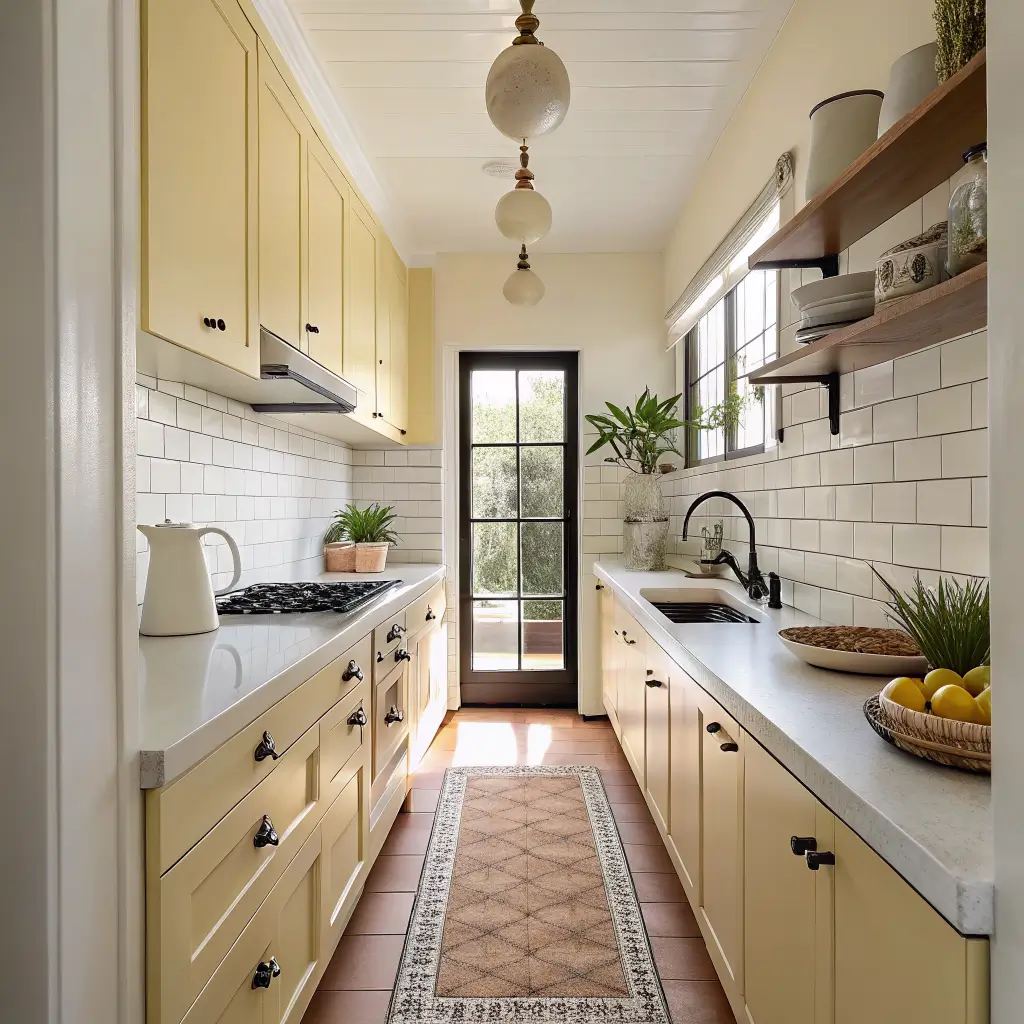
If you have a north-facing galley kitchen with almost no daylight, skip mustard. It’ll go muddy. Pale lemon or butter is your friend.
What to Pair with Yellow Cabinets
The single biggest mistake with yellow cabinets is choosing a shade off a 2-inch paint chip. Yellow amplifies. What looks like a soft cream on a card can read highlighter-marker once it’s on 14 cabinet doors.
The four shades that actually work:
– Butter yellow — soft, warm, low-saturation. Reads as a warm neutral. Pairs with almost everything.
– Lemon / sunshine yellow — brighter, cheerful, best in kitchens with good natural light and a lot of white to balance it
– Mustard / golden yellow — richer and moodier, gorgeous with brass and walnut, dominant in a small room
– Saffron / amber gold — deep, warm, works beautifully with matte black and butcher block
My first sample was Benjamin Moore’s Hawthorne Yellow, which everyone recommends. On my north-facing cabinets it went green. I ended up with a custom mix closer to Farrow & Ball’s Dayroom Yellow but slightly warmer, and it finally read the way I wanted — soft, buttery, not baby-nursery.
Buy sample pots. Paint a full cabinet door. Look at it in morning, afternoon, and lamp light before you commit.
How to Put It Together
The formula that works across nearly every source and every kitchen I’ve seen in person: one yellow + two or three balancing neutrals + one metal.
Countertops
– White quartz or marble-look — keeps things fresh, best with brighter yellows
– Butcher block or warm wood — softens the yellow, farmhouse-adjacent
– Black or deep soapstone — sharp contrast, best with mustard or saffron
– Skip beige or cream counters — they fight the cabinets
Hardware
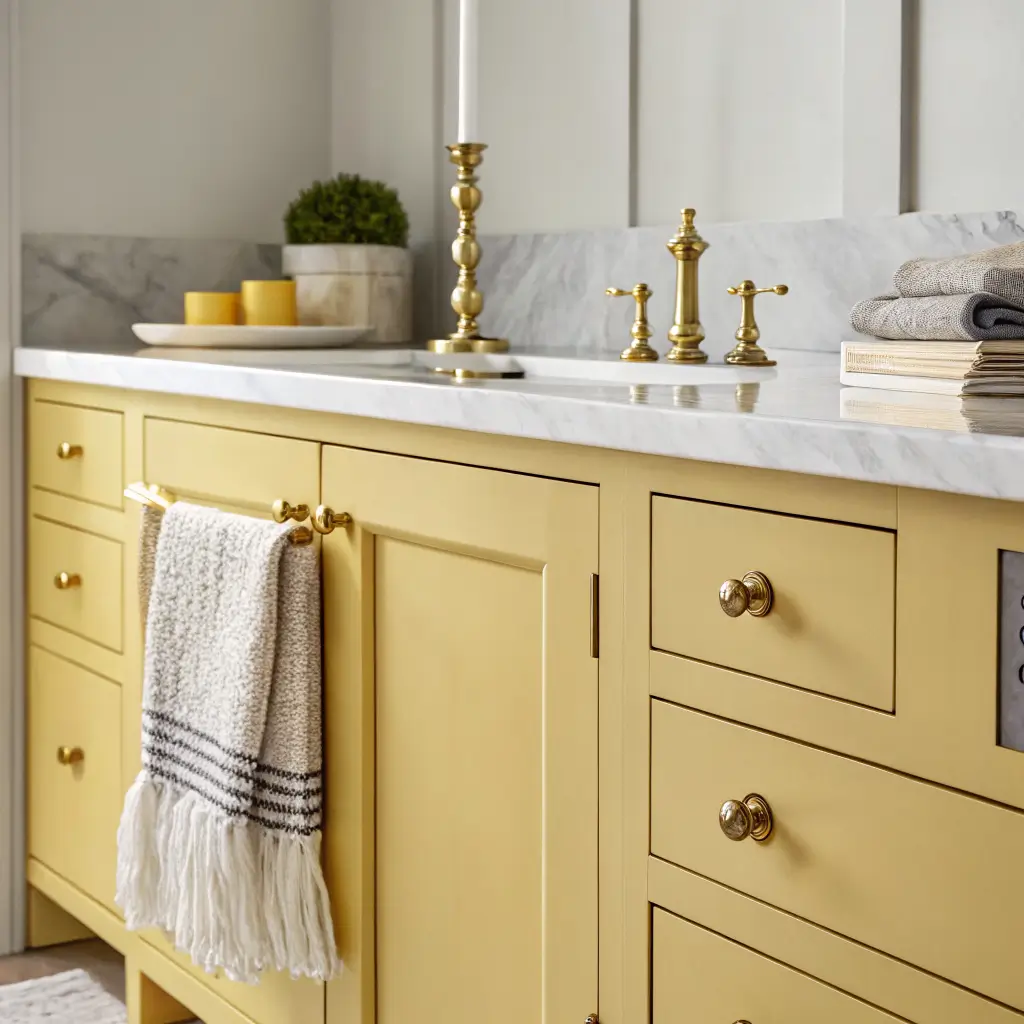
Brass and unlacquered brass are the natural partners. They warm the yellow up and read intentional. Matte black is the alternative if you want something more graphic and contemporary — it works especially well with lemon or sunshine yellow because the contrast is sharp.
Avoid brushed nickel and chrome unless you’re going full retro diner. On yellow, cool silvery finishes look cheap.
Backsplash
Keep it quiet. If your cabinets are already saturated, the backsplash is not the place to add pattern.
– White subway tile (still the safest, still works)
– Small handmade zellige in white or pale gray
– A soft green-gray tile if you want a little something
Skip: bold patterned cement tile, yellow tile, or anything glossy in a competing color.
Walls
Warm white or a soft greige. My walls are Benjamin Moore White Dove and it does the job — reads white next to the yellow without going stark.
Budget: Where to Spend, Where to Save
Layer in this order and it comes out balanced almost every time:
1. Largest yellow surface first — full cabinets, lower cabinets only, or island
2. Countertop — decide freshness (white), warmth (wood), or contrast (black)
3. Hardware — treat it like jewelry, don’t cheap out here
4. Backsplash and walls — quiet, supporting role
5. Two or three accent colors, max
Palettes I’ve seen work every time:
– Yellow + white + oak + brass
– Yellow + black + white (very graphic, modern)
– Yellow + navy or muted blue + brass
– Yellow + sage or olive + natural wood
If you’re nervous about committing, do lower cabinets in yellow with white uppers, or paint just the island. Both approaches are more forgiving and easier to live with long-term. My kitchen is two-tone — yellow lowers, white uppers with open shelves — and it feels grounded instead of shouty.
The Time It Actually Takes
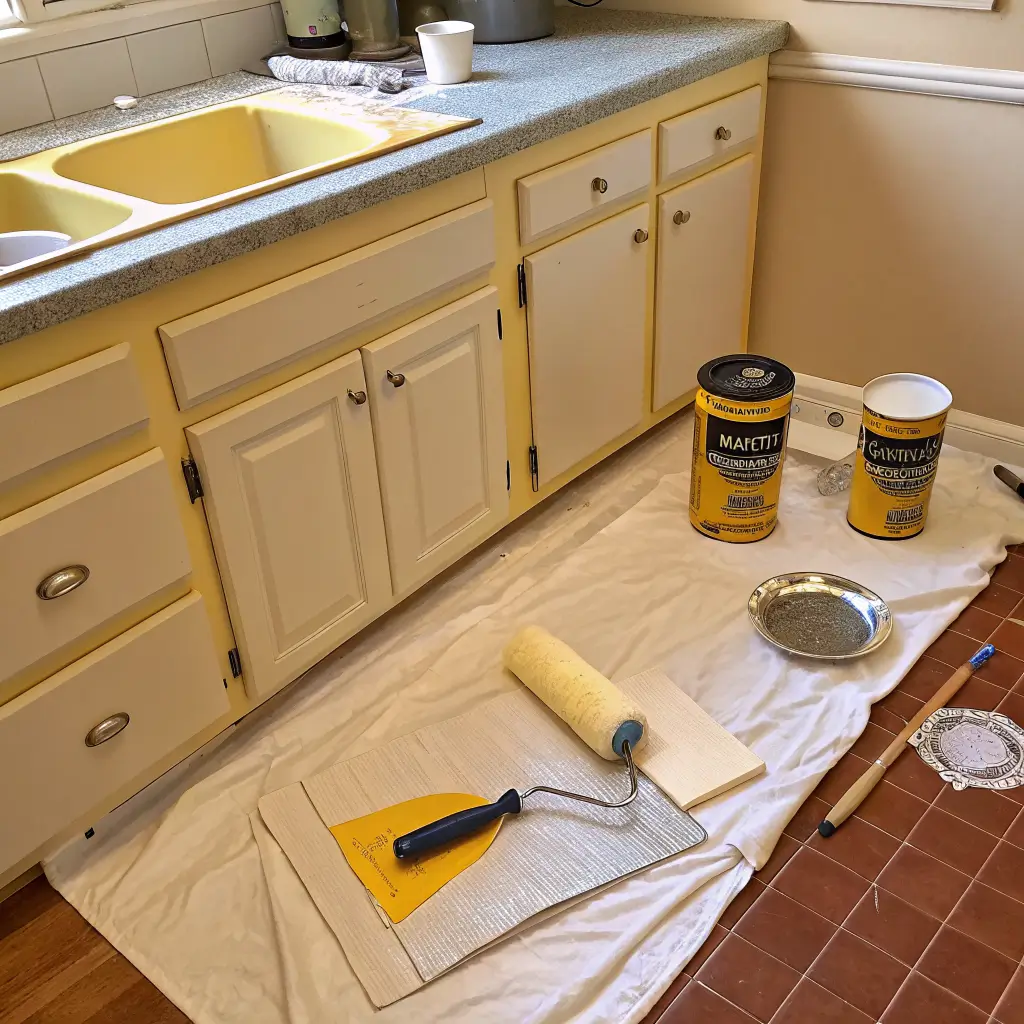
Paint-only DIY refresh: $150–$500 for primer, cabinet-grade paint (Benjamin Moore Advance or Sherwin-Williams Emerald Urethane are the two I’d actually use), foam rollers, sandpaper, a good angled brush, painter’s tape, and wood filler.
Professional cabinet painting: roughly $2,000–$8,000 depending on kitchen size, prep complexity, and whether they spray or brush.
Full cabinet replacement in yellow: stock options do exist from cabinet retailers, but you’re looking at kitchen-remodel money — usually $5,000 and up for materials alone.
Styling-only refresh (if cabinets are already yellow or you want to test the vibe first): a few hundred dollars in yellow textiles, hardware swaps, and accessories.
Spend on: primer (Zinsser BIN shellac-based, no debate), the topcoat paint, and hardware.
Save on: decor, textiles, small appliances, open-shelf styling.
Common Mistakes
– Styling refresh only: 1–3 days
– Repaint of existing cabinets (no door removal): 3–7 days including cure time between coats
– Full sand-prime-paint with doors removed and hardware swapped: 1–3 weeks
Do not rush drying between coats. Cabinet paint that isn’t fully cured before you rehang doors will chip within a month. I learned this on a bathroom vanity before I ever touched the kitchen. Give each coat a real 24 hours if the label says 16.
Keeping It Fresh Over Time
– Picking yellow off a chip. Sample on a cabinet door. Always.
– Ignoring undertones. Some yellows go green in cool light, some go orange in warm light. Look at what’s underneath the yellow on the strip.
– Too many saturated colors. Yellow cabinets + red KitchenAid + turquoise tile = chaos. Pick one hero, then neutrals.
– Deep mustard in a dim kitchen. It turns to mud. Save mustard for a room with real windows.
– Skipping deglossing and primer. The paint will peel off factory-finished cabinets in six months without proper prep.
– Overmatching. If the cabinets are already bold, don’t add yellow curtains, yellow bowls, and a yellow stand mixer. Let them breathe.
Quick Answers to the Questions People Actually Ask
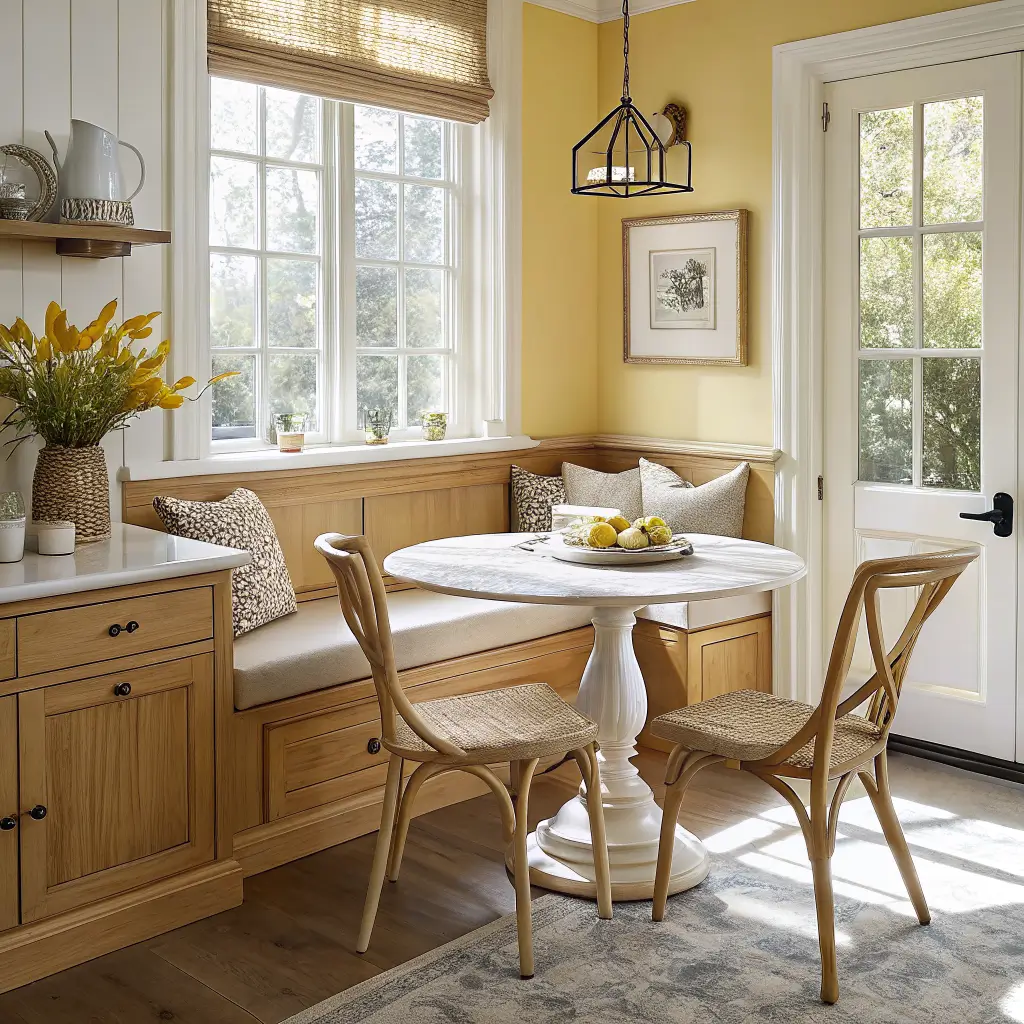
Stay in one yellow family — don’t mix lemon, mustard, and cream in the same sightline. Match the temperature: warm yellow pairs with brass, oak, and beige; cooler yellow with gray, black, and white.
Seasonal swaps that cost almost nothing:
– Spring: a bowl of lemons, tulips in a plain white jug, linen tea towels
– Summer: woven placemats, a bowl of stone fruit, white ceramics
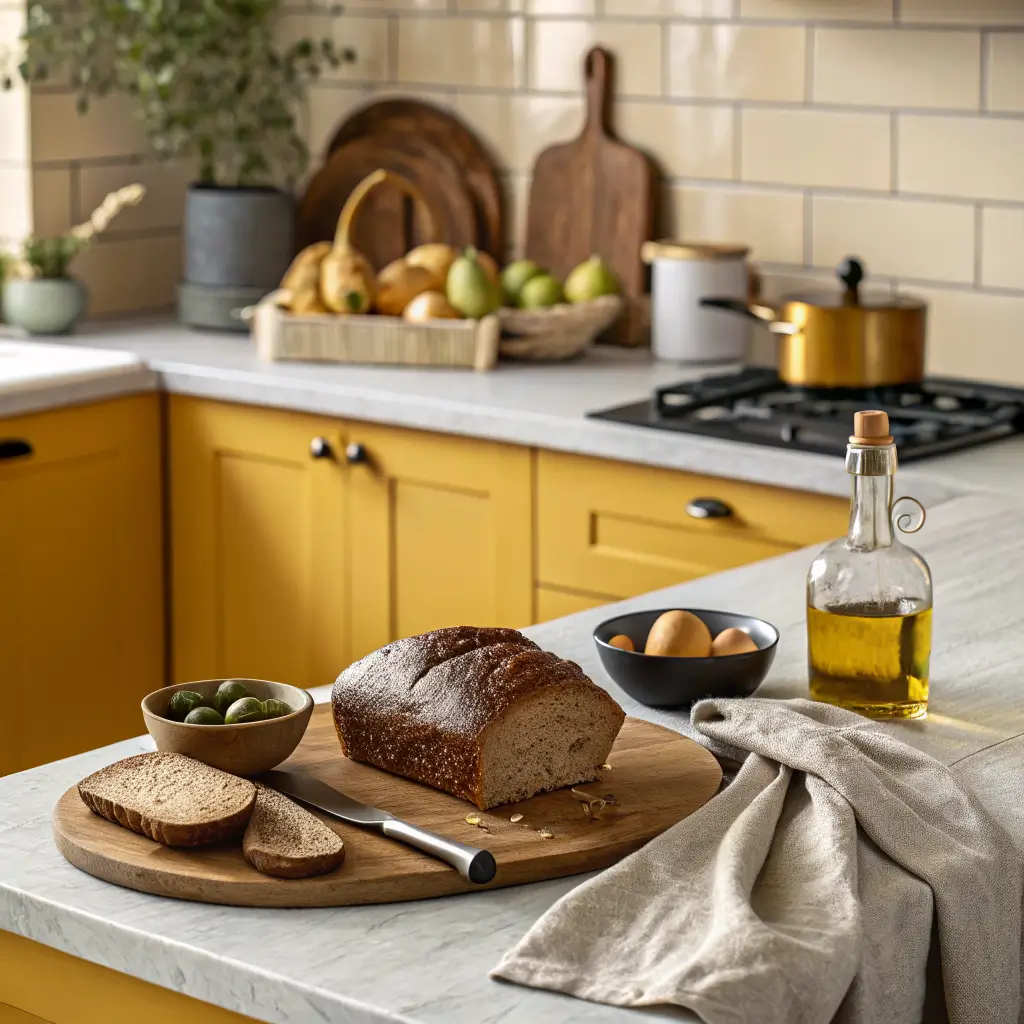
– Fall: amber glassware, a walnut cutting board out on the counter, dried wheat
– Winter: eucalyptus or cedar clippings, a wool runner, brass candlesticks
Rotate three or four small things. The cabinets do the heavy lifting year-round.
Quick Answers to the Questions People Actually Ask
Are yellow cabinets outdated? No — they’re currently one of the fastest-rising kitchen colors in design coverage as people move away from all-white and sage.
Do yellow cabinets make a kitchen look bigger? Pale butter and lemon yes; deep mustard no. Light-reflecting shades open a small kitchen up.
Best countertop with yellow cabinets? White quartz for freshness, butcher block for warmth, black for contrast. Avoid beige.
Best hardware? Unlacquered brass first, matte black second.
How do I keep it from looking childish? Choose a muted or muddy yellow (not primary crayon yellow), pair with sophisticated materials — brass, marble, walnut — and keep accessories restrained.
Paint colors close to butter, mustard, and golden yellow? Butter: Farrow & Ball Dayroom Yellow, BM Hawthorne Yellow (test in your light). Mustard: SW Nugget, BM Golden Straw. Golden: SW Gambol Gold, F&B India Yellow.
If you’ve been circling this idea for months, sample three shades this weekend. Paint a whole cabinet door in each. Live with them for a week. That’s how you find out whether yellow is your color — not by scrolling more photos.