What Western Gothic Vintage Actually Is
The western gothic vintage mix started with a worn saddle blanket I could not leave behind. Black iron and faded wool turned out to read cozy, not cold.
Three things braided together:
Western Americana — cowhide, longhorns, cacti, saddle leather, sepia photography, reclaimed wood
Victorian gothic — dark walls, candlelight, ornate frames, velvet, curios under glass
Genuine vintage patina — worn leather, distressed wood, tarnished brass, foxed book pages
Miss any one leg and it collapses. All Western and it’s a steakhouse. All gothic and it’s a vampire’s Airbnb. All vintage and it’s your grandmother’s guest room. The magic is in the collision.
Who this is for: people who love dark, story-heavy rooms. Fans of Deadwood, dark academia, tarot decks, Cormac McCarthy, and estate-sale rummaging. If beige minimalism makes you feel dead inside, this is your aesthetic.
What It Costs and How Long It Takes
I redid my living room over about five weekends — mostly waiting on paint to cure and stalking Facebook Marketplace for a leather chair that wasn’t $1,400.
Realistic budgets per room:
Thrift-heavy budget build: $250–$600. Paint ($40–$70/gallon in something like Behr Broadway or Sherwin-Williams Black Magic), a faux cowhide ($80–$150), a set of iron taper holders ($25–$60), a few framed vintage prints ($20–$80 each).
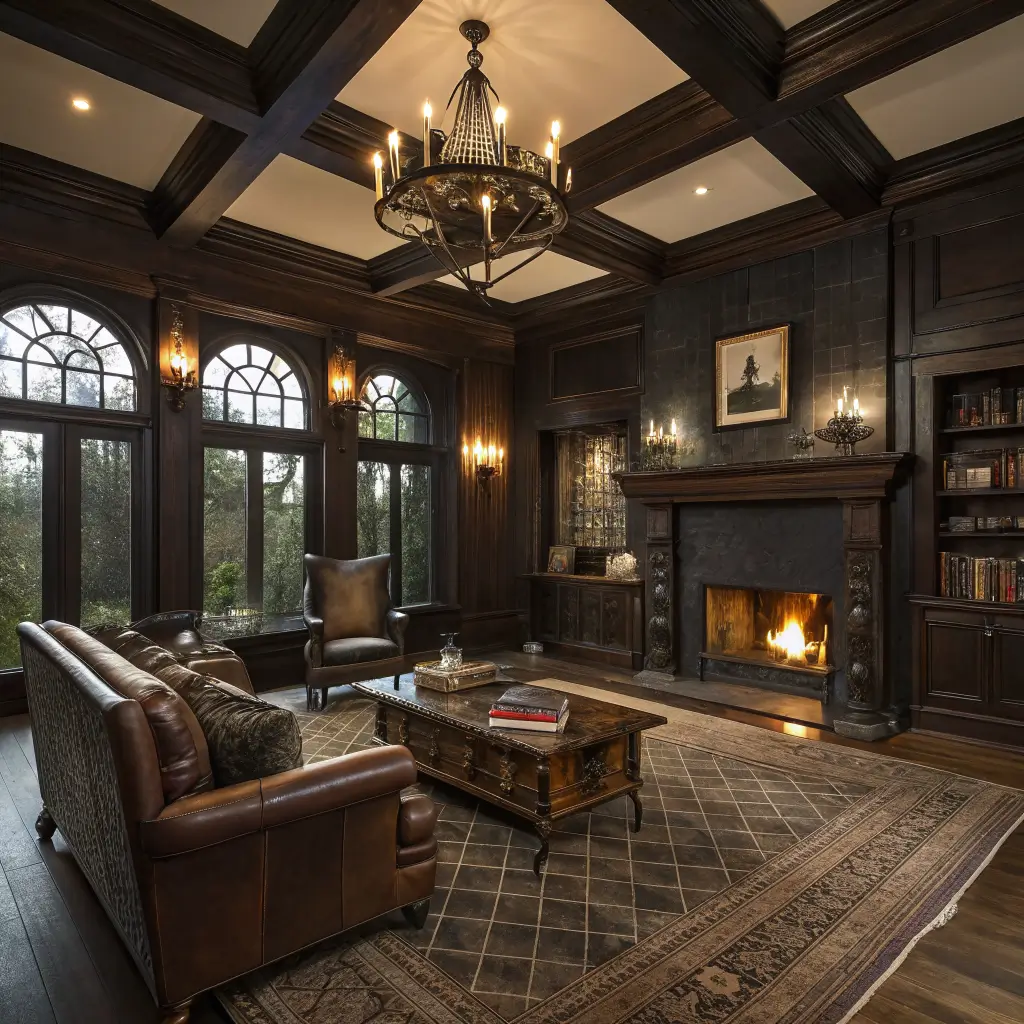
Mid-range: $1,000–$2,500. Real cowhide ($180–$400), dark wood coffee table or console ($250–$700), a vintage leather club chair ($300–$900), an iron chandelier with candle bulbs ($200–$600), curios and art ($150–$400).
Collector level: $3,000–$8,000+. Antique Victorian sideboard, hand-knotted rug, custom iron sconces, real curated Americana.
Timing: a single-room refresh runs 1–3 days of active work. A full-home version is more like 1–3 weeks because the sourcing is the slow part — you can’t rush finding the right leather chair, and you shouldn’t.
The Color Palette (Pick One Dominant, Then Layer)
The whole thing hinges on committing to darkness. Half-measures read as “gray sad” instead of atmospheric.
Your dominant options — choose one:
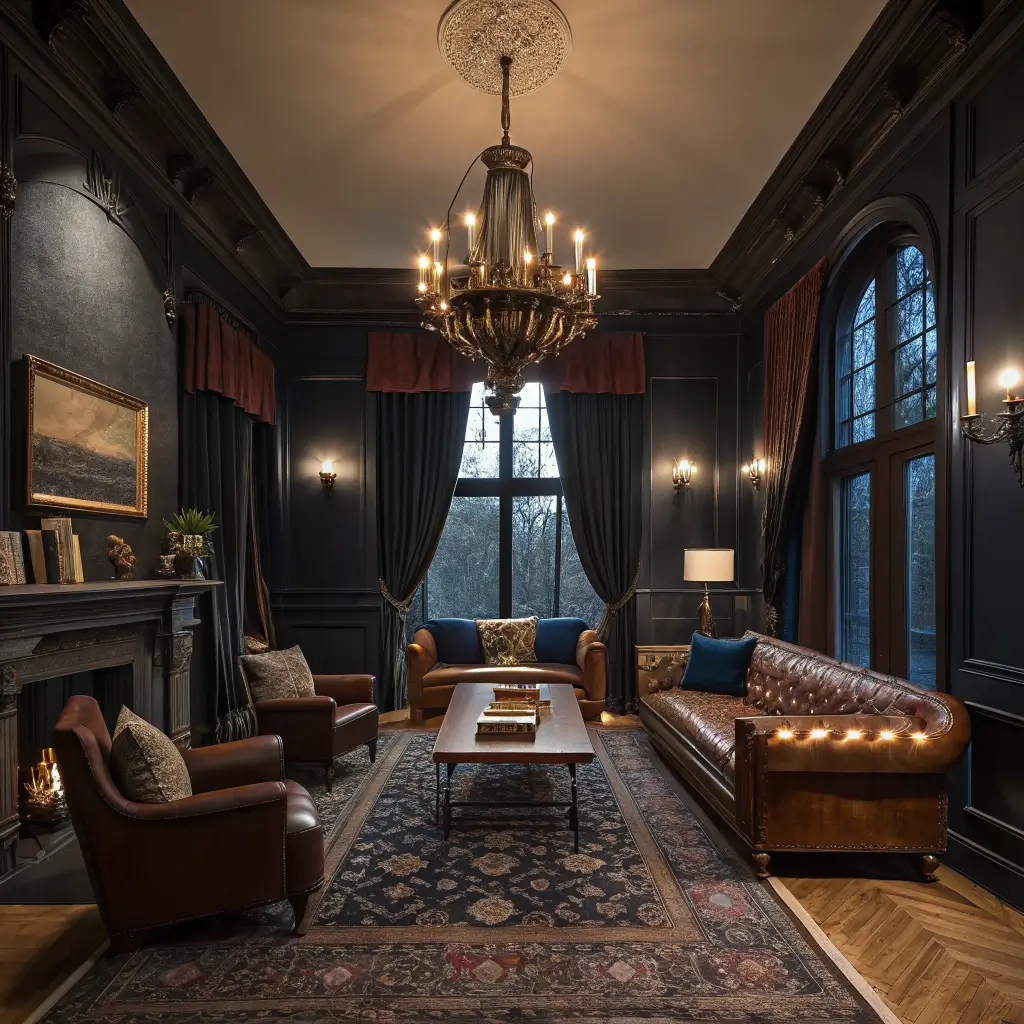
True black or charcoal (my pick for small rooms — it recedes and makes the space feel deeper)
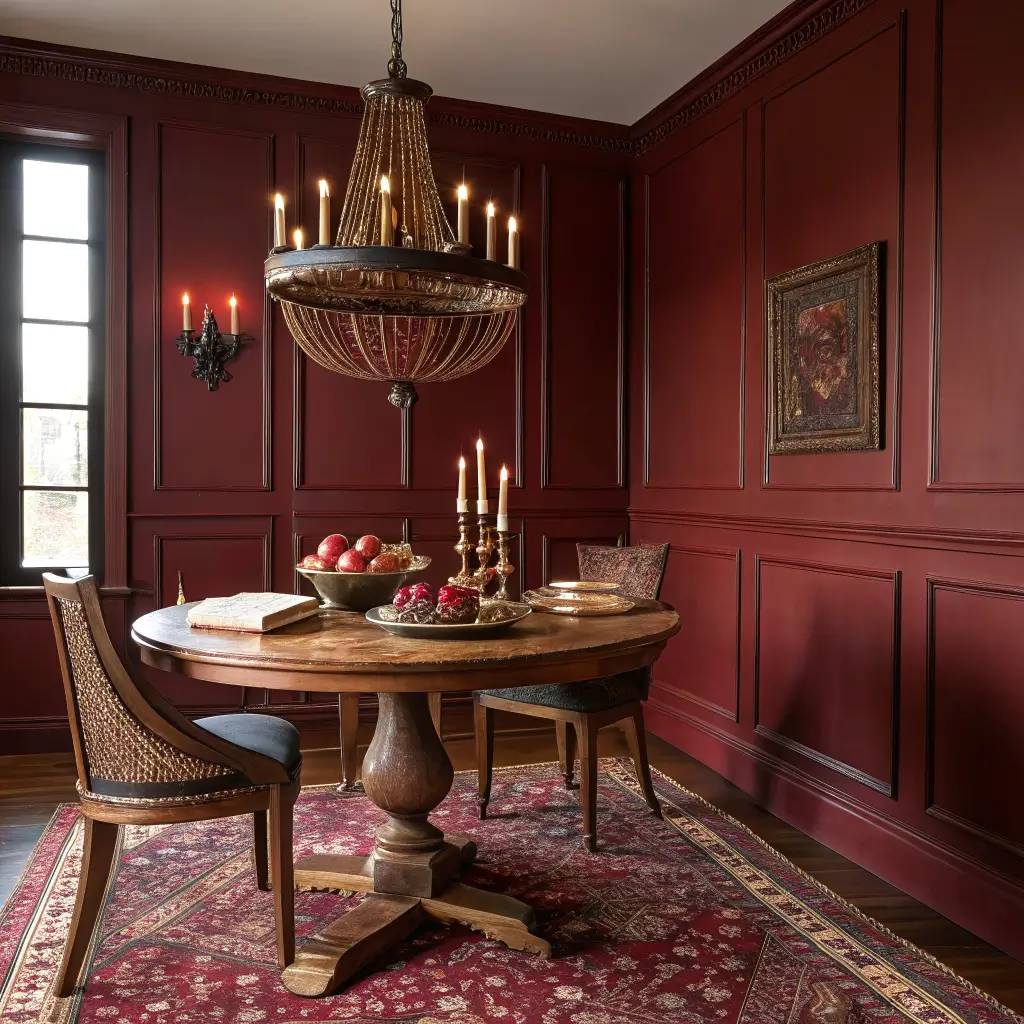
Oxblood or blood red (best for bedrooms and dining nooks)
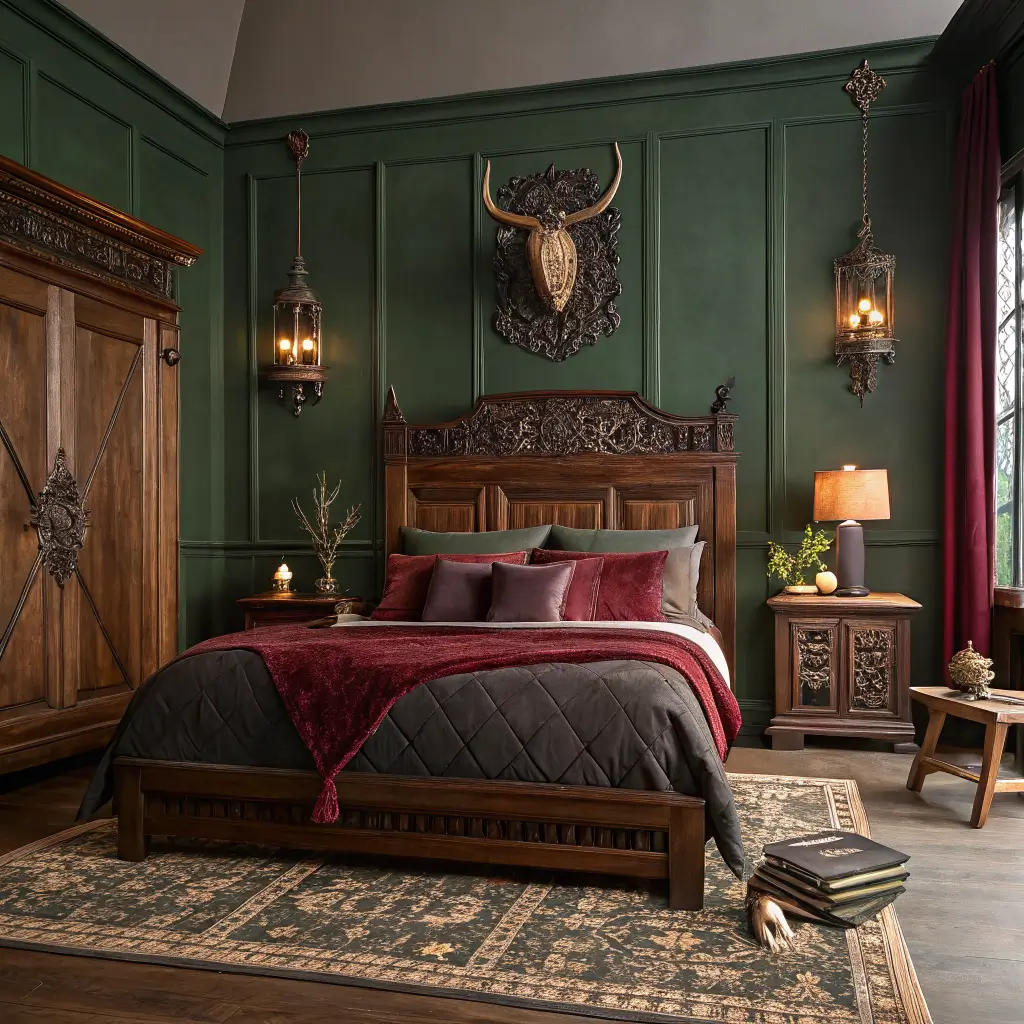
Deep forest or olive (softer, works if you have a lot of natural light to fight)
Plum or eggplant (the least common — most interesting if you can pull it off)
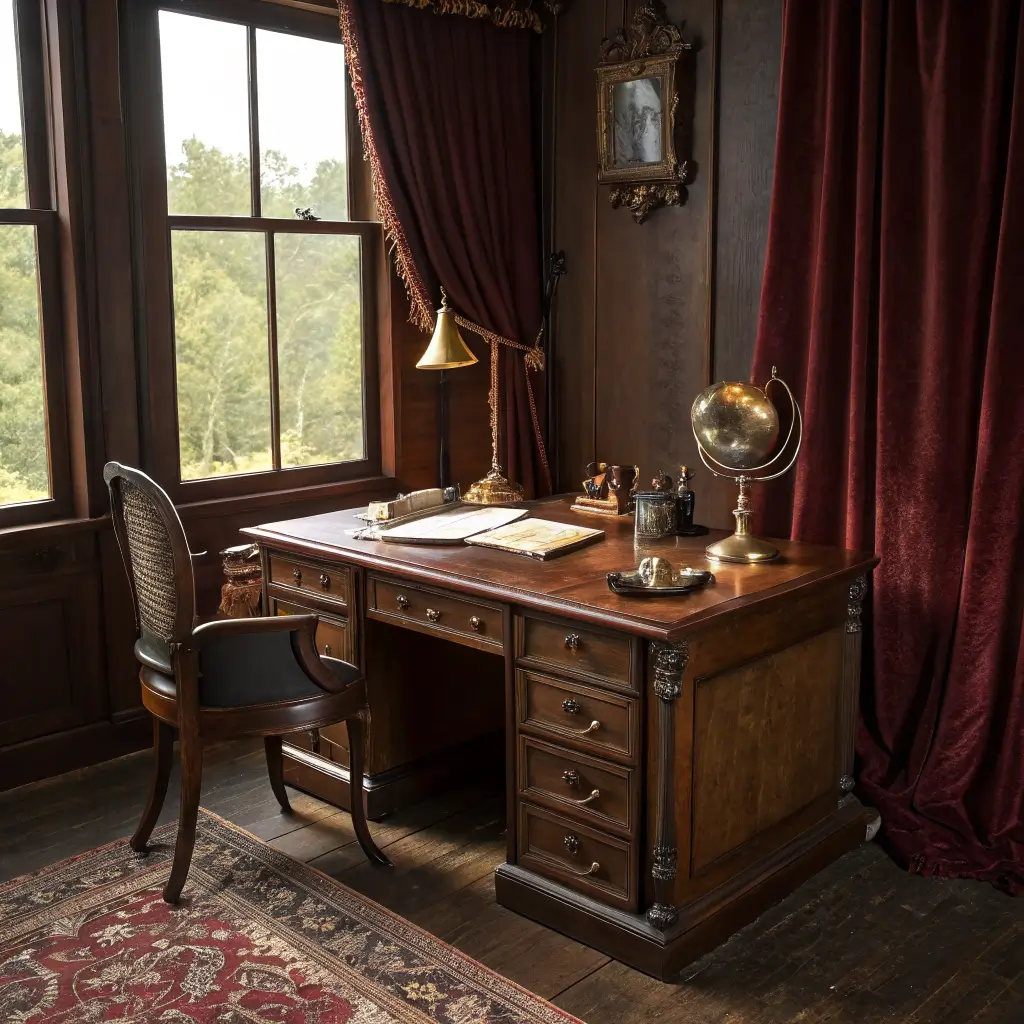
Then bring in 2–3 supporting shades: saddle brown, whiskey leather, walnut wood, and a warm metal (brass is my default — gold reads too shiny, silver too cold).
Rule of thumb: warm metals should occupy about 10–20% of what you see. Any more and you lose the mood; any less and the room goes flat.
The Hero Pieces Worth Spending On
If you buy nothing else nice, buy these three well:
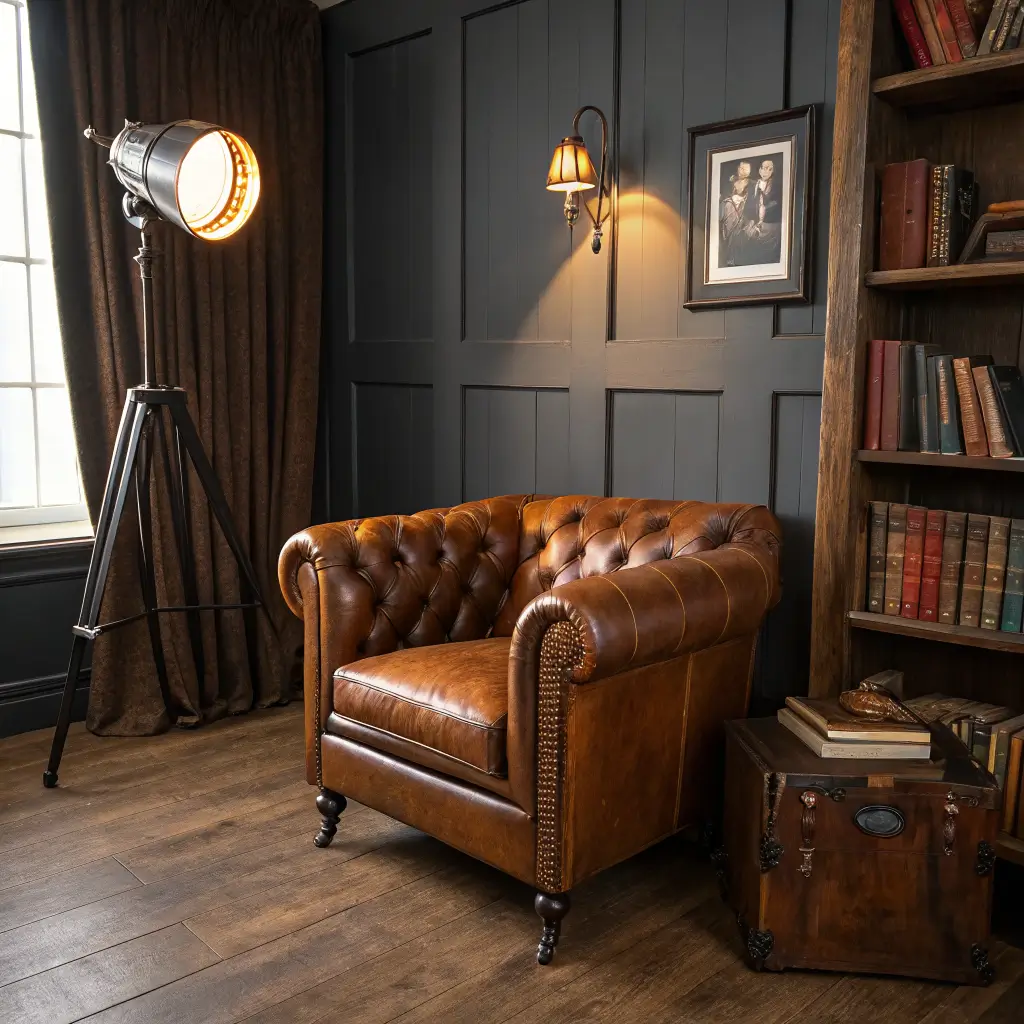
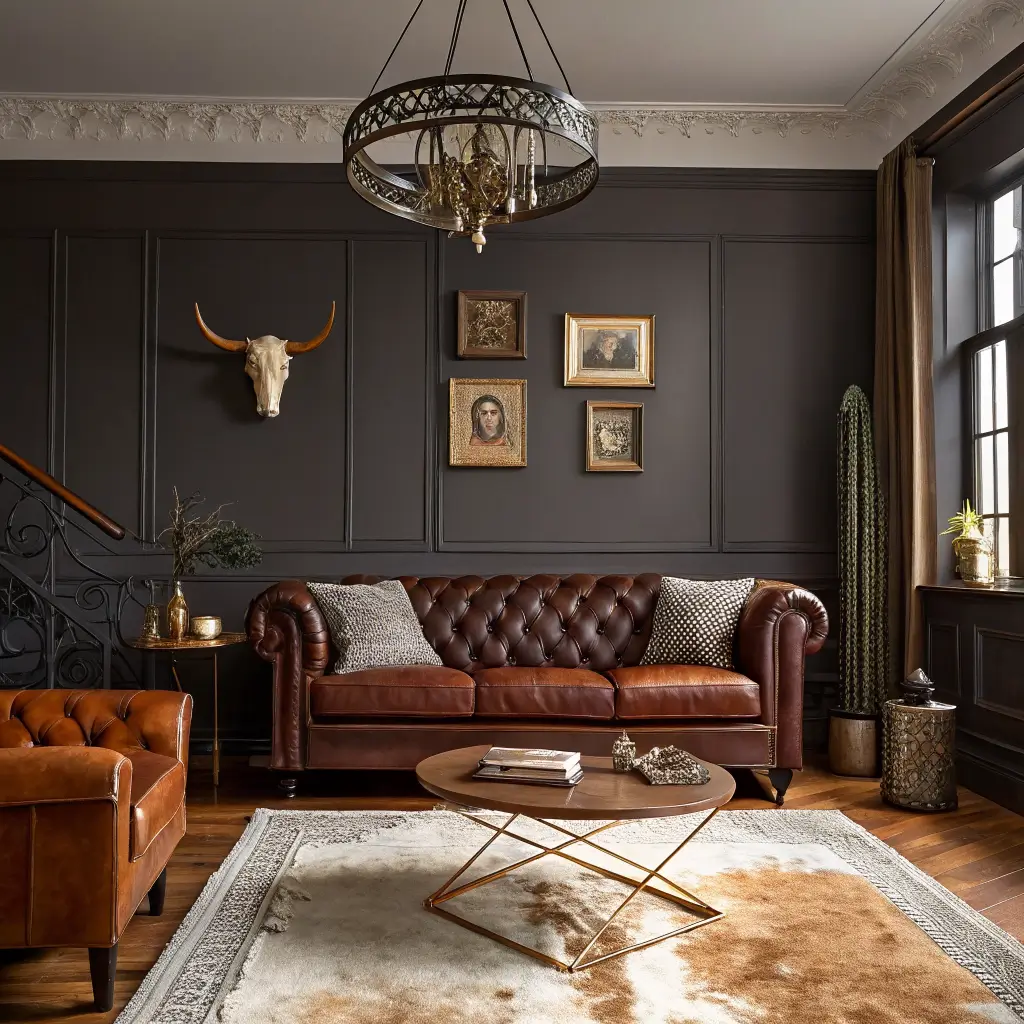
1. A real leather chair or sofa with visible wear. Not new “distressed” leather from a big-box store — that stuff always looks like a costume. Hunt for the real thing on Marketplace, Chairish, or estate sales. I paid $275 for a 1970s saddle-brown Chesterfield-style club chair with cracked arms and a broken-in seat, and it’s the single piece that made the room work.
2. Dark wood furniture with actual weight. Walnut, mahogany, or reclaimed pine — a console around 48–72″ long and a coffee table 40–55″ long. Avoid anything with visible MDF edges. If your budget is tight, buy a solid-wood piece in a bad finish and paint it Rust-Oleum Ultimate Ebony with a satin poly on top. Satin, not gloss — gloss kills the vintage feel instantly.
3. Statement lighting with candle bulbs. An iron chandelier with curved arms, or wall sconces in dark metal with amber or frosted glass. Skip anything with white shades. Warm bulbs only — I use 2700K, sometimes 2400K for lamps.
The Layering Pieces
Once the bones are in place:
Cowhide rug — real if you can, 5’x7′ minimum. Faux is fine but avoid the ones with unnaturally sharp black-and-white patterns. Softer, mottled browns look real from three feet away.
Velvet and brocade pillows in oxblood, forest, or plum. Two or three, not eight.
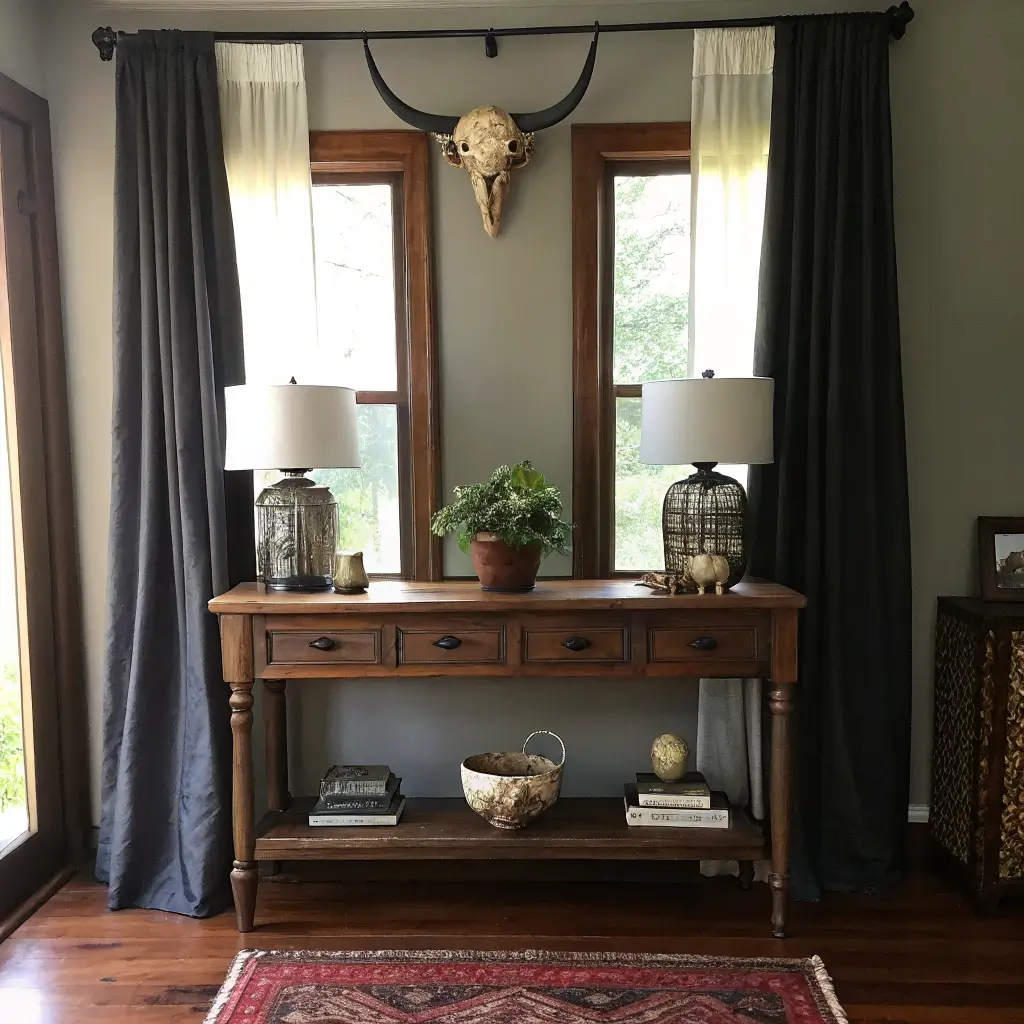
A longhorn skull — one, mounted where it can breathe. Not a wall of skulls.
Cacti in clay or matte black pots — a big one, like a 3-foot San Pedro, does more work than five small succulents.
Ornate gilded or black frames around Western photography, tarot art, or sepia landscapes.
Old books with cloth or leather spines — I bought a $12 box of 1920s hardcovers at a church sale that anchors my coffee table year-round.
Iron taper candlesticks in varied heights, grouped in threes.
How to Actually Put a Room Together
The order matters. I’ve rearranged my own three times, and this sequence saves the most pain:
1. Paint or paper first. Dark walls change everything and every piece you place after will look different. Also hang heavy curtains — velvet or linen in a dark tone, floor-length, mounted 4–6 inches above the window frame to make ceilings feel taller.
2. Anchor with the biggest pieces. Sofa, chair, console. Arrange them like a saloon parlor — seating pulled inward around a coffee table or fireplace, not shoved against walls.
3. Rug down, defining the seating zone.
4. Lighting on. Chandelier or pendant first, then lamps at two or three heights around the room. Never rely on the overhead light alone.
5. Western layer. Cowhide throw, one skull, cacti, a Western print or two.
6. Gothic layer. Velvet pillows, ornate frames, a tapestry or damask panel, candles.
7. The curio layer last. Vintage bottles, pocket watches, tarot decks, a stack of books, a small brass tray. Group in odd numbers, varied heights — one tall, one medium, one low.
Where to Splurge vs. Where to Save
Spend on: the leather chair, the rug, the lighting, and one piece of real vintage wood furniture. These are the pieces the eye lands on first.
Save on: frames (thrift stores, then spray-paint), candles (Dollar Tree tapers look identical to $8 ones once lit), skulls (resin replicas are indistinguishable from bone in a dim room), and curios (estate sales, $10–$50 each, always).
The paint tip that saved me the most money: a $6 quart of dark wax over a $40 gallon of flat black paint on cheap furniture ages it about forty years. Test on the back first.
Mistakes I Made So You Don’t Have To
Buying too many themed items too fast. My first pass had cowboy boots on the mantel, a lasso over the doorway, a horseshoe on the wall, and a skull. It was a set from a Western musical. Now I keep one Western symbol per sightline and let it breathe.
Going too dark without warmth. Black walls plus black furniture plus a black rug reads as a void. You need brown leather, warm wood, or brass in the room — otherwise it feels like a dentist’s waiting room in a Tim Burton movie.
Spreading small objects evenly across every surface. Vignettes beat scatter. Cluster three or five things together, then leave the next surface almost bare. Empty space is what makes the full spots feel intentional.
Skipping the vintage layer entirely. New black furniture with new Western décor from Target looks like a store display. You need at least a few pieces that are actually old — foxed pages, tarnished brass, cracked leather. Even one truly aged object in a vignette tells your eye the whole room is real.
Ignoring the ceiling and floor. Painting one accent wall dark and calling it done never works. Either commit to all four walls or bring the dark down into the rug and up into the curtains so the room reads as enveloped.
Small Space and Rental-Friendly Adjustments
If you can’t paint, the trick is to build the envelope out of textiles instead:
Floor-length dark curtains on every window, even ones you don’t need to cover
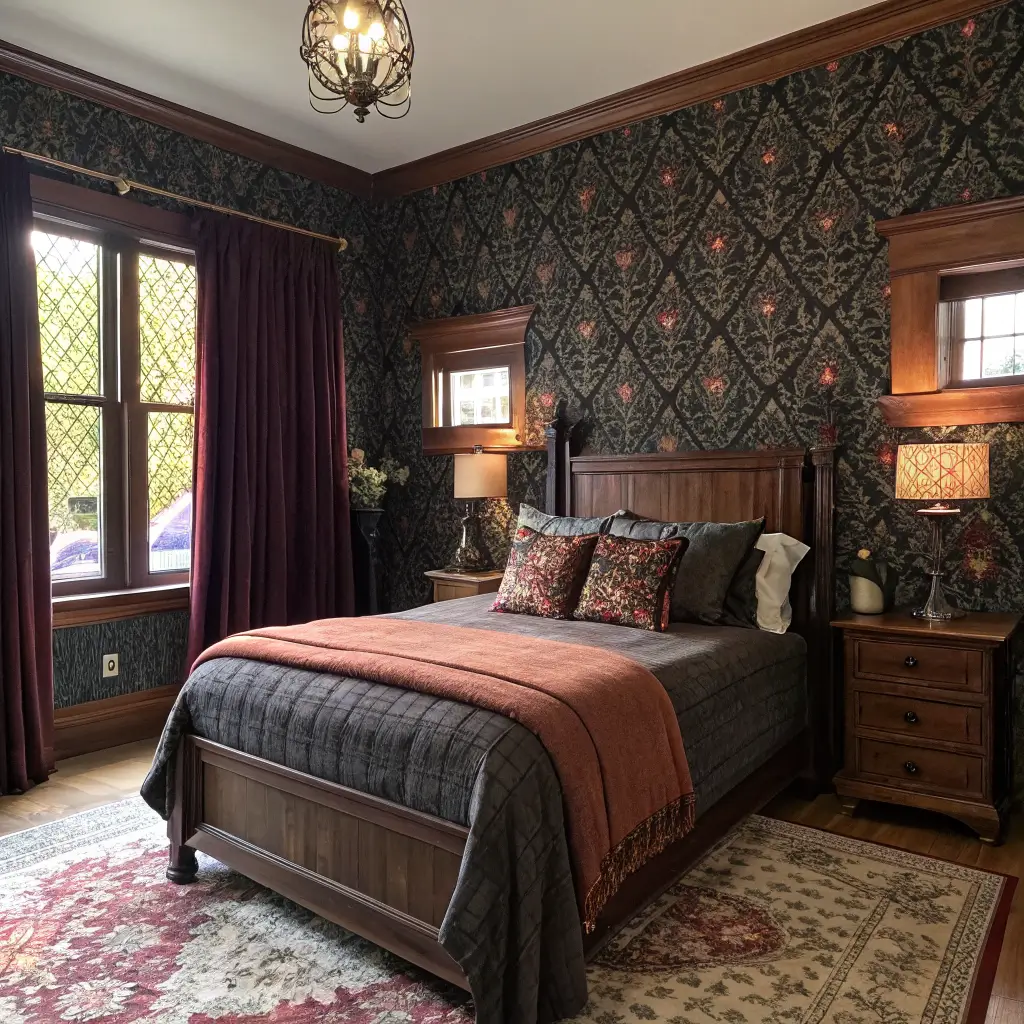
A large tapestry or damask panel behind the sofa or bed
A dark rug that covers most of the visible floor
Peel-and-stick wallpaper on a single wall (William Morris–style patterns in dark colorways work beautifully here)
In tight rooms — under 200 square feet — dark walls actually make the space feel bigger by blurring the corners. The room reads as depth, not boundaries. Just keep the ceiling one shade lighter than the walls so it doesn’t press down.
Seasonal Shifts Without Restyling Everything
The style is naturally year-round, but small swaps keep it from stagnating:
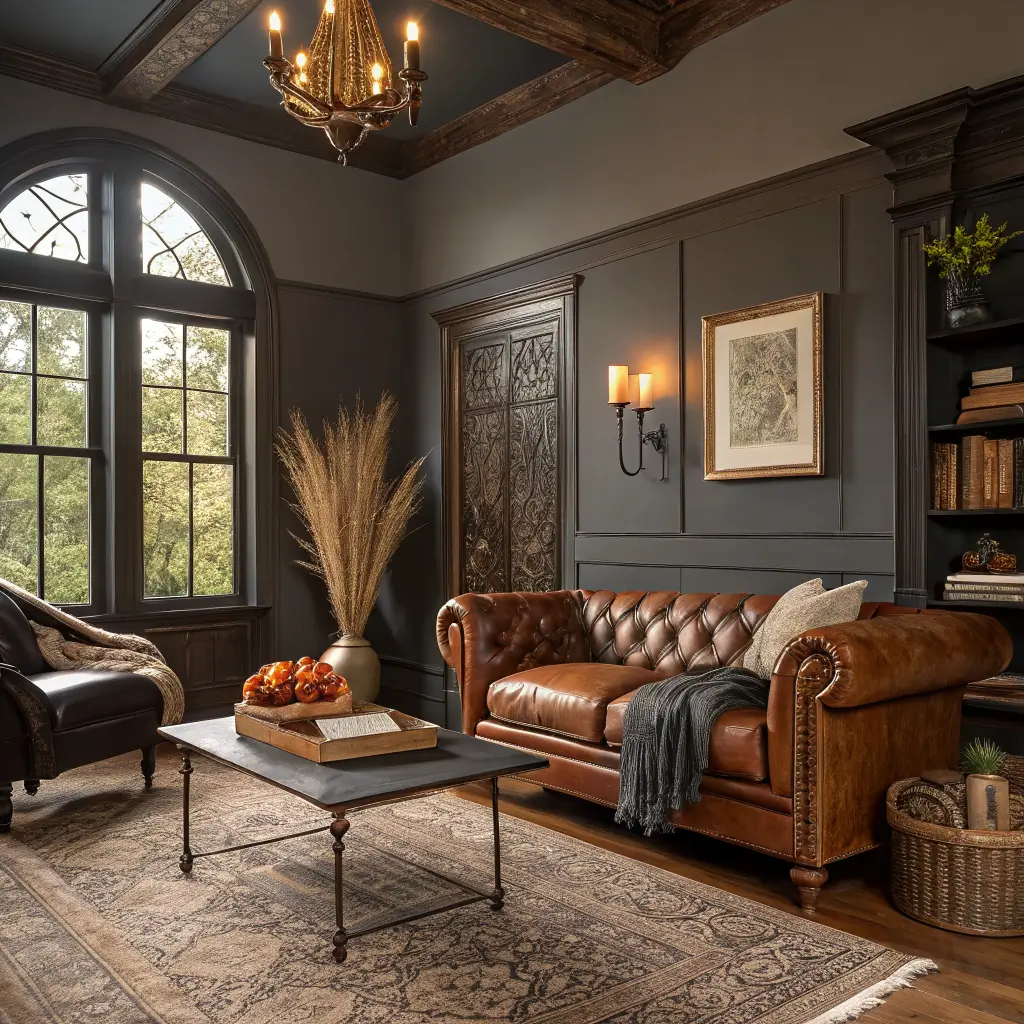
Fall: rust and amber throws, dried pampas or wheat in a tall vessel, more candles lit
Halloween: a cobwebbed antler bowl, a skeleton in a cowboy hat propped in a chair, black tumbleweeds if you can find them
Winter: heavier velvet blankets, dark plaid throws, a wool serape folded over the sofa arm
Spring/summer: swap in lighter linen curtains (still dark, but breathable), add more live cacti, cut back on the fur throws
One Question Worth Asking Before You Buy Anything Else
Before adding a new piece, ask: is this Western, gothic, or vintage? If it’s not clearly one of the three, it doesn’t earn a spot. That single filter is what finally stopped me from bringing home random “dark and moody” things that didn’t add up to anything.
The rooms that work in this style aren’t the ones with the most stuff. They’re the ones where every object feels like it has a backstory — even if you made the backstory up on the drive home from the flea market.