Neoclassical Kitchen Design: How to Get the Look Without It Feeling Like a Museum
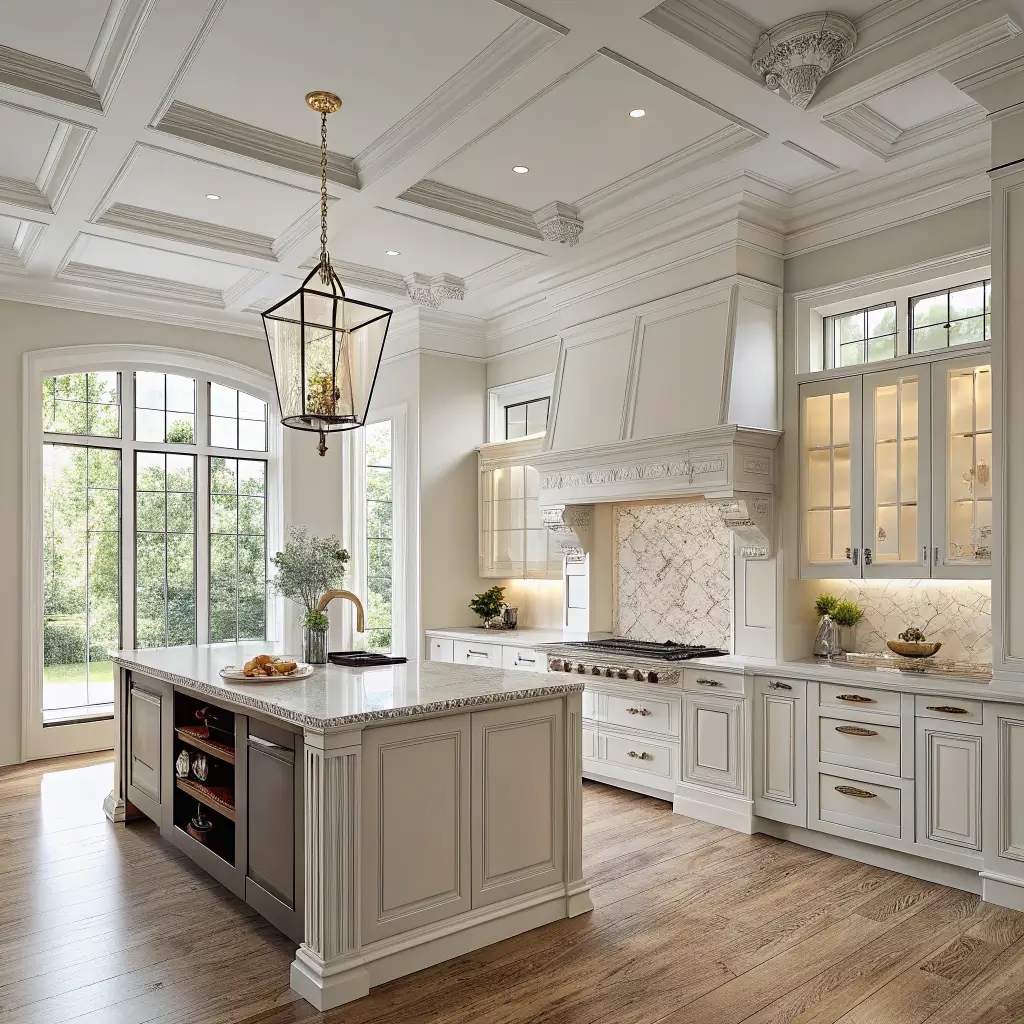
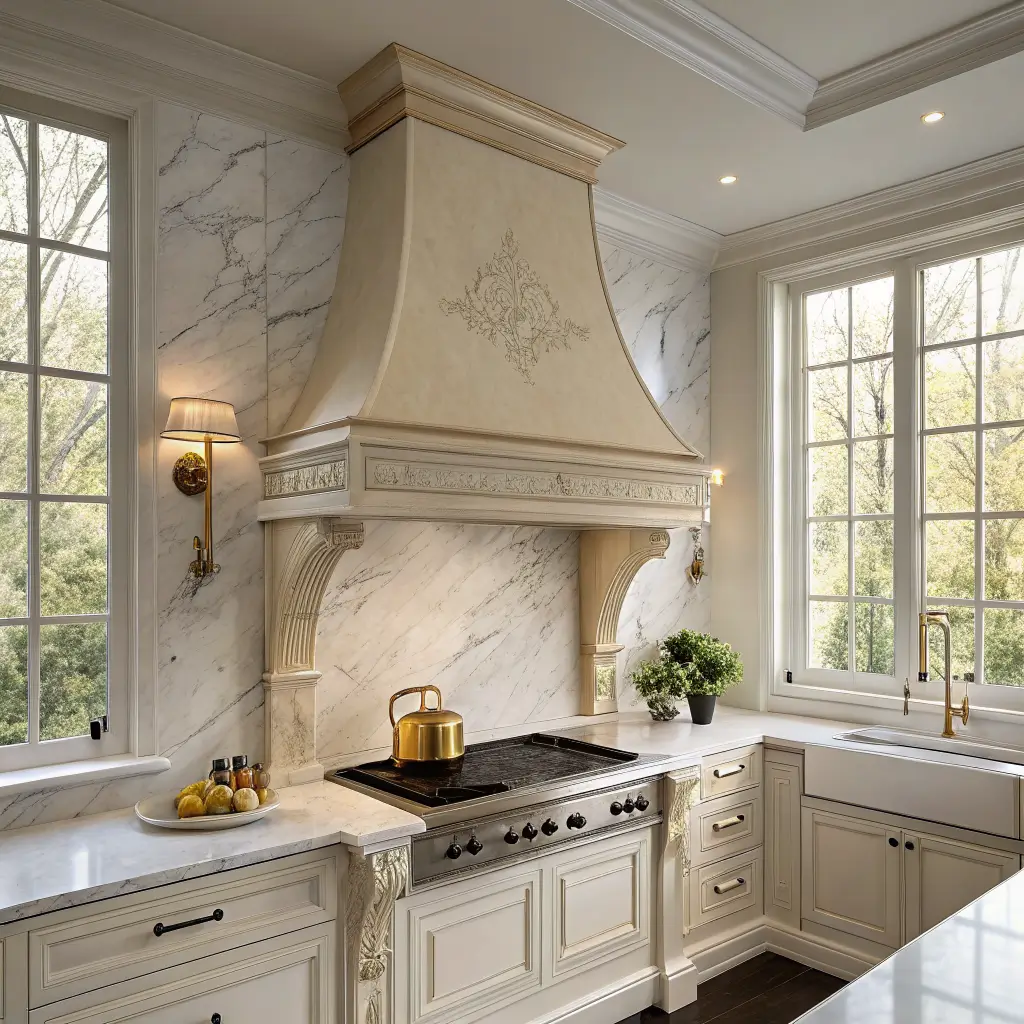
The neoclassical kitchen design I planned was really about one carved corbel and restraint everywhere else. The detail read as intentional, not busy.
Most people searching for neoclassical kitchen design are stuck in the same spot I was two years ago: you want a kitchen that feels grown-up and formal, but not stiff, not a period drama set, and not the same white shaker box everyone else has. You want molding and marble and a real chandelier over the island — you just don’t want it to look like a hotel lobby.
Here’s how I’d actually build it, based on doing my own kitchen and helping my sister redo hers last spring.
What Neoclassical Kitchen Design Actually Is
Strip away the fancy language and it’s this: a modern kitchen built on the bones of classical European interiors. Symmetry. Restrained ornament. Light, quiet colors. Real materials — stone, wood, brass. It borrows from Greco-Roman proportions but it still has to hold a dishwasher and a coffee grinder, so the ornament gets dialed back.
If a traditional kitchen feels heavy and a modern classic kitchen feels almost minimalist, neoclassical sits in between. Straight lines, but with molding. Symmetry, but not fussiness. A chandelier, but over a working island.
Who this style is for: anyone who wants formal-but-livable. If you love pure minimalism or full farmhouse, this isn’t your style.
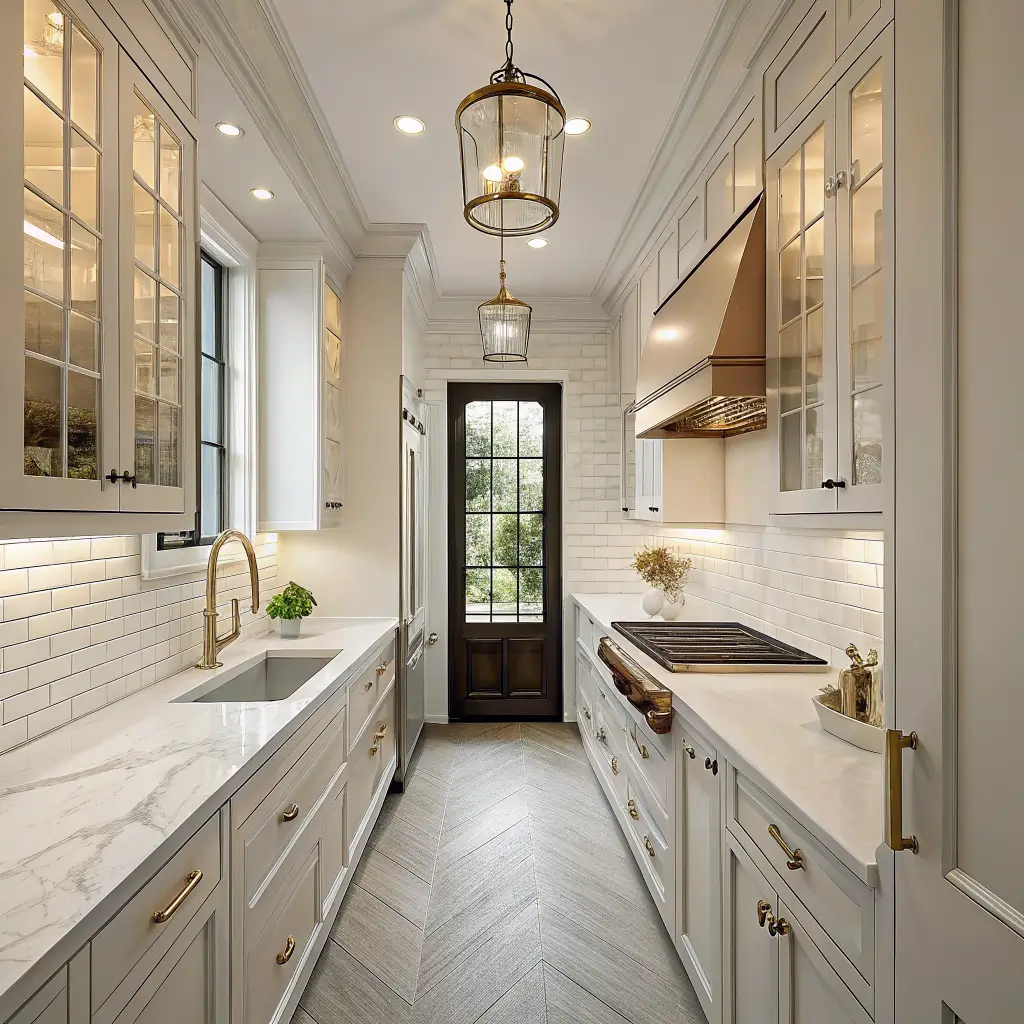
Where it works best: medium to large kitchens, especially kitchen-dining combos and rooms with 9-foot-plus ceilings. Symmetry needs breathing room. You can pull it off in a galley if the height is there, but tiny square kitchens fight the whole idea.
What It Costs (Ballpark, Not Fantasy)
I’ll be straight about this because the internet is bad at it.
– Styling refresh only — paint, new hardware, a chandelier swap, decor: $500–$3,000. This is the “I’m renting or not renovating” version.
– Mid-range update — cabinet refacing or semi-custom cabinets, quartz counters, new backsplash, layered lighting: $15,000–$45,000.
– Full renovation — custom cabinetry, real marble, decorative hood, premium appliances, trim work: $50,000–$120,000+.
The style leans on millwork and stone, which is where the money goes. Flat-pack IKEA fronts won’t get you there on their own, though they can be a starting point if you swap the doors.
Timeline: 1–3 days for a styling refresh. 4–10+ weeks for anything involving cabinetry — custom doors and stone fabrication both have long lead times.
The Color Palette I’d Actually Use
Keep it quiet. This is the single biggest thing people get wrong.
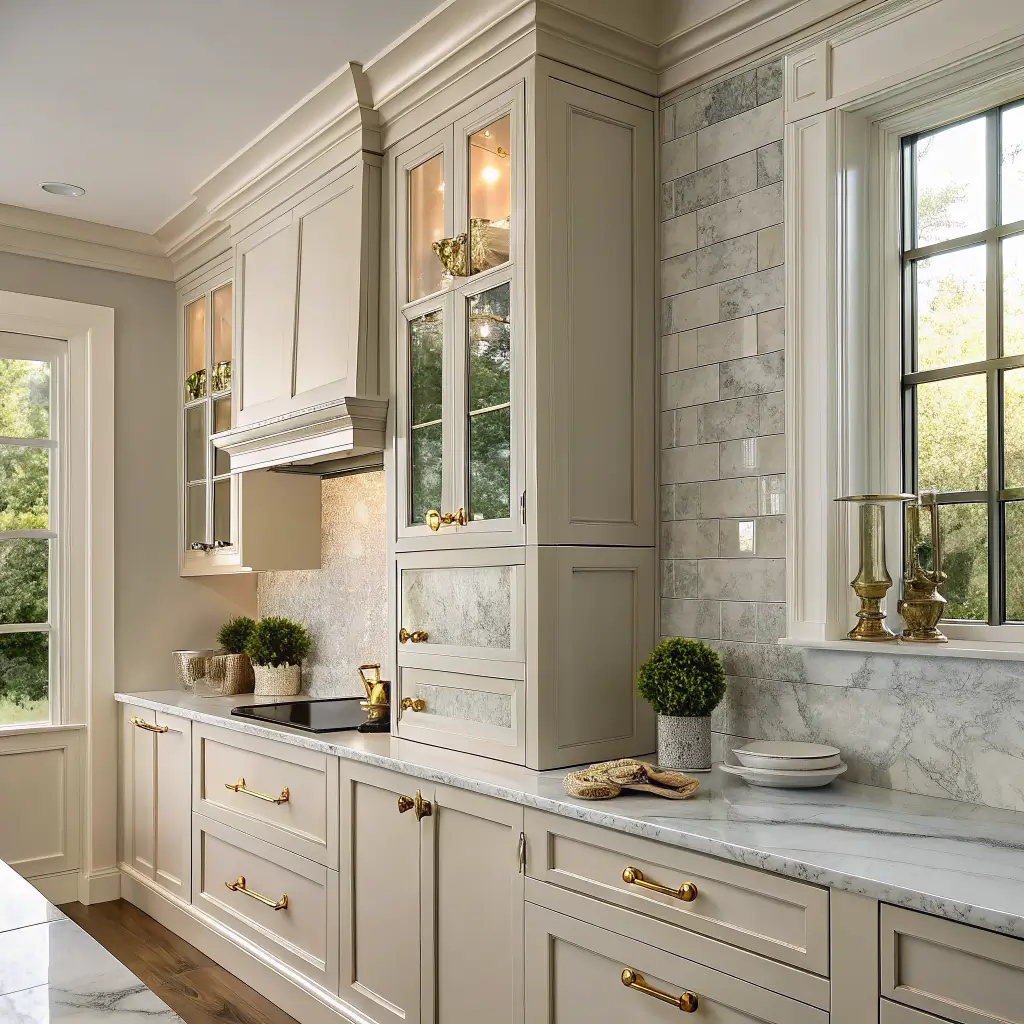
– Base colors: ivory, cream, pearl white, warm greige, sand, ash gray
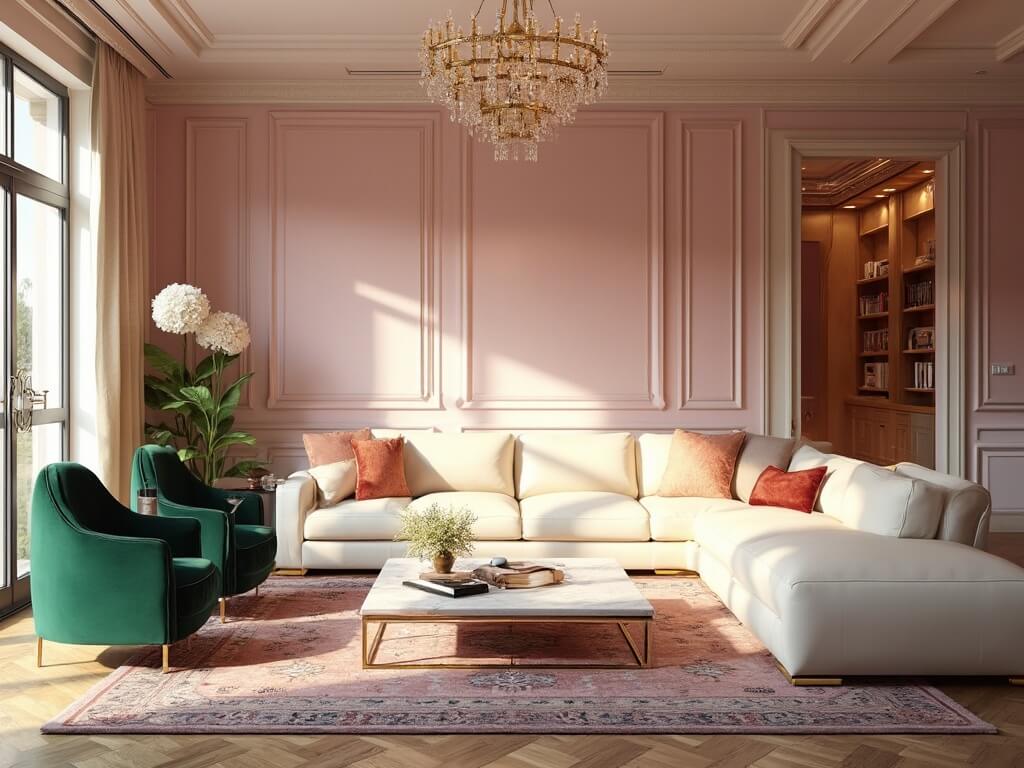
– Accent colors: black (in small doses), soft moss green, muted powder blue, powder pink
– Metals: brushed brass or polished brass first choice; polished chrome or satin nickel if you want cooler
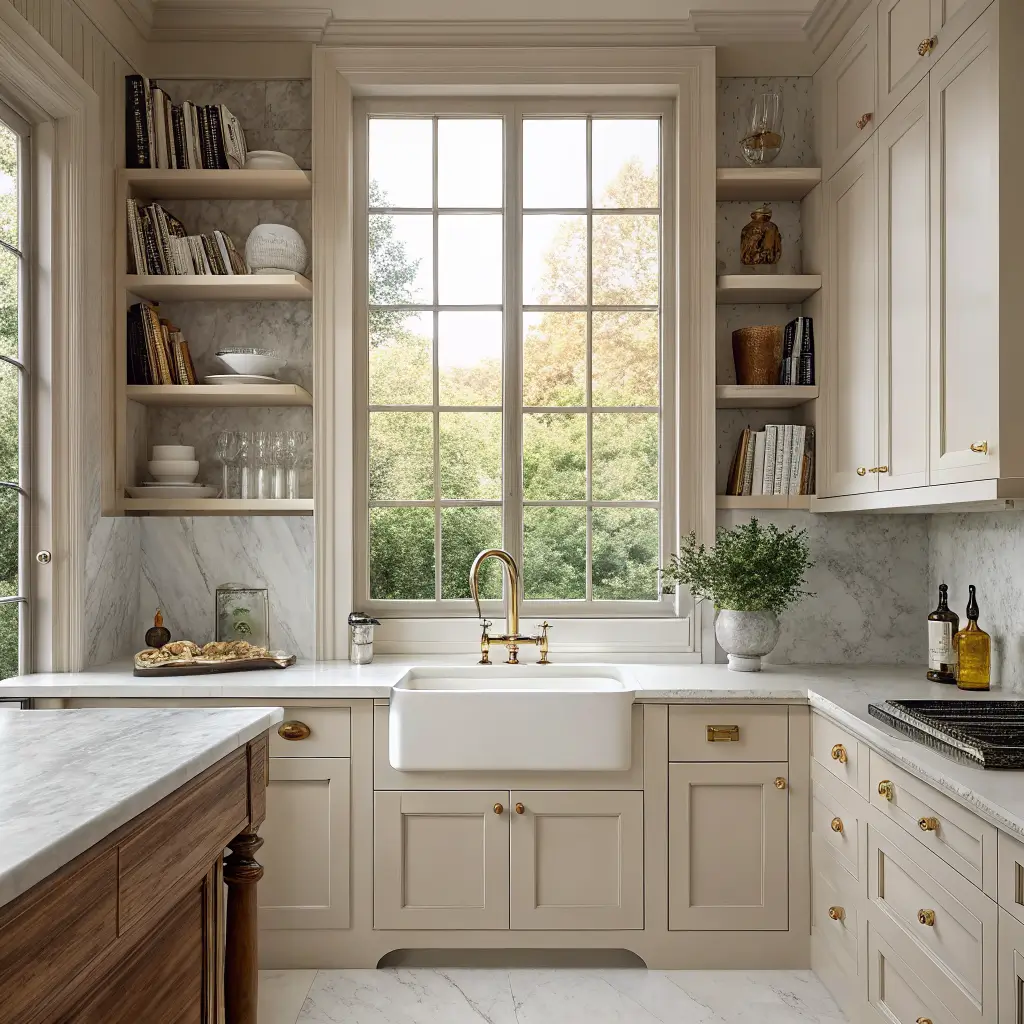
My kitchen is Benjamin Moore White Dove on the uppers, a warm greige on the lower cabinets, and honed Carrara on the counters. That’s it for the “big” surfaces. Every other decision gets easier once you cap the palette at three finishes.
The mistake I made first time: I picked a bright true-white paint (Simply White), and against warm brass and cream marble it looked bluish and off. Repainted six months later. Always sample against your stone.
The Pieces That Actually Make It Read as Neoclassical
You don’t need all of these. You need most of them.
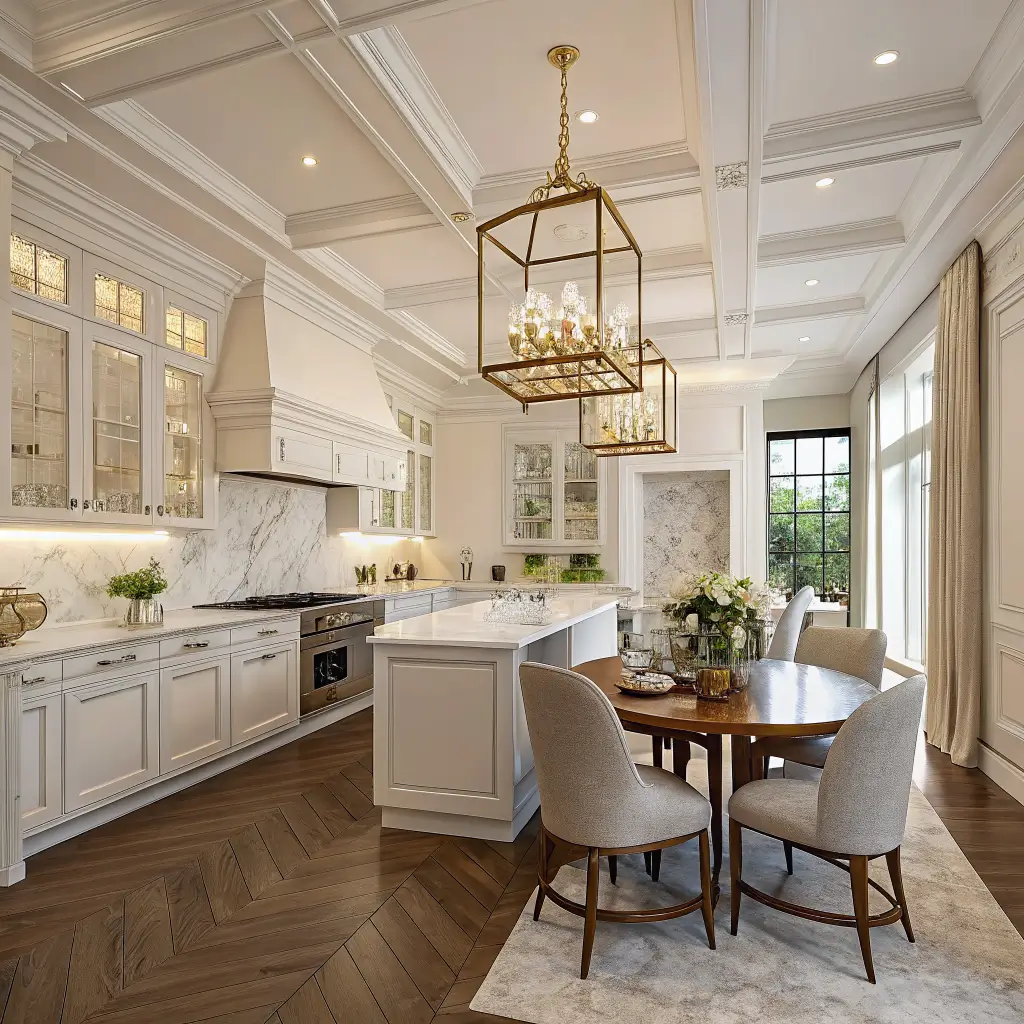
Cabinetry with real shape. Inset doors or raised-panel doors with a subtle bevel. Not slab fronts. If your budget is tight, semi-custom shaker with an applied molding on top reads more classical than plain shaker alone.
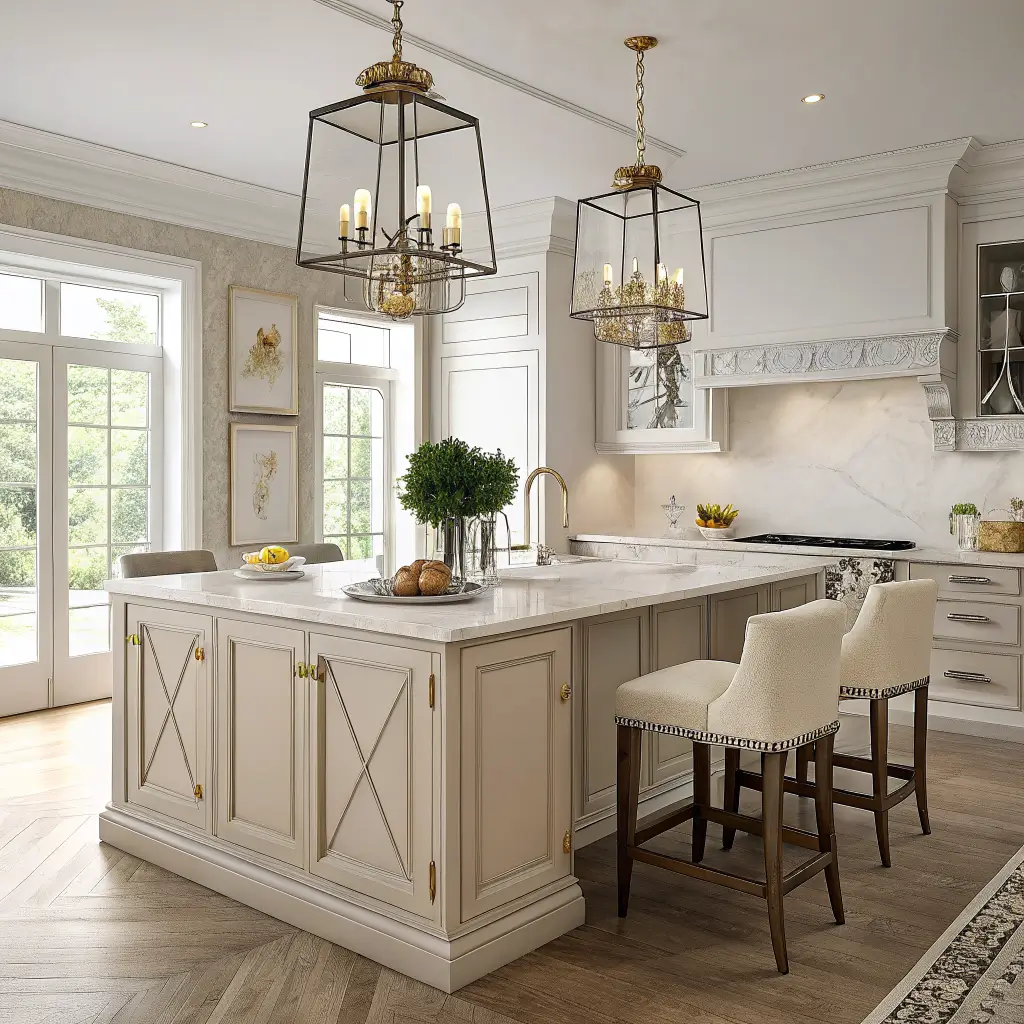
A statement island with a stone top. This is the anchor. Marble or marble-look quartz. Mine is a 7-foot island in honed Carrara — it’s the first thing you see and it does the heavy lifting for the whole style.
A decorative range hood. Plaster, wood-paneled, or a custom framed metal hood. Centered on the cooking wall. This is your symmetry anchor.
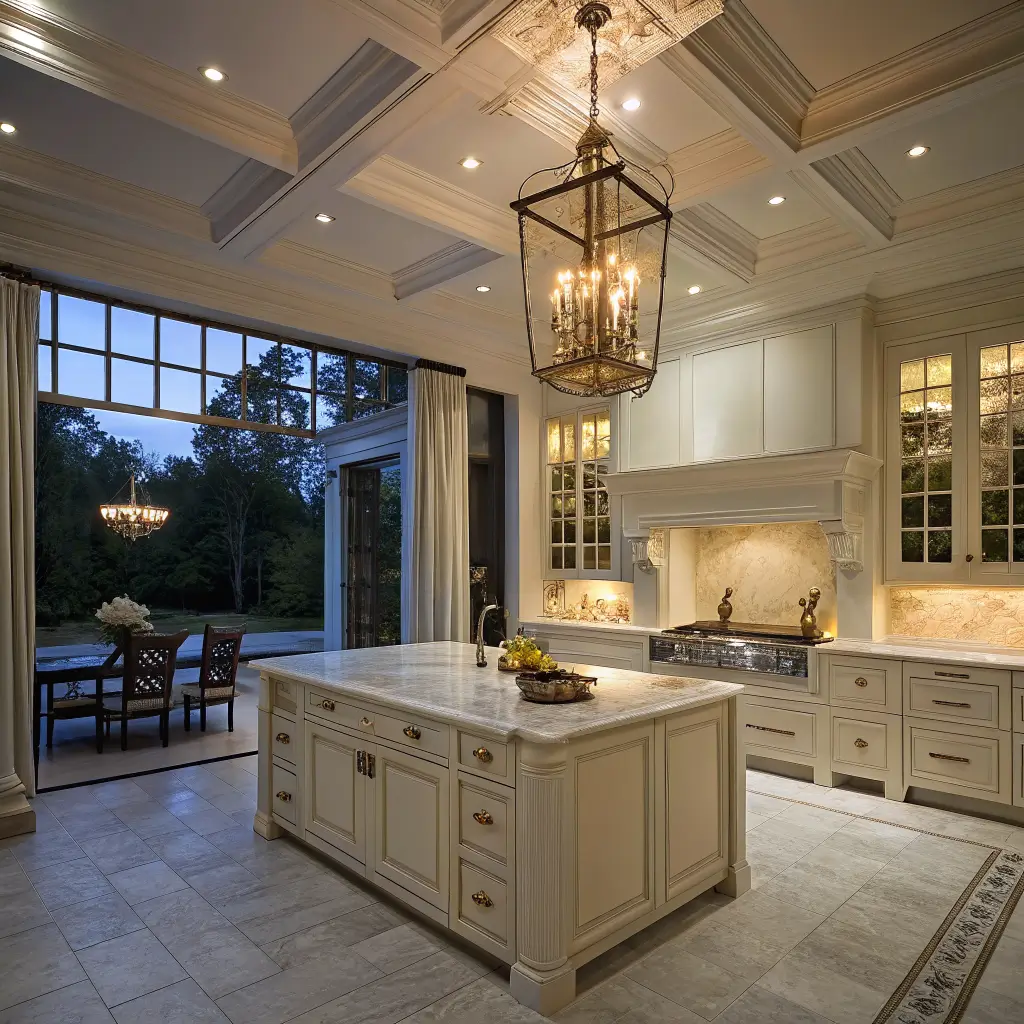
A real chandelier or paired pendants. Not a single flat modern disc. I have a small brass-and-glass lantern over the island — nothing crystal, nothing gilded — and it changed the whole room. Budget: I’ve seen good ones on Rejuvenation and Visual Comfort’s cheaper lines around $400–$900.
Classical hardware. Curved bail pulls, knurled knobs, or cup pulls in brass. Skip the 6-inch flat bar pulls — they fight the style.
Tall crown molding. Take cabinets to the ceiling with a proper crown. A 1-inch gap between the top of a cabinet and the ceiling is what makes builder-grade kitchens look builder-grade.
Glass-front uppers on at least one run. Even one cabinet. It breaks up the solid mass and gives you a place for the two pretty things you actually own.
How to Put It Together
Work in this order. I’ve done it out of order and it costs you money.
1. Cabinet shape and color first. Everything else keys off this.
2. Counters and backsplash next. Pick these together, in the actual room, in daylight.
3. Range hood and island shape. These are architectural — decide before you order cabinets.
4. Lighting. Layered: chandelier or pendants for drama, recessed for general light, under-cabinet LED strips for the counter. One decorative fixture is not enough. This is the second-biggest mistake I see.
5. Hardware and faucet last. Commit to one metal family. Mixing brass and chrome in a small kitchen looks like you couldn’t decide.
6. Styling last of all. Two or three curated objects on the counter. That’s it.
The symmetry rule: stand at the entry to your kitchen. The main sightline — usually the range wall or sink wall — should be balanced. Matching cabinets flanking the hood. Matching pendants over the island. Sconces in pairs. If one side has three cabinets and the other has two and a fridge, the room will always feel off, and no amount of decor fixes it.
Where to Spend, Where to Save
Spend on:
– Cabinet doors and boxes
– Countertops (a decent quartz beats a cheap granite every time)
– The range hood
– The main light fixture
– Hardware — cheap pulls look cheap the second you touch them
Save on:
– Backsplash tile — a simple honed marble subway or a classic checkerboard porcelain can look expensive at $8–$15/sq ft
– Bar stools — West Elm and CB2 have decent classical shapes under $300
– Decor — thrift stores are full of brass candlesticks, small oil paintings in gilt frames, and porcelain that fit this style. I paid $6 for a pair of brass urns at an estate sale that anchor my open shelf.
– Paint — you don’t need designer paint for the walls; you do want good paint for the cabinets
Common Mistakes
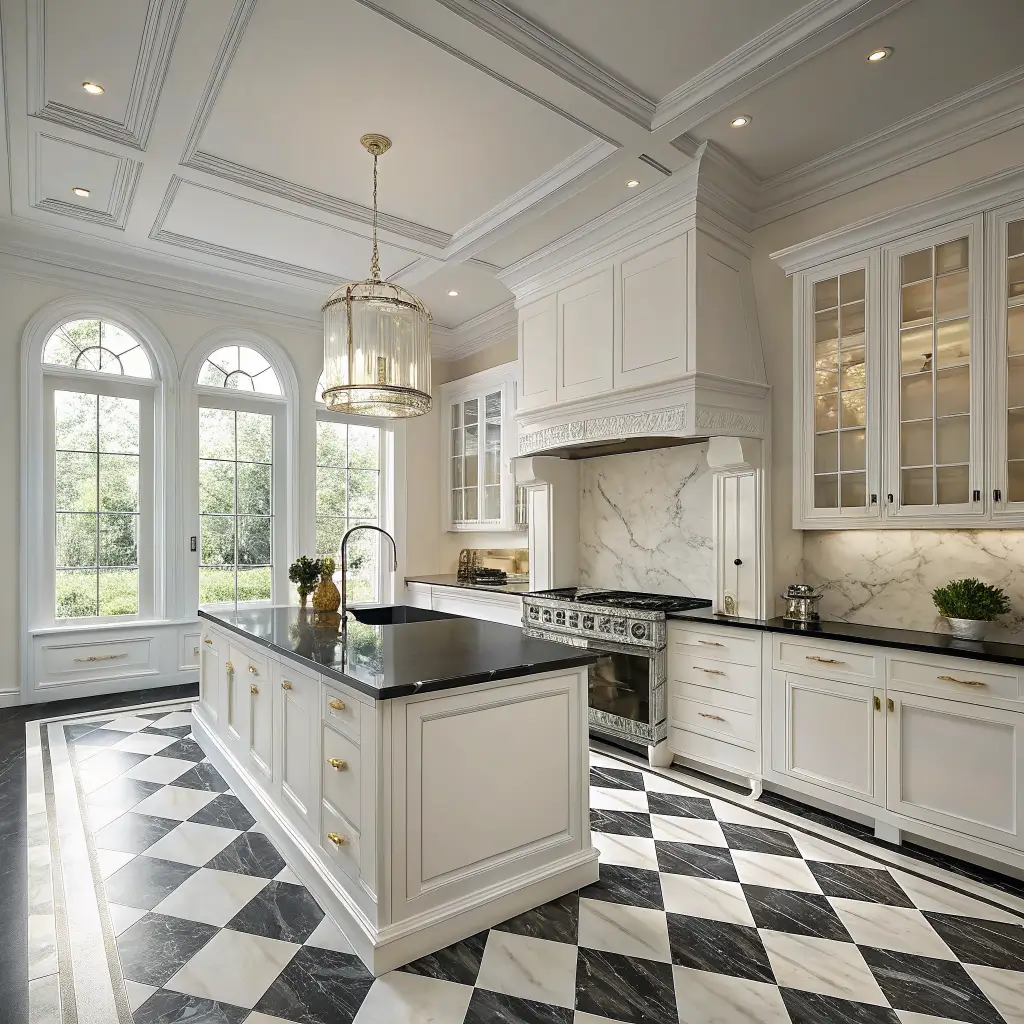
Too much ornament. Carved corbels and fluted pilasters and rope molding and a coffered ceiling. Pick one or two classical details and let them breathe.
All white, no texture. A fully white kitchen with no wood tone, no black accent, no stone veining reads flat. Add a warm wood floor, a darker island, or a honed stone with movement.
Modern slab fronts with a chandelier hanging over them. The chandelier alone won’t rescue flat-front cabinets. You need at least one classical cue in the cabinetry itself.
Ignoring symmetry. I rearranged my open shelving three times before I realized the problem was that the shelves themselves weren’t centered on the window. Once I moved them two inches left, everything relaxed.
Under-lighting. Neoclassical rooms in magazines have five or six light sources. Yours needs at least three.
Small-Kitchen and Rental-Friendly Versions
You can do a lighter version of this in a smaller space:
– Paint existing cabinets in a warm cream (Farrow & Ball Slipper Satin or BM Swiss Coffee)
– Swap hardware for unlacquered brass — will patina, looks better every year
– Add a peel-and-stick applied molding to plain slab doors (yes, this actually works if you paint after)
– Hang one small brass lantern where the builder flush-mount was
– Replace the faucet with a bridge-style or gooseneck brass faucet
That’s under $1,500 in most kitchens and it reads neoclassical.
Cross-Style Variations
If pure neoclassical feels too formal:
– Modern neoclassical: keep the molding and symmetry, use cleaner door profiles, drop the chandelier for a sculptural pendant
– Black-and-white neoclassical: white uppers, black or deep charcoal island, brass hardware, checkerboard floor
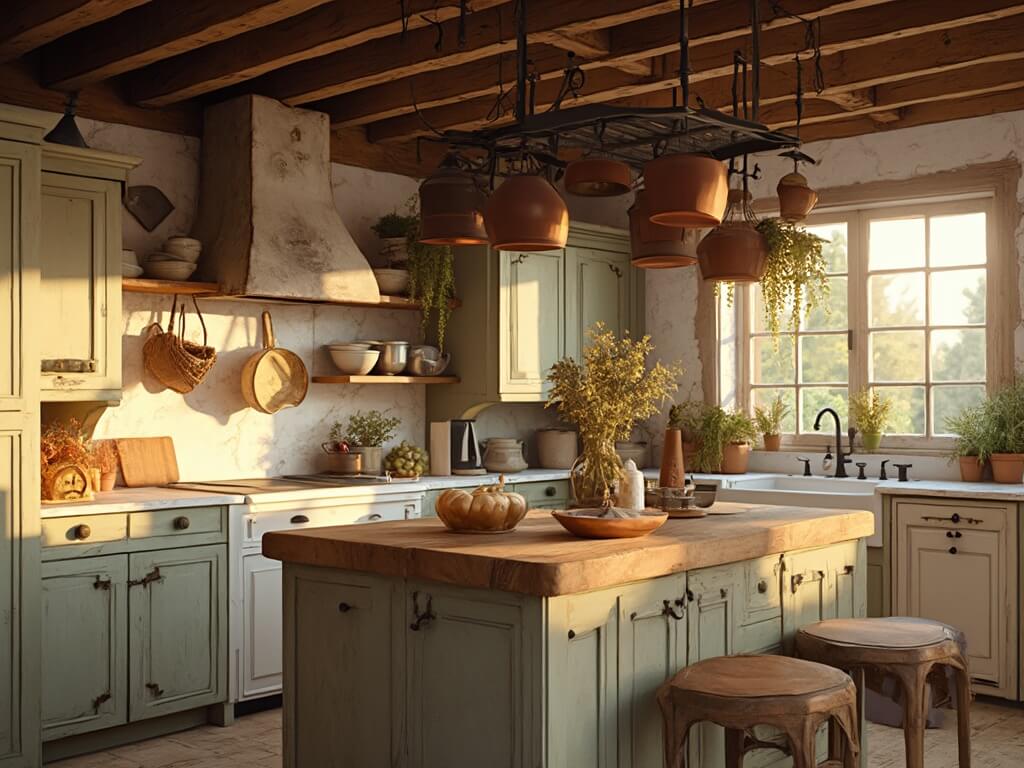
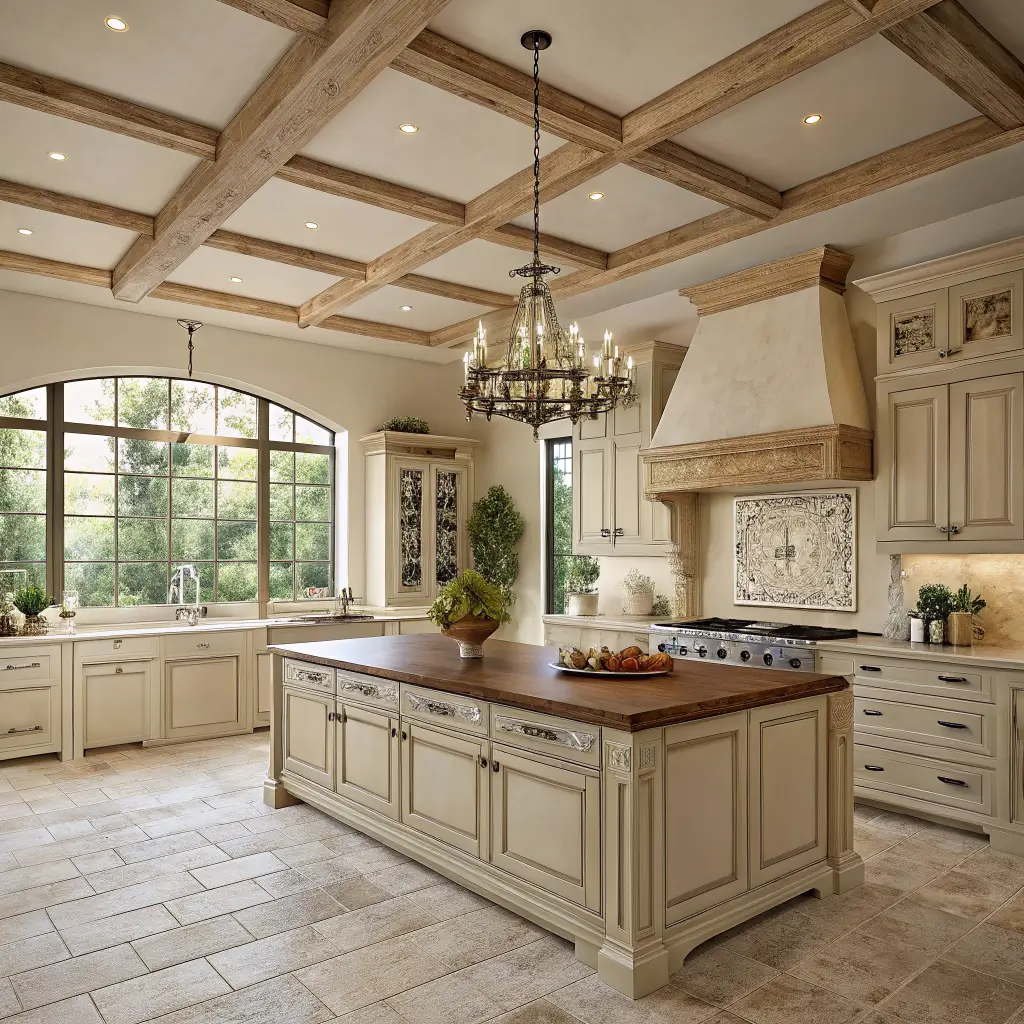
– Neoclassical + French country: warmer woods, softer linen roman shades, a slightly rustic wood island top
– Neoclassical + coastal: ivory, sand, honed limestone, sheer linen curtains, brushed brass
Quick Answers to the Questions I Get Asked
Is marble necessary? No. Marble-look quartz is easier to live with — no etching from lemon juice, no sealing. Real marble looks better and ages more beautifully if you can accept the patina. I chose honed Carrara and I don’t regret it, but I don’t cook with a lot of citrus.
Best cabinet doors? Inset raised-panel or a beveled shaker. Avoid slab.
Best lighting? Layered. Chandelier or paired pendants + recessed + under-cabinet.
Can a small kitchen do this? Yes, but restrain the ornament and skip the giant chandelier. Symmetry matters more than scale.
How do you keep it from feeling dated? Straight lines in the cabinetry, one metal family, editing decor down to a few objects, and modern appliances that don’t try to hide behind panels.
The through-line for all of it: this style rewards restraint. Every time I’ve added something to my kitchen, it’s gotten worse. Every time I’ve taken something away, it’s gotten better.