Black and White Living Room Decor: A Complete Guide to Getting the Contrast Right
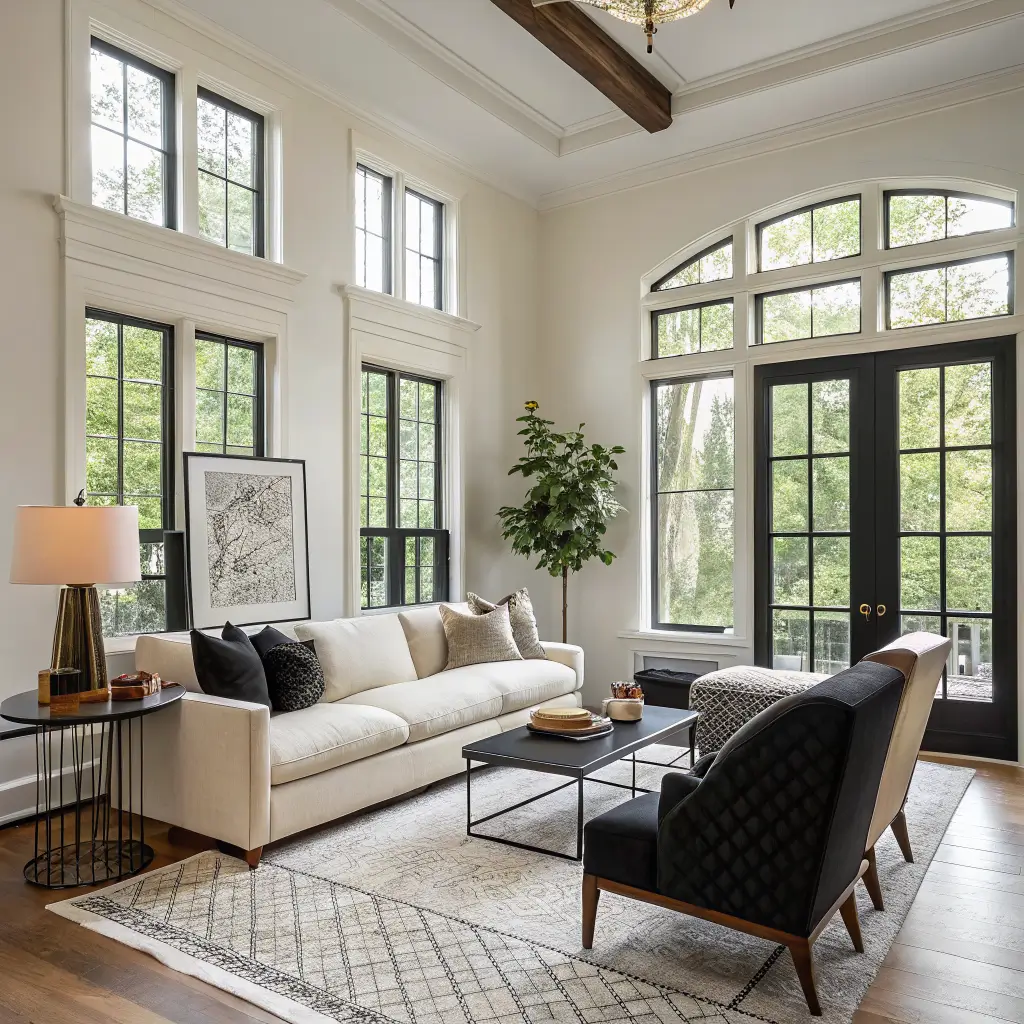
The black and white living room decor is really about balance, not contrast. I kept the walls quiet and let one chair carry the room.
A black and white living room sounds easy until you actually try it — and then the space looks like a dentist’s office, or a moody cave you don’t want to sit in. I’ve made both mistakes. My first attempt had a black accent wall, black leather sofa, black rug, and one sad white pillow trying to hold the whole thing together. It looked like a furniture showroom nobody remembered to turn the lights on in.
The fix wasn’t more stuff. It was better ratios, warmer textures, and knowing where black belongs and where it doesn’t. Here’s what I’ve learned putting my own room together three times before it finally clicked.
Who This Look Is Actually For
Black and white works if you want high contrast with a small color budget. It’s especially good for:
– Renters who can’t paint but can swap textiles, art, and lamps
– Small-space dwellers who need a tight palette to keep things from feeling chaotic
– People who redecorate often — a black-and-white base takes any accent color you throw at it
If you love layered warm neutrals and Pinterest-style “quiet luxury,” this probably isn’t your palette. Black-and-white has a graphic quality. It reads modern even when you soften it.
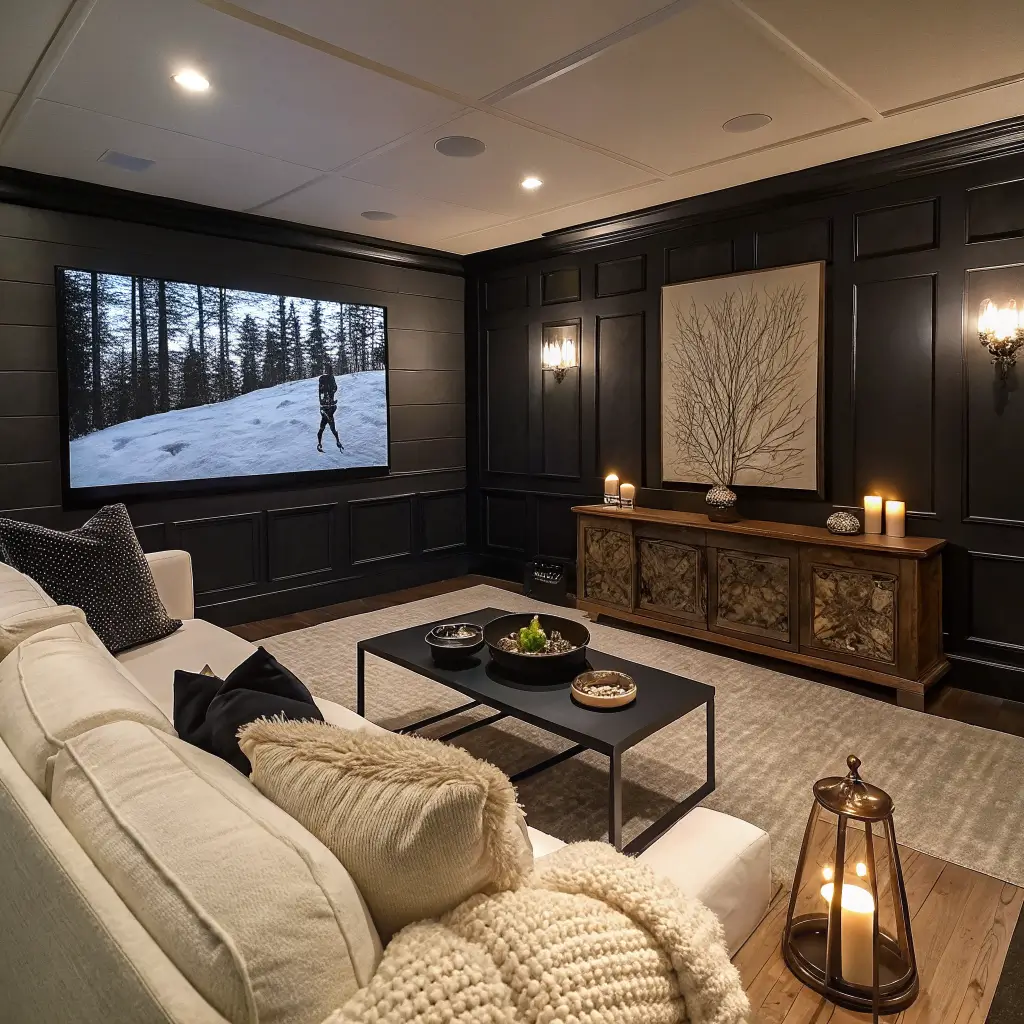
Best rooms for it: main living rooms, open-plan living/dining spaces, and media rooms (black around a TV cuts glare and makes movies look better — this was my favorite side effect).
What It Costs to Do This Well
Budget refresh ($300–$800): You’re keeping your existing furniture and swapping soft goods.
– Black-and-white patterned rug (5’x7′ or 6’x9′): $120–$250
– Four to six pillows in mixed textures: $15–$40 each
– Black frames + printable art: $15–$30 per frame, $20–$60 for print packs
– One black floor or table lamp: $60–$150
Mid-range makeover ($1,000–$3,000):
– White or cream fabric sofa: $600–$1,500 (get performance fabric — non-negotiable if you have a life)
– Black accent chair: $200–$600
– 8’x10′ statement rug: $250–$600
– Paint for accent wall + white walls: $60–$150
– Coffee table (black metal + glass, or black wood): $150–$500
High-end redesign ($3,000+):
– Designer sofa in performance fabric: $2,000–$5,000
– Custom floor-to-ceiling patterned curtains: $500–$1,500
– Designer lighting (brass chandelier, sculptural floor lamp): $400–$2,000
Timing-wise, a soft refresh is a weekend of shopping and styling. A full re-do with paint, deliveries, and a new sofa is two weekends minimum.
The Colors That Actually Work
The mistake most people make is using pure white and pure black straight from the tube. It’s too clinical.
Whites I’d pick:
– Benjamin Moore Chantilly Lace for crisp, clean walls with almost no undertone
– A soft off-white or warm cream if your room gets north light and needs help feeling warm
Blacks I’d pick:
– Sherwin-Williams Tricorn Black — the most neutral black on the market, and my personal pick for trim and accent walls. Blacks with blue or green undertones look bruised in certain light. Tricorn just looks black.
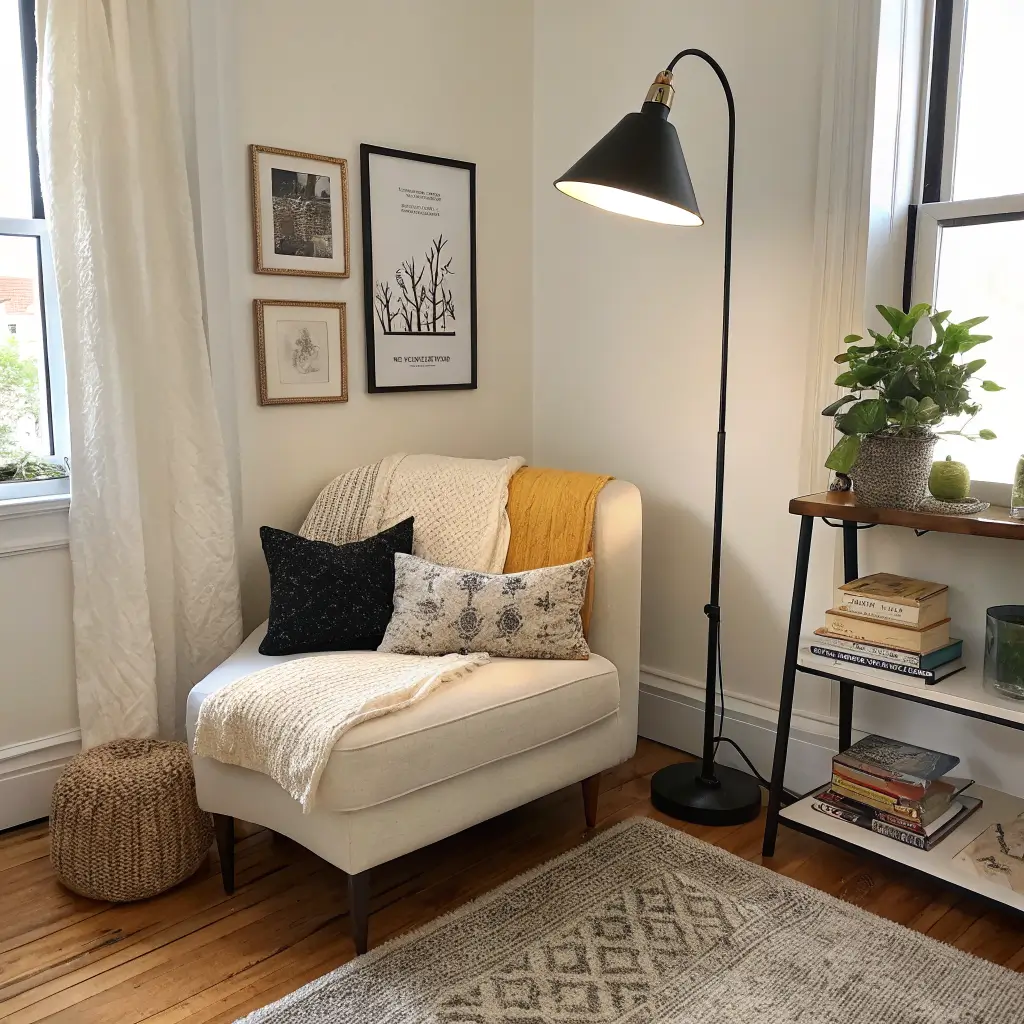
Grey is the peacemaker. One or two mid-grey tones make the contrast feel intentional instead of harsh. I use grey in a linen throw and a ceramic lamp base — small doses, big effect.
Accent colors that hold up:
– Bold: cobalt, mustard yellow, tomato red, jewel-tone emerald or teal
– Softer: blush pink, olive, sage, terracotta
Pick one accent color and repeat it in three places. Not one of each color across the room.
The Pieces That Do the Heavy Lifting
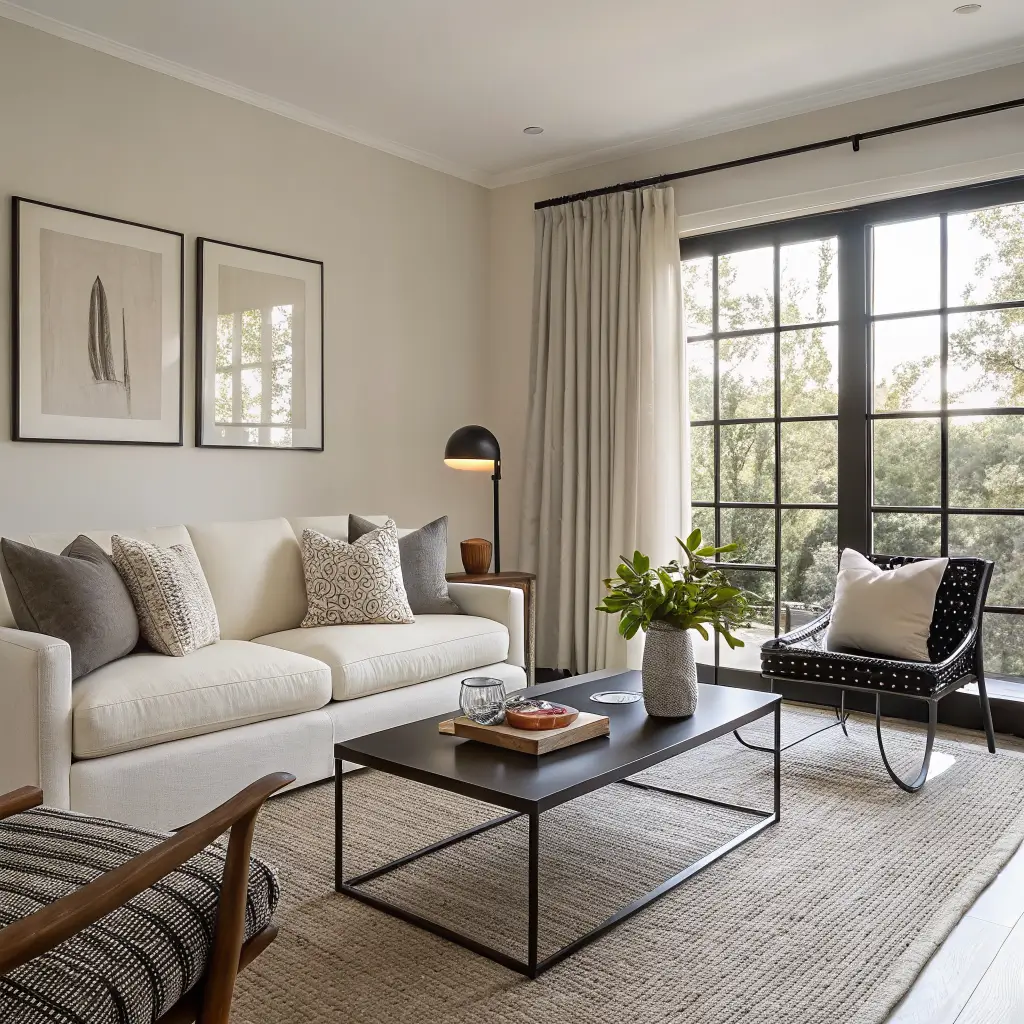
The sofa. A white or cream fabric sofa is the piece I’d anchor around. 80″–90″ for a three-seater, 100″+ for a sectional. Performance fabric or you’ll hate yourself in six months. Straight lines feel more modern; a slight curve softens the whole room.
The rug. This is where you get to have fun. A geometric, striped, or checkerboard rug in black-and-white anchors the seating and gives the eye somewhere to land. Front legs of the sofa and chairs should sit on the rug — a rug that’s too small is the single most common styling mistake I see.
One or two accent chairs in black. Black leather has an industrial edge; black boucle or fabric softens things. I have a black cane-back chair I found on Facebook Marketplace for $80 and it’s the most complimented piece in my apartment.
A coffee table with visible legs. Black metal + glass, or black wood with a lighter top. Keep it 16″–18″ from the sofa edge. Chunky solid tables shrink small rooms.
Lighting — and this is where people cheap out and regret it. Matte black lamps are your friends. Two table lamps or a floor lamp minimum. Use warm white bulbs (2700K) — cool bulbs turn a black-and-white room into an interrogation scene.
How to Layer It So It Doesn’t Feel Cold
This is the part I got wrong for over a year. A monochrome room without texture reads flat. The solution is stacking materials that catch light differently.
Mix these deliberately:
– Matte and glossy: flat paint walls, glossy ceramic vase, glass tabletop
– Smooth and nubby: linen curtains next to a boucle pillow, velvet cushion on a linen sofa
– Hard and soft: metal lamp, wool rug, wood side table
The wood part matters. A light or medium wood coffee table or sideboard is what saved my room. Pure black-and-white with metal and glass only will always feel like a hotel lobby. Add a piece of walnut or oak and the whole room exhales.
Pattern rule I follow: one dominant pattern (usually the rug), one supporting pattern (a pillow or curtain), and everything else stays solid or subtly textured. Three bold patterns fight; two harmonize.
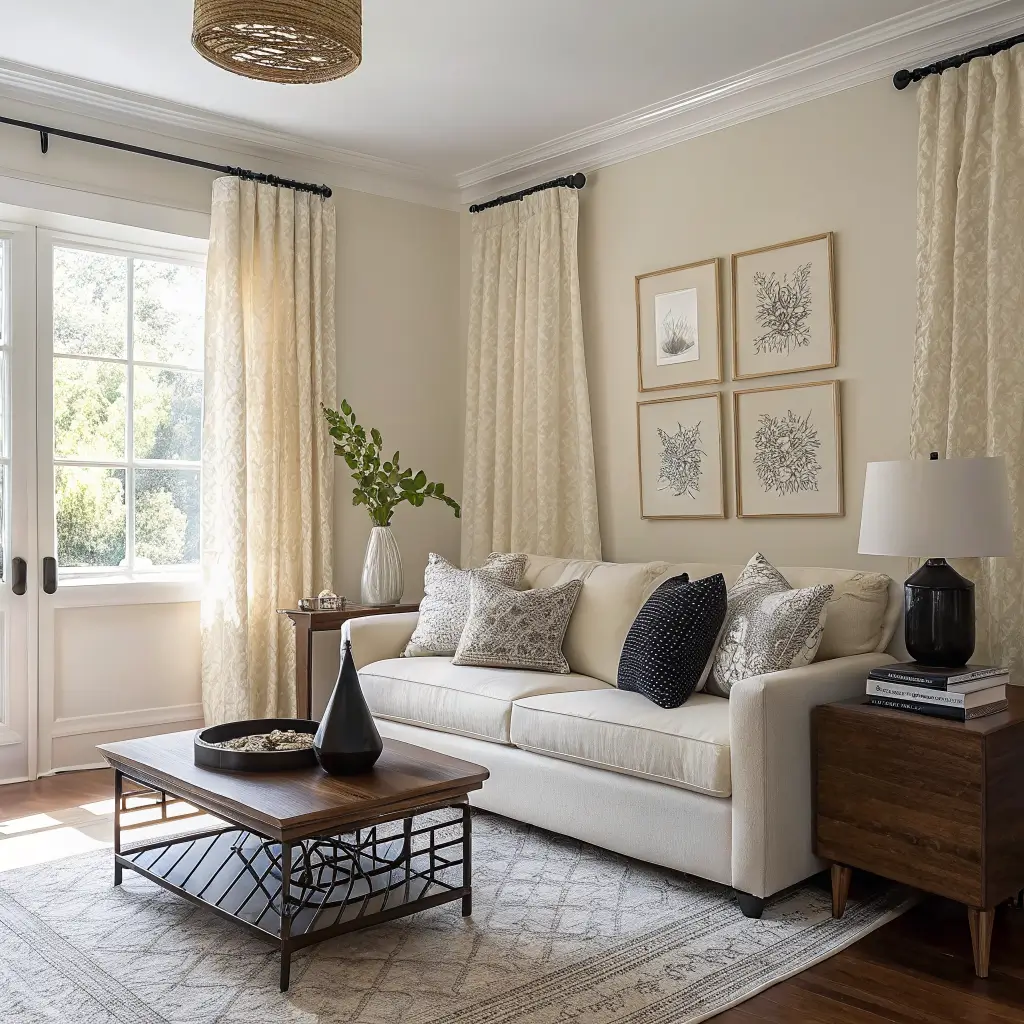
Where to Put the Black
This is the piece nobody explains well. Black shouldn’t be scattered evenly like sprinkles.
– Keep heavy black low. Rug, coffee table, sofa base. It grounds the room.
– Keep white and light above eye level. Walls, ceiling, curtains, upper shelving. It keeps the space feeling open.
– Frame the room with black. Skirting boards painted black, black window frames, black door hardware. This is the trick that makes a room look tailored instead of scattered.
– Repeat black in at least three spots — a lamp, a set of frames, and a chair, for example. One black object floating alone looks like a mistake.
For a small room (150–200 sq ft), keep walls white and use black only in accents. In a larger, bright room (250+ sq ft), one black accent wall behind the sofa or TV adds serious drama without swallowing the space.
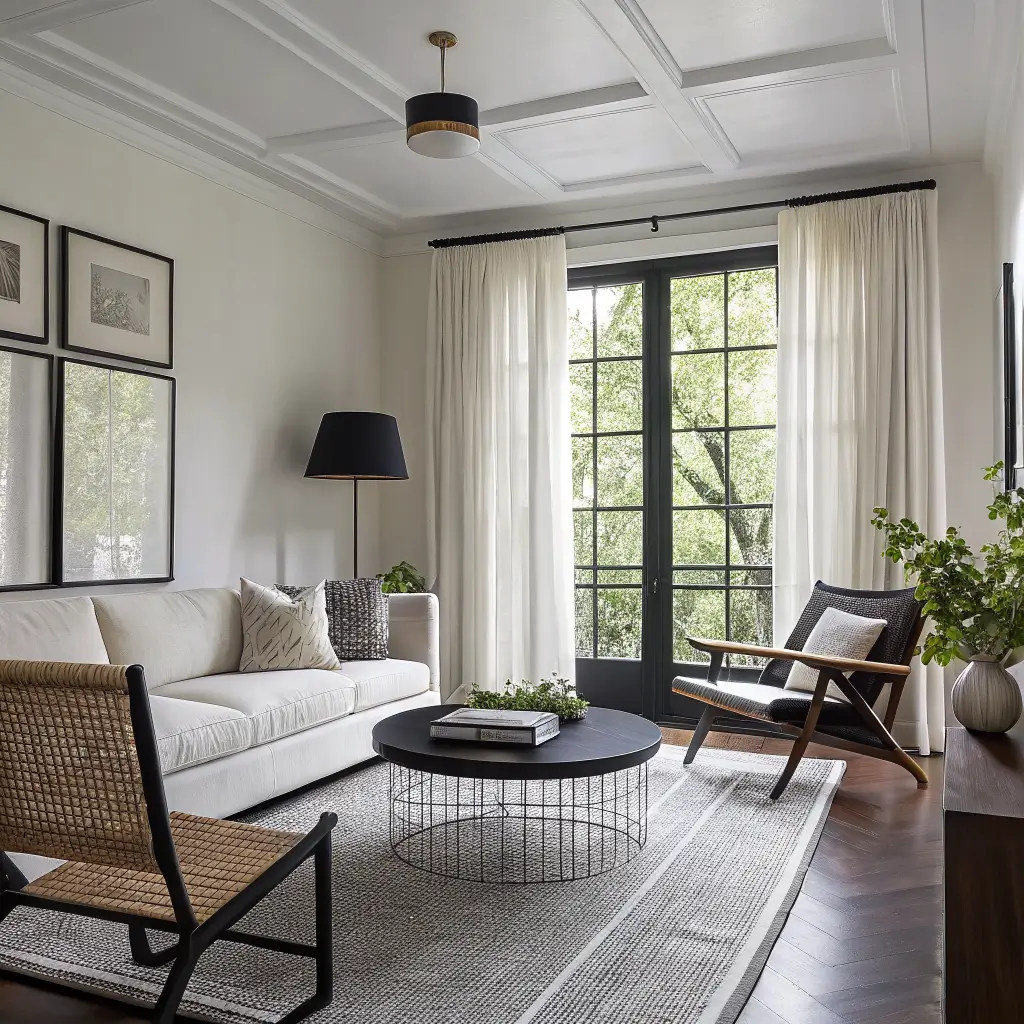
The Focal Point Question
Every room needs one thing your eye lands on first. Pick one:
– White sofa against a black wall
– Black-painted fireplace surround
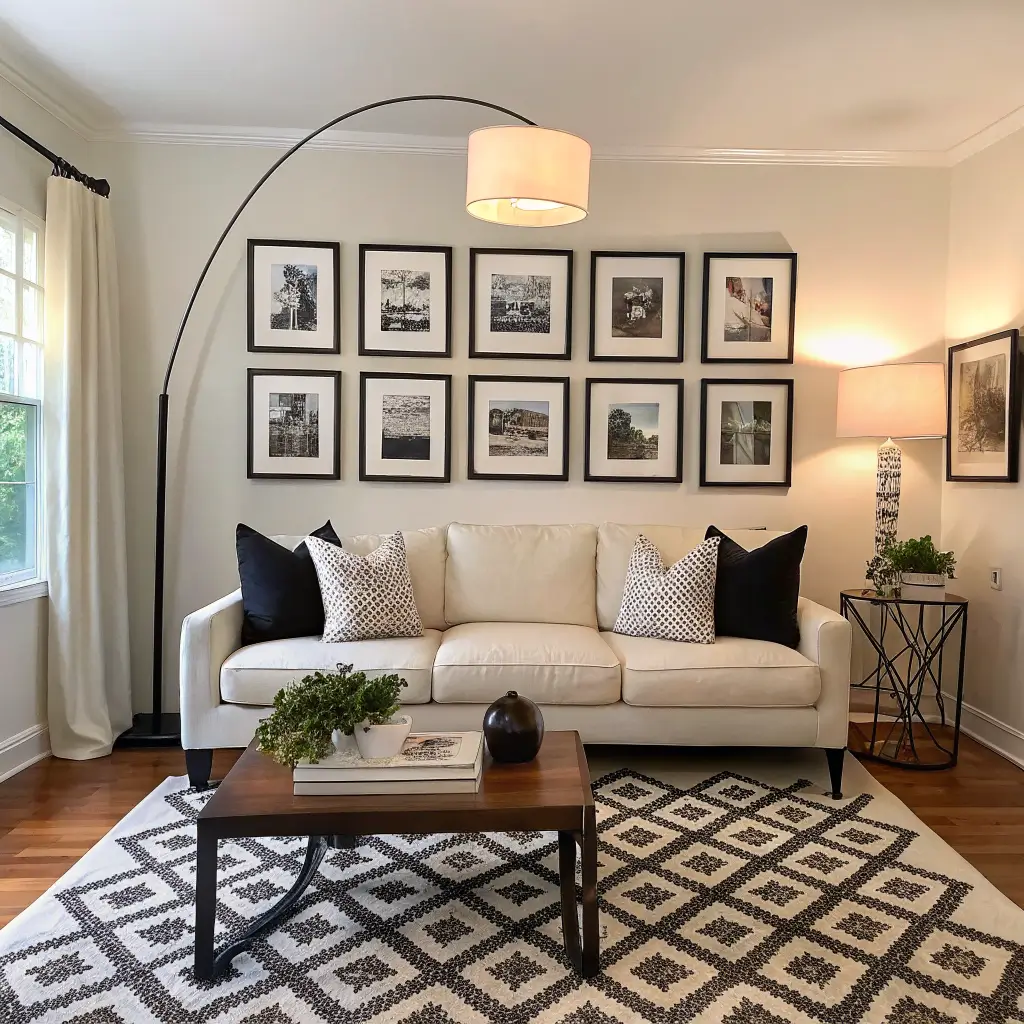
– A large gallery wall of black-and-white photography with black frames and white mats
– One oversized piece of art
Not all of the above. When everything competes, nothing wins.
For gallery walls, lay the whole arrangement on the floor first and photograph it before you put a single nail in the wall. I skipped this step once and ended up with fourteen holes in drywall for a nine-frame layout.
Common Mistakes I’ve Made (or Watched Friends Make)
Painting a dim room black. If your room gets one window of afternoon light, black walls will make it feel like a basement. Keep walls light and use black in furniture and trim instead.
All smooth, all cold. Flat leather, flat paint, glass, chrome. No knits, no wood, no plants. The room reads like a photo instead of a home. Fix: chunky throw, wool rug, one wood piece, warm bulbs.
Every pattern turned up to eleven. Black-and-white stripes on the rug, houndstooth pillows, geometric curtains, checkerboard art. Pick one graphic hero. Everything else supports.
Ignoring undertones. I once bought a “black” paint that turned out deep navy in my afternoon light. Buy sample pots. Look at swatches at 9 a.m., 2 p.m., and 8 p.m. under your actual lamps.
No hierarchy. Twelve small black objects with no anchor piece. Your eye has nowhere to rest. Fix: one big black moment (chair, wall, art), then smaller echoes.
Seasonal Swaps That Keep It From Feeling Static
The best part of this palette is how easily it flexes:
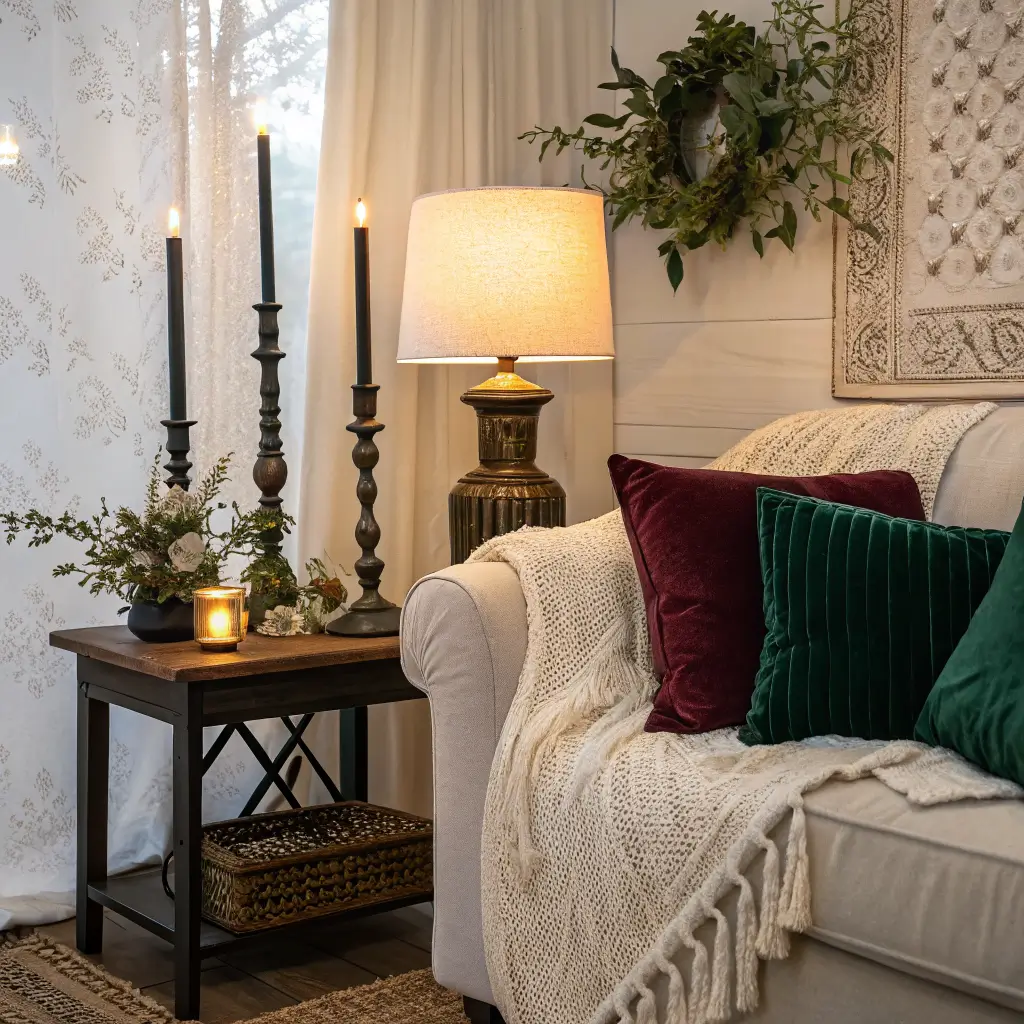
– Fall/winter: swap in emerald, burgundy, or teal pillows, a chunky cream knit throw, brass candlesticks
– Spring/summer: lighter linen pillow covers, fresh eucalyptus or olive branches in a white vase, a single blush or sage accent
– Holidays: black taper candles in brass holders is the easiest upgrade nobody thinks of
Rotate art seasonally too. Poster prints in black frames are $30 and take five minutes to switch.
Style Variations on the Same Base
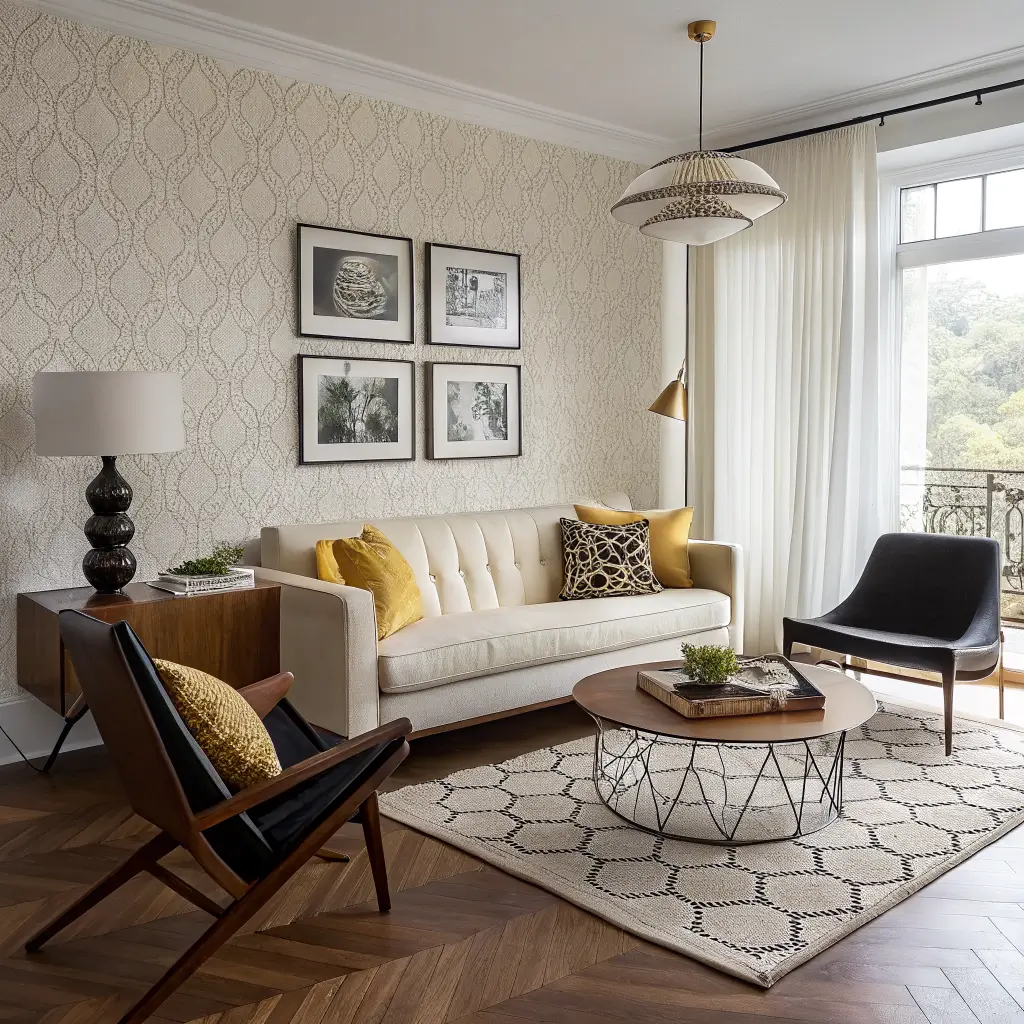
The black-and-white foundation takes different directions depending on what you add:
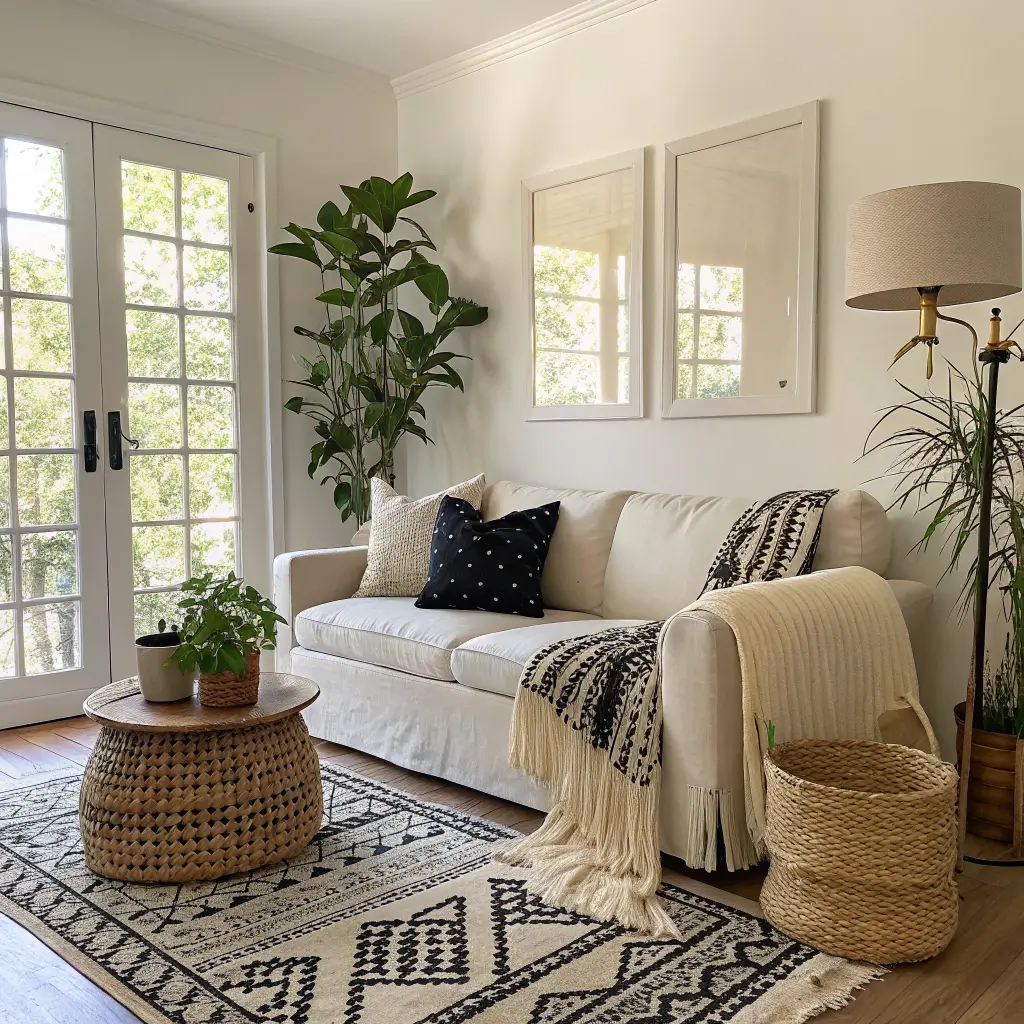
– Boho monochrome: off-white walls, woven wall hangings, patterned kilim-style rugs, lots of plants, natural fiber baskets
– Scandi: light oak wood, softer off-white sofa, minimal accessories, one graphic pillow
– Mid-century: walnut wood, tapered legs, one pop of mustard or teal, geometric art
– Industrial: black metal shelving, leather sofa, exposed Edison bulbs, concrete-look surfaces
Same palette, four very different rooms.
What I’d Buy First If I Were Starting Over
If I had to redo my living room tomorrow with a limited budget, in this order:
1. Rug (defines the space)
2. Two warm-bulb lamps (fixes 80% of the “why does this feel cold” problem)
3. Pillow covers in mixed textures
4. One wood accent piece
5. Framed art
Sofa and paint come after that, and only if the bones aren’t working. Most black-and-white rooms don’t need more furniture — they need better light, better texture, and one fewer pattern.