What Contemporary Actually Means (and Who It’s For)
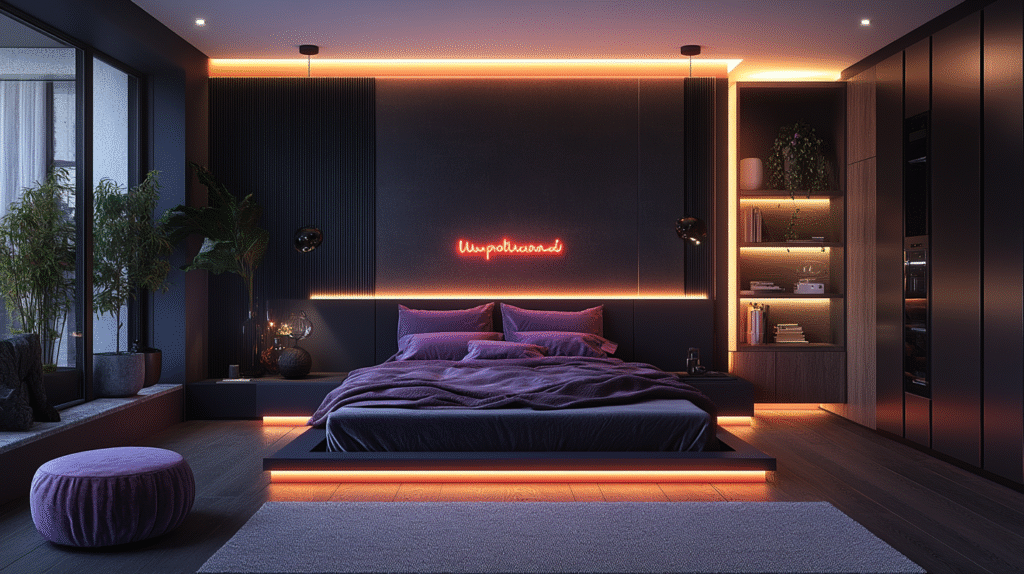
The contemporary bedroom design I built around was calm lines and one strong headboard. The room reads current without dating in a year.
Contemporary isn’t the same as minimalist. Minimalist is austere. Contemporary borrows the clean lines but adds warm woods, soft textiles, and curated pieces so the room feels lived-in. Think of it as Scandi comfort meets hotel-suite discipline, with a little organic modern texture layered in.
This look is right for you if:
– You want a calm, uncluttered room but hate the word “sterile”
– You’d rather refresh with new bedding and art than repaint every two years
– You have a small city bedroom that needs to feel bigger
– You want storage that doesn’t dominate the room visually
It works in bedrooms as small as about 100 sq ft all the way up to a full primary suite. It’s especially good for guest rooms — nobody has ever complained about a room that feels like a nice hotel.
Time and Budget: What You’re Actually In For
Light refresh (paint, bedding, lamps, a rug, some art): 1–2 weekends and roughly $700–$2,000.
Full redesign (new bed, storage, lighting, paint): 2–4 weeks once you factor in furniture delivery, running around $2,500–$6,000 mid-market.
High-end with custom headboards or built-ins: $6,000–$15,000+.
Real 2025 U.S. price points I’d budget for:
– Platform or low-profile bed frame: $300–$1,200 (Ikea, Wayfair, CB2, West Elm)
– Queen mattress: $800–$1,800
– Nightstands: $100–$400 each
– Dresser or minimal wardrobe: $400–$1,500
– Sheet set (percale or sateen): $80–$250
– Duvet + cover: $120–$300
– 8’×10′ rug for a queen: $200–$800
– Blackout or linen drapes: $80–$300 per window
– Bedside lamps or sconces: $80–$300 each
– Pendant or chandelier: $150–$600
The two places I’d spend more: the mattress and the rug. Everything else you can find a good version of at a normal price.
The Look: Colors, Materials, and What Ties It Together
Palettes that keep working
– Warm neutral base: soft white, warm ivory, greige, stone, taupe, pale grey
– Warm accents: rust, terracotta, camel, sand, muted ochre
– Earthy/cool accents: sage, olive, eucalyptus, slate blue, ink navy
– Graphic contemporary: black and white, hotel-style
– Monochrome cocoon: ivory → sand → tan, all in the same family
The monochrome warm-neutral thing is what I ended up doing in my own bedroom after painting one wall a deep green I loved for about six weeks and then couldn’t stand. A room in three shades of the same warm neutral looks more expensive than it is. That’s the trick.
Materials to repeat
– Pale woods — oak, ash, birch — for bed frames, nightstands, and picture frames
– Upholstered surfaces — linen or bouclé headboards, a bouclé chair in the corner
– Natural textiles — cotton, linen, wool, some nubby texture
– Stone or marble — one small piece, like a nightstand tray or a lamp base
– Black metal in thin lines — lamp arms, drawer pulls, picture frames
The rule I keep coming back to: pick one wood tone and repeat it three times minimum. In my room, the same white oak shows up in the bed frame, the nightstands, and the frames above the bed. That repetition is what makes it look designed instead of assembled.
The Hero Pieces
The bed
Get a low-profile or platform bed, ideally upholstered. Low beds make the ceiling feel higher, which matters enormously in a small room. If you can swing an oversized or extended headboard — wider than the mattress, or a full wall of vertical slats behind the bed — do it. That’s the single biggest “this looks like a magazine” move you can make.
I bought a tall, tufted headboard when I first did my bedroom. Regret. It felt like it was closing in on me. I replaced it with a low, wide linen headboard about 12 inches taller than the mattress and the whole room opened up.
Nightstands
Floating (wall-mounted) nightstands are worth the drilling. They keep the floor visible, which makes the room read as bigger, and they force you to keep the surface tidy because you can see under them. If you can’t mount them, get slim-legged ones — nothing chunky, nothing boxy.
Storage
Closed storage, always. Flat fronts, integrated pulls, no hardware drama. A single well-chosen dresser beats two mismatched pieces. If you have the space and budget, built-in wardrobes with flush doors are the highest-impact contemporary move you can make.
One extra piece
A bench at the foot of the bed or a sculptural accent chair in the corner. Not both, unless the room is big. That single piece is where you get to have a little fun — a bouclé chair, a caned bench, something with a shape.
Lighting: The Thing Most People Get Wrong
If I could go back and yell at myself about one thing from my first attempt, it would be lighting. I had a single overhead bulb and two matching table lamps and I thought I was done. The room felt like a dentist’s office at night.
You need three layers, minimum:
– Ambient: overhead pendant or flush mount, always on a dimmer
– Task: bedside sconces or lamps for reading
– Accent: LED strip behind the headboard, a small corner lamp, or a candle
Bulb temperature matters more than fixture choice. Use warm white bulbs around 2700K. Anything cooler and the room reads clinical. I switched every bulb in my bedroom to 2700K and it did more for the mood than a new coat of paint would have.
Wall-mounted sconces beside the bed instead of table lamps are the move if you want to free up nightstand surface — and they photograph like you paid a designer.
Putting It Together: The Order I’d Do It In
1. Paint first. Soft neutral. Warm white, greige, or pale stone. Do this before anything else lands in the room.
2. Place the rug. Under the front two-thirds of the bed, extending at least 24 inches past each side. A too-small rug ruins the room; if you have to choose, go bigger.
3. Move in the bed and nightstands. Center the bed on the main wall, ideally the one you see when you walk in.
4. Hang the lighting. Pendant, sconces, whatever. Get the wiring done before the room is styled.
5. Dress the bed. Fitted sheet, flat sheet, duvet with cover, then a quilt or coverlet folded across the foot. Two sleeping pillows, then 2–3 accent pillows — never a pyramid of ten.
6. Hang curtains high and wide. Rod goes 4–6 inches above the window frame and extends 6–10 inches past each side. This is the cheapest way to make windows and ceilings look bigger.
7. Art last. One or two large pieces. Not a gallery wall of small ones — that’s a different aesthetic.
The 60-30-10 Rule (The One Design Rule Worth Following)
– 60% main neutral — walls, big furniture
– 30% secondary tone — rug, curtains, headboard
– 10% accent — pillows, art, one plant pot
For a black-and-white scheme specifically: keep the black in thin lines only — lamp bases, frame edges, drawer pulls. Big blocks of black in a bedroom feel heavy fast.
Common Mistakes I See (and Made)
Overcrowding the room. If you have to sidestep to get to your closet, cut a piece of furniture. You need 24–28 inches of clear space around the bed to move comfortably.
One overhead light and calling it done. Covered above. Three layers or the room feels wrong and you won’t know why.
Mixing ornate traditional furniture with sleek modern accents without a bridge. If you’re keeping a curvy inherited dresser, ground it with simple bedding and modern lighting so it reads as intentional.
Open shelving stuffed with stuff. Contemporary means closed storage. If you have open shelves, either curate them ruthlessly (five objects, not fifty) or swap them for cabinets.
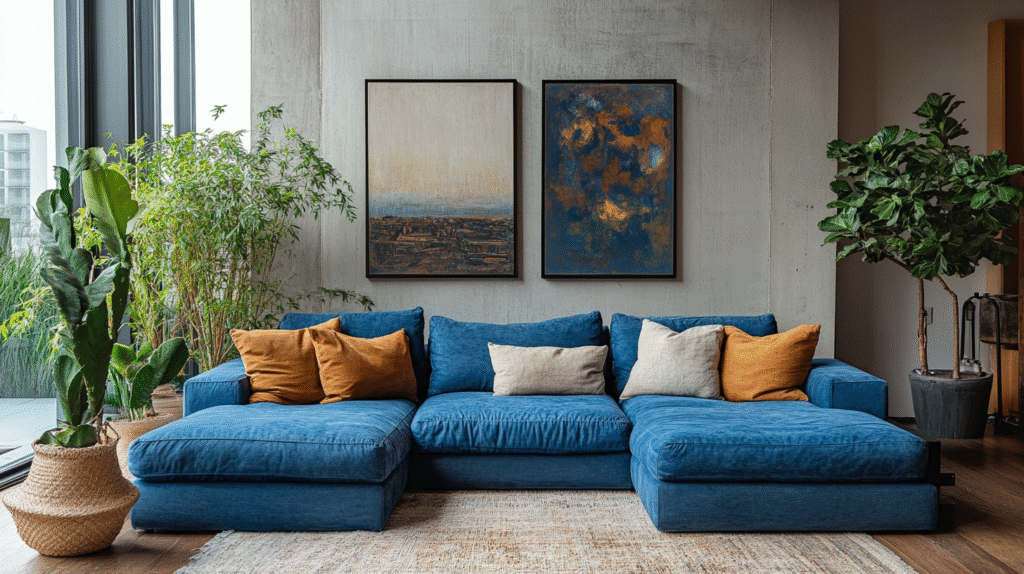
Going too cold. All white and grey with no wood, no texture, no plant. Fix it with a wood-toned bench, a chunky wool throw, and one real plant — a 4-to-5-foot olive tree or fiddle-leaf fig in the corner past the dresser does more than any decorative object.
Seasonal Swaps That Actually Work
The whole point of a neutral base is that you can shift the room without redoing it.
– Fall/winter: chunky knit throw, wool blanket, rust or ochre pillow covers, an amber candle
– Spring/summer: linen throw, sage or slate blue pillow covers, fresh eucalyptus on the nightstand
Two pillow covers and a throw. That’s the whole seasonal update. Maybe $60.
Budget Refreshes That Punch Above Their Weight
– Peel-and-stick vertical slat panel behind the bed — dramatic and rental-safe
– New hardware on existing wardrobes — swap brassy gold for matte black, or vice versa
– Replace only the lighting — a sculptural pendant plus two sconces can modernize a decade-old room
– New bedding in a single tonal palette — ivory, oatmeal, and camel is a formula that always works
Cross-Style Variations
If straight contemporary feels too pared back, blend it:
– Contemporary + Boho: neutral base, one patterned rug, a couple of woven baskets, two patterned pillows — all within a tight color palette so it doesn’t tip into cluttered
– Contemporary + Coastal: soft whites and sands, muted blue accents, light woods, linen drapes. Skip anything shell-shaped.
– Contemporary + Organic Modern: limewashed or plaster walls, a raw-wood bench, a stone lamp, one big branch in a floor vase
The blend I’d recommend if you can’t pick: contemporary with organic modern touches. It’s the version that ages best and photographs well without effort.
One last thing. The bedroom I have now has fewer things in it than the one I started with, and I like it more. That’s usually the answer when a room feels off — not another decorative object, but one less.