Japandi Design: A Real-Person Guide to Getting the Look Right (Without It Feeling Cold)
The japandi design look is the one I landed on after too much stuff. Quiet lines and one natural material per surface made the room finally breathe.
Japandi design is what you land on when you love minimalism but your all-white living room still feels like a dentist’s office. That’s the actual problem most people are trying to solve — how to strip a space back without stripping the warmth out of it. The style fuses Japanese wabi-sabi (the beauty of imperfect, handmade, slightly weathered things) with Scandinavian hygge (that lived-in coziness the Danes are annoyingly good at). Done right, it’s calm and grounded. Done wrong, it looks like a hotel lobby.
I’ve been rearranging my own place around this style for about two years now, and I’ve made most of the mistakes I’m going to warn you about. Let’s get into it.
Who Japandi Actually Suits
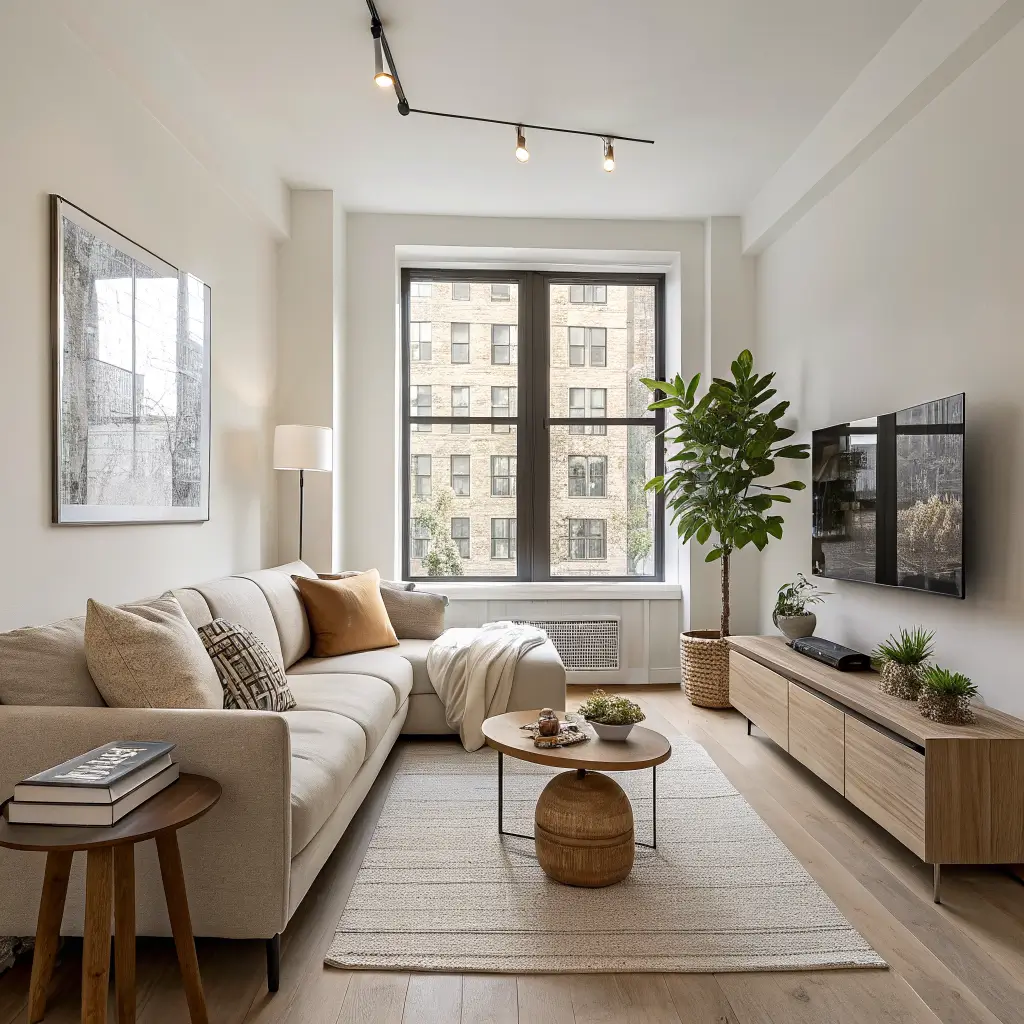
If you want your home to feel like a place to exhale, this is the style. It works especially well if you:
– Live in a smaller apartment (300–800 sq ft) where clutter shows fast
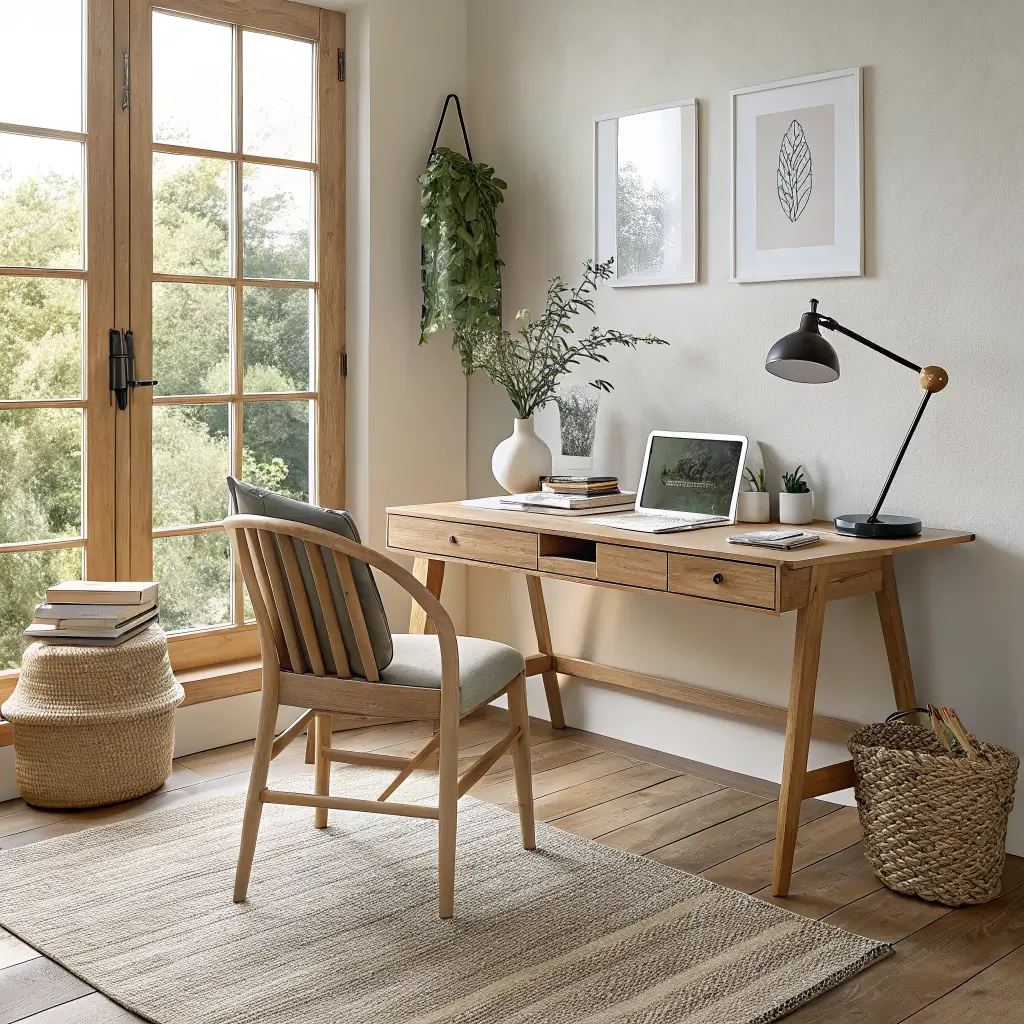
– Work from home and need visual quiet
– Care about buying fewer, better things
– Get overwhelmed by heavy pattern and color
It works less well if you’re someone who genuinely loves collecting stuff and displaying it. Japandi is a lifestyle commitment as much as a look — you have to be willing to put things away.
Best rooms for it: living rooms with decent natural light, bedrooms, dining areas, and home offices. It struggles in ornate Victorian or heavily traditional architecture unless you’re willing to simplify the bones first.
The Color Palette I Actually Use
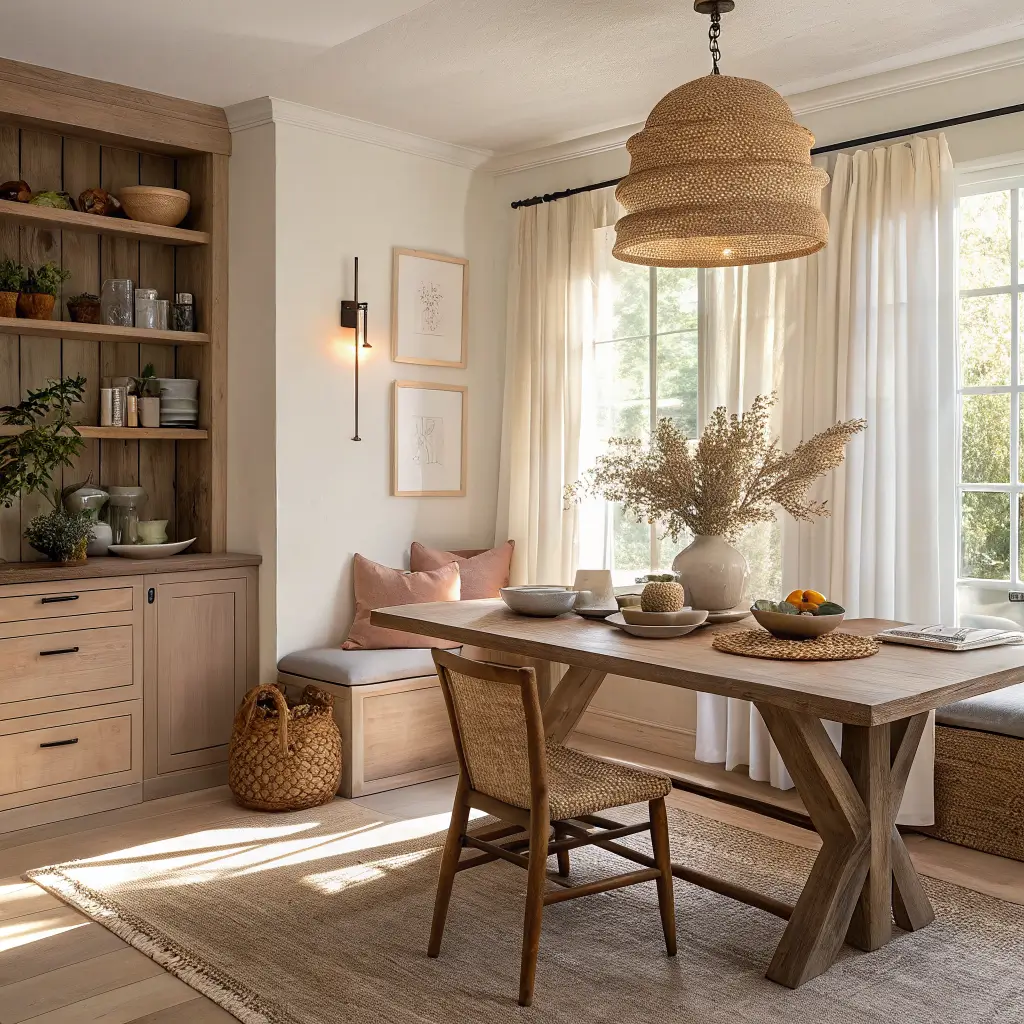
Forget stark white. That’s the single biggest mistake people make when trying this style. You want warm neutrals with a beige or taupe undertone, not cool blue-grays.
My core palette:
– Chalky off-white on walls (I use Farrow & Ball “Shaded White” or Benjamin Moore “Swiss Coffee”)
– Greige and mushroom for larger textiles
– Oak tones across most wood
– Soft black or espresso in tiny doses — lamp bases, chair legs, picture frames
The “Japandi 2.0” shift happening right now is toward deeper earth tones: dusty olive, terracotta, smoky mauve, burnt umber, even inky aubergine on a single wall. I painted the back of my built-in shelving in a clay color last spring and it made the whole room feel finished in a way it never did before.
Rule of thumb: if your grays lean blue, they’ll fight your wood tones. Pull everything warm.
Materials That Do the Heavy Lifting
Japandi lives or dies on materials. Color is secondary.
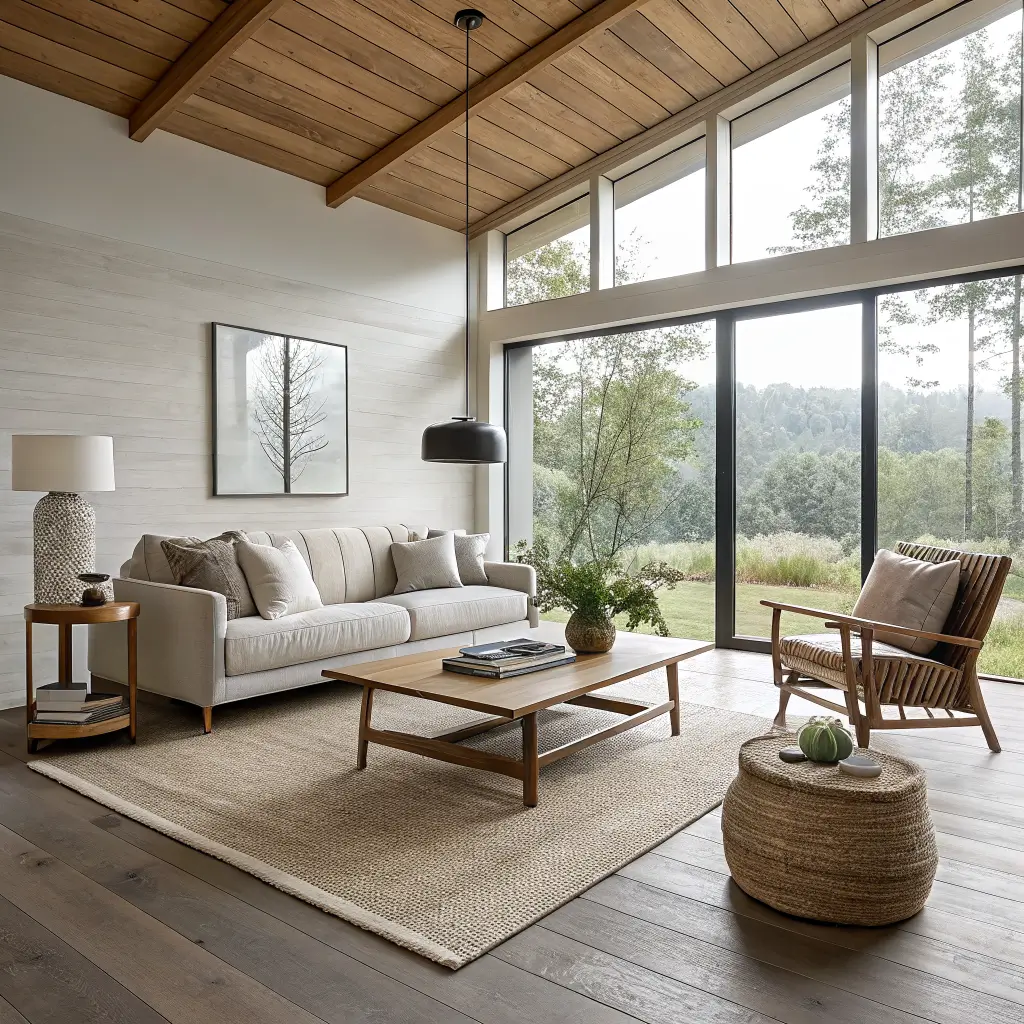
– Wood: oak, ash, beech, walnut — light to medium tones mostly, with occasional smoked or dark-stained pieces for contrast
– Textiles: linen (especially slubbed or stonewashed), cotton, wool, jute, hemp
– Hard surfaces: ceramic, stone, paper, rattan, wood-look porcelain tile
– Metals: brushed brass, aged bronze, blackened steel — sparingly, and never shiny chrome
The texture mix is what saves the style from feeling sterile. A room with a smooth oak table, a slubby linen sofa, a coarse jute rug, and a hand-thrown ceramic bowl reads as calm and rich even though the color palette is basically three shades of beige.
The Hero Pieces
If you’re building a Japandi living room from scratch, spend the money on these:
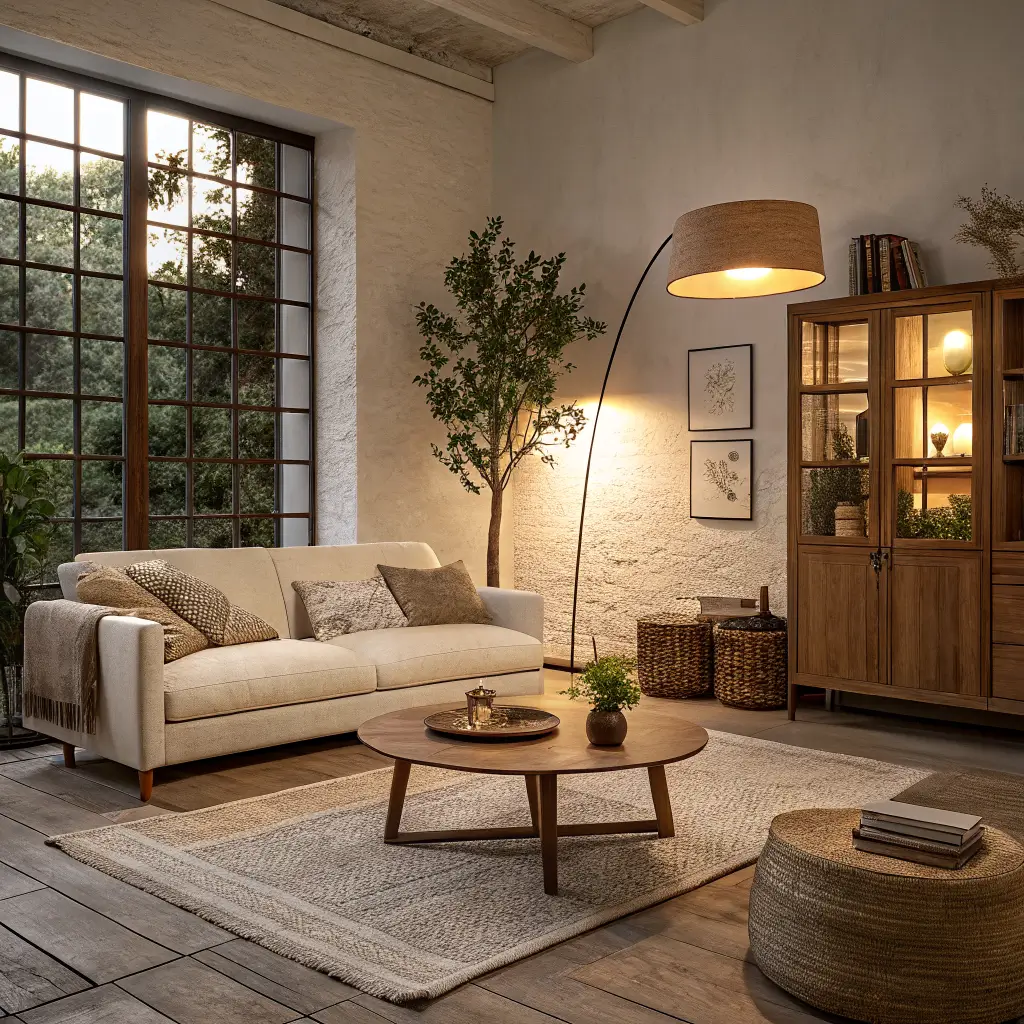
– A low-profile sofa in linen or a nubby neutral fabric. Look for seat heights around 15–18″, depth of 36–40″. Nothing tufted, nothing with rolled arms.
– A solid wood coffee table — oak or ash, low, clean lines. Oval or gently rounded rectangles feel less rigid than sharp squares.
– A sideboard or credenza with flat fronts and integrated pulls. This is your clutter hider. Non-negotiable.
– A statement pendant or floor lamp — rice paper, fabric drum, or a matte ceramic base. Never a builder-grade boob light.
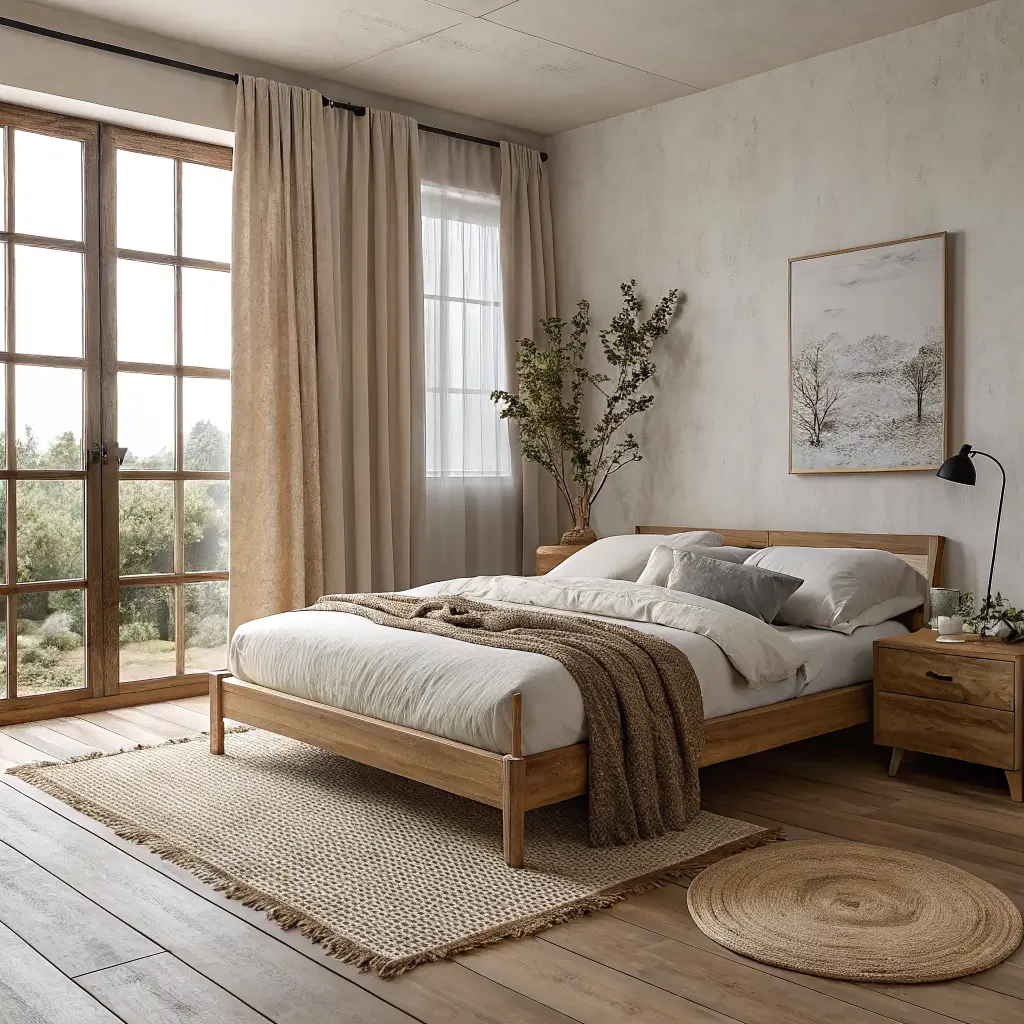
For a bedroom, the anchor is a low platform bed in oak or beech with a minimal headboard or none at all.
What This Actually Costs
I’ll give you real numbers because vague “budget-friendly” ranges are useless.
Entry-level refresh ($400–$1,000):
– IKEA solid wood coffee table: $80–$200
– Linen cushion covers and throws: $20–$60 each
– Paper lantern pendant: $40–$120
– Jute or flat-weave rug: $100–$250
Mid-range full room ($3,000–$6,000):
– Low-profile linen sofa: $900–$2,500
– Solid oak coffee or dining table: $400–$1,200
– Accent chair: $300–$800
– Layered rugs (jute base + wool top): $300–$800 combined
– Oak or walnut sideboard: $600–$1,500
Where I’d spend the money: the sofa and the sideboard. Both get used constantly and both are visually dominant. Cheap sofas sag in two years and a bad sideboard ruins a whole wall.
Where I’d save: ceramics (thrift stores and estate sales are goldmines — my favorite bowl cost $4 at a church rummage sale and looks like a $180 piece from a Brooklyn ceramics studio), rugs (IKEA and Article both have decent jute), and lighting shades (paper pendants are cheap almost everywhere).
How to Put It Together
Do it in this order. I’ve rearranged my living room enough times to know that skipping steps means starting over.
1. Set the envelope. Paint walls first, before any furniture arrives. Warm off-white or a soft greige. If you’re renting and can’t paint, focus on flooring or a large area rug that sets the tone.
2. Place the big furniture. Sofa near the light, not against the darkest wall. Leave at least 18″ between the coffee table and seating. Keep everything low — tall bookcases and towering armoires kill the horizontal calm this style depends on.
3. Add closed storage before decor. This is the step everyone skips. If you don’t have somewhere to hide the mail, the chargers, and the random hand cream, your Japandi room becomes a cluttered Japandi room within a week.
4. Layer textiles. Rug first, then cushions, then throws. Vary texture more than color. Two beige cushions in different weaves look better than two cushions in two different colors.
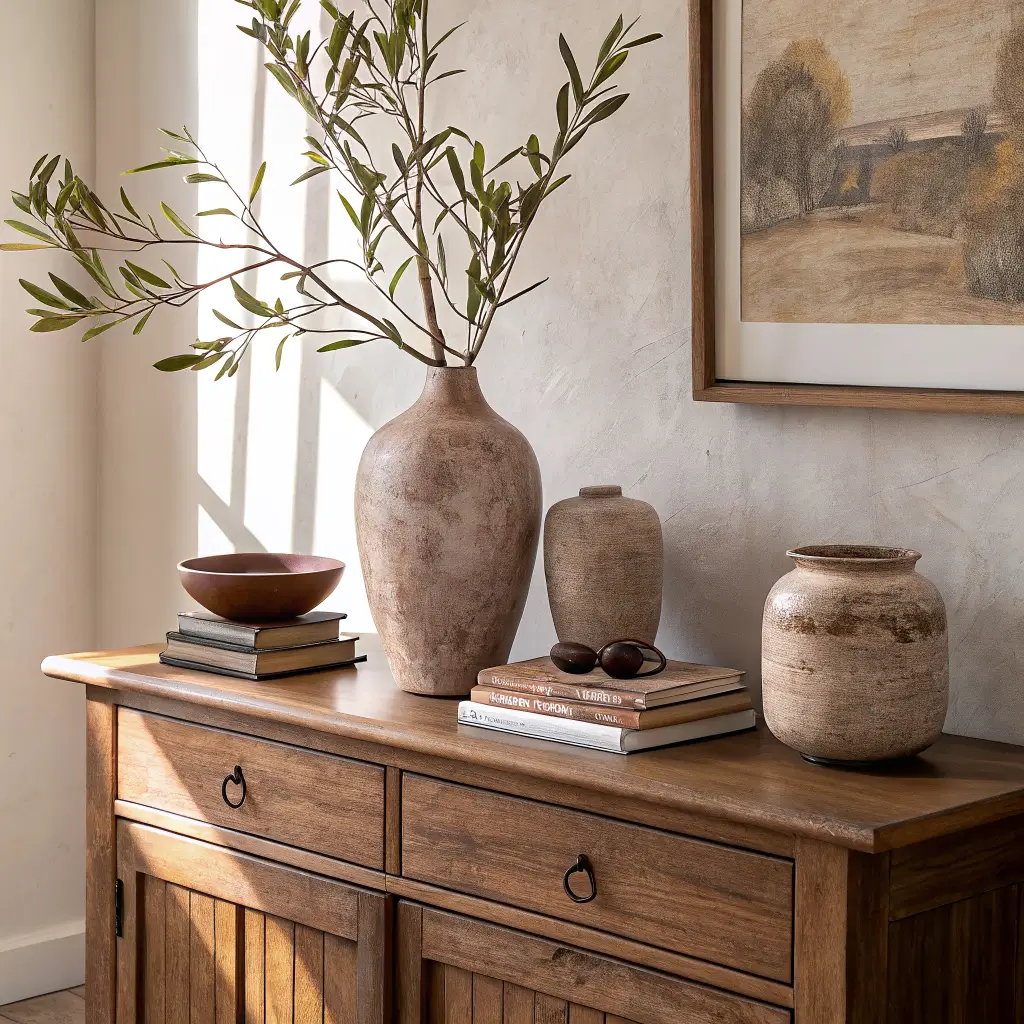
5. Curate accessories. Group in odd numbers — 1, 3, or 5 objects per surface. Vary heights. A tall vase, a low bowl, a small stack of books. That’s a vignette.
6. Bring in one or two plants, not eight. A 4-foot olive tree in a matte stoneware pot next to the sofa does more work than fifteen little succulents scattered around. Branches in a tall vase count.
7. Remove 20–30% of what you placed. I mean it. Take a photo of the room, then edit. Japandi looks best slightly under-decorated.
The Mistakes I Made So You Don’t
Buying a cool-gray rug. My first Japandi attempt included a beautiful pale gray wool rug that clashed with every wood tone in the room. It looked wrong for months before I figured out why. Sold it, bought a warm oatmeal one, everything clicked.
Going too stark. For about six weeks I had a living room that was basically white walls, a white sofa, a light oak floor, and one plant. It photographed fine and felt like a cold waiting room in person. The fix was adding a chunky wool throw in warm putty, a clay-colored ceramic lamp, and a jute rug under the coffee table.
Ignoring wabi-sabi. Everything I bought at first was new and flawless. It read as “Scandinavian showroom” — not Japandi. Adding handmade ceramics with visible thumb marks, a reclaimed wood bench with knots, and a slightly wonky linen throw is what tipped the balance.
Trying to mix in boho. I had a phase where I kept a couple of my old macramé pieces and patterned kilim cushions “for warmth.” They fought the Japandi elements constantly. When I finally stored them, the room settled.
Seasonal Tweaks That Don’t Require a Full Redo
Japandi is a year-round style, but subtle shifts keep it from feeling static:
– Spring/summer: lighter linen covers, sage or dusty green cushions, fresh branches or grasses in a stoneware jug
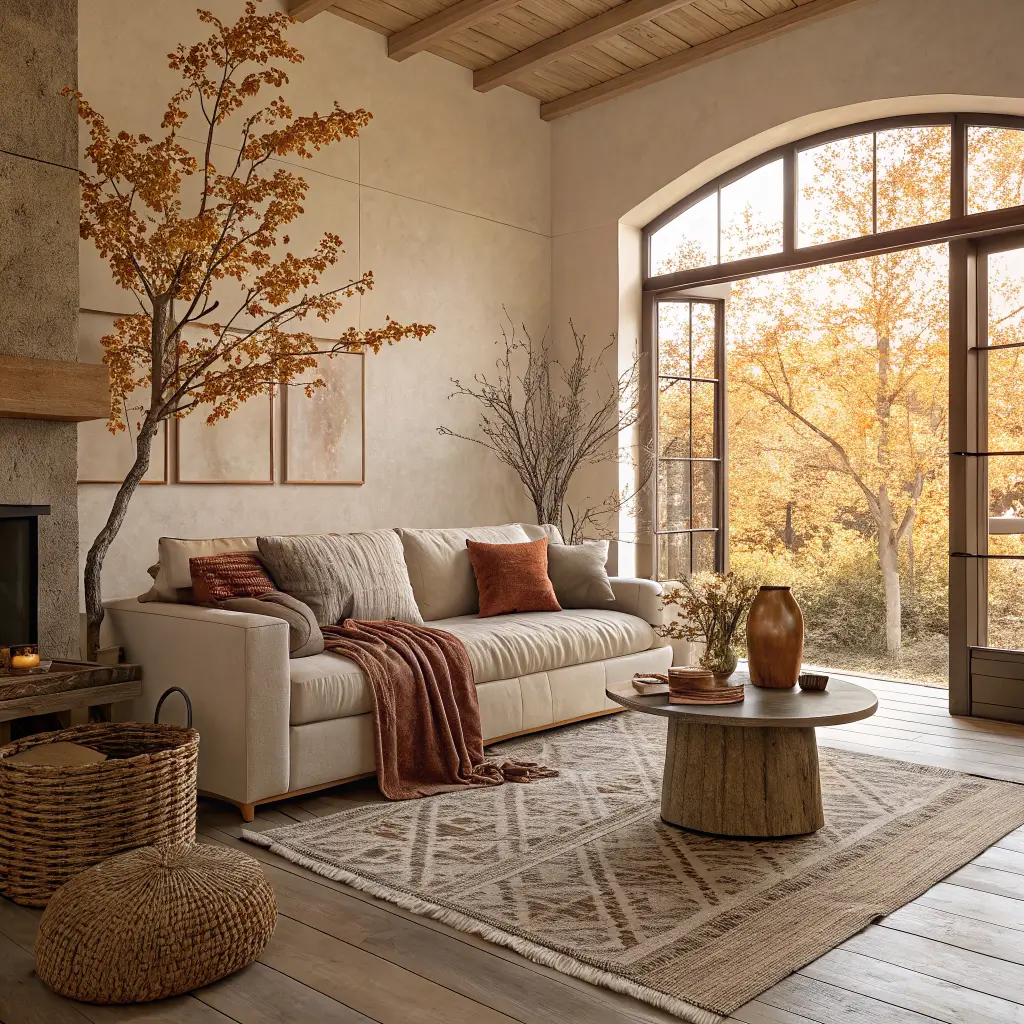
– Autumn: swap in terracotta, burnt umber, smoky mauve cushions
– Winter: heavier wool and bouclé throws, an extra floor lamp for warmth, dried grasses or bare branches
The furniture never moves. Only the soft stuff and the greenery.
Small-Space and Rental Notes
Japandi is genuinely good in tiny apartments because it forces you to keep floors and walls visible. A few rental-friendly moves:
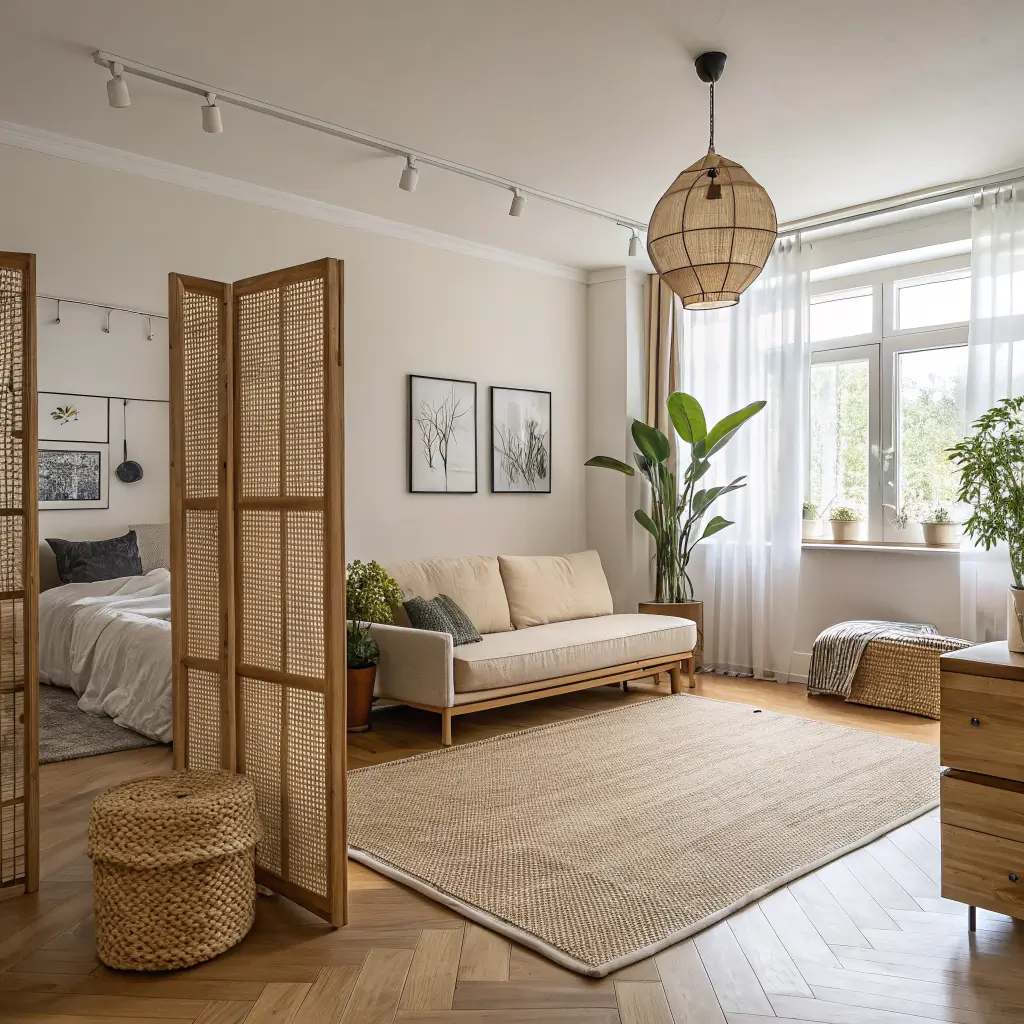
– Use a large jute rug to reset the flooring visually if your carpet is bad
– Add freestanding paper or rattan screens for zoning instead of building anything
– Swap cabinet hardware for simple wood or blackened steel pulls (keep the originals in a drawer)
– Lean tall mirrors against walls instead of hanging heavy art
– Bring in one statement pendant on a plug-in swag kit if your ceiling fixtures are ugly
Cross-Style Variations
If pure Japandi feels too austere, you can bend it slightly:
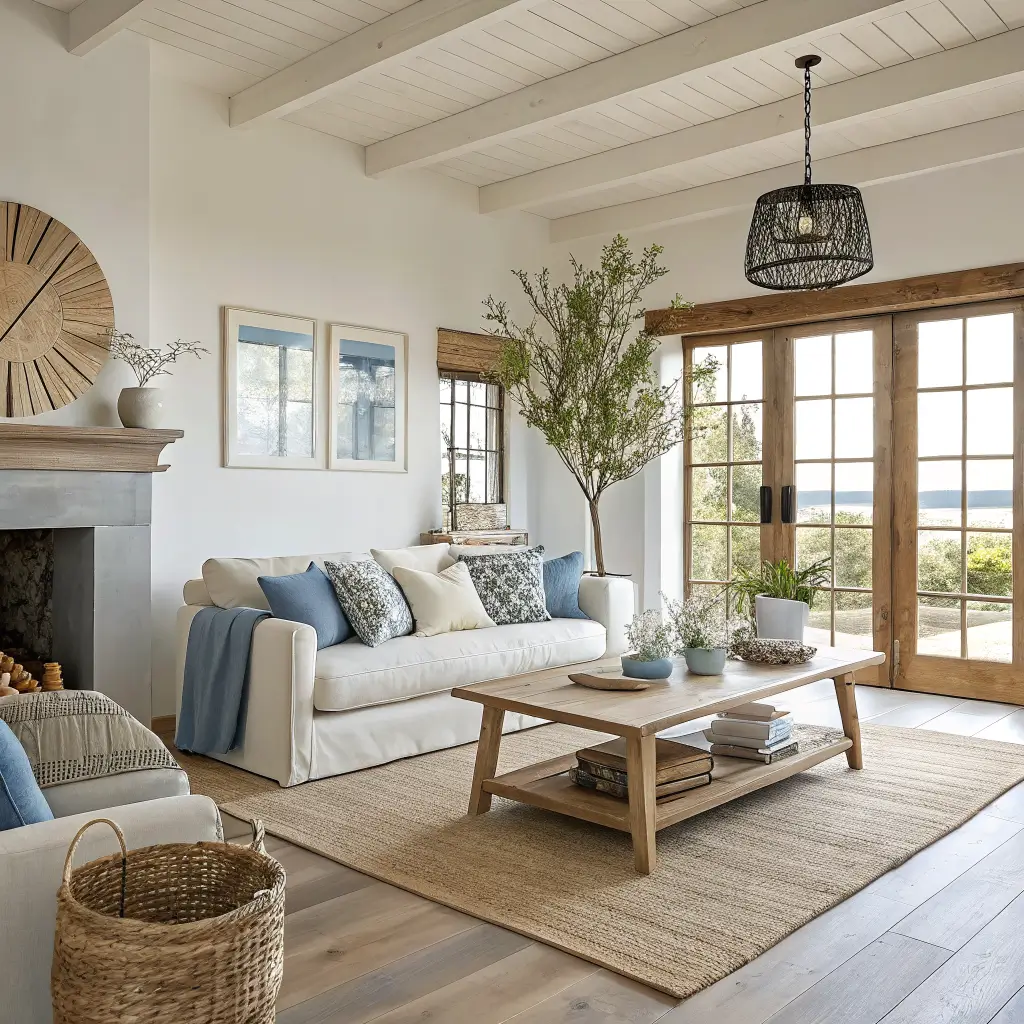
Coastal × Japandi: bleached oak, sand-toned rugs, one or two soft blue-gray accents. Keep surfaces uncluttered — no shells in jars, no rope everywhere.
Boho × Japandi: add one carved wooden stool, a couple of woven baskets in natural tones, maybe one patterned cushion. Stop there.
Modern × Japandi: works well if the modern pieces have clean lines and matte finishes. Skip anything glossy or chrome.
The rule is that Japandi has to stay the base. The moment another style starts competing for attention, the whole thing collapses into “eclectic with beige accents,” which is not what you’re going for.
A Quick Checklist Before You Buy Anything New
Ask yourself:
– Is this made from a natural, tactile material?
– Does it have a function, or is it genuinely meaningful?
– Will it still look right in five years?
– Does it fit my 3–4 color core palette?
– Do I already own something that does this job?
If you can’t answer yes to at least three, put it back. That instinct — the willingness to leave the shelf empty a little longer — is what separates a real Japandi home from an approximation of one.