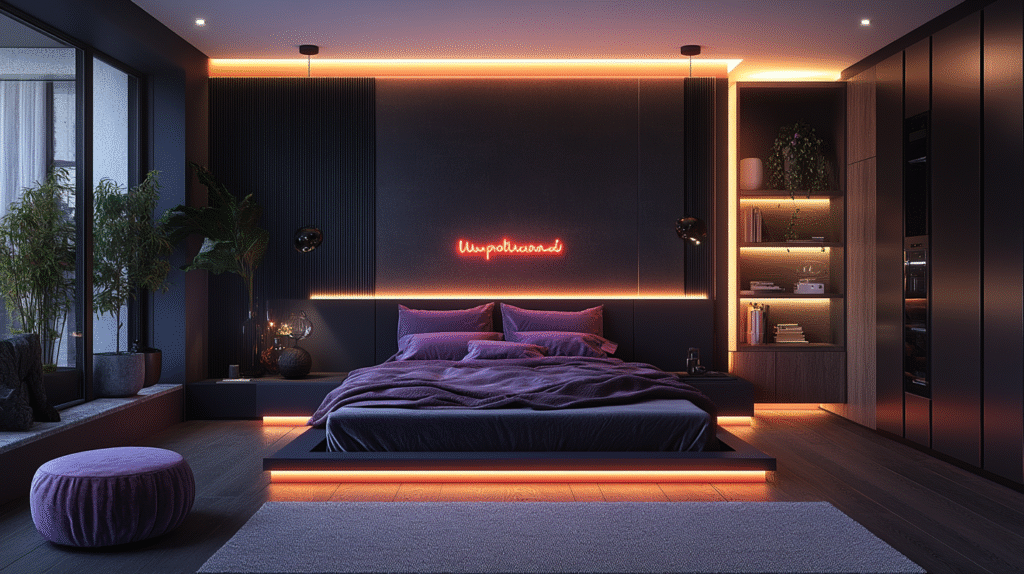
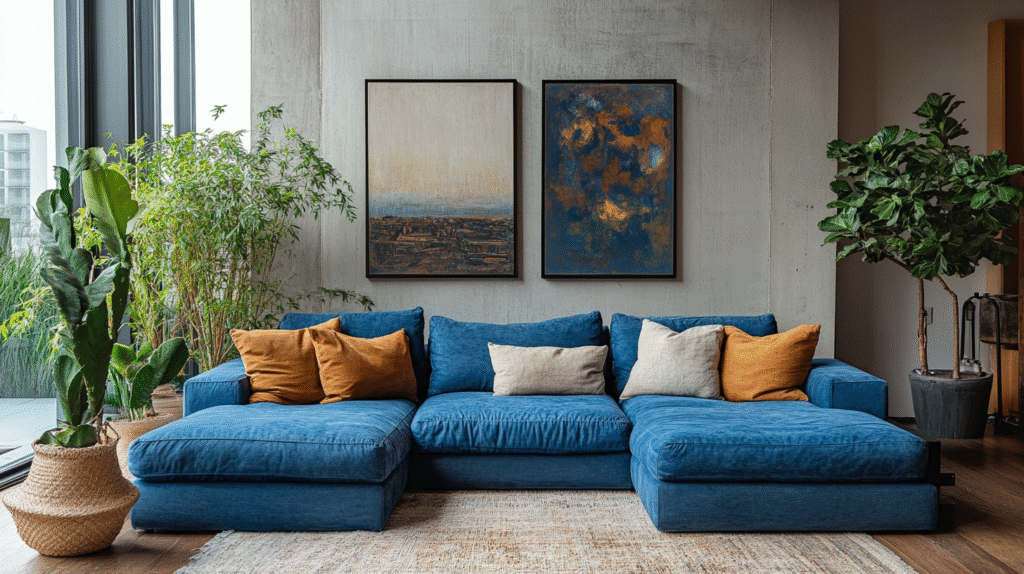
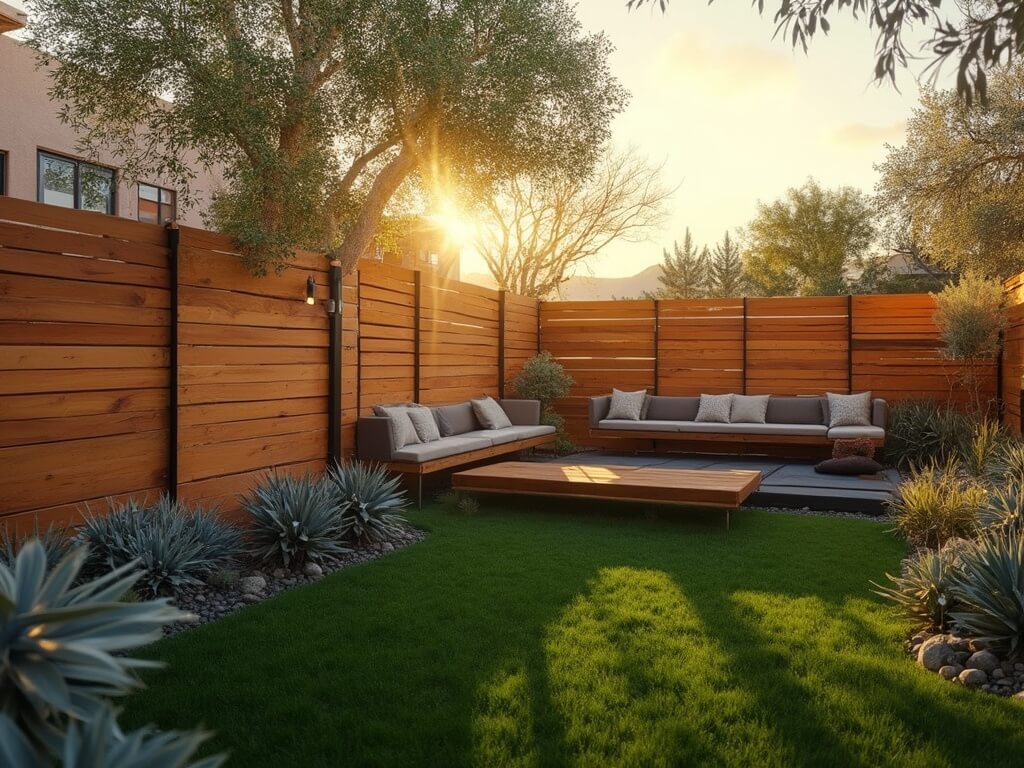
Most contemporary dining room ideas online look great in photos and awful in real life — all hard edges, glossy surfaces, and chairs nobody wants to sit in for more than twenty minutes.
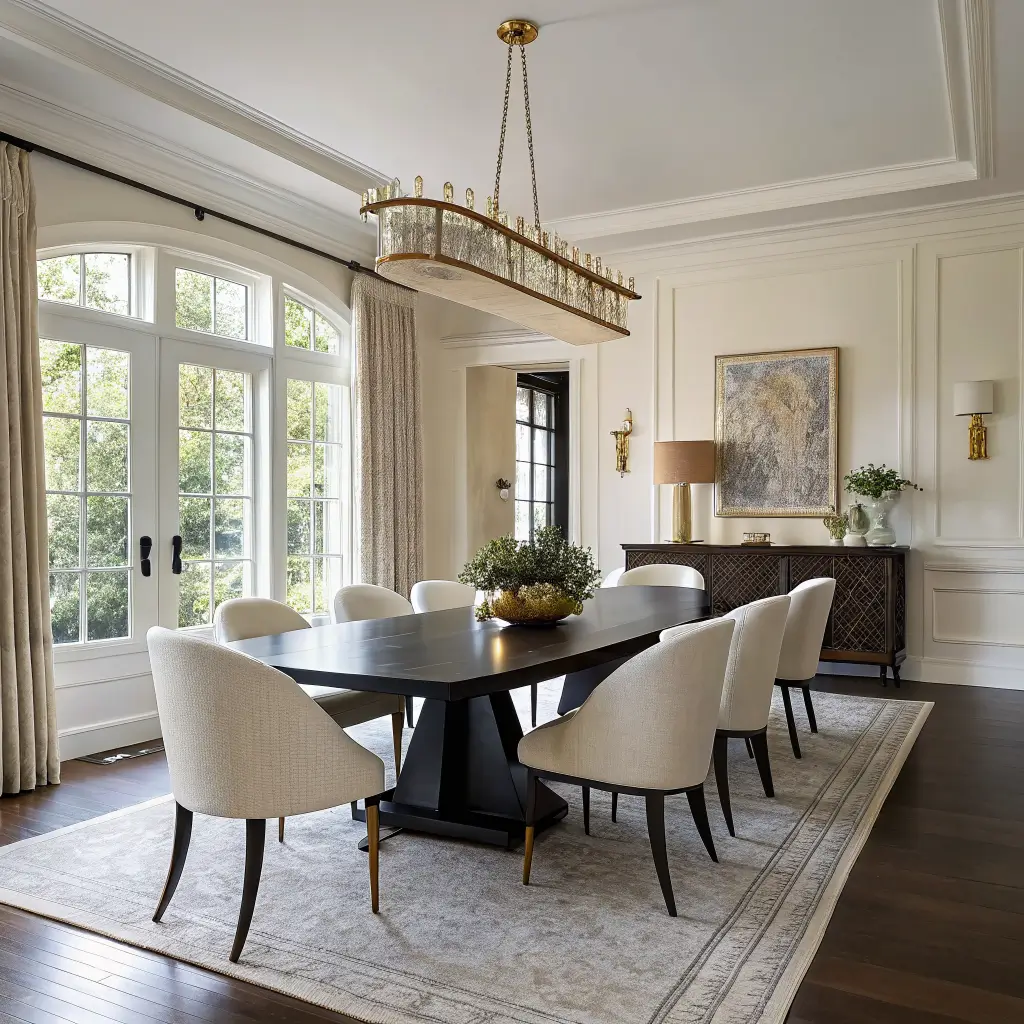
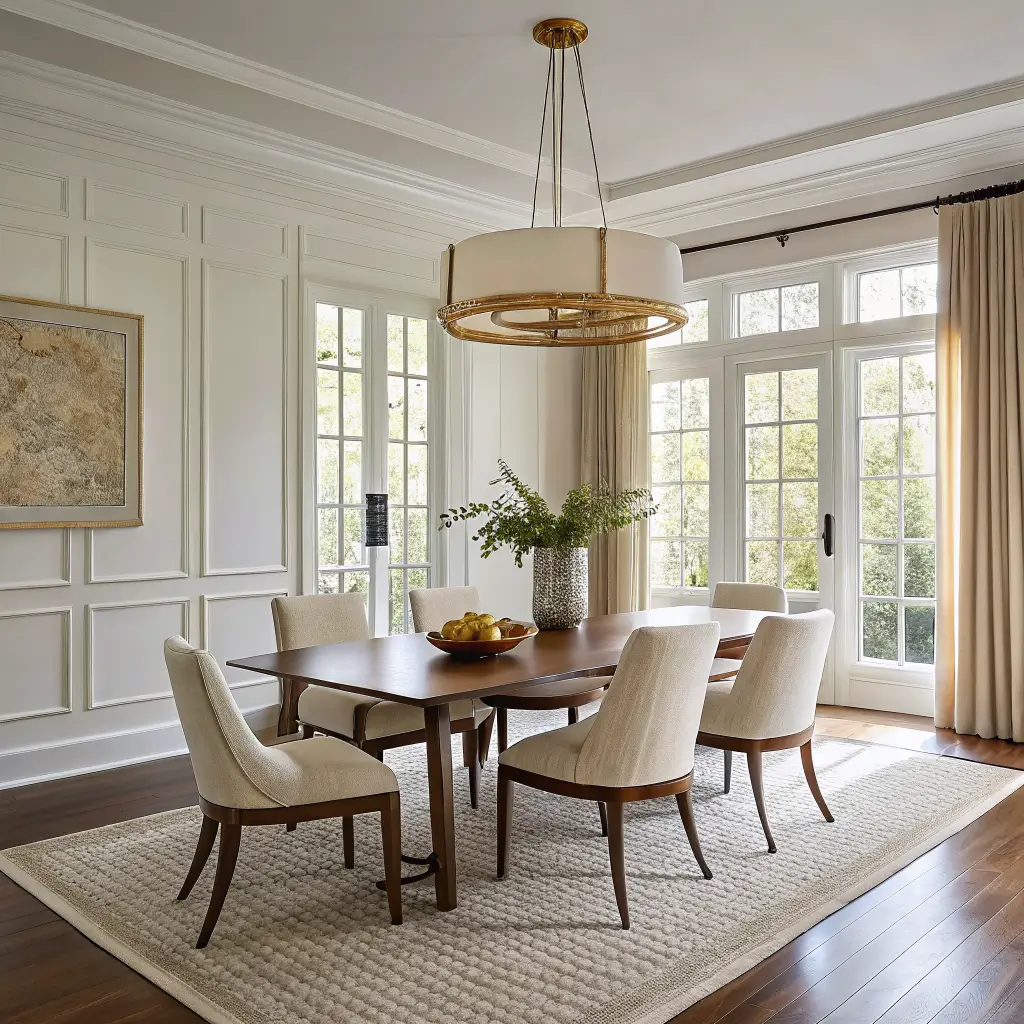
The contemporary dining room was the one I kept simple on purpose. A solid table and one pendant made the space feel finished, not decorated.
I’ve decorated three dining rooms across two apartments and a house, and the version I finally love isn’t the one that looks most “designed.” It’s the one that reads clean and current but still feels like people actually eat there.
Here’s how I’d put one together now, with the specifics I wish someone had told me the first time.
What Contemporary Actually Means (and Who This Look Is For)
Contemporary isn’t the same as modern. Modern refers to a specific mid-20th-century movement with defined rules. Contemporary just means what’s happening in design right now — which in 2024 is a mix of clean lines, sculptural shapes, tactile materials, and neutral palettes broken up by one confident color or dark anchor.
This look suits you if you want:
– A dining room that photographs well but works for weeknight pasta
– Restraint over maximalism, but not stark minimalism
– Space to entertain six people without the room feeling like a showroom
It works in formal dining rooms, open-plan kitchen-dining zones, small nooks, and awkward pass-through spaces — anywhere you can define the eating area with a rug and a light.
Budget reality check:
– Refresh only (paint, rug swap, new pendant, styling): $300–$800
– Mid-range redo (new table, 4–6 chairs, statement light): $1,500–$4,500
– Full designer look (marble, boucle, custom lighting, built-ins): $5,000+
Timeline runs from a weekend for styling to two weeks if you’re painting and swapping electrical, longer if anything is custom or backordered (which, in my experience, everything is).
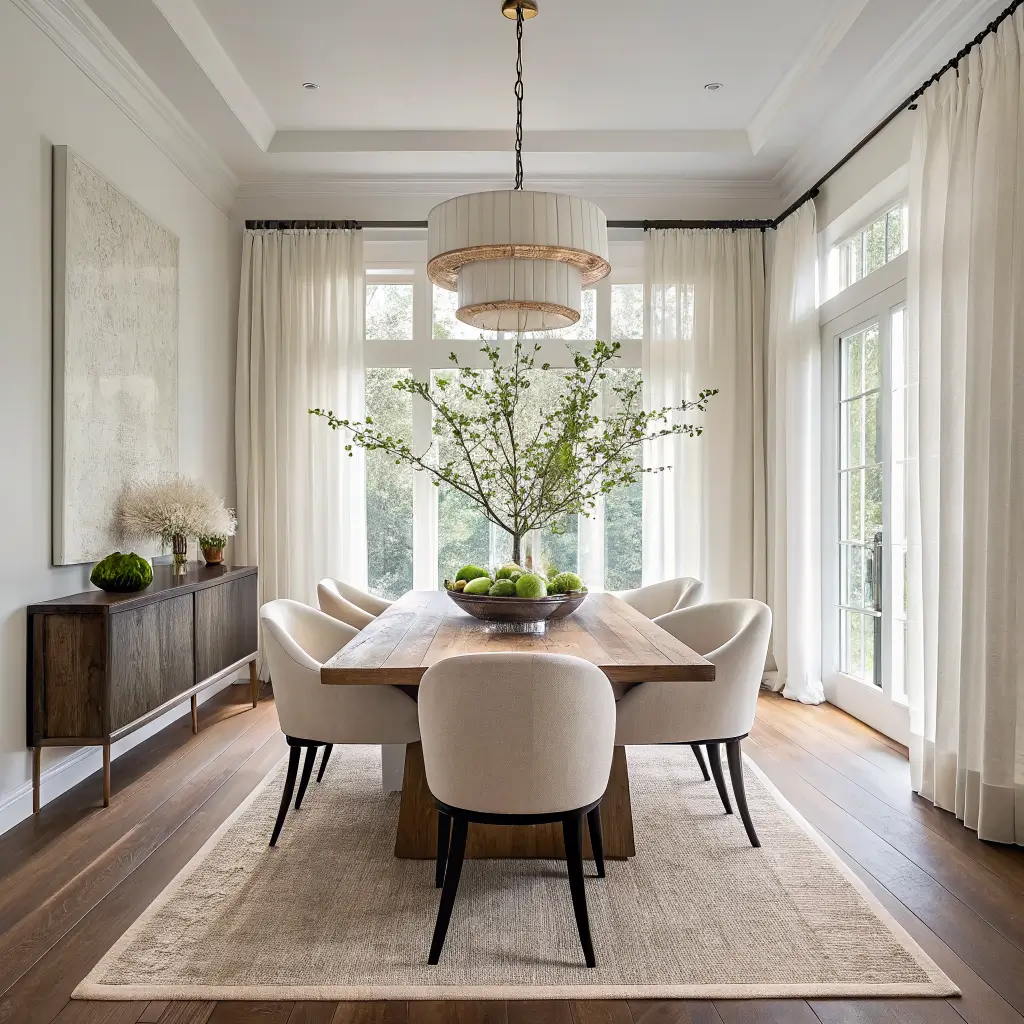
The Seven Pieces That Do the Heavy Lifting
Every contemporary dining room I’ve seen work well has the same skeleton. Skip any of these and something feels off.
1. The table.
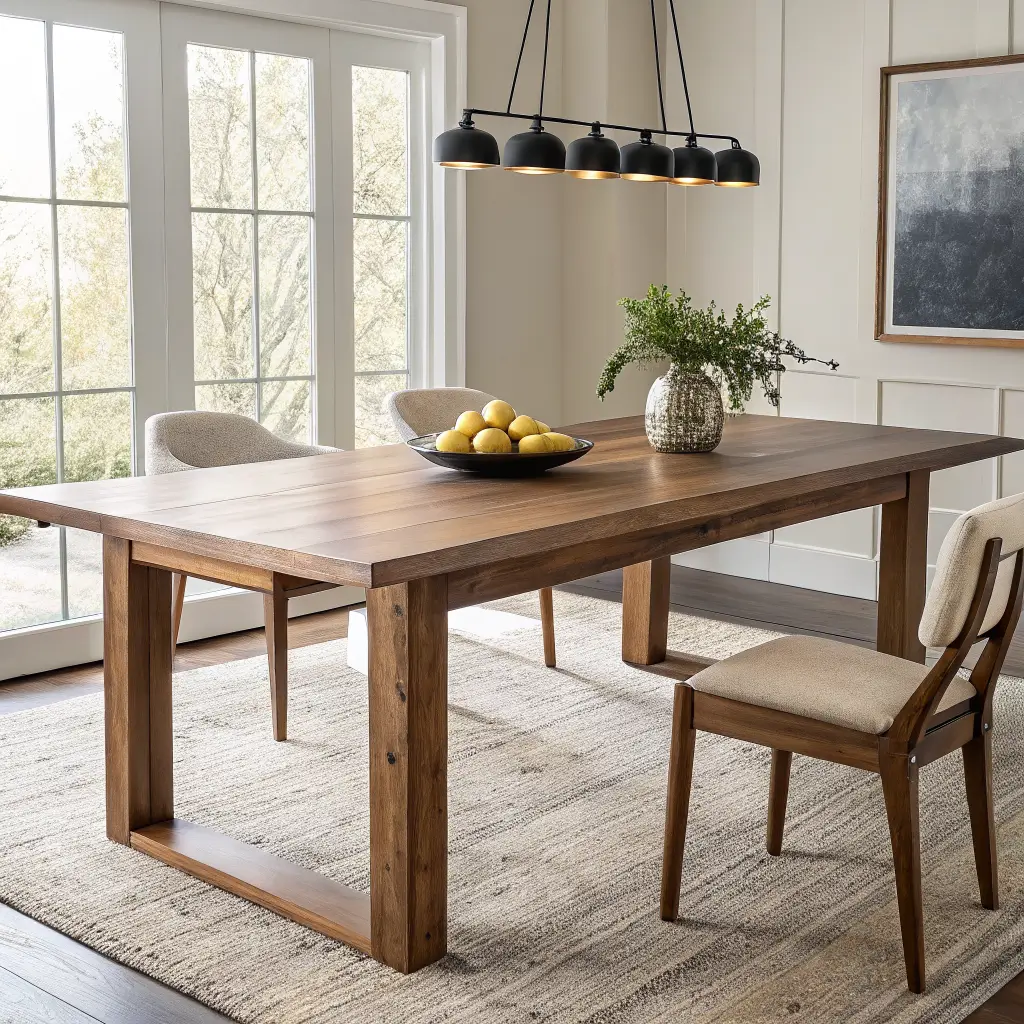
This is where I’d spend real money. A rectangular oak, walnut, or black-stained wood table in a simple silhouette will outlast every trend. Glass tops photograph beautifully and show every fingerprint by 6 p.m. Marble is stunning and stains if you look at it wrong — I know because I bought a Carrara-topped table in 2019 and now have a permanent red wine ghost near the head seat.
2. The chairs.
Current looks lean into mixed sets — two upholstered heads, four wood or cane sides. Or all boucle. Or leather with a wood frame. Matching the table wood to the chair wood exactly makes the room feel like a hotel lobby. Contrast is the point.
3. Lighting.
The single biggest contemporary cue. A sculptural pendant, linear suspension over a rectangular table, or a cluster of three globes hung at varying heights. Hang the bottom of the fixture 30–36 inches above the tabletop. Anything higher looks stranded.
4. A rug.
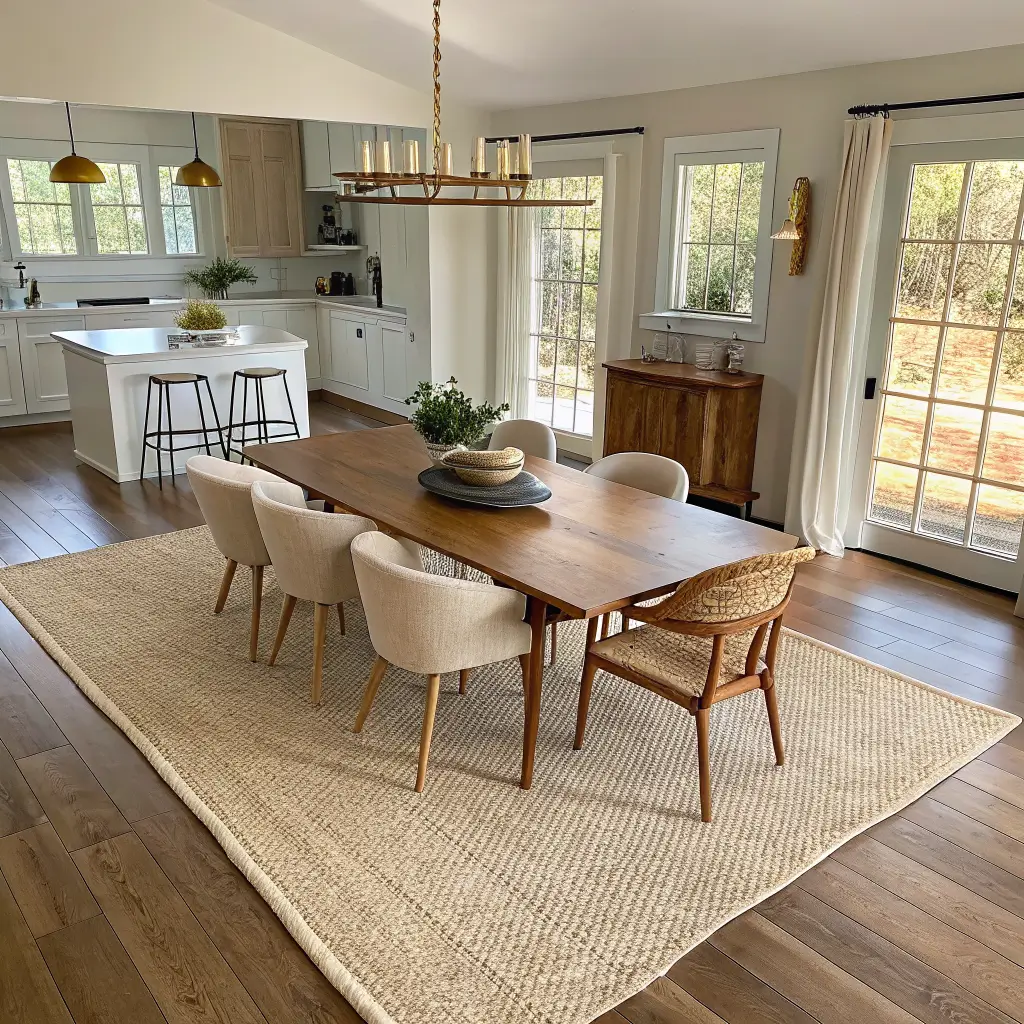
Non-negotiable in open-plan spaces. Size it so chairs stay on the rug even when pulled out to sit — usually that means the rug extends 24–30 inches past the table on all sides. An 8×10 minimum for most rectangular tables, 9×12 if you have a leaf.
5. A sideboard or credenza.
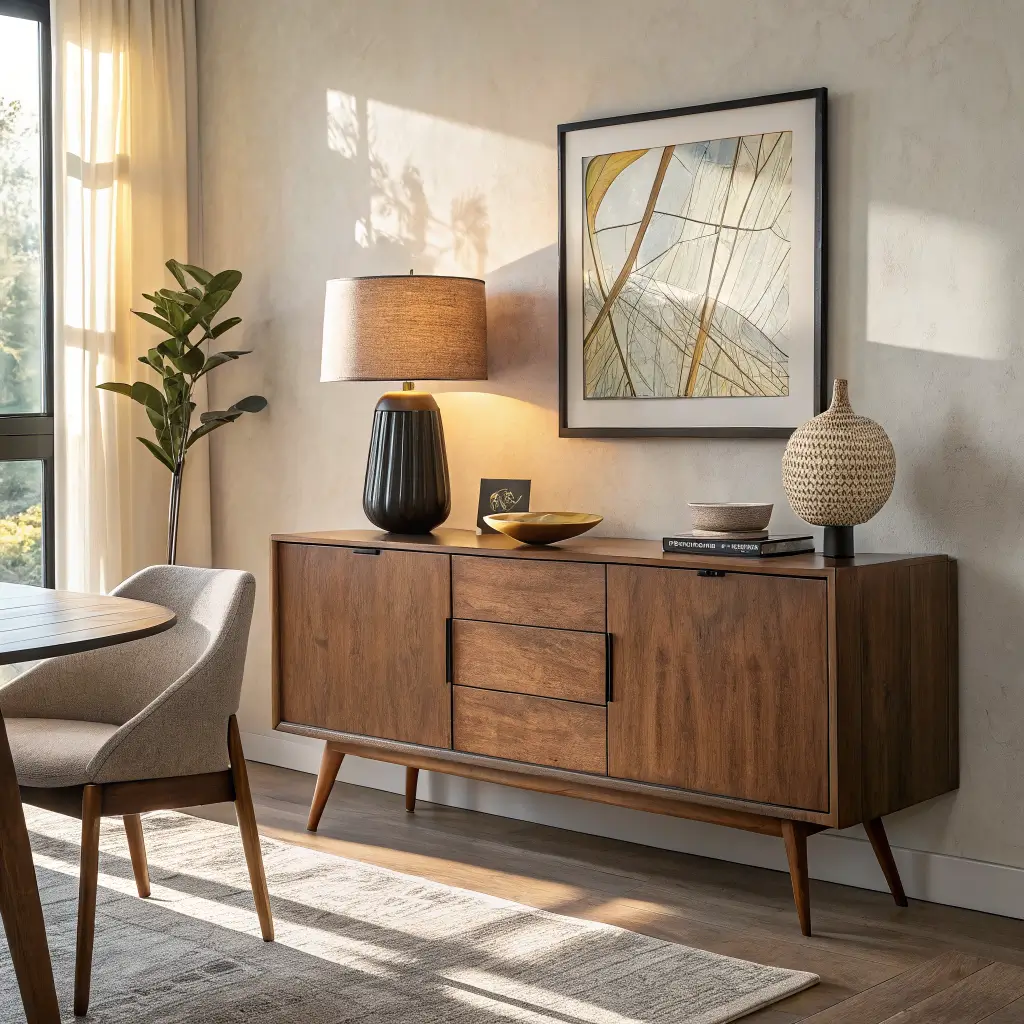
Storage plus a surface for a lamp, a bowl, and one piece of art. I found mine at an estate sale for $180 — a low walnut credenza from the ’70s that looks more expensive than half the new stuff at West Elm.
6. One wall moment.
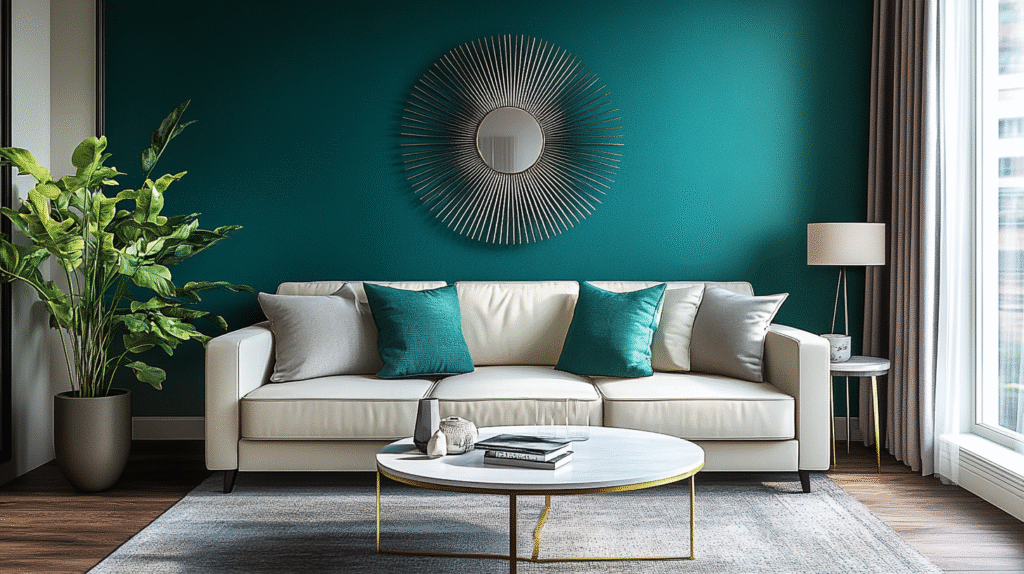
Big abstract art, a mural wallcovering, a deep painted accent wall, or an oversized mirror. Pick one. Not all four.
7. A tabletop centerpiece that stays put.
A single ceramic vessel, a low bowl with fruit, or a taper candle cluster. Not a runner with three vases and a bowl of decorative orbs.
Color and Material Combinations That Work Right Now
The palettes I keep coming back to:
– Warm neutral: oak table, ivory boucle chairs, cream walls, brass pendant, linen curtains
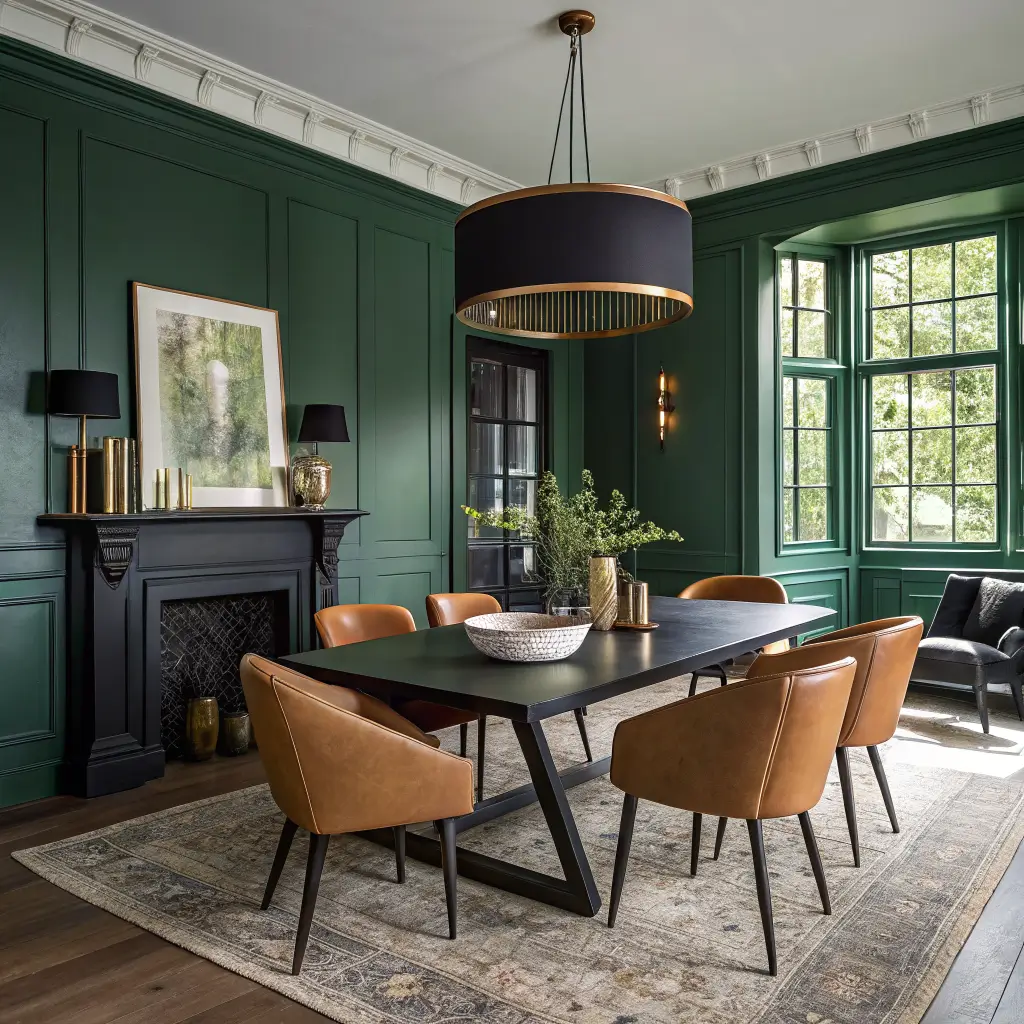
– Moody contemporary: black-stained table, deep green walls (Farrow & Ball Studio Green is the one), matte black pendant, mixed wood and leather chairs
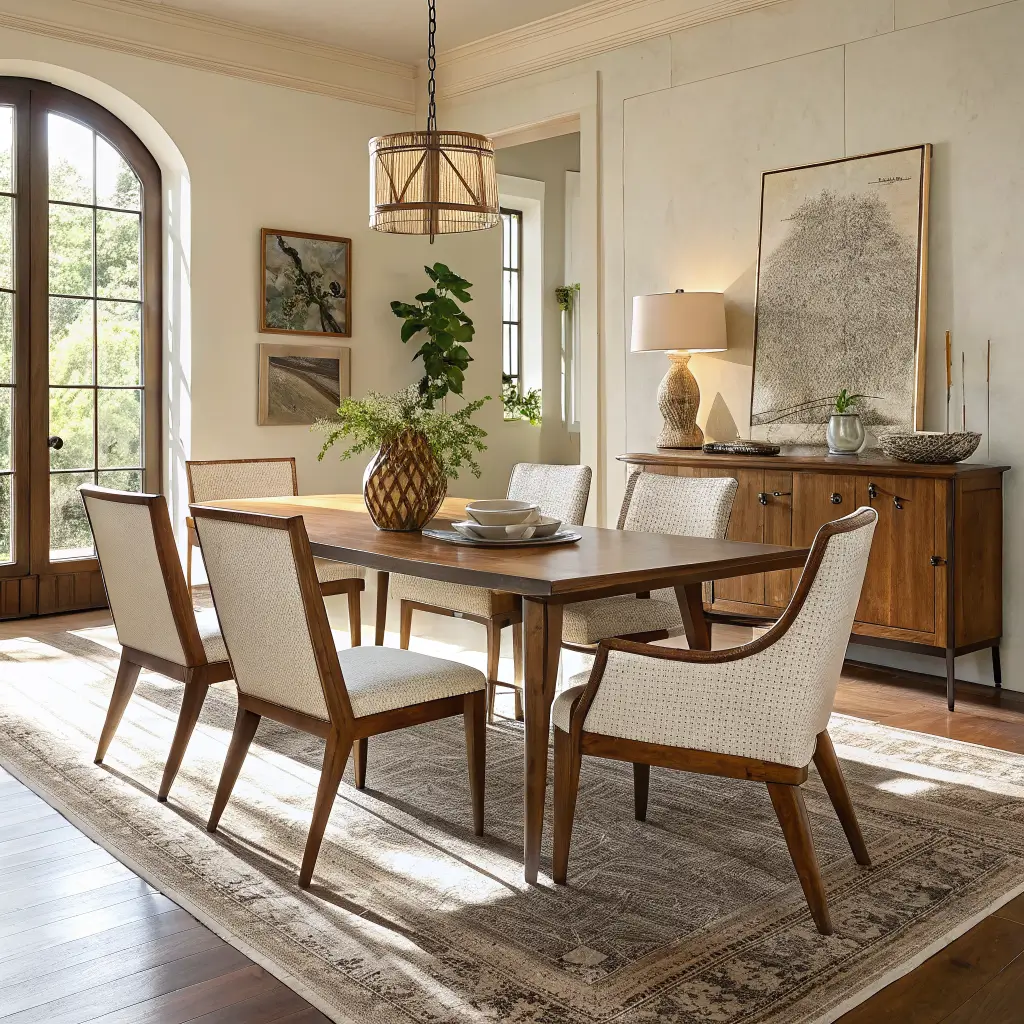
– Organic contemporary: walnut table, cane-back chairs, plaster-finish walls, rattan pendant, jute rug layered under a wool one
– Sharp minimalist: white oak table, black metal chairs, white walls, a single sculptural fixture in chrome or brushed nickel
A rule I stick to: two to four main colors, one accent. That’s it. My current dining room runs walnut, cream, black, and one shot of ochre in the art. Every time I’ve added a fifth color, the room stopped feeling considered.
How to Actually Put It Together
The order matters more than people admit.
1. Pick a direction first. Minimalist monochrome, warm Scandi, moody dark contemporary, modern Mediterranean, or organic contemporary. Write it down so you stop pinning things that fight each other.
2. Choose the table. Its material sets the temperature of the whole room.
3. Add chairs with a different texture than the table. Wood table gets upholstered or cane chairs. Marble or glass gets wood or leather. Don’t double up on the same material.
4. Hang the light before the art. It defines the zone. Center it on the table, not the room — those are often different points.
5. Roll out the rug. Test with chairs pulled out. If your back legs slide off, the rug is too small.
6. Style the wall. One statement. Then stop.
7. Edit the tabletop. If you can’t wipe it clean in ten seconds for dinner, it’s too much.
Where to Spend and Where to Save
Spend on: the table, the light fixture, and the rug. These three are seen from every angle, every day, and cheap versions read cheap fast. A hollow-core dining table sounds like a drum when you set a glass down. I learned this.
Save on: side chairs (IKEA’s cane-back chairs are $99 and look like something four times the price), sideboards (estate sales, Facebook Marketplace, Chairish), art (large-scale prints from Juniper Print Shop for $30 in a $40 frame beat most gallery pieces for this look), and tabletop styling (thrifted ceramic vases, branches from your yard).
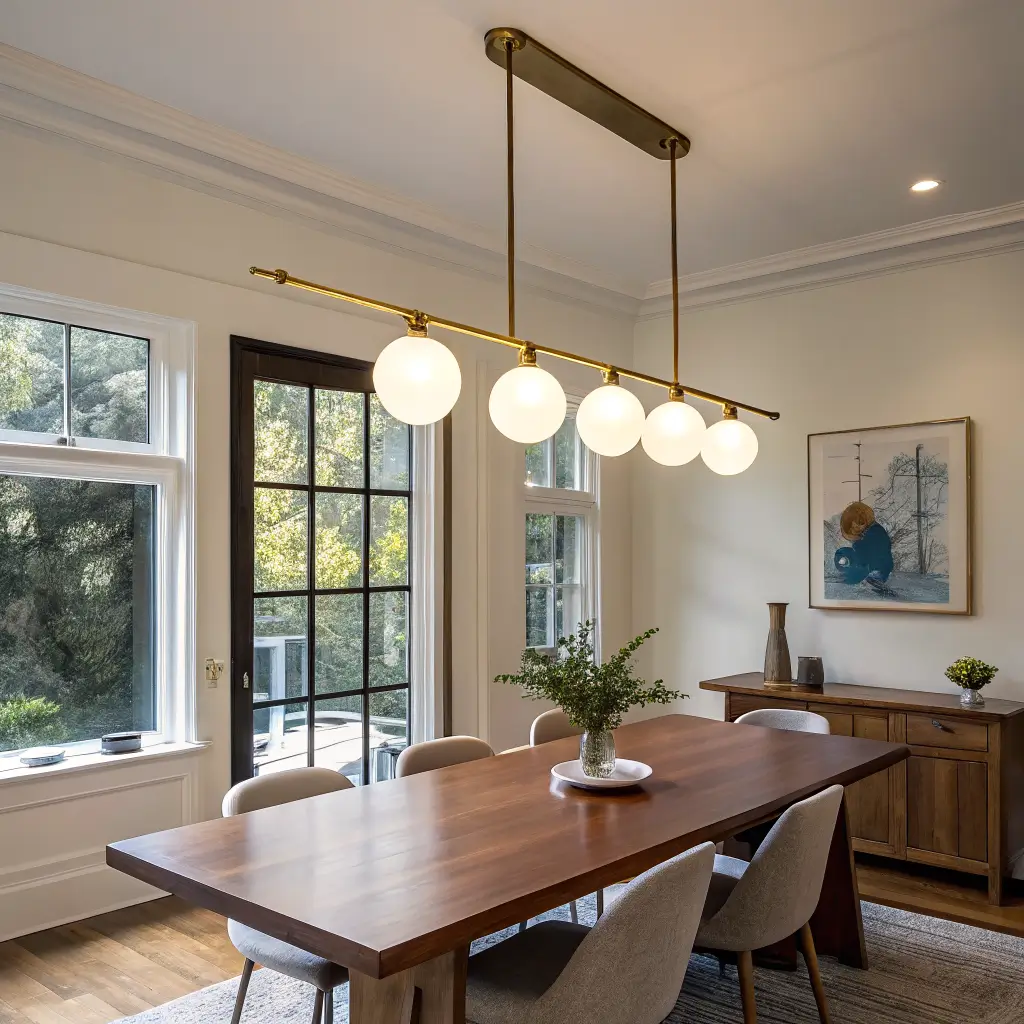
The pendant is the one place I’d stretch. A $79 dome from Amazon and a $400 sculptural fixture read completely differently in person. If the budget is tight, buy a vintage one on eBay before buying a cheap new one.
The Mistakes I See Constantly (and Made Myself)
– Under-scaled lighting. A 12-inch pendant over a 72-inch table looks like a bike headlight. Your pendant or fixture should be roughly one-half to two-thirds the width of your table.
– Matching the whole set. Table, chairs, sideboard, and hutch in identical finish equals furniture-showroom energy. Break one.
– Forgetting comfort. I bought four beautiful bentwood chairs in 2020 that were miserable to sit in past thirty minutes. We ate standing at the counter for a year. Test the chair before you commit.
– No zoning in open-plan. Without a rug and a defined light, the dining area just becomes “the table near the kitchen.
– Overdecorating the sideboard. One lamp, one piece of art or a mirror, one sculptural object, maybe a tray. Four things max.
– Ignoring the ceiling. If your ceilings are 8 feet, a low-hanging cluster fixture makes the room feel shorter. Go with a flush or semi-flush sculptural piece instead.
Seasonal Updates Without Buying Anything Major
The base stays. The little stuff shifts.
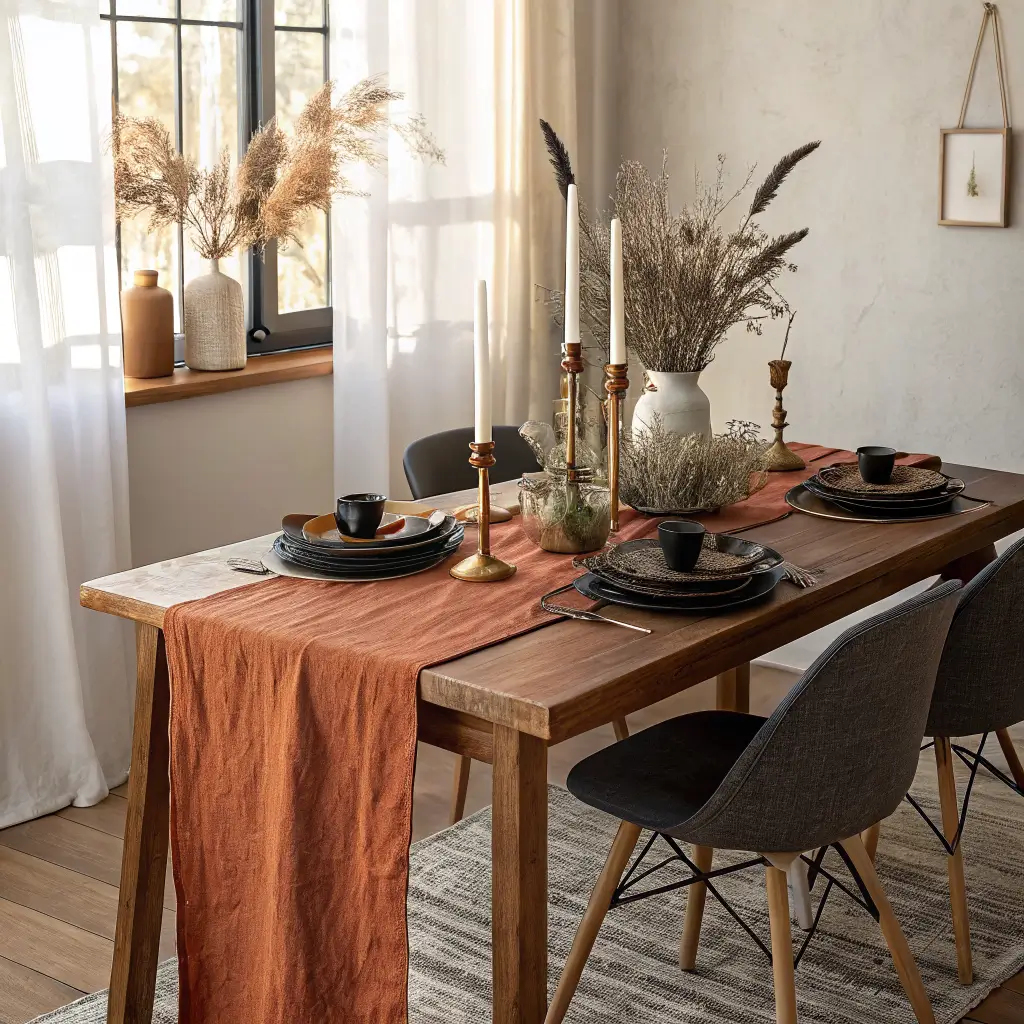
– Fall/winter: Taper candles in brass holders, dried pampas or eucalyptus branches, a heavier linen table runner in rust or olive
– Spring/summer: Fresh branches (forsythia and cherry are my go-to’s for $8 at the grocery store), a low bowl of lemons, lighter cotton napkins
– Anytime refresh: New pillow covers on any nearby banquette, a rug swap, repainting just the accent wall
The point is that a good contemporary dining room has bones strong enough that swapping soft goods four times a year keeps it feeling current for a decade.
Answers to the Questions Everyone Actually Googles
How do I make my dining room look contemporary without replacing furniture?
Paint the walls a deeper or warmer tone, swap the pendant for something sculptural, add a large rug, and reupholster the chair seats. That combo alone will do 80% of the work.
Should dining chairs match the table?
No. Contrast material or tone. Same wood species and finish across the whole set is what dates a room.
What’s the difference between modern and contemporary?
Modern is a specific style from roughly 1920–1950 with strict rules. Contemporary is what’s current — it borrows from modern, Scandi, Japandi, and organic minimalism and shifts every few years.
How do I keep it from feeling cold?
Wood tones, upholstered seating, a rug with real pile, linen or wool textiles, and warm-toned lighting (2700K bulbs, not 4000K). Cold contemporary rooms are almost always all-hard-surface rooms with blue-white light.
The dining room I have now took me three tries to get right.
First version was too matchy. Second was too moody — I painted the walls near-black and it felt like eating in a wine bar at noon. This one works because it’s got one dark anchor (the table), one soft layer (boucle chair seats), one sculptural moment (the pendant), and nothing else fighting for attention.
That’s really the whole thing. Pick your hero, support it, and leave the rest quiet.