Country Bedroom Ideas: How to Get the Cozy, Layered Cottage Look Without It Feeling Like a Theme Park
The country bedroom was the room I softened with one quilt and a wood beam I did not expect to love. It reads settled, not staged.
Country bedroom ideas usually go wrong in one of two directions: too literal (rooster art, “Live Laugh Love” over the bed, gingham on every surface) or too washed-out (a beige quilt and a wicker basket, calling it done). The version I actually live with — and the one I’ll walk you through here — sits in the middle. Warm, layered, a little bit vintage, but calm enough that you can sleep in it.
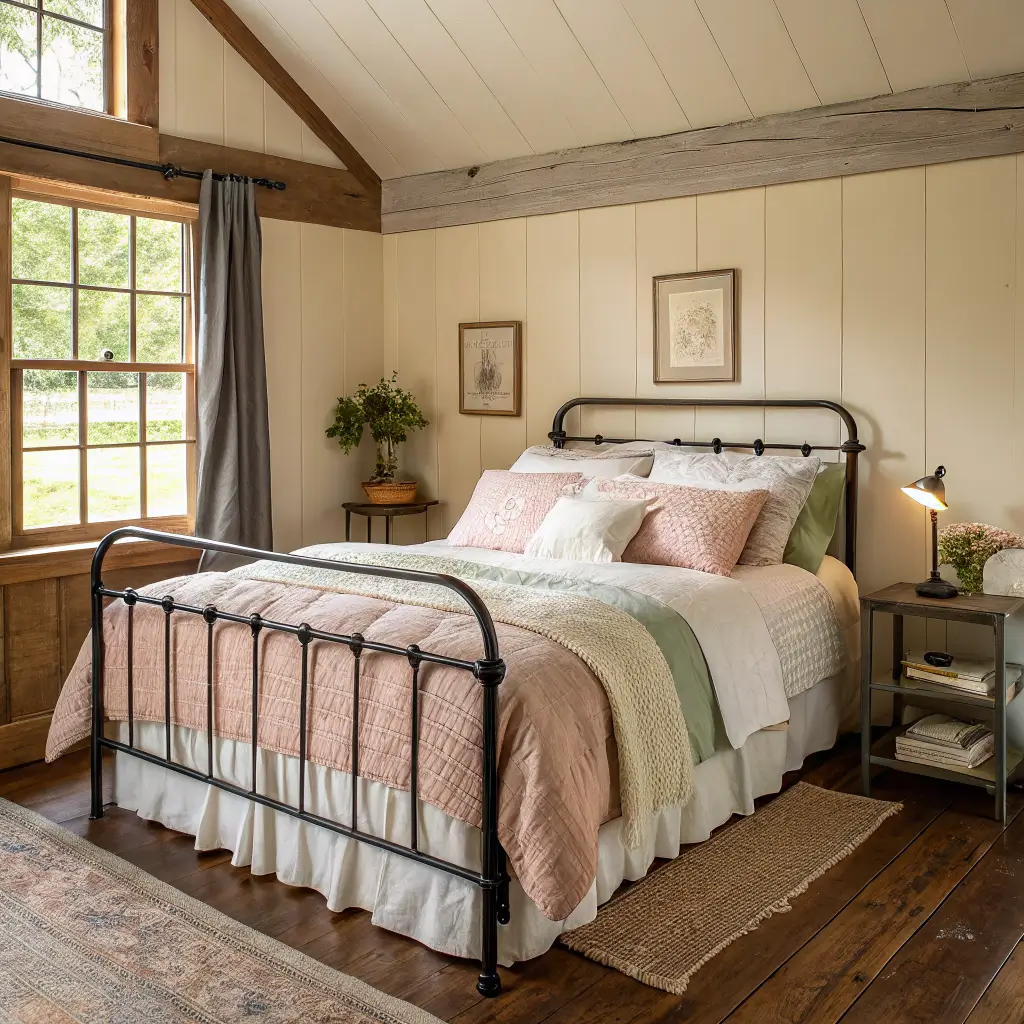
I redid my own bedroom over about three weekends after years of a beige-on-beige situation that I’d talked myself into liking. The turning point was a $40 patchwork quilt I found at an estate sale in a farmhouse outside town — muted rose, sage, and cream, hand-stitched, slightly faded. Everything else got built around it. That’s the approach I’d recommend: find one anchor piece with soul, then work outward.
The Look, and Who It’s For
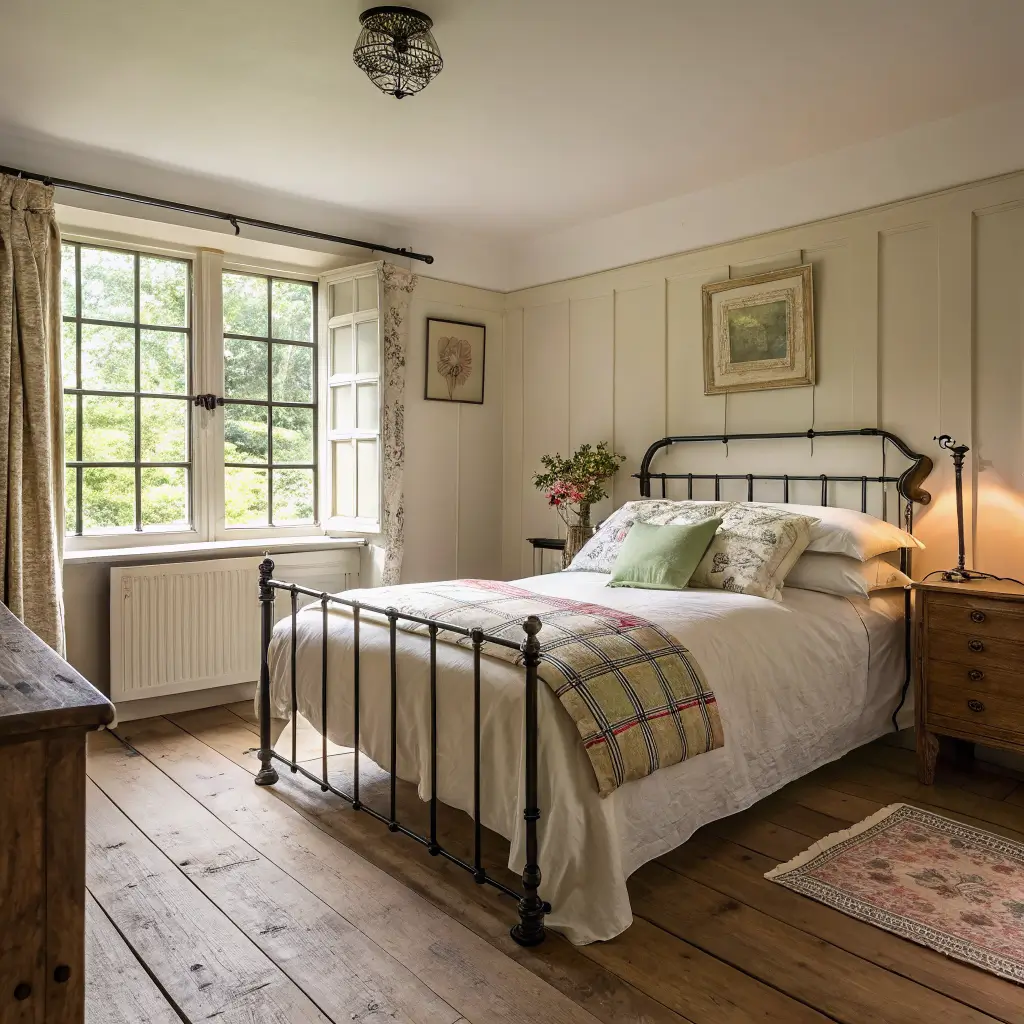
Country bedrooms lean on natural materials, soft pattern mixing, and a kind of gentle imperfection. Think oak and pine instead of high-gloss lacquer. Linen and cotton instead of polyester satin. A bed you want to climb into with a book and a cup of tea.
This style suits you if:
– You’d rather have a room feel collected over time than perfectly matched.
– You like florals, checks, and vintage finds, and you want them to coexist.
– You want warmth over minimalism, but you don’t want it to feel fussy or grandmotherly.
It works in almost any room type — primary bedrooms, guest rooms, attic spaces with weird sloped ceilings (arguably the best canvas for it), and even kids’ rooms if you dial down the florals and lean on gingham and stripes.
What It Actually Costs
Depending on how far you’re going:
– Light refresh (bedding, rug, lamps, accessories, a coat of paint): $400–$1,200. This is where I’d start, and honestly where 80% of the visual impact lives.
– Mid-range makeover (new bed frame, dresser, DIY shiplap or panelling on one wall, statement pendant): $1,500–$4,000.
– Full-tilt version (four-poster bed, custom wallpaper, antique rug, exposed or faux beams): $5,000 and up, easily more.
Real numbers for the pieces that carry the most weight:
– Cotton or linen duvet set with shams: $80–$200
– Patchwork quilt or coverlet (new or vintage): $60–$250
– Wool or jute rug, 5×8 or 6×9: $120–$400
– Solid wood or iron bed frame: $400–$1,200
– Wrought-iron chandelier or lantern pendant: $150–$600
If your budget is tight, put the money into the quilt, the rug, and the lighting. Skimp on accessories — that’s where thrifting pays off.
The Colors That Actually Work
I’ve tried the pure-white cottage look and it read cold and hospital-ish in my north-facing room. What works better is a warm neutral base with muted, garden-inspired accents.
Core palette to pick from:
– Warm whites and creams: Farrow & Ball’s “School House White,” Benjamin Moore “White Dove,” or any soft off-white with a hint of yellow. Skip the blue-based whites.
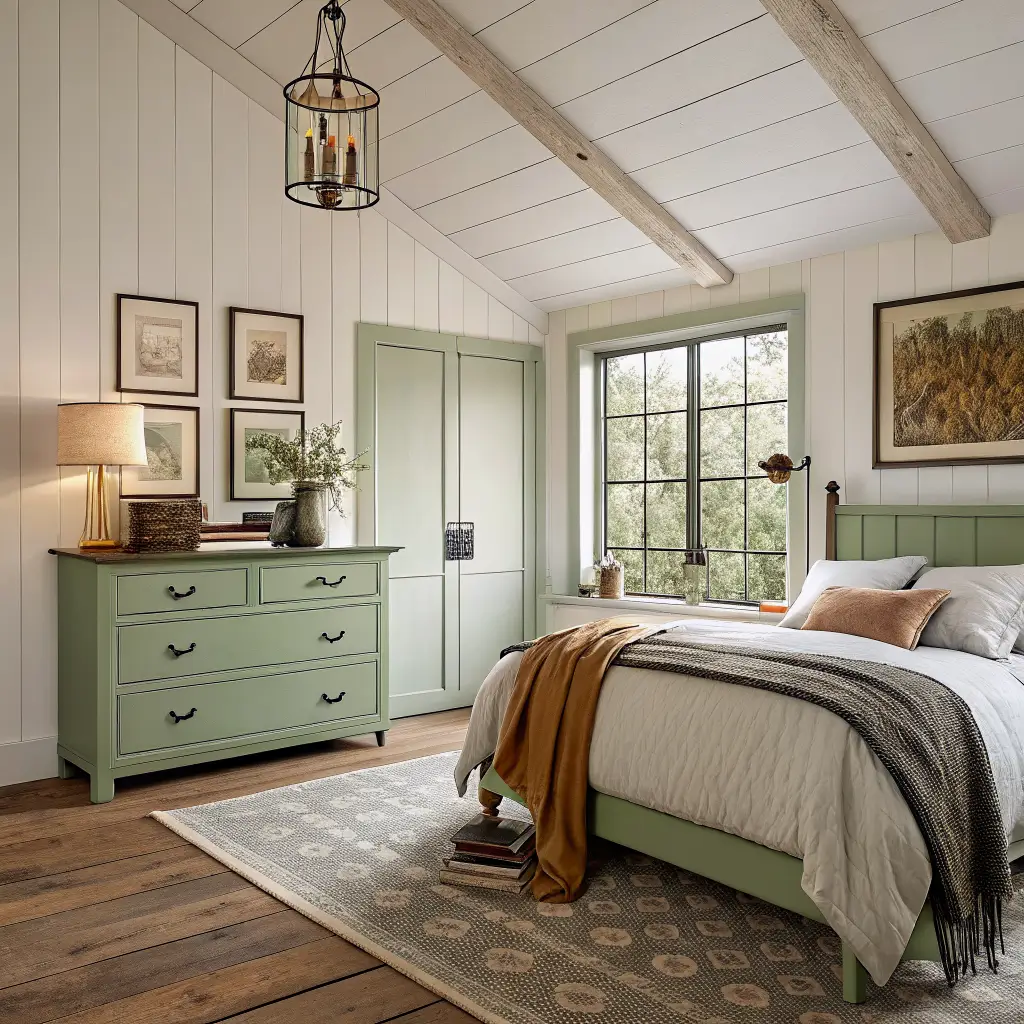
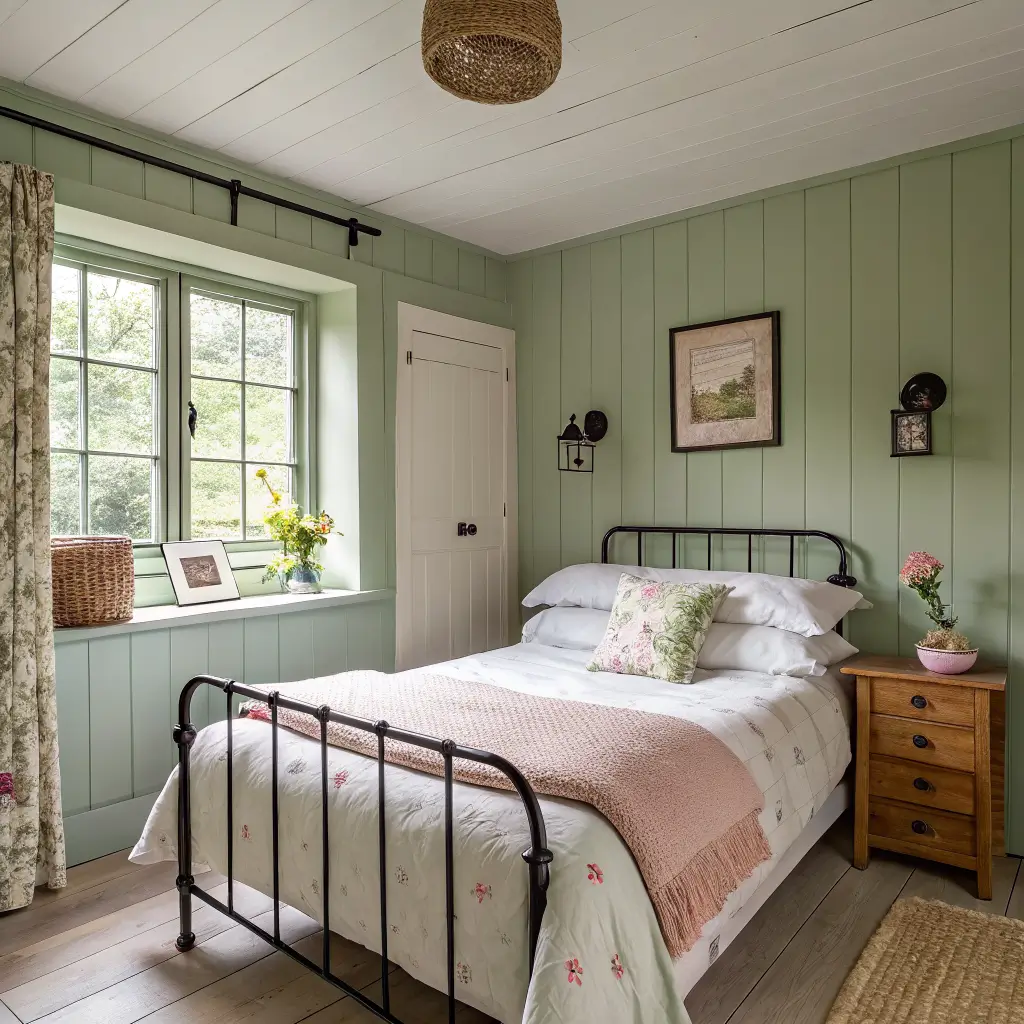
– Sage, olive, and moss greens for walls, cushions, or a painted dresser.
– Duck egg blue, powder blue, slate — traditional English country territory.
– Rose pink, dusty lilac, soft mustard as accents in florals and cushions.
– Black or charcoal on iron bed frames, hardware, and lampshades to keep things from getting too sweet.
Rule I follow: two to three main colors, plus one darker anchor. Any more and it starts looking like a fabric store threw up.
The Hero Pieces
The Bed
The bed does 60% of the work. Options I’ve tried or seriously considered:
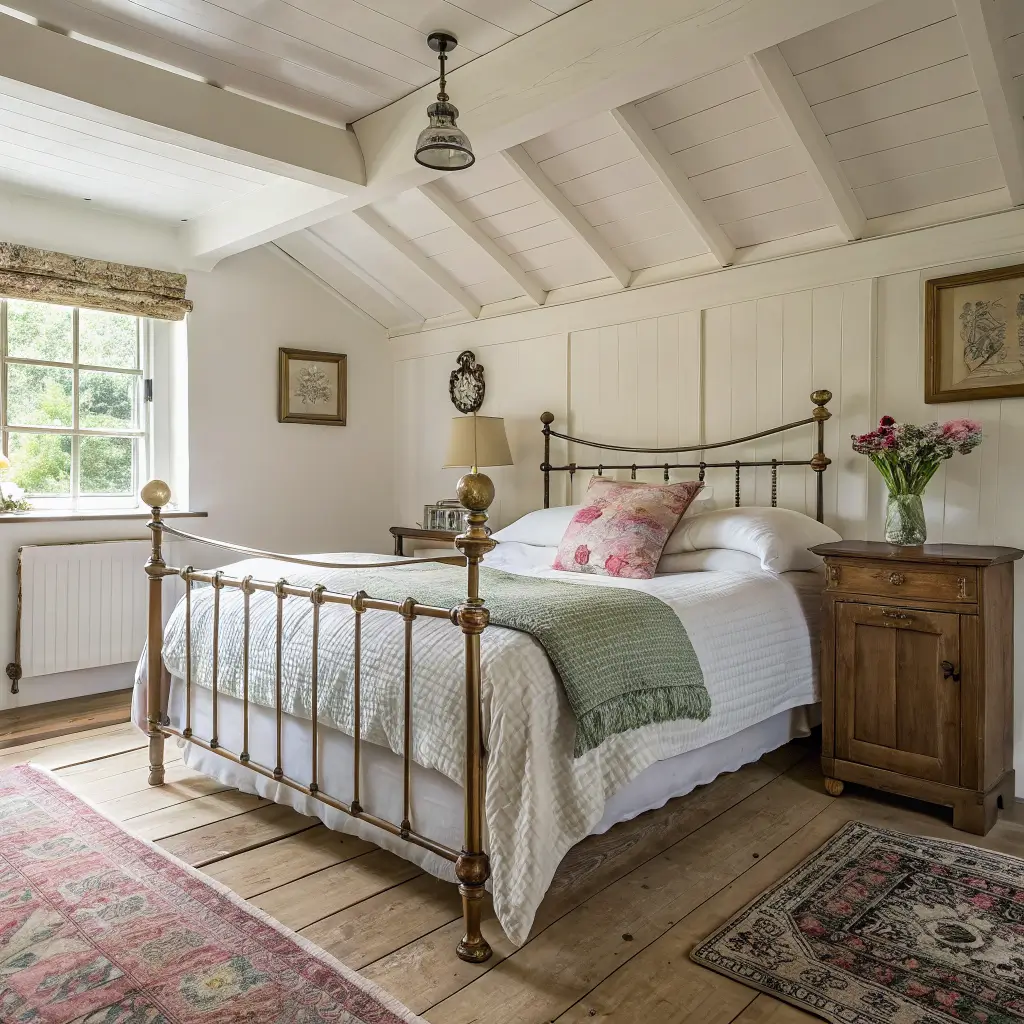
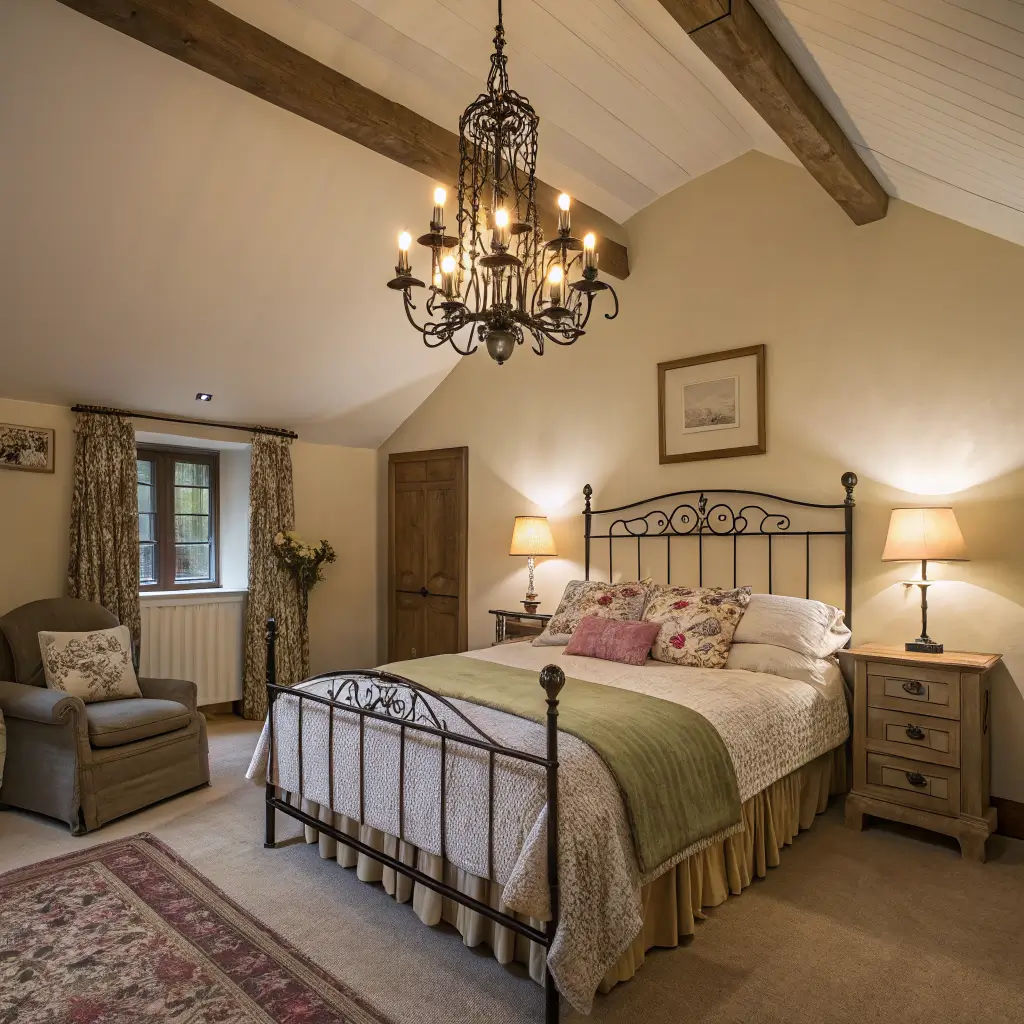
– Wrought iron or brass bedstead in black or aged brass — the classic country move. Reads clean but has character. Around $500–$1,000 new; less if you’re patient with Facebook Marketplace.
– Four-poster or canopy bed if you have ceilings above 8 feet. Gives you vertical drama and a place to drape linen.
– Chunky solid wood bed (oak, pine, sometimes painted) — this is the cabin/farmhouse version.
Mine is a simple iron frame in matte black. It cost $380 and looks like it cost more, because the bedding on top of it is where I put the money.
The Bedding
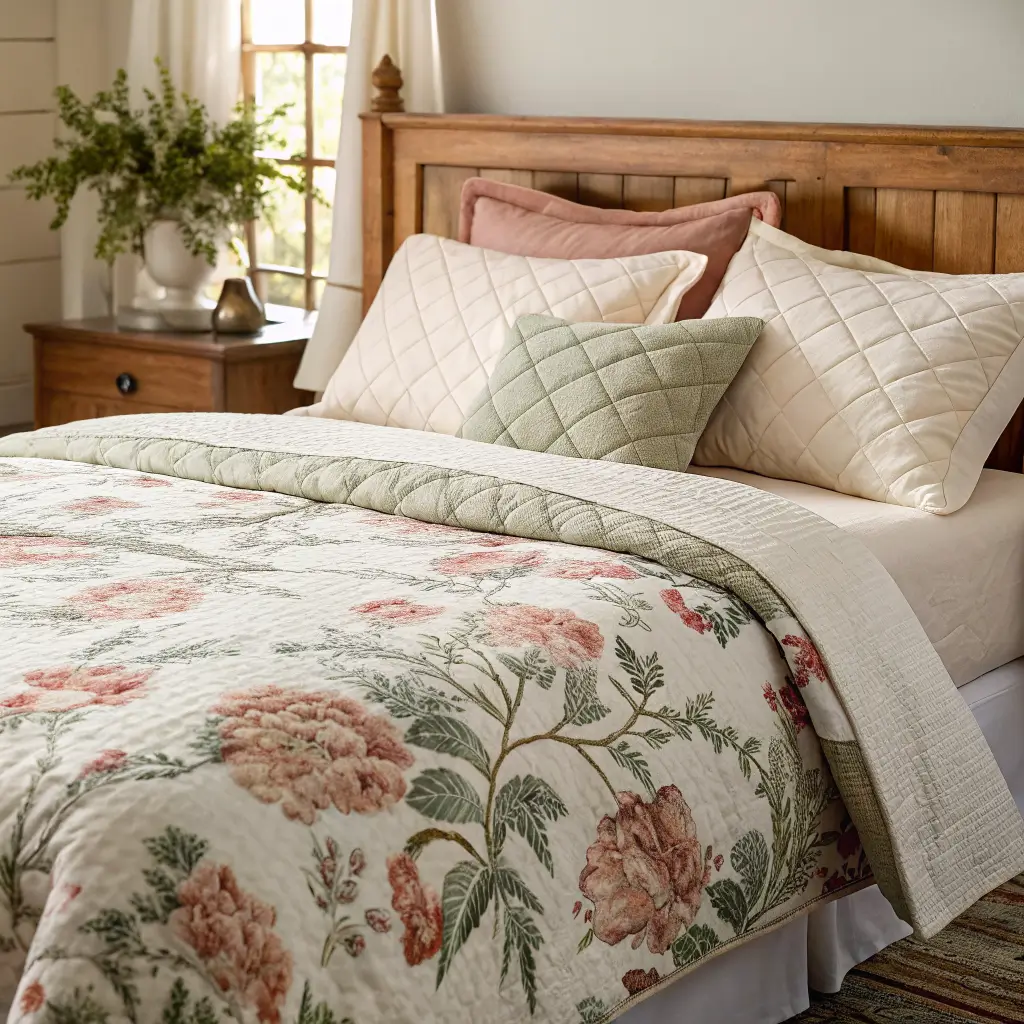
This is where the country style lives or dies. My layered stack, top to bottom:
– White cotton sheets (nothing fancy — percale, breathable)
– A patterned quilt or coverlet as the main event
– A folded wool throw at the foot of the bed
– Two euro shams in a solid, two standard pillows in a small print, one lumbar in a larger floral
Three textures on the bed, minimum. That’s the difference between “cozy” and “flat.”
The Walls
You’ve got three routes:
1. Paint only — cheapest, still effective. Pick a warm neutral or a muted color.
2. Shiplap or beadboard on one wall — DIY-able in a weekend for $300–$500 in materials for a standard wall. I put beadboard behind my headboard and it made the whole room feel intentional.
3. Floral or botanical wallpaper on the wall behind the bed. Sanderson, Morris & Co., or if you’re renting, peel-and-stick from Chasing Paper or Rifle Paper Co. Budget $150–$400 for one accent wall, more for the whole room.
Do not wallpaper all four walls with a busy pattern. I’ve seen it done well twice in my life. It’s a coin flip and usually loses.
Layering Patterns Without It Looking Chaotic
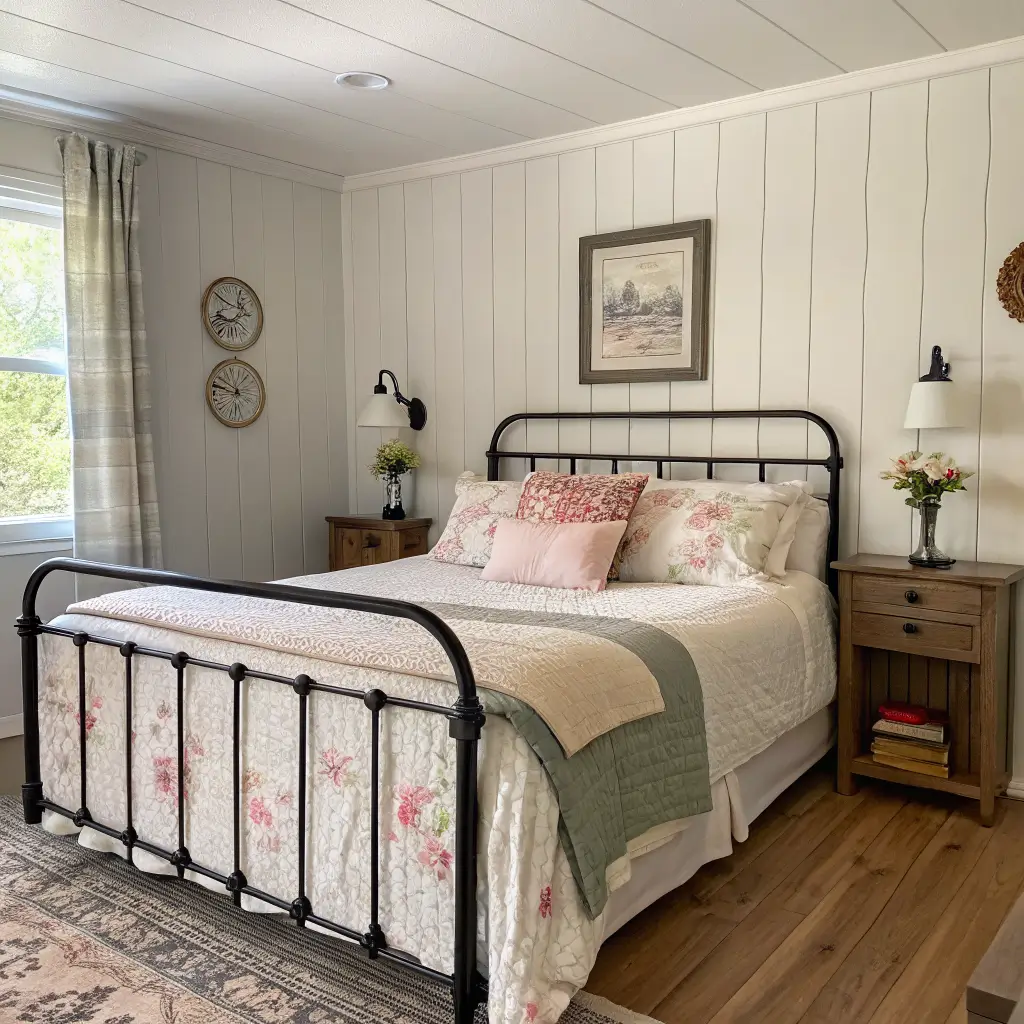
The trick isn’t avoiding pattern — it’s scaling it. Use three:
– One large-scale pattern (a big floral on the quilt or curtains)
– One small-scale pattern (gingham, ticking stripe, tiny botanical on a cushion)
– One solid or textural (linen in a coordinating color, a chunky knit)
Pull all three from the same color family. If your quilt has rose, sage, and cream, your check should live in those tones too, not introduce a whole new mustard and navy situation.
Lighting — The Part Most People Get Wrong
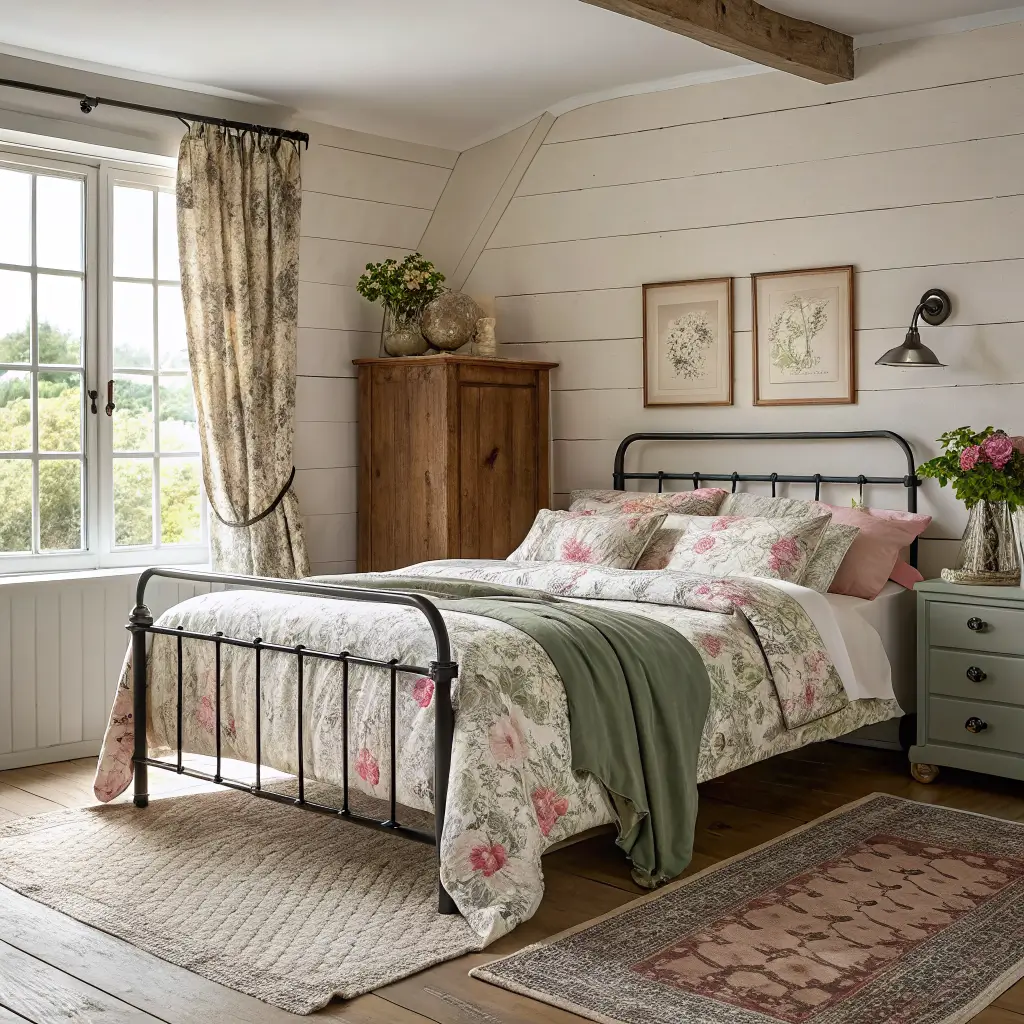
A single overhead bulb kills the whole mood. You need three sources at minimum:
– Overhead: a wrought-iron chandelier, lantern pendant, or something with a linen drum shade. On a dimmer if at all possible.
– Bedside lamps: matched or intentionally mismatched, with pleated fabric shades or linen drums. Around 24–28 inches tall for a standard nightstand.
– A third source: floor lamp by the reading chair, or a small table lamp on the dresser.
Bulb temperature: 2700K. Not a degree higher. Anything cooler and the whole warm-country thing collapses.
The Reading Nook (If You Have the Space)
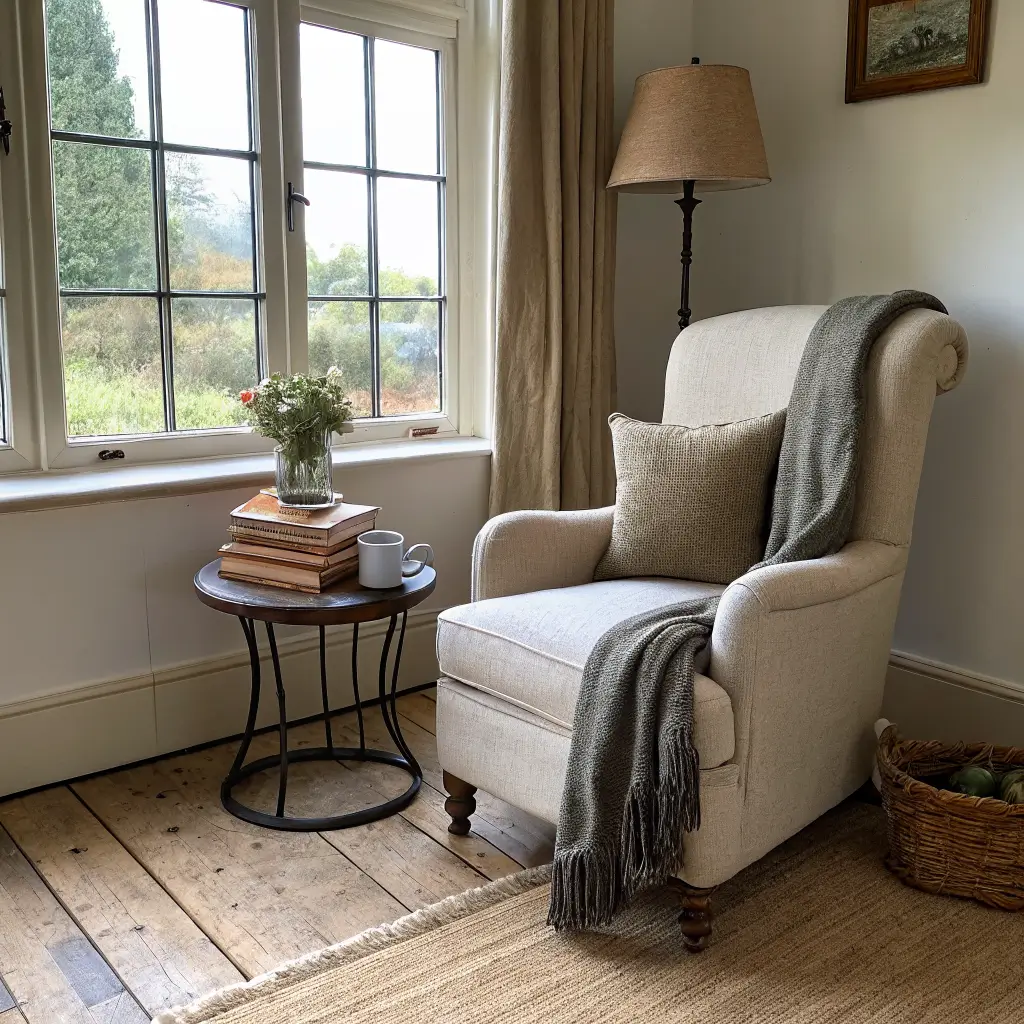
If the room is 12 m² or bigger, carve out a second zone. A small armchair by the window, a floor lamp, a side table with a stack of books, and a wool throw over the arm. Doesn’t need to be big — a 30-inch-wide upholstered chair works. Anchor it with a small rug (2×3 or 3×5) so it reads as a distinct area.
Where to Spend vs. Where to Save
Spend on:
– The quilt or coverlet (this is what people see first)
– The rug (cheap rugs look cheap; wool ages beautifully)
– Lighting fixtures (they’re jewelry for the room)
– One good piece of solid wood furniture
Save on:
– Accessories, vases, baskets — thrift stores, estate sales, and your grandmother’s attic
– Art (framed vintage botanical prints from Etsy for $15 each look better than anything from a big-box store)
– Sheets (any decent cotton percale is fine)
– Curtains (IKEA linen panels are $40 and look like they cost five times that)
Common Mistakes I’ve Made or Watched Others Make
Pattern overload. My first attempt had a floral quilt, floral curtains, floral wallpaper, and gingham cushions. It looked like a fabric sample book exploded. Pull back to one dominant pattern.
Kitsch creep. Wooden signs with cursive sayings, decorative roosters, mason jars used as literal decor. One or two vintage items with actual patina beat a shelf of themed novelty pieces every time.
Uncomfortable bedding for the sake of a photo. Fifteen decorative pillows means fifteen pillows on the floor every night. Two euro shams, two standard pillows, one lumbar. That’s it.
Ignoring the tech problem. A modern TV mounted above a rustic dresser is jarring. Either put it in a cabinet with doors, hide it behind a sliding piece of art, or accept it and don’t fight it — just keep the surrounding styling calmer.
Overloaded surfaces. A dressing table with 30 items on it reads as clutter, not charm. Group in threes: a tray with perfume, a small vase with something green, and a stack of books. That’s a vignette. Everything else goes in a drawer.
Small Bedroom Version
Yes, a country bedroom works in a 10 m² room — I did it in a rental with an 11×10-foot footprint before I moved. What matters:
– Keep walls light (warm white, palest sage, or pale blue)
– One patterned element, not four
– Wall-mounted sconces instead of table lamps to free up nightstand space
– A small-scale bed frame (skip the four-poster; go iron or a simple wood headboard)
– Baskets under the bed for storage, not visible clutter
Small rooms need the same layering, just fewer pieces of each thing.
Seasonal Swaps
Two or three times a year, I rotate:
– Autumn/winter: wool throws, flannel sheets, deeper florals, dried eucalyptus and branches in a stoneware pitcher
– Spring/summer: linen bedspread, lighter cotton throw, sheer or lace curtain panels, wildflowers or peonies in a glass vase
Store the off-season textiles in a wicker trunk at the foot of the bed. Doubles as decor.
Country Meets Something Else
Country isn’t rigid. Some crossovers that work:
– Modern country: white walls, one traditional patchwork quilt, one vintage wooden dresser, everything else clean-lined. This is what most magazines are showing right now.
– Country + coastal: swap sage and rose for duck egg blue and sandy beige, keep the wood and linen. Skip the shells and rope — one nod is plenty.
– Country + boho: add a woven wall hanging, terracotta cushions, and maybe a Berber-style rug. Keep the iron bed and floral bedding as the country anchor so it doesn’t drift into “generic Pinterest.”
Farmhouse and country get used interchangeably, but if you want to be precise: farmhouse leans more American, whitewashed, with cleaner lines and often shiplap. English country is more layered, more floral, more vintage. Pick your lane or blend them, but know which one you’re doing before you buy anything.
The country bedroom I have now is the fourth iteration in this house. The first three had good bones and bad execution — too matchy, too themed, too careful. What finally worked was letting the quilt lead, keeping the palette tight, and mixing a few actually-old things in with the new. If you do nothing else: find your anchor piece first, and buy the rest slowly.