What This Style Actually Is (And Who Should Try It)
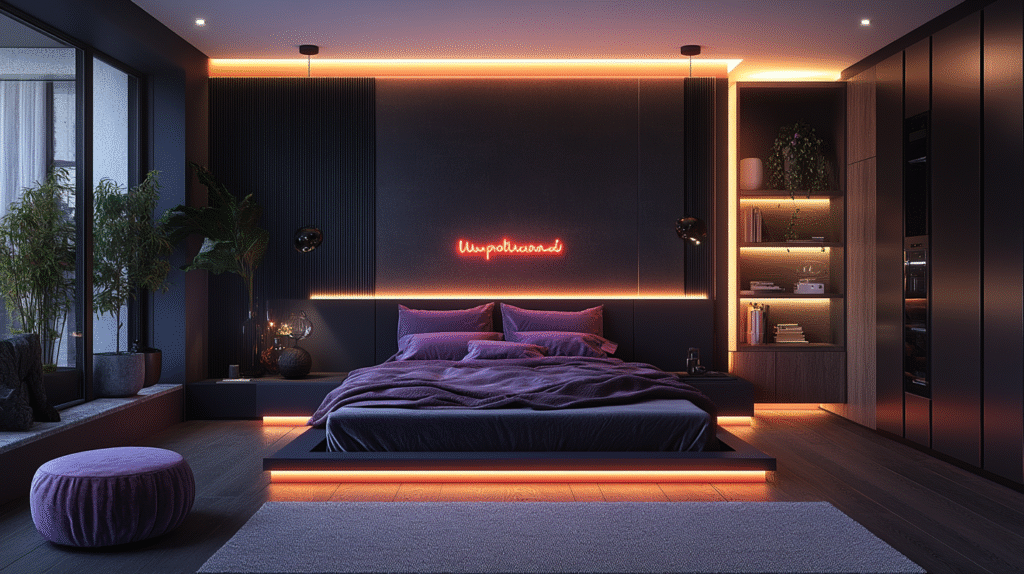
The dark modern bedroom is where I learned that black paint can open a room. One charcoal wall and soft linen made it feel like a retreat, not a cave.
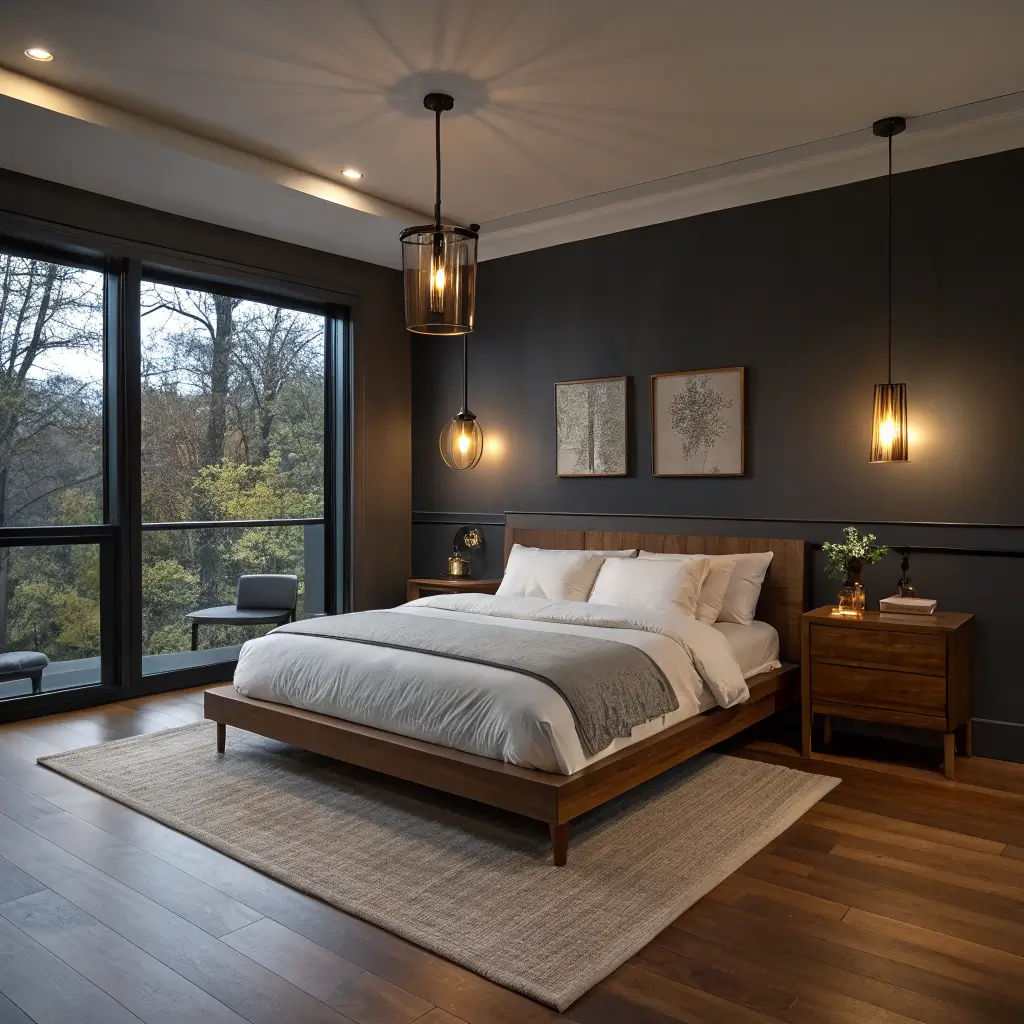
Think boutique hotel at 10 p.m. Deep matte walls, low-slung furniture, warm pools of light instead of one flat ceiling glow, and enough soft texture that the room reads calm rather than severe. It borrows the restraint of Scandinavian design and the drama of a moody European hotel, then strips out anything fussy.
It works best if you:
– Live in a smaller space or a low-light room and are tired of pretending it’s bright
– Sleep badly in light-filled rooms
– Want a room that looks composed with fewer objects, not more
– Are willing to commit to a real color decision instead of hedging with greige
Where it shines: primary bedrooms around 100–180 sq ft, city apartments with one north-facing window, guest rooms where you want people to walk in and stop talking for a second. In rooms under 100 sq ft, keep the darkness on the walls and textiles and leave the ceiling and floor lighter, or the whole thing collapses in on itself.
The Palette I’d Actually Use
Pick a lane. The rooms that fail are the ones trying to do black and navy and forest green in the same 12×12 space.
Three combinations that work:
– Matte black + warm white + brushed brass + walnut. The most graphic, most “modern hotel” version.
– Charcoal + ivory + blackened steel + oak. Softer, more Scandinavian, easier to live with long-term.
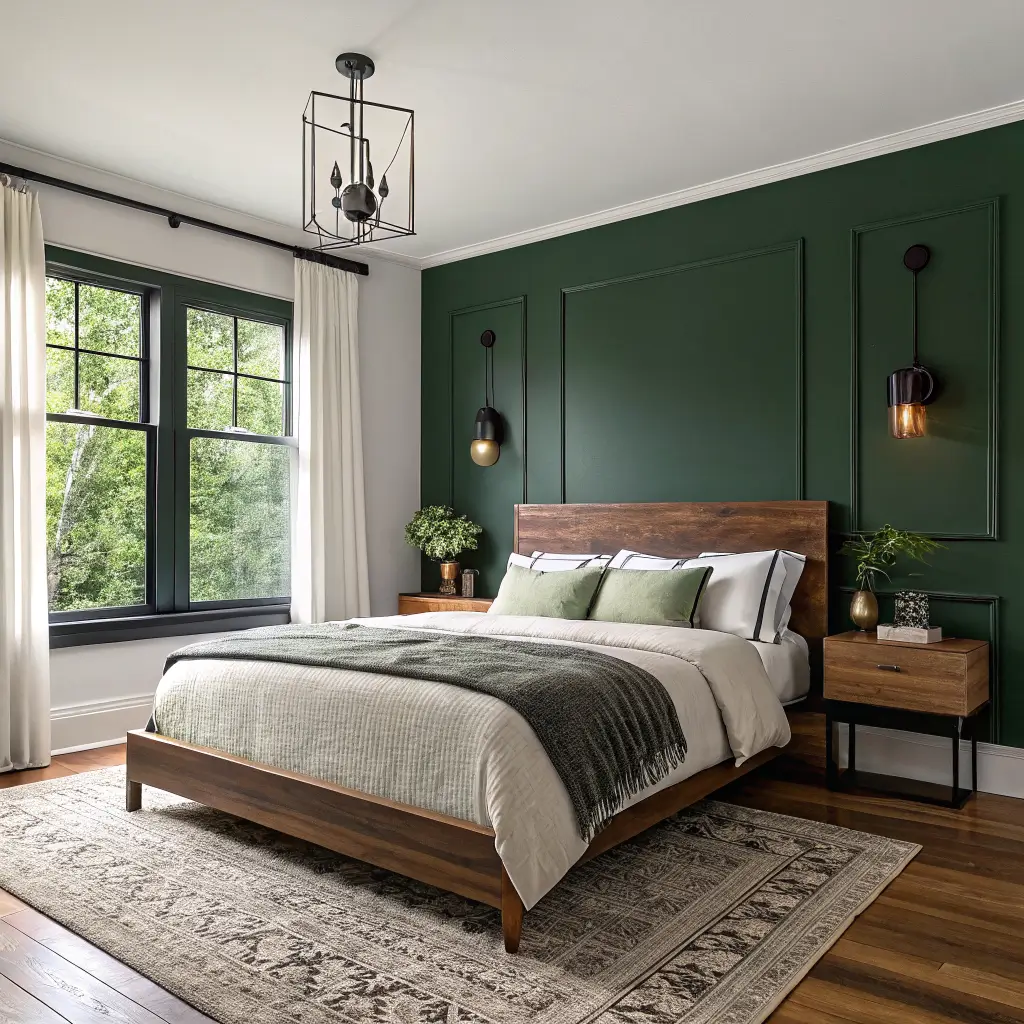
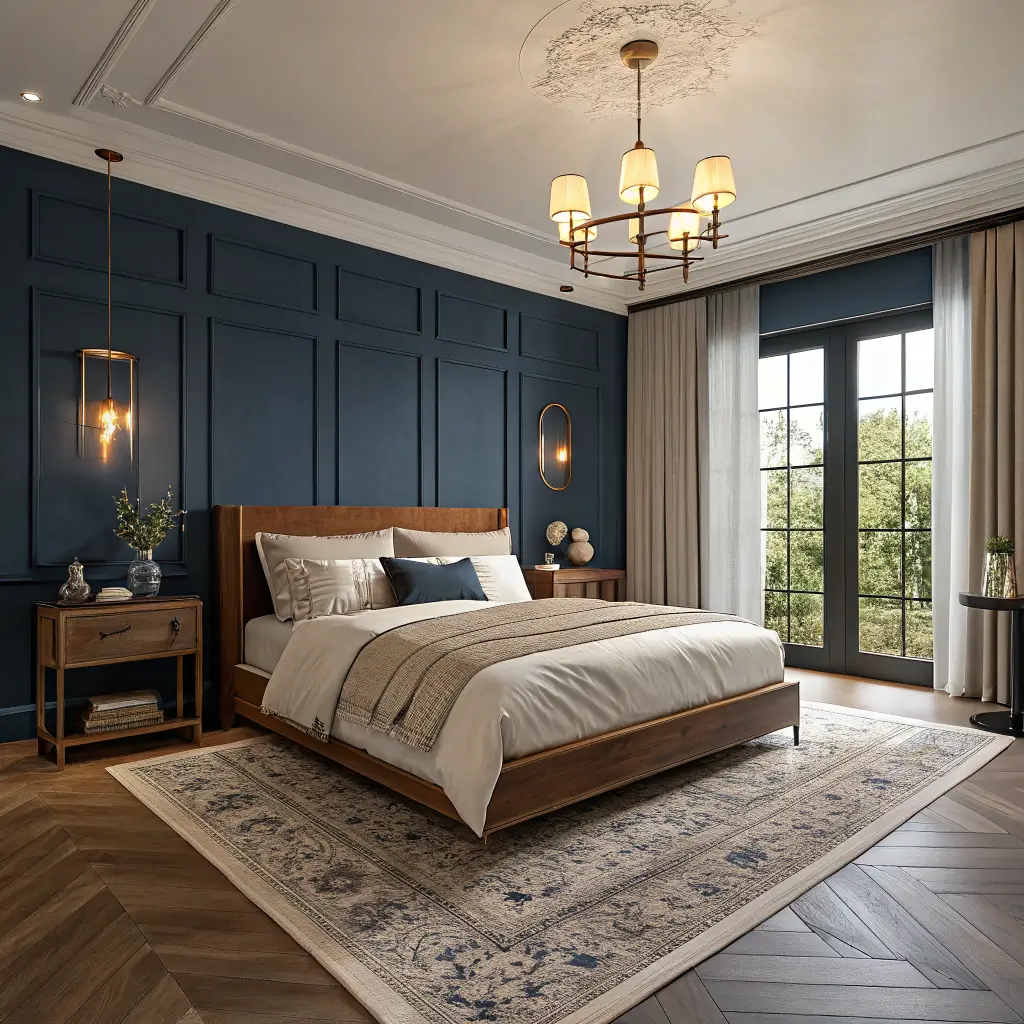
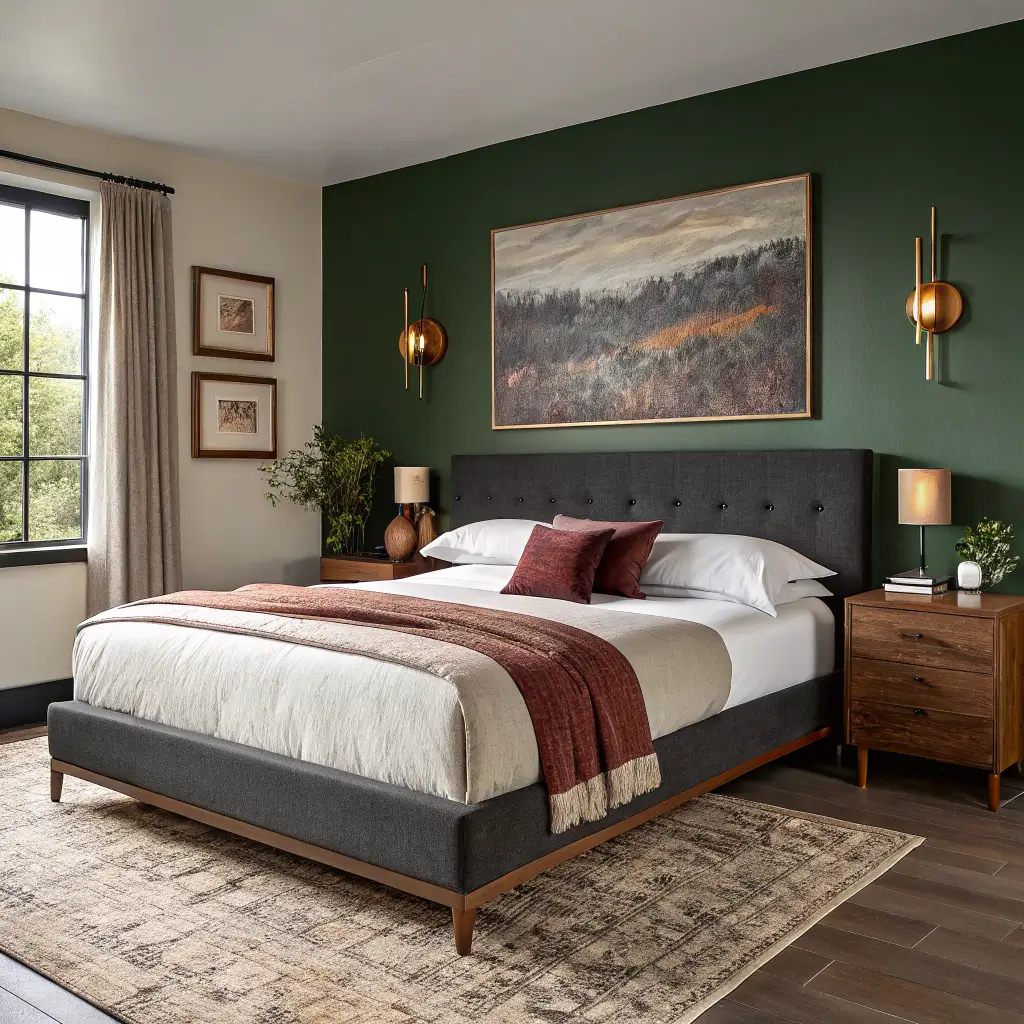
– Deep forest green or Hague blue + cream + aged brass + walnut. The luxe, less stark option. This is the one I’d pick if I were doing it again today.
For paint, I go matte or dead flat, never satin on dark walls. Satin catches every roller mark and lightswitch scuff, and dark colors are unforgiving. Behr Marquee in Cracked Pepper, Benjamin Moore Black Beauty, or Farrow & Ball Studio Green if you’re spending. Budget for two gallons and three coats minimum — dark paint over light primer will humble you on coat one.
The Pieces That Do the Heavy Lifting
You don’t need much. You need the right few.
The bed. A low-profile platform in walnut or a dark upholstered headboard in a nubby fabric — boucle, linen, or a tight velvet. Skip anything with a tall, tufted, hotel-lobby headboard; it fights the whole aesthetic. Budget: $150–$300 for a metal platform, $400–$900 for a decent upholstered or wood one, $1,000+ if you want something that’ll last.
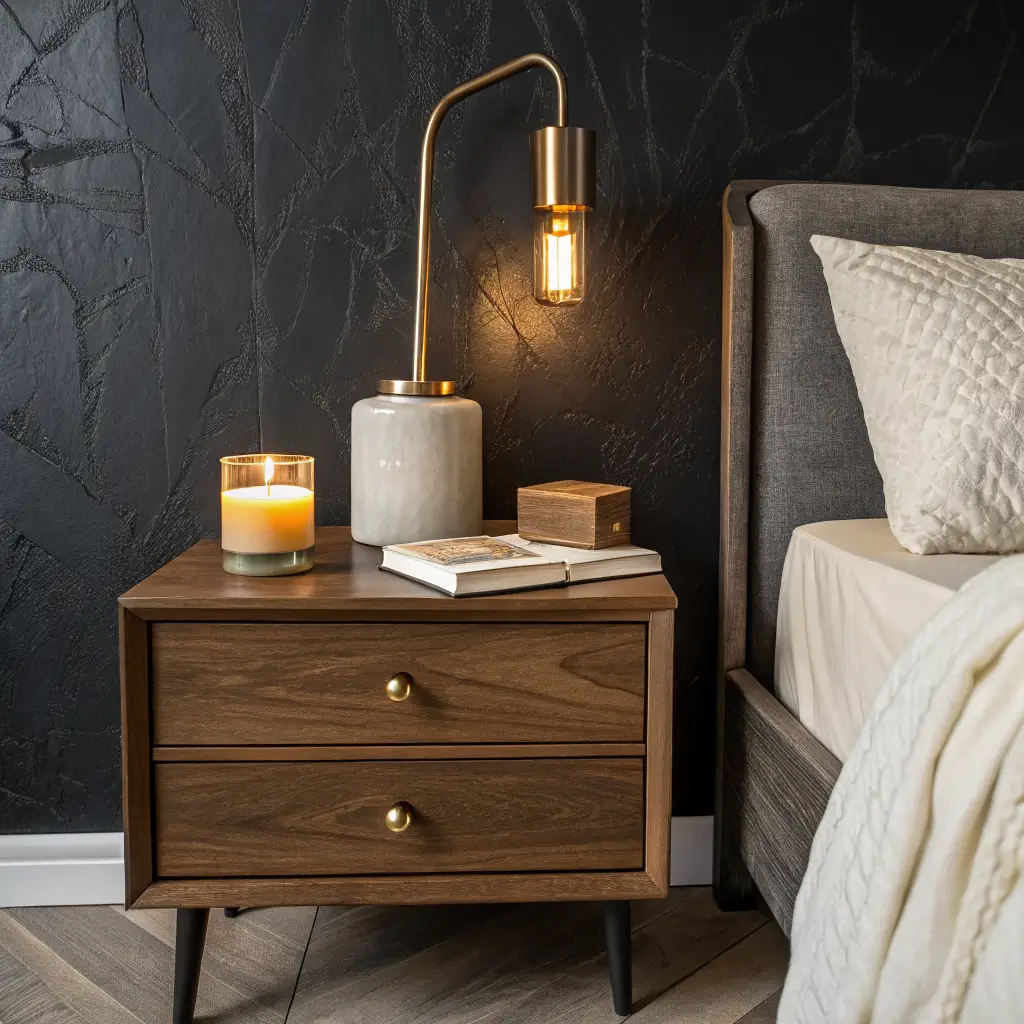
Nightstands with drawers. Closed storage matters more than it sounds. The whole look depends on empty surfaces, and empty surfaces depend on somewhere to put your charger, hand cream, and the three books you’re pretending to read. $100–$300 each. Match them or don’t, but make them the same height.
Layered lighting — this is the part people skip and then wonder why their dark room feels like a dentist’s office. You need three sources minimum:
– Overhead on a dimmer (recessed cans or a single pendant, not a boob light)
– Two bedside sources at reading height — matching sconces mounted on the wall are cleaner than table lamps and free up nightstand space
– One low, warm source — a small table lamp on a dresser, or a floor lamp in a corner
All bulbs 2700K, no exceptions. Cool white bulbs on black paint look like a morgue. I learned this after wiring three 4000K LEDs into a black bedroom and having to redo all of them.
A rug big enough to actually anchor the bed. For a queen, that’s 8×10, positioned so it extends about 24 inches past the sides and foot. Anything smaller floats and makes the room look cheap. Charcoal wool, a low-pile dark pattern, or vintage-style in muted tones.
Floor-length curtains hung high and wide. Mount the rod 4–6 inches above the window frame and extend it 6–8 inches past each side. Linen in charcoal, black, or a dark green. The curtains should just kiss the floor, not puddle, not hover.
How to Put It Together Without It Feeling Like a Cave
The single biggest mistake I made on my first attempt: black walls, dark gray floor, dark bedding, black curtains. It looked like a bunker. What saved it was replacing the duvet with a warm ivory linen one and adding a large mirror opposite the window.
The rules I follow now:
– If walls are dark, keep either the ceiling or the floor light. Both, ideally, in a small room.
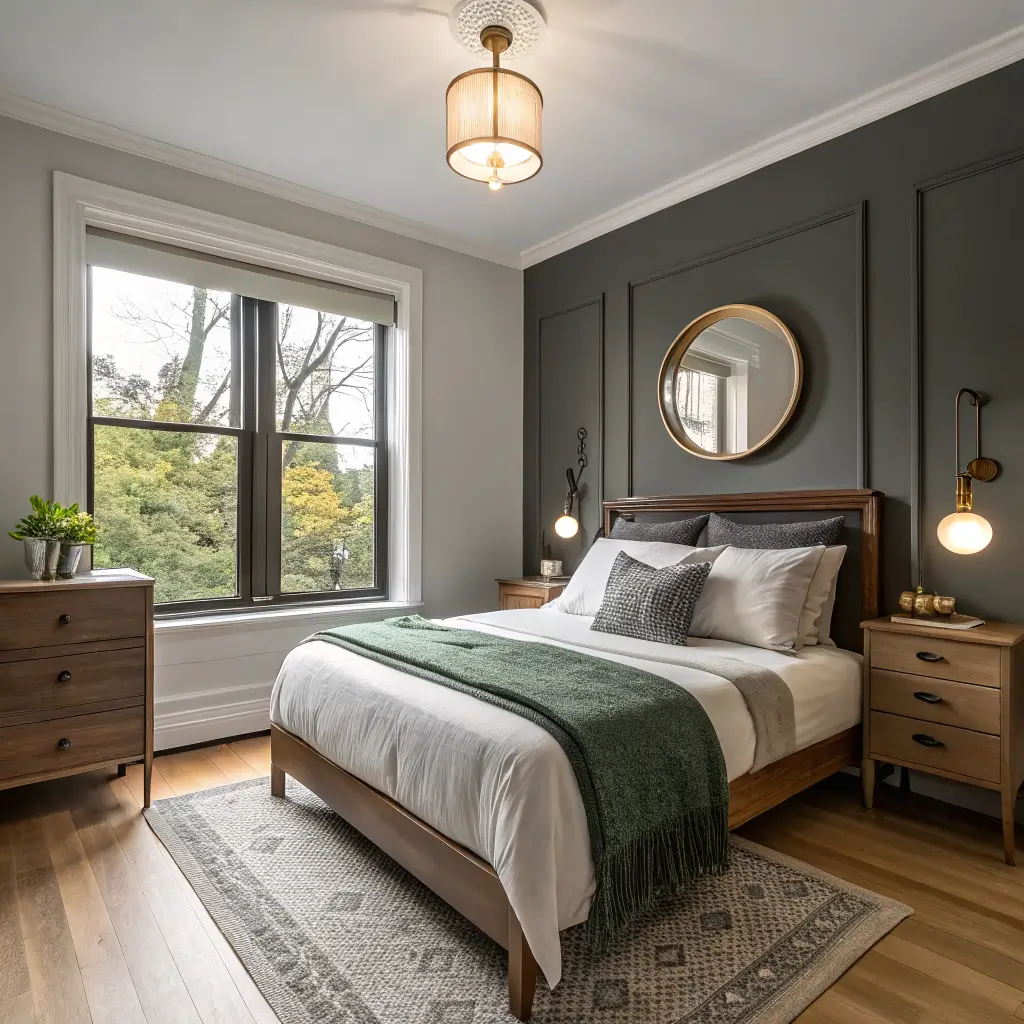
– Bedding should contrast the walls, not match. Dark walls = warm white or oatmeal bedding with one dark accent pillow. Not a black-on-black-on-black situation.
– Add one reflective surface per wall — a mirror, a piece of glass-framed art, a metallic lamp base. Dark rooms need bounce.
– Keep 2–3 main colors, full stop. Every new object gets checked against the palette before it comes home.
Where the Bed and Everything Else Goes
Center the bed on the darkest wall, ideally opposite or perpendicular to the door so it’s the first thing you see. Leave at least 24 inches of walking space on each side you use — 30 is better.
Nightstands should sit within an inch or two of mattress-top height. A nightstand that’s noticeably shorter than the mattress reads like it wandered in from a different room.
Art or a mirror above the bed should span roughly two-thirds the width of the headboard and hang with its center about 57–60 inches from the floor. One large piece beats a gallery wall here — gallery walls fight the calm.
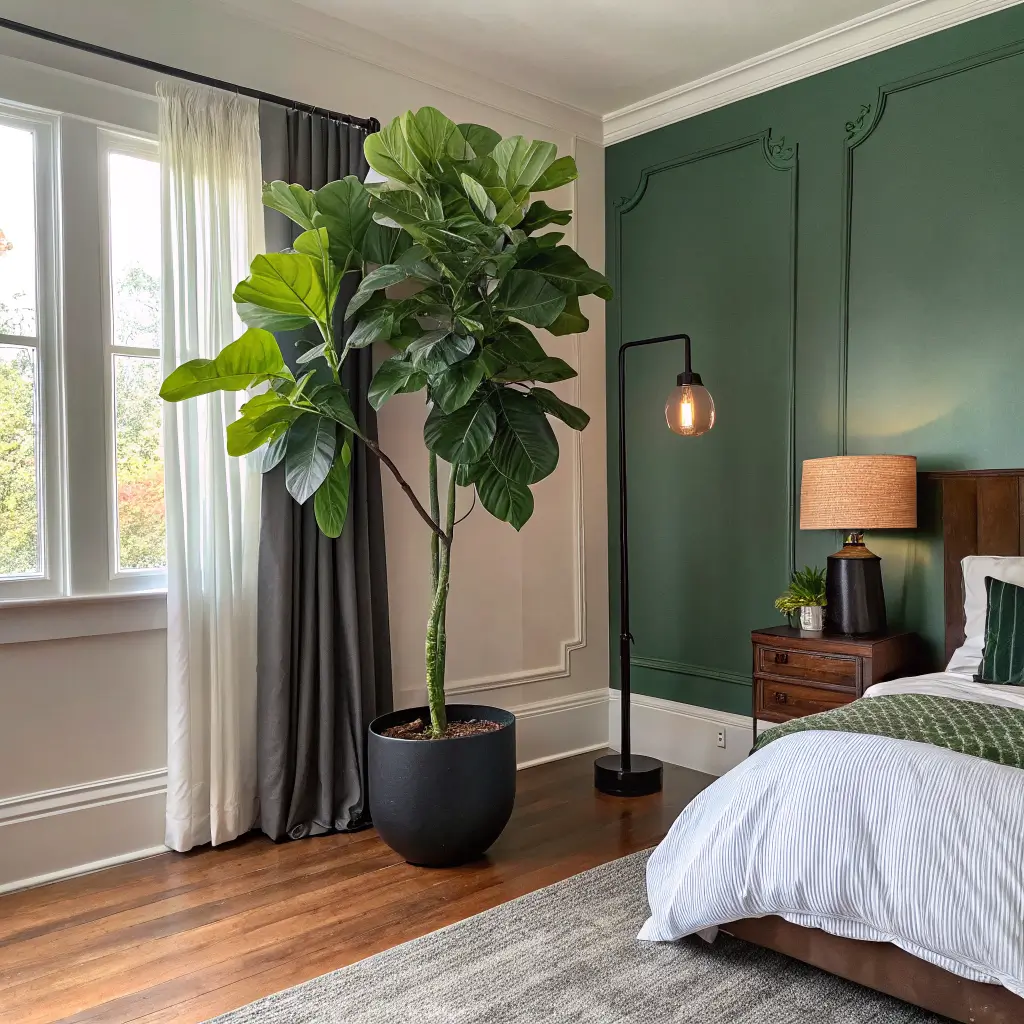
Put a plant somewhere. A rubber plant or a fiddle-leaf fig in a matte black or unglazed stoneware pot, in the corner past the foot of the bed. The organic shape breaks up all the rectangles.
Budget: Where to Spend, Where to Save
Spend on:
– The mattress (obviously)
– Lighting fixtures and dimmers — these define the mood more than the paint does
– The rug, if the floor is visible around the bed
– One good linen or velvet element (headboard or curtains)
Save on:
– Paint — mid-range interior paint in a rich color looks the same as premium once it’s on the wall. What matters is finish and coats.
– Nightstands — IKEA Nordli or a thrifted mid-century pair with new hardware both work.
– Art — oversized prints from a poster shop in a black frame, or a large canvas thrifted and repainted matte black.
Full ranges: $600–$1,500 for paint, textiles, and a few accents on an existing bed. $2,000–$5,000 for a proper redesign with a new bed, lighting, and rug. $5,000+ if you’re commissioning or buying solid walnut.
The Mistakes I See (And Made)
Cool lighting on warm-black paint. Makes the walls look dusty blue and drains all the depth out. Warm bulbs, always.
One bright ceiling light and nothing else. Even the prettiest dark room looks bad under a single overhead. Layer or don’t bother.
Too many small objects. Dark walls magnify visual clutter. A row of six little ceramic things on a dresser looks fine against white paint and chaotic against charcoal. Edit to three objects, tops, per surface.
Matching the metal finishes to nothing. Pick one primary metal — brass or blackened steel — and let it repeat in at least three places (sconces, drawer pulls, curtain rod). Mixing four metals in a small room reads accidental.
Blackout curtains that swallow the window in daylight. Hang them wide enough that when they’re open, they clear the glass entirely. Otherwise the room looks perpetually shrouded.
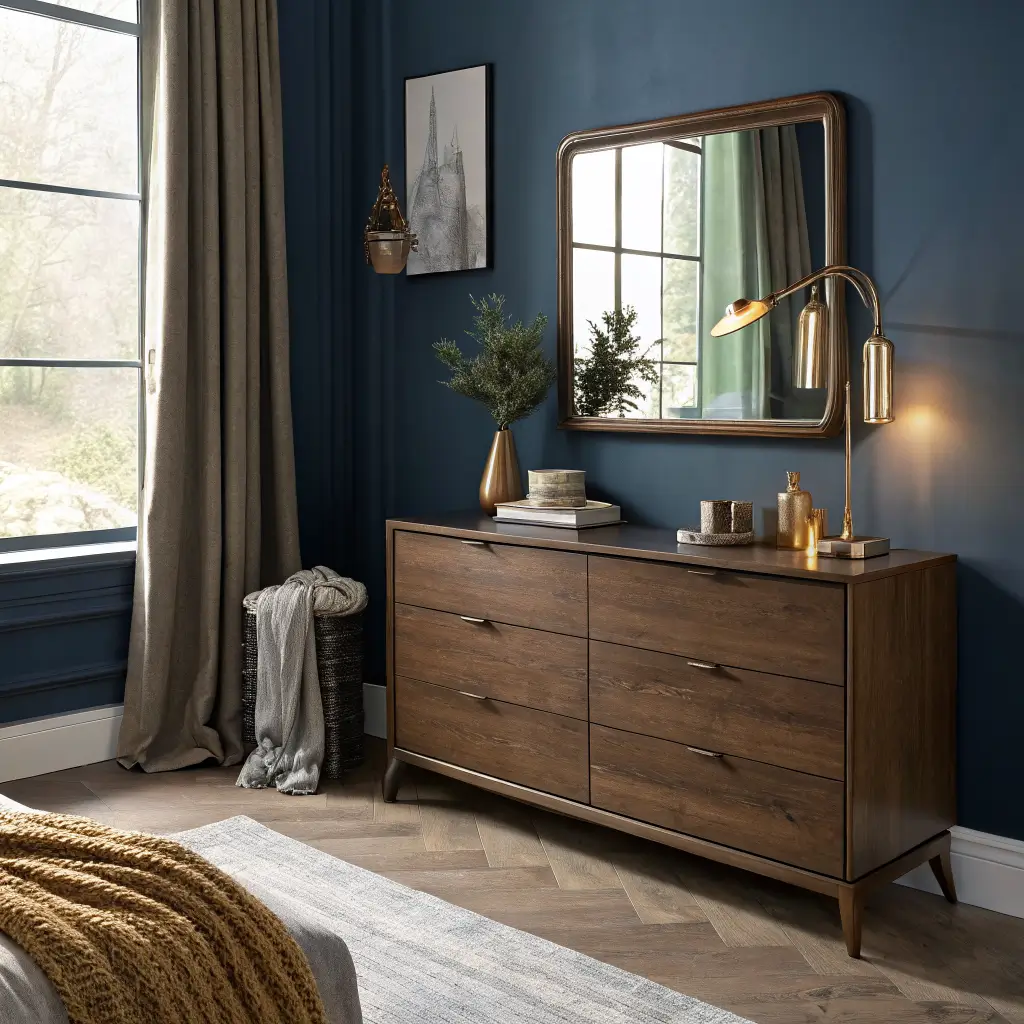
Small Updates That Keep It From Getting Stale
The look holds up year-round if the bones are right. Seasonal shifts are all in the textiles:
– Cooler months: faux fur or heavy wool throw, a burgundy or rust velvet pillow cover, a candle in amber glass on the nightstand.
– Warmer months: swap in a washed linen throw, replace dark accent pillows with oatmeal or sage, bring in a taller plant, switch out one piece of art for something with more air in it.
If the palette starts to bore you after a year, repaint one adjacent wall in a related tone — a charcoal room can take a single deep-green accent wall behind the bed and read completely different. Keep everything else identical and let the paint do the work.
One last thing I’d tell anyone starting: live with the dark paint for a full week before deciding it’s wrong. Mine looked terrible on day two — muddy, cold, off. By day six the lighting was in, the bedding was cream instead of gray, and I couldn’t remember why I’d ever wanted white walls. The room needs its full outfit before you judge it.
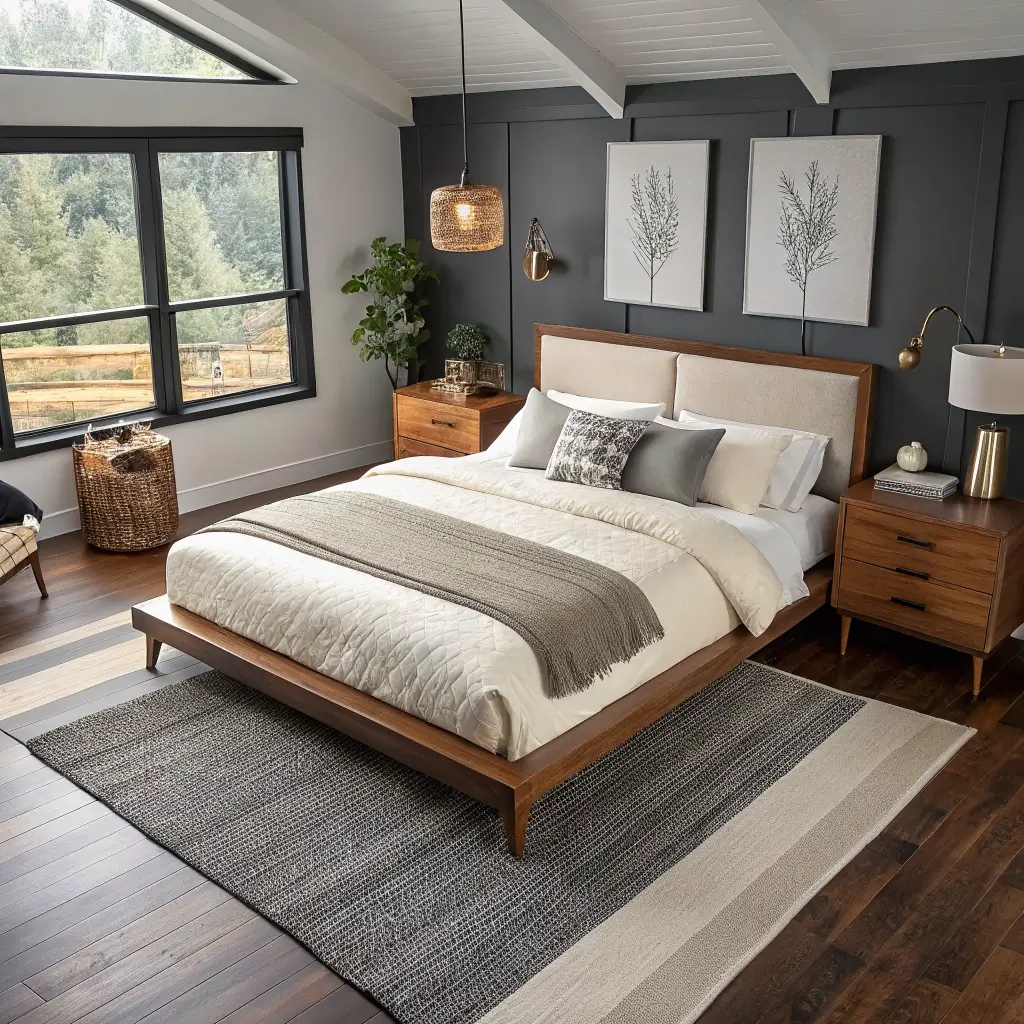
The Dark Modern Bedroom: How to Build a Moody, Minimalist Room That Actually Feels Good to Sleep In
A dark modern bedroom is what you want when your current room feels flat, bright in the wrong way, and somehow both cluttered and boring at the same time. I painted my first black bedroom wall four years ago after months of staring at builder-beige drywall and knowing something needed to go darker, not lighter. The instinct was right. The execution took me three tries.
This is the version I’d build now, knowing what I know — the paint that works, the mistakes I made, and the specific pieces that carry the look.
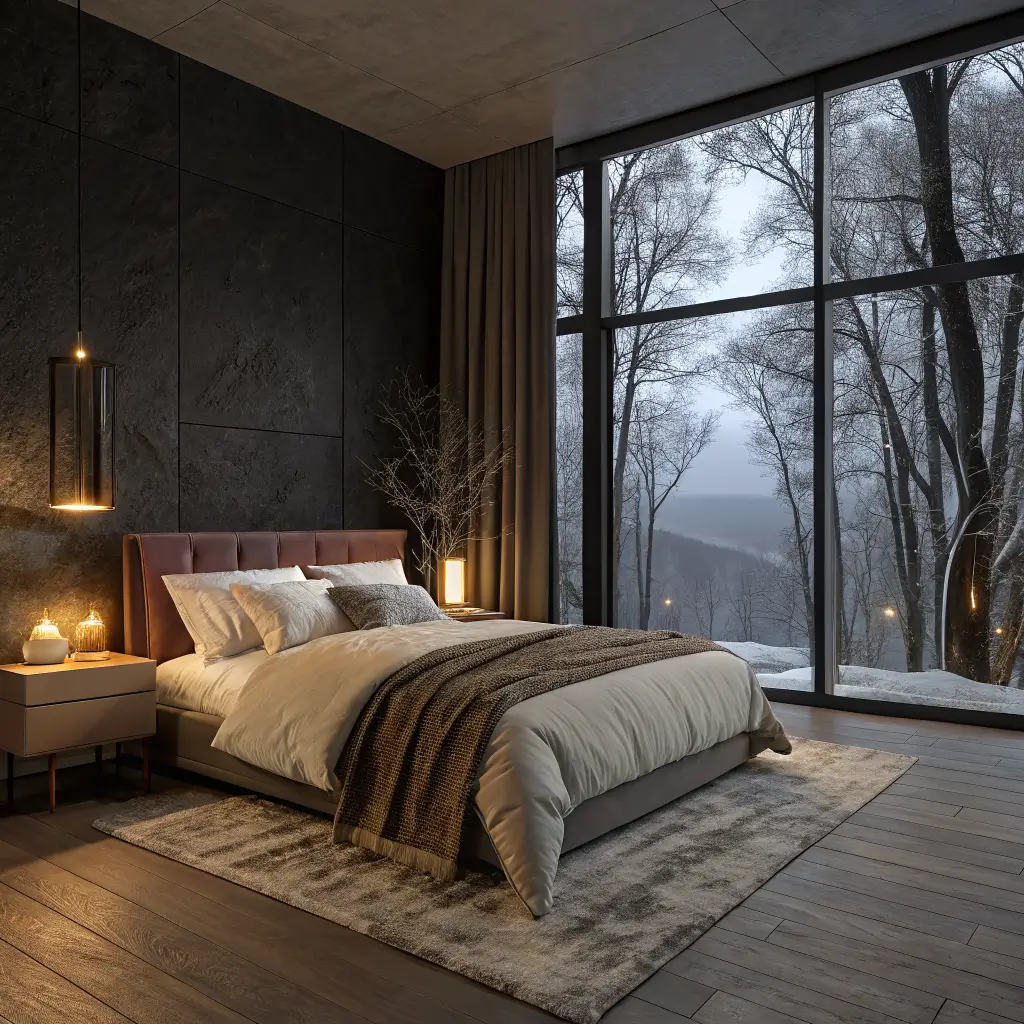
Related Accent-Wall Option
If the palette starts to bore you after a year, repaint one adjacent wall in a related tone — a charcoal room can take a single deep-green accent wall behind the bed and read completely different. Keep everything else identical and let the paint do the work.