The Look and Who It’s For
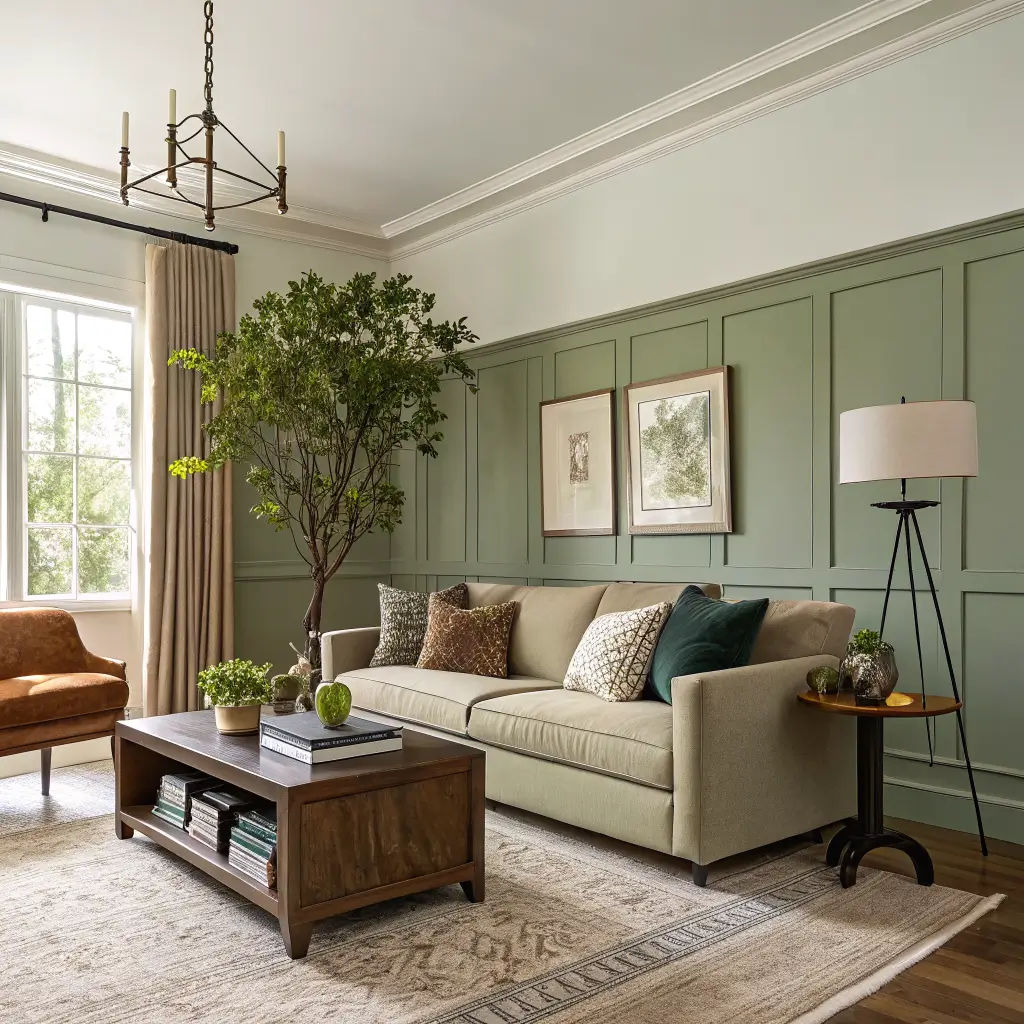
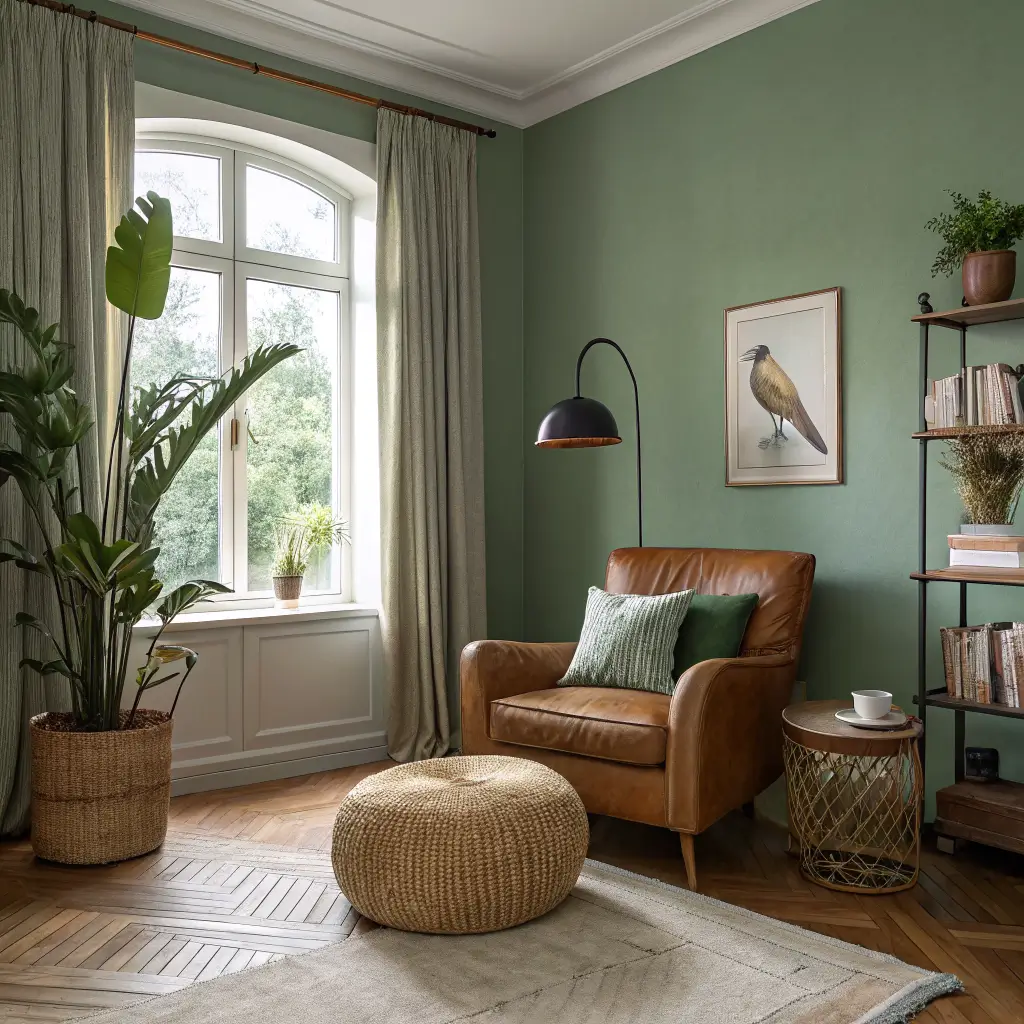
The green living room decor started with one sage wall I could not commit to, then did. A wood tone and cream sofa kept it from going muddy.
Green living room decor is what I landed on after two years of trying to make a beige box feel like something. Cream walls, oatmeal sofa, jute rug — the whole “safe” playbook. It photographed fine and felt like nothing. The minute I painted the back wall Farrow & Ball’s Card Room Green and dragged in an olive linen sofa, the room finally had a pulse.
If you’re here, you probably suspect green is the answer but don’t know which green, how much, or how to keep it from looking either dated or like a garden center exploded. Let’s fix that.
Pick Your Green First. Everything Else Follows.
This is the step people skip and then wonder why the room feels off. Every green has an undertone, and the undertone is what decides your wood, your metals, and your neutrals.
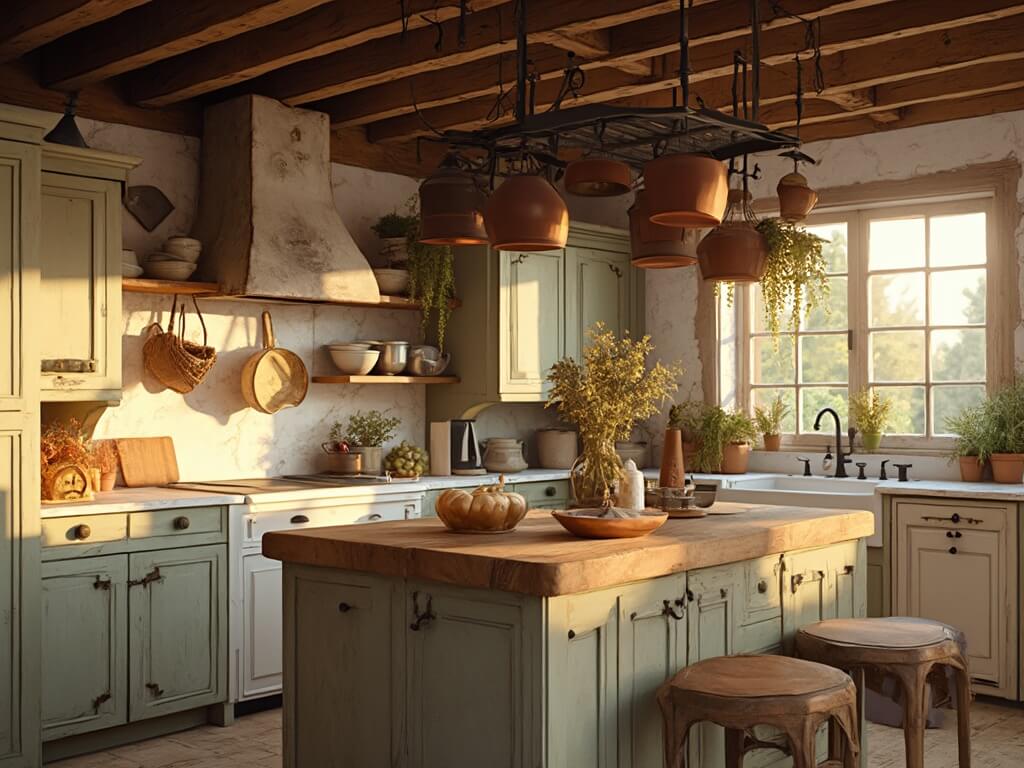
Warm greens (sage, olive, moss): pair with oak, walnut, brass, terracotta, cream, caramel leather. My personal favorite range for living rooms.
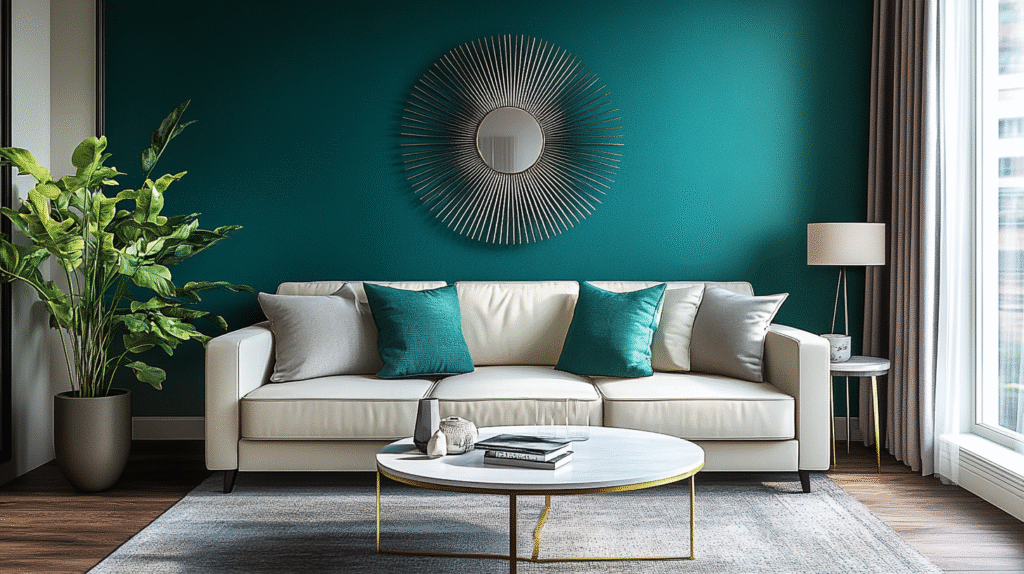
Cool greens (emerald, forest, seafoam, mint): pair with white, gray, black, chrome, navy, cooler wood tones like ash.
Rough shade shortlist I’d actually use:
– Sage — small rooms, low light, Scandi-leaning. Farrow & Ball’s Mizzle or Benjamin Moore’s Saybrook Sage.
– Olive — grounded, a little moody, hides life (kids, dogs). Sherwin-Williams Rosemary or F&B Sap Green.
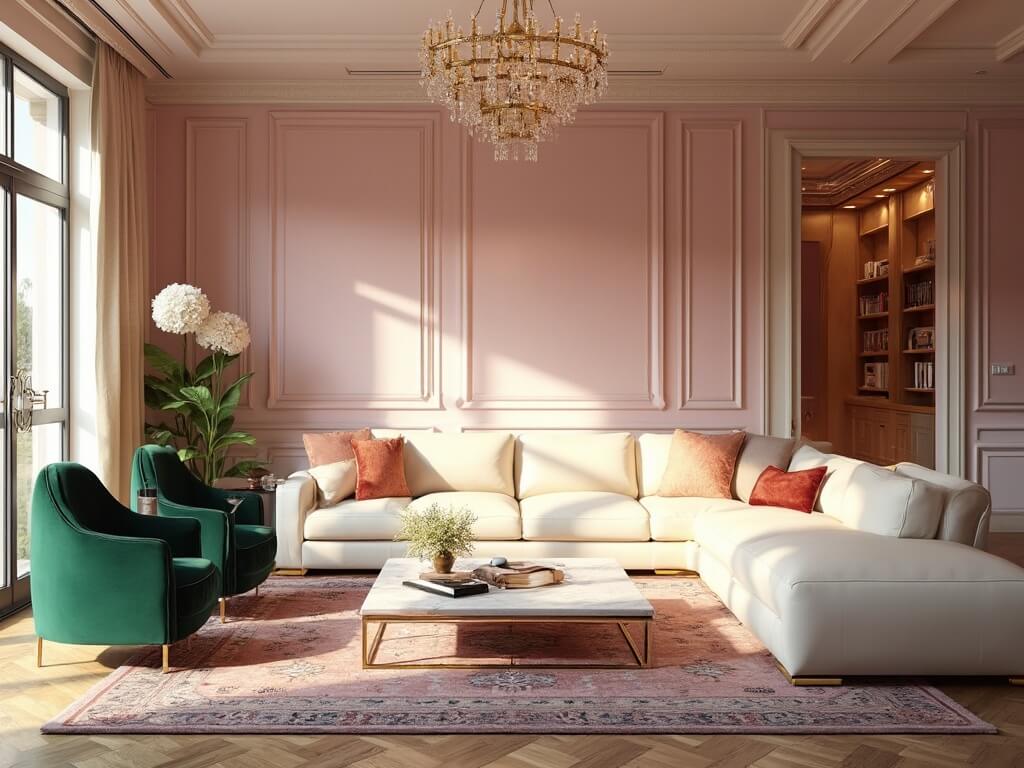
– Emerald — for a velvet sofa moment, not four walls.
– Forest/hunter — traditional rooms, paneling, jewel-box effect in small spaces.
– Calke Green / Card Room Green — that dusty, historical mid-green everyone on Instagram is using. It earns the hype.
Test at least three samples. Paint them on poster board, not the wall directly, and move the boards around the room over a full day. Greens shift hard between morning and lamp light.
Budget: Where to Spend, Where to Save
Here’s what I’d actually put money into, and where I’d cut.
Spend on:
– The sofa if it’s the hero. A green velvet or linen sofa is the single biggest lever in the room. Article, Sixpenny, and CB2 sit in the $1,200–$2,500 range for a good 3-seater. My olive one was $1,600 and it’s the best furniture decision I’ve made.
– Paint quality. Cheap paint on a saturated color looks streaky and reads flat. Two to three gallons of the good stuff runs $80–$180.
– One large plant. A real 5-foot rubber tree or bird of paradise ($60–$120) does more than five little pothos.
Save on:
– Cushion covers. IKEA and H&M Home do velvet and linen covers for $15–$40 that pass for much more.
– Throws. $25–$60 gets you a decent chunky knit.
– Rugs. Polypropylene flatweaves at Ruggable or Wayfair look great in the $150–$300 range for a 5×8.
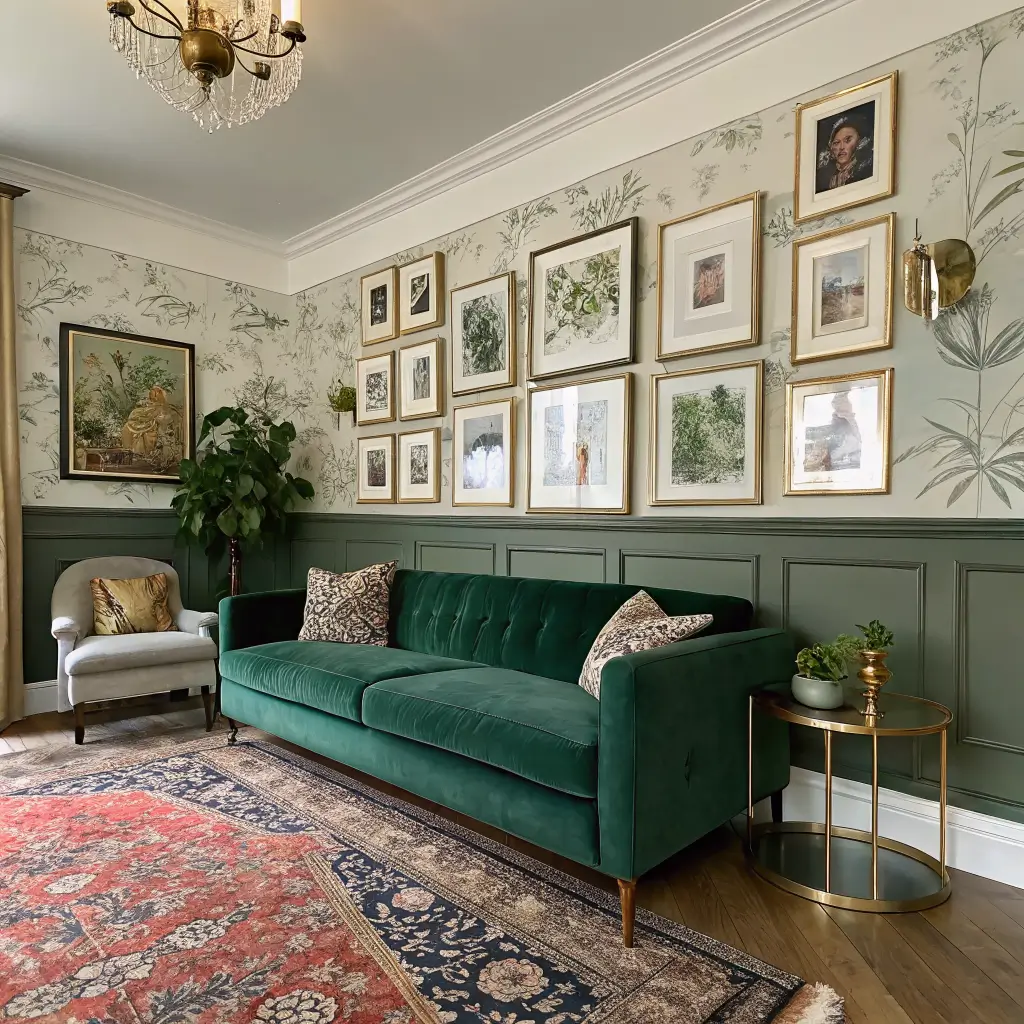
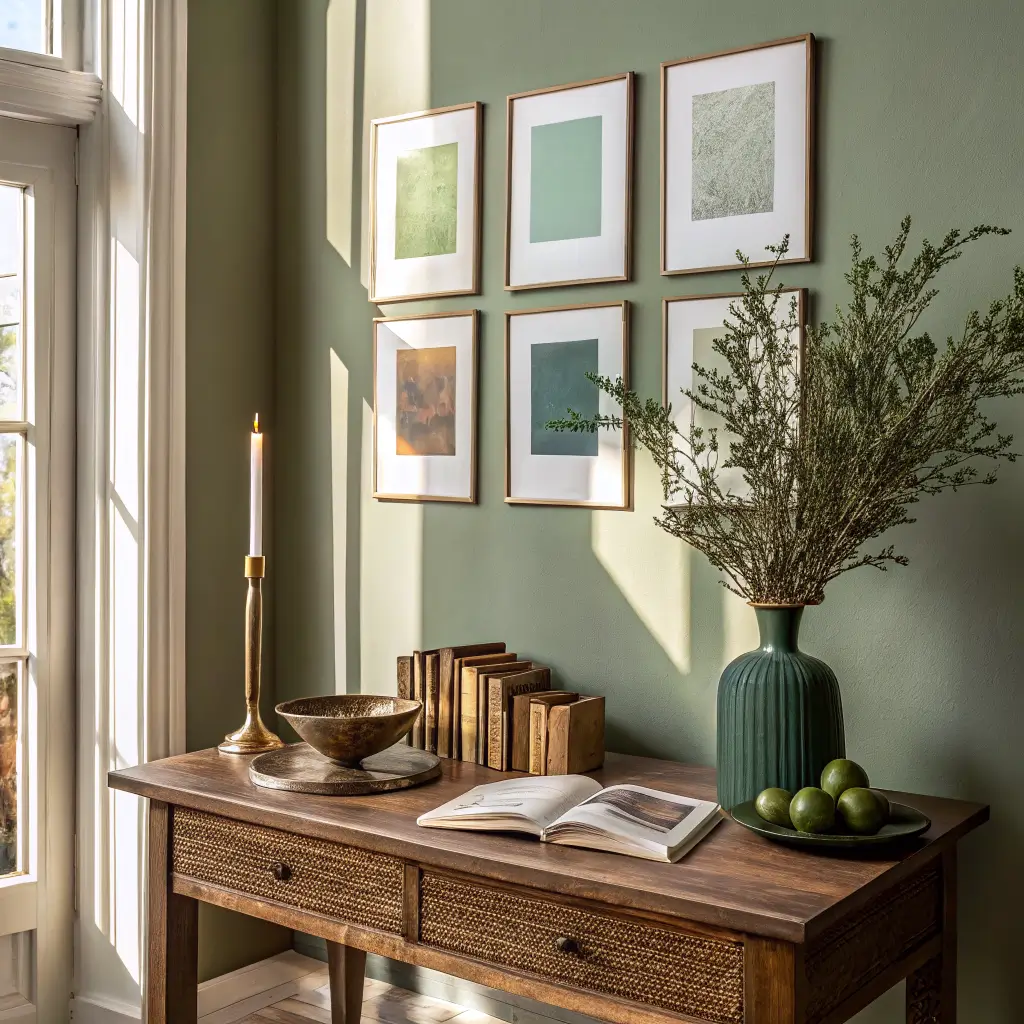
– Art. Thrifted botanicals in real wood frames beat the mass-market “leaf print” every time. I paid $8 for a 1970s framed fern watercolor at an estate sale that anchors my whole gallery wall.
Ballpark totals:
– Accent refresh (pillows, throw, plants, a couple of decor pieces): $150–$400
– Mid-range makeover (paint, rug, curtains, one accent chair): $600–$1,500
– Full overhaul (green sofa, wallpaper or drenched walls, art, lighting): $2,000–$6,000+
How to Actually Put It Together
The order matters. I’ve redone my own living room three times and this sequence is the one that saved me from repainting twice.
1. Lock the main green shade. Everything reads against this.
2. Paint or wallpaper first, before furniture arrives. Painting around a sofa is misery.
3. Bring in the hero piece — sofa, chair, or feature rug.
4. Layer textiles: curtains, then rug (if not the hero), then cushions and throw.
5. Add plants and art last. These are the tuning knobs.
The 3–5 Repetition Rule
Whatever your main green is, it needs to appear in at least three to five places across the room. Not identical shades — related. Walls, one cushion, a vase, the spine of a stack of books, the leaves of a plant. That repetition is what makes a room feel designed instead of accidental.
Sofa Placement and the Rug Problem
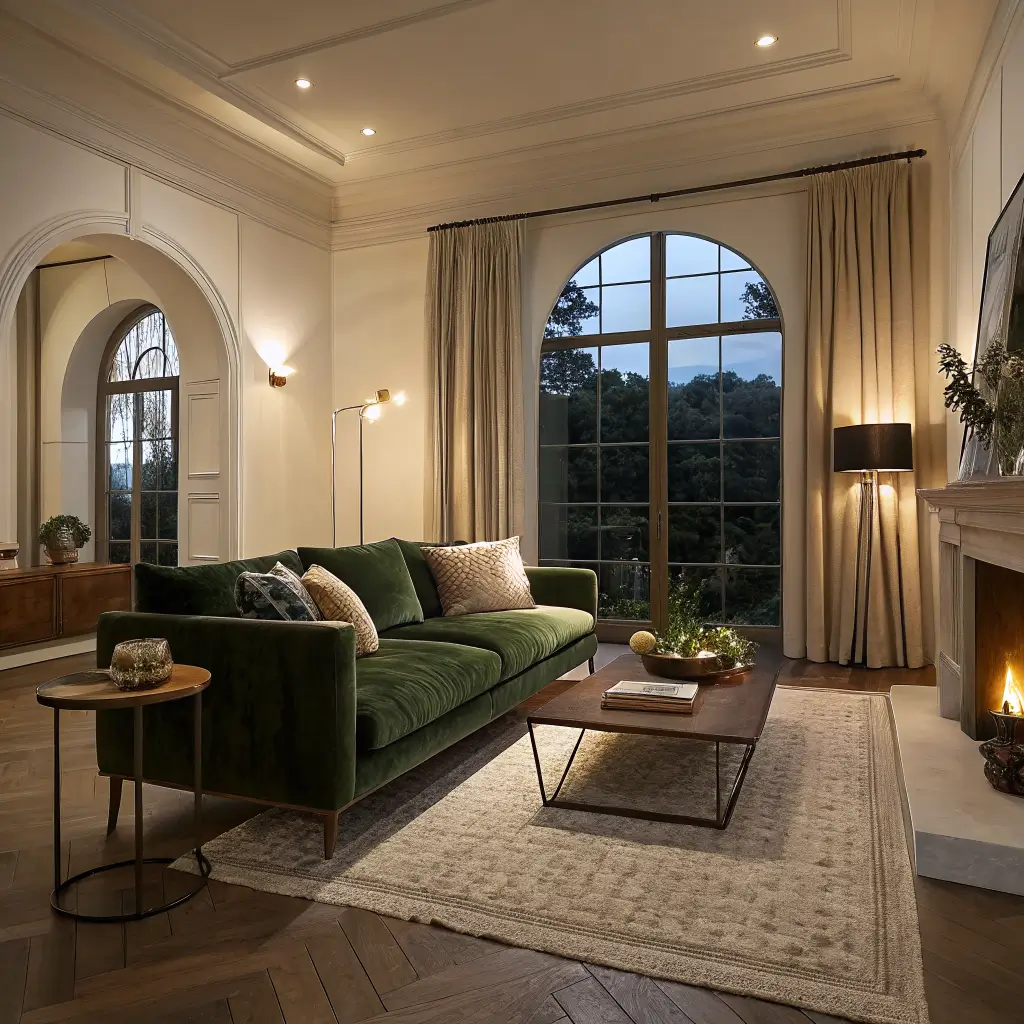
Front two legs of the sofa on the rug. Not floating in front of it, not the whole thing swallowed. For most living rooms that means an 8×10 minimum, and a 9×12 if the room is over about 14 feet wide. The single most common thing I see people get wrong is a 5×7 rug bobbing in the middle of the floor like a bath mat.
Lighting
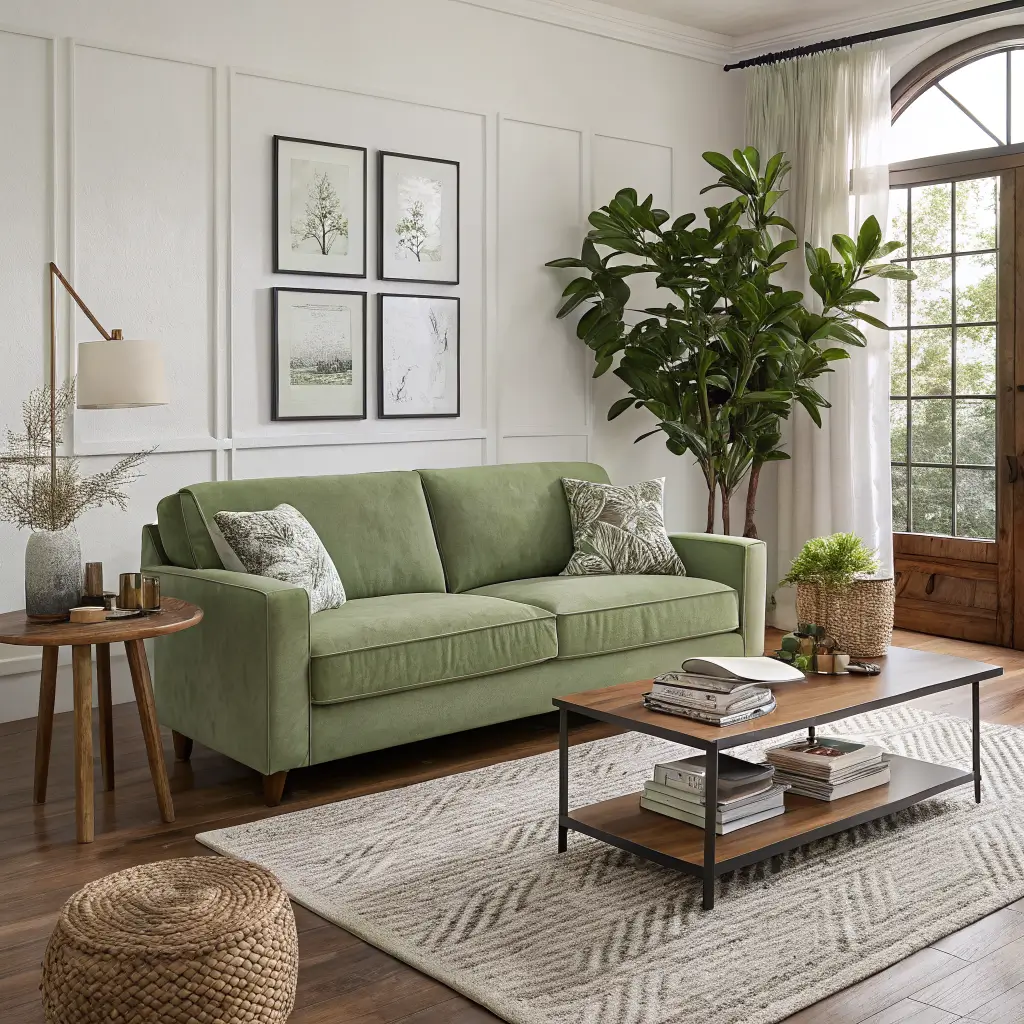
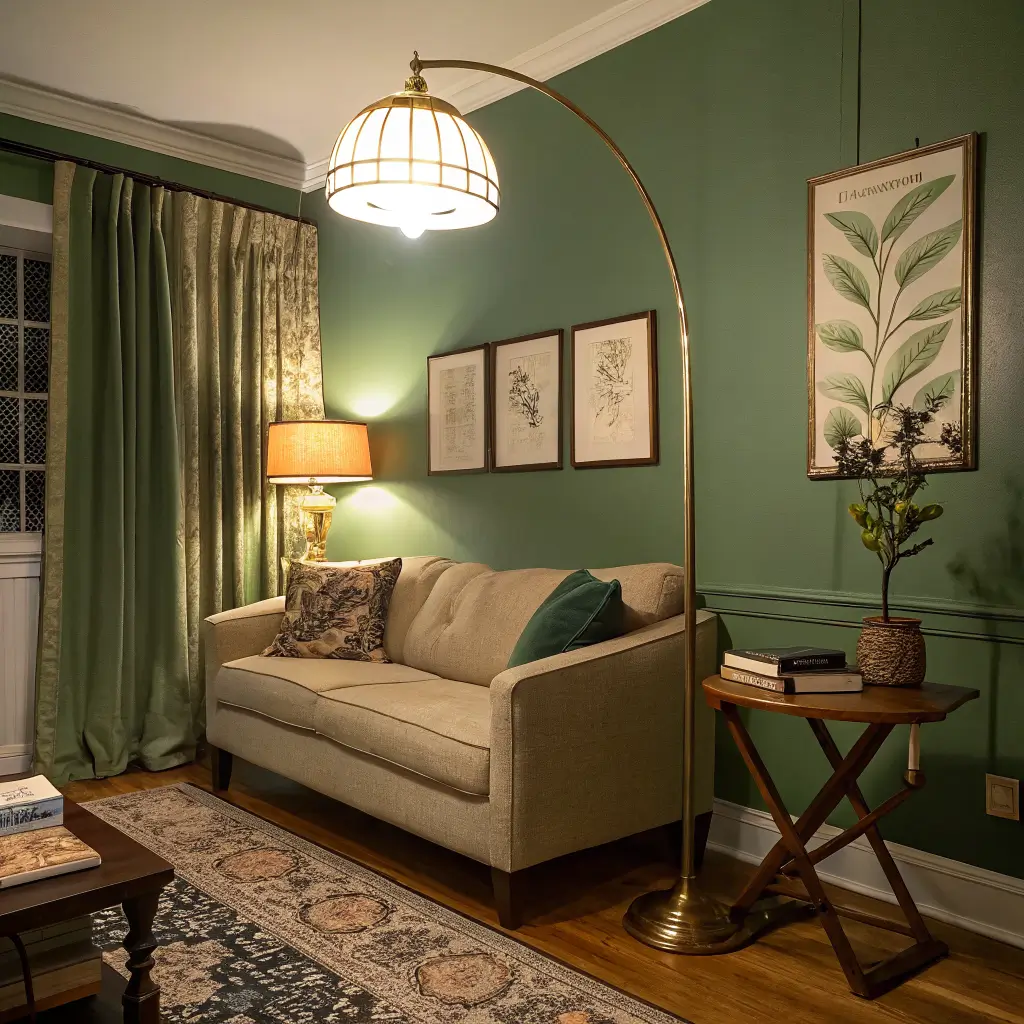
Overhead light kills a green room. You need three sources minimum:
– One ambient (overhead or a large floor lamp)
– One task (reading lamp by the sofa)
– One accent (table lamp on a console, or a picture light)
Use 2700K warm-white bulbs. Cool bulbs turn olive into something that looks like a hospital wall.
Common Mistakes I’ve Personally Made
Matching too tightly. My first attempt used three cushions in the exact same sage as the wall. It looked like the sofa had absorbed the paint. Vary the tones — pair a mid-sage wall with a deeper moss cushion and a paler linen one.
Ignoring undertones. I bought a beautiful cool-toned emerald pillow to sit on my warm olive sofa. It looked wrong for months before I admitted it and rehomed it to the bedroom.
No dark anchor. All-green plus all mid-tone wood equals mud. You need something black or near-black — a lamp base, a picture frame, a matte black candlestick — to sharpen the eye.
Too many plants, all the same size. Six little succulents on a shelf is clutter. One large floor plant plus two mid-size trailing ones on a shelf reads intentional.
Green ceiling in a low-ceilinged room. Color-drenching (painting walls, trim, and ceiling the same color) is beautiful in rooms with 9+ foot ceilings. In an 8-foot room, keep the ceiling white or a shade lighter than the walls.
Rental-Friendly Version
No paint, no problem. Here’s the setup that gets you 80% of the look:
– Olive or sage slipcover over an existing sofa ($80–$200 from Bemz or a generic Amazon cover).
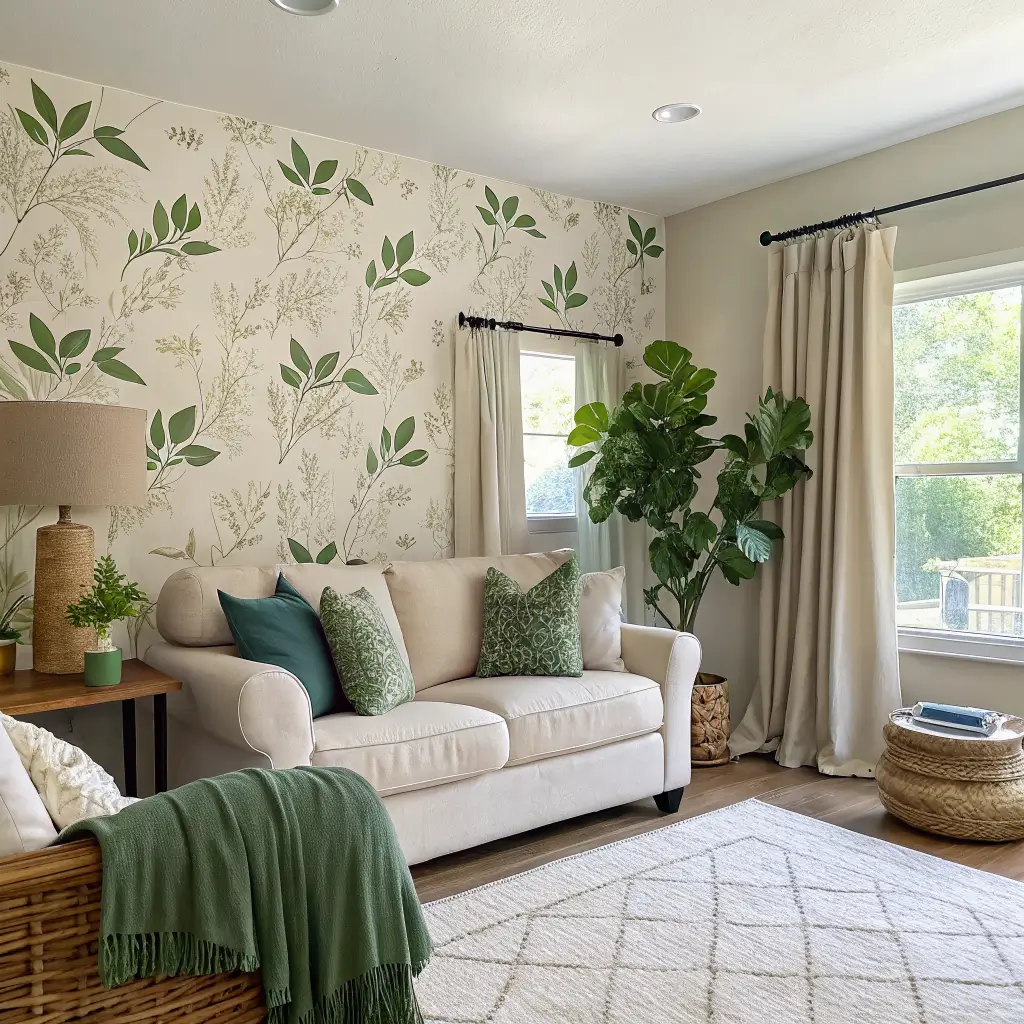
– Peel-and-stick wallpaper on one wall — Chasing Paper and Tempaper both do proper botanicals that don’t look plasticky.
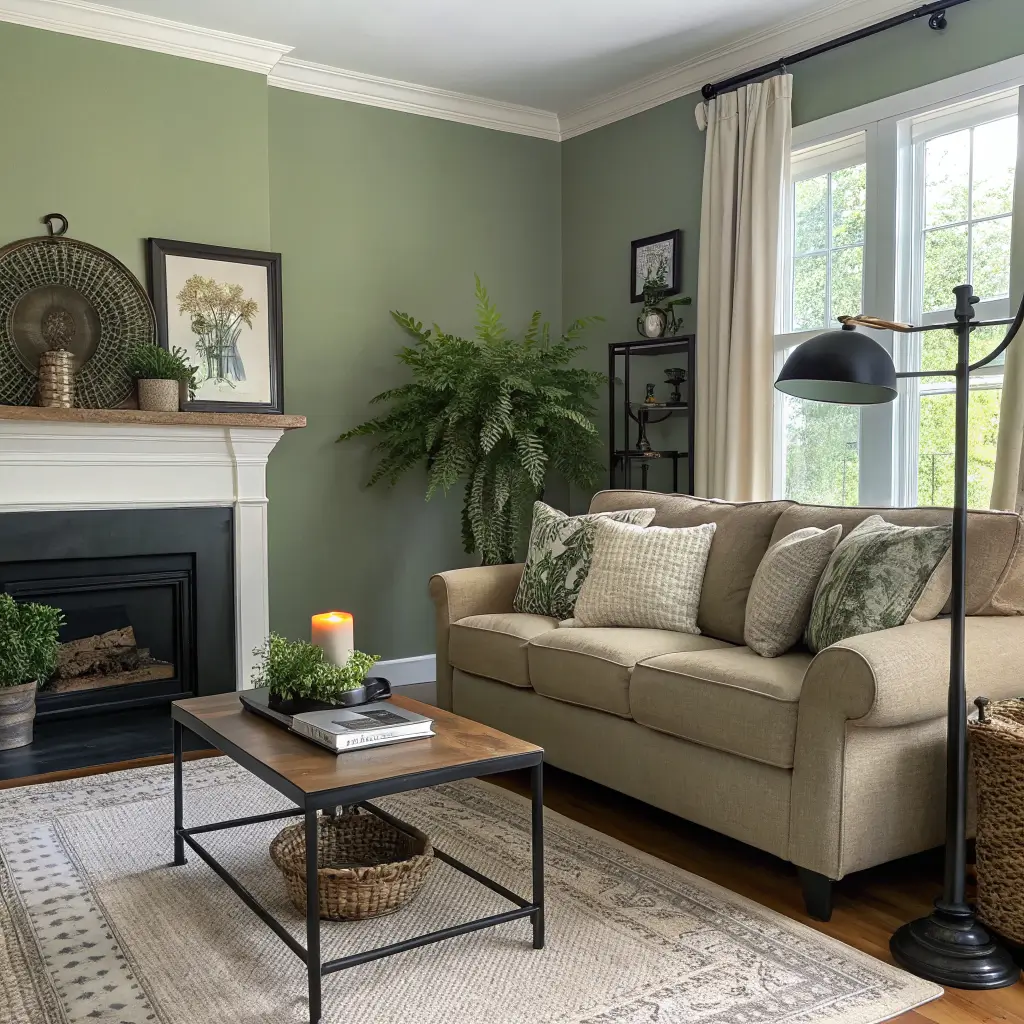
– A 6-foot fiddle-leaf fig or rubber tree in the empty corner past the sofa. This does an absurd amount of heavy lifting.
– Curtains in sage linen hung high and wide (about 4 inches above the frame, extending 6–8 inches past on each side). Instant architecture.
– Three to five cushions in mixed green textures: velvet, linen, chunky knit.
Seasonal Swaps Without Redecorating
– Spring/summer: swap in pale linen cushions, a lighter cotton throw, white ceramic planters, cut branches in a clear vase.
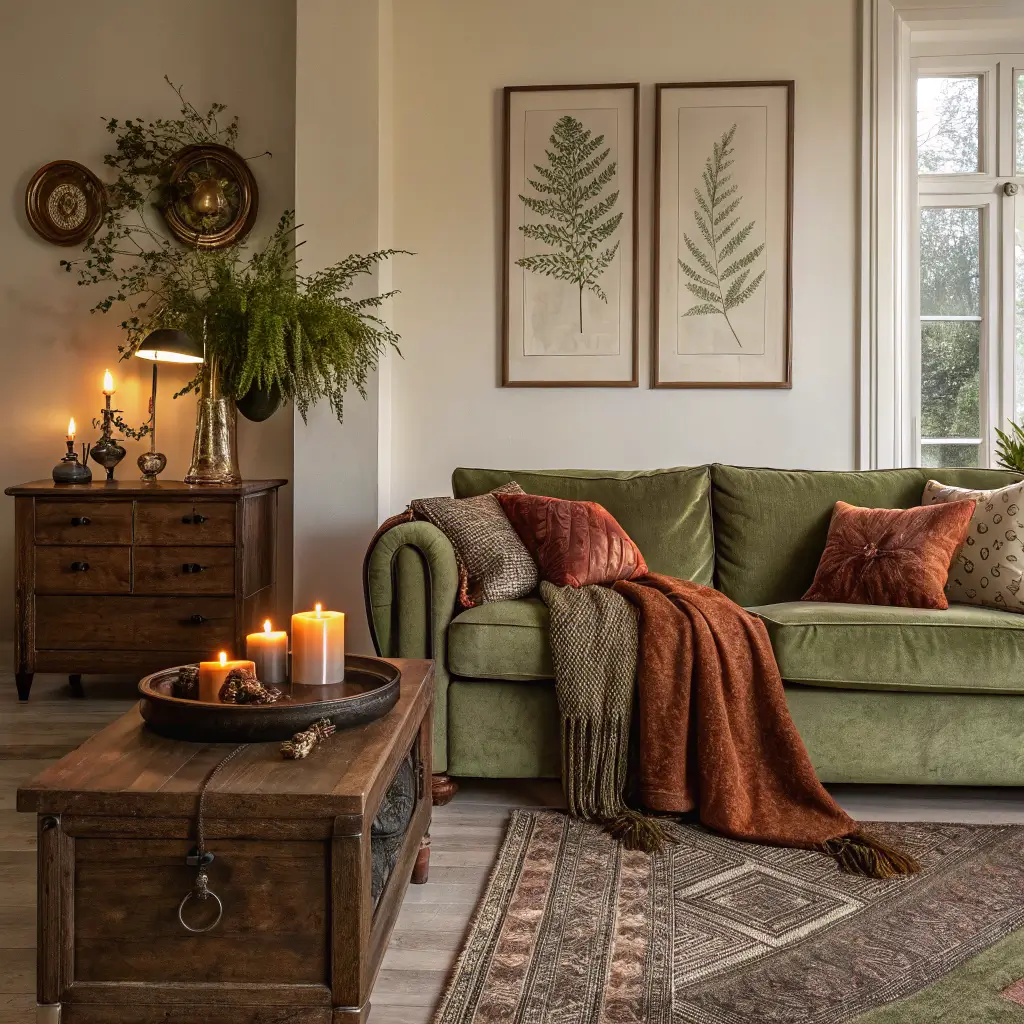
– Fall/winter: chunky wool throw in a deeper green or rust, terracotta or aged brass planters, beeswax candles, swap one botanical print for something moodier.
Keep a bin in a closet with the off-season stuff. The room reads new twice a year and you spent nothing.
Blending Green With Other Styles
– Boho: olive walls, cane furniture, kilim rug with rust and cream, macramé, tons of trailing plants.
– Modern traditional: hunter green paneling to chair-rail height, cream walls above, brass sconces, a Persian rug.
– Scandi: pale sage walls, white oak coffee table, black steel floor lamp, one large monstera, restraint everywhere else.
– Maximalist: emerald velvet sofa, botanical wallpaper, layered rugs, gallery wall with mixed frames, a leopard-print footstool if you’re brave. (I am, and it works.)
The room I have now started as a mistake — I bought the olive sofa on sale without a plan and had to build around it. Two paint samples, one returned rug, and a lot of moving lamps around later, it’s the room I actually want to sit in. Start with the shade of green you keep coming back to, commit to it in three or four places, and let the rest catch up.