Modern Minimalist Living Rooms: What Actually Works (and What I’d Skip)
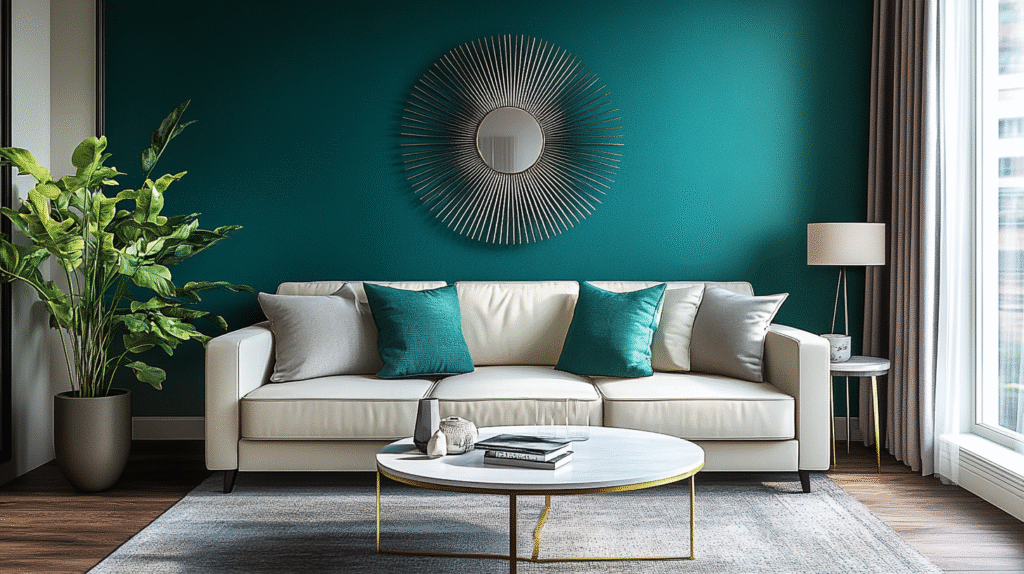
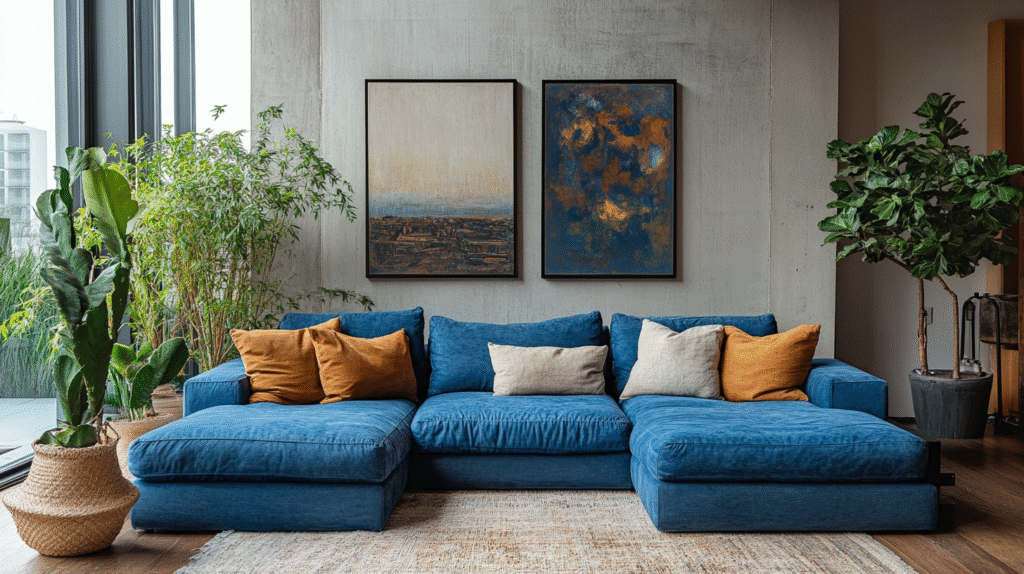
The modern minimalist living room is where I learned that empty is not the goal, calm is. A low sofa and one big plant did more than a wall of decor.
Modern minimalist house interior living rooms get a bad rap for feeling cold, empty, or like a dentist’s waiting room — and honestly, my first attempt at one deserved that reputation. I painted everything Chantilly Lace, bought a white slipcovered sofa, and spent six months wondering why the room felt like a hospital lobby with a plant in the corner.
The fix wasn’t more stuff. It was better stuff, and knowing where to hold back.
Here’s what I’ve learned from redoing my own 13’×15′ living room three times, and helping two friends do theirs on tighter budgets.
The Style, and Who It’s Actually For
Minimalism today isn’t the stark, all-white 2015 version. The current direction is warm minimalism — same clean lines and uncluttered surfaces, but with real texture, warmer neutrals, and enough softness that you want to sit down. It overlaps heavily with Scandinavian, Japandi, and contemporary design.
It works if you:
– Get anxious around visual clutter
– Would rather own five good things than fifty okay things
– Live in a small apartment where every extra object shows
– Want a low-maintenance room that photographs well and cleans in ten minutes
It doesn’t work if you’re a natural collector, love pattern-mixing, or find bare walls unsettling. That’s not a flaw — it just means a different style.
What It Costs (Real Numbers)
Setup time depends on how deep you’re going. A refresh — paint, declutter, new textiles — takes one or two weekends. A full furniture overhaul with new sofa, rug, and lighting runs two to four weeks once you factor in delivery.
Budget build ($1,000–$3,000) using IKEA, Wayfair, Article’s lower end, and Amazon:
– Sofa: $350–$800 (clean-lined 3-seater in oatmeal or gray)
– 8’×10′ rug: $120–$400 (low-pile wool blend or synthetic)
– Coffee table: $120–$400
– Media console with doors: $200–$600
– Floor lamp + table lamp: $80–$250
– Art and small decor: $100–$300
Mid-range ($3,500–$8,000) — Article, CB2, West Elm, Burrow:
– Sofa: $1,200–$3,000
– Wool or hand-knotted rug: $400–$1,200
– Solid wood or stone coffee table: $400–$1,200
– Sideboard: $600–$1,500
– Layered lighting: $250–$800
High-end ($10,000–$25,000+) for custom sofas, designer rugs, real marble, and built-ins.
For reference: I did my current setup for around $2,800, and the two pieces I spent the most on — the sofa and the rug — are the two I’d spend more on next time. Everything else I could’ve bought cheaper without noticing.
The Color Palette That Doesn’t Feel Cold
This is where most minimalist rooms fail. Pure white walls plus a white sofa plus a gray rug reads as cold every time, regardless of how good the furniture is.
The formula that works:
– 60–70% light neutrals on walls, sofa, and large surfaces
– 20–30% mid tones — wood, beige, greige, warm taupe
– 10% dark accents — black coffee table legs, a charcoal cushion, an iron floor lamp
Colors I’d actually use for walls: Benjamin Moore White Dove, Farrow & Ball Slipper Satin, or Sherwin-Williams Accessible Beige if you want more warmth. Skip pure whites unless the room has huge windows and warm wood floors to balance them.
For a monochrome scheme, layer creams and off-whites in different textures rather than matching them exactly. Two shades of “white” that don’t quite match look intentional. One flat white everywhere looks like a rental.
Accent tones that play well: muted sage, clay, soft black, pale blue-gray. Use them in one or two spots, not five.
The Pieces That Actually Matter
The sofa. Look for a low back (under 32″ total height) and a straight or gently curved silhouette. Skirted sofas, tufted backs, and rolled arms fight the style. Fabrics that work: linen blends, cotton weaves, bouclé (if you don’t have shedding pets), or smooth tan leather. I have a light gray performance-linen 3-seater and it’s survived two years including one red wine incident.
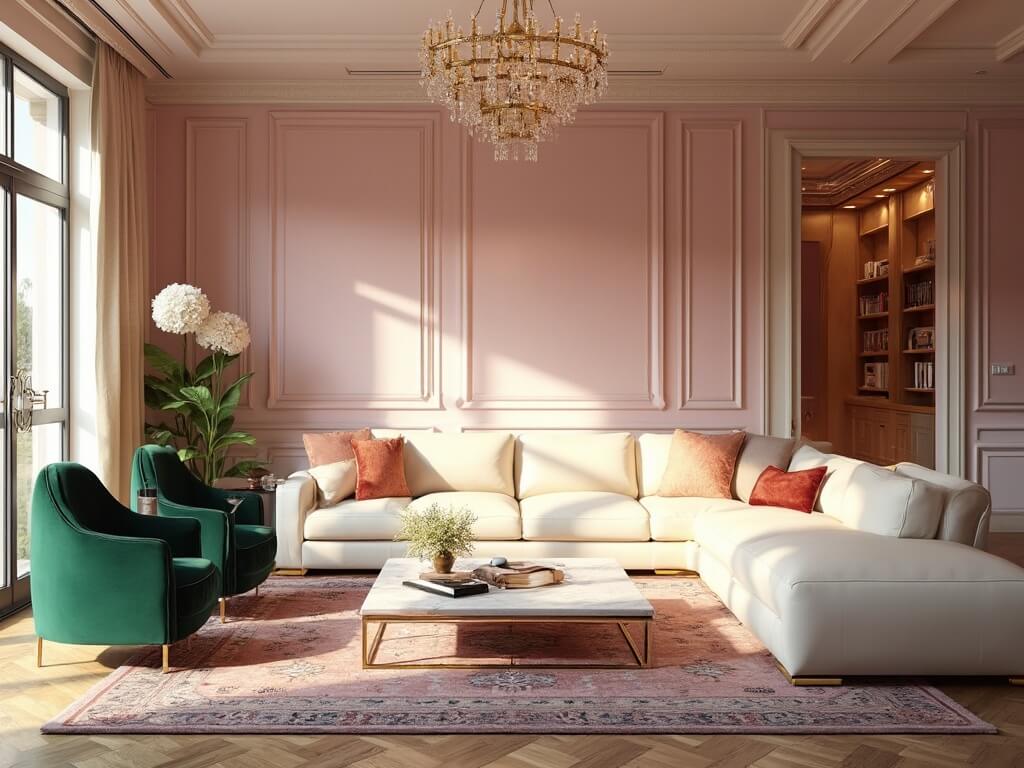
The rug. Go bigger than you think. An 8’×10′ is the minimum for most living rooms; a 9’×12′ is better if you can fit it. The front legs of every seating piece should sit on the rug — this single rule fixes more layouts than any other. Wool or a wool blend if budget allows; jute if you want texture and don’t mind that it sheds for the first month.
The coffee table. One solid piece beats a nested set. Light oak, walnut, black metal, or a stone top. For small rooms, a glass or acrylic table keeps sightlines open, though I find they look dated faster than wood.
The media console with real storage. Not open shelving. Doors and drawers. This is the piece that hides remotes, cables, chargers, and the seventeen items that would otherwise live on your coffee table.
One accent chair. Sculptural but simple — a bentwood frame with a linen cushion, or a single lounge chair in a warm neutral. Not two matching chairs. Two matching chairs look like a hotel lobby.
Lighting Is Where Cold Rooms Get Fixed
If your minimalist room feels sterile, the lighting is almost always the reason. Overhead lights alone will kill the mood every time.
Three layers, minimum:
– Ambient — a floor lamp with a fabric or paper shade, not glass or metal
– Task — a table lamp on the console or side table
– Accent — a small lamp or LED strip that washes a wall or highlights texture
Bulbs matter more than fixtures. Use 2700K warm white LEDs, never anything above 3000K. I made the mistake of buying 4000K “daylight” bulbs once and my living room looked like a morgue for two weeks before I figured out what was wrong.
Layout and Spacing Rules That Actually Help
– Pull the sofa about 6 inches off the wall. It looks intentional instead of shoved.
– Keep 18–24 inches between seating and side tables or the coffee table.
– Hang art with its center at 57–60 inches from the floor, not the ceiling.
– Above a sofa, art should span roughly two-thirds the width of the sofa — one big piece beats three medium ones every time.
For open-plan spaces, use the rug to define the living zone. Don’t try to fill the whole floor plan with furniture — let the rug boundary do the work.
Styling Surfaces Without Overdoing It
Coffee table: 3 to 5 objects, max. My current setup is a stack of two books, a small matte ceramic bowl, and a stone tray with a candle. That’s it.
Use the rule of three for grouping: one tall (a vase with a single branch), one medium (a book stack), one low and wide (a tray or bowl). Vary the heights, keep the color family tight.
Plants earn their spot. A 4-to-6-foot olive tree, rubber plant, or fiddle leaf fig in an empty corner does more than five small pothos scattered around. Put it in a simple matte ceramic or concrete pot — no woven baskets on top of pots, that’s a different style.
Mistakes I’ve Made or Watched Others Make
Buying furniture too small. A 72″ sofa in a room that needed an 84″ one. The room looked underfurnished, not minimal. Measure your space, measure your doorways, then buy the biggest piece that fits.
Confusing empty with minimal. A room with three items in it isn’t minimalist — it’s unfinished. Minimalism is about intentional pieces, not few pieces.
No closed storage. If your remotes, mail, chargers, and kids’ stuff have no home, they end up on your beautiful surfaces. A media console with doors and a storage ottoman solve 90% of this.
Skipping personality. No art, no photos, no books. The room ends up looking like a staged listing. Keep one or two pieces that actually mean something — a photograph you took, an object from a trip, a book you’ll actually reread.
Matching everything. Two identical lamps, two identical chairs, a sofa and loveseat set. This reads as “furniture showroom,” not “considered space.” One of each, in a related but not matching palette.
Making It Work in a Small Living Room
Small rooms — I’m talking 12’×14′ or under — are actually where minimalism performs best. The style relies on negative space, and small rooms don’t have space to waste on clutter.
What I’d do:
– One sofa, one chair, one coffee table, one console. No sofa-plus-loveseat combos.
– Furniture with legs you can see under. It reads lighter than skirted or floor-hugging pieces.
– A wall-mounted TV over the console, not on a stand.
– Sheer linen curtains hung high and wide — rod at the ceiling, curtains extending 6 inches past the window on each side. Instant taller ceilings.
Kids, Pets, and Real Life
Minimalism with a toddler isn’t the Pinterest version, but it’s more doable than people think. The trick is closed storage everywhere. A large storage ottoman that holds toys. A media console with deep drawers. Baskets inside a sideboard.
Performance fabric on the sofa is not optional if kids or dogs are involved. Crypton, Sunbrella, or any polyester-blend performance weave in a mid-tone (not white, not black — both show everything). My gray performance linen has taken markers, juice, and a dog with muddy paws without permanent damage.
Rugs: skip white and cream if you have kids or a shedding dog. A warm greige or oat-toned wool hides more than you’d expect.
Seasonal Swaps That Don’t Cost Much
The whole point of a strong neutral base is that you can change the feel of the room for under $100.
– Fall/winter: swap linen throw for a chunky wool one, add a rust or deep olive cushion cover, put dried branches in the vase
– Spring/summer: back to linen and cotton, lighter greenery, a single stem of eucalyptus
Cushion covers alone (I use HomGoods and Etsy for these) let me change the season without touching the furniture.
If You Want to Bend the Style
Japandi-minimalist: lower furniture, more warm wood (walnut, teak), paper lantern floor lamp, a single piece of ink art. Warmer and quieter than pure minimalism.
Coastal-minimalist: light oak instead of walnut, one or two pale blue-gray accents, more linen, sheer white curtains. Skip the rope, shells, and “beach house” signage.
Boho-minimalist: a jute or textured wool rug, one patterned cushion in an earthy tone, a woven wall hanging — but only one boho element per surface, not layered.
The rule across all three: pick one direction and commit. A minimalist room with boho, coastal, and Japandi elements all fighting for attention is just a cluttered room with better vocabulary.
The One Question That Fixes Most Rooms
Before buying anything new, ask: does this replace something, or add to something?
If it adds, put it back. If it replaces something you’re getting rid of, and it fits the palette, and it has a real function — bring it home. That single filter is what took my living room from “trying too hard” to a room I actually want to sit in.