The Look and Who It’s For
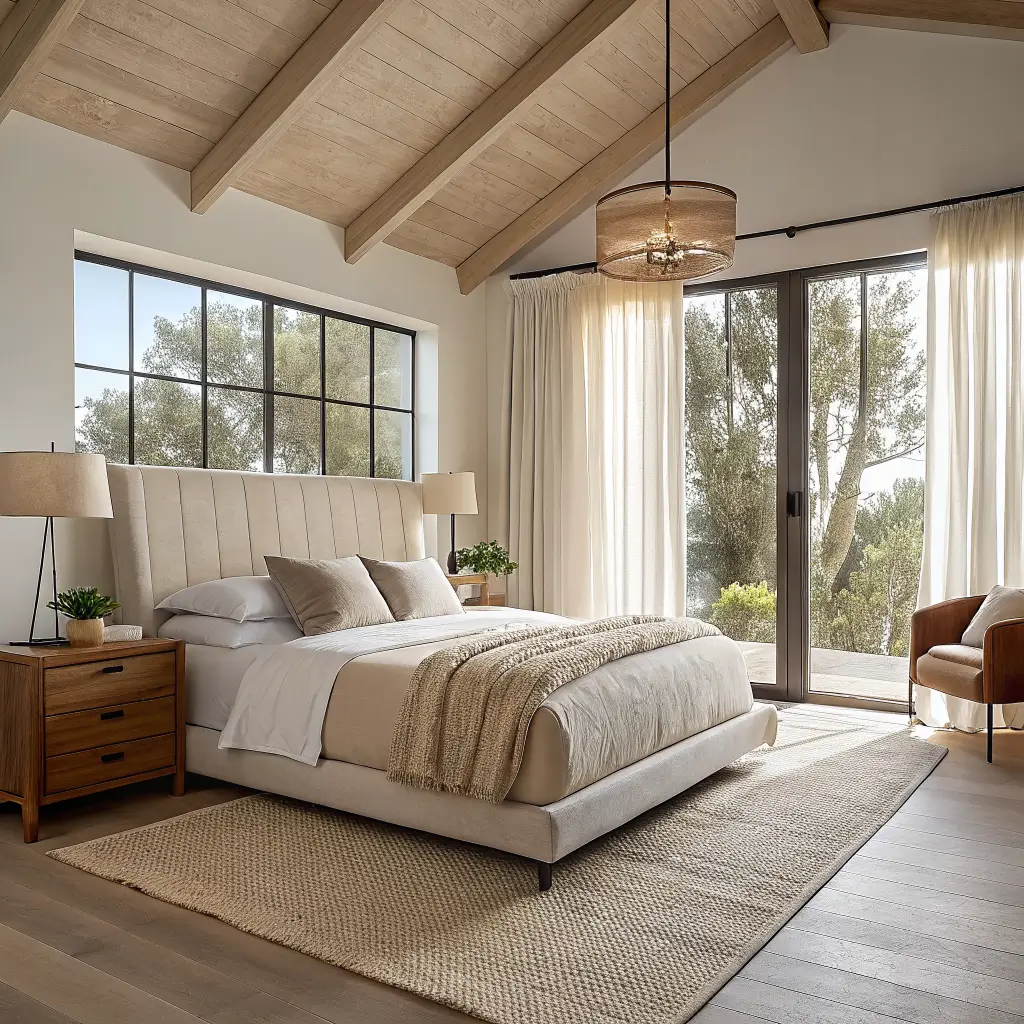
The organic bedroom ideas I used were really about touch, not color. Linen, raw wood, and one sheepskin made the room feel like a place to land.
Organic modern sits at the intersection of minimalism and nature. Clean silhouettes, warm palette, and materials you’d find on a hike — wood, stone, wool, clay. It borrows from Scandi restraint and soft boho warmth without leaning fully into either.
It’s the right style if you want:
– A bedroom that feels spa-like without being sterile
– Non-toxic, sustainable materials (organic cotton, FSC-certified wood, low-VOC paint)
– Warmth and texture, but not a room stuffed with stuff
– Something rental-friendly — most of the impact comes from textiles, plants, and lighting
It works in a 10′ x 10′ city bedroom as well as a big primary suite. Small rooms actually benefit because the palette is light and the furniture is low-profile.
Time and Budget
Weekend refresh (bedding, plants, lamps, art): 4–8 hours, $300–$800.
Full makeover (paint, bed, rug, curtains, nightstands): 1–3 days, $1,200–$3,000 mid-range.
Designer-level with live-edge or custom pieces: $3,000–$8,000+.
Rough price points I’d plan around:
– Organic cotton or linen queen duvet set: $80–$200
– Jute or wool 5′ x 8′ rug: $120–$350 (go to 8′ x 10′ for a queen, 9′ x 12′ for a king)
– Solid wood or bamboo platform bed: $400–$1,200
– Matching oak or walnut nightstands: $300–$800 for the pair
– Sculptural pendant or arc lamp: $150–$400
– Sheer linen curtains: $60–$150 per pair
– One statement plant plus pot: $60–$150
If I could only spend money on three things, it’d be the mattress, the bedding, and the rug. Everything else can be thrifted, HomeGoods’d, or slowly upgraded.
Colors and Materials That Actually Work
The palette is where most people go wrong, so this part matters.
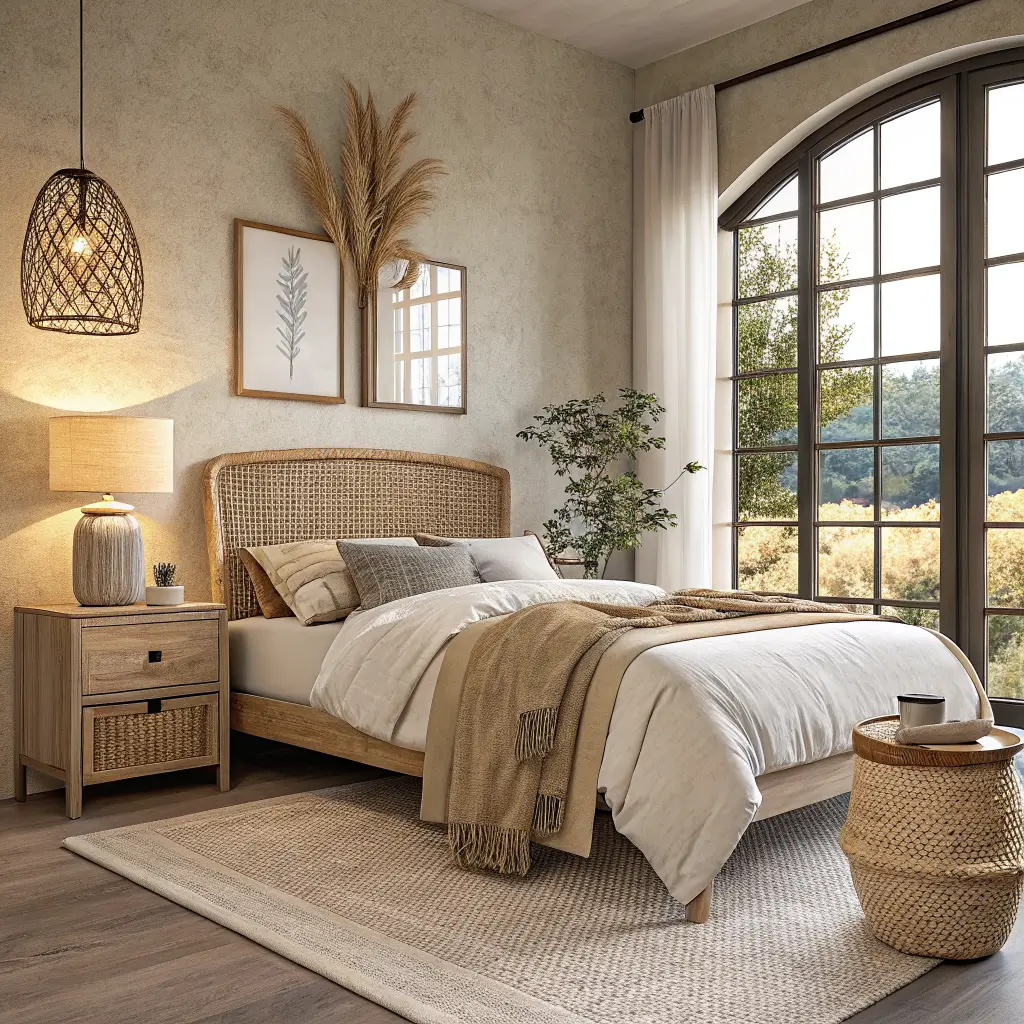
Warm neutrals only. Oat, cream, mushroom, greige, warm white. If the paint chip looks even slightly blue or gray-blue on the wall, it’ll fight everything else. I painted mine Benjamin Moore’s Classic Gray first, hated it — read cold in afternoon light — and repainted in Swiss Coffee. Night and day.
Earth accents. Clay, terracotta, sandstone, camel, soft brown. Small doses.
Soft greens. Sage, olive, eucalyptus — the kind of green you’d actually see on a plant, not a paint deck’s idea of green.
Contrast in tiny amounts. Charcoal or soft black on a lamp base, a picture frame, hardware. That’s it.
For materials, the shortlist:
– Wood: light oak, warm walnut, ash, bamboo, reclaimed pieces with visible grain
– Textiles: washed linen, organic cotton, hemp, wool, bouclé
– Natural fibers: jute and sisal rugs, rattan or wicker headboards, seagrass baskets
– Stone and ceramic: travertine, unpolished marble, matte stoneware, clay pottery
What to avoid: chrome, glossy lacquer, cool bright white, glass-heavy anything. It fights the warmth.
The Hero Pieces
Three things anchor the room. Get these right and the styling almost handles itself.
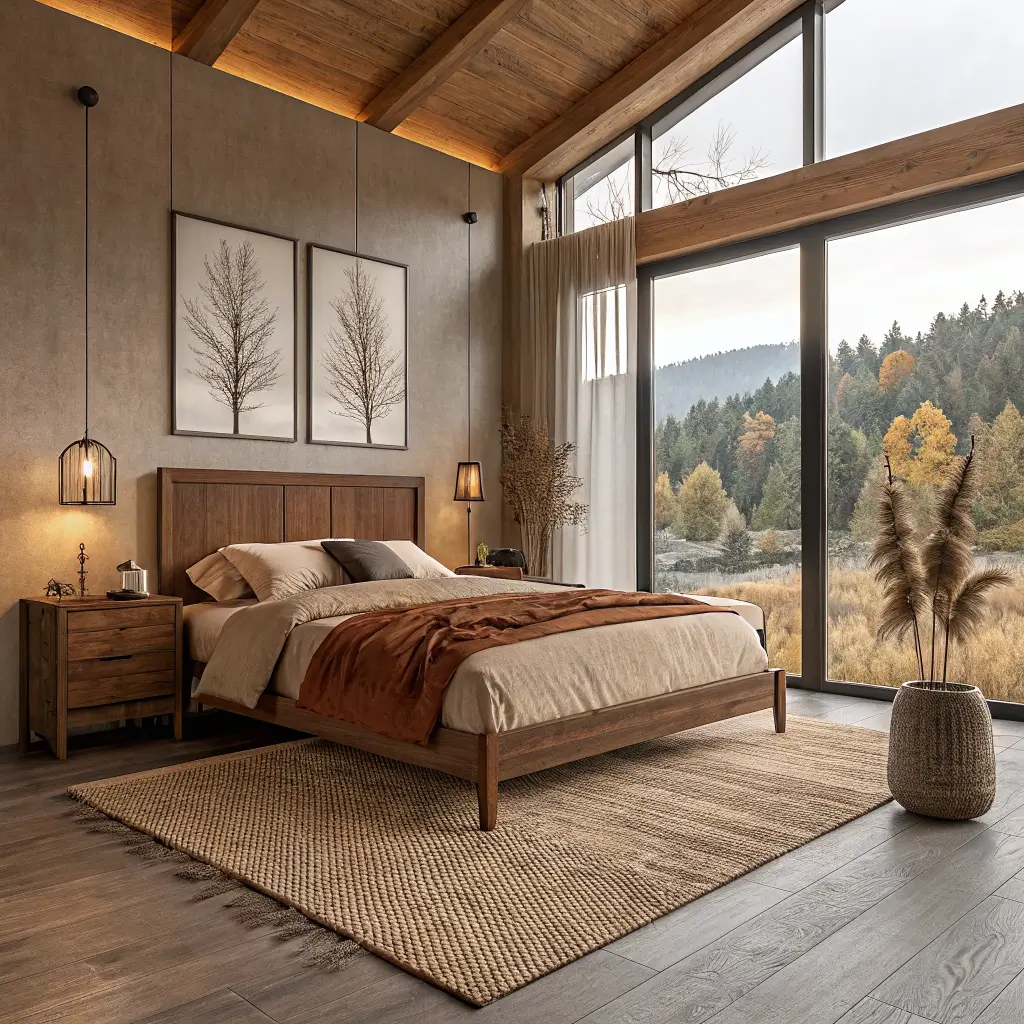
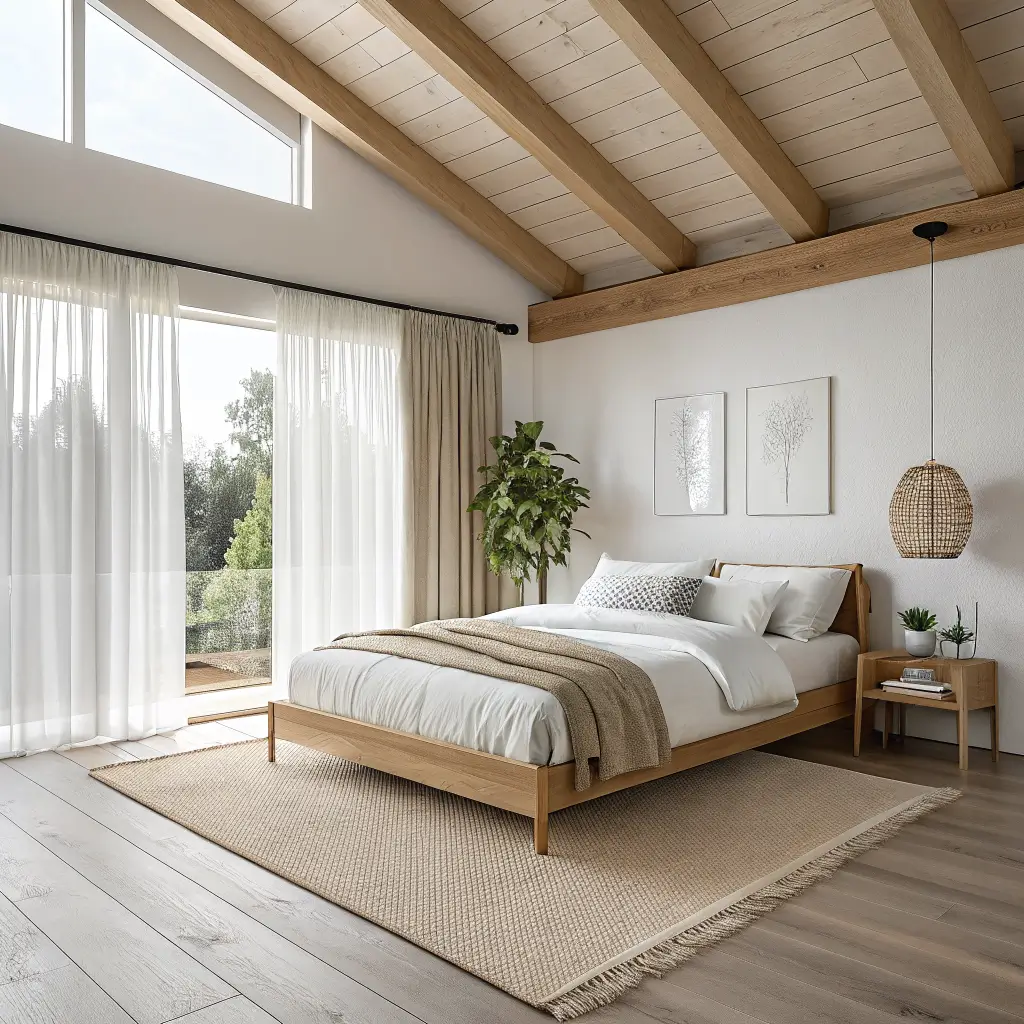
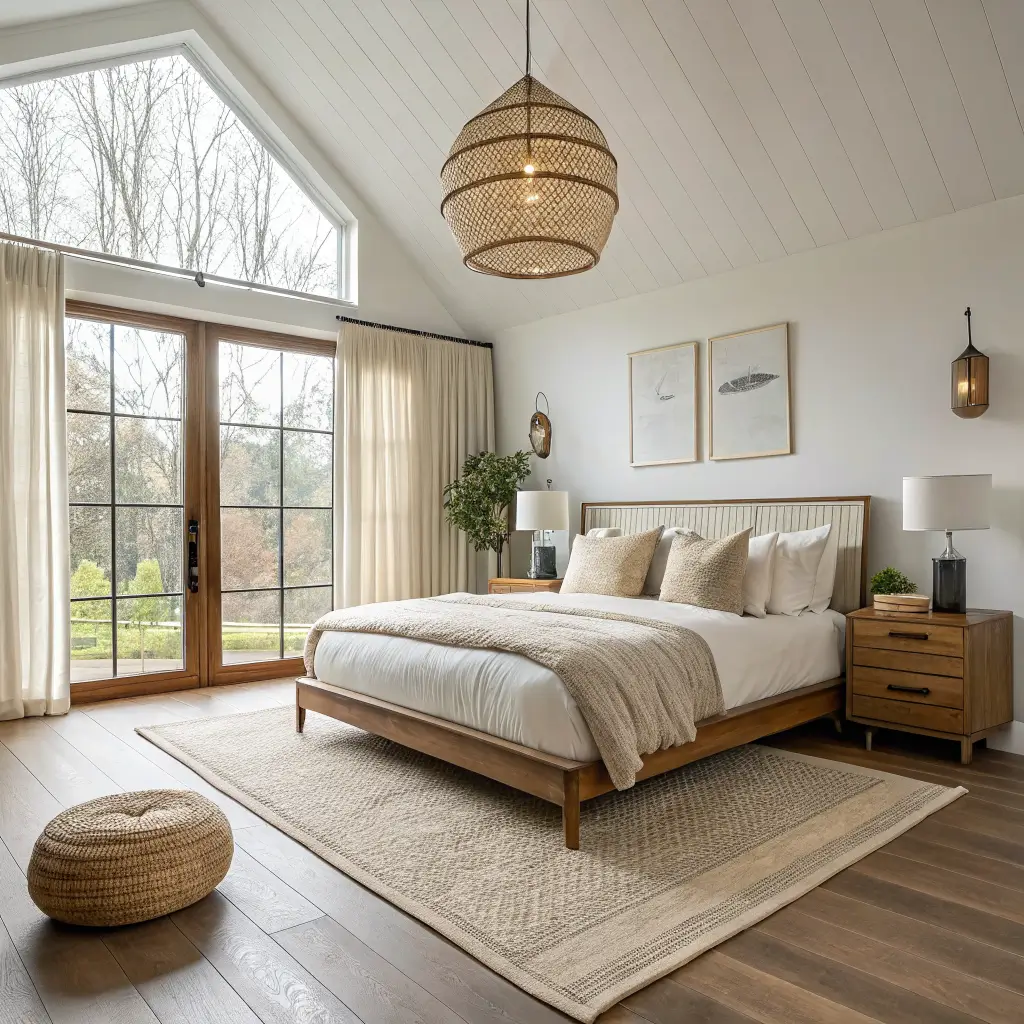
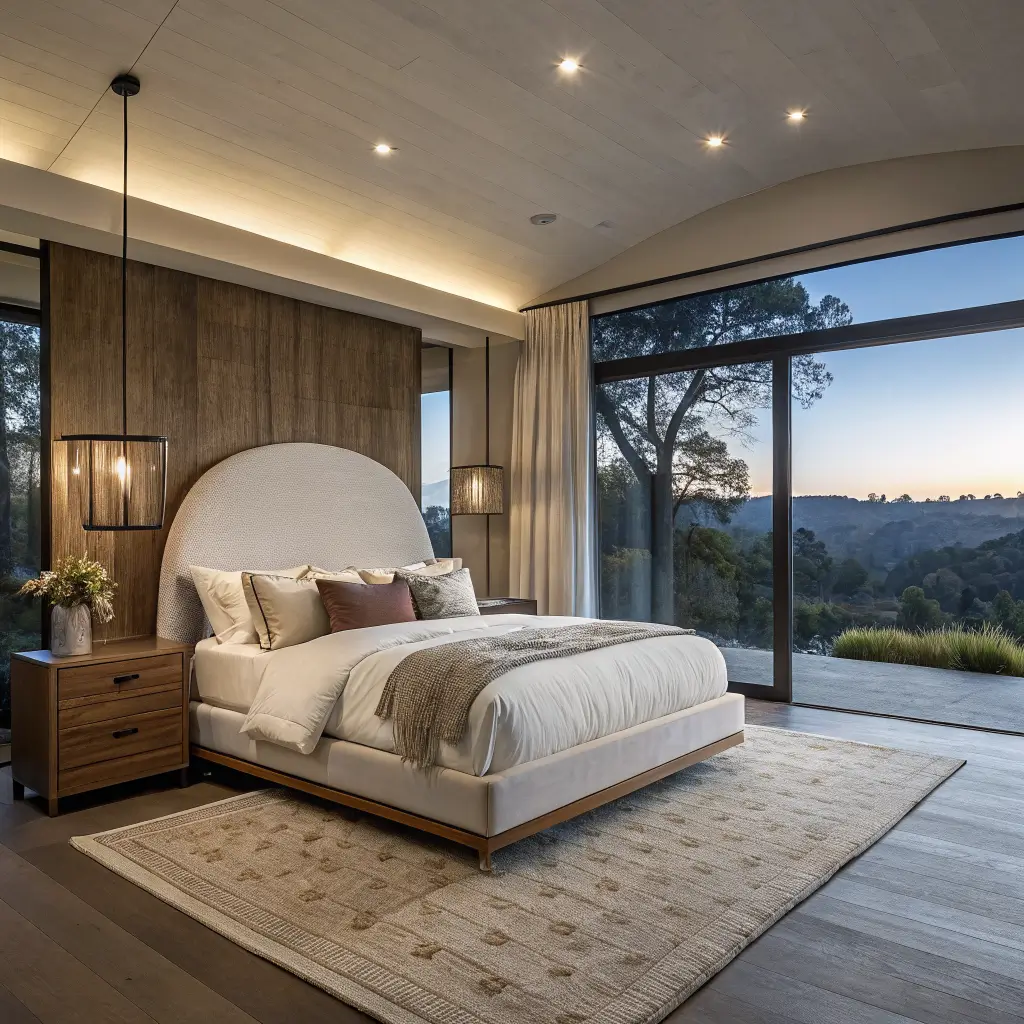
1. A low-profile platform bed. Oak, walnut, or bamboo with clean lines and no carving. If your budget stretches, a curved or arched upholstered headboard in linen or bouclé is the defining organic modern move.
2. A large natural fiber rug. Jute-wool blends are the sweet spot — pure jute is scratchy underfoot, pure wool is expensive. The rug should extend 18″–24″ past the sides and foot of the bed. Anything smaller looks like a bath mat parked under a bed.
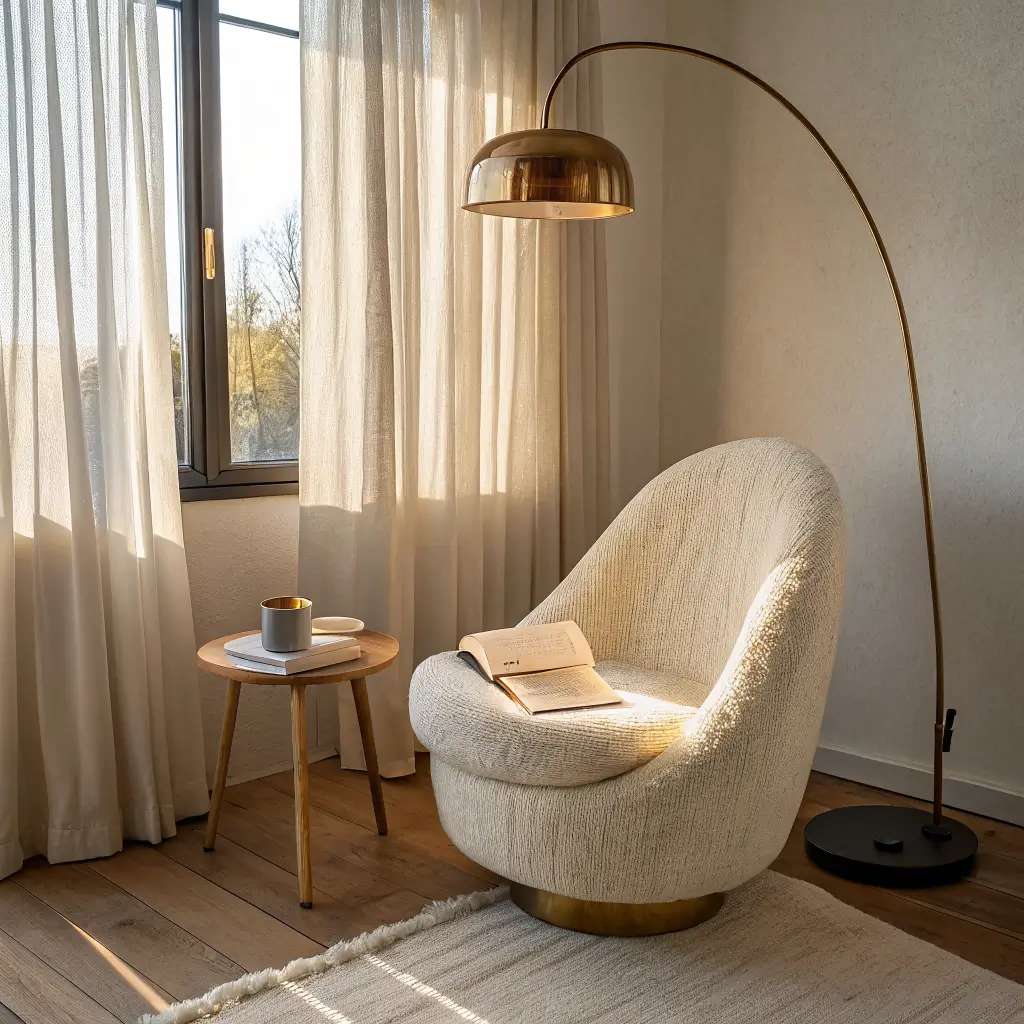
3. A sculptural light source. Woven rattan globe pendant, plaster wall sconces, or a curved arc floor lamp. Anything but a boob light. If you’re renting and can’t rewire, plug-in sconces mounted with 3M strips are a real workaround — I used them for two years.
How to Actually Put It Together
Order of operations matters here. Doing it in the wrong sequence means moving furniture six times.
1. Paint first. Matte or eggshell finish, warm neutral. Skip satin — too shiny for this look.
2. Place the bed and rug. Bed on the most uninterrupted wall, rug centered underneath with 18″+ of overhang on three sides.
3. Add nightstands and lighting. Nightstand tops should sit level with or slightly below the mattress top. Lamps go on next — linen, paper, or ceramic shades.
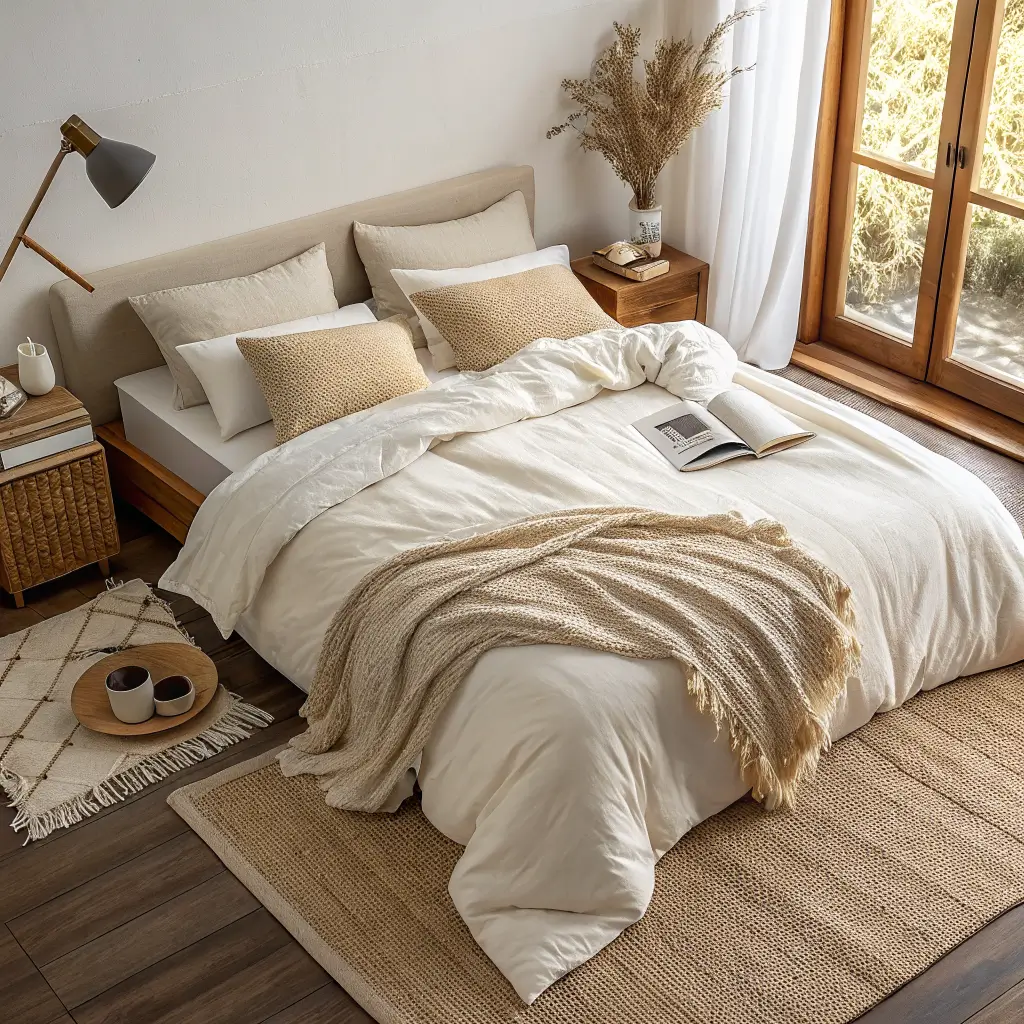
4. Layer the bedding. Linen sheets, oat or cream duvet, then one chunky knit or waffle throw folded across the foot. Two euro shams behind two standard pillows is my go-to.
5. Add seating if you have room. A bouclé or rattan chair in the corner with a small side table.
6. Hang curtains high and wide. Rod goes near the ceiling, extending 6″–12″ past the window frame on each side. This is the single biggest cheat for making a bedroom feel taller.
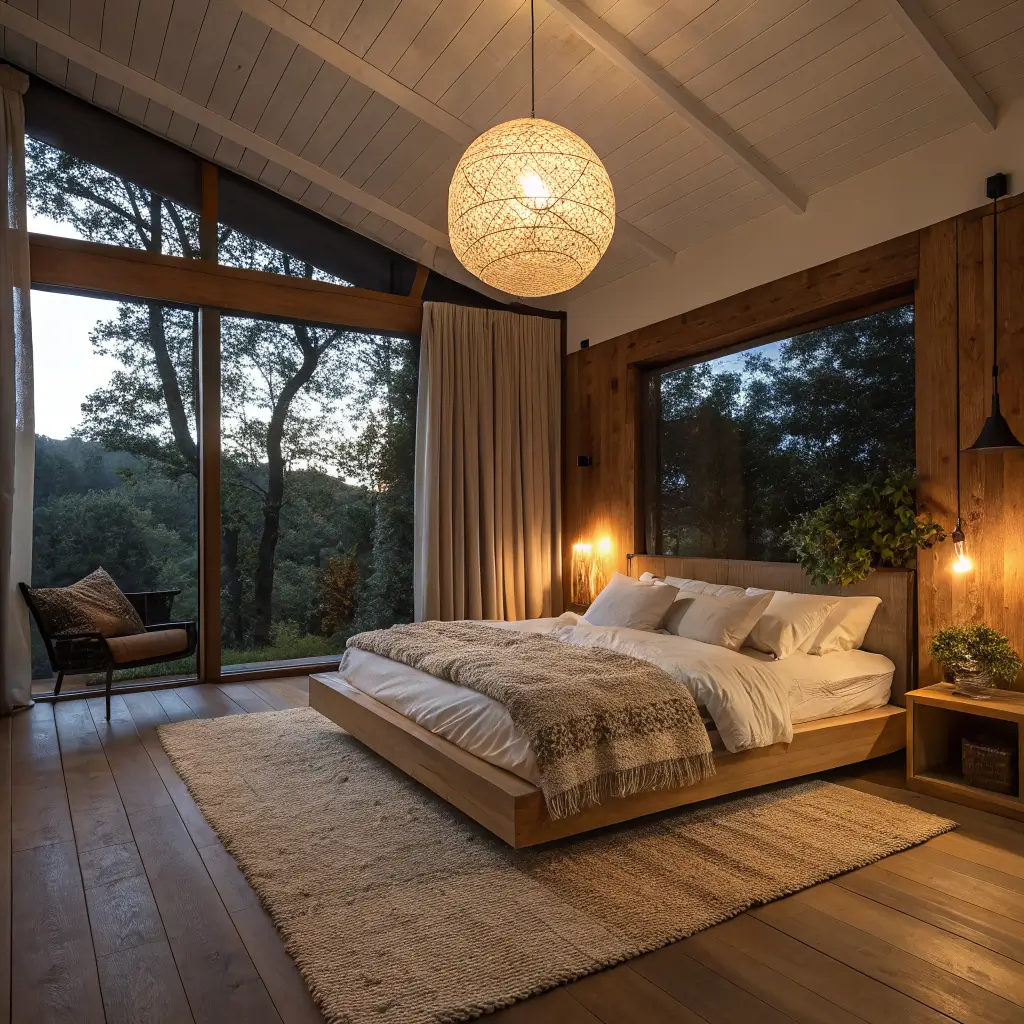
7. Bring in one big plant. Not five small ones. A 5-to-6-foot bird of paradise or olive tree in a matte terracotta pot near the window does more than a shelf of pothos ever will.
8. Finish with art and small objects. Botanical prints, landscape photography, or muted abstracts in simple wood or black frames.
Styling Rules I Actually Follow
Texture over color. The palette is tonal, so the interest comes from mixing jute, linen, wool, bouclé, and knit in the same beige family. If you photographed my bed in black-and-white it should still look layered.
70/30 rule. About 70–80% of the room is light neutrals (walls, bedding, curtains, rug). The other 20–30% is deeper earth tones and small dark accents. More than that and it starts to feel heavy.
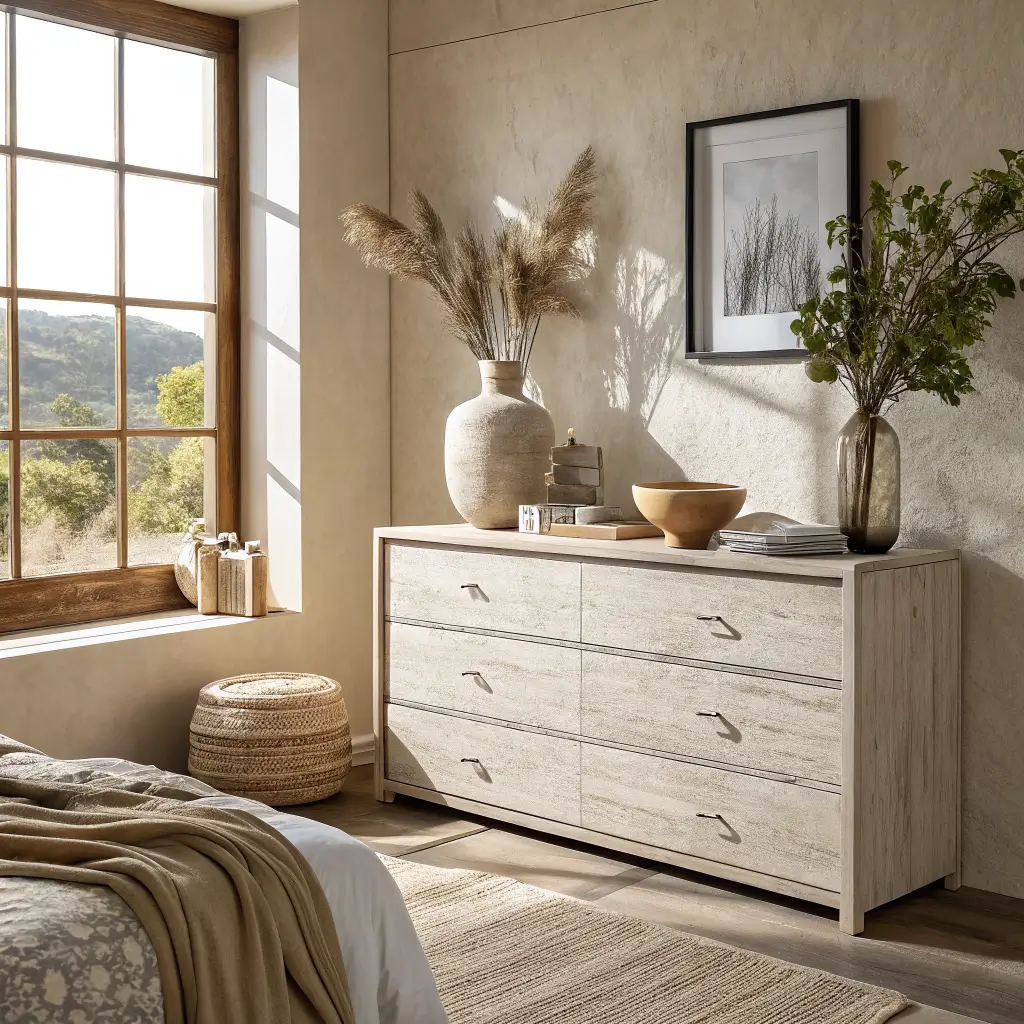
Three to five objects per surface, max. On my nightstand: a lamp, a stack of two books, a small stoneware cup for water, and one ceramic dish for jewelry. That’s it. Anything more and it looks like a junk drawer.
Negative space is a feature, not a mistake. Leave a wall bare. Leave part of the dresser empty. The eye needs somewhere to rest.
Mistakes I Made (So You Don’t Have To)
I bought a cool-gray duvet. It photographed beautifully online and looked wrong the second it hit the bed. Returned it, ordered oat linen from a direct-to-consumer brand, never looked back. Lesson: if the neutral has any blue or green in it, skip it.
I over-planted. At one point I had eight plants in a 12′ x 12′ bedroom. It felt like a humid greenhouse, not a bedroom. Cut down to two — one big, one small on the dresser — and the room finally exhaled.
I mixed four wood tones. Oak bed, walnut nightstand, pine dresser, teak mirror. Chaos. Now I keep it to two wood tones max, and one of them dominates.
I skipped lighting layers. Overhead only, on a cold LED bulb. The room felt like a dentist’s office. Adding bedside lamps with 2700K bulbs and a small floor lamp in the corner fixed it in an afternoon.
Flat, synthetic rug. Bought a cheap flatweave for $80. It looked fine and felt like nothing. Replaced it with a jute-wool blend and the whole room got quieter — that surprised me.
Seasonal Swaps Without Redecorating
The bones stay the same year-round. What changes is small.
– Summer: lighter linen throws, one extra plant, a coastal print on rotation, citrus or eucalyptus candles
– Fall: swap pillow covers to clay and terracotta, add a wool blanket, dried pampas or eucalyptus in a stoneware vase
– Winter: heavier knit throw, a sheepskin over the reading chair, more candles, woodsy scents (cedar, sandalwood)
– Spring: fresh flowers on the nightstand, sage or dusty rose accents, lighter-weight bedding
I keep a bin in the closet with four sets of pillow covers and three throws sorted by season. Ten minutes to swap, real difference in how the room feels.
Where to Take It Next
If you want to bend the style:
– Boho-organic: more woven wall hangings, macramé, subtle pattern mixing — but keep the palette muted
– Coastal-organic: driftwood tones, one soft blue accent, seagrass baskets
– Scandi-organic: lighter woods, even more restraint, focus on comfort over decoration
The one thing I wouldn’t skip, at any budget or in any variation: the mattress and the bedding. You’re spending a third of your life on it, and no amount of styling makes cheap polyester sheets feel like linen. Save on the frame, spend on what touches your skin.