The Organic Modern Bedroom: How to Build a Calm, Nature-Grounded Space That Still Feels Modern

What “Organic Modern” Actually Means in a Bedroom

The organic modern bedroom is the look I landed on after too many cold white rooms. Rounded shapes and warm wood finally made it feel lived in.

Strip it down and it’s two things sitting next to each other: minimalism and nature. Clean-lined furniture. Natural materials — linen, oak, rattan, plaster, stone. Nothing shiny, nothing fussy, nothing loud.

Think of it as modern design that’s been softened by wood grain, wrinkled linen, and a big plant in the corner.

Who it’s for:

– Anyone who finds pure modernism too clinical
– Minimalists who still want warmth
– Renters who want a low-effort, high-impact look
– People who genuinely need their bedroom to feel like a place to sleep, not a Pinterest set piece

It works in a 10′ x 10′ city bedroom (low-profile bed, one nightstand, one plant, done) and it scales up beautifully to a primary bedroom that can hold a dresser, bench, and a six-foot olive tree.
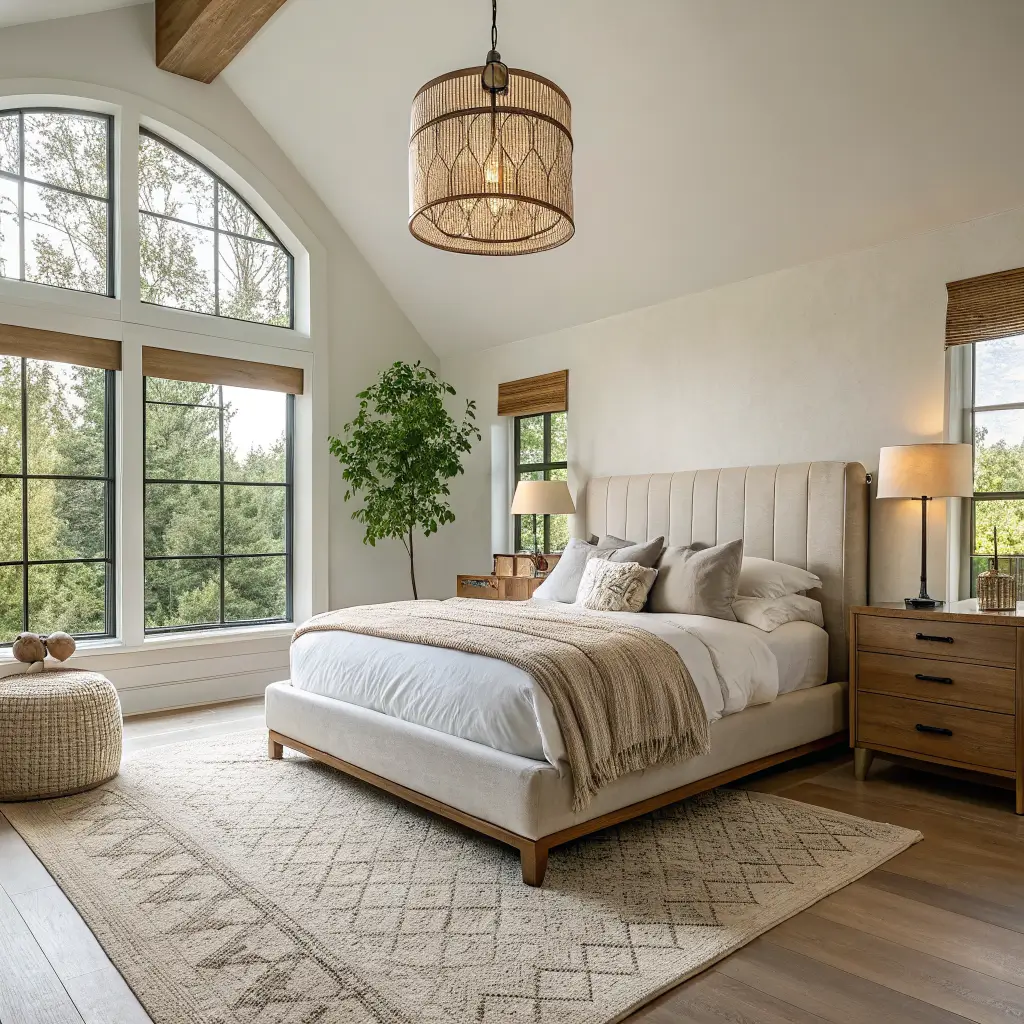
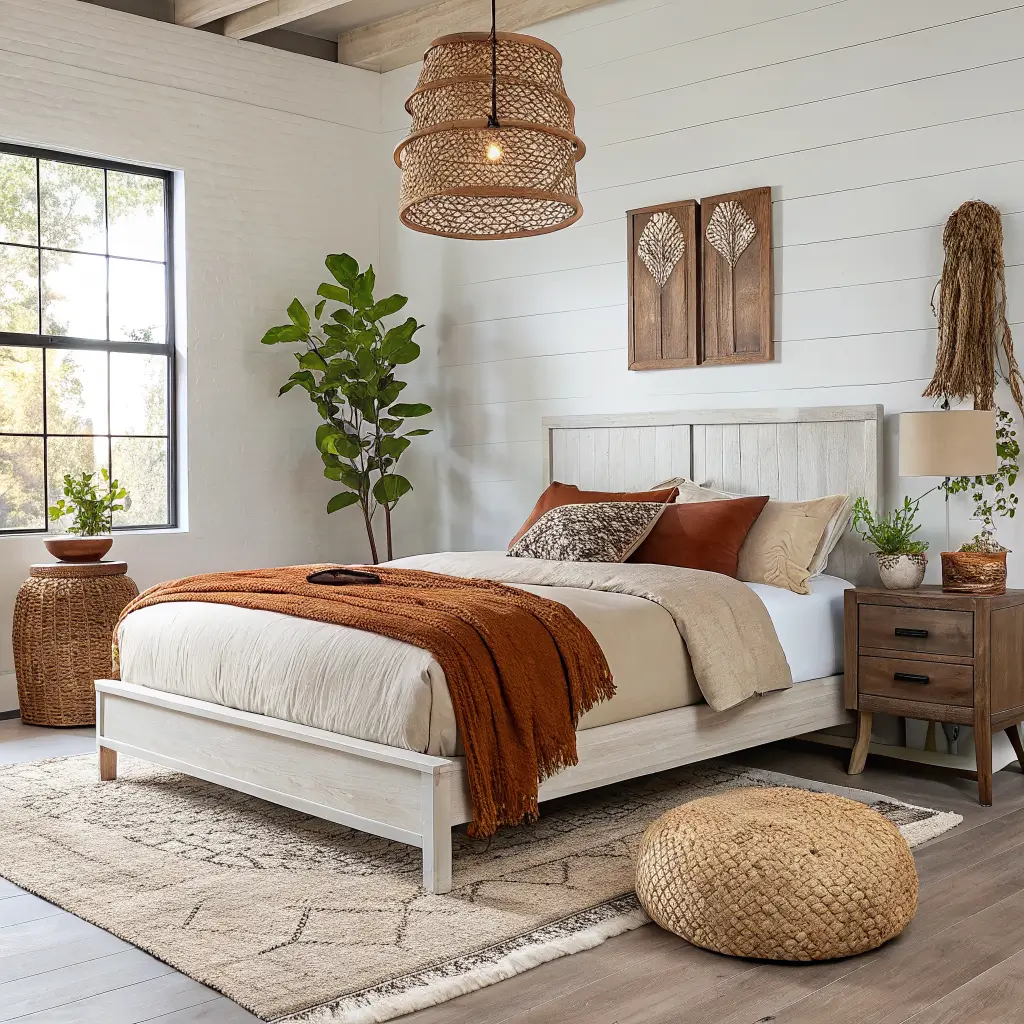
Organic modern bedroom with warm cream limewashed walls, white oak platform bed in warm-white linen, oatmeal rug, rattan pendant, olive tree in terracotta pot, and golden morning light from a tall left window.

The Real Cost: What You’ll Actually Spend

I’ve done this on two very different budgets — once in a rental where I couldn’t paint, and later in a house where I went full limewash on the bed wall. Ballparks:

Budget refresh: $500–$1,500
– Linen duvet + shams: $80–$200
– Neutral wool-blend or jute rug (8′ x 10′): $150–$400
– Simple wood nightstands: $120–$300 each
– Ceramic table lamps with linen shades: $60–$150 each
– Plants and pots: $20–$150

Mid-range full room: $2,000–$4,500
– Solid or engineered wood platform bed: $500–$1,200
– Light oak or walnut dresser: $600–$1,200
– Sculptural pendant: $150–$600
– Full linen bedding set: $250–$600

Higher-end: $5,000+
– Limewash or plaster walls: $600–$1,500 per room
– Handcrafted solid wood pieces: $1,200–$3,000
– Artisan rugs and lighting: $800–$2,000+
Time commitment: A light refresh (bedding, lamps, plants, a paint accent) fits in one weekend, roughly 8–12 hours. A full transformation — new bed, rug, lighting, storage — is closer to two or three weekends once you factor in ordering and assembly.

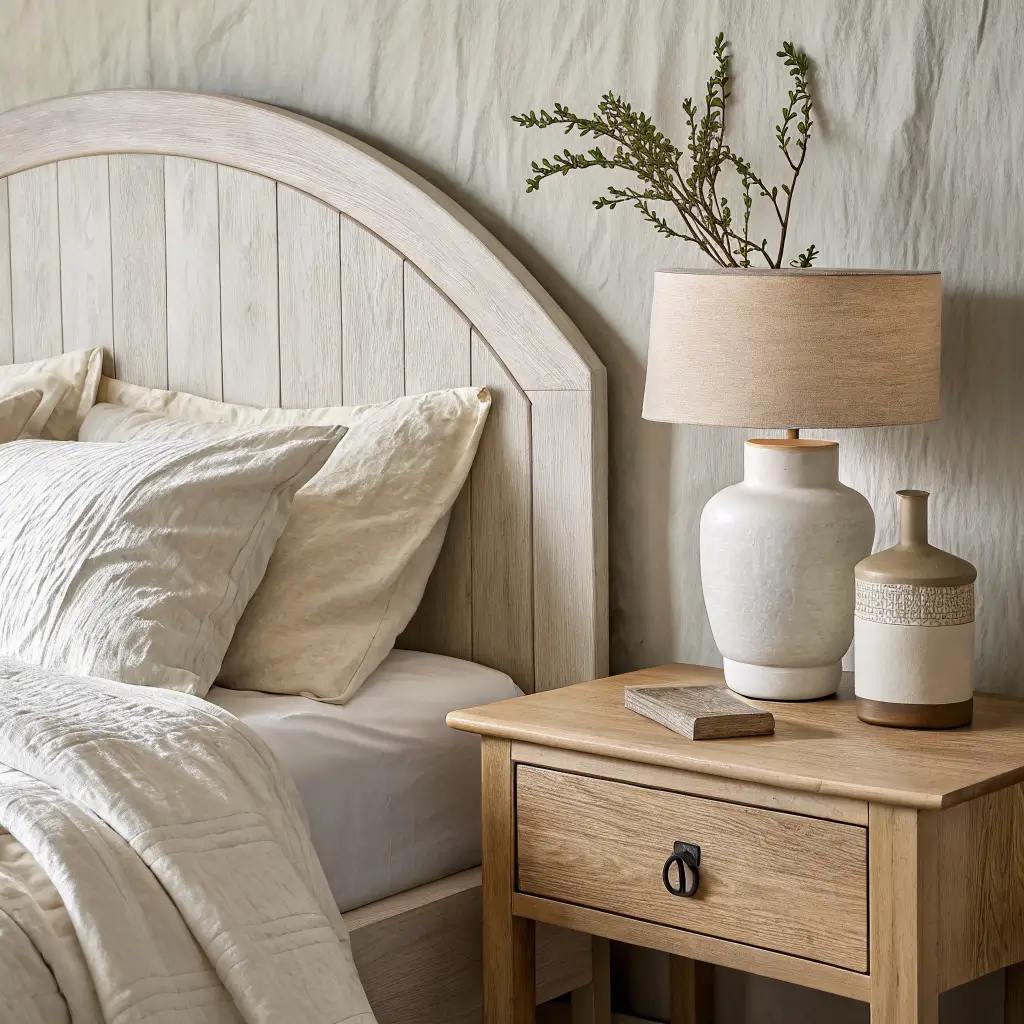
Close-up of an organic modern bed corner with curved white oak headboard, wrinkled warm-white linen bedding, eucalyptus stem in a matte ceramic vase on a light oak nightstand, and a softly glowing linen-shaded lamp against a limewashed cream wall.

The Color Palette (Get This Right First)

This is where I see people go wrong most often. They pick “neutrals” and end up with five different beiges that all fight each other.

Base neutrals (70–80% of the room):
– Warm white or soft cream — I use Benjamin Moore White Dove in eggshell
– Beige, taupe, oatmeal, greige
– Soft gray only in small doses

Accent colors (20–30%):
– Sage or olive green
– Terracotta, rust, clay
– Charcoal or black in thin lines — lamp bases, picture frames — to keep it from drifting into farmhouse territory

Materials that carry the style:
– Woods: light oak, white oak, ash, or walnut for warmth
– Textiles: linen, cotton, wool, bouclé
– Natural fibers: rattan, jute, seagrass
– Ceramic and stone: unglazed, hand-thrown, travertine
– Finishes: matte or eggshell paint only. High-gloss anything ruins it.
Pick one dominant wood tone and stick to it. This is the single biggest fix if your room feels “off.” I had a warm oak bed, a gray-washed nightstand, and a red-toned dresser in my first attempt. It looked like three different rooms shoved together. I sold the nightstand and dresser, replaced both in warm oak, and the room finally settled.

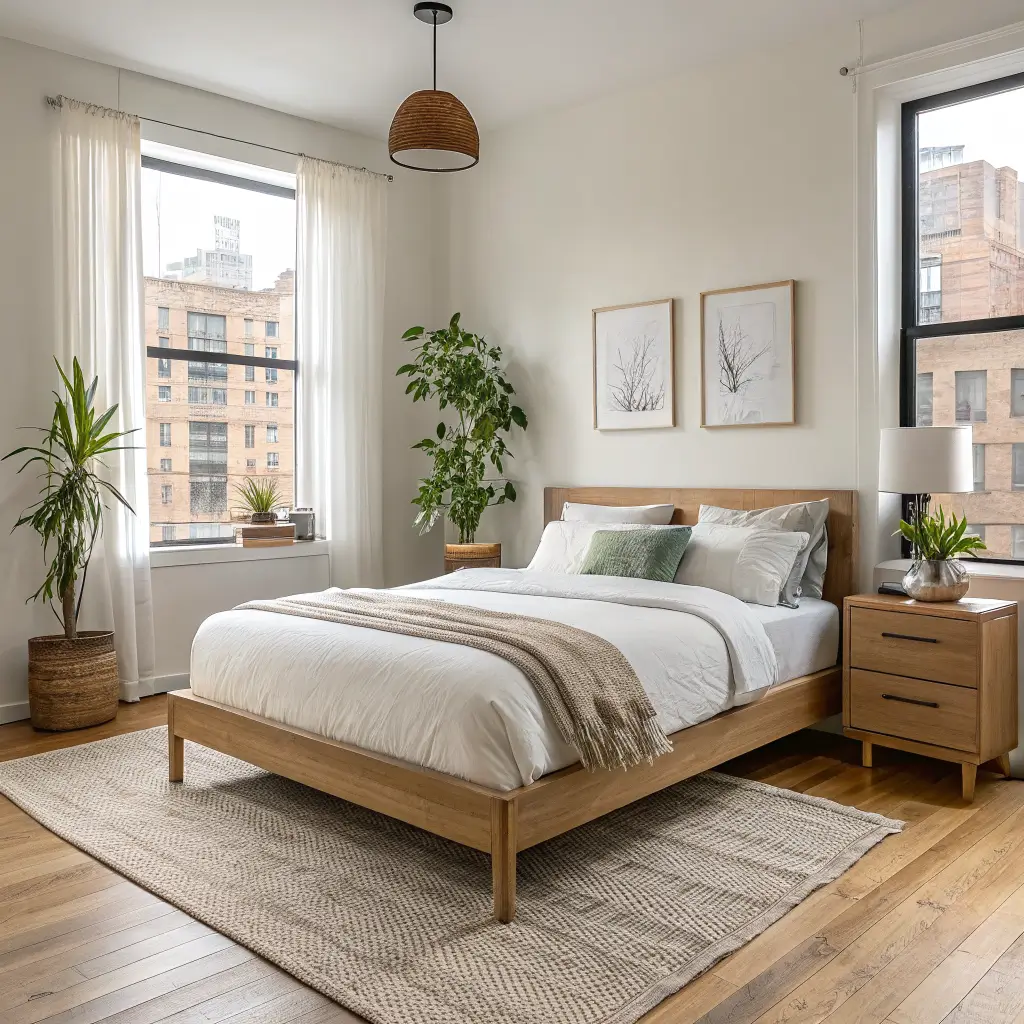
Photorealistic 10x10 organic modern budget bedroom with light oak platform bed, warm-white linen bedding, oak nightstand with lamp, sand jute-wool rug, snake plant, White Dove walls, and high linen curtains in soft daylight.

The Hero Pieces

Five things do the heavy lifting. Get these right and everything else is styling.

1. A low-profile platform bed in light or mid-tone wood. Rounded or slightly curved headboard reads modern; ornate carving does not. Queen footprint is 60″ x 80″ — plan for at least 18″–24″ of clearance on each side.

2. A large, textured rug. For a queen, an 8′ x 10′ is the minimum. It has to extend at least 18″–24″ past the sides and foot of the bed. A too-small rug is the number one styling crime in bedrooms. Wool, jute-and-wool blends, or a flatweave in oatmeal or sand.

3. Modern nightstands with visible wood grain, 18″–24″ wide, sitting around 24″–28″ high so the top aligns roughly with the mattress. No ornate hardware — either integrated pulls or simple round knobs.

4. Statement lighting. Two layers minimum:
– Overhead sculptural pendant in rattan, linen, or matte metal
– Bedside lamps or wall sconces flanking the bed, 20″–26″ tall with linen shades
5. Linen bedding in warm white or cream. Stonewashed linen is the move. It wrinkles on purpose. That wrinkle is the whole point.

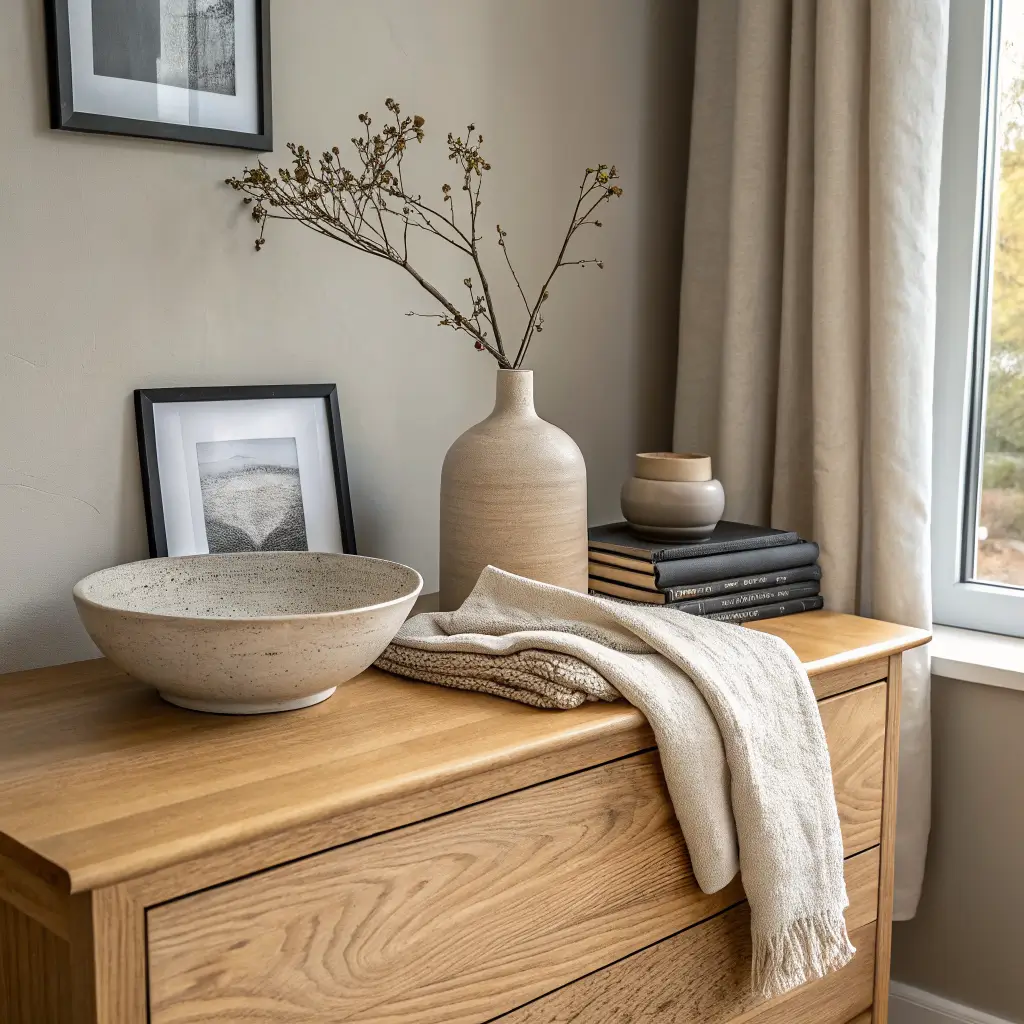
Flat-lay on a light oak dresser showing a cream ceramic bowl, taupe vase with dried sage, charcoal picture frame, and folded oatmeal linen throw against a greige wall in warm window light.

Layering: Where Most People Stall

Once the big pieces are in, layering is what separates “empty room with a bed” from “designed room.”

Aim for 3–5 distinct textures. In my room right now: linen bedding, wool rug, oak furniture, unglazed ceramic on the nightstand, rattan pendant. Five textures, one calm palette.

Pillow stack on a queen bed:
– Two sleeping pillows (in matching linen cases)
– Two Euro shams behind them in a slightly different weave
– One or two lumbar or throw pillows in bouclé, or a subtle sand-and-clay stripe

That’s it. More than that and it tips into hotel-showroom territory.
Fold a throw at the foot — chocolate wool in winter, a lighter waffle cotton in summer.

Group accessories in odd numbers. On a nightstand: a small ceramic vase with a single eucalyptus stem, a stacked book or two, a lamp. Three objects, varying heights.

Keep 40–50% of every surface visible. This is the rule I break most often and immediately regret. Empty space isn’t wasted space in this style — it’s the whole aesthetic.

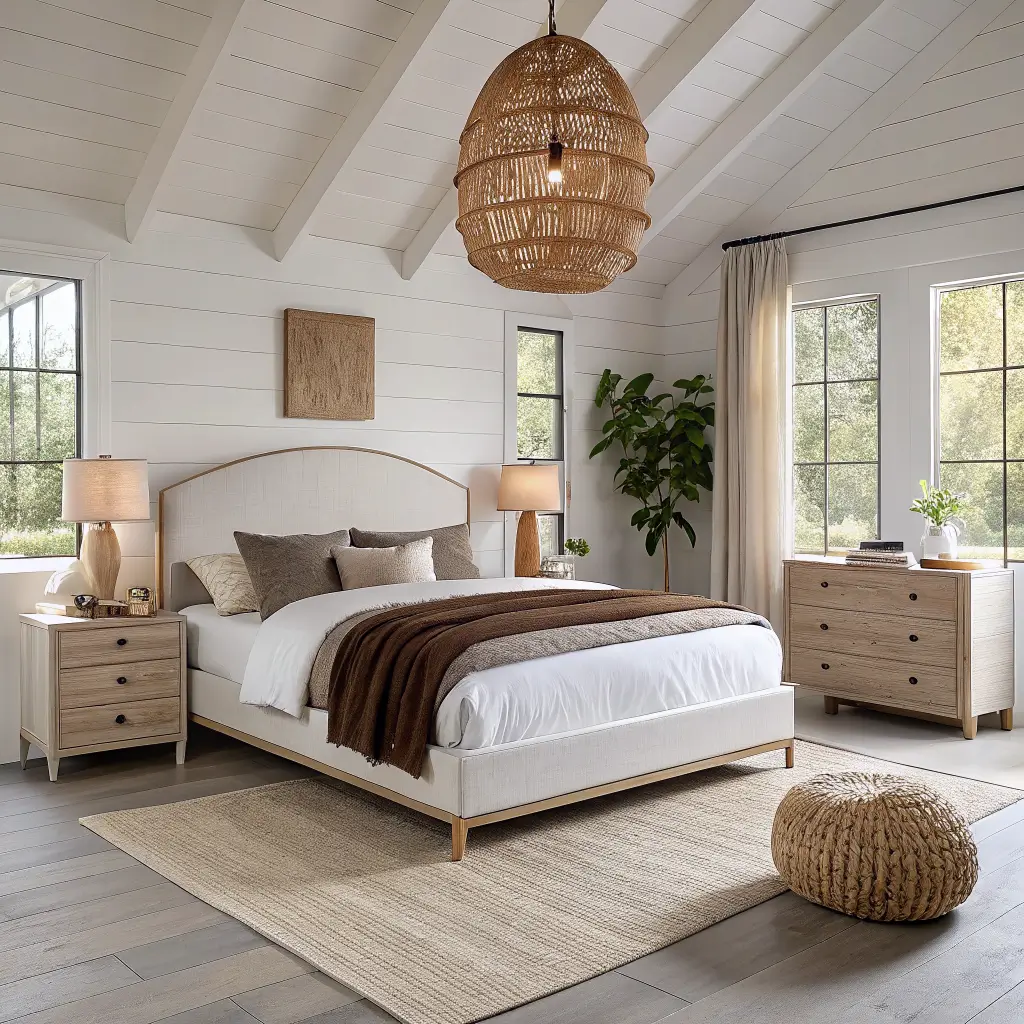
Symmetrical modern organic bedroom with white oak platform bed, oatmeal rug, matching oak nightstands, rattan pendant, ceramic lamps, and limewashed cream accent wall in warm neutral tones.

Lighting: The Thing That Fixes Everything

If your organic modern bedroom feels flat, it’s almost always the lighting.

Warm bulbs only: 2700K–3000K. Anything cooler kills the mood instantly.
Three light sources minimum: overhead, bedside, and one more (floor lamp, sconce, or picture light).
Put the overhead on a dimmer. Non-negotiable. A $15 dimmer switch is the highest ROI upgrade in the whole room.

I ran my bedroom on a single cool-white ceiling fixture for six months telling myself it was “fine.” Swapped in warm bulbs, added a $40 ceramic table lamp on each nightstand, and the room genuinely looked like a different space.
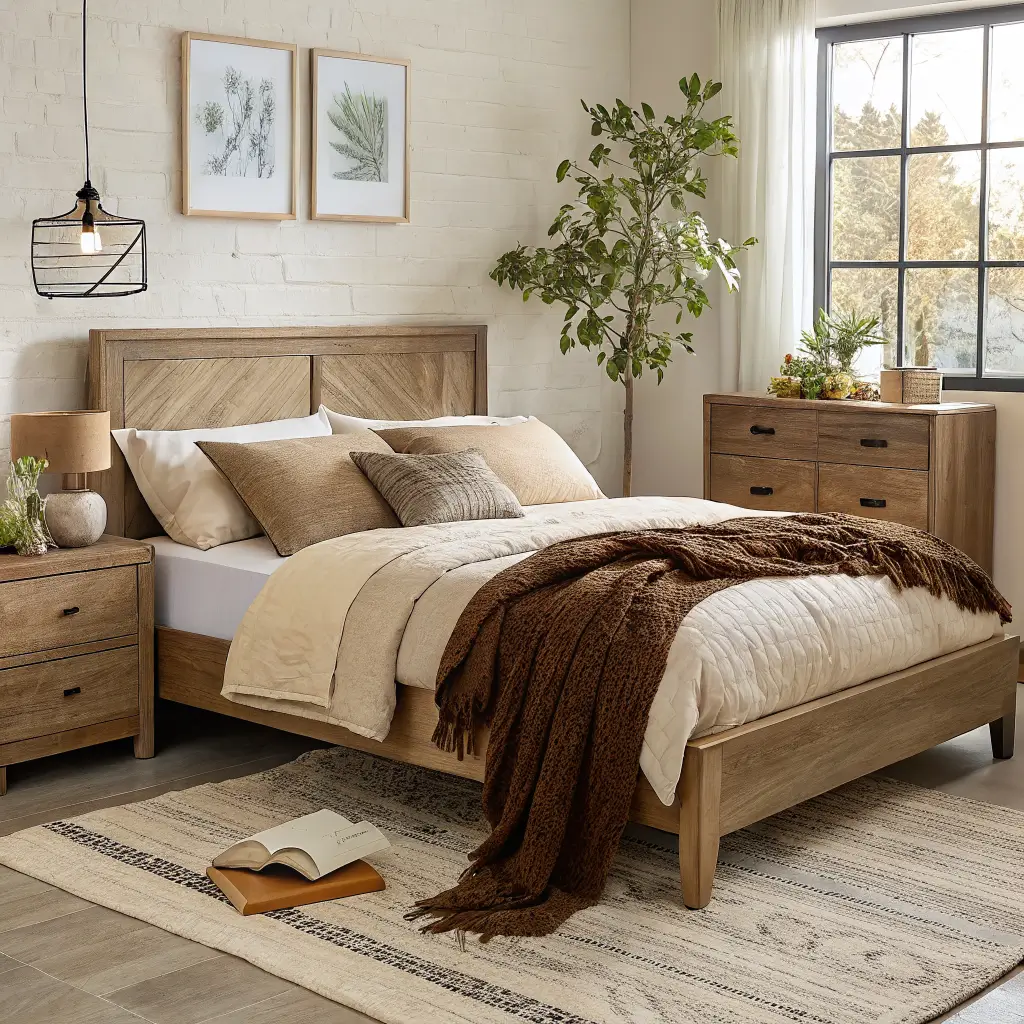
Photorealistic organic modern bedroom with layered linen, wool, bouclé, ceramic, and rattan textures in cream, oatmeal, chocolate, and warm oak, lit by late-morning window light.

Plants and Organic Objects

One big plant beats five small ones. My pick: a 5–6 foot olive tree or fiddle-leaf fig in a natural or unglazed terracotta pot, placed in the corner past the foot of the bed near a window.

Then a few smaller organic moments:
– A hand-thrown ceramic bowl or vase on the dresser
– A seagrass basket by the bed for extra blankets
– A single branch of dried eucalyptus or pampas in a stoneware vessel — not a giant pampas explosion, one restrained stem

Skip anything glossy, plastic, or overly styled. If it looks like it came from a hotel gift shop, it’s wrong.
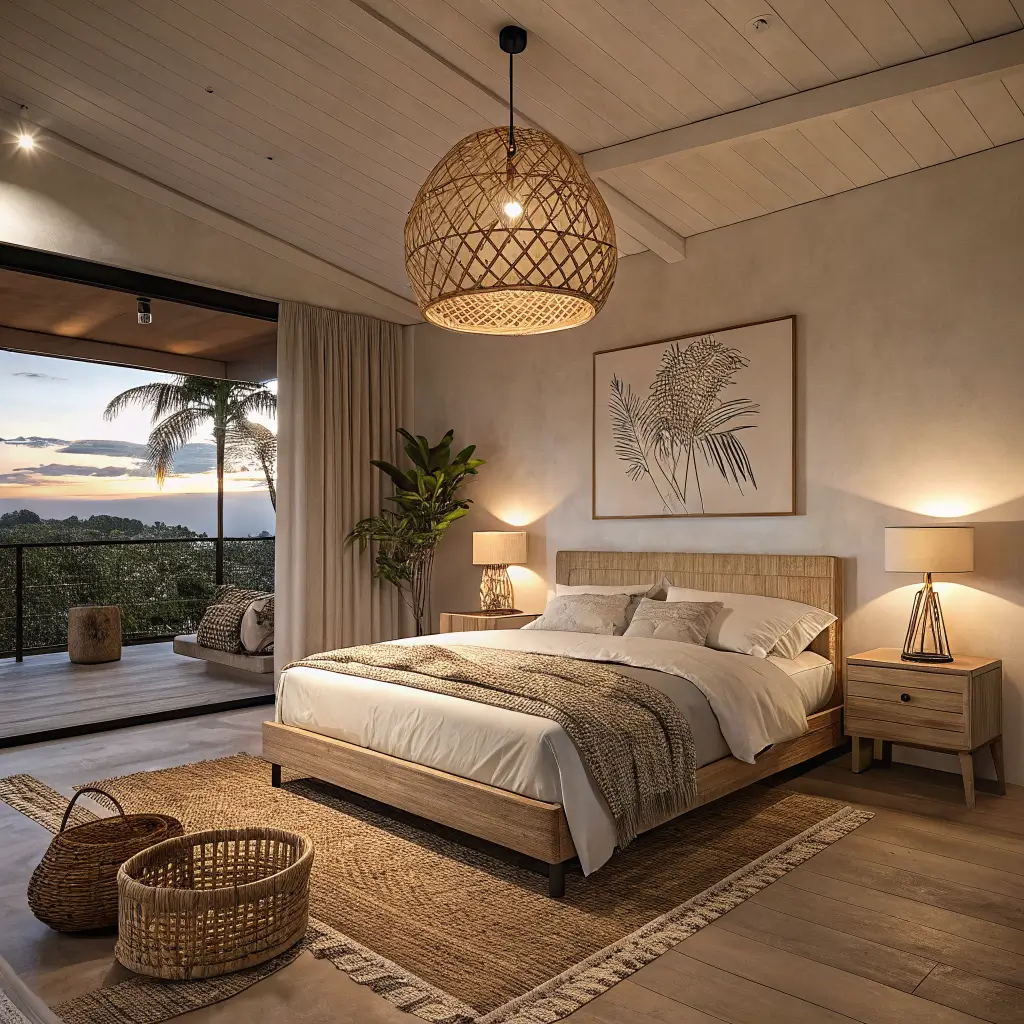
Organic modern bedroom at dusk with warm layered lighting, rattan pendant shadows, oak bed with linen bedding, ceramic bedside lamps, and blue twilight through curtains.

Windows and Walls

Curtains: Floor-length linen drapes, hung as high and wide as possible. Rod goes 8″–12″ past the window on each side and 4″–6″ below the ceiling. This single trick makes rooms look taller.

Bamboo or woven wood shades underneath work if you need light control.

Wall treatment options, cheapest to most involved:
– Repaint in warm white, matte or eggshell finish
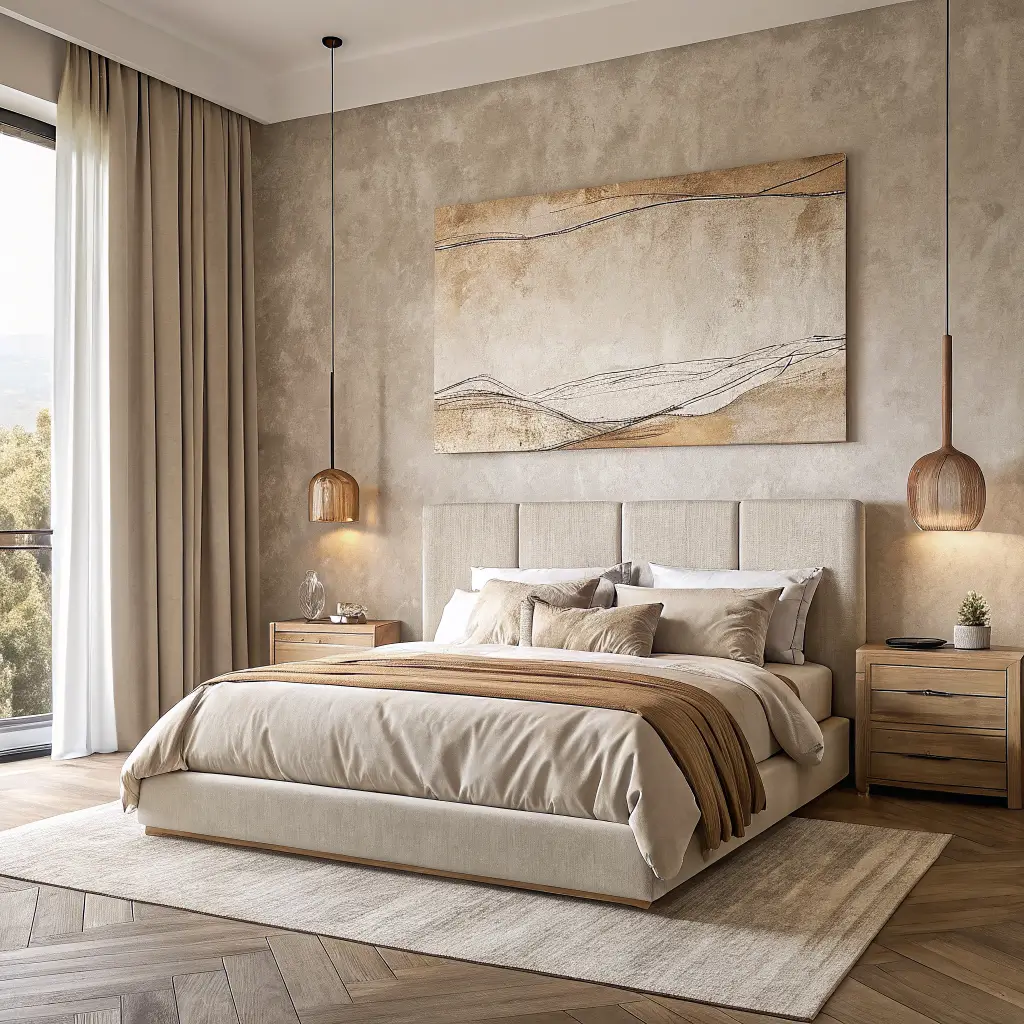
– Add a large-scale piece of art above the bed (abstract organic shapes, muted photography, line drawings — one big piece beats a gallery wall for this style)
– Limewash the bed wall for a plaster-like, softly mottled finish. Roman Clay and Portola Paints Lime Wash are both good. Budget $200–$400 in materials for a single accent wall and half a Saturday.
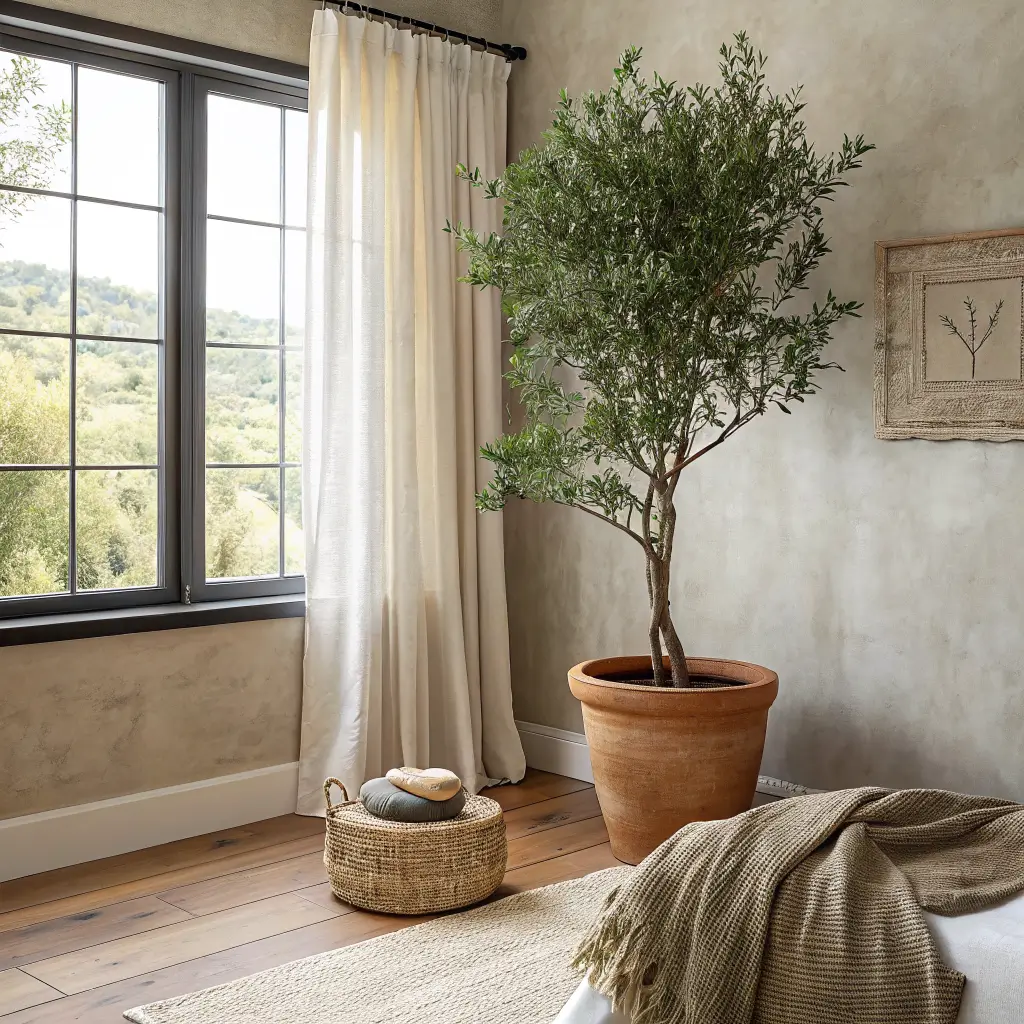
Photorealistic organic modern bedroom corner with a large olive tree in a terracotta pot by a tall window with linen drapes and bamboo shade, seagrass basket on an oatmeal rug, and a stoneware vase on an oak stool in soft late-afternoon light.

Common Mistakes I’ve Made or Watched Others Make
Clutter. Small frames, trinkets, three candles per surface. Remove half of it. Then remove half again.

Cold minimalism. All-white, no wood, no plants, glossy everything. Fix: add warm oak, matte paint, one big plant, and a wool throw. Instant warmth.

Clashing wood tones. Covered above. Pick one dominant wood and echo it in at least three major pieces.

Too many strong patterns. Boho rug + patterned duvet + geometric pillows = chaos. Limit strong pattern to one piece.

Harsh overhead lighting. Covered above. Warm bulbs, layered sources, dimmer.

A rug that’s too small. If your nightstands sit off the rug and only the front half of the bed is on it, the rug is too small. Size up.

Symmetrical organic modern bedroom with abstract sand-and-clay canvas above a white oak bed on a limewashed cream plaster wall, warm linen bedding, oak nightstands, and soft morning light.

Keeping It Fresh Without Redoing Everything

Seasonal swaps I actually make:

Fall/winter: Chocolate brown or rust wool throw, bouclé lumbar pillow, deeper olive Euro shams. Swap in dried branches.
Spring/summer: Waffle cotton throw, pale stone ceramics, more live greenery, lighter pillow covers in oatmeal or soft sage.

Total cost to swap: usually $80–$150 twice a year if you already own the base pieces.

Editing rule: Every three to six months, look at the room and pull anything that reads too colorful, too synthetic, or too shiny. Store it or donate it. The style stays intact because you keep pruning.

Cross-Style Variations

Organic modern + boho: Add one patterned rug or throw with muted, small-scale motifs. Keep the walls, bed, and furniture strictly modern and neutral. The pattern becomes a single accent, not the whole vibe.

Organic modern + coastal: Swap terracotta for soft blue-gray and sandy beige. Driftwood objects instead of dark stone. Same restraint, different palette.

Organic modern + Scandinavian: Lean paler on all the woods (white oak, ash), lighter on textiles, and let the room go a shade cooler. Add a sheepskin over a bench or chair.

Photorealistic organic modern autumn bedroom with white oak bed, warm linen bedding, olive and rust pillows, brown wool throw, dried leaves arrangement, fiddle-leaf fig, and golden-hour light.

The Order I’d Buy Things In

If I were starting over from an empty room, in this order:

1. Paint (walls, ceiling, trim)
2. Bed frame and mattress
3. Rug — sized correctly, this is where I’d spend real money
4. Bedding, at least the duvet and shams in linen
5. Nightstands and lamps
6. One large plant
7. Art above the bed
8. Dresser or bench
9. Curtains
10. Small ceramics and baskets, last

Paint, textiles, and lighting give you the biggest visual return for the money. Furniture matters, but a $300 nightstand in the right wood tone will outperform a $1,200 one in the wrong finish every time.

Get the palette tight, the wood tones consistent, the lighting warm, and the surfaces mostly empty. That’s the whole game.
Trophywifestyle
🛋️ Passionate about home decor, fashion, interior design, and exploring the world 🌎 Join me as I curate stylish spaces and seek out adventure!
Scroll to Top