Organic Modern Decor: A Real-World Guide to Getting the Warm, Minimal Look Right
The organic modern decor style is the one that fixed my cold living room. A curved sofa and a wood bowl did more than any accent wall.
Organic modern decor is what I landed on after two years of buying, returning, and second-guessing everything in my living room. If your space feels either too cold and gallery-white or too cluttered and beige-on-beige with no soul, this is the style that fixes both problems. It’s minimal, but warm. Quiet, but not boring. Below is exactly how I’d put it together — including where I wasted money so you don’t have to.
What Organic Modern Actually Is (and Who It’s For)
At its core, organic modern is modern minimalism with the chill taken out. Clean lines stay. But instead of glossy lacquer, chrome, and stark white, you’re working with matte white oak, linen, plaster, jute, and warm ivory. It borrows quietly from Scandinavian, Japandi, California casual, and wabi-sabi — enough to feel layered, not so much that it looks like a mood board fight.
It’s the right style for you if:
– You want a calm home that still feels lived-in
– You’d rather buy fewer, better pieces than refresh with trends
– You care about natural materials and matte finishes
– You’re a renter or owner and want something that won’t date in three years
Where it shines hardest: living rooms and bedrooms. It also translates well to entryways, dining rooms, and warm-toned kitchens with wood and stone.
Time and Budget: What This Actually Costs
A one-room refresh — keeping your existing sofa or bed, swapping textiles, rug, lighting, and accents — takes me a solid weekend (8–12 hours of active work) and runs $300–$1,000.
A full mid-range room — new sofa, rug, coffee table, lamps, accent chair, and accessories — is $2,000–$6,000 and closer to 2–4 weekends once you factor in delivery windows.
Designer-level, artisan-heavy, plaster-wall, custom-everything starts around $6,000 and easily hits $20,000+.
Rough price benchmarks I’ve paid or seen recently:
– Jute or seagrass rug (5′ x 8′): $120–$300
– 8′ x 10′ natural fiber rug: $300–$900
– Clean-lined neutral sofa: $1,000–$2,500 (Article, West Elm, and CB2 all have decent options)
– Solid wood or veneer coffee table: $300–$900
– Curved accent chair: $400–$1,200
– Bronze or iron pendant/linear light: $200–$800
– Ceramic vases and bowls: $20–$80 each
Space-wise, this works in a 250 sq ft studio up through a 600–800 sq ft open plan. The one hard rule: don’t over-furnish. Organic modern lives or dies on negative space (the empty room around your pieces — that breathing room is doing real work).
The Color Palette I Actually Use
Skip cool blue-grays and stark bright white. That was mistake number one in my first attempt — I painted a wall Chantilly Lace and the whole room went cold and flat, no matter how much wood I added.
The palette that works:
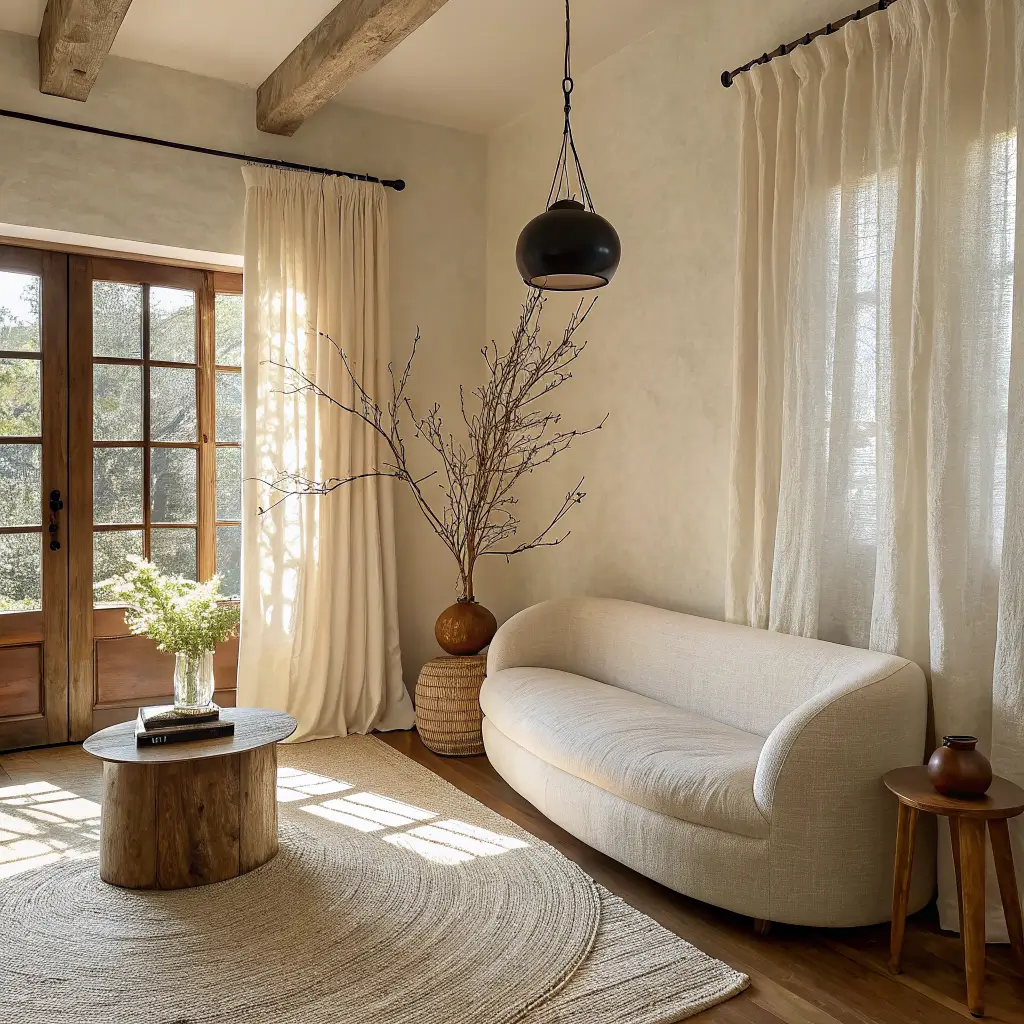
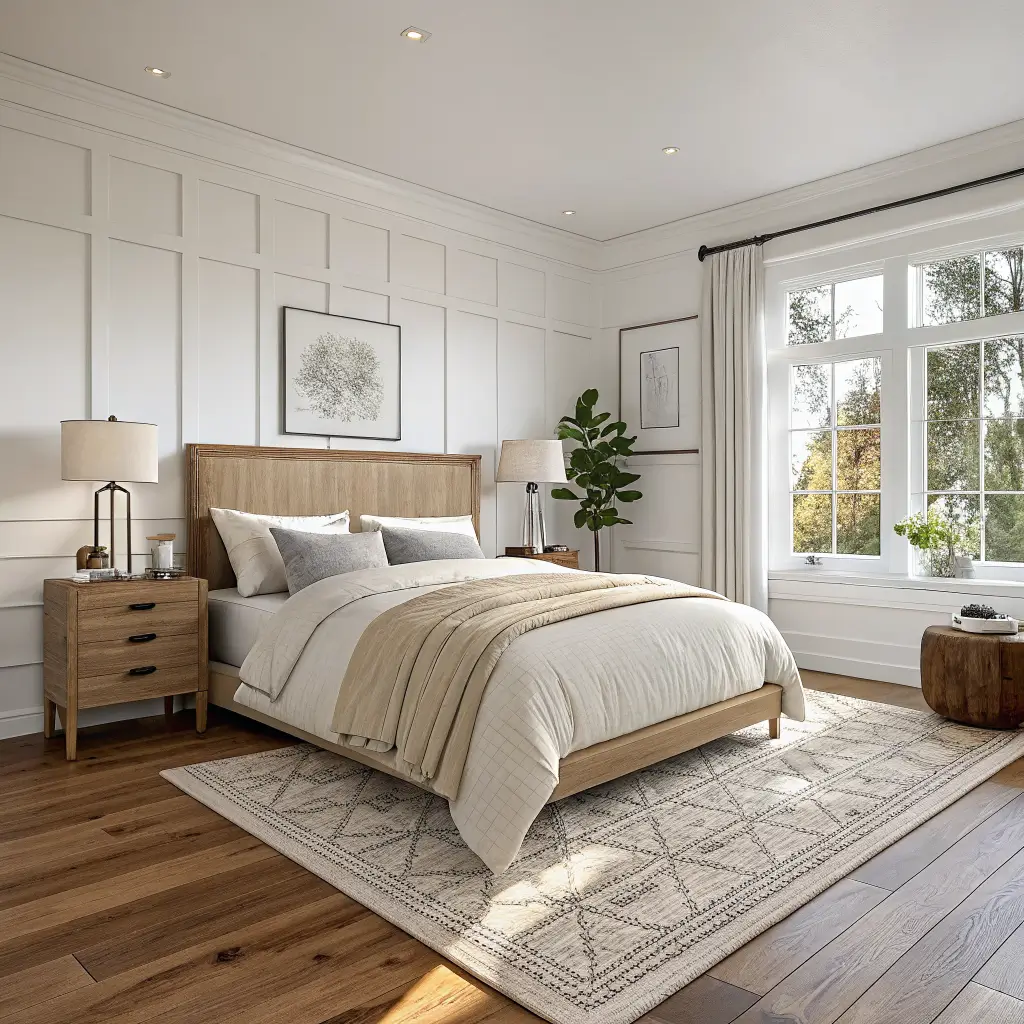
Base (60–70% of the room): creamy white, ivory, oatmeal, warm beige, light warm gray. Think Benjamin Moore Swiss Coffee or White Dove, not pure white.
Middle tones (20–30%): camel, taupe, caramel, warm oak, honed stone.
Accents (5–10%): terracotta, rust, cognac leather, chocolate brown, olive or sage green, muted charcoal. Black is used in thin lines only — a lamp base, a picture frame, a slim table leg.
Warm cream vs. bright white. Charcoal vs. true black. Those small shifts are the difference between “looks like a Pinterest board” and “looks like a rental staging photo.”
Materials That Do the Heavy Lifting
Since color is quiet, texture is your main tool. Mix these deliberately:
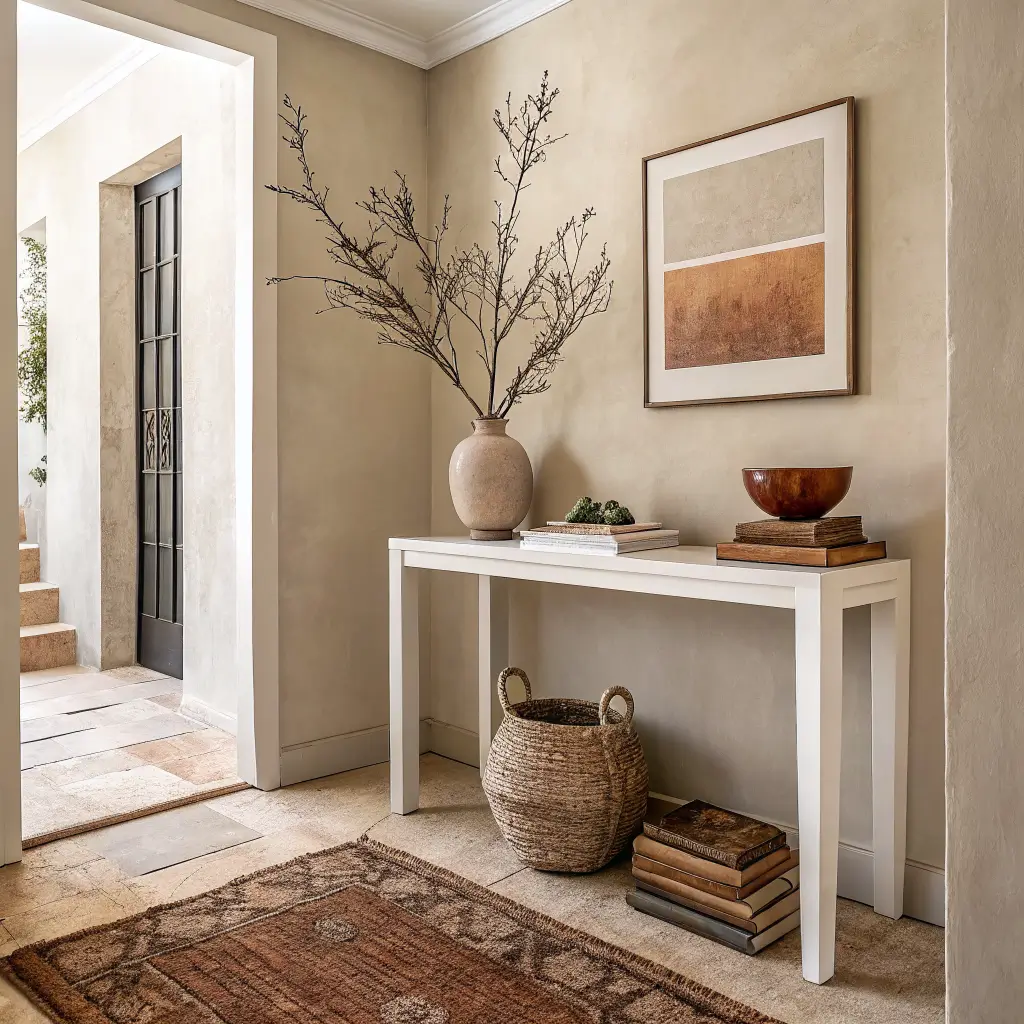
– Woods: white oak, ash, walnut, reclaimed pine, live-edge slabs — always matte or lightly oiled, never glossy
– Textiles: linen, cotton, wool, boucle, sheepskin, jute, seagrass, sisal
– Hard surfaces: limestone, honed marble, travertine, concrete, plaster, terracotta
– Accents: rattan, cane, cognac leather, hand-thrown ceramic, paper shades
– Metals: brushed brass, bronze, blackened steel — matte, never chrome
If a finish is shiny enough to see your reflection in, it’s usually wrong for this style. The exception is a small amount of brushed brass on lighting or hardware.
The Hero Pieces That Make the Room
Get these four right and the rest is styling.
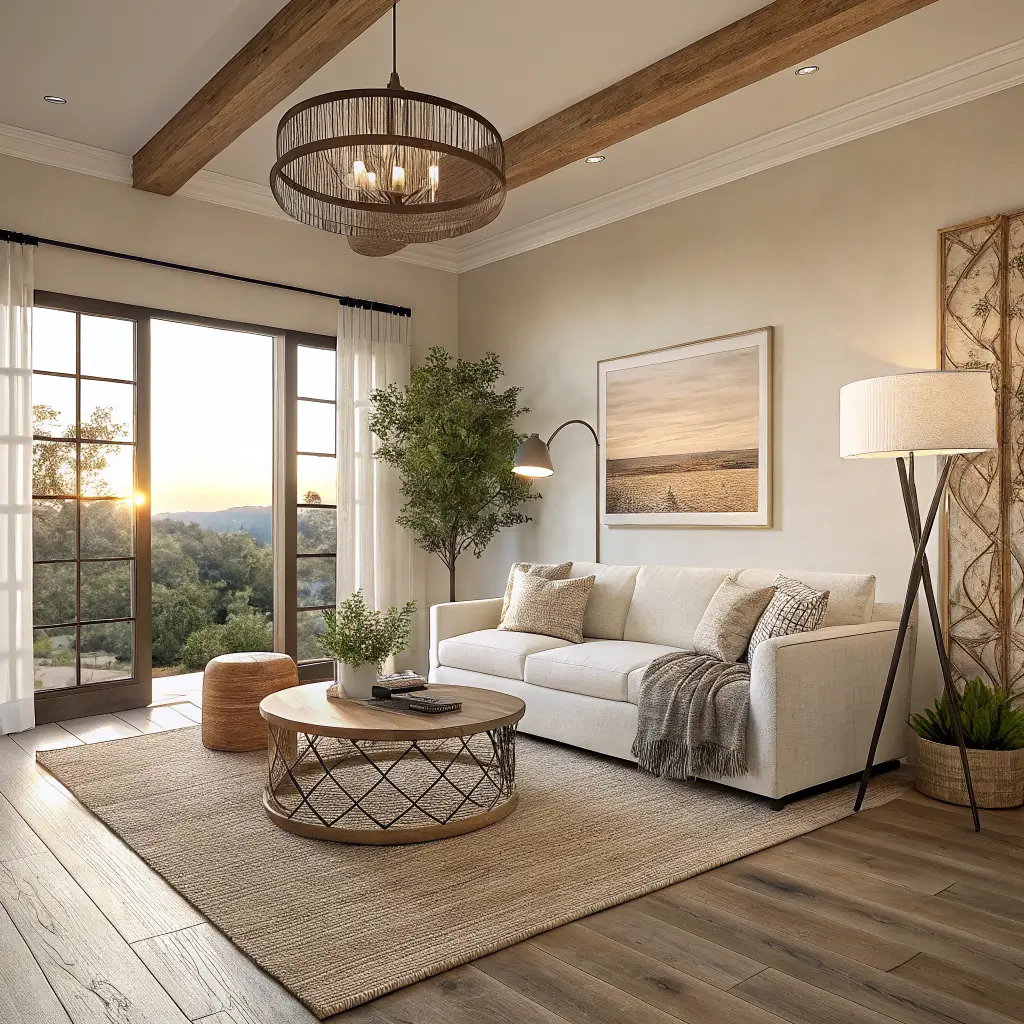
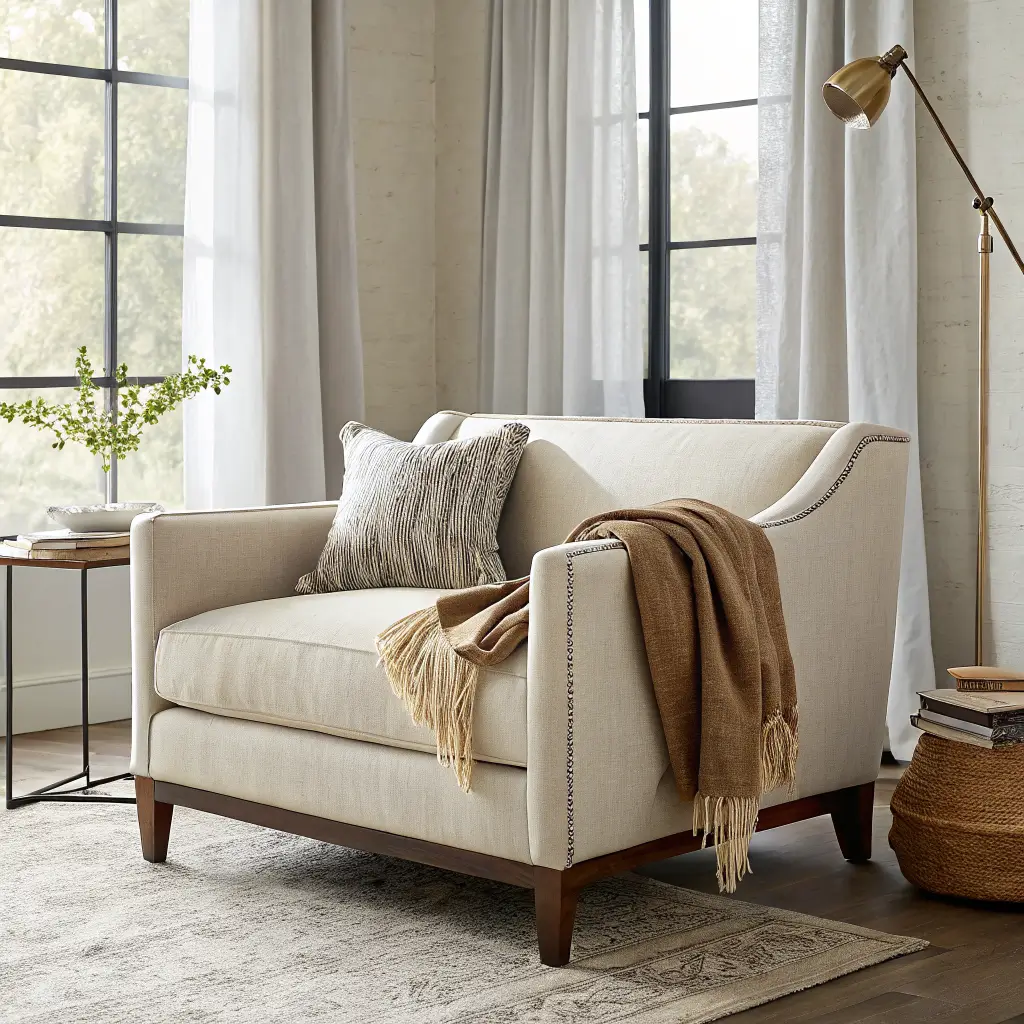
1. The sofa or bed. Ivory, oatmeal, or beige performance linen or boucle. Straight or softly rounded arms, low profile, exposed wood legs or a plinth base. For a standard living room, an 84″–96″ sofa; L-sectionals in the 110″–130″ range. For a bed, a linen or light oak frame with a headboard around 48″–55″ high.
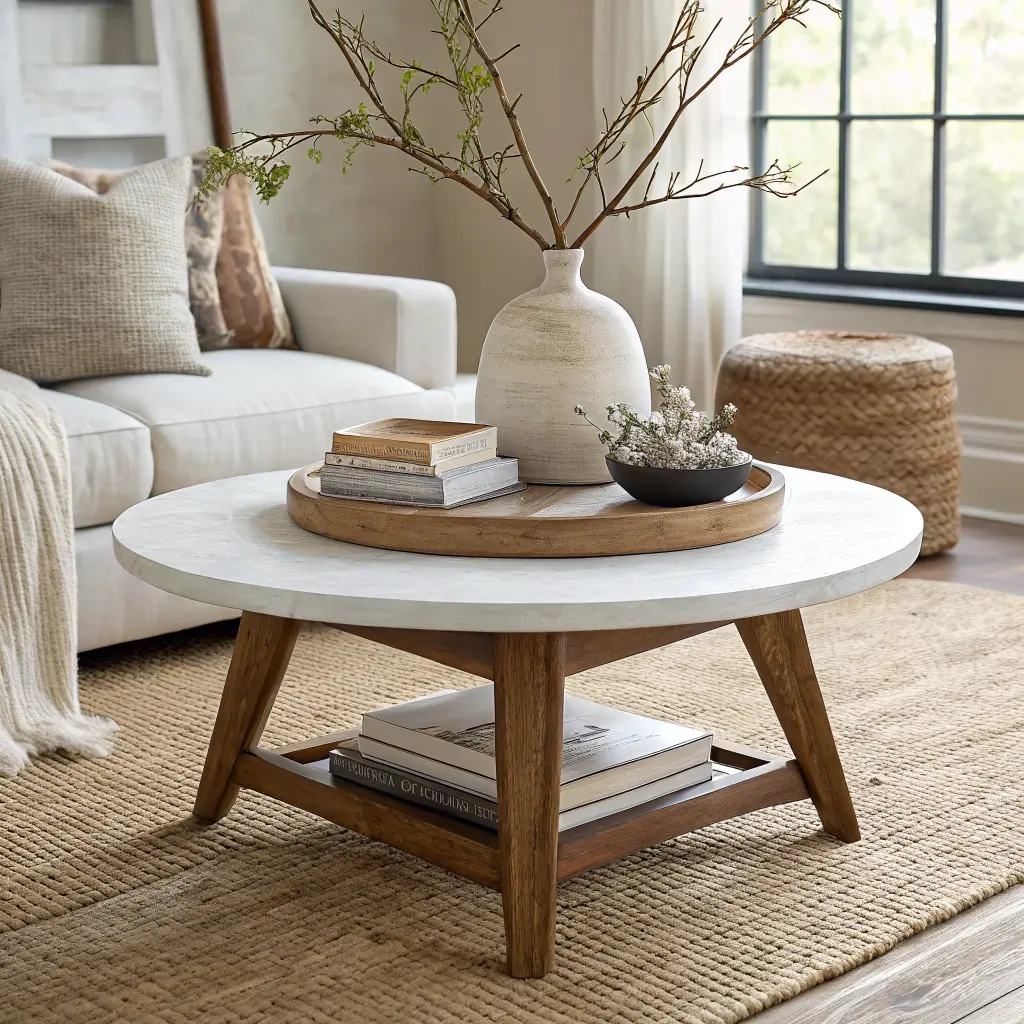
2. The coffee table. Oval, round, drum, or a chunky soft rectangle. White oak, walnut, or a plaster-effect finish. I bought a thin, spindly metal-and-glass table first and it disappeared in the room — replaced it with a chunky round oak one and everything else finally made sense. Presence matters here.
3. The rug. Jute, wool, or a wool-jute blend. Size up. In the living room, go at least 8′ x 10′ so the front legs of every seat sit on the rug. Under a queen bed, 8′ x 10′ minimum. A too-small rug is the single most common mistake I see.
4. Lighting. One overhead fixture plus at least two or three soft light sources. Linen drum shades, paper lanterns, arched floor lamps, blackened iron pendants. Overhead lighting alone will kill the mood every time.
How I Style Surfaces
The formula for a coffee table that actually looks put-together:
– One tray or stack of books for a base
– One organic vase with branches (eucalyptus, olive, or bare woody stems) for height
– One sculptural object — a stone, a wooden bowl, a small ceramic form
Three items. Varied heights. Done.
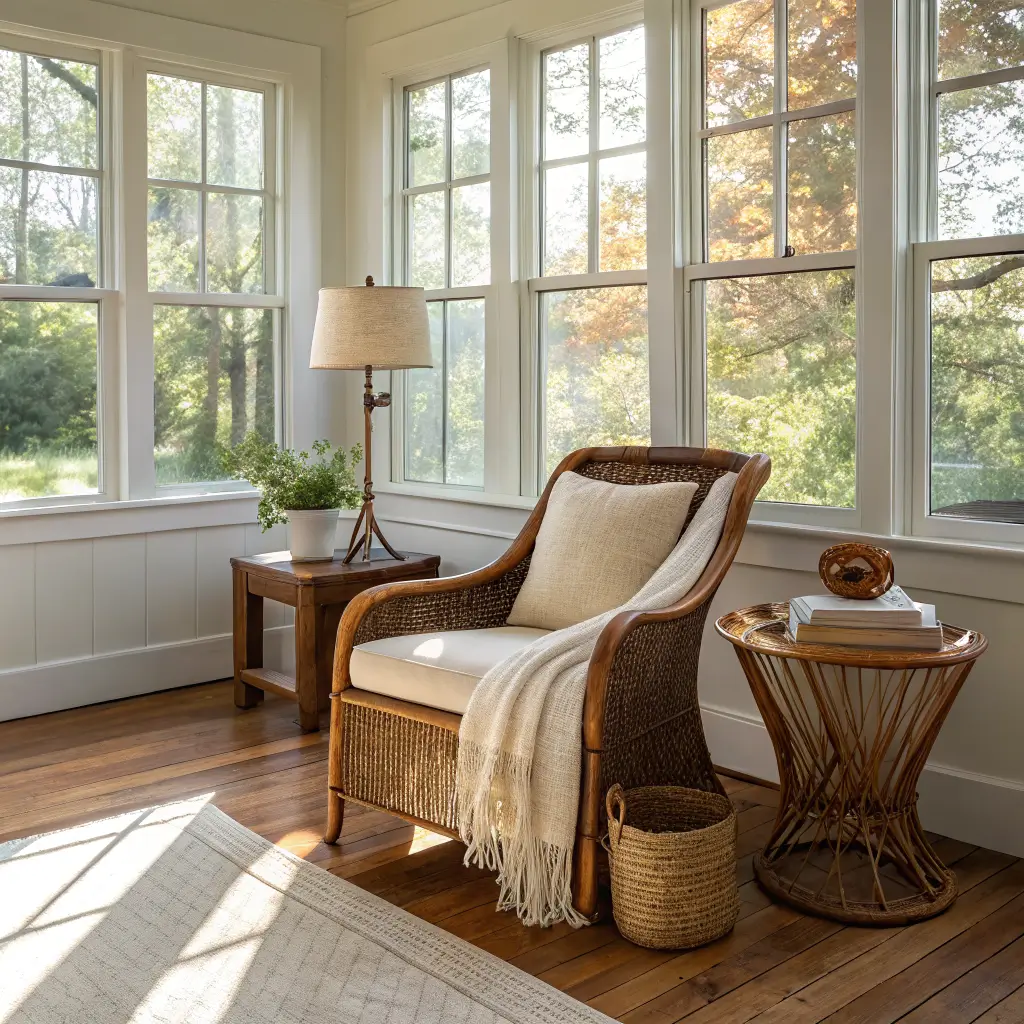
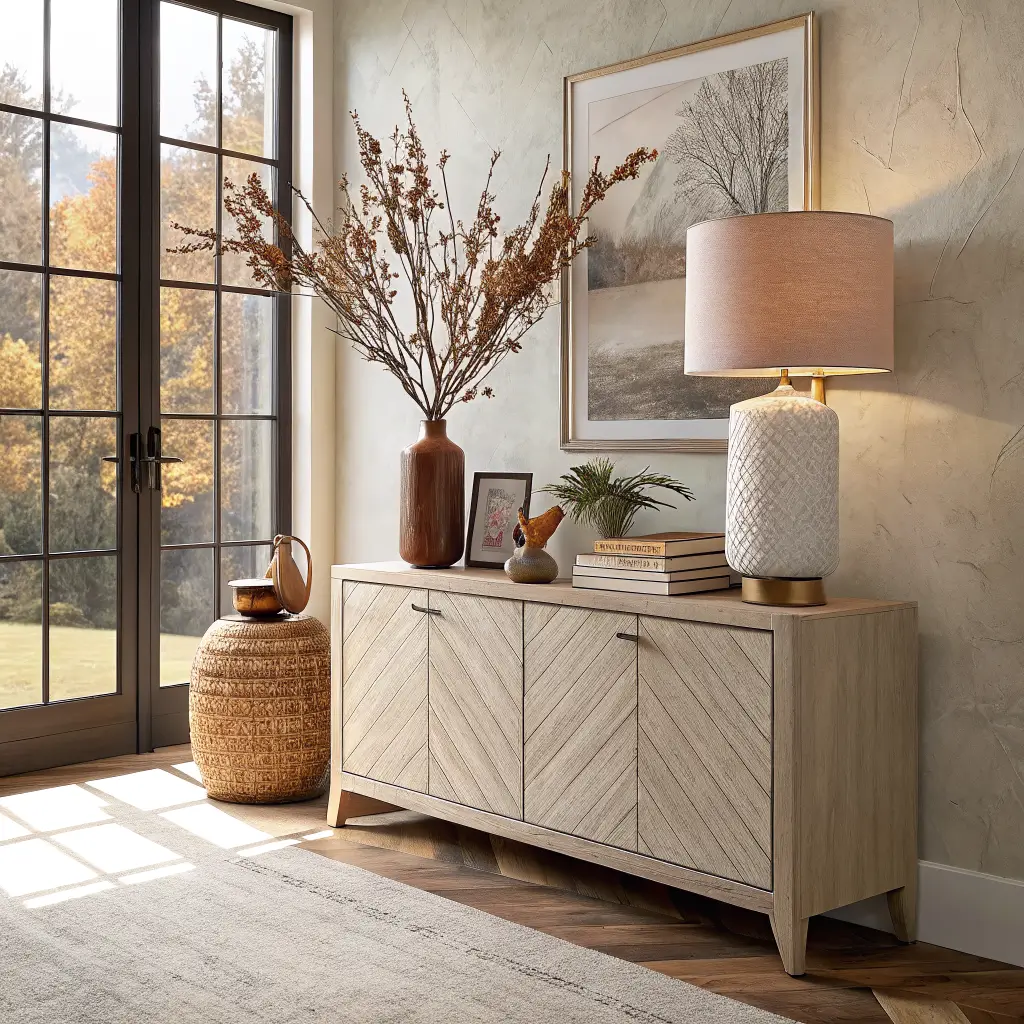
For a sideboard or console: go asymmetrical. Bigger lamp on one end, stacked books and a ceramic vessel toward the middle, art leaned (not hung) against the wall behind. Leave a good third of the surface empty.
Rule I live by: 30–40% of every surface should be empty. If it looks styled, it’s overstyled.
Layering Textures Without It Turning Into a Craft Store
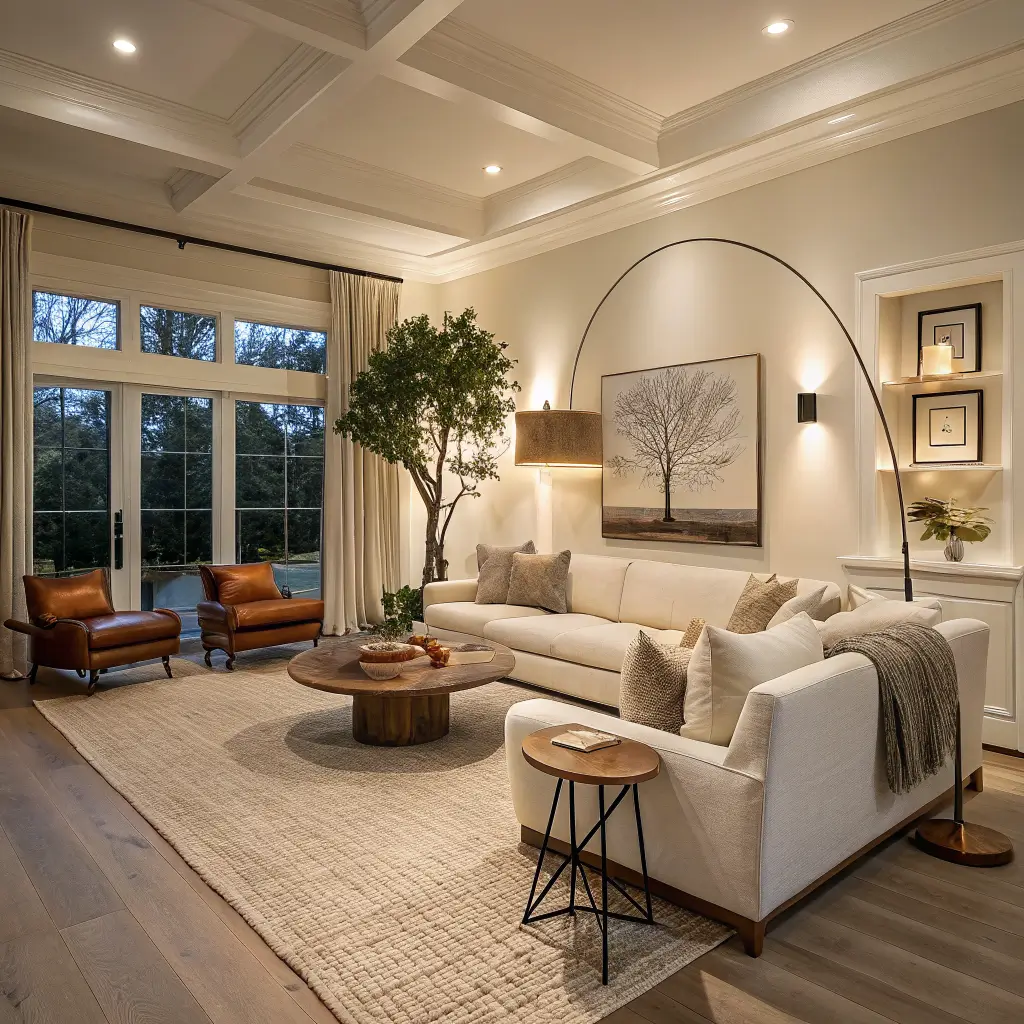
Since you’re not adding color, you’re adding tactile contrast. On a sofa I’ll usually run:
– Two heavy linen pillows in oatmeal or warm gray (20″ x 20″)
– One boucle or chunky knit pillow in cream (18″ x 18″)
– One smaller lumbar in a subtle tonal stripe or a cognac leather (12″ x 20″)
– A wool or linen throw draped over one arm, not folded into a perfect square
Keep patterns low-contrast and large-scale — broad stripes, soft organic shapes. Anything tiny or high-contrast reads busy in a neutral room.
Greenery That Doesn’t Look Fake
Real is better if you have light. My non-negotiables:
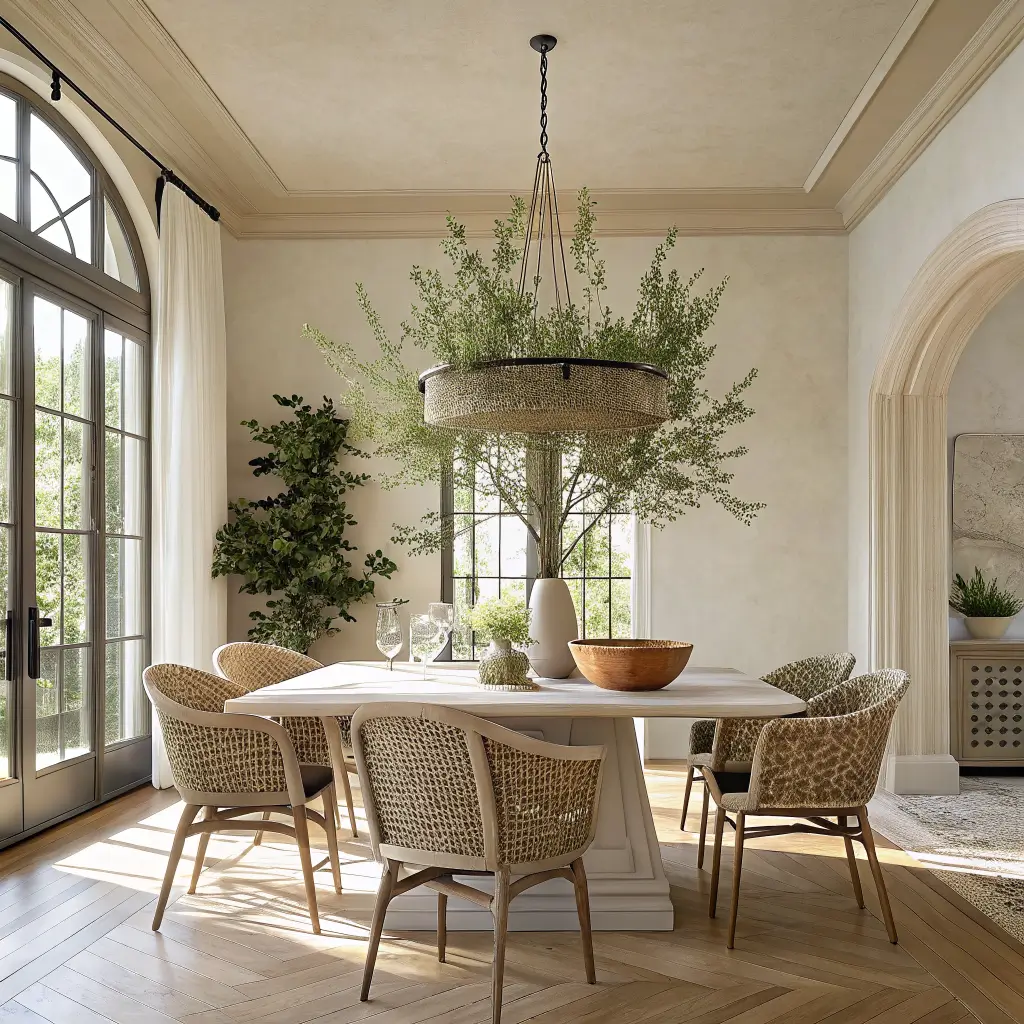
– One tall tree per major room — olive, ficus, or rubber tree, 5–6 feet minimum. Placed in an empty corner, ideally past the sofa or next to a console.
– A few textural stems in a large ceramic vase — eucalyptus, pampas (used sparingly, it’s had a moment and is now overdone), bare branches in winter.
– Two or three smaller pots on shelves and side tables.
If you go faux, spend on one really good tree ($100–$150 at minimum) rather than three cheap ones. The cheap ones look like they came from a party store, and they will.
The Five Mistakes That Killed My First Attempt
1. Too cold and minimal. Fix: more textiles, more wood, actual plants. If a room feels like a dentist’s office, you don’t have enough soft or handmade things in it.
2. Over-styled surfaces. Fix: pull half the objects off and put them in a drawer. Come back in a week. You won’t miss them.
3. Cool whites and blue-gray everything. Fix: repaint in warm white. This is worth doing even if you just painted. I’ve done it twice.
4. Style mash-up. Farmhouse signs plus boho macrame plus glam mirrors plus organic modern will fight forever. Pick one or two supporting influences (I lean Japandi) and commit.
5. Small-scale everything. Fix: one big lamp beats three little ones. One oversized piece of art beats a gallery wall of postcards. Scale up.
Where to Spend, Where to Save
Spend on:
– Sofa (you sit on it every day)
– Rug (size and material both matter, and cheap jute sheds forever)
– Main lighting fixture
– One statement piece of art
Save on:
– Pillow covers (H&M Home, Amazon, and thrift stores are all fine — I’ve found linen covers for $12 that look great)
– Vases and ceramic objects (thrift shops are gold here; I have a chunky matte ivory vase I paid $4 for at Goodwill that gets complimented constantly)
– Baskets and trays
– Stems and branches (cut them from your yard if you can)
Seasonal Shifts Without Redecorating
Same bones, different accents:
– Fall/winter: rust and merlot pillow covers, wool throws, more candlelight, dried branches, a deeper terracotta vase in rotation
– Spring/summer: flax linen, soft sage, muted blue textiles, fresh cut greenery, lighter cotton throws, a woven runner on the dining table
The point is that your core furniture and rug never change. You’re swapping maybe six to ten small items per season, for well under $200.
Cross-Style Variations
If you want to lean into another influence without breaking the look:
– Japandi + organic modern: lower profiles, more black wood, extremely restrained accessories, one strong indoor-outdoor moment (like a bench under a window with a single ceramic and a plant)
– Coastal + organic modern: sand, stone, bleached oak, muted seafoam or slate blue in small doses, linen drapes. Skip anchor motifs, rope details, and anything with a starfish on it.
– Boho + organic modern: keep the furniture clean-lined but add a couple of handmade patterned textiles, global ceramics, and warmer art. Cap the pattern count or you’re just doing boho.
The Test I Use for Every New Purchase
Before anything comes home, three questions:
1. Is it a natural material, or does it convincingly look like one?
2. Is the finish matte or softly brushed?
3. Does it live in the palette?
If it fails one, I put it back. If it fails two, I don’t even take a second photo of it. That single filter has kept me from spending a lot of money on things that would’ve looked wrong the second they arrived.