Spare Bedroom Ideas: How to Style a Small, Multi-Purpose Guest Room That Actually Works
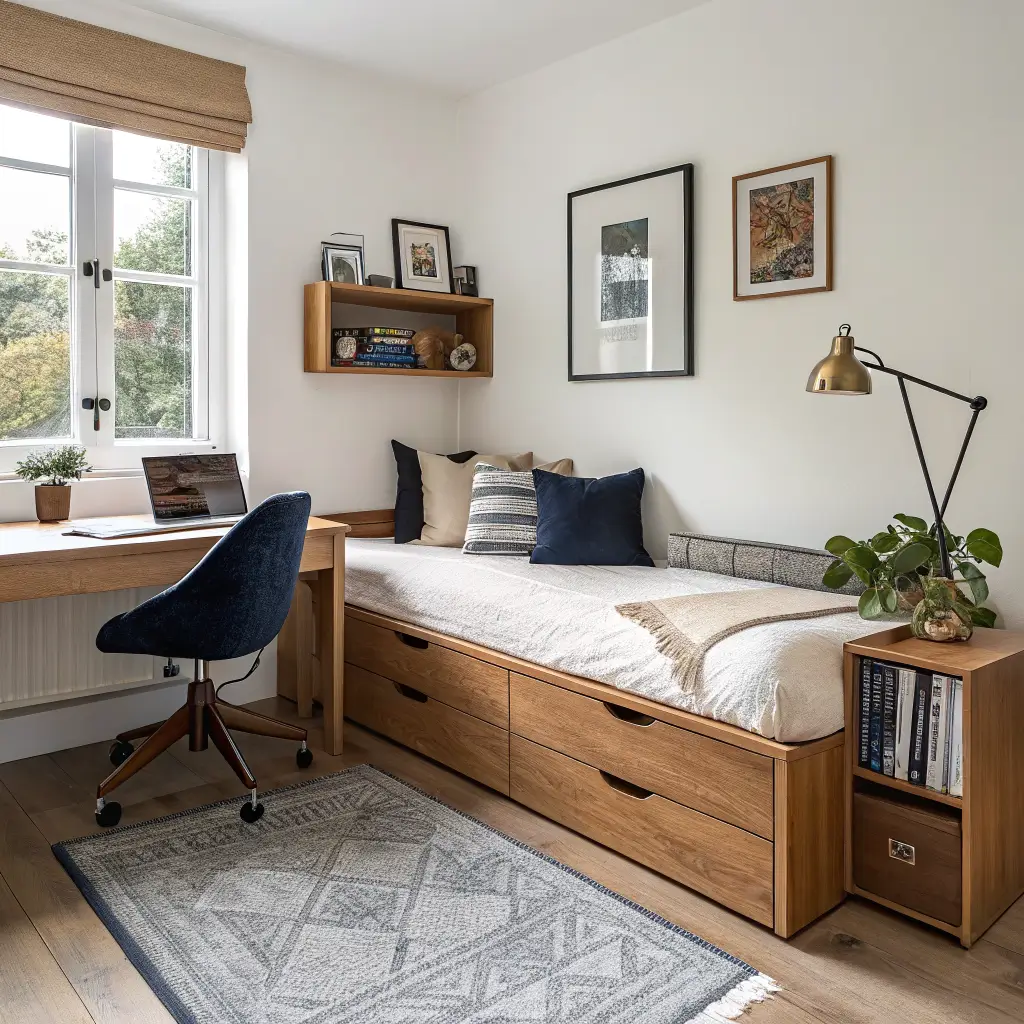
The spare bedroom is the room that becomes everything else when you let it. I gave mine one real purpose, a daybed, and stopped apologizing for the door.
Spare bedroom ideas usually fall apart the moment you try to make the room do more than one thing. You want it ready for your mother-in-law, but you also need somewhere to work, wrap presents, dump the ironing pile, and stash the exercise bike you swore you’d use. I’ve been through three versions of my own spare room — a bad one, an over-decorated one, and finally one that pulls its weight — and most of what I got wrong the first time was trying to make it look like a hotel instead of a room that lives in my house.
Here’s what actually works, room by room, decision by decision.
What a Spare Room Should Really Do (And Who This Is For)
Before you buy a single thing, pick a primary function and a secondary function. That’s it. Two. Not four.
Mine is guest room first, home office second. My friend’s is dressing room first, occasional guest room second (daybed under the window). Once you rank them, every decision gets easier — you’re not agonizing over whether the desk or the bed gets the good wall.
This setup is for:
– Renters and homeowners with one small room doing double duty
– Hybrid workers who host guests a few times a year
– Anyone with a box room (7–9 m² / 75–95 sq ft) they’ve written off as useless
– People running an Airbnb who need neutral, durable, easy-to-reset styling
Room size reality check:
– 7–9 m²: single bed or daybed, plus one other function. Don’t push it.
– 10–12 m²: double bed, small wardrobe, chair. A real guest room.
– 12–14 m²: guest + office genuinely works with a proper desk and daybed.
The Style That Works for Almost Everyone
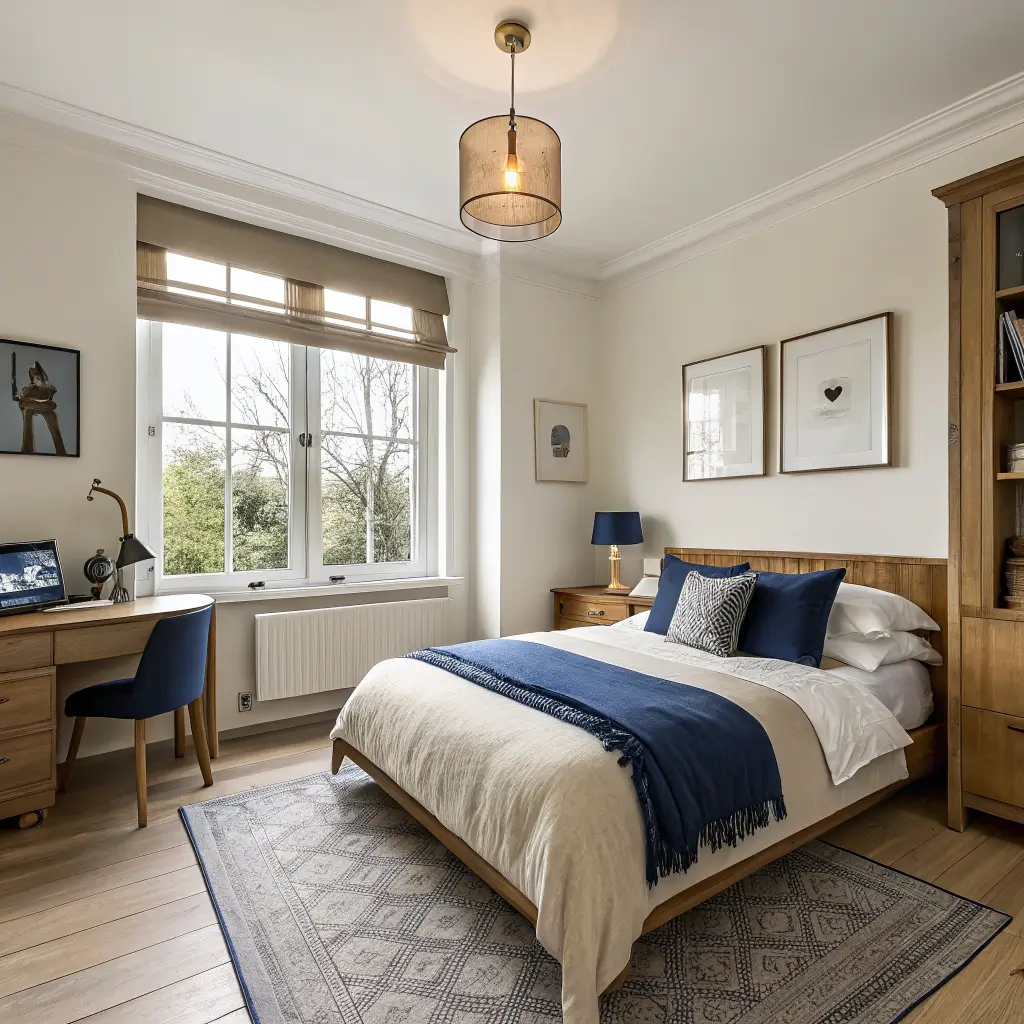
I’ve landed on what I’d call modern neutral with warm accents — and I recommend it for anyone hosting mixed guests or running short-term rentals. It photographs well, doesn’t date, and doesn’t impose taste on the person sleeping there.
The palette I’d use again tomorrow:
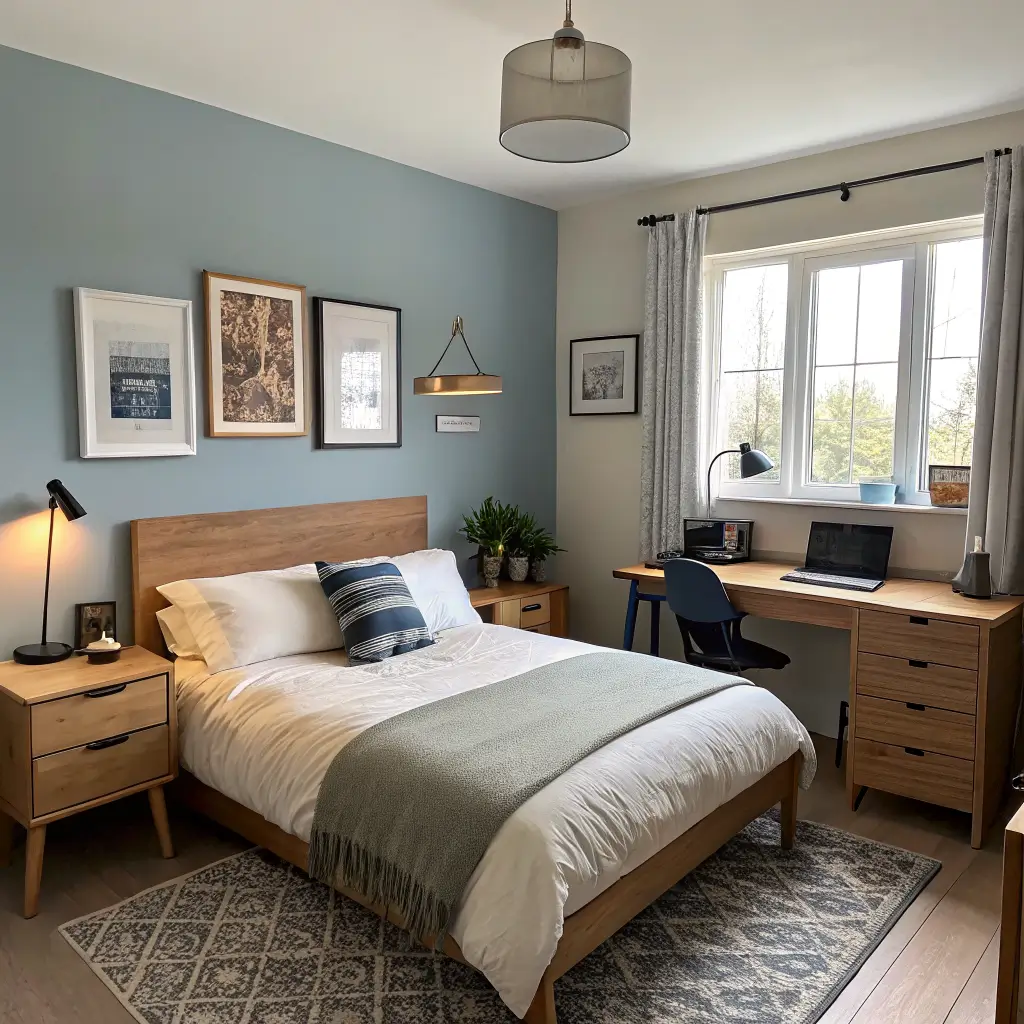
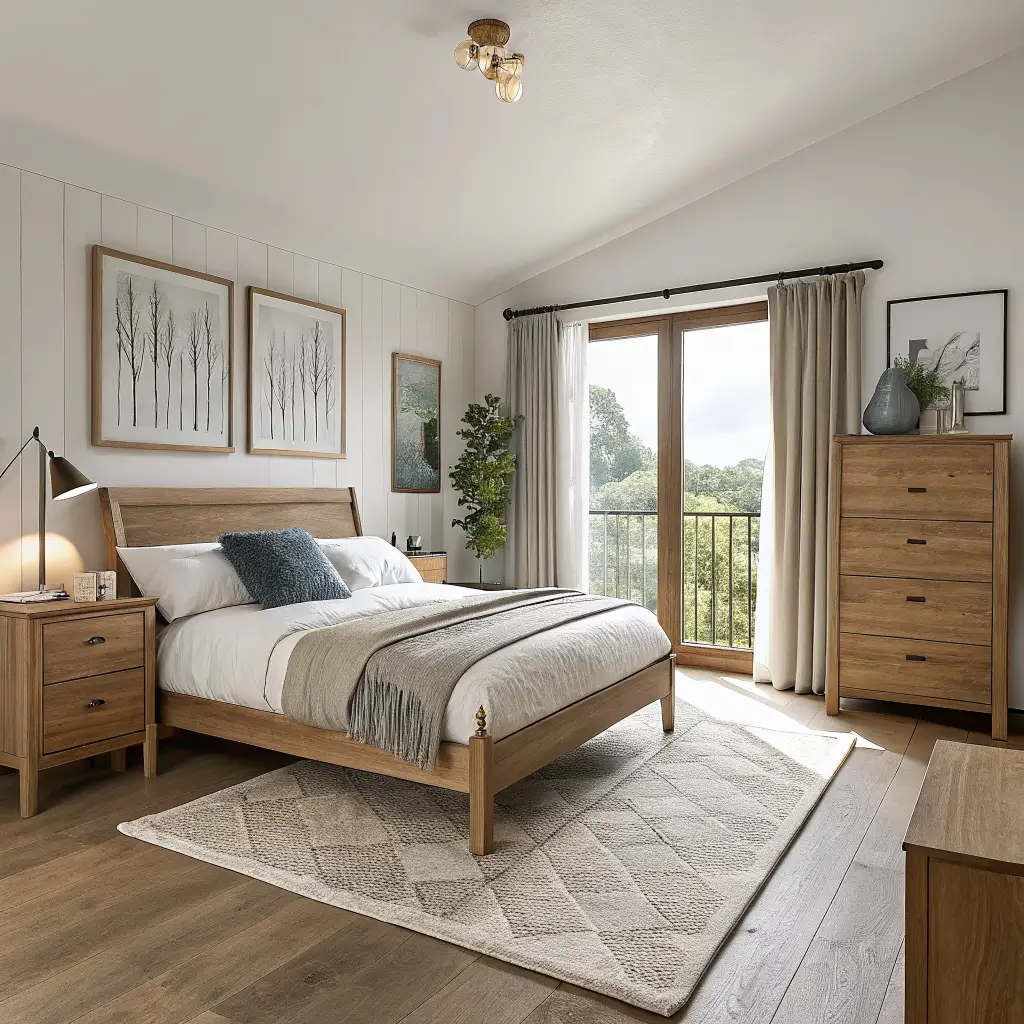
– Walls: warm off-white (something like Farrow & Ball School House White or Benjamin Moore White Dove). Not stark. Not builder-beige.
– Bed and large furniture: natural oak or walnut, or a linen upholstered headboard in oatmeal
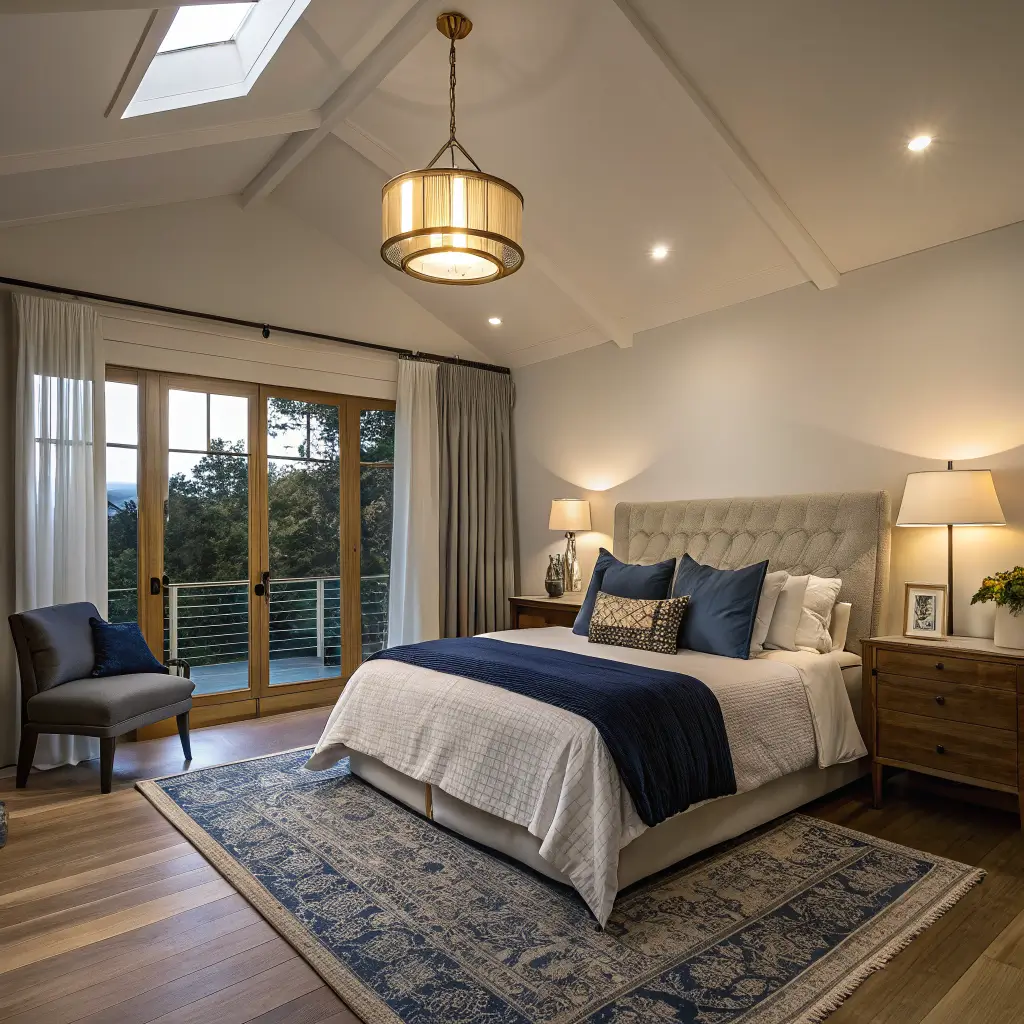
– Accent color: one — pick one. I use a deep navy on cushions and a piece of art. Forest green, terracotta, and dusty blue all work the same way.
– Metals: brushed brass for lamps and hardware. It reads warm without looking flashy.
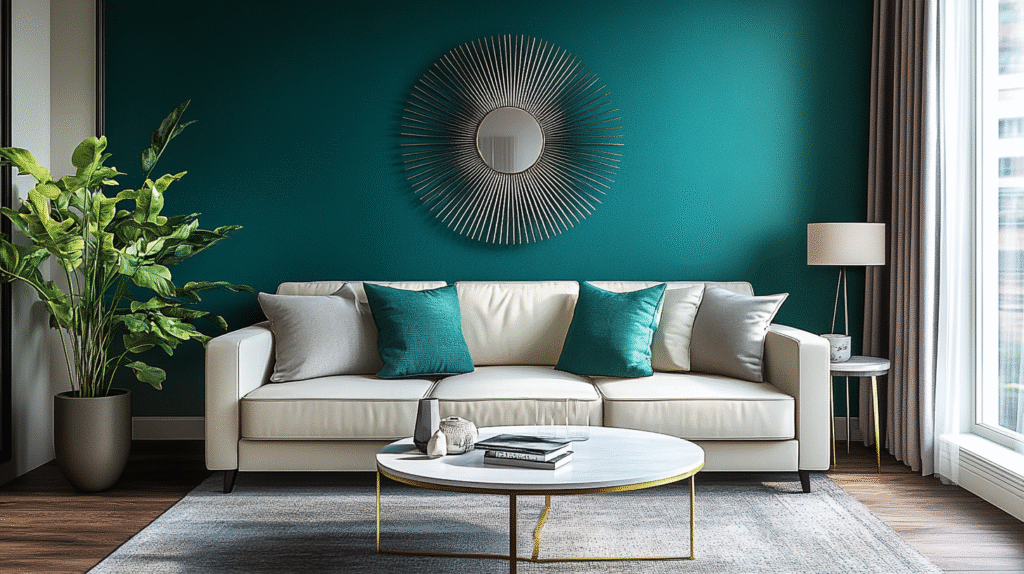
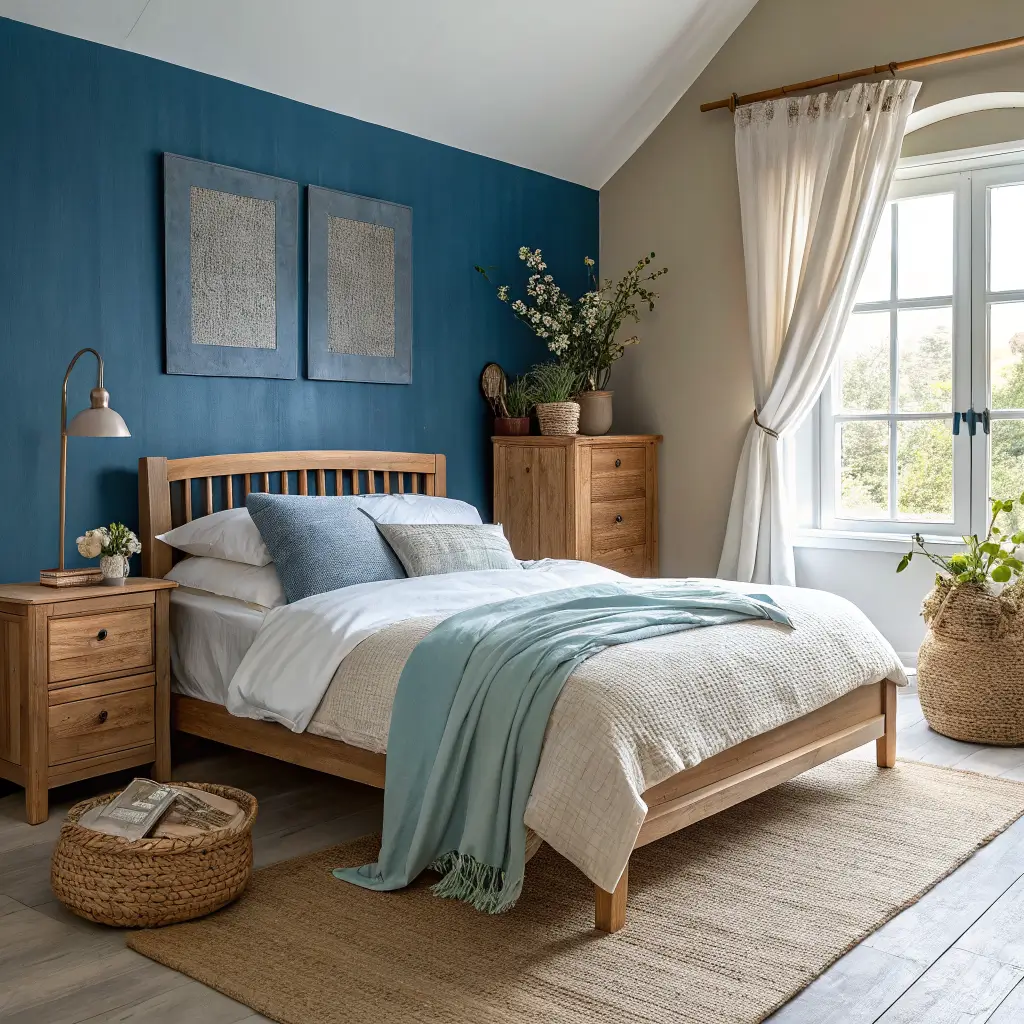
If you want more personality, put it on the wall behind the bed only — a dark accent color like navy or charcoal makes a small room feel intimate rather than smaller, as long as the other three walls stay light. I painted the wall behind my bed Hague Blue and it’s the single best decision I made in there.
The Pieces That Actually Matter
The mattress is not the place to save. I bought a £280 mattress from a warehouse clearance the first time around and my sister still brings it up. A mid-range hybrid ($400–$900 / £350–£800) will make the room feel like a real guest room instead of a punishment.
Non-negotiables for a working guest room:
– Bed: minimum a double/full (135×190 cm). If the room can’t fit one, use a daybed with a proper mattress, not a sofa bed that folds out into something spine-destroying.
– Two bedside surfaces with lamps — even if one is a small stool or wall-mounted shelf. Guests need somewhere to put a phone and a glass of water.
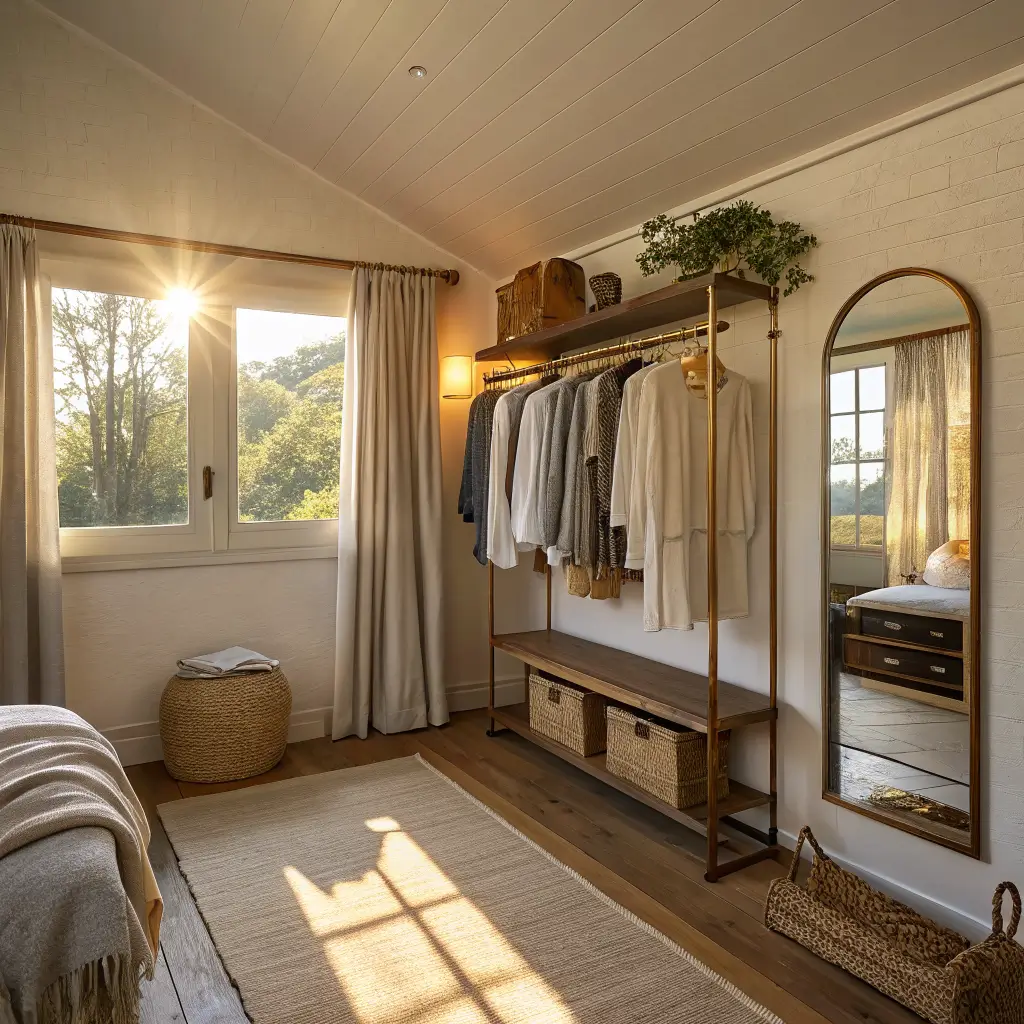
– Full-length mirror. Non-negotiable. Nobody wants to get dressed guessing.
– Somewhere to put a suitcase that isn’t the floor. A folding luggage rack ($30–$50) or a low bench at the end of the bed.
– Hooks or a slim clothes rail if there’s no wardrobe. IKEA’s Mulig rail is £10 and I’ve used one for four years.
– Blackout curtains or a blackout blind behind whatever curtains you like. Guests sleeping in a new place in July at 5am will thank you.
For the office side, if that’s your secondary use:
– Desk at least 120 cm wide with drawers or a pedestal
– Ergonomic chair — spend the $150–$250. A pretty dining chair for eight-hour workdays is a back injury waiting.
– Place the desk perpendicular to the window, not facing it (glare) and not backing it (screen washout on video calls).
How to Lay It Out Without It Feeling Cramped
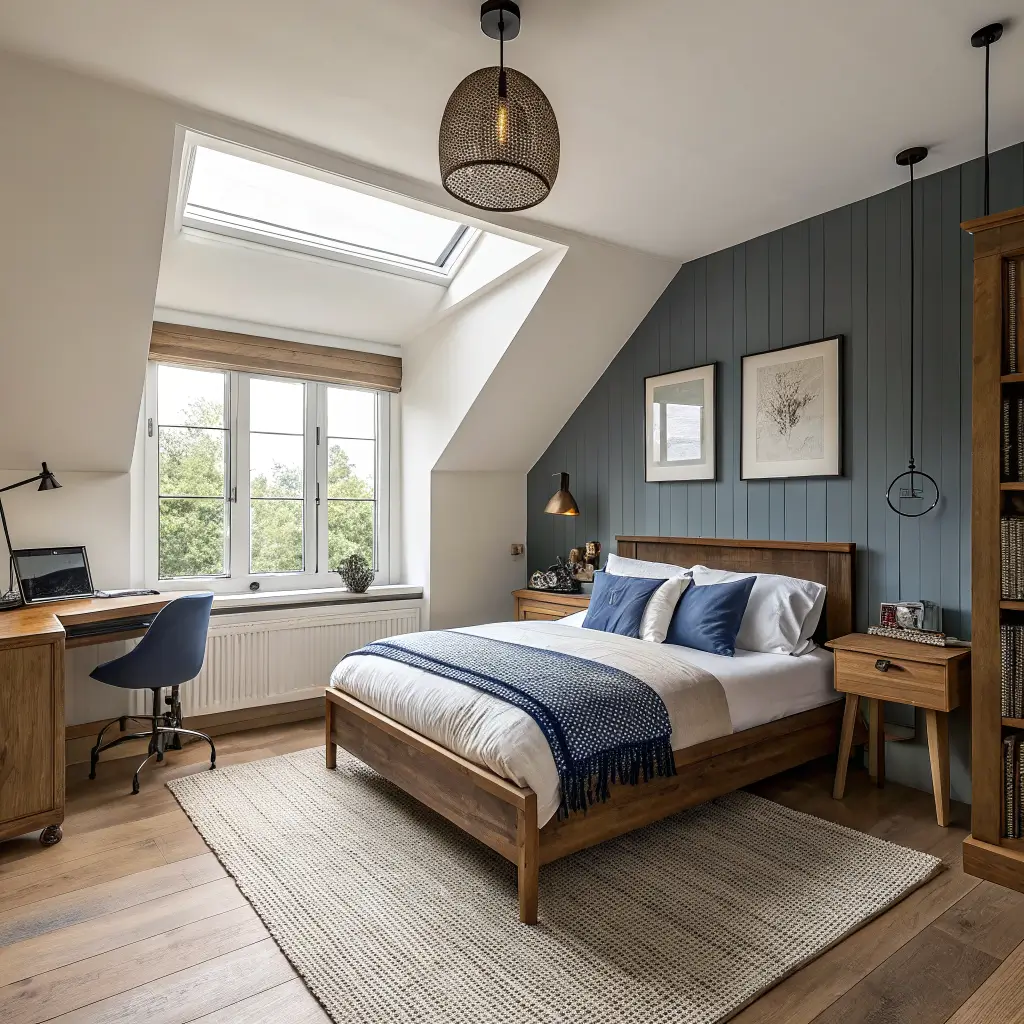
The mistake I made twice: floating the bed in the middle of the room like it was a primary suite. In a small room, push the bed against the longest wall and give yourself one generous walkway (60–80 cm) on the access side. Two cramped walkways is worse than one good one.
A few rules that keep small rooms breathing:
– Hang curtains at ceiling height, not at the top of the window frame. This one change makes a room look taller than any amount of tall furniture.
– Keep the window wall clear of tall pieces. Storage goes on shorter walls and in corners.
– Choose furniture with legs, not skirts — you can see floor underneath, so the room reads bigger.
– One big rug that goes under the front two-thirds of the bed looks intentional. Small rugs floating in the middle look like a mistake.
Layering Texture Instead of Piling on Patterns
Small rooms get busy fast. I learned to lean on texture and keep pattern minimal.
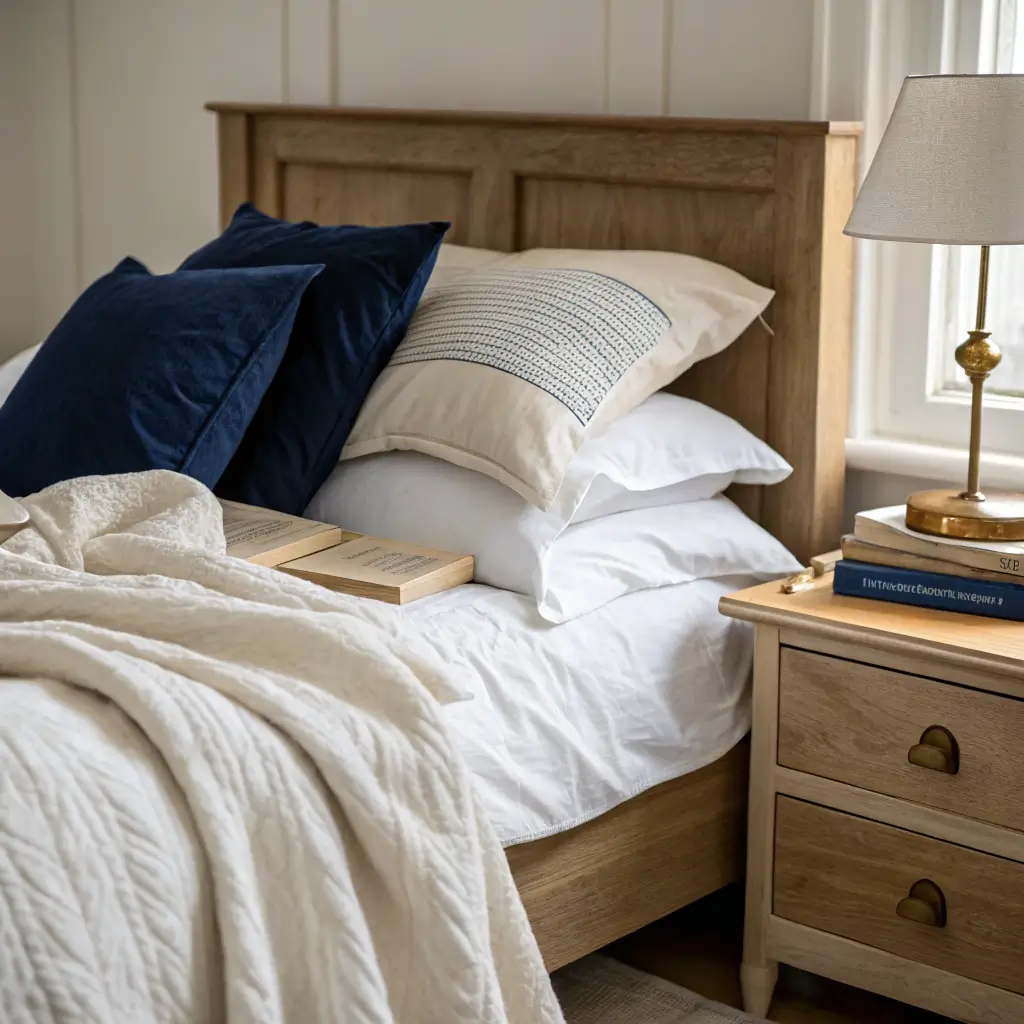
On my bed right now: cotton percale sheets (smooth), a linen duvet cover in oatmeal (crumpled, matte), a chunky wool throw folded at the foot (nubby), and two velvet cushions in navy (soft, deep). Four textures, one pattern (a subtle stripe on one cushion). It reads layered without looking like a bedding showroom.
The rule I use: one dominant pattern, one supporting pattern max, then let texture do the rest.
Where to Spend and Where to Save
Spend on:
– Mattress
– Bed frame (something you actually like — you’ll see it every day)
– Overhead light fixture (the ceiling boob light kills every room it’s in)
– Curtains and rod (cheap thin curtains are the number one thing that makes a room look rental-grade)
Save on:
– Bedside tables — thrift these. My best pair was £30 for two at a charity shop and I painted them.
– Art — framed prints, or your own photos in good frames from IKEA
– Decorative cushions — H&M Home and Dunelm are genuinely good here
– Bedding sets — Amazon basics cotton is fine for a guest bed used ten nights a year
Rough budgets to aim for:
– Refresh with existing furniture: $300–$600 / £250–£500 (new bedding, lamps, curtains, art)
– Full DIY guest room from scratch: $1,200–$2,500 / £1,000–£2,000
– Guest + office build-out: $2,000–$4,000 / £1,700–£3,200
– Custom built-ins or en-suite additions: $8,000+ / £7,000+ — get quotes from three trades, not one
Setup Order (Skip Steps and You’ll Redo Them)
1. Paint first, before any furniture. Always. Even if it delays you a weekend.
2. Bed and desk in — check circulation. Actually walk the paths.
3. Storage next: wardrobe, rail, or shelves. Corners and short walls.
4. Textiles: bedding, rug, curtains.
5. Lighting: overhead, two bedside, one task/floor lamp. Aim for 2700–3000K bulbs — anything cooler feels like a dentist’s office.
6. Walls: art at eye level (centre roughly 145–150 cm from the floor), mirror opposite or adjacent to the window to bounce light.
7. Guest touches last: water carafe, phone charger, a couple of books, Wi-Fi password written on a card.
The Mistakes Almost Everyone Makes
Overfurnishing. A bed, a giant wardrobe, a desk, a chair, a bookcase, and a bench — in a 10 m² room. Cut one. Then cut another. Empty floor space is a feature.
Making it too themed. Coastal-everything or farmhouse-everything ages fast and makes guests feel like they’re in a set. Neutral base, personality in swappable accents.
One overhead light and nothing else. A single ceiling bulb makes any room feel like a waiting room. Three light sources minimum, on different levels.
Turning it into storage overflow with a bed shoved in. If the guest can’t unpack, it’s not a guest room. Empty half the wardrobe. Leave two drawers free. Put a few hangers in.
Skipping the mirror. Every time.
Bedside tables at the wrong height. The top should sit within 5 cm of the top of the mattress — higher or lower and it looks off and it’s annoying to use.
Easy Seasonal Swaps
Because a neutral base makes this stupid easy:
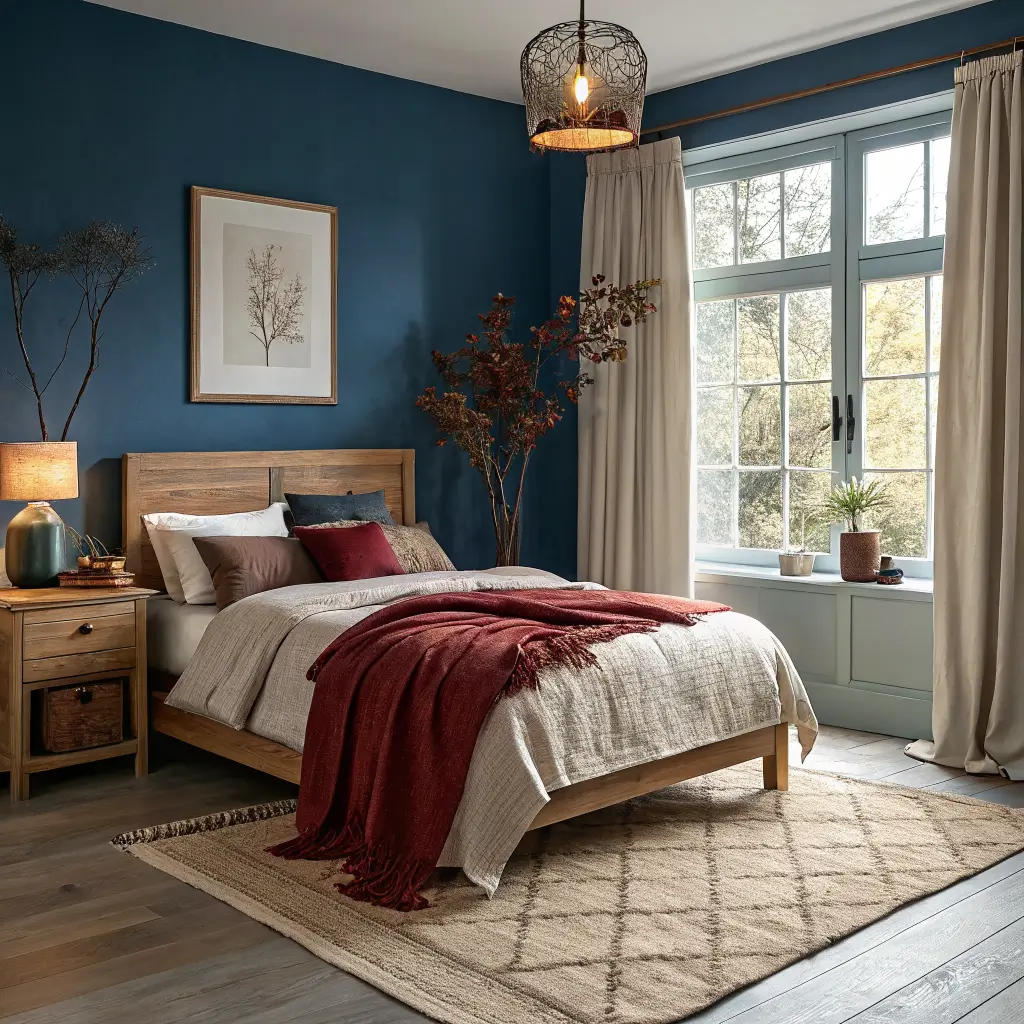
– Winter: swap in a heavier wool throw, deeper cushion covers (burgundy, forest, rust), a stoneware jug with eucalyptus, warmer bulb temperature
– Summer: lightweight linen throw, paler cushions, a woven basket with a rolled-up spare blanket, sheer linen instead of heavy drape
I keep a labeled box in the loft with “spare room — winter” and “spare room — summer” cushion covers and throws. Twenty-minute swap, twice a year, and the room feels new.
If You’ve Got a Tiny Box Room
Stop trying to make it a full guest bedroom. It’s not. Better uses for a 7–9 m² room:
– Dressing room with an open rail system and a full-length mirror — genuinely luxurious
– Reading room with a single deep armchair, a floor lamp, and wall-to-wall shelves
– Focused home office with a proper desk and a daybed for occasional overnights
– Craft or hobby room with a big work table and pegboard storage
A daybed with a good mattress (Ikea’s Hemnes is the workhorse here) lets any of those double as a guest room a few nights a year without pretending to be a full bedroom the other 355.
The spare room I’ve got now started as a junk room with a broken exercise bike and a stack of empty Amazon boxes. It’s a working office four days a week and a decent guest room maybe fifteen nights a year. What made it work wasn’t a bigger budget — it was picking two jobs and not asking the room to do a third.