The Small Fishing Cabin Interior Guide: How to Style 200–800 Square Feet Without Making It Look Like a Bass Pro Shop Threw Up
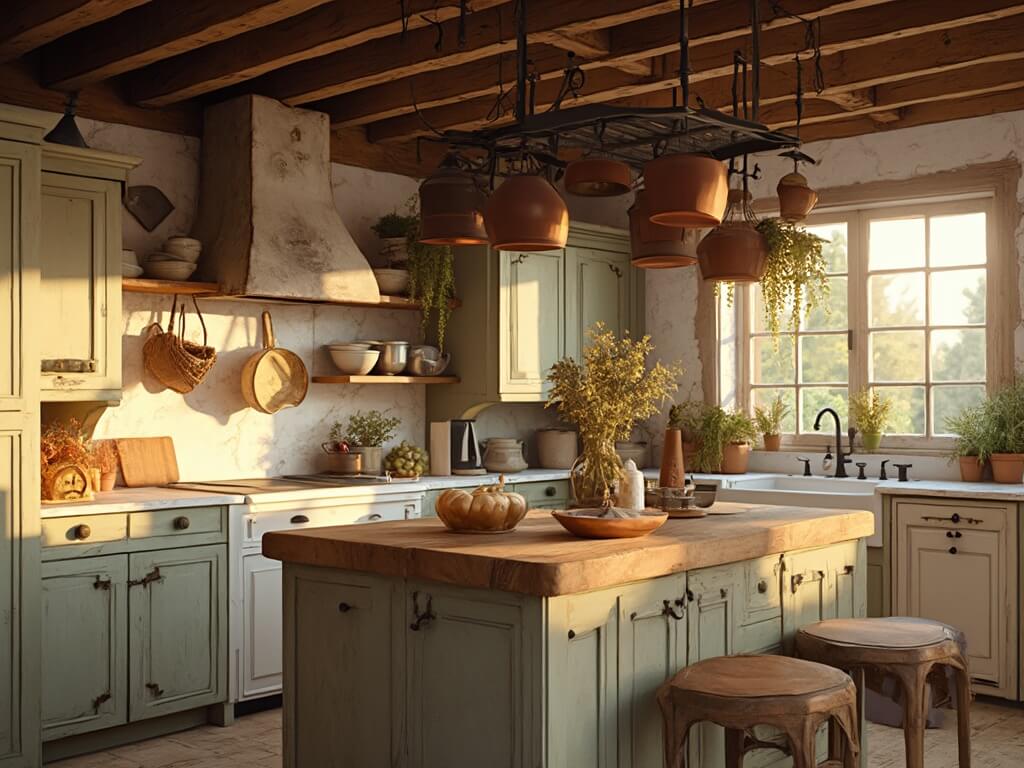
The small fishing cabin interior is built for mud and gear, not magazines. I leaned into oiled wood and open shelving, and it stopped feeling like a chore to keep.
A small fishing cabin interior is one of the trickiest spaces to get right, because the line between “authentic angler’s retreat” and “novelty gift shop” is thinner than most people think. I’ve styled two of these — my family’s 480-square-foot place on a lake in northern Wisconsin, and a friend’s rental cabin I helped rescue after her contractor left her with pine walls, pine floors, pine ceiling, and a brown leather sofa. It looked like the inside of a log.
What I’m walking you through here is the version that actually works: functional for wet gear, warm without being dark, fishing-themed without being cartoonish, and doable on a range of budgets.
The Look and Who It’s For
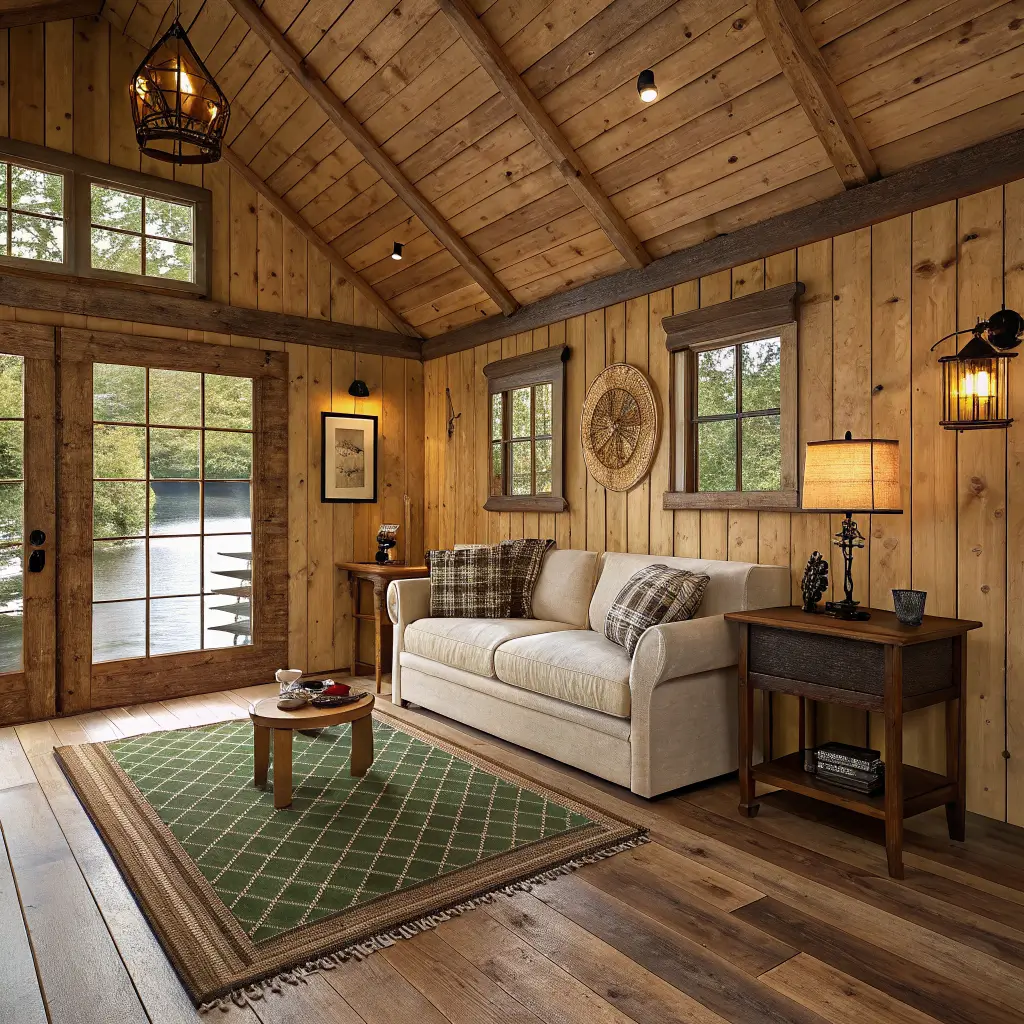
The style pulls from three places: classic rustic cabin (wood, stone, plaid), the newer fisherman aesthetic trend Country Living has been calling out for 2025 (waxed-canvas colors, utilitarian gear, muted outdoorsy palettes), and the small-space discipline you need to make 300 square feet function for four people on a rainy weekend.
It works for:
– Anglers who want a real base camp, not a themed hotel room
– Families hosting fishing weekends who need durable sleeping space
– Airbnb/VRBO owners marketing a fishing retreat (this style photographs beautifully)
– Weekenders who want the cabin feel without the maintenance of a giant place
Rooms it suits: entry mudroom/gear zone, living room with a stove or fireplace, bunkhouse, small dining nook, and a fly-tying corner if you have the square footage.
The Numbers: Time, Cost, Skill
Time to set it up:
– Cosmetic refresh (paint, textiles, art): 1–2 weekends
– Full furnishing from empty: 2–4 weekends
Cost ranges I’ve actually seen hold up:
– Budget ($500–$2,000): thrifted furniture, DIY art, basic lighting. Accent chair or small loveseat from IKEA/Walmart runs $250–$800. A 5×7 indoor/outdoor rug is $80–$300. Wall art and signs, $20–$150 per wall.
– Mid-range ($2,000–$8,000): reclaimed wood coffee table $250–$600, log queen bed frame $500–$1,500, wood-burning stove $800–$2,500 before install.
– High-end ($8,000–$15,000+): custom built-in bunks, premium textiles, quality stove with proper hearth.
Skill level: styling and paint are beginner. Storage benches and hooks are intermediate. Stove installation and structural work go to a pro — not because it’s hard to figure out, but because a chimney fire is not a learning experience you want.
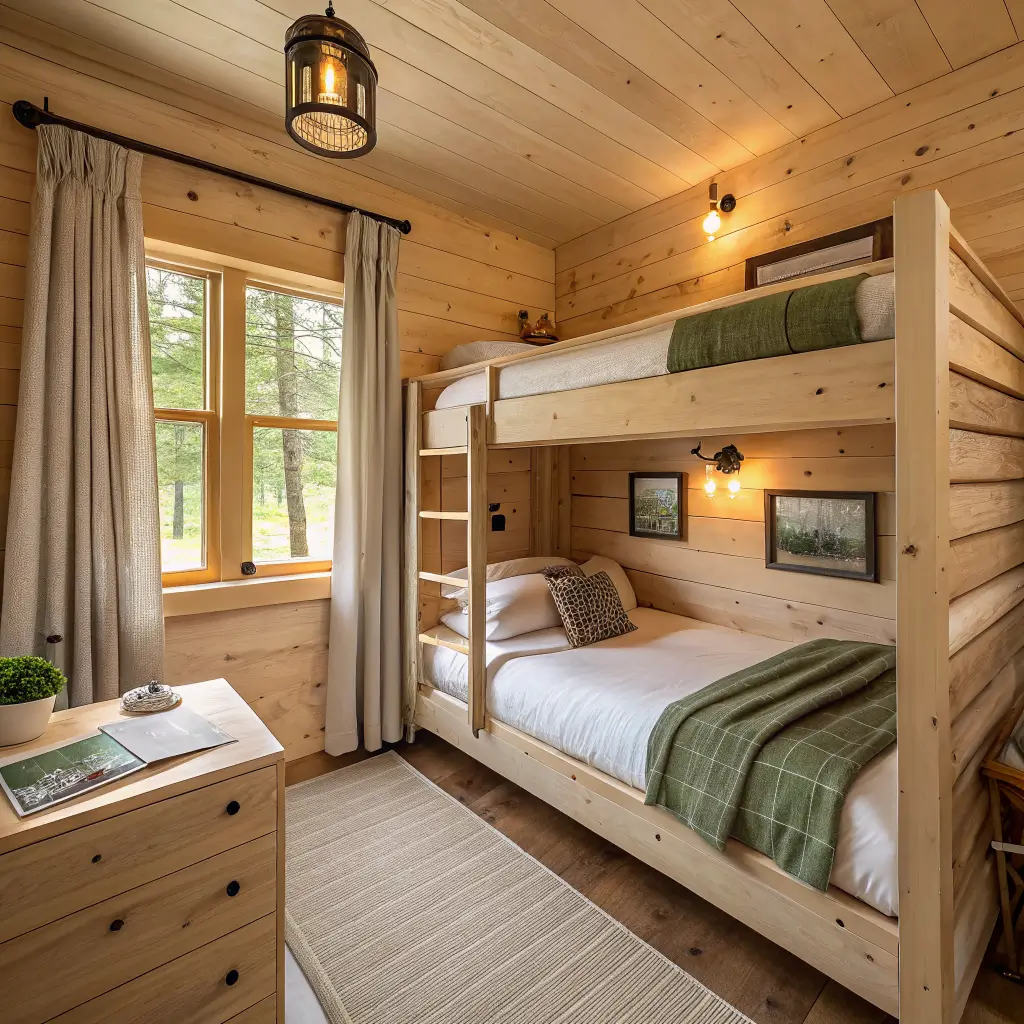
The Color Palette That Keeps It From Feeling Like a Cave
The biggest mistake I made in my first cabin was leaning into the wood. All wood, all the time. Honey pine walls, oak floors, cedar ceiling, brown sofa, brown throw. In photos it looked like sepia. In person it felt like being inside a barrel.
Here’s the palette that fixed it:
– Base (60–70%): honey pine or golden oak walls, natural light woods, warm cream upholstery
– Mid-tone (20–30%): forest green, deep river blue, slate gray, aged black iron hardware
– Accent (10%): muted rust, olive, and the occasional plaid — red-and-black buffalo check on one throw, not on every surface
If your walls are already dark log or heavy pine, the fastest fix is cream or light gray upholstery and a pale rug. Don’t paint the wood unless you truly hate it. Add light in the soft goods instead.
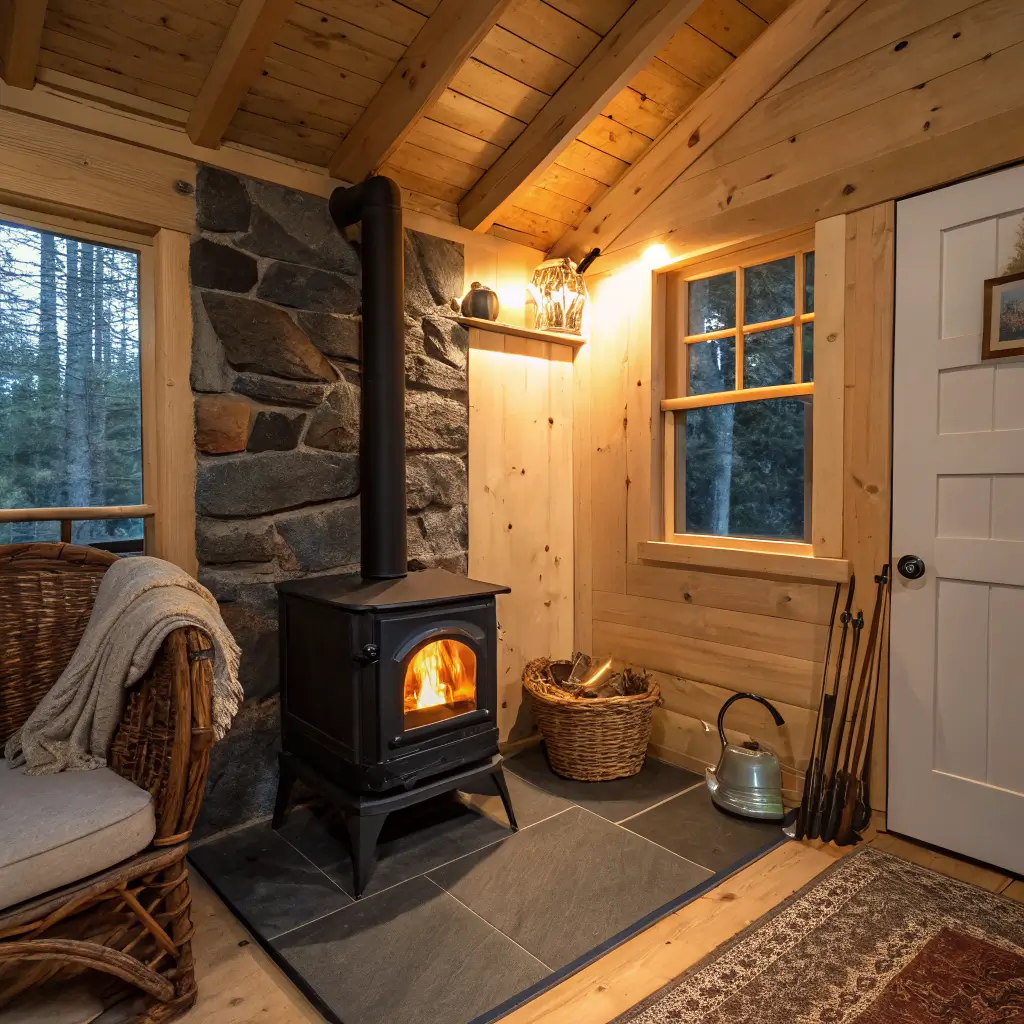
The Hero Pieces Worth Buying Well
Skimp anywhere else, but these carry the room:
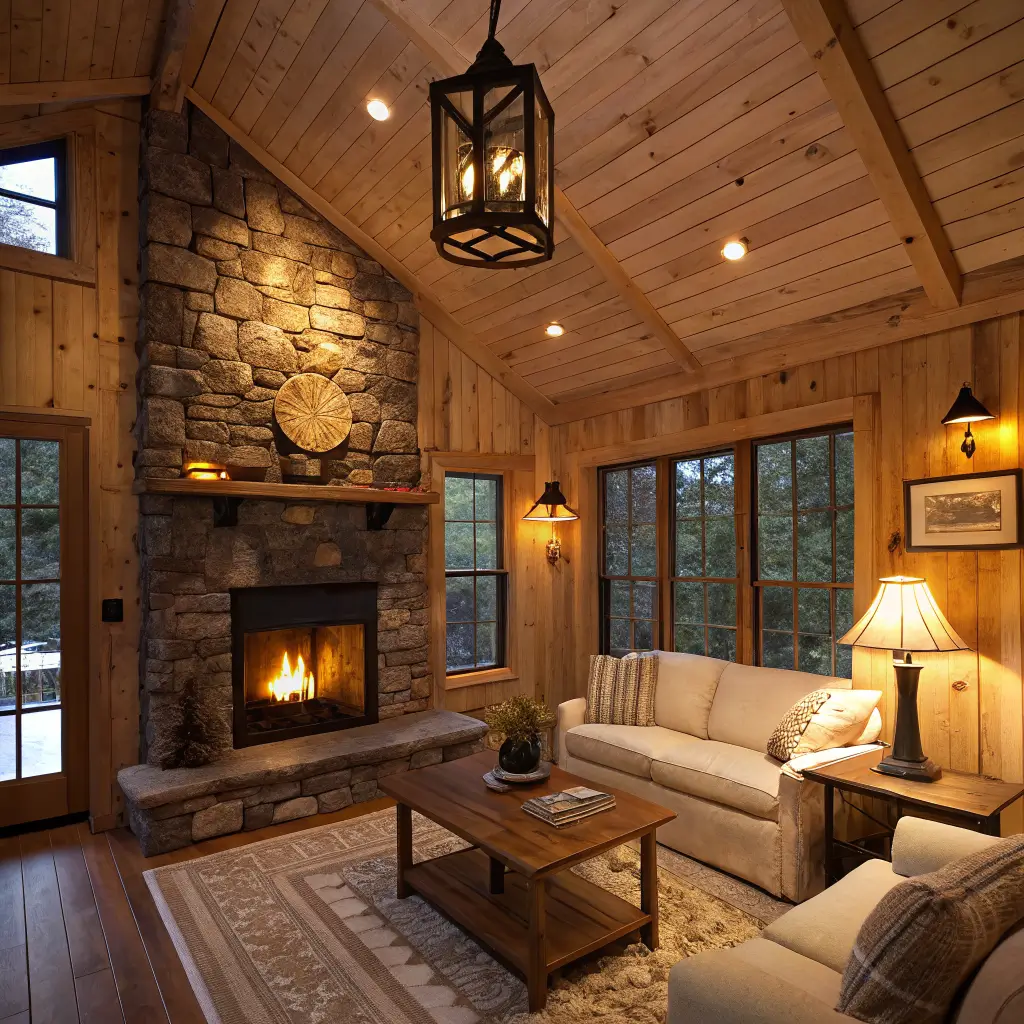
– Wood-burning stove or a real fireplace. Even a small one anchors everything. If you can’t do a stove, a proper stone or brick hearth with a good electric insert is a distant second.
– The coffee table. A 36–48″ reclaimed wood or thick plank piece. This is where wet drinks, playing cards, and tackle boxes end up. Buy something you don’t have to baby.
– The sofa. In a small cabin, 72–84″ is the sweet spot. Get performance fabric or canvas in cream, oatmeal, or olive. Not brown. Brown eats the light.
– The bed or bunks. A log frame is charming but heavy — measure your doorways before you order. For bunkhouses, built-ins beat freestanding almost every time because you can add reading lights, shelves, and USB outlets right into the frame.
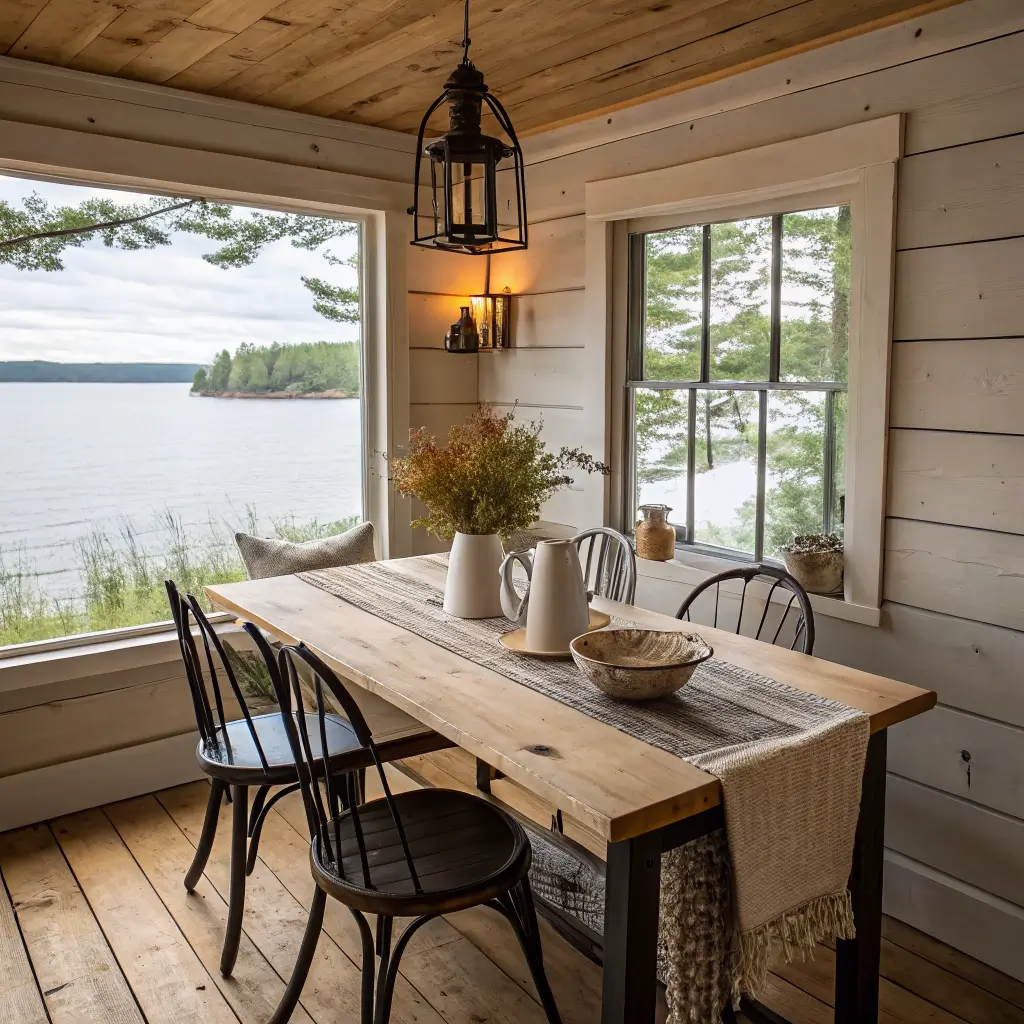
– A rough-plank dining table, 60–72″. This doubles as a fly-tying bench, card table, and gutting-fish-cleanup station if you cover it.
Storage for Wet Gear (The Part Everyone Forgets)
This is what separates a real fishing cabin from a themed cabin. If there’s nowhere to put a soaking wet pair of waders, they end up on a chair, then the chair is ruined, then someone’s mad.
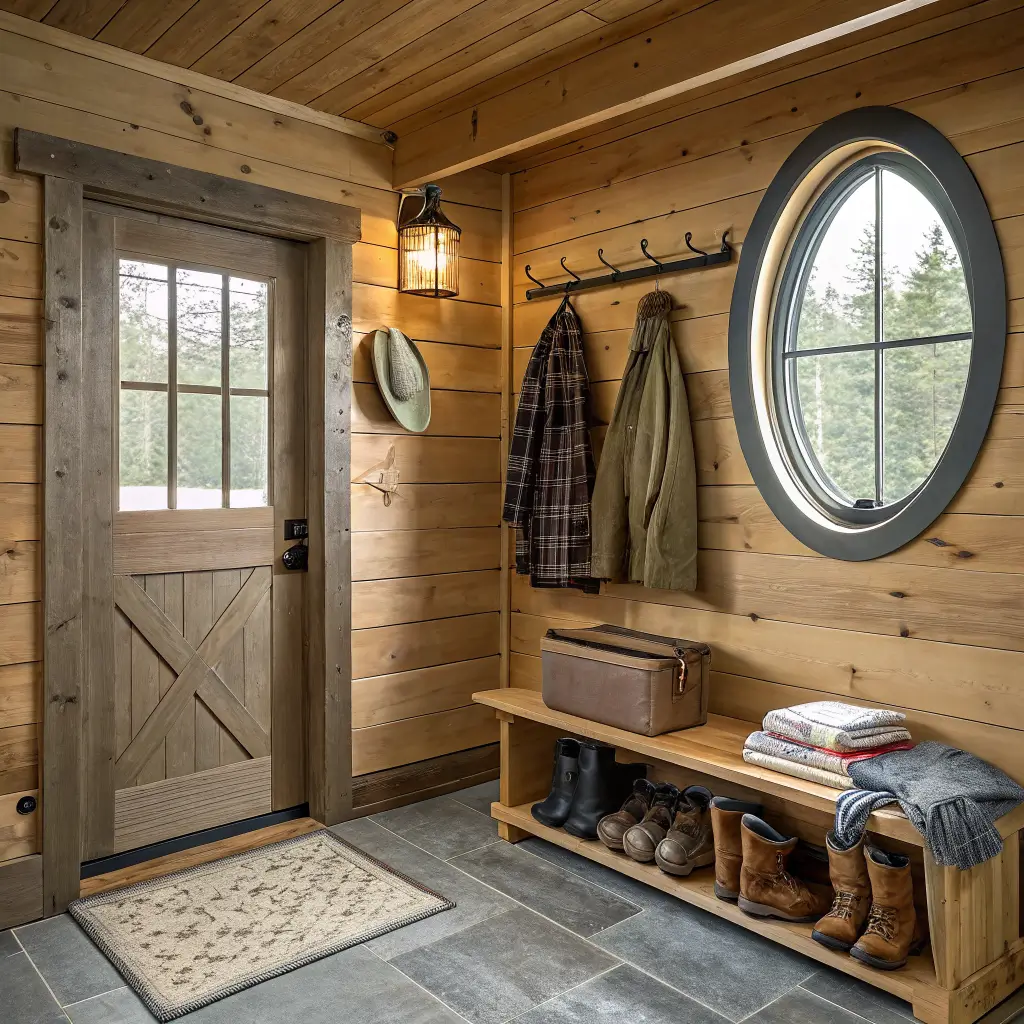
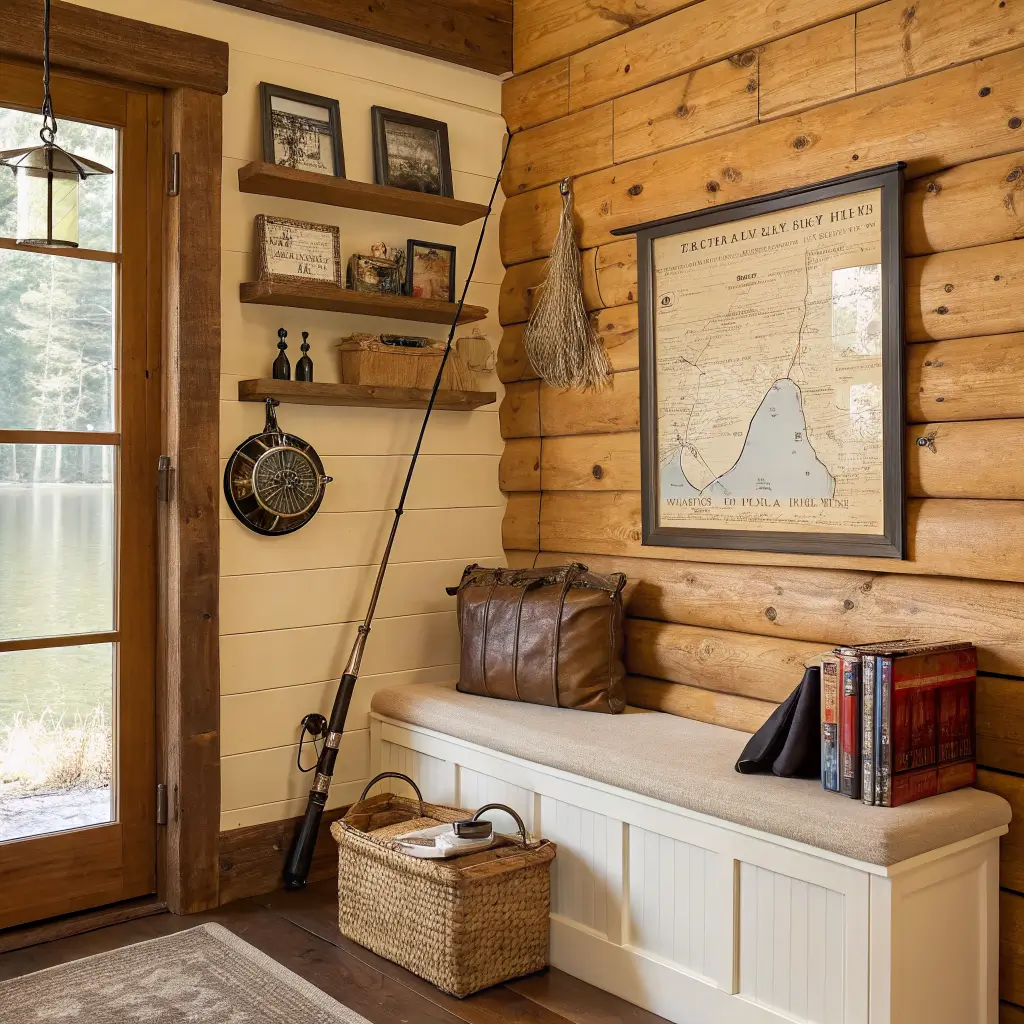
Build an angler’s entry. Even four feet of wall by the door is enough:
– Heavy-duty cast iron hooks at two heights — one for jackets around 66″, one for kids and hats around 48″
– A boot tray with a lip (I use a galvanized metal one, $30 at a hardware store)
– A wall-mounted rod rack, either horizontal above the door or vertical in a corner
– A storage bench with a hinged lid for tackle, extra line, and dry socks
– A jute or indoor/outdoor runner that can take mud
I put my rod rack above the interior door frame — 8-foot rods lie flat, out of the way, and it looks intentional.
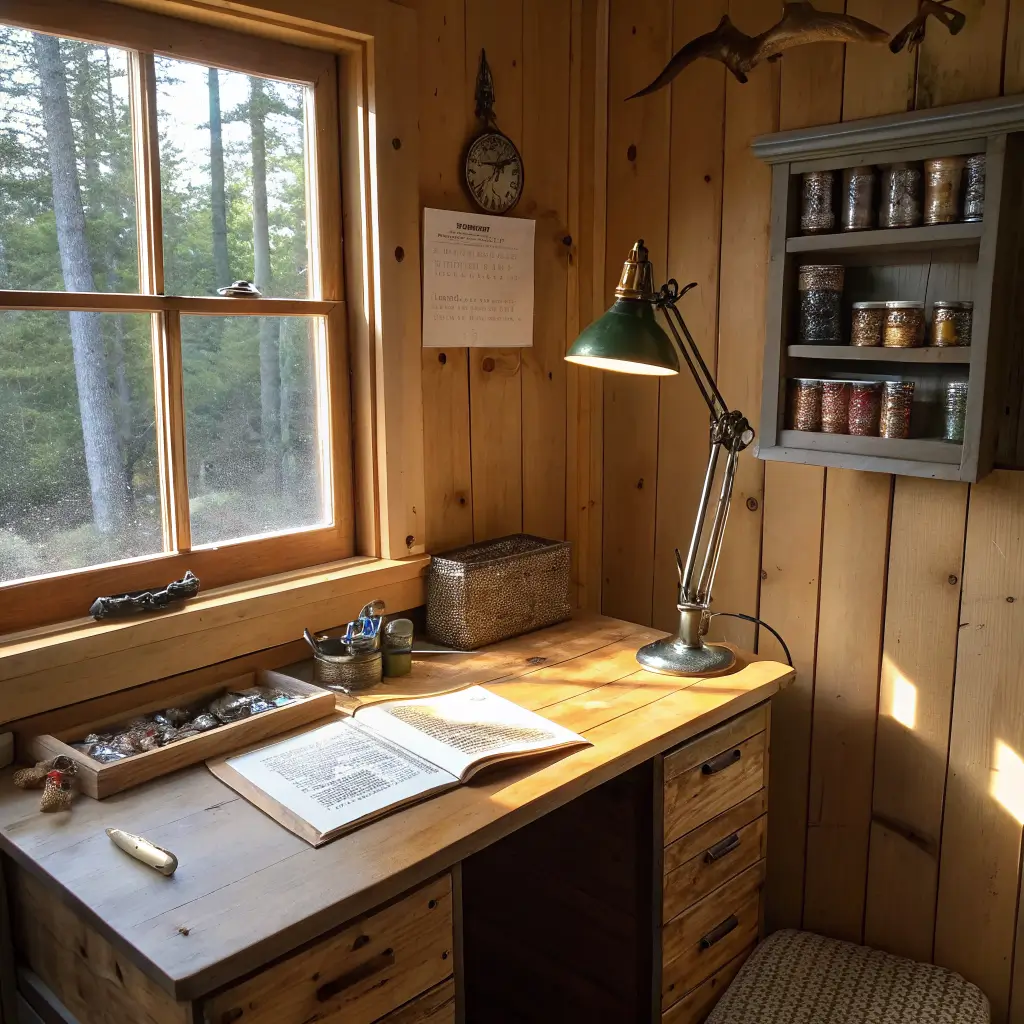
Fishing Decor Without the Kitsch
The rule I follow: limit overt fishing references to 2–3 focused zones. Entry wall, above the fireplace, one bunk room. Everywhere else stays quieter.
What works:
– A vintage bamboo rod mounted horizontally, alone, on one wall
– An old wicker creel on a shelf with two books and nothing else
– Framed antique fishing prints or a real local lake map, matted and framed properly
– A shadow box of flies tied by someone you know
– One “Bait & Tackle” or lake-name sign — one, not four
What to avoid:
– Fish-shaped everything (soap dish, toilet paper holder, drawer pulls, welcome mat)
– Rubber trout wall clocks
– More than one Billy Bass adjacent object per cabin, and honestly, zero
– Bedding with allover fish print — one pillow, maybe
The vintage stuff should look like it belongs to someone. Hit estate sales in lake towns before you hit Wayfair. I bought a beat-up 1950s Pflueger reel for $8 at a garage sale in Hayward that gets more compliments than anything I ever paid full price for.
Lighting: Three Layers or the Room Dies at Sunset
Cabin windows are usually small, and once the sun drops, one overhead bulb makes the whole place feel like a garage.
You need three layers:
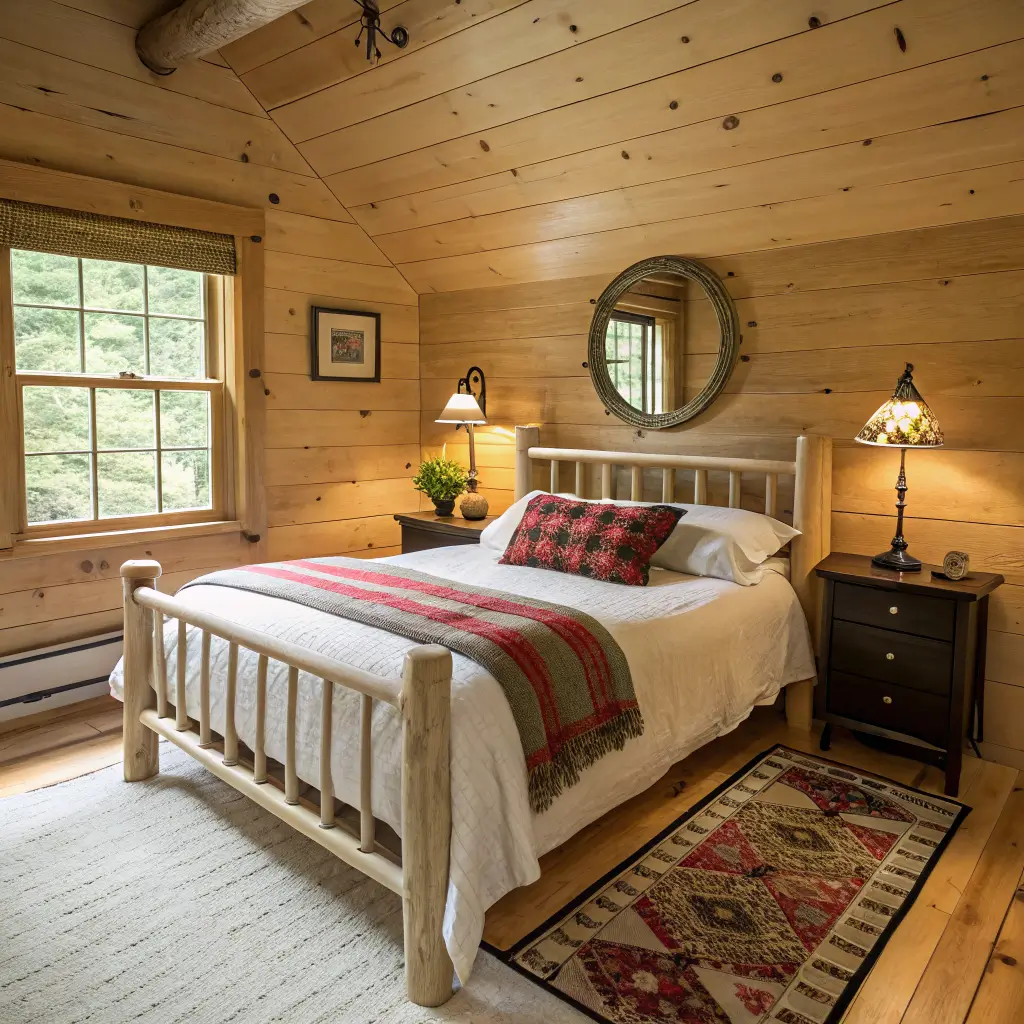
1. Overhead — a lantern-style or metal pendant with a warm Edison bulb (2700K, not the blue stuff)
2. Task — bedside lamps in the bunk room, a reading lamp by the sofa, a light over the dining/tying table
3. Ambient — a small table lamp on a side table, string lights along a beam if you like them, or wall sconces flanking the fireplace
Aged brass and black iron are the two metals that fit. Pick one and stick with it across the whole cabin.
Layout Rules for Small Square Footage
– Keep windows clear. No tall furniture in front of them, minimal window treatments — simple linen curtains or roller shades. The view is the best decor you have.
– Front feet of the sofa on the rug, not floating in the middle of the floor.
– Mirror opposite a window to bounce light and double the water view. This is the single cheapest trick that makes a small cabin feel bigger.
– Rug size: measure your seating footprint and add 12″ on each side minimum. A rug that’s too small is the number one thing that makes a cabin living room look off, and most people don’t know why.
– Circulation paths of at least 30″ between furniture pieces. Tight cabins get intolerable fast when you have to sidestep the coffee table.
Textiles and Layering
– One dominant plaid, one subtle stripe, one solid. That’s it.
– Wool, flannel, canvas, and sheepskin, layered
– A large jute or sisal rug with a smaller patterned rug on top for the living area
– Faux fur throw on the sofa in winter, cotton or linen throw in summer — same sofa, different seasons
Seasonal Swaps That Don’t Cost Much
Rotate small things, not furniture:
– Summer: oars on the wall, enamel campware on open shelves, lighter cotton throws, botanical prints
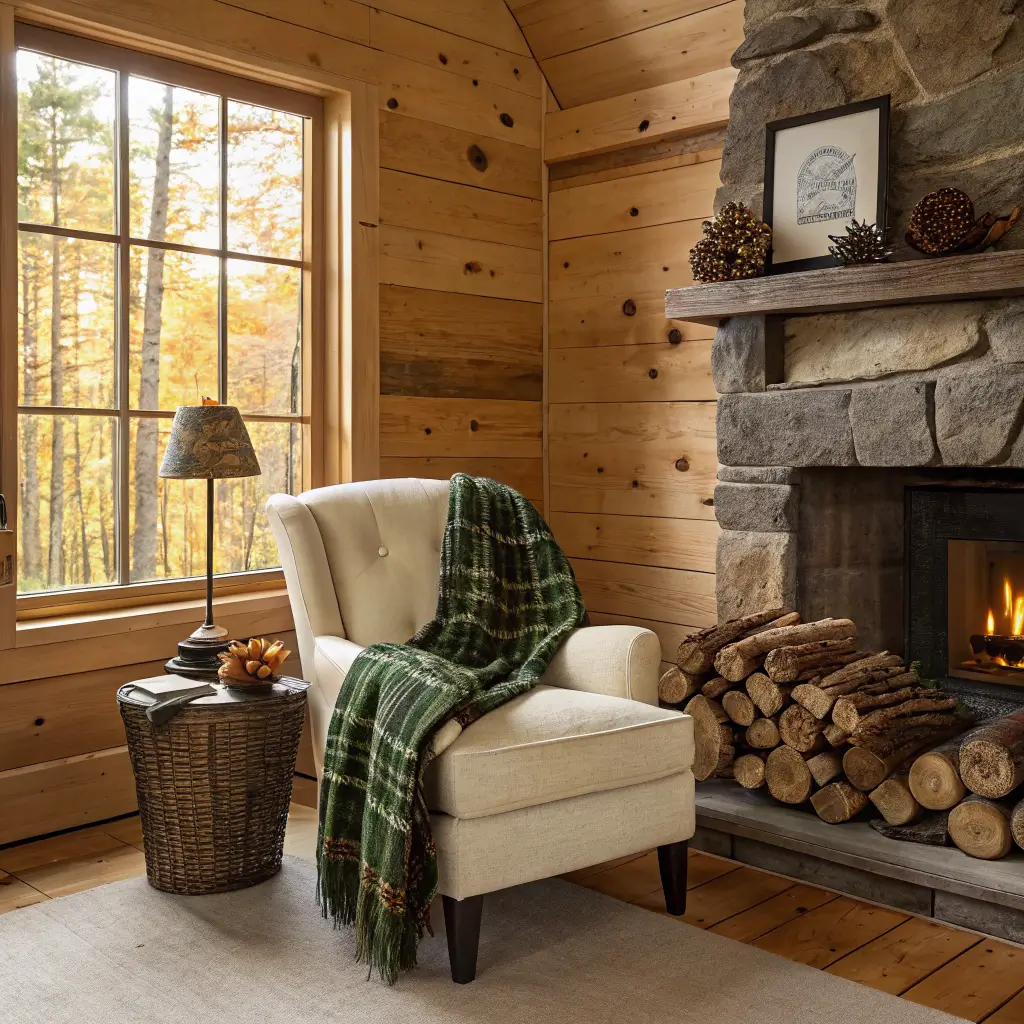
– Fall: pinecones in a bowl, deeper plaids, wool blankets stacked by the hearth
– Winter: faux fur, stacked firewood as decor, heavier rugs
– Spring: fresh greenery, lake maps back up, lighter blues
Store the off-season stuff in the storage bench. That’s what it’s for.
Common Mistakes I’ve Made or Watched Others Make
– Too much wood, not enough light color. Fix: cream or pale gray upholstery, light rugs, painted trim if you have any.
– Oversized furniture. That 96″ sectional from the suburban living room does not go in the cabin. Measure the door first.
– No dedicated wet-gear zone. Fix it before you unpack anything else.
– Decor too close to the stove. Follow the clearance specs. A dry wool throw and a hot stove are how cabins burn down.
– Buying the whole look on Amazon in one weekend. It shows. The pieces have no relationship to each other, and no story. Buy slowly, mix vintage with new, and leave room for the reel you’ll find at the flea market next summer.
Variations if Straight Rustic Isn’t Your Thing
– Modern cottage meets fishing cabin: matte black hardware, cleaner-lined furniture, one or two restrained fishing references, pale walls
– Coastal-leaning: lighter blues, more woven texture, rope details, whitewashed wood
– Scandi rustic: more white, pale wood, minimal decor, one or two vintage fishing artifacts as focal art
All three keep the bones of the fisherman aesthetic — earthy, functional, outdoorsy — without the full log-cabin heaviness.
The cabin should feel like someone actually fishes out of it. Not like someone Googled “fishing cabin decor” and hit add-to-cart on the first fourteen results. The difference is restraint, real materials, and one or two things you can point to and tell a story about.