What You’re Actually Building (and Who It’s For)
The nursery baby room is the one place I slowed down and picked fewer things. A solid chair and a dim lamp mattered more than the theme.
Designing a nursery baby room is the kind of project that feels huge until you break it into parts — and then it’s just a series of small, doable decisions. I’ve done this twice now (once in a 9×10 box room off our bedroom, once in a proper 12×12 with a real closet), and the second time went about ten times smoother because I knew what actually mattered and what I’d wasted money on the first round.
Here’s everything I’d tell a friend who’s five months in and starting to panic.
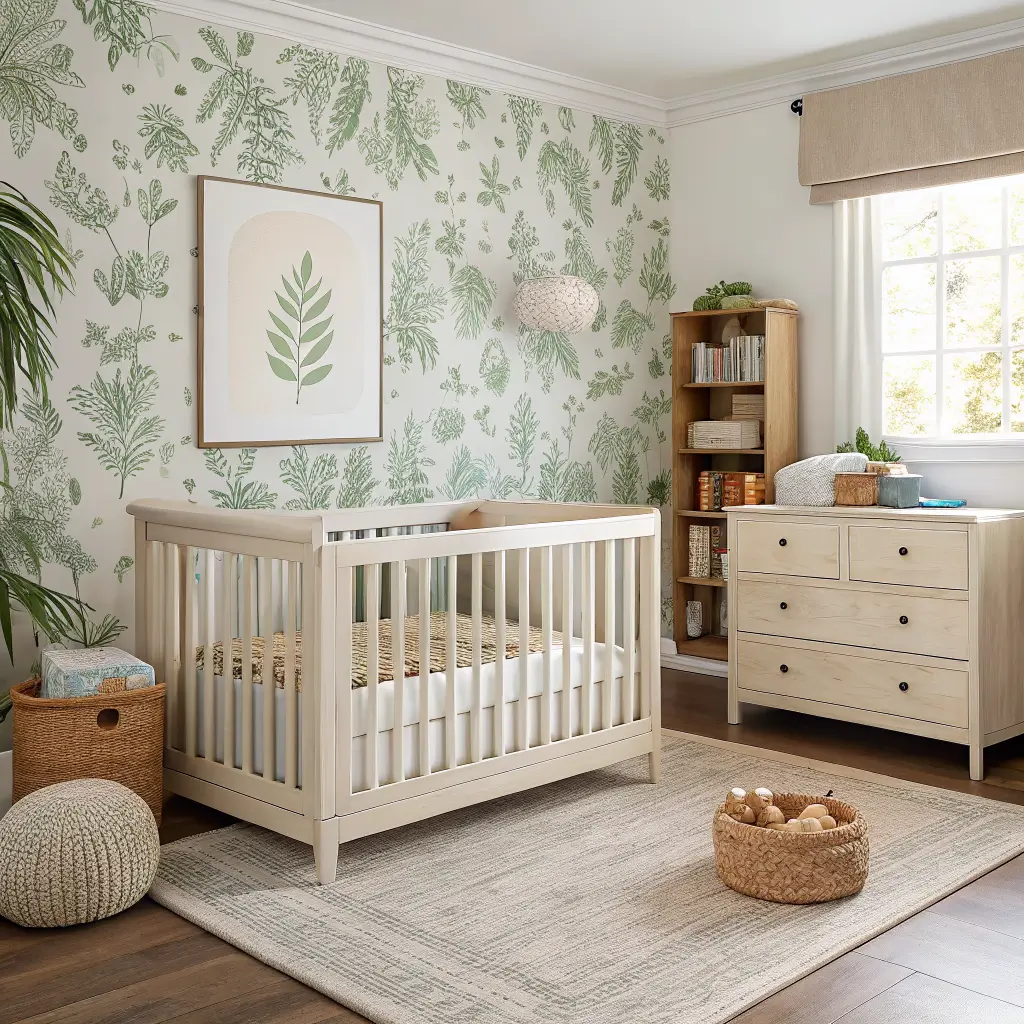
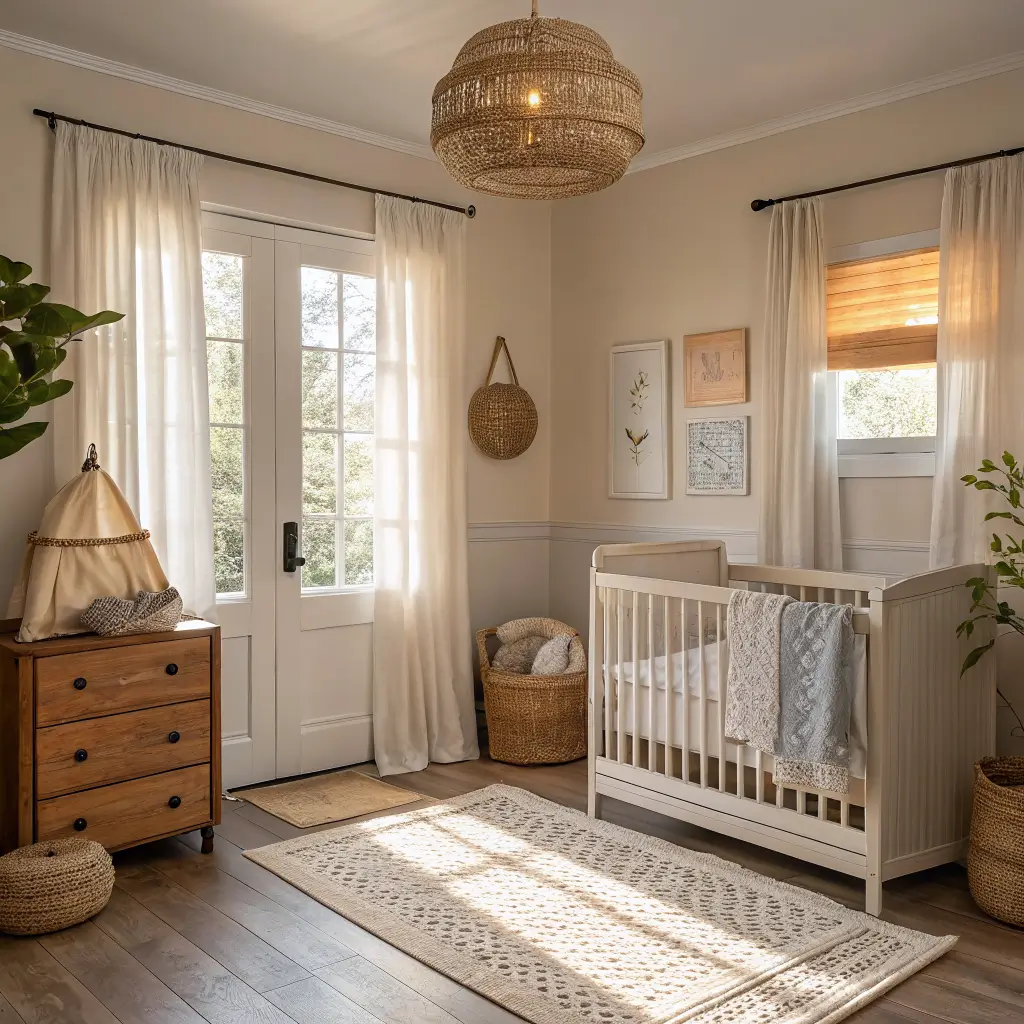
A modern nursery isn’t a themed room. It’s a quiet, functional space for a small human to sleep in, and for you to spend a lot of exhausted hours in at 3 a.m. The best ones I’ve seen — and the one I finally got right — lean on a neutral base with a few genuine style moments, so the room can shift from newborn to toddler without a full redo.
The look most people are gravitating toward right now:
Scandi-inspired neutral — light oak, warm whites, clean lines, not much on the walls
Nature-led / biophilic — botanical prints, terracotta, rattan, real plants up high
Soft modern boho — woven textures, a rainbow or tribal rug, a canopy in the corner
Any of these work in an 8×8 minimum. A 10×10 to 12×12 is where you stop having to make tradeoffs on layout.
Who this suits: first-time parents who want a room that looks pulled-together but is built around safe sleep, renters who need everything to come off the walls cleanly, and anyone who doesn’t want to redecorate again in 18 months.
The Budget: What Things Actually Cost
I’ll be honest — the first time around I spent about $2,400 and had regrets. The second time I spent closer to $1,600 and liked the room more. Here’s how it breaks it down:
Budget build: $700–$1,300 total
Convertible crib: $150–$250
Firm non-toxic mattress: $80–$150
Dresser doubling as changing table: $100–$250
Basic glider or rocker: $150–$300
Rug, blackout curtains, baskets: $150–$300
Wall decals and prints: $50–$100
Mid-range: $1,500–$3,000 total — this is where a nicer glider ($400ish) and a proper wool-blend rug really show up.
High-end: $3,000–$6,000+ — designer crib, custom mural, built-in shelving, statement pendant.
Where I’d spend the money: the glider and the mattress. A cheap glider will squeak within four months and your back will hate you. A firm, breathable mattress is non-negotiable for safe sleep.
Where I’d save: the changing table (a dresser with a mat on top is better anyway), the crib sheets (cotton or bamboo from a mid-tier brand is fine), and wall art (removable wallpaper and a couple of framed prints do more than a full gallery wall).
Time-wise: budget on 1–3 full days of work spread across two weekends for a standard setup. Add another week if you’re wallpapering or waiting on a custom pendant.
The Palette and Materials That Actually Age Well
I painted my first nursery a pale mint that photographed beautifully and looked cold and hospital-ish in person by month three. Lesson learned.
What works:
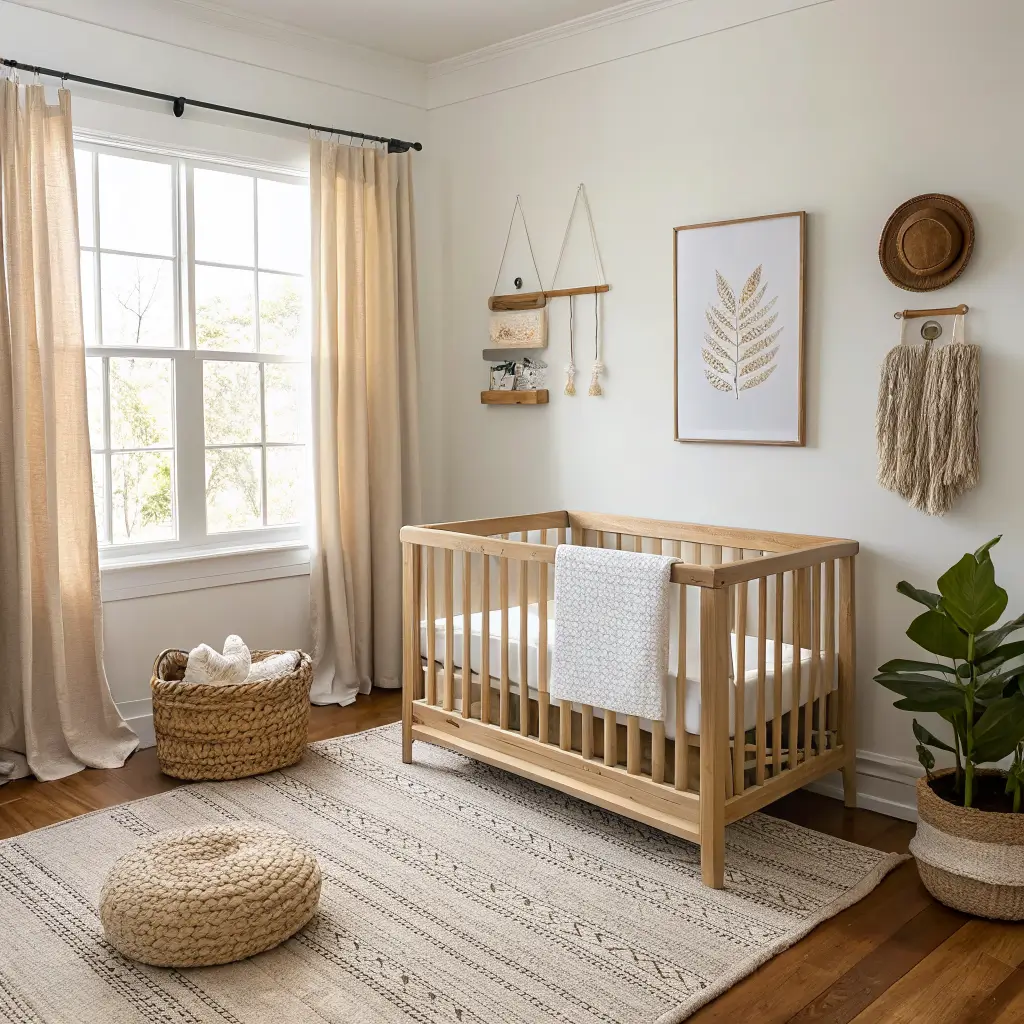
Walls: warm white or a soft warm neutral. Benjamin Moore Swiss Coffee, Farrow & Ball Slipper Satin, or a peachy off-white. Get it in a matte or eggshell finish — flat shows every scuff, semi-gloss looks like a rental kitchen.
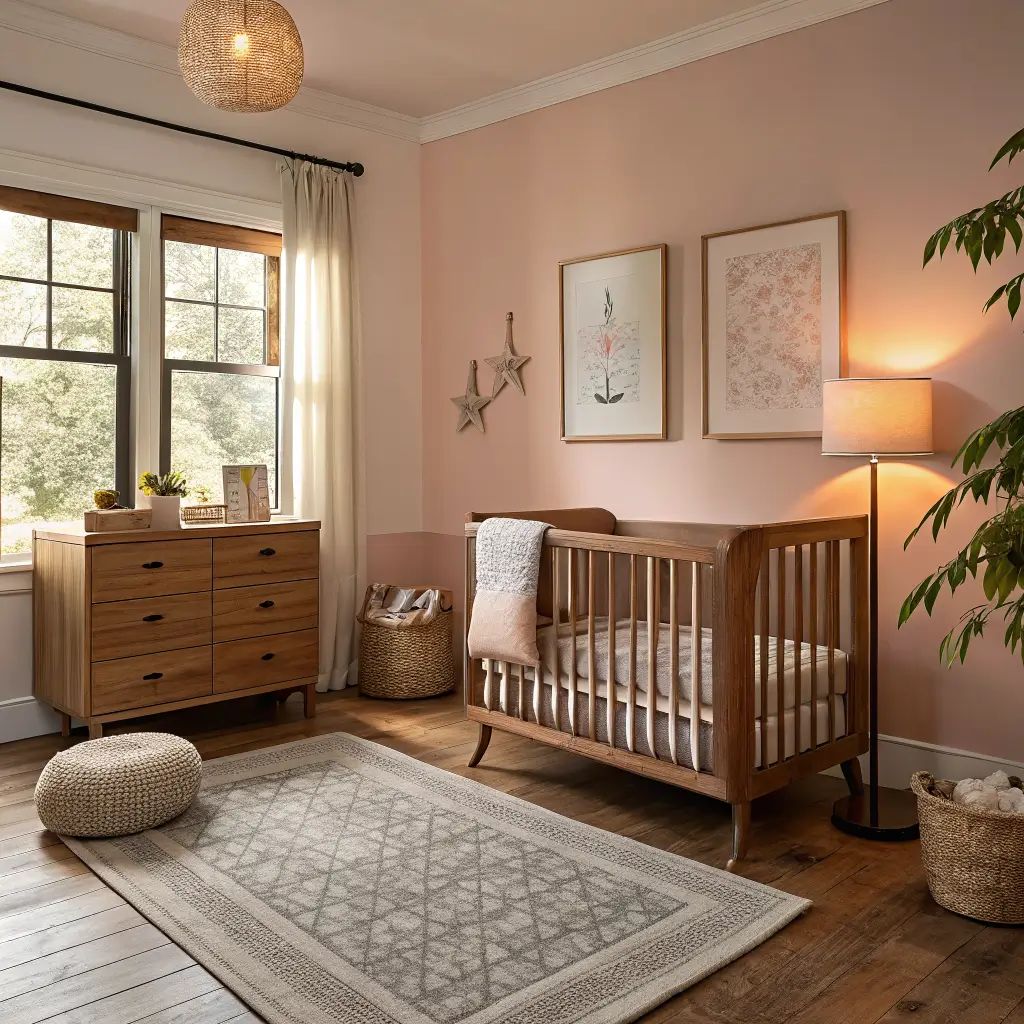
Accent color, if you want one: dusty rose, muted sage, terracotta, or a deep forest green on a single wall behind the crib. Skip primary colors unless you love them.
Wood tones: stick to one family. Light oak and birch, or mid-walnut. Don’t mix five different woods.
Textiles: natural fibers only. Cotton, organic cotton, bamboo, linen. They breathe better and feel better against skin.
Textures to layer: woven (baskets, rattan lampshade), soft (wool rug, linen curtains), smooth (painted wood).
Pick two accent colors max and repeat them in the rug, the art, and one or two baskets. That’s what makes a room read as “designed” instead of “collected over time from Target runs.”
The Hero Pieces
Three things anchor a nursery. Get these right and the rest is easy.
1. The crib. Convertible if you can — the ones that turn into a toddler bed and then a daybed genuinely earn their keep. Standard interior is about 52″ x 28″. Place it on your main focal wall, at least 2 feet from any window, blinds, or cords.
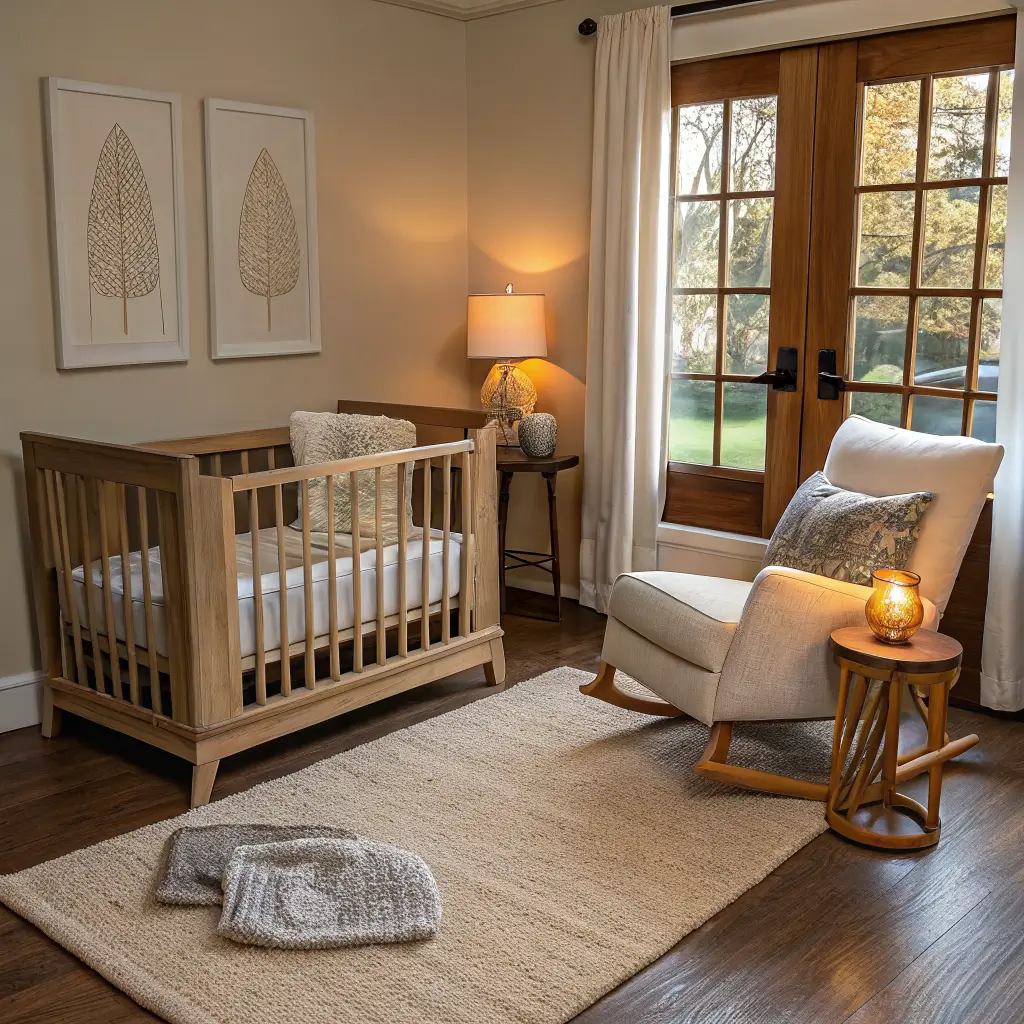
2. The chair. A glider or upholstered rocker with real lumbar support. Sit in it in the store for a full ten minutes before buying. I bought a beautiful low-slung one online without testing it and it wrecked my neck during night feeds for weeks before I gave up and bought a boring but supportive Nursery Works dupe.
3. The rug. Low-pile wool or cotton, big enough to sit under the crib and the chair both, or at minimum to define the play area. This is what makes the room feel finished. A too-small rug is the single most common mistake I see in nursery photos.
The Functional Essentials
Nothing fancy, all necessary:
Firm mattress with breathable cover — no memory foam, no soft toppers
4+ fitted sheets (cotton or bamboo)
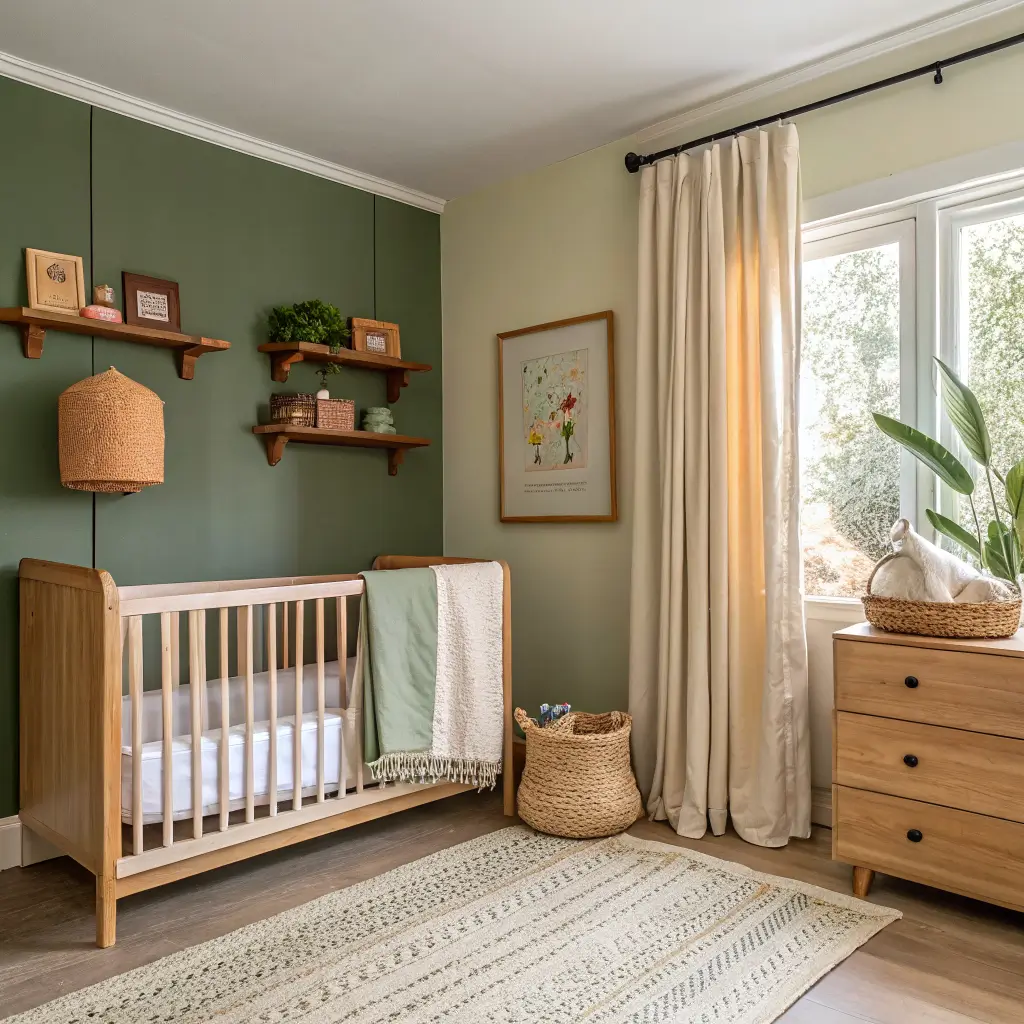
Dresser — deep drawers for clothes, swaddles, extra sheets
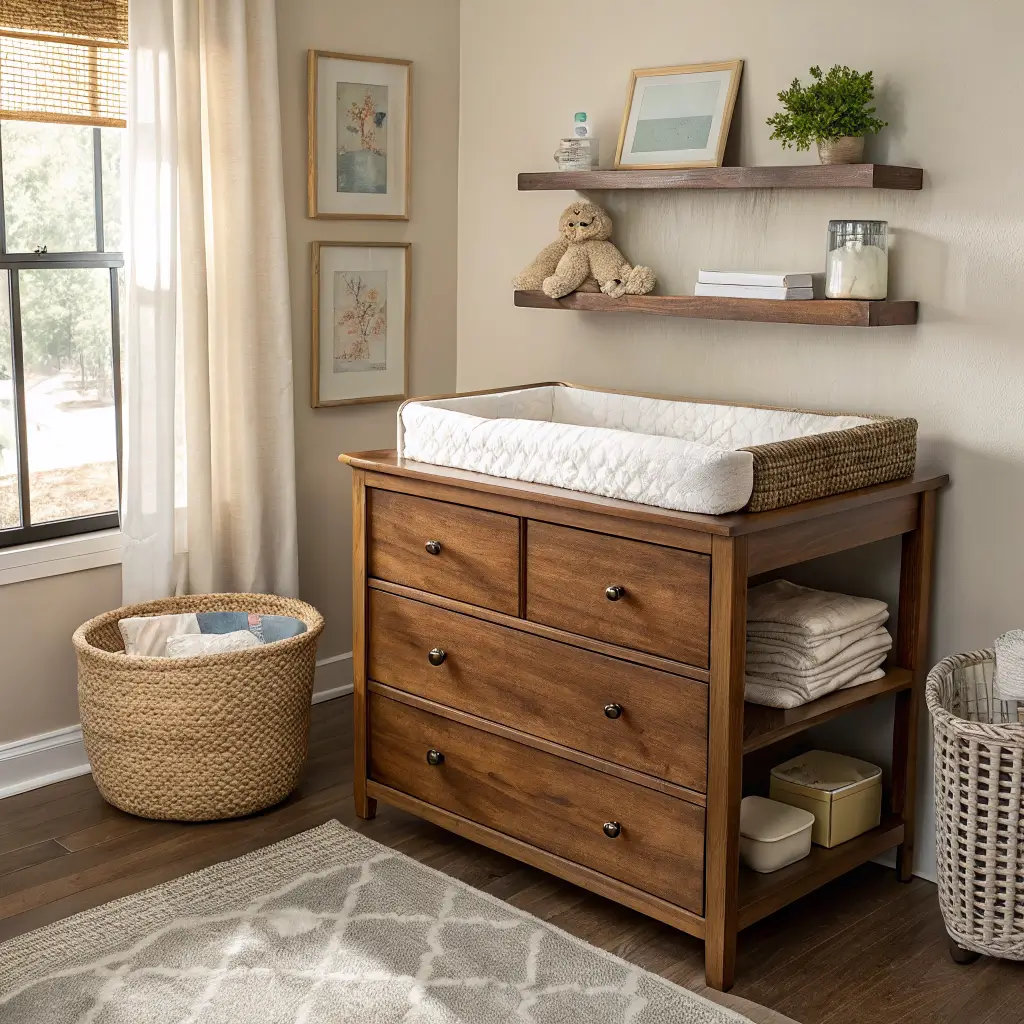
Changing setup on top of the dresser with a contoured mat or a flat pad in a woven tray
Blackout curtains or blinds — this is one of the most useful things you’ll buy
Warm-toned dim night light (amber or red, never blue) for feeds and diaper changes at 3 a.m.
Baskets everywhere — under the changing area, by the chair, on shelves
The Signature Pieces That Make It Feel Like a Room
This is where personality shows up:
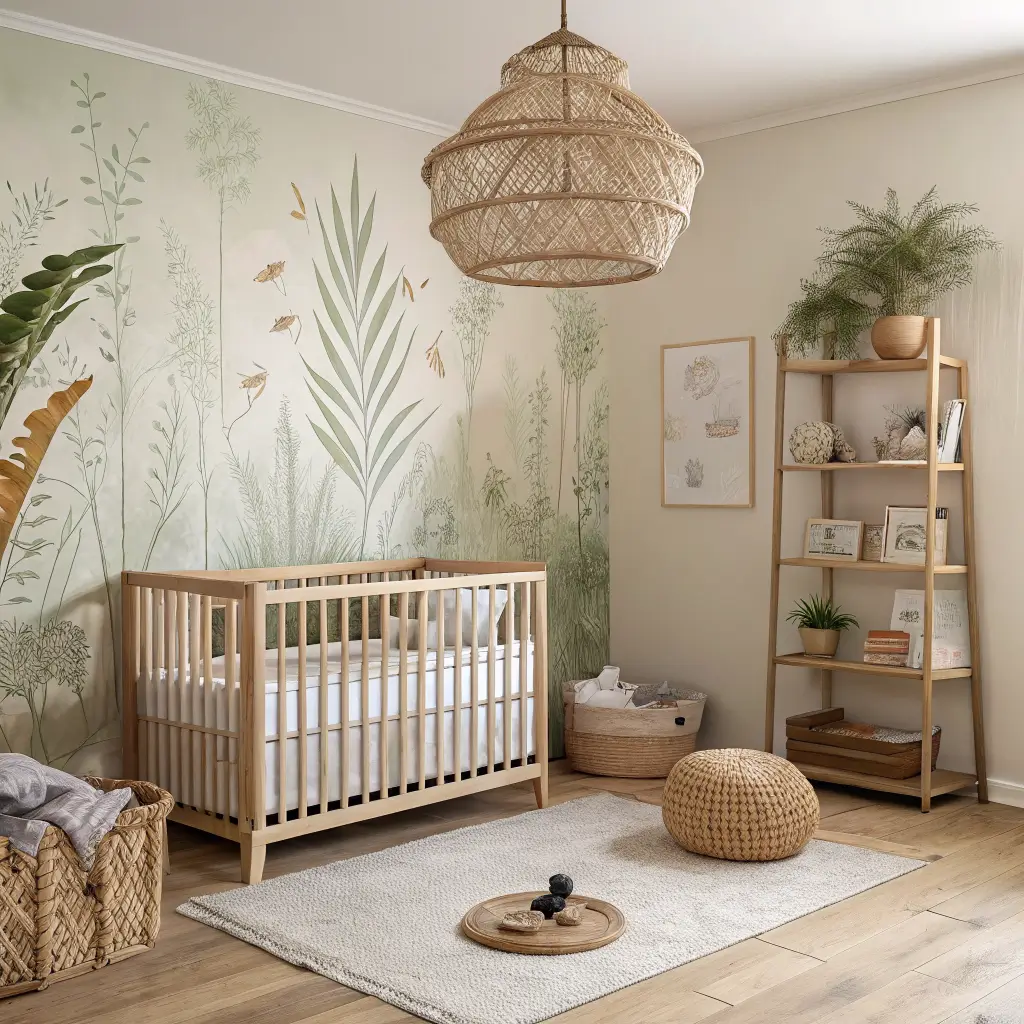
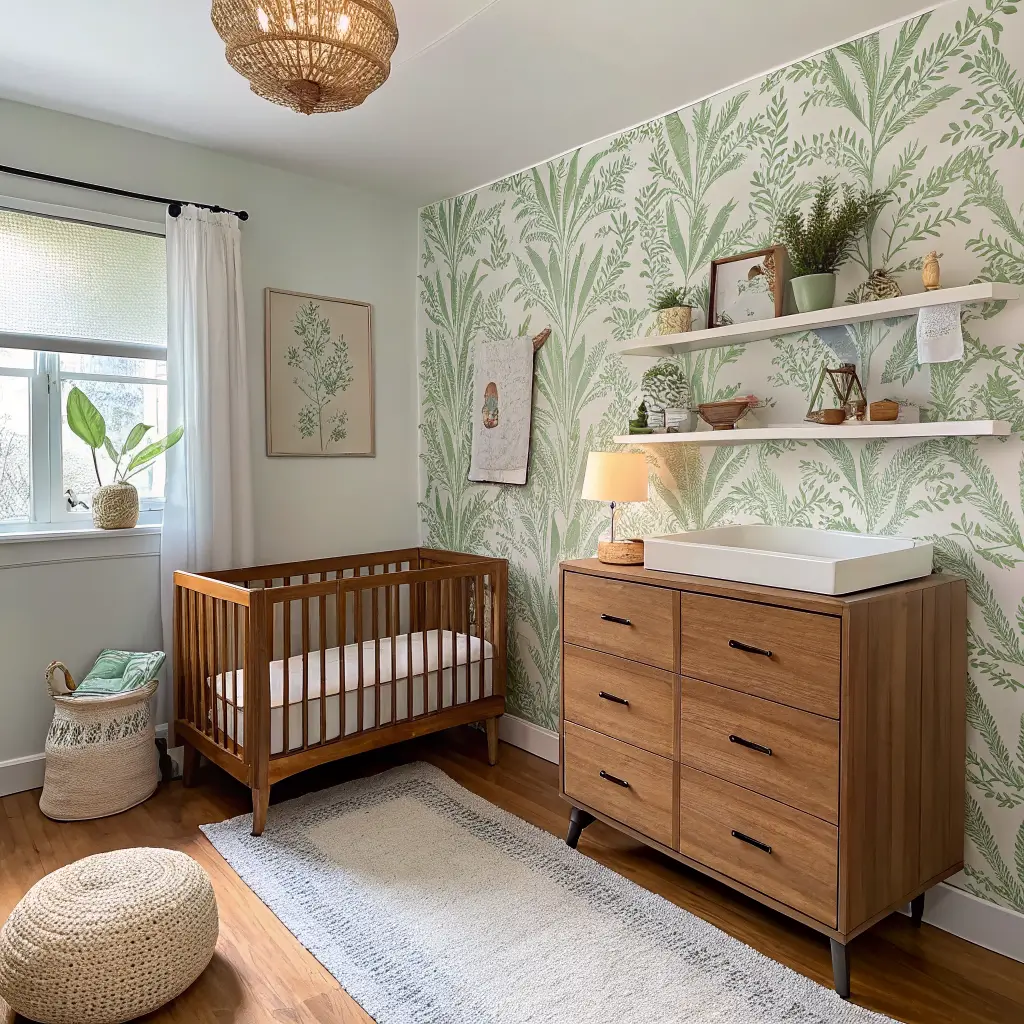
A wallpaper accent wall or large mural behind the crib. Removable peel-and-stick is genuinely good now — I used one from Chasing Paper in my second nursery and it took about 90 minutes to install.
A pendant light or ceiling fixture with some presence. Overhead lighting in most nurseries is aggressively boring. A rattan pendant or a small fabric drum shade changes the whole feel of the room for around $80–$150.
Floating shelves with a small safety lip for board books, a wooden toy, a framed photo. Not stuffed. Three or four objects per shelf, max.
Framed art at eye level when you’re sitting in the chair, not centered for adults standing up. You’ll be sitting a lot.
Laying It Out: The Three Zones
Every nursery, no matter the size, has three zones. Design around them:
Sleep zone: crib on the focal wall, away from windows. Dim night light within arm’s reach. Nothing hanging directly over the crib (mobiles get removed once baby can push up on hands and knees, usually around 5 months).
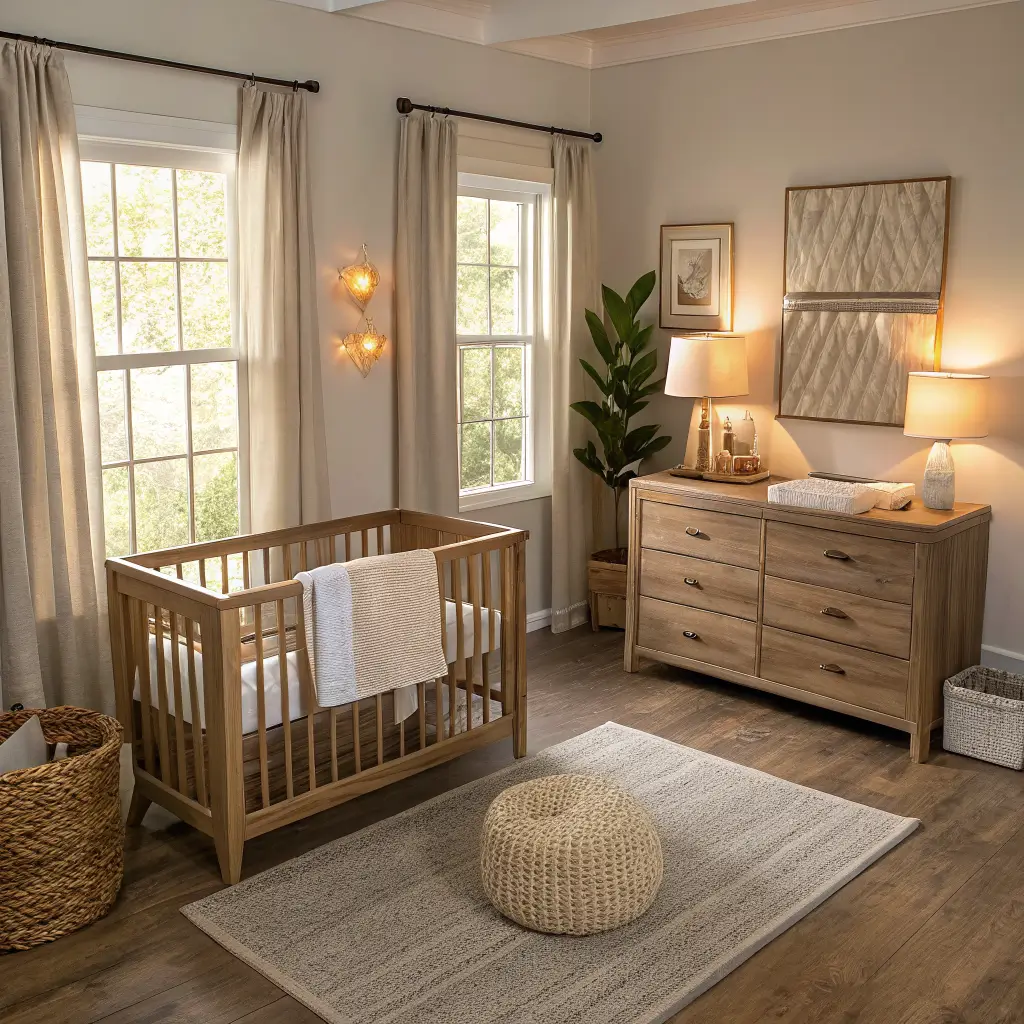
Feeding zone: chair angled so you can see the door, small side table within reach for water, phone, burp cloth. A dedicated lamp on that side table — not overhead — with a warm bulb around 2700K.
Changing/dressing zone: dresser with changing pad on top, diaper caddy or basket at hand, a small trash bin with a lid within one step. Wipes, cream, spare onesies in the top drawer.
Keep taller furniture (wardrobes, tall shelves) on one wall so the floor stays open. Babies do a lot of tummy time.
The Mistakes I Made So You Don’t Have To
Overdecorating the crib. No bumpers, no pillows, no stuffed animals, no loose blankets — no matter how sweet they look in the Instagram photo. Fitted sheet on a firm mattress. That’s it. Every current safe sleep guideline says this.
Putting the crib under the window. I did this the first time because it “looked balanced.” Then I realized the cord from the blinds was within reach of the crib rail, and morning light came in like a floodlight regardless of curtains. Move it.
Trusting one dresser to hold everything. Babies come with an amount of stuff that is not rational. Plan for open shelving, under-crib storage bins, or a small bookshelf from day one.
Skipping the blackout curtains. I convinced myself sheer linen would be “enough.” It was not enough. Naps require darkness. Get proper blackout — either lined curtains or a blackout roller blind behind decorative curtains.
Going too hard on a theme. Woodland foxes, jungle safari, whatever it is — if it’s plastered on every surface, you’ll be tired of it before the baby can crawl. Base neutral, accents themed if you must, done.
Small-Space and Rental-Friendly Fixes
If you’re working with a box room or a rental:
Removable wallpaper on one wall instead of paint
Peel-and-stick decals for a mural effect
Command hooks and adhesive shelves (rated for the weight you’re using — check this)
A slim dresser (under 18″ deep) instead of a standard 20–22″
Wall-mounted swing-arm lamp instead of a floor lamp near the chair
Over-the-door organizers for shoes, hats, small toys
Vertical storage is your best friend. Go up the walls, not out into the floor.
Keeping It Fresh Without Redoing the Room
The whole point of a neutral base is that you can update it cheaply as the kid grows.
Every 6 months: rotate art, swap pillow covers on the glider, change out one basket for a new texture
Seasonally: switch throws (chunky knit in winter, waffle cotton in summer) draped on the chair — never in the crib
Toddler transition: most convertible cribs turn into a toddler bed by removing the front rail. Add a low bookshelf, a floor cushion, a small reading corner where the changing station used to be. Same room, different life stage, no new furniture.
The nursery I built the second time is now a toddler room. The rug, the dresser, the chair, the light, and the wallpaper are all still there. I swapped the crib to a toddler bed, added a small play table, and moved two baskets. That’s it. Two years, one room, one refresh — which is exactly what a good nursery should be able to do.