The Country Chic Living Room: How to Get Rustic Warmth Without the Farmhouse Cliché
The country chic living room is the look I got right by mixing one aged piece with clean lines. It reads collected, not like a set.
If your living room feels either too stiff and modern or too full-on farmhouse (mason jars, shiplap, the whole thing), a country chic living room is the middle ground you’re actually after. It keeps the wood, the linen, the softness — but swaps the barn-door aesthetic for antique chandeliers, velvet cushions, and rugs with some real depth.
I’ve been working on mine for about three years now. I got a lot of it wrong before I got it right. Here’s what actually works.
What Country Chic Actually Is (and Who It’s For)
Think rustic bones with refined layers. Wood, florals, and antiques — but paired with linen upholstery, aged brass, and lighting that wouldn’t look out of place in a small country hotel. It’s less rugged than farmhouse and more lived-in than French country.
It suits you if:
– You want a room that looks like it has a history, not a mood board
– You have kids, dogs, or people who actually sit on the furniture
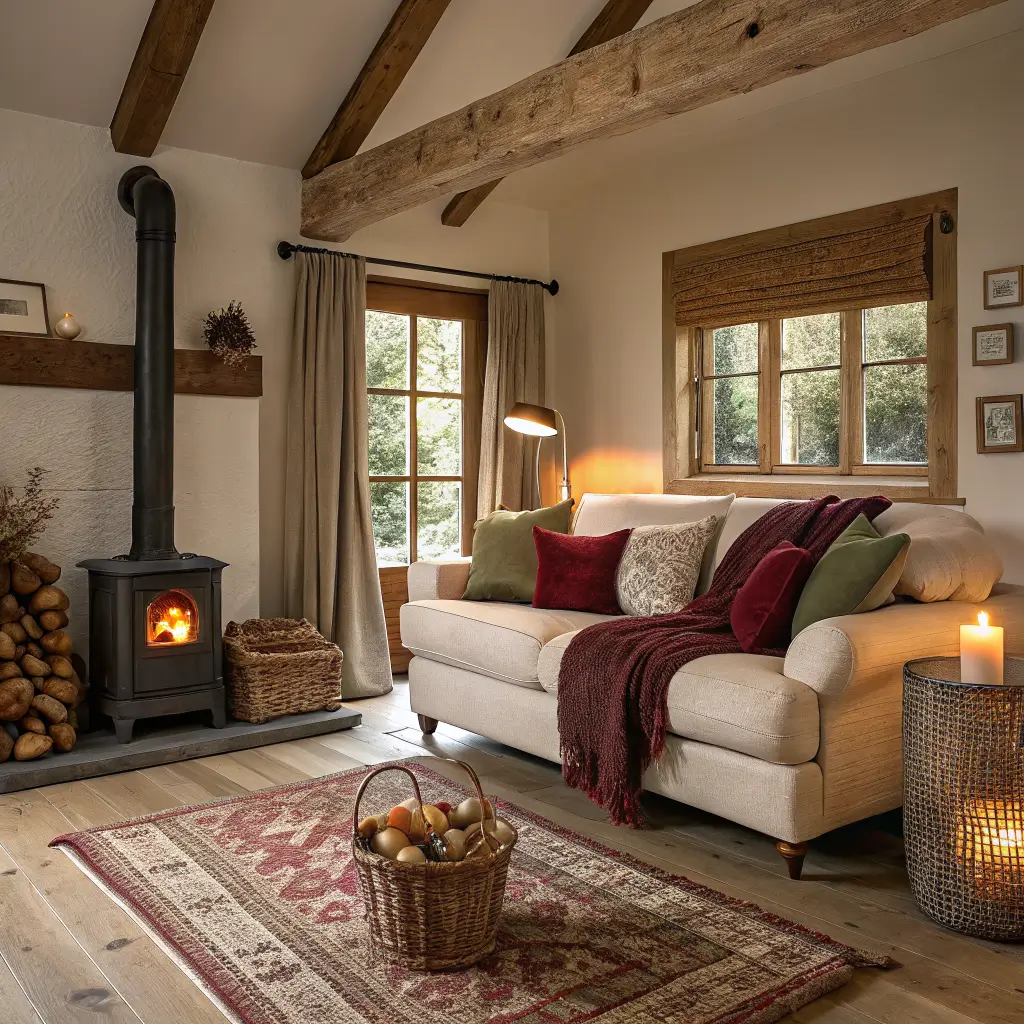
– You like the idea of a fireplace or stove being the center of the room
– Minimalism makes you feel cold
It works in a tiny cottage (I’ve seen it done beautifully in about 100 sq ft) and it scales up to a big open-plan space if you break it into seating zones.
Time to pull it together: a paint-and-textile refresh takes one or two weekends. A full redo with new furniture and lighting is more like 2–6 weeks once you factor in delivery.
Skill level: beginner to intermediate. Painting, styling, and flat-pack are easy. Panelling and limewashing brick are a step up but doable.
Budget: What to Spend On, What to Skip
Rough spend brackets I’d plan around:
– Budget refresh: £600–£1,500 / $750–$2,000. An IKEA-style linen sofa, a jute rug, thrifted lamps, and a stack of cushions gets you a long way.
– Mid-range: £2,000–£5,000 / $2,500–$6,000. A proper deep linen sofa, a reclaimed-wood coffee table, and one antique piece with real character.
– High-end: £5,000+ / $6,000+. Bespoke upholstery, antique chandelier, vintage rug, original art.
Spend on the sofa and the rug. They take up the most visual space and the most physical wear. A £400 sofa in a scratchy fabric will annoy you every evening for five years. A good linen slipcover sofa (mine’s £1,200, deep enough to nap on) has already outlasted two side tables.
Save on: side tables, lamps, mirrors, art, and anything decorative. Antique markets, Facebook Marketplace, and charity shops will beat any retailer on character. My favorite piece in the room is a £22 brass mirror I found in a barn sale in Somerset. It has some spotting on the glass. That’s the point.
Skip entirely: anything labeled “farmhouse-inspired” at a big-box store. It’s usually flimsy MDF with stick-on wood grain, and it screams what it is.
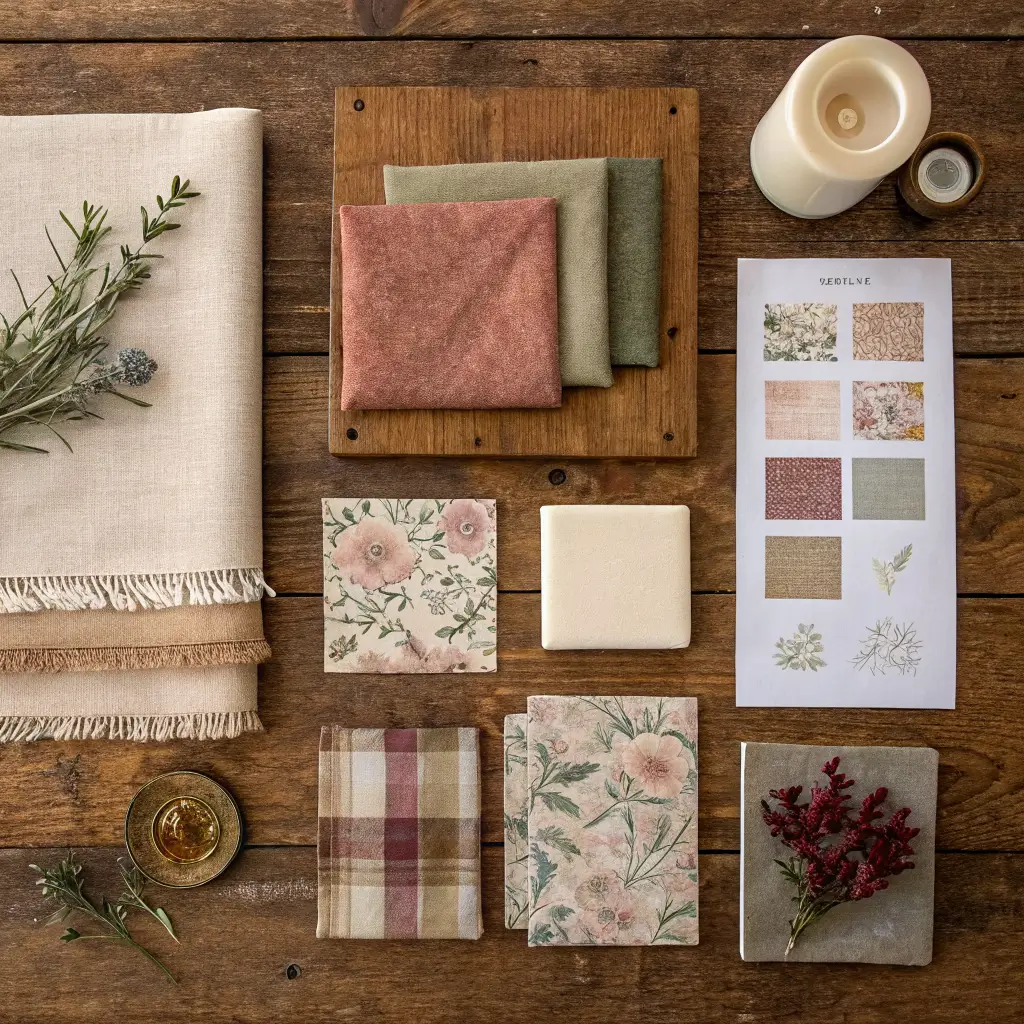
The Palette That Makes It Work
Country chic falls apart fast if you use too many colors. Keep it to 2–4 shades across the whole room.
A palette I’ve used and can vouch for:
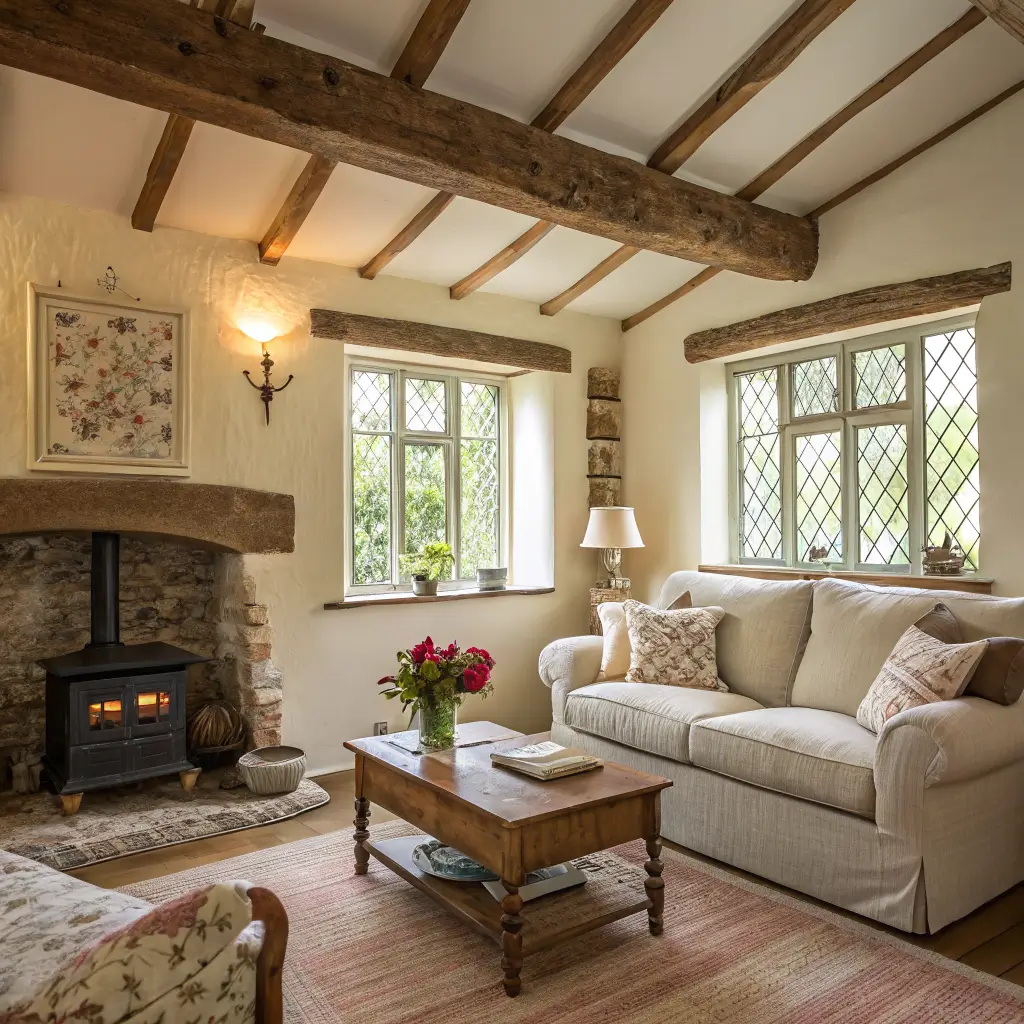
– Walls: warm cream (Farrow & Ball’s Slipper Satin, or a close match) in a matt finish
– Sofa: oatmeal linen
– Accents: sage green, dusty rose, and a small amount of muted garnet red
Other combinations that work: taupe + duck egg + soft yellow. Or stone + olive + cream + a touch of aubergine for something moodier.
One rule I’d insist on: pick either warm or cool neutrals and stick with it. Mixing a cool grey sofa with a warm cream wall is what makes rooms feel “off” without you being able to say why. This tripped me up for months.
The Hero Pieces
Get these right and the rest falls into place.
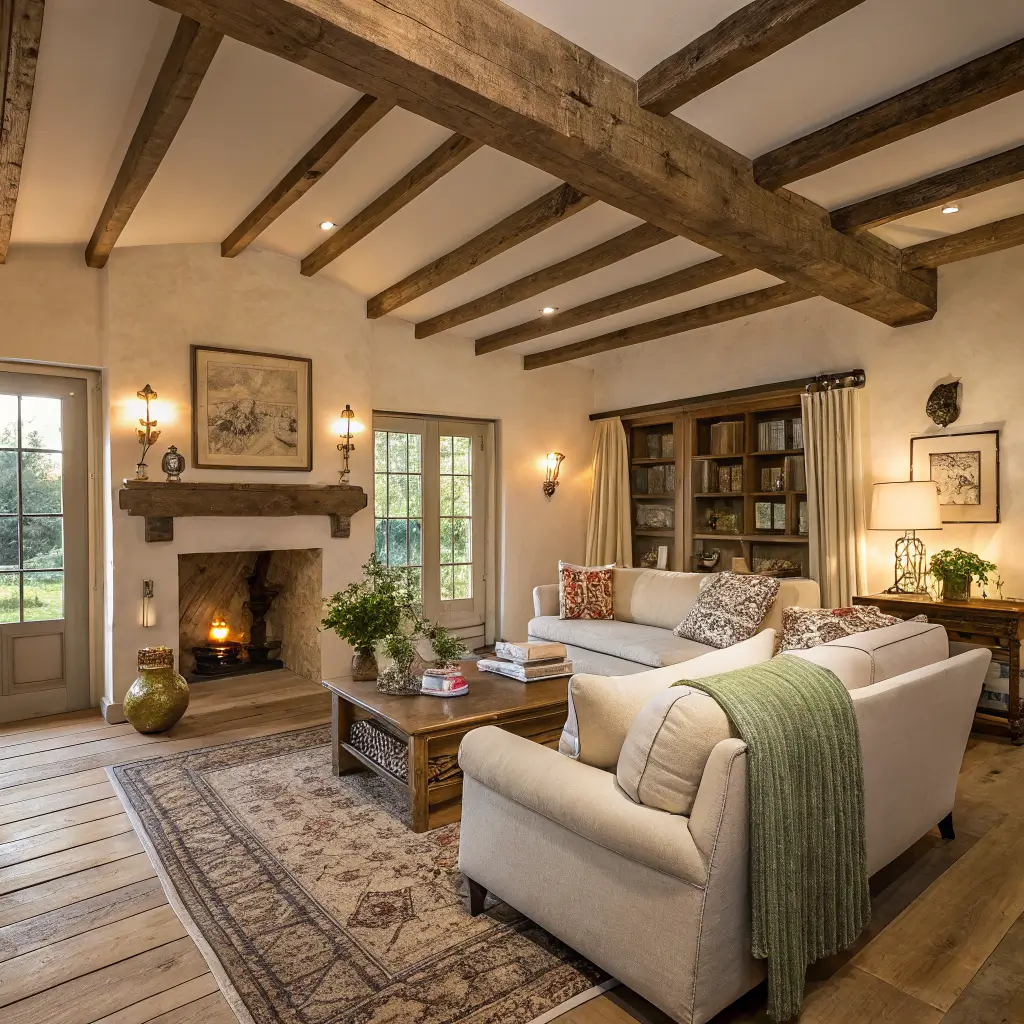
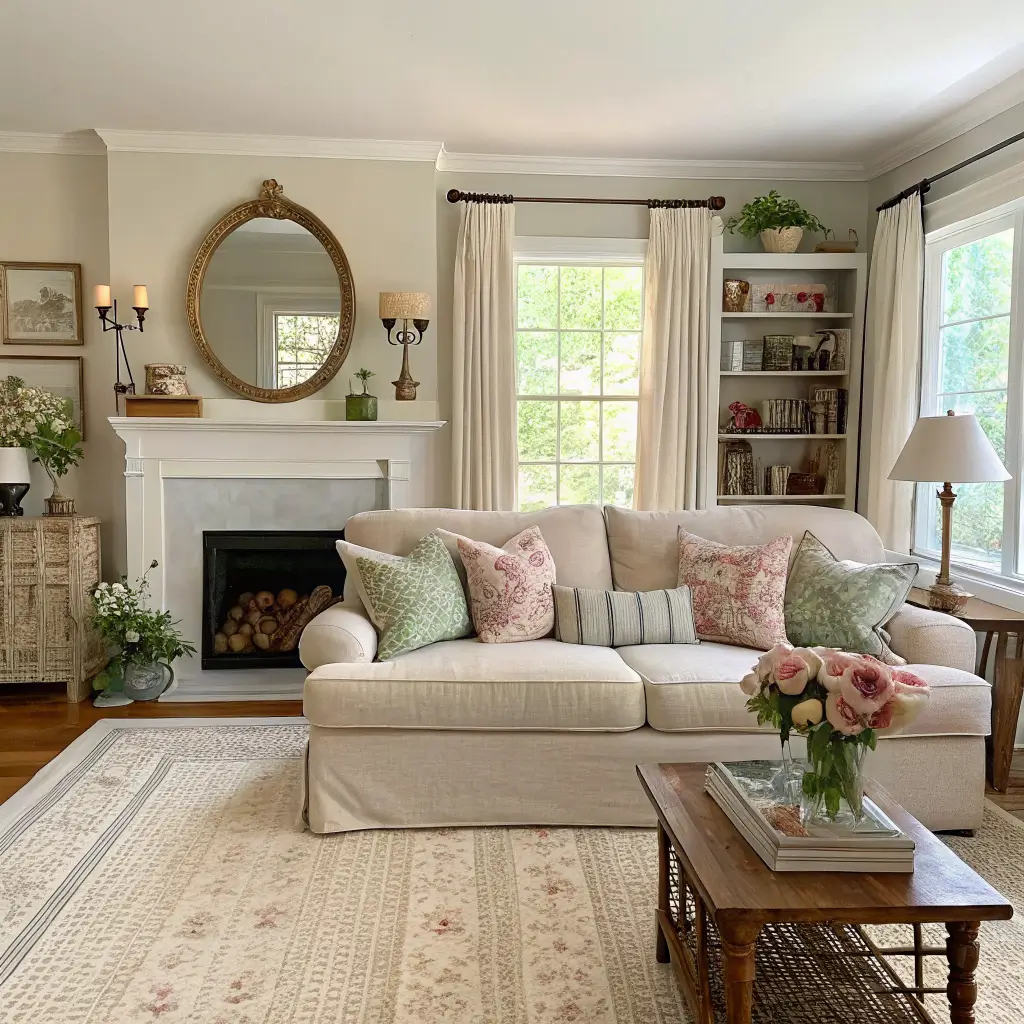
A sink-in sofa in linen or cotton. Rolled arms or a low back, ideally with a slipcover you can wash. 200–220 cm for a three-seater. Skirted or turned wooden legs beat chrome every time. Budget: £350–£550 for IKEA EKTORP territory; £900–£2,000+ for something with better frame and fill.
A wood coffee table. Reclaimed plank top, turned legs, or a farmhouse trestle base. Aim for roughly 120 x 60 cm. Avoid glass, avoid black metal frames. £150–£800 depending on whether you go new or vintage.
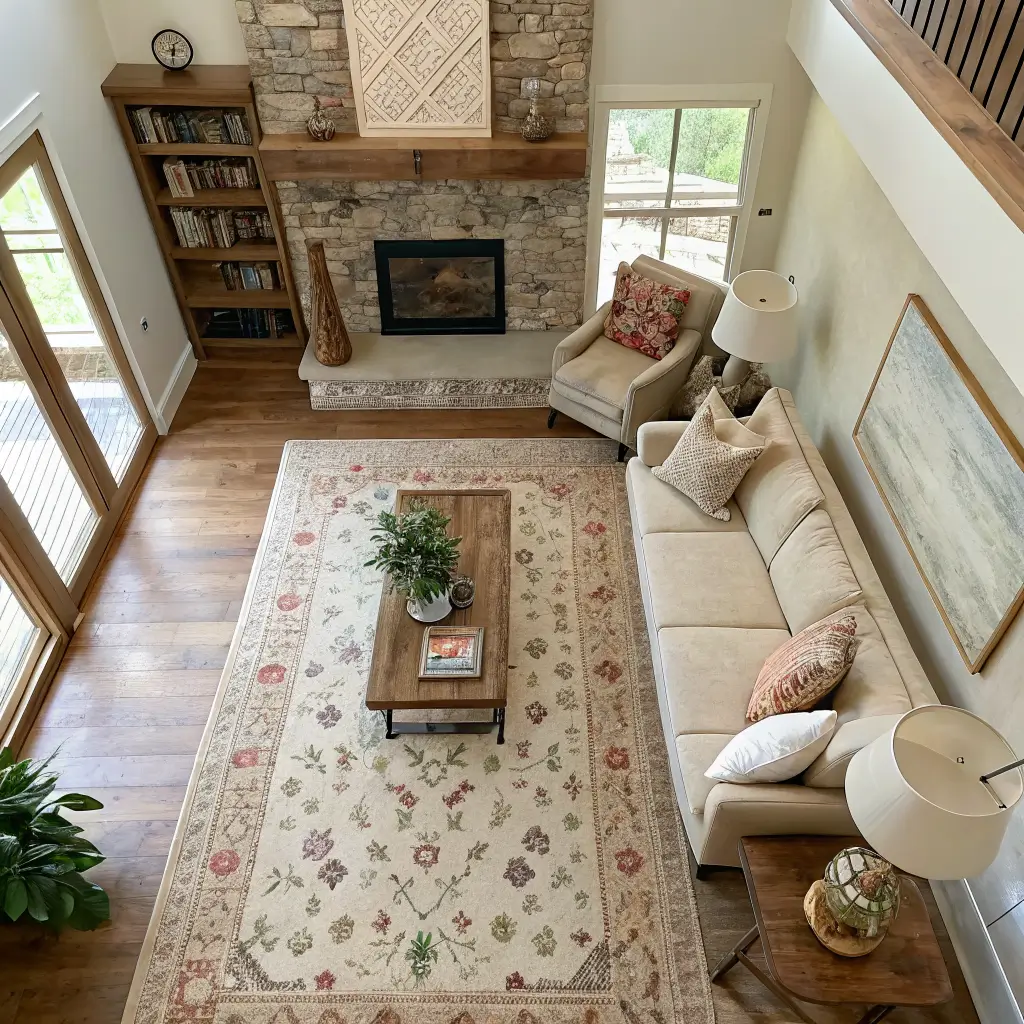
A focal point. A real wood-burning stove is the dream (£1,000–£3,000 installed), but a mantel styled well works nearly as hard. If you don’t have one, a large antique mirror and a substantial console can become the anchor instead.
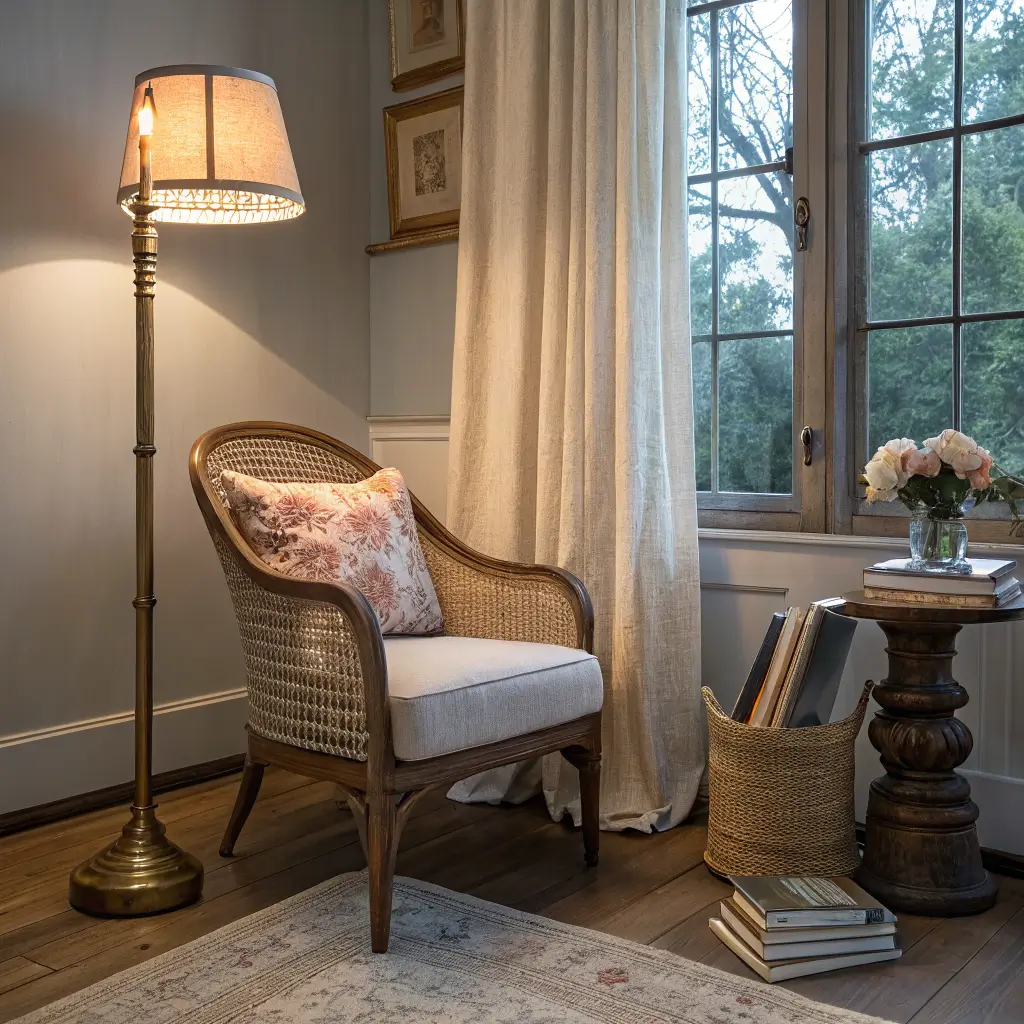
One accent chair with personality. A linen wingback, a cane-back armchair, or — my favorite — a small floral slipcovered chair. This is the piece that stops the room reading as generic. £150–£600.
The Layering That Makes It Feel Right
This is where most people either quit too early or go too far.
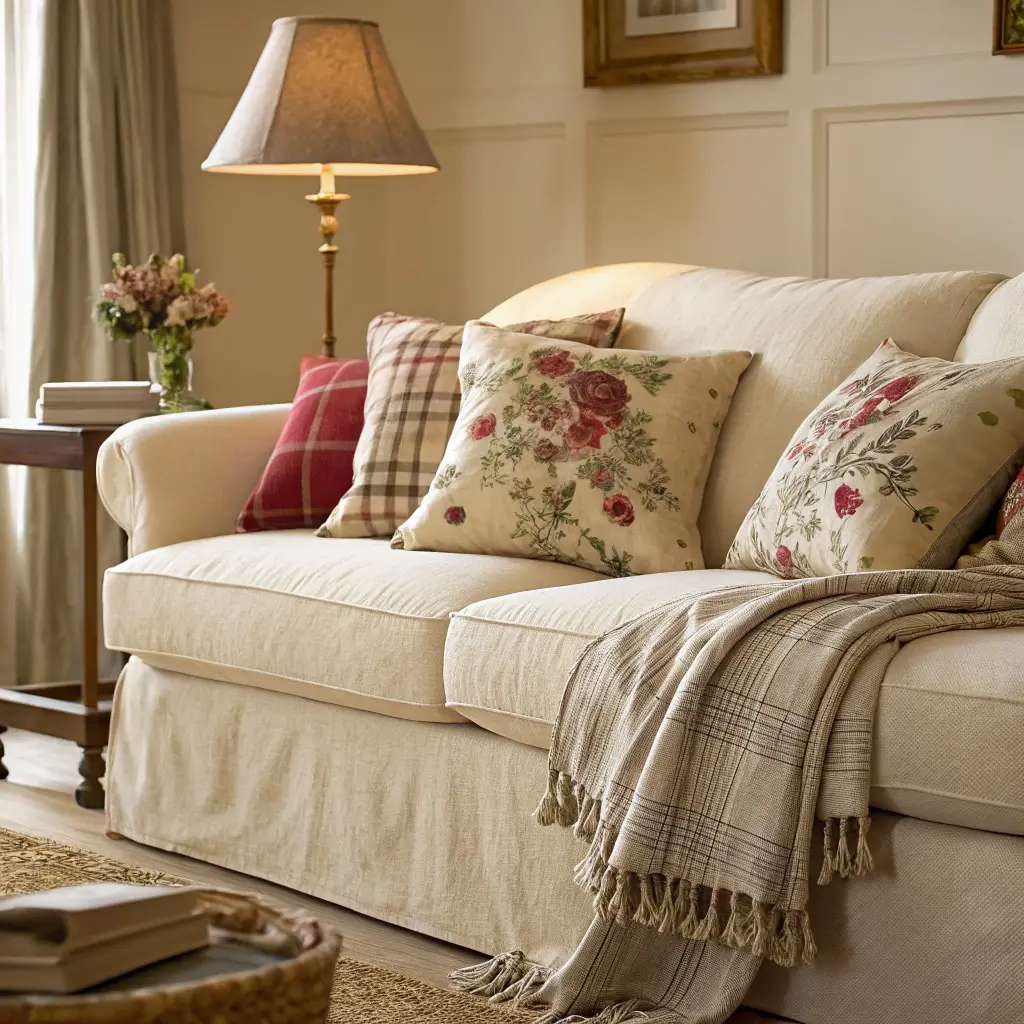
On the sofa: 6–10 cushions, mixed patterns held together by a tight palette. My formula: two large solid linen cushions at the back, two medium florals in front, and one or two smaller ones in a plaid or stripe. Add two throws — one folded on an arm, one draped over the back.
The rug rule: the front legs of the sofa and any accent chairs should sit on the rug. A 5′ x 8′ works only in a genuinely small room. Most living rooms need 8′ x 10′ minimum, and going too small is the single most common mistake I see.
Windows: floor-length linen or cotton curtains. Hang the rod at least 15 cm above the window frame, and let the fabric just kiss the floor. Short curtains kill a country chic room instantly.
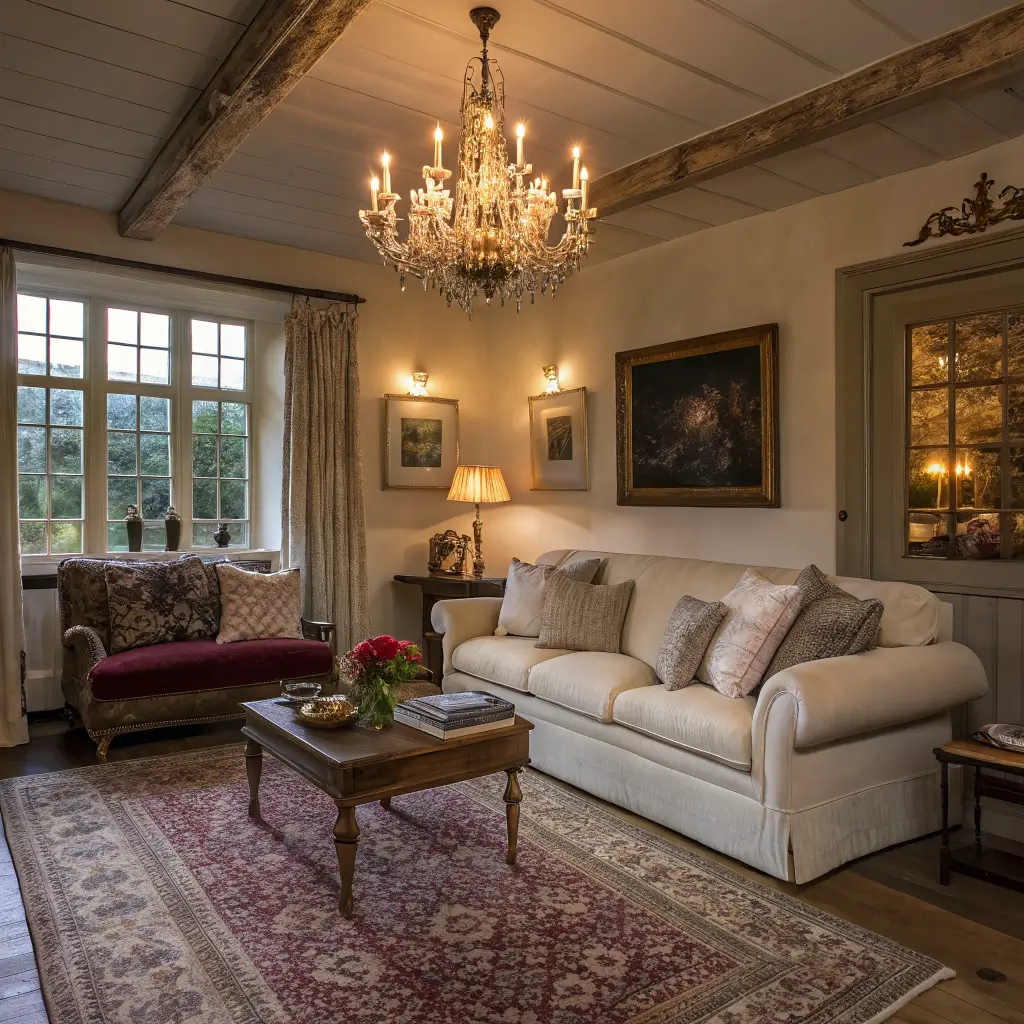
Lighting — this is non-negotiable. You need at least three light sources beyond the ceiling fixture. A table lamp on each side, a floor lamp in the reading corner, and candles on the coffee table or mantel. Use warm white bulbs, 2700K or lower. Cool white lighting will fight everything else you’ve done.
How I’d Actually Put It Together
If I were starting from an empty room tomorrow:
1. Paint walls in a warm off-white, matt finish
2. Lay the rug — jute for neutral, vintage floral for more character
3. Place the sofa facing the focal point (fireplace, window, or where a good mirror will go)
4. Angle one accent chair toward the sofa, not straight-on
5. Coffee table 45 cm from the sofa edge — close enough to reach a cup of tea without leaning
6. Console or sideboard behind the sofa or on the wall opposite
7. Style surfaces last: stacked vintage books, a ceramic vase with eucalyptus or dried flowers, one framed botanical print, a small brass candlestick
Group items in odd numbers, vary the heights, and leave gaps. Empty space is what makes a curated room look curated instead of cluttered.
Mistakes I Made (So You Don’t Have To)
I over-distressed everything. My first attempt at this style had a distressed wood coffee table, a distressed console, distressed picture frames, and a chippy-painted side chair. It looked like a prop store. Now the rule is: one visibly distressed piece per zone. The rest can be aged, but subtly.
Too many prints, none related. I had a plaid throw, a floral cushion, a striped rug, and paisley curtains — all in different color families. Chaos. Pull one shared color through every patterned piece. That’s what makes it look intentional.
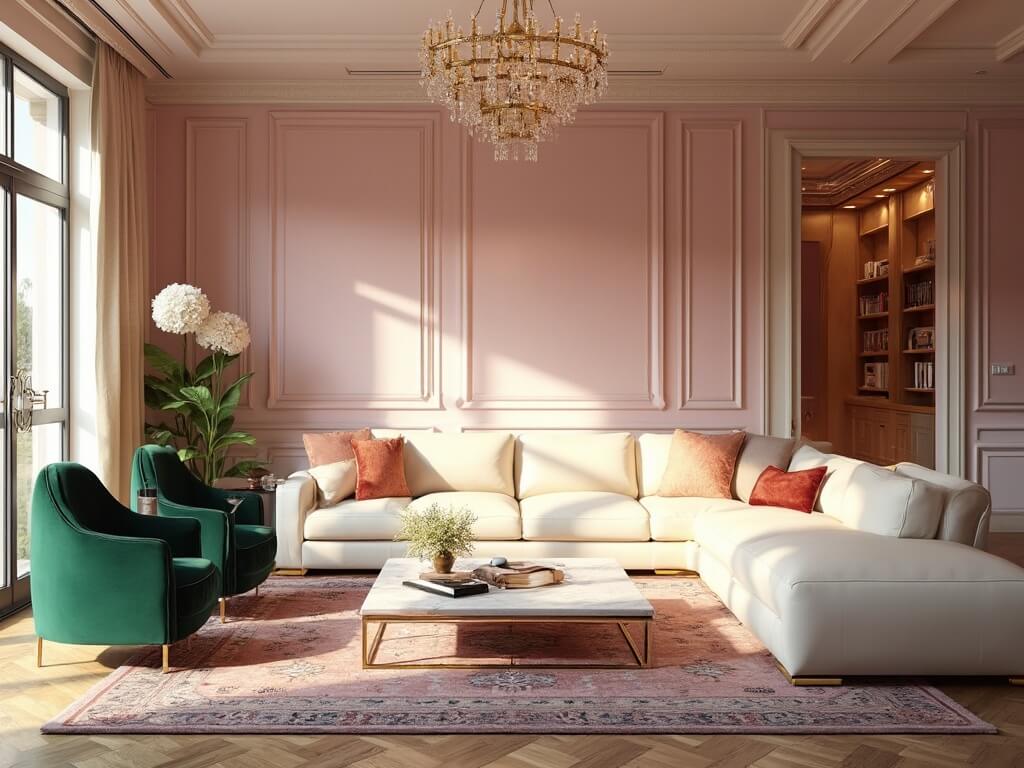
Not enough velvet or brass. Country chic needs something slightly luxe to keep it from tipping into “rustic cabin.” A pair of velvet cushions, an aged brass lamp, or a small crystal chandelier is the shift that makes it feel refined.
Overhead lighting only. Ceiling lights alone flatten a country room. Lamps at multiple heights are what create the pools of warm light this style is built on.
Seasonal Swaps Without Redecorating
The base stays the same. You change three things: cushion covers, throws, and what’s on the coffee table.
Autumn/winter:
– Swap in wool cushion covers in garnet, aubergine, forest green
– Chunky knit throws in cream or oatmeal
– A basket of logs by the fireplace
– Beeswax candles and a small lantern on the coffee table
Spring/summer:
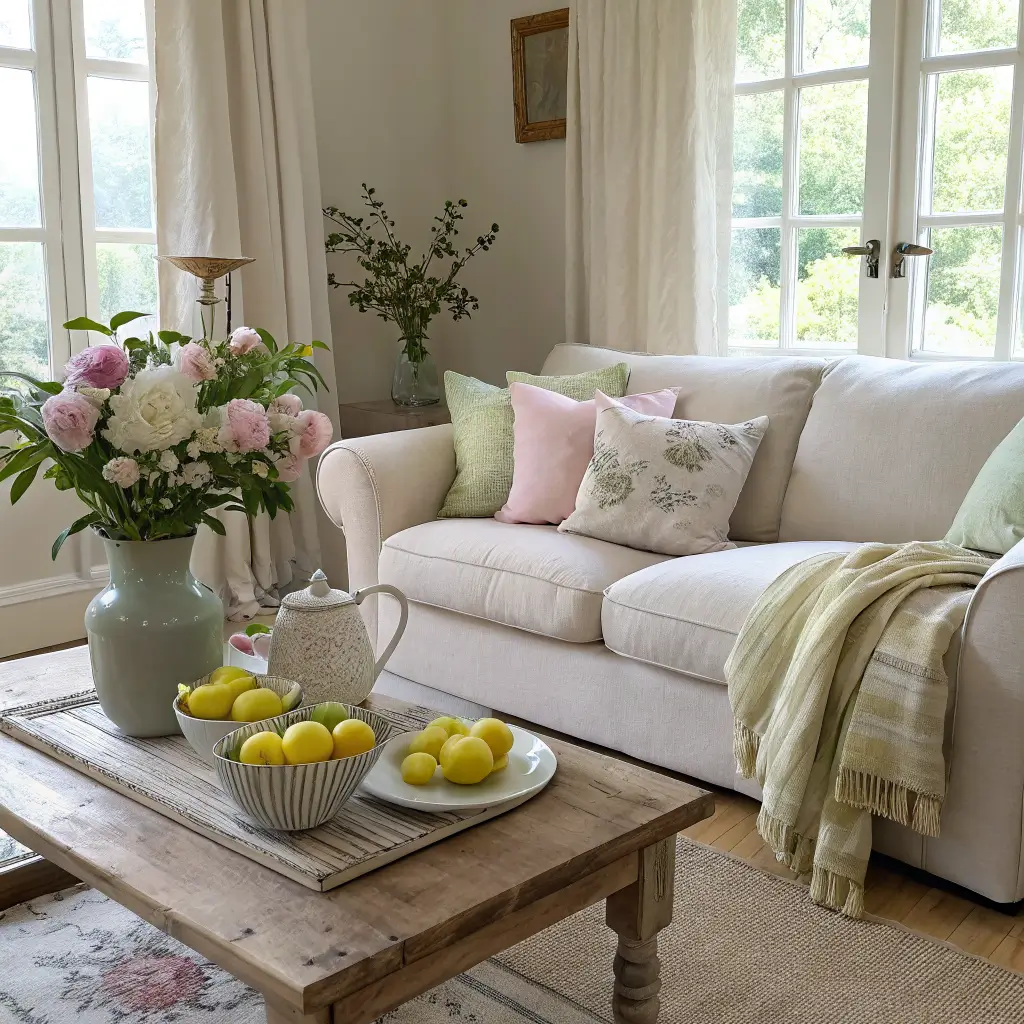
– Lighter cotton and linen cushions in pale pink, soft yellow, sage
– One thin cotton throw folded on an arm
– Fresh flowers or greenery in a ceramic jug — peonies in June, wildflowers later
– Swap heavy candles for a small bowl of lemons or a bud vase collection
Total cost per swap: under £100 if you build up your cushion cover collection slowly.
The One Thing I’d Tell Anyone Starting
Country chic isn’t about buying a set of things that match. It’s about a room that looks like it happened over time — some inherited, some found, some new but chosen carefully. Buy the sofa and the rug new if you need to. Then let the rest of the room build itself through markets, thrift shops, and things you actually love. A room styled in a weekend from one retailer will always look like a room styled in a weekend from one retailer.
The mismatched brass candlesticks on my mantel came from three different charity shops over about six months. That’s the look. You can’t shortcut it, and you shouldn’t want to.