Coastal Farmhouse Decor: A Real Guide to Getting the Look Without the Kitschy Beach House Vibe
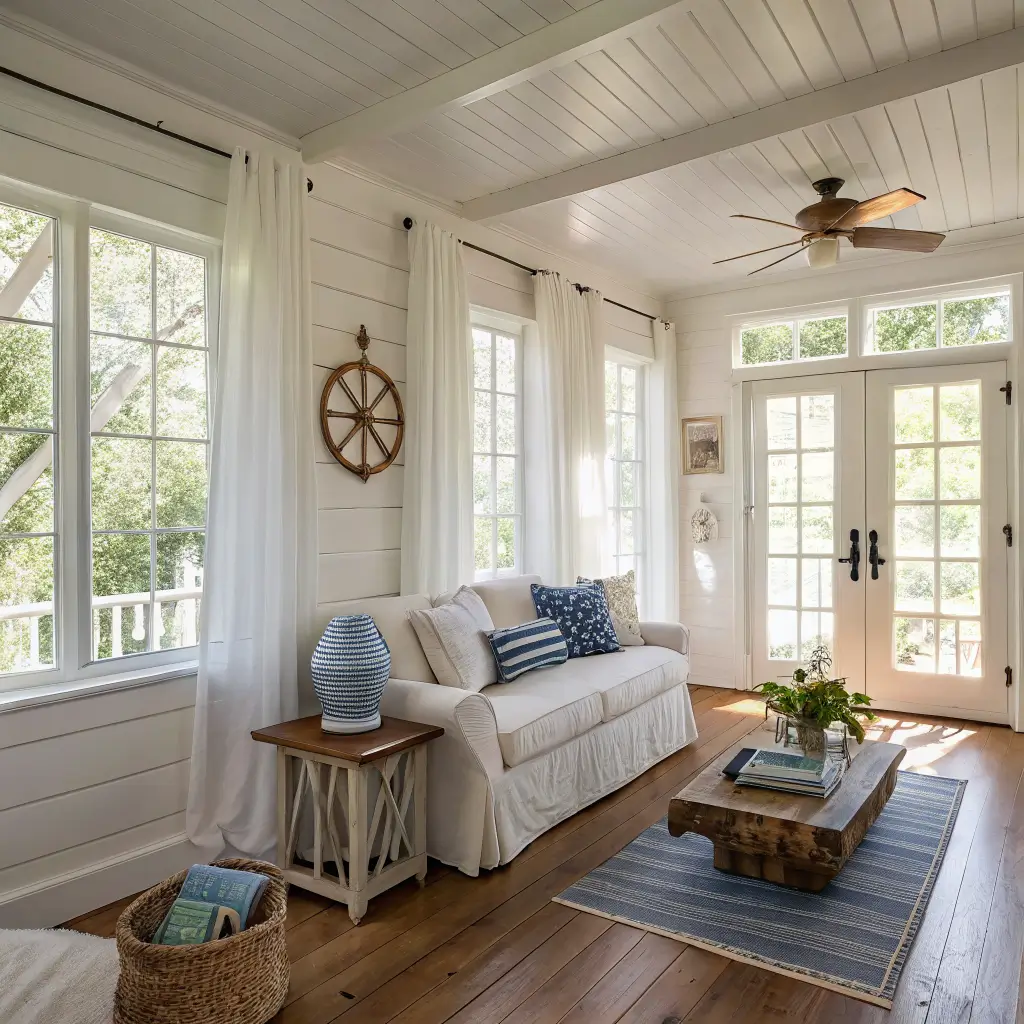
The coastal farmhouse decor in my place started with shiplap I almost skipped. A soft blue and weathered wood made it feel found, not staged.
Coastal farmhouse decor is what you land on when you want a house that feels like a slow morning by the water, but you also can’t stomach one more resin starfish or “Gone to the Beach” sign. I’ve been living in and refining this style in my own home for about four years now — starting with a rental where I couldn’t touch the walls, and now in a small 1940s bungalow where I’ve slowly worked shiplap, jute, and a lot of soft blue into every room.
Here’s how to actually pull it off, what to spend on, and the mistakes I made so you don’t have to.
What Coastal Farmhouse Actually Is (and Who It’s For)
It’s a blend. Coastal brings the airy, light-washed palette and woven textures. Farmhouse brings the weathered wood, Shaker lines, and utilitarian lighting. Together they make a home that reads calm and lived-in without going full beach cottage or full black-and-white modern farmhouse.
This look works if you:
– Want neutrals but hate the all-white, sterile feel
– Like a beachy mood without hanging a ship’s wheel in the entryway
– Gravitate toward vintage or rustic pieces but need rooms to stay bright
– Have kids, dogs, or a slipcover habit, and need durable, washable materials
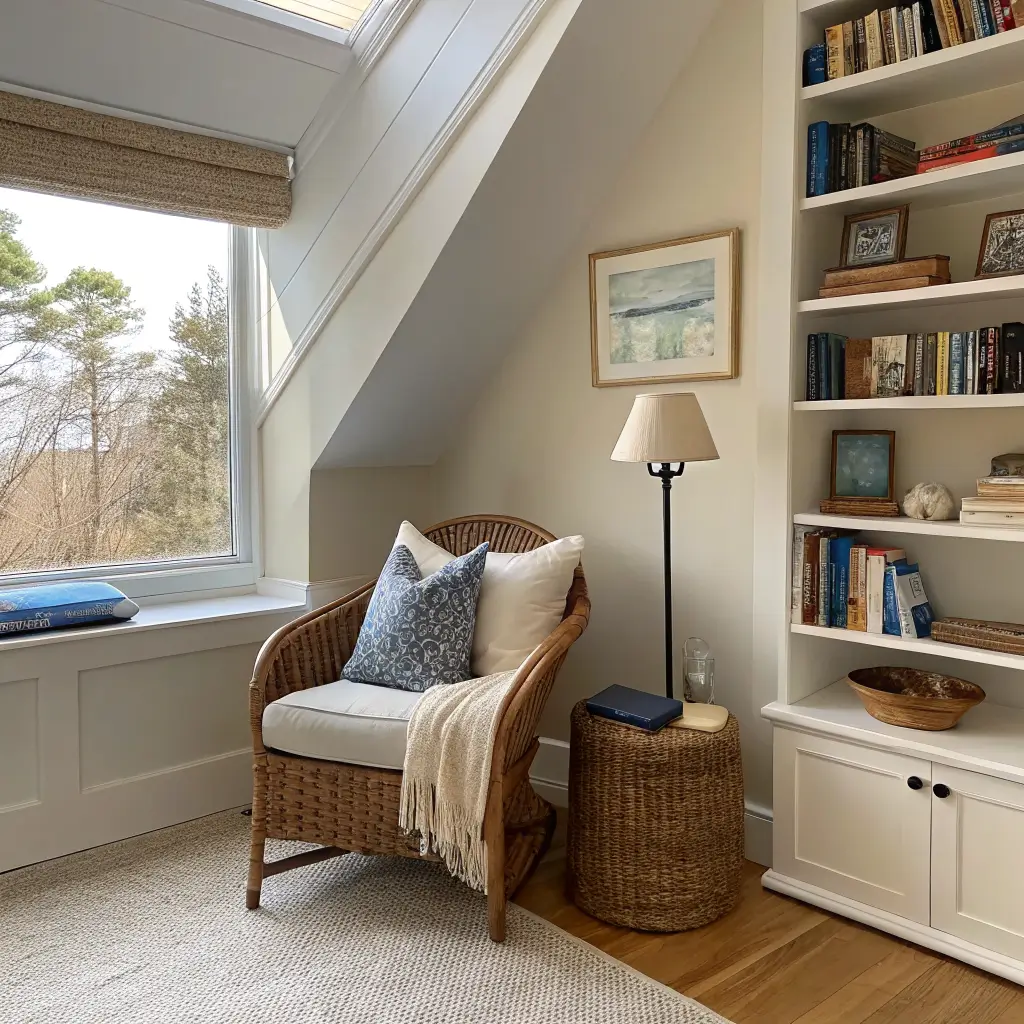
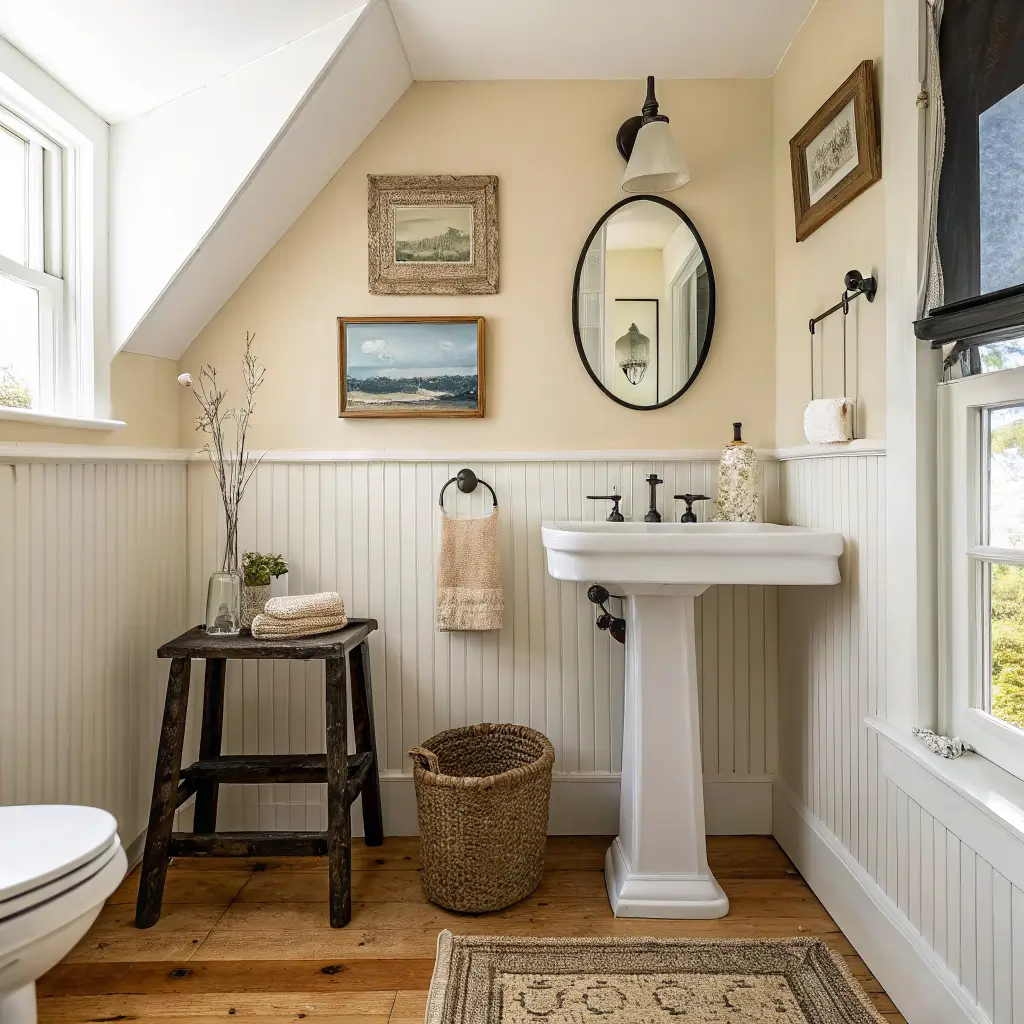
It’s strongest in open-plan main floors (300–600 sq ft) where light can travel across a consistent palette. But I’ve made it work in an 84-square-foot guest bath too, using a jute runner, a teak stool, and one framed watercolor.
Year-round style, easily tuned warmer in fall with wool throws and honey-toned wood, and lighter in summer with linen and eucalyptus.
Time and Money: What You’re Actually In For
Here’s the honest breakdown from doing this in three rooms myself:
– Small room refresh (entry, bath, reading nook): one weekend, 8–12 hours. Budget $250–$800.
– Full living room or bedroom: 2–3 weekends, 20–30 hours if you’re adding shiplap or swapping lighting. Budget $1,000–$3,000.
– Whole main floor: $4,000–$12,000 depending on furniture quality and whether you’re doing millwork or custom built-ins.
Skill level lands beginner to intermediate. Textiles, art, and paint — anyone. Shiplap, floating shelves, and swapping a pendant — a Saturday and a stud finder. Beams and built-ins — hire it out.
The Color Palette That Makes or Breaks It
This is where most people go wrong. They pick blues that are too saturated and end up with a nautical playroom.
Base (60–70% of the room):
– Crisp white — Benjamin Moore Chantilly Lace or Sherwin-Williams Pure White
– Warm ivory or soft sand-beige on trim-adjacent walls
Accents (20–30%):
– Hazy blue, dusty blue, seafoam, sage, fog gray
– Navy only in small doses — one lampshade, a set of pillow covers
Warm contrast (10%):
– Honey oak, driftwood gray, light walnut
– Black iron or aged brass for hardware
The rule I keep coming back to: if a color feels crayon-bright, it’s too saturated. Coastal farmhouse blues should look like they’ve been left in the sun for a summer.
Hero Pieces: Where to Spend
These are the anchors. Don’t cheap out here — you’ll replace them within two years if you do.
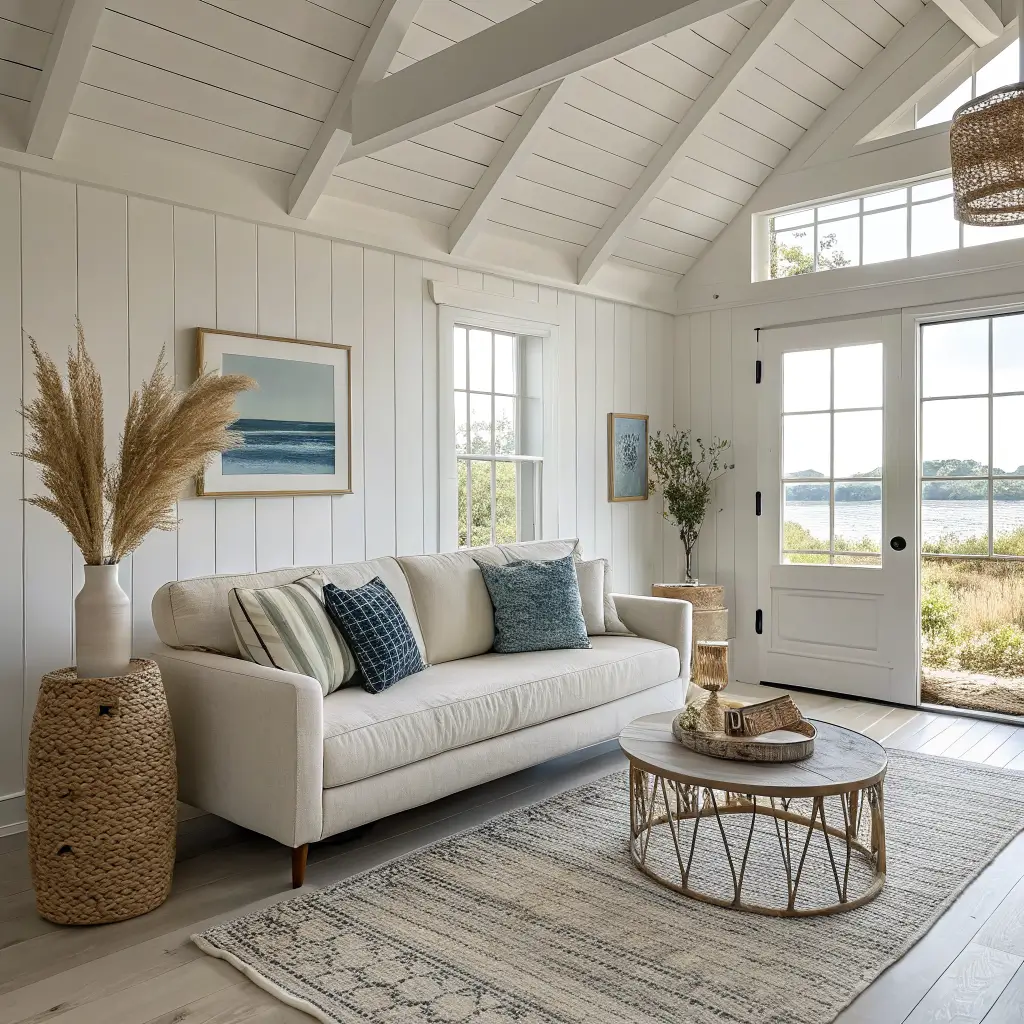
– Slipcovered linen sofa in white, ivory, or light beige. 80–90" for a standard living room. $700–$1,500. Get the washable slipcover version. I bought a non-slipcovered linen sofa first and regretted it within six months — a glass of red wine ended that experiment.
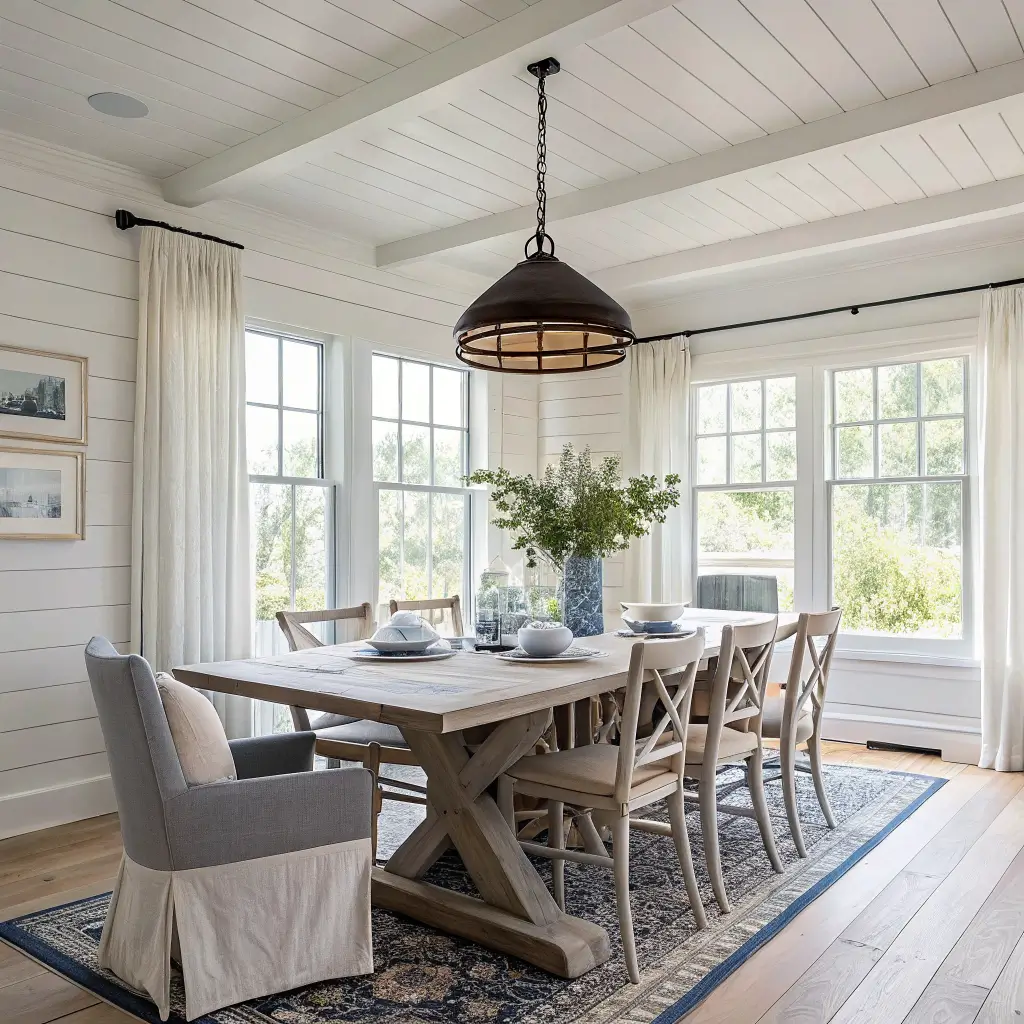
– Farmhouse dining table. Trestle base or straight rectangular, 72–96" for six to eight seats. Solid wood if you can swing it. $400–$1,200.
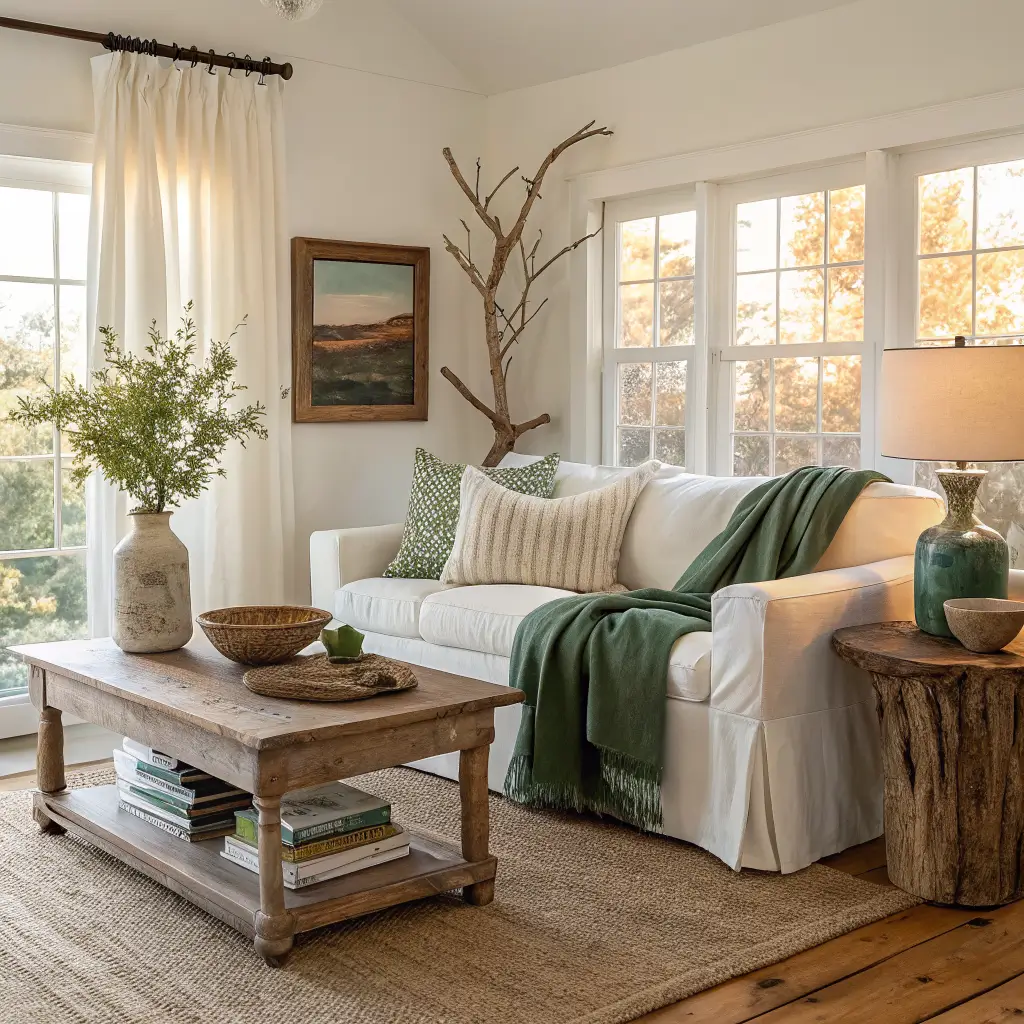
– Weathered wood coffee table. Driftwood, whitewash, or light oak finish. $250–$700. Round or oval softens a boxy sofa layout.
Where to Save
Textiles and accessories move the room 80% of the way. This is where you get to be smart.
– Jute or sisal area rug, 5×8 or 8×10 as your base layer: $80–$350
– Layered accent rug with a soft stripe or faded pattern, roughly one foot smaller per side than the jute: $60–$250
– Wicker or rattan accent chairs: $150–$400 each (thrift stores and Facebook Marketplace are gold for these — I got two 1970s rattan chairs for $40 total and recaned one myself)
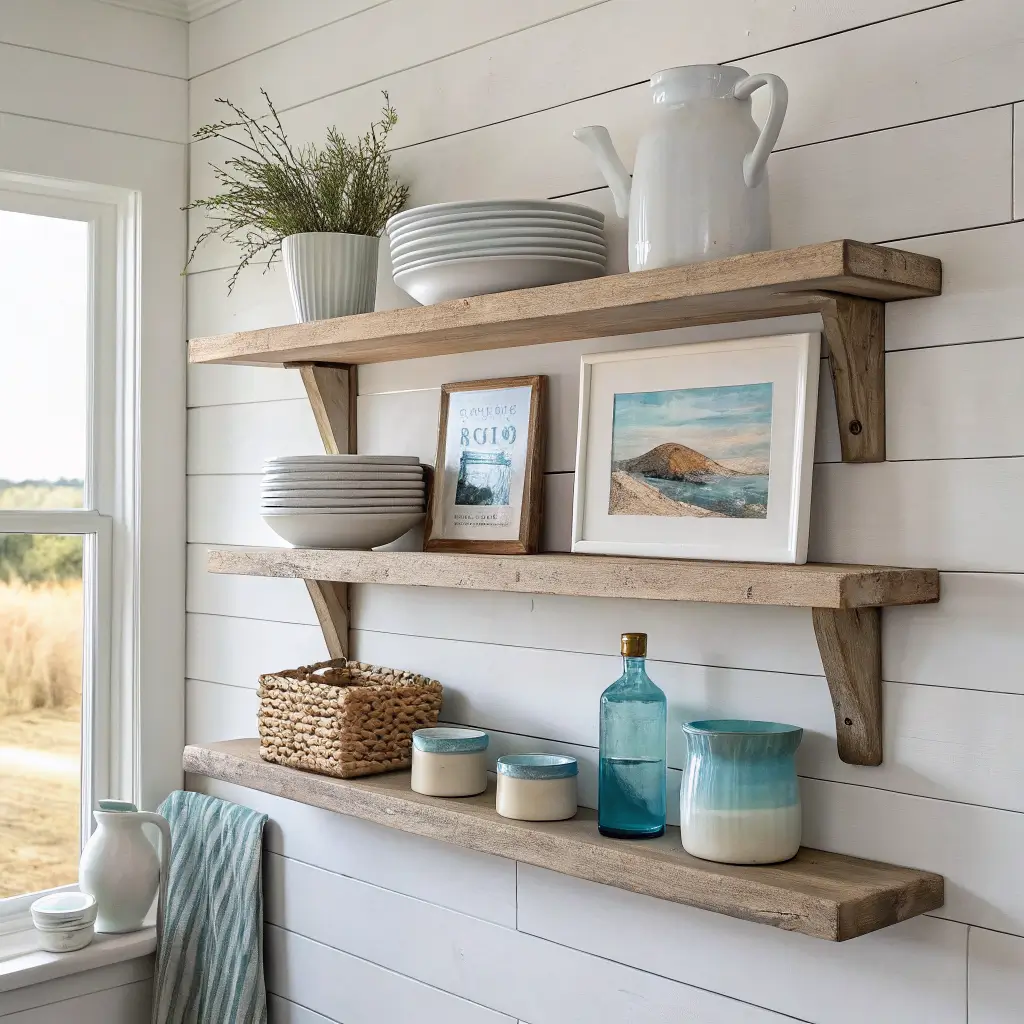
– Floating shelves, whitewashed pine or oak: $30–$100 per shelf
– Pillow covers: $12–$30 each. Buy the covers, not the pillows — swap seasonally.
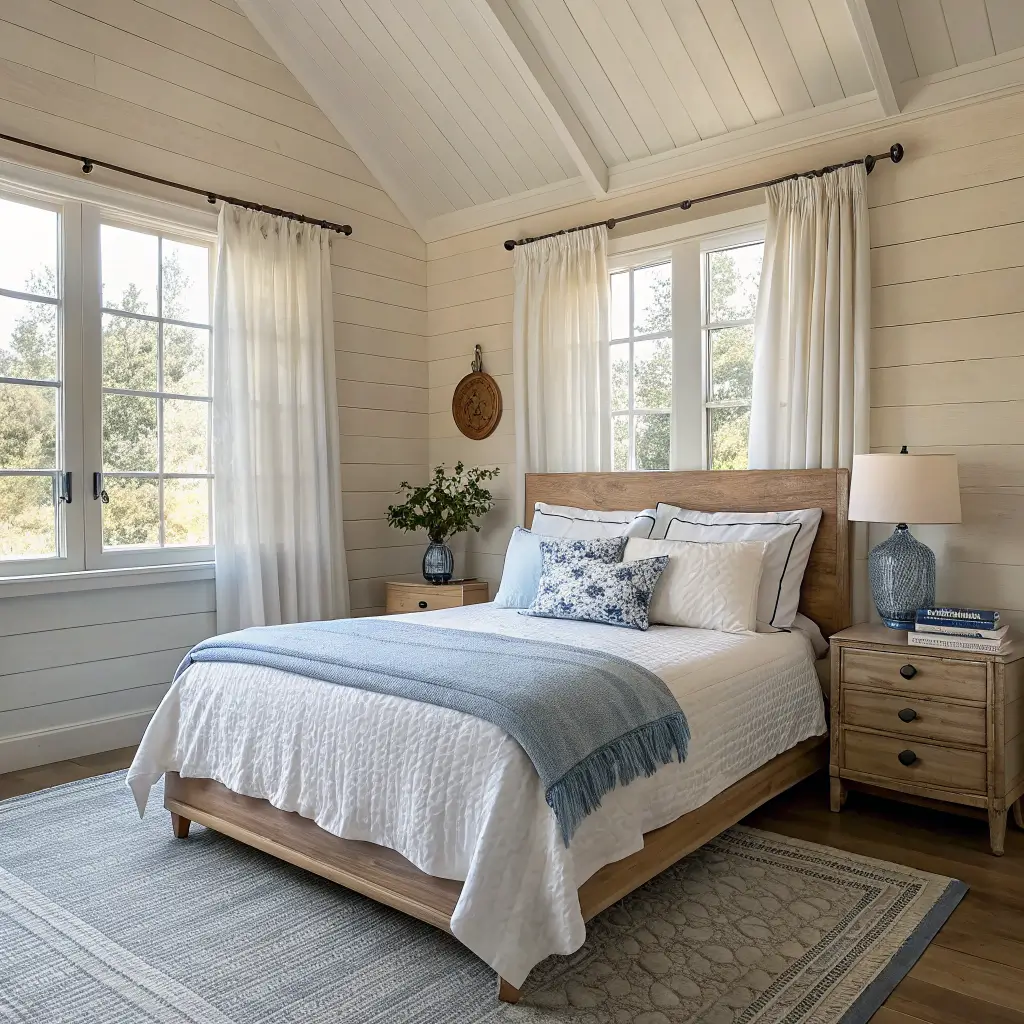
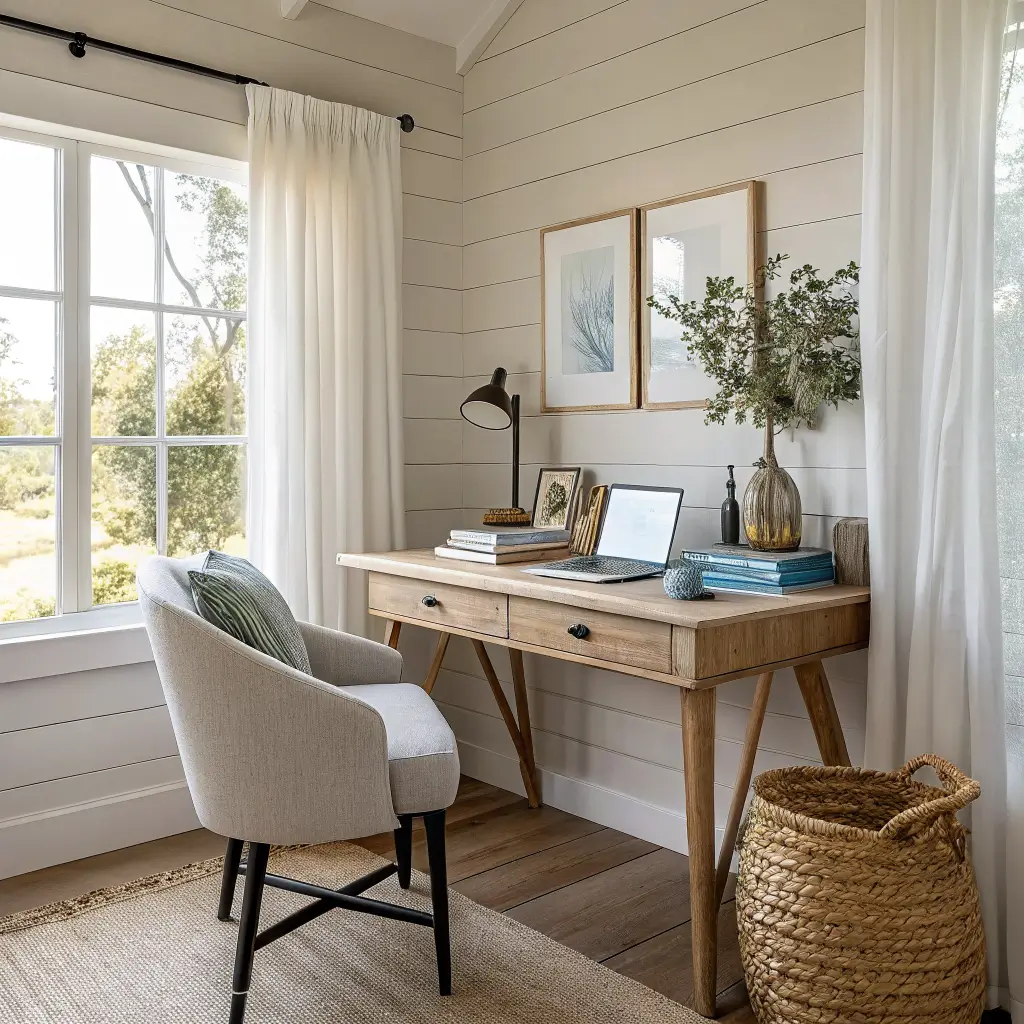
– White or off-white linen curtains: $35–$120 per pair. Hang them high and wide — rod 4 inches above the window frame, extending 6–10 inches past each side. This single move makes rooms look taller and more expensive.
Building the Look, Step by Step
This is the exact order I’ve followed in every room. Doing it out of order is why rooms end up feeling "off."
1. Fix the envelope first. Paint the walls. Add shiplap or beams if that’s happening. Don’t buy anything else until this is done — I’ve made that mistake and ended up with furniture that clashed with wall color I hadn’t picked yet.
2. Lay the jute rug and place the big furniture. Give it breathing room. Sofa 12–18 inches off the wall, not shoved against it.
3. Bring in the wood and woven layer. Coffee table, side tables, dining chairs, baskets, a woven pendant.
4. Add textiles. Striped pillows, linen throws, bedding in white plus soft blue or sage.
5. Layer the coastal cues sparingly. One or two pieces of art per wall. A blue glass bottle on the mantel. Not five.
6. Finish with lighting and hardware. Barn pendants, bronze or matte black knobs, linen-shaded table lamps. Warm bulbs — 2700K, never higher.
The Styling Rules I Actually Follow
One or two nautical items per room. Max. A single piece of driftwood on the mantel or a bowl of shells on the coffee table — not both, not in the same room as a coral sculpture and a rope-wrapped lamp.
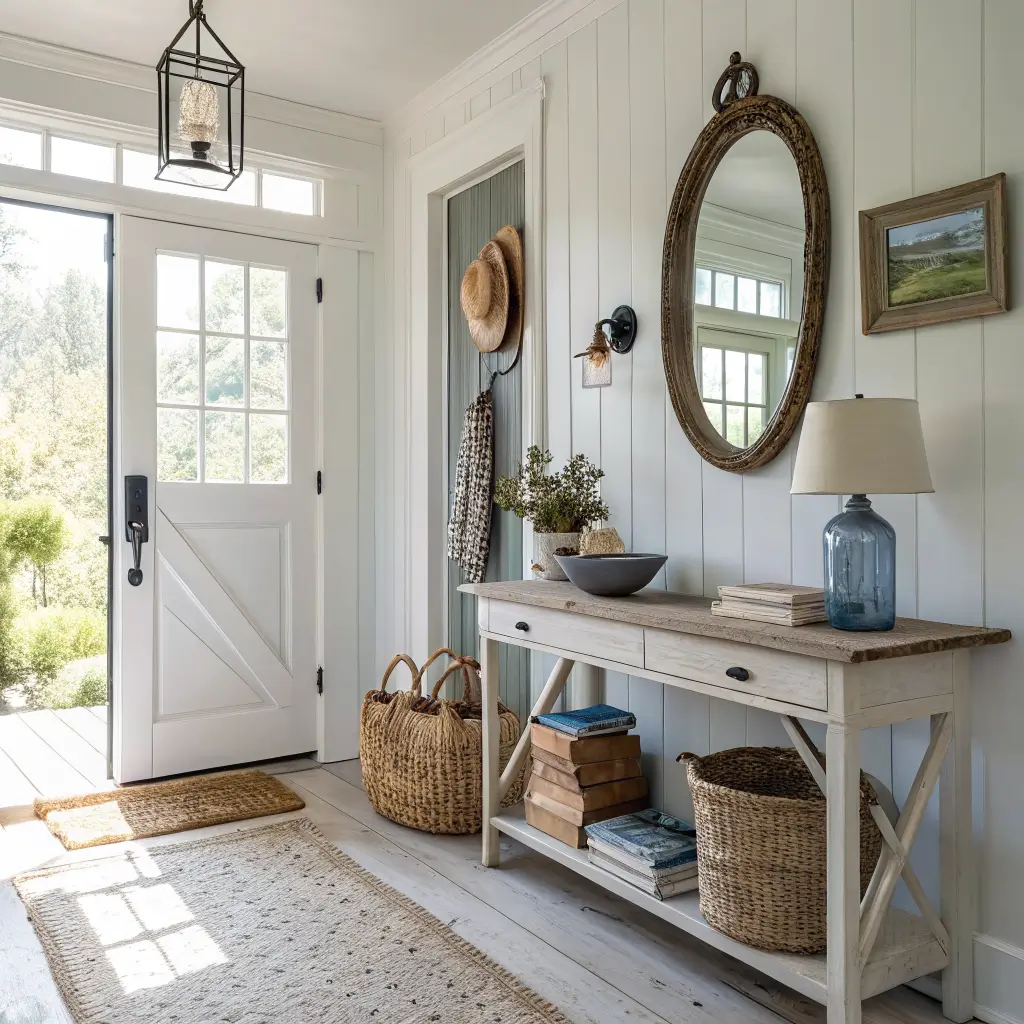
Group in odd numbers, vary the height. Tall vase, mid-height framed print, small ceramic bowl. Three items, three heights. Works every time.
Mix a farmhouse item with a coastal item on the same shelf. A stack of vintage books next to a blue glass bottle. A wood cutting board leaned behind a small watercolor. That’s the whole trick to blending the two styles — literally putting them next to each other.
Two to three wood tones, no more. I default to light oak + driftwood gray + a small amount of walnut. When I let a fourth wood tone in (a red-toned cherry side table I inherited), the whole room started fighting itself. It’s in the basement now.
Mistakes I’ve Made So You Don’t Have To
– The trinket avalanche. My first attempt had shells in three different bowls, a starfish garland, and a "Beach" sign. It looked like a gift shop. Cap coastal-themed objects at roughly 20% of your total decor and let color and texture do the rest.
– Overhead lighting only. A single ceiling fixture kills the mood no matter how nice your furniture is. Every room needs at least three light sources at different heights — overhead, table, and either floor lamp or sconce.
– Glossy everything. Shiny lacquer coffee table, glass side tables, high-gloss trim. Coastal farmhouse wants matte and soft-sheen finishes. Save the gloss for one small moment — a mercury glass lamp base, maybe.
– Forcing it on the wrong architecture. If you live in a mid-century ranch or a downtown loft, don’t slap faux beams on the ceiling. Lean on the adaptable pieces — neutral paint, jute rug, linen sofa, woven baskets — and skip the shiplap.
Keeping It Consistent Across Rooms
Pick a core three-color palette and repeat it. Mine is Chantilly Lace white + warm sand + hazy blue, and it shows up in every room in some proportion. The living room leans white, the bedroom leans blue, the guest bath leans sand — but they all read as part of the same house.
Keep metals consistent too. I use matte black hardware on cabinets and doors, aged brass on lighting and lamp bases. Two metals, applied by category, feels intentional. Four random metals feels chaotic.
Seasonal Swaps That Cost Almost Nothing
The whole point of buying pillow covers instead of pillows, and keeping your palette neutral, is that seasonal updates get cheap and easy.
Spring/summer:
– Swap in lighter linen pillow covers, whites and seafoam
– Eucalyptus stems in a clear glass bottle
– Roll up the wool throw and put out a cotton stripe one
Fall/winter:
– Chunky knit throws in oatmeal or cream
– Add one accent color — muted forest green, rust, or golden beige — in pillows only
– Second layer rug on top of the jute if the floor’s cold
– More candles, warmer bulbs still at 2700K
Cross-Style Variations
If straight coastal farmhouse feels too tame, here’s how to bend it:
– Boho-coastal farmhouse: more layered rugs, a macramé wall hanging, softer and more eclectic textiles. Keep the neutral walls and rustic wood as anchors.
– Scandi-coastal farmhouse: paler woods, cleaner lines, minimal accessories. Fewer coastal blues, more oatmeal and driftwood.
– Modern farmhouse-coastal: black-framed windows, cleaner-lined furniture, and coastal cues kept to art and textiles only. This is the direction I’ve drifted lately — a little less rustic, a little more graphic.
The framework holds. Once you have the palette, the jute base, and the wood-plus-woven layer locked in, you can push the mood in whatever direction suits the light and the year you’re in.