What This Style Actually Looks Like (And Who It’s For)
The feng shui bedroom was the room I rearranged after bad sleep, not a rulebook. Moving the bed off the wall and clearing under it actually helped.
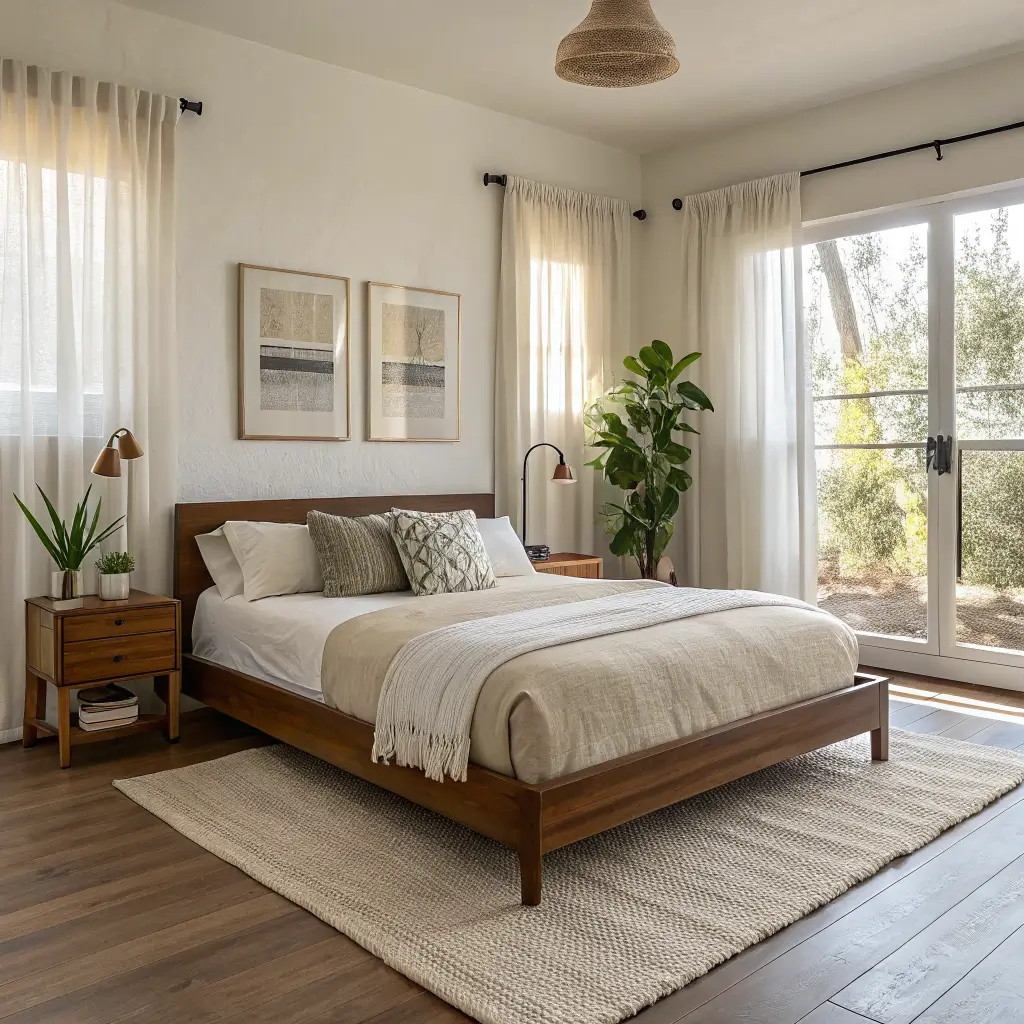
Think minimal, warm, and grounded — closer to Japandi than “spiritual boutique.” Curved edges over sharp ones. Natural wood, soft linen, matte finishes. No glossy black lacquer, no chrome, no wall of framed motivational quotes.
The palette I keep coming back to:
– Walls and big textiles: warm white, sand, taupe, soft greige, clay
– Support colors: muted sage, dusty blue, pale lavender
– Accents in small doses: blush, rust, terracotta — a hint of deep red only if you want it
If you’re a light sleeper, live with a partner and want the room to feel like a shared space rather than one person’s project, or work from home and hate that your laptop lives ten feet from your pillow — this is for you. It works in a 10×10 box (I’ve done it) and scales up to a primary suite without changing the rules.
Time to reset an average bedroom: 3–6 hours if you’re just moving furniture, decluttering, and swapping lighting. A full weekend if you’re bringing in new pieces.
Budget: What I’d Spend Where
Low-budget refresh, no new bed ($150–$400):
– Two matching nightstands: $60–$150 each
– Pair of table lamps with fabric shades: $30–$80 each
– Linen or blackout curtains: $50–$150 per set
– Snake plant or peace lily in a simple planter: $15–$60
– Candles, a small earth-tone rug: $30–$80
Mid-range redo ($600–$1,500): add a solid headboard bed frame ($300–$900), a proper 5×7 or 8×10 rug in a grounded color ($150–$500), better bedding ($150–$400), and a dresser or a cabinet to hide the TV ($200–$400).
High-end ($2,000+): designer bed, dimmable sconces, custom window treatments, real art.
Where I’d spend: the bed frame, the mattress, and the lighting. Where I’d save: nightstands, rug, accessories. My current nightstands are $89 each from a mid-range retailer and I’ve never once wished they were fancier.
The Bed: Where It Goes and Why It Matters More Than Anything Else
This is the whole game. Get this right and half the work is done.
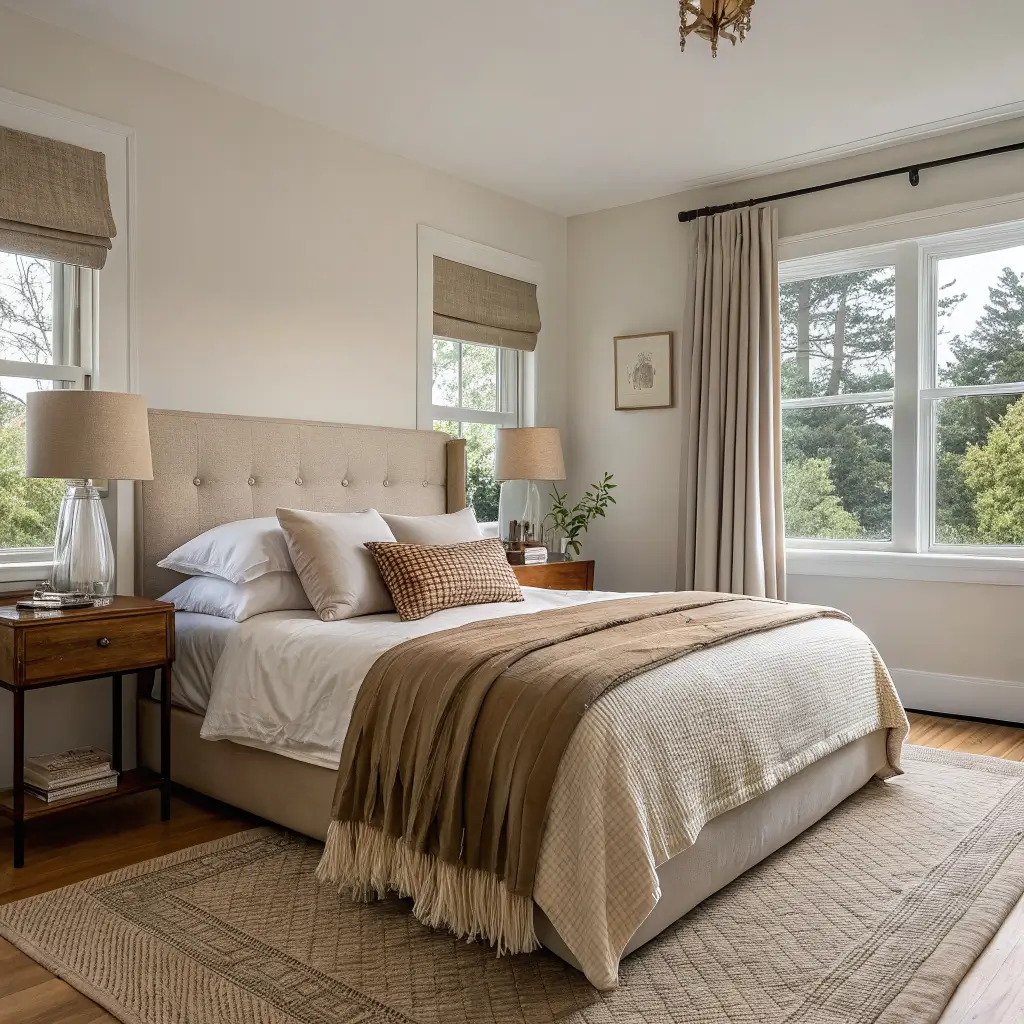
Command position means you can see the door from bed, but you’re not directly in line with it. The classic guidance is diagonally across from the door, headboard against a solid wall. In practice: don’t sleep with your feet pointing straight at the doorway (sometimes called “coffin position” — it’s as ominous as it sounds, and more practically, it keeps you subtly alert all night).
Also avoid:
– Bed under a window. No solid backing, drafts, and light pouring on your face at 6 a.m.
– Bed under a ceiling beam, fan, or heavy shelf. Something hanging over your head while you sleep does register, even if you swear it doesn’t.
– Bed shoved against a wall on one side. Both sides need to be accessible. This is the single most common mistake I see in small bedrooms.
Get a solid headboard — upholstered or solid wood, no bars, no slats with gaps. It gives your brain something to read as “back covered.” My first bed had a metal frame with vertical bars and I slept badly for a year without connecting the dots. Swapped in a $400 upholstered headboard in oatmeal linen and the room finally felt like a room.
Standard headboard heights I aim for: 48–54 inches for a queen, 52–60 for a king.
The Two Nightstands Rule
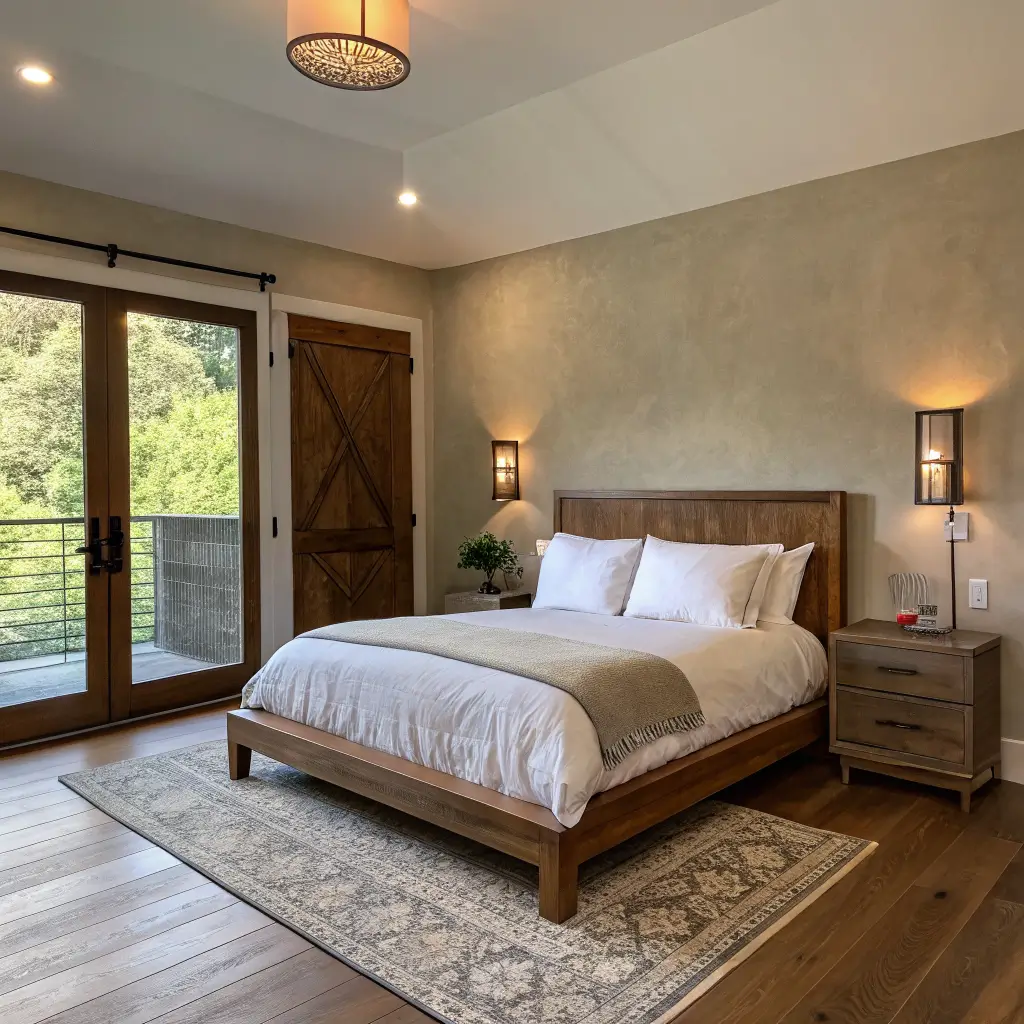
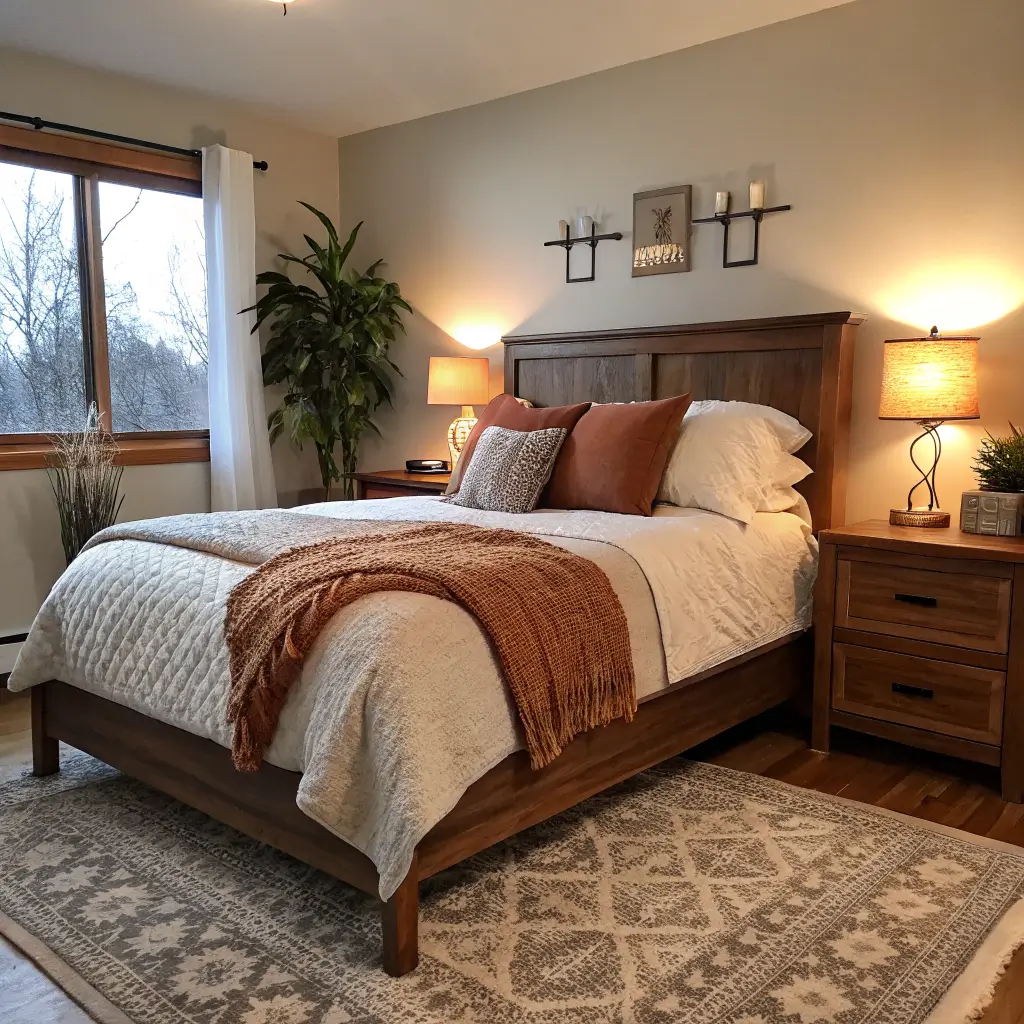
Two matching nightstands. Not one and a chair. Not one because your bed is against a wall. If you share the bed, this is non-negotiable — the symmetry reads as “there’s room for both of us here,” and asymmetry reads as the opposite whether you notice or not.
Height: level with the top of the mattress, or slightly lower. Rounded corners are better than sharp ones (also just kinder to your hip at 2 a.m.). Closed storage beats open shelves — you want to be able to shove your reading glasses, hand cream, and phone charger out of sight in three seconds.
Lighting: Kill the Overhead
The overhead fixture in most bedrooms is the enemy. Cool, bright, unflattering, and it triggers “office” energy right before bed.
Build a lighting stack instead:
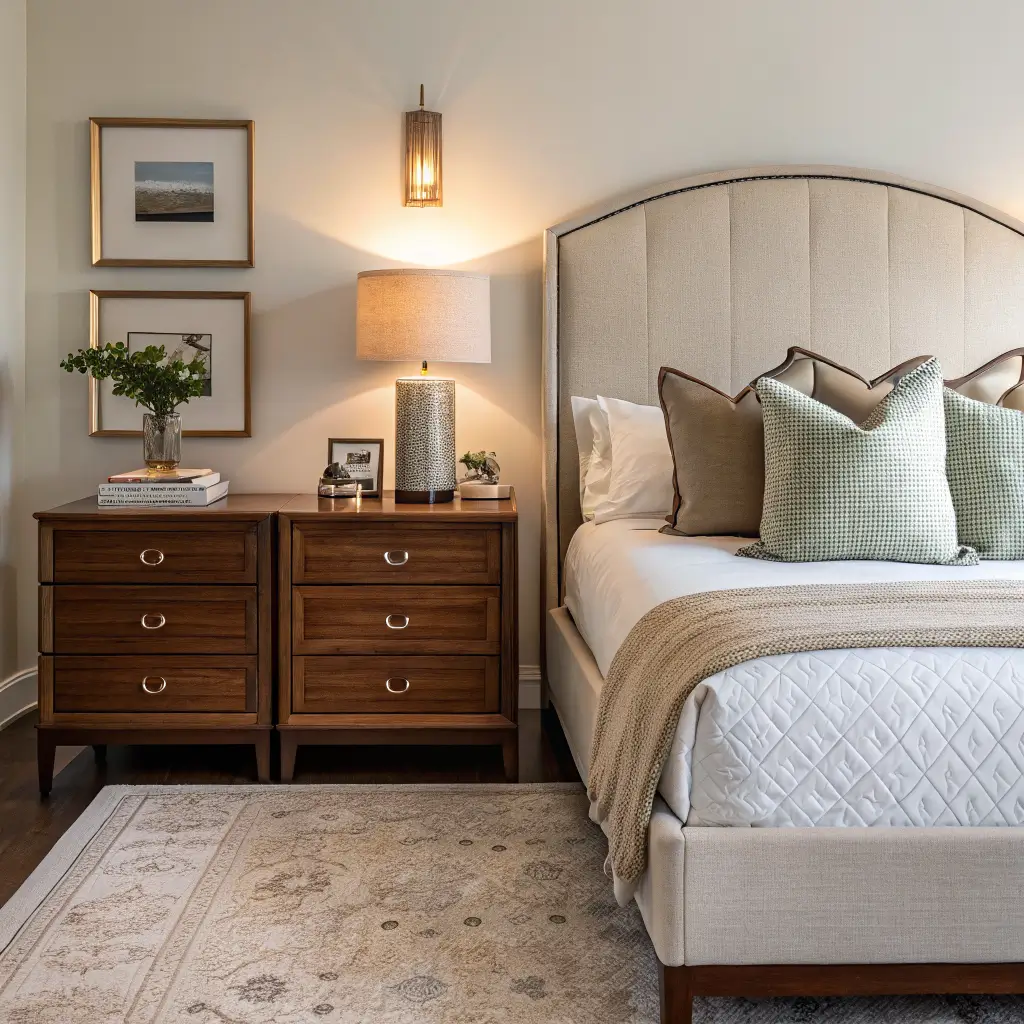
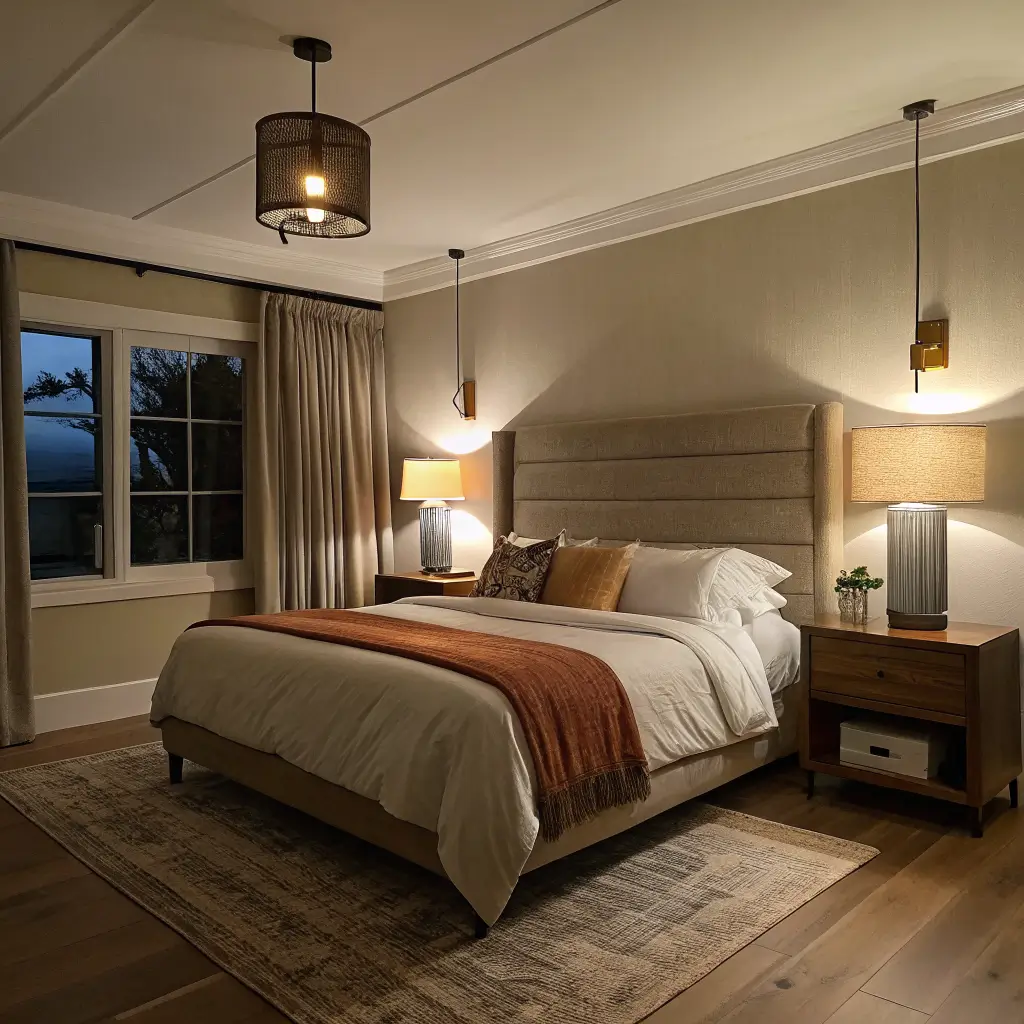
– Two table lamps on the nightstands, fabric or paper shades, warm bulbs
– Dimmable wall sconces or plug-in reading lights above the bed if you read (I use plug-in brass ones I mounted with wall anchors in a rental — no electrician needed)
– The overhead kept as a backup, on a dimmer, with warm bulbs
Bulb temperature: 2700K–3000K. If you’re buying bulbs and see “daylight” or “5000K” on the box, put it back. That’s for garages.
Storage, Clutter, and the Work-From-Home Problem
The bedroom cannot double as a gym, a home office, and a laundry pile. If it has to (studios, small apartments, I get it), the answer is visual separation:
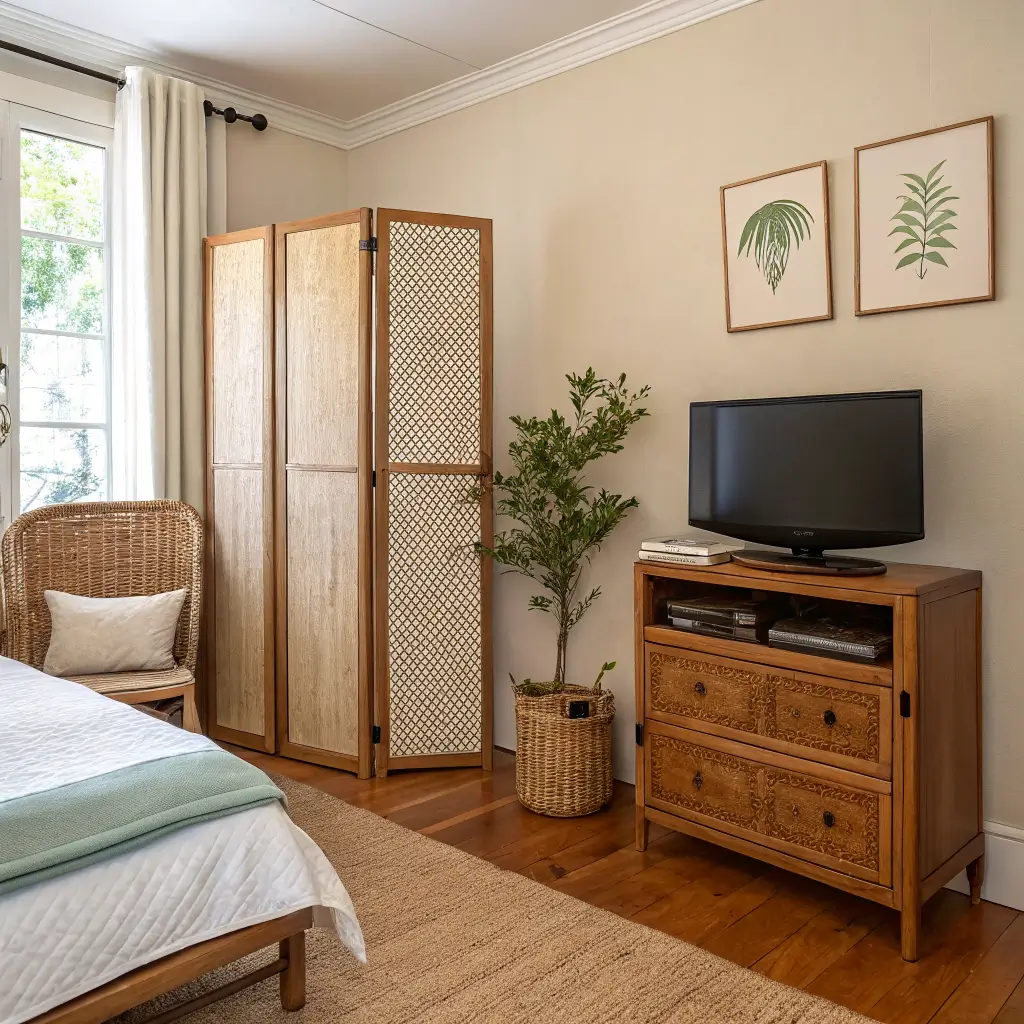
– A folding screen in front of the desk after work hours
– A cabinet with doors that hides the TV completely — not a “media console” with the screen exposed
– Baskets with lids for laundry, not open hampers
– A cable management box for the tangle of chargers behind the nightstand
Under-bed storage: skip it if you can. If you can’t, only soft things — extra pillows, off-season bedding — in flat, closed containers. No shoeboxes of tax documents under your head.
Textiles That Actually Feel Good
Layer three textures on the bed:
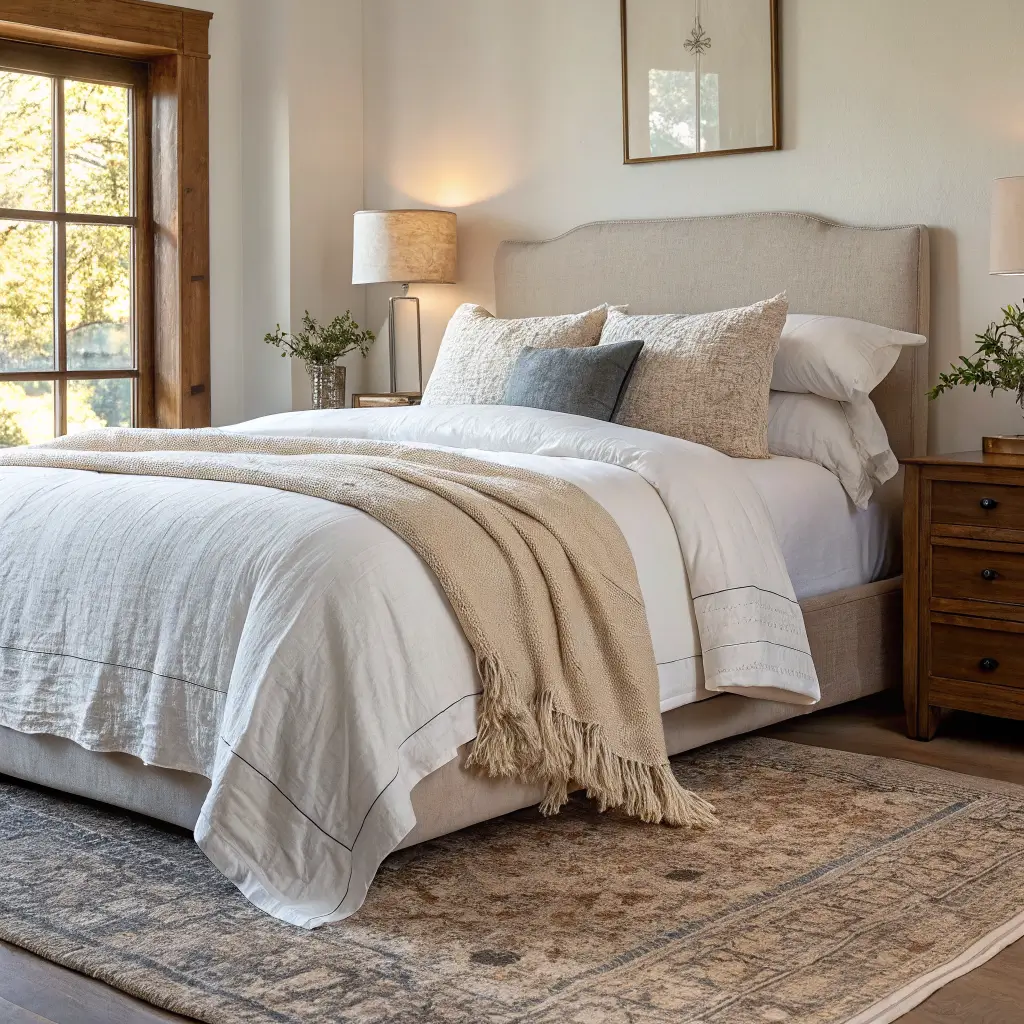
– Smooth: cotton or linen sheets, a linen duvet cover
– Nubby: a wool or cotton throw at the foot
– Soft: two velvet or brushed cotton accent pillows
Keep the colors in the same family. This is where people go wrong — they layer texture and pattern and contrasting color, and the bed ends up looking like a display in a furniture showroom.
Rug: pull it out from under the bed at least 18–24 inches on the sides and foot. A tiny rug marooned in the middle of the room is worse than no rug.
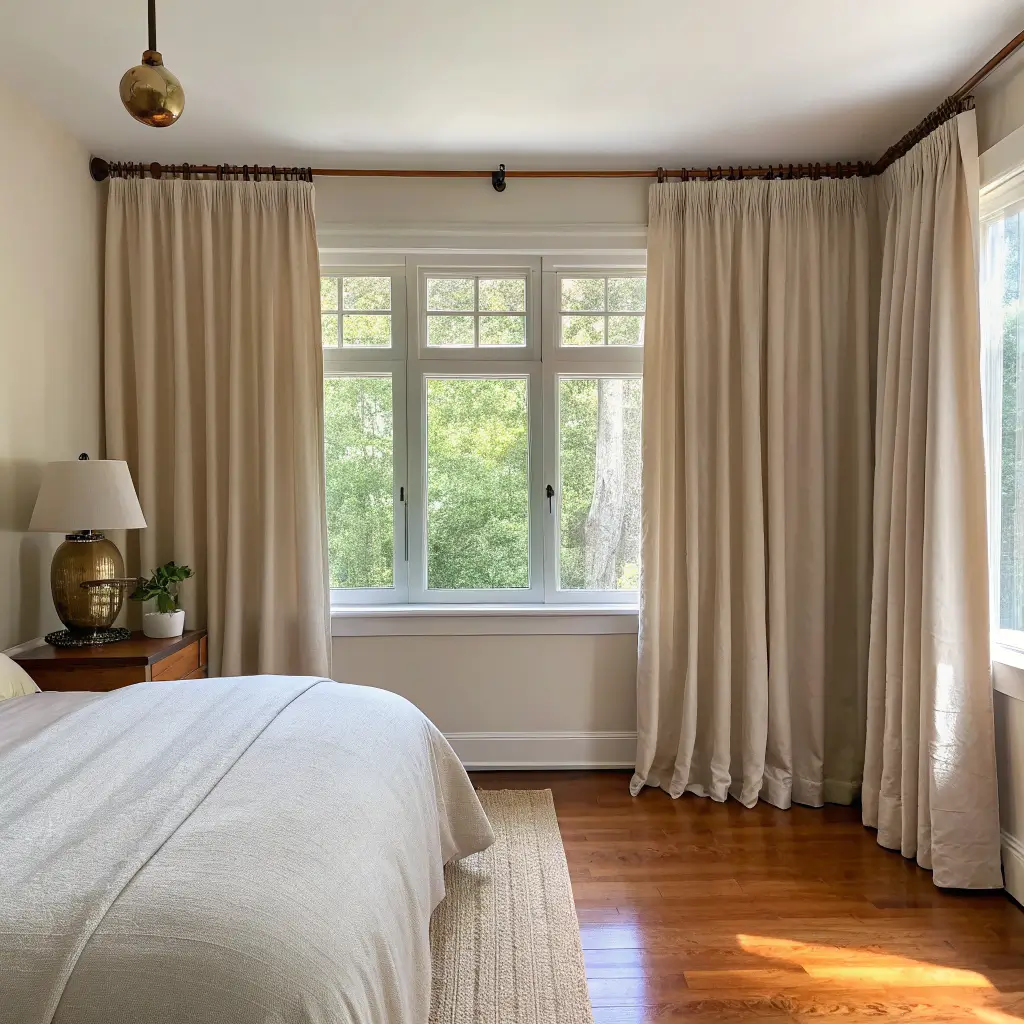
Curtains: floor-length, hung wide and high (rod extends 6–8 inches past the window frame on each side, mounted halfway between the window top and ceiling). This one trick makes a rental bedroom look intentional in about an hour.
Mirrors: Handle With Care
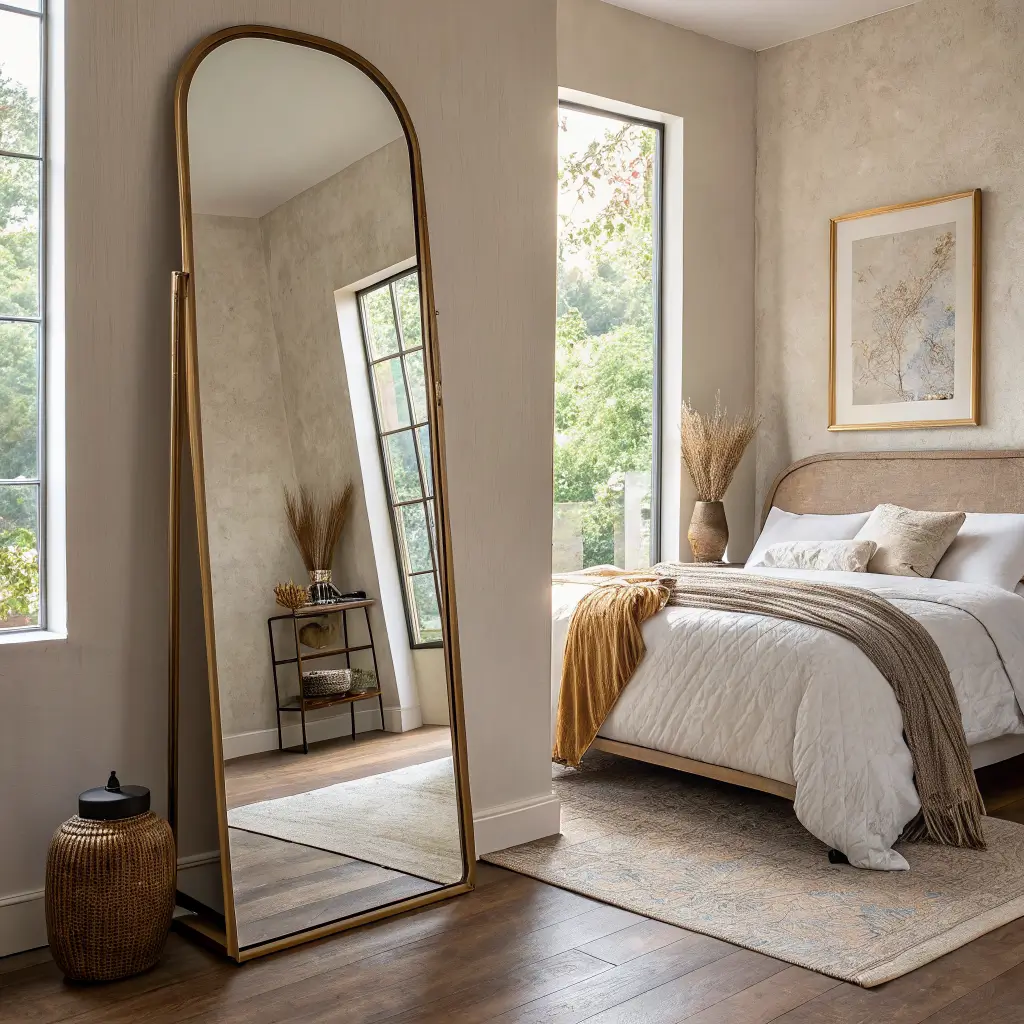
Mirrors bounce light and open up small rooms, but not facing the bed. Catching your own reflection at 3 a.m. is genuinely disturbing, and beyond that, a big mirror opposite the bed creates a low-grade “someone’s watching” feeling that fights sleep.
Better spots:
– Perpendicular wall to the door
– Inside the closet or on the closet door
– On the back of the bedroom door
I have a full-length leaning mirror on the wall to the left of my bed, out of sightline when I’m lying down. Works fine.
Plants and the Five Elements Thing (Simplified)
You don’t need to memorize a chart. Aim for a little of each:
– Wood: the bed frame, a small plant (snake plant, peace lily, pothos — all forgiving)
– Earth: ceramic lamp base, stoneware tray, a rough clay pot
– Metal: brushed brass picture frame or lamp hardware — pick one metal finish and stick with it
– Fire: one or two candles, a warm-toned throw
– Water: implied through curves and soft fabrics — skip literal water imagery, fountains, or big ocean photos in the bedroom. Water in bedroom art is one of the classic don’ts
One plant in the far corner past the foot of the bed is usually the move. My 4-foot snake plant lives there and it does more for the room than anything else I’ve bought.
The Mistakes I Made So You Don’t Have To
1. Bed with feet pointing at the door. Slept badly for months, blamed the mattress, bought a new mattress, still slept badly. Moved the bed. Fixed.
2. One nightstand. Bought a beautiful vintage side table, told myself matching was “too matchy.” My partner had a stack of books on the floor for a year. Nobody felt great about it.
3. A giant mirror opposite the bed. Looked amazing in daylight. Genuinely creepy at night.
4. Cool white LED bulbs in the bedside lamps because they were on sale. Room felt like a dentist’s office.
5. A busy floral duvet. Looked calm in the store, felt like static in the room.
Keeping It Fresh Without Starting Over
The core palette and layout should stay put. Rotate through the small stuff:
– Fall/winter: swap in wool throws, deeper accent pillows in cocoa or rust, heavier quilt
– Spring/summer: lighter linen, muted sage or dusty blue pillow covers, breathable cotton blanket
– Scent: lavender or sandalwood at night, something citrusy in the morning if you like it — avoid anything sharp or synthetic
Daily habits that keep the room working:
– Clear the nightstands before bed. Not perfectly — just enough that surfaces read as calm
– Put clothes away or in a lidded hamper, not on the chair (the chair always becomes the pile)
– Make the bed in the morning. Ninety seconds. Changes the whole room
Anytime you’re about to buy something for the bedroom, ask two questions: Does it help me rest? and Does it add noise — visual, color, or literal? If the answers aren’t right, it belongs somewhere else in the house.
That’s the whole method. Move the bed, add the second nightstand, kill the overhead, and the rest is just editing.