Small Cabin Interior Office: How to Build a Workspace That Actually Works in 40–120 Square Feet
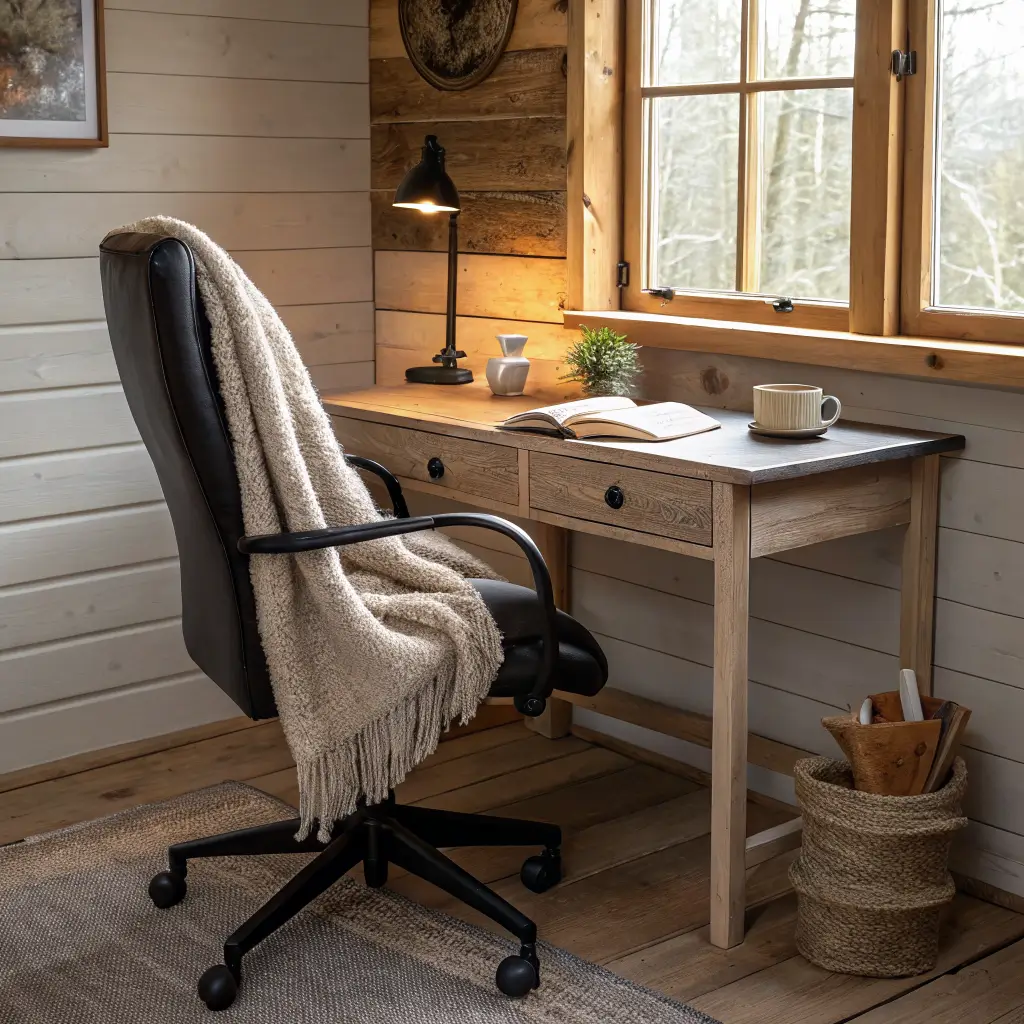
The small cabin interior office was a corner I claimed with a plank desk and a lamp I liked. It reads as a room now, not a pile of mail.
Setting up a small cabin interior office is the kind of project that looks simple on Pinterest and gets frustrating the second you drag a desk inside and realize the door won’t close. I’ve done this twice — once in a 7’×9′ loft nook and once in a converted shed office out back — and the difference between a cabin workspace that feels calm and one that feels like a storage closet with a laptop comes down to about six decisions.
Here’s how I’d make them.
What This Setup Delivers, and Who It’s For
A small cabin office is a dedicated work zone inside a cabin, shed, ADU, or single-room structure — usually 40 to 120 square feet. Think a 6’×7′ corner up to a 10’×12′ room. Enough for a desk, a real chair, storage, and one plant that survives you forgetting about it.
This works if you’re:
– A remote worker who needs a door (or at least a psychological one) between work and the rest of life
– A freelancer or creative using the cabin as a studio
– A vacation-cabin owner squeezing in part-time work without wrecking the lounge feel
– Anyone tired of working from a kitchen table
Time to set up: one weekend for freestanding furniture and plug-in lighting. Two or three weekends if you’re painting, mounting shelves, or running cable channels.
Cost, honestly:
– Budget ($300–$800): IKEA/Amazon desk, decent task chair, a couple of floating shelves, a task lamp, small rug.
– Mid-range ($800–$2,000): solid wood desk, ergonomic chair with lumbar support, modular shelving, layered lighting.
– Custom ($3,000–$8,000+): built-in desk and cabinetry, premium chair, glass partition or interior window, acoustic panels.
My first cabin office landed around $650. My second, with a built-in plywood desk my neighbor helped me cut, came in around $1,400.
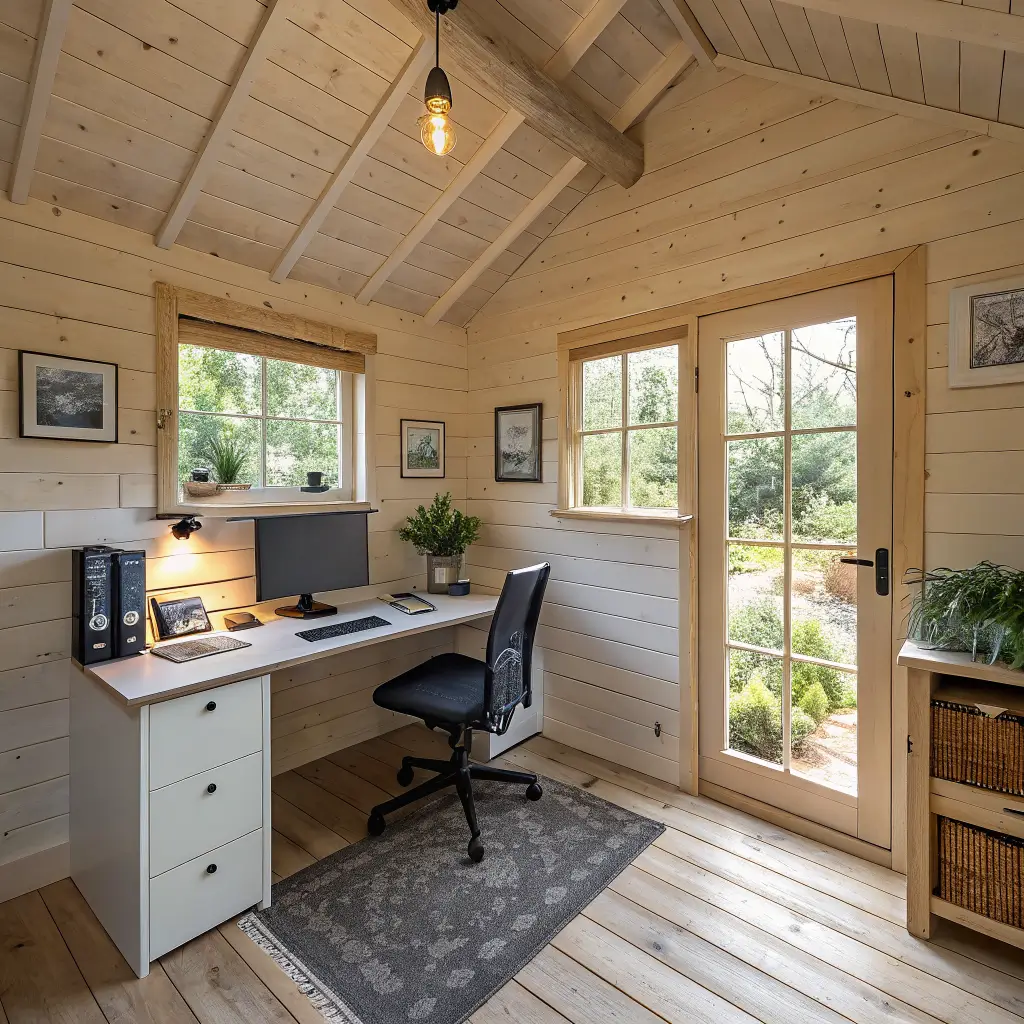
The Look: Modern Rustic, Minus the Log-Cabin Clichés
I don’t want a cabin office that looks like a hunting lodge gift shop. What actually reads well in a small footprint:
– Modern rustic — light wood, neutral walls, black metal accents
– Scandi-cabin hybrid — pale oak or ash, soft whites, one plant, one wool throw
– Minimalist with warmth — clean lines, but linen and wood keep it from feeling like a dentist’s office
The move is picking one and committing. Mixing three styles in 60 square feet is what makes a room feel “off” without you being able to name why.
Colors I’d Actually Use
Walls first — this matters most in a small cabin because the walls are three feet from your face.
– Benjamin Moore Swiss Coffee or Chantilly Lace for warm off-whites that don’t go blue in low light
– Sherwin-Williams Repose Gray if you want a true neutral that plays with both warm and cool wood
– Benjamin Moore Edgecomb Gray for a beige-leaning warm neutral — my pick for cabins with a lot of raw wood already
– Accent colors on textiles only: muted sage, deep navy, or a dusty terracotta. One accent. Not all three.
Finish matters. Use eggshell on cabin walls, not flat. Flat holds every fingerprint and cabin walls take abuse — brushing past with a jacket, propping a bike, wiping condensation off in winter.
Materials That Belong
– Wood: light oak, ash, or pine. Skip orangey knotty pine unless it’s original to the cabin.
– Metal: matte black or brushed steel on legs, hardware, and lamps
– Glass: a glass desktop protector or a glass-front cabinet keeps small rooms feeling open
– Textiles: wool rug, linen curtains, cotton throw. These soften sound, which matters in a small hard-walled room where every Zoom call echoes.
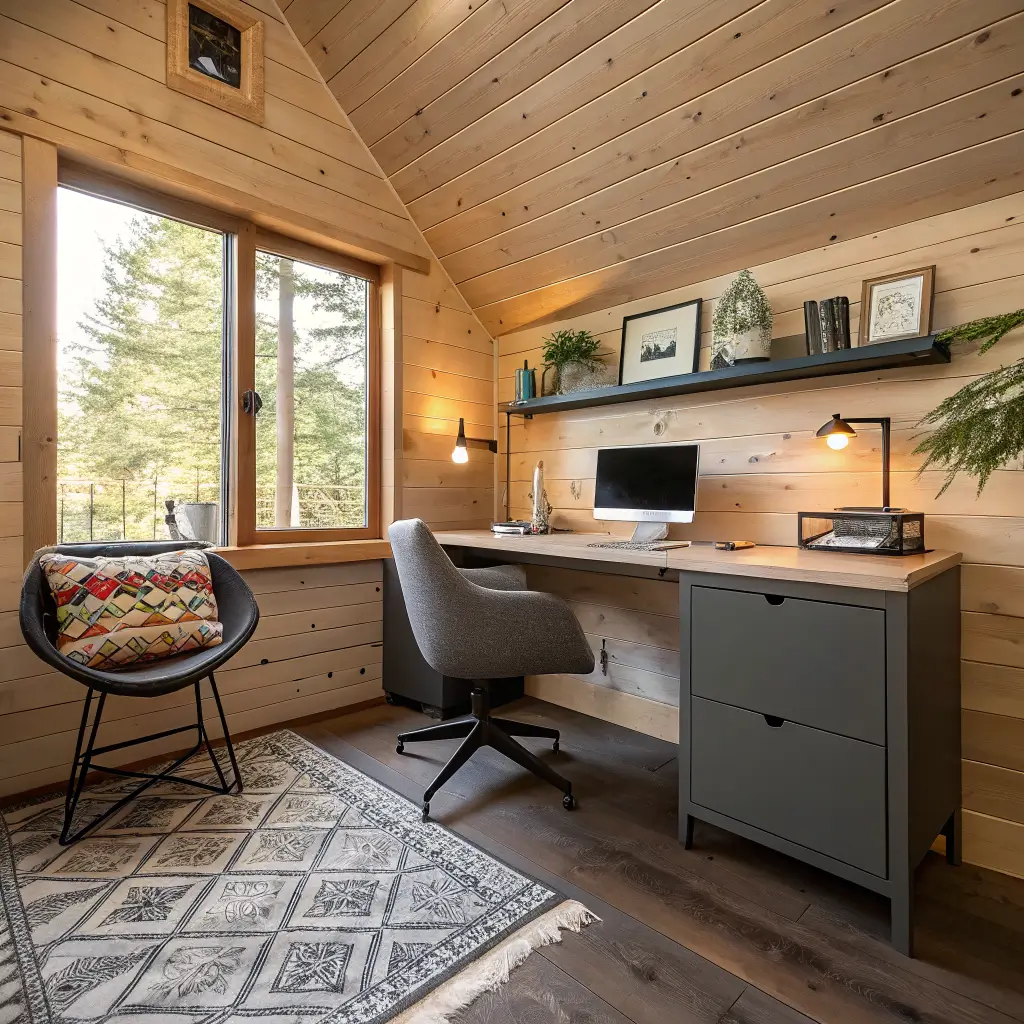
The Non-Negotiable Pieces
If I’m setting this up from scratch, I buy these first, in this order.
1. A compact desk, 48–60" wide by 20–30" deep. Any smaller and your monitor and notebook fight for space. Any larger and you’ve eaten the room. L-shaped desks work well in awkward corners, but only if the short leg is 40" or less. I made the mistake of buying a 72" desk for my first cabin office. It sat there like a barge for two months before I sold it at a loss.
2. An ergonomic chair with lumbar support and adjustable height. This is where I’d spend real money if the budget is tight elsewhere. A $180 Amazon chair will hurt your back within six months. The Branch Ergonomic Chair (around $340) or a used Herman Miller Aeron off Facebook Marketplace ($400–$600) are both worth it.
3. One vertical storage piece. A tall bookcase (72"+) or a slim 12–18" deep cabinet. Vertical, always. Floor space is what makes a small cabin feel big.
4. Layered lighting. This is the single most overlooked thing.
– Overhead: a flush mount or small pendant
– Task: an adjustable desk lamp with a warm bulb
– Ambient: a small floor lamp or wall sconce for evening light
Bulb temperature: 2700–3000K. Anything cooler makes the room feel like a break room.
5. A rug, 4’×6′ or 5’×7′. Jute or low-pile wool. It defines the office zone and lets a chair roll. Do not buy shag. I bought shag once. It fought the chair wheels for a year before I gave up and moved it to the bedroom.
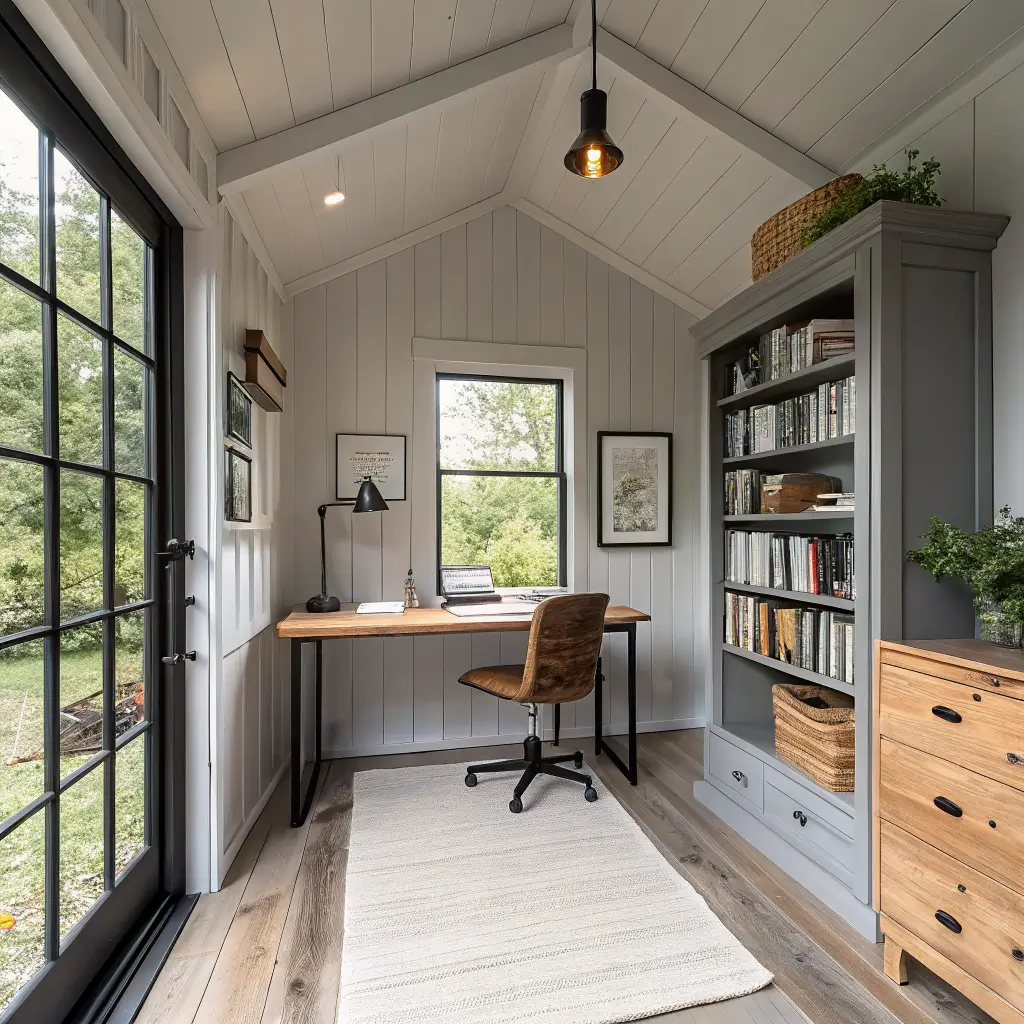
Layout: The Rules That Actually Matter
Face the door, but not directly in line with it. Sit where you can see who’s coming in without being on display. This is old advice, but it’s right — being back-to-door for eight hours a day quietly wears you down.
Put the desk near a window, angled 90° to it. Not facing the window (glare on your face and blown-out video calls), not backing it (silhouette on Zoom, monitor glare). Perpendicular. Light comes across your work.
Tall storage on the wall with the fewest windows and doors. This is boring advice but it’s what buys you floor space.
Leave 36" behind the desk chair for rolling back. In a 7’×9′ room, this is the number that dictates everything else.
The Wall Behind the Desk Is Your Focal Point
Not the desk. Not the chair. The wall behind you — because it’s what you see when you walk in, and what shows up on video calls.
Options I’ve tried:
– Vertical wood slat panel (1×2 pine strips, painted or stained, spaced 1.5" apart). Cost me about $70 for an 8-foot wall.
– Single wide piece of art — one 24×36 print in a black frame reads better than a gallery wall in a tiny room.
– Painted accent wall in a deeper shade of your neutral. Not a contrast color. A shade darker.
Gallery walls in small cabin offices almost always look busy on camera. I’ve tried. Twice. Took them down both times.
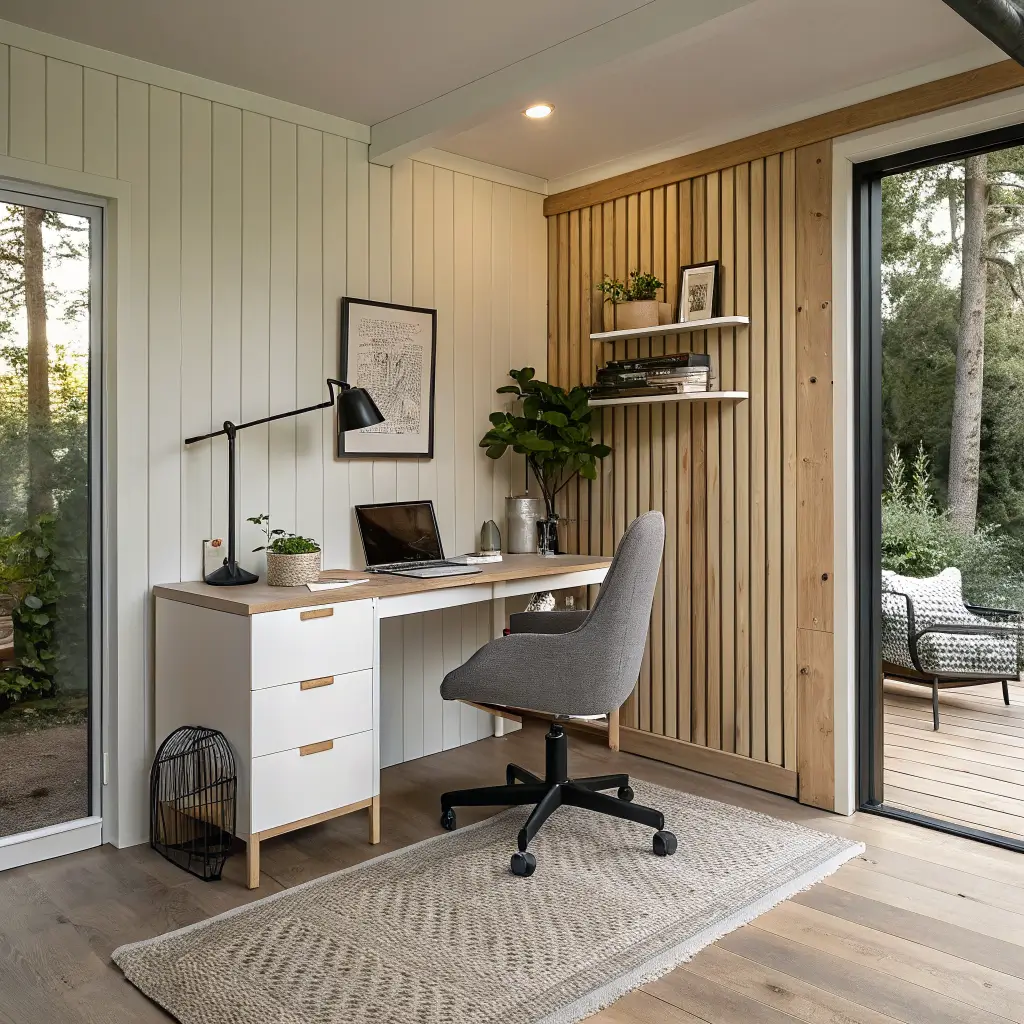
Where to Spend, Where to Save
Spend on:
– The chair. Every time.
– Lighting. A $60 warm-bulb task lamp beats a $200 pendant that lights nothing useful.
– The rug if you’re on hard flooring — cheap rugs curl at the edges within a year.
Save on:
– The desk. A $150 IKEA Lagkapten on Alex drawer legs looks clean and lasts.
– Shelves. Plain pine boards with black iron brackets from the hardware store run about $25 per shelf and look better than most retail options.
– Decor. Thrift stores, estate sales, and your own garage. My favorite piece in my current office is a $6 brass desk lamp from a church sale that I rewired myself.
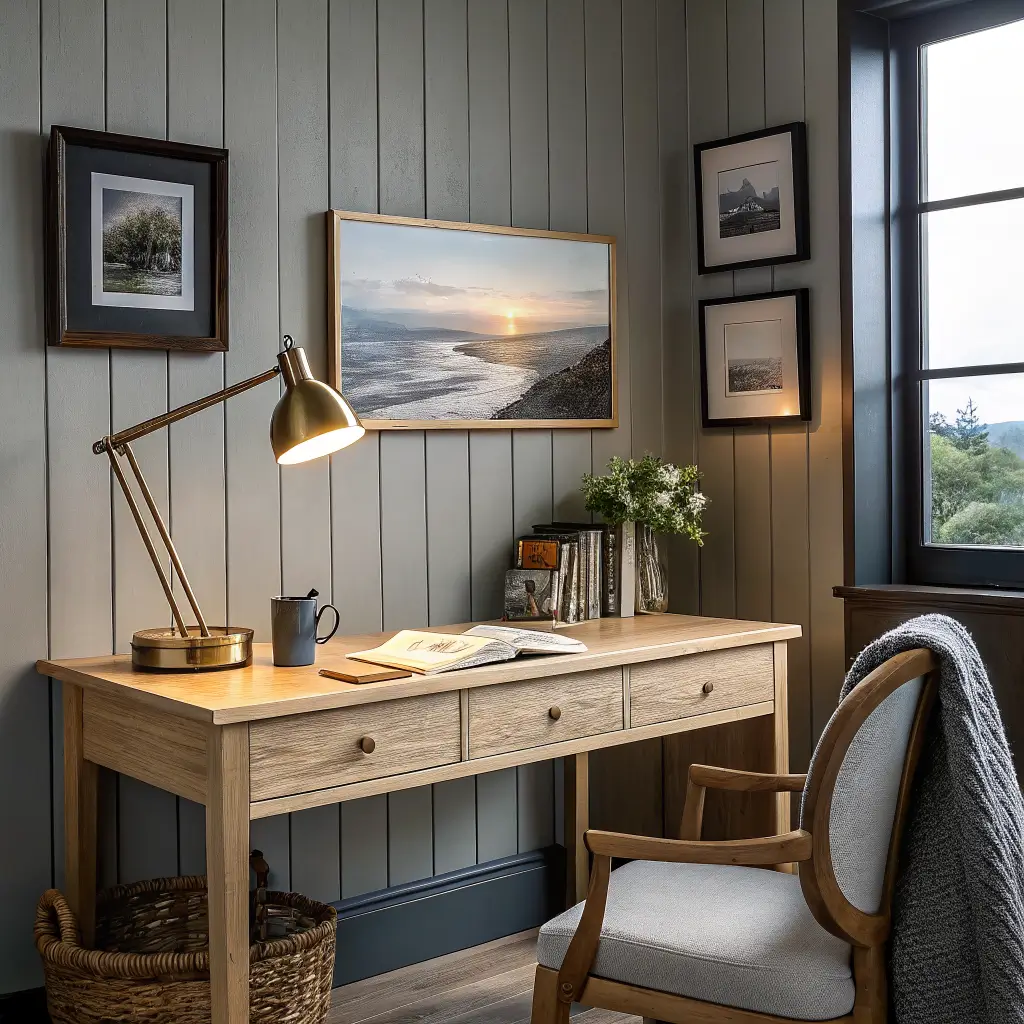
Mistakes I’ve Made So You Don’t Have To
Overfurnishing. My first cabin office had a desk, a chair, a filing cabinet, a bookshelf, a side chair for guests, and a printer stand. In 63 square feet. It felt like a submarine. Now I keep it to desk, chair, one storage piece, and a small stool that doubles as a side table.
Ignoring the walls. For six months I had a beautiful cabin office with completely bare walls and a floor covered in stuff. Move it up. Shelves to the ceiling. Pegboards. Wall-mounted file holders.
One harsh overhead light. The original fixture in my shed office was a 5000K LED puck that made the room feel like a walk-in fridge. Swapped it for a 2700K flush mount and the whole room changed personality.
Visible cable spaghetti. A $15 under-desk cable tray and a pack of adhesive clips solve 90% of this. Do it the day you set up the desk, not "eventually."
No closed storage. Open shelves look great in photos and terrible in real life once you have three months of tax paperwork. At least one cabinet with doors. Non-negotiable.
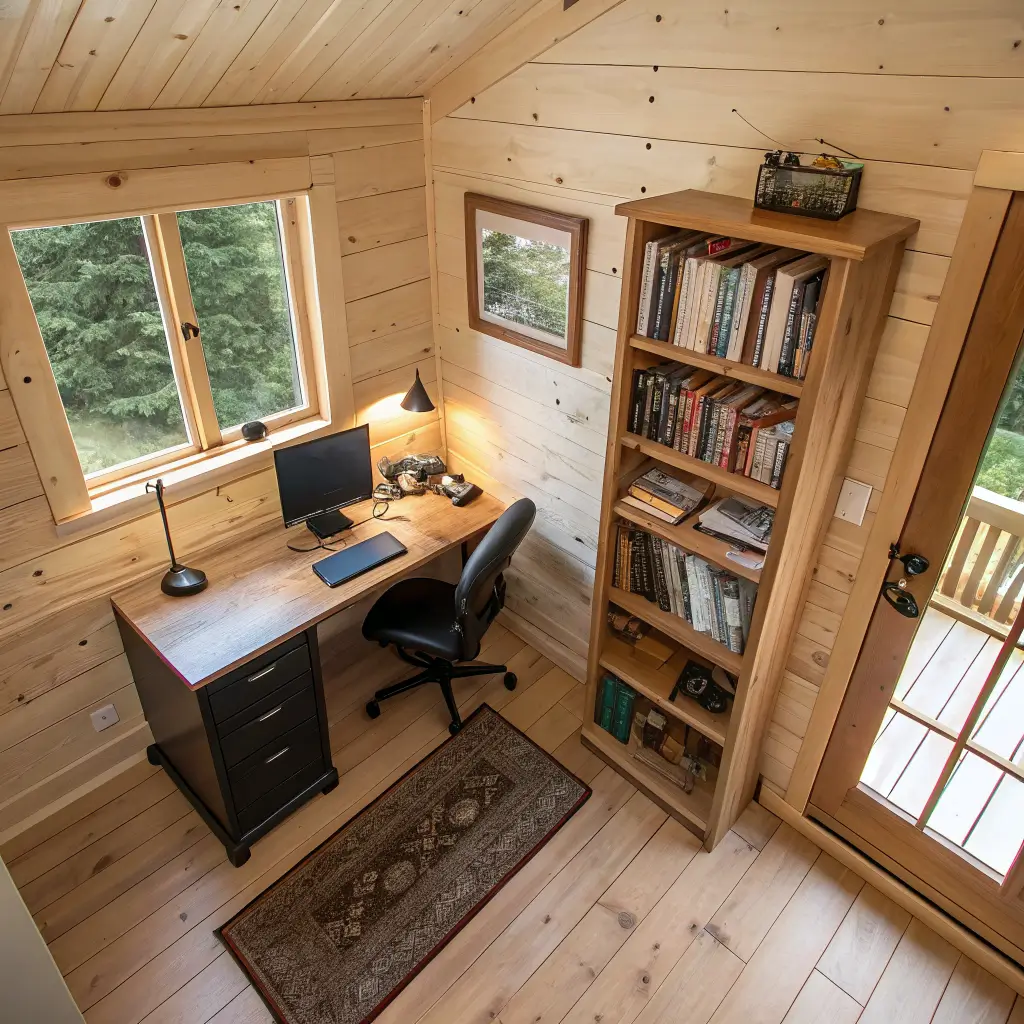
Small Additions That Punch Above Their Weight
– A mirror opposite the window. Doubles the light. In a windowless cabin corner, this is the single biggest upgrade for $40.
– One real plant. Snake plant, ZZ, or pothos — all survive low light and inconsistent watering. A 4-foot snake plant in a corner planter costs about $60 and reads as intentional in a way a fake plant never will.
– A wool throw over the chair back. Softens the room visually and covers the ergonomic chair’s plastic-y look on video.
– A small tray on the desk for pen, notebook, and phone. Contains the mess without a full clear-off every night.
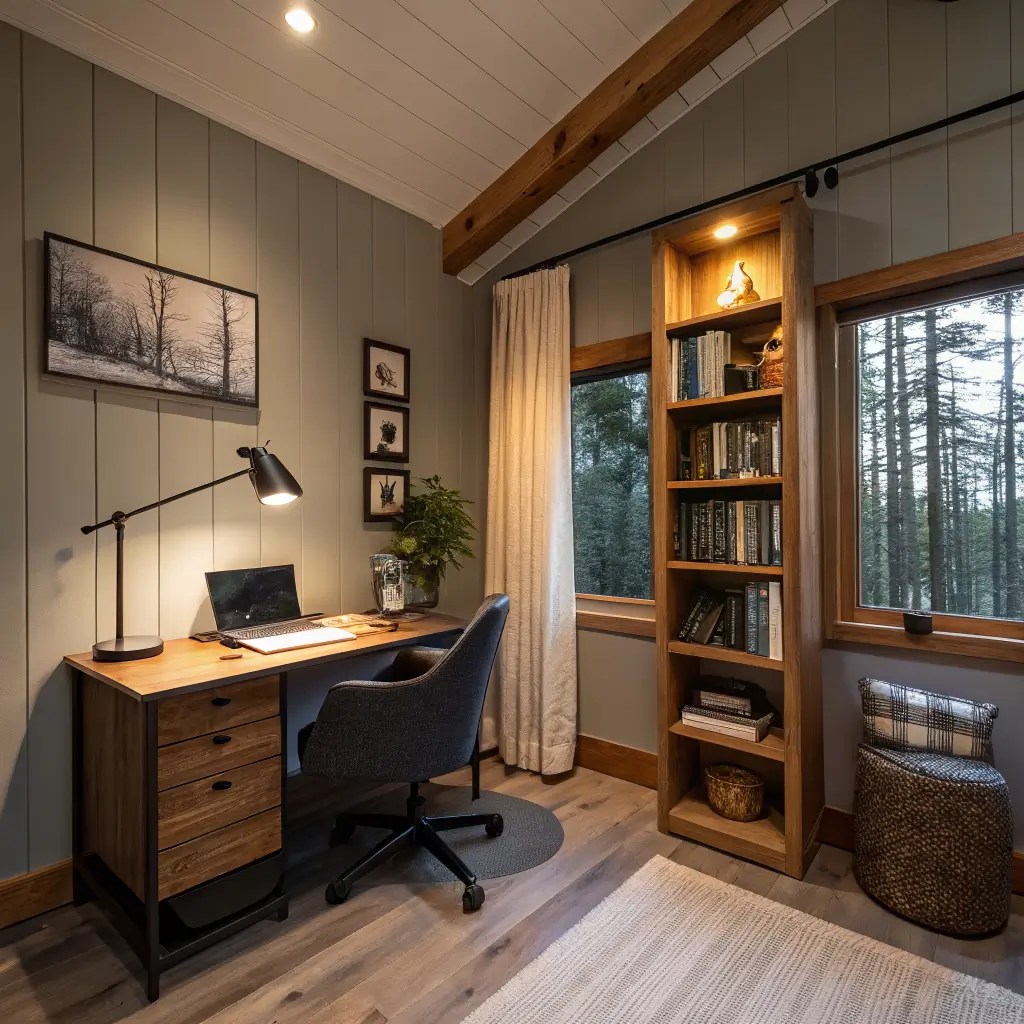
Seasonal Tweaks Without Redecorating
Keep the base neutral. Swap the small stuff:
– Fall/winter: wool throw, deeper cushion cover, a small brass candleholder, a heavier curtain layer
– Spring/summer: linen throw, lighter pillow, sheers only, a bud vase with whatever’s growing outside
Rotate two or three art prints in the same frames. Costs almost nothing and the room feels new every three months.
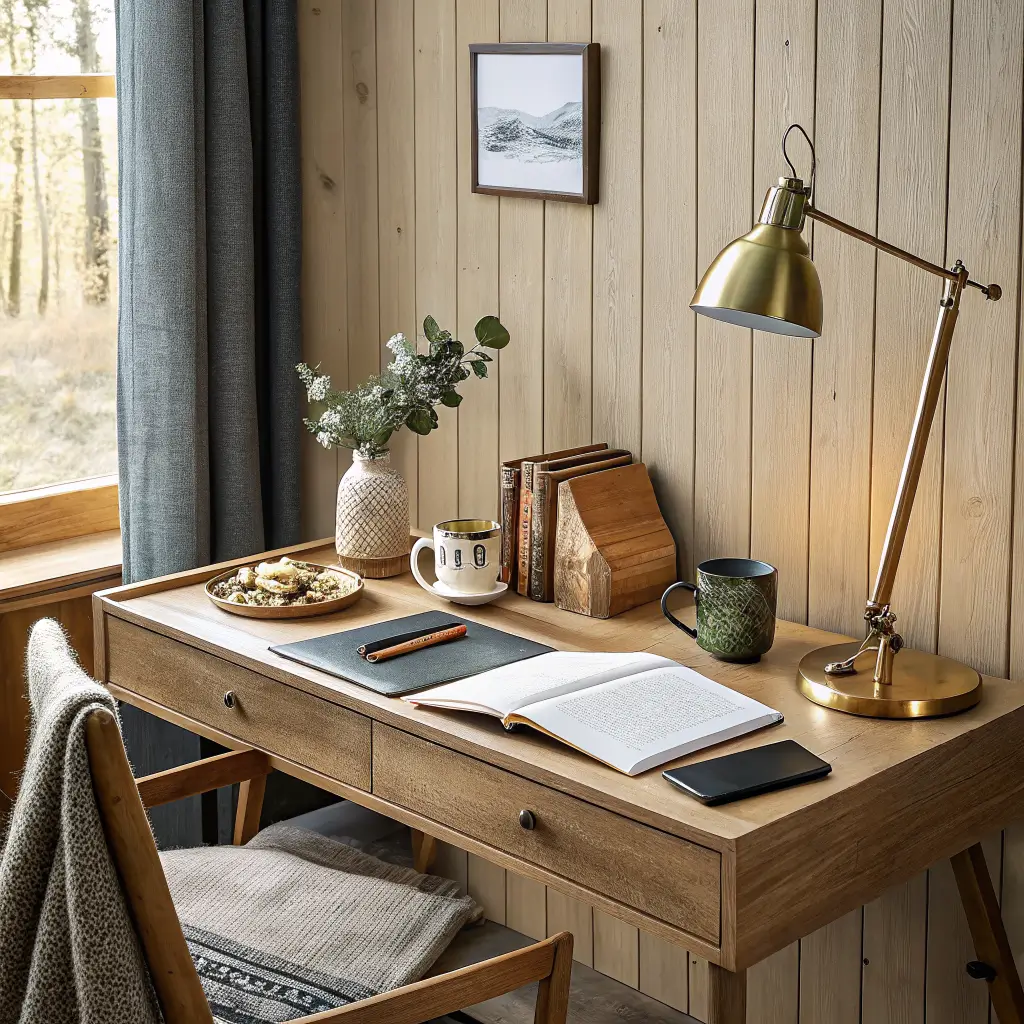
If You Want to Bend the Style
A cabin office doesn’t have to be full lodge. Some hybrids that work:
– Boho-cabin: jute rug, woven wall basket, one macramé piece, more plants. Keep the wood.
– Coastal-cabin: swap warm neutrals for cool whites and dusty blue, add a striped runner, keep the wood light.
The rule I’d keep either way: no glossy plastic finishes, no chrome. Both fight the cabin material palette and lose.
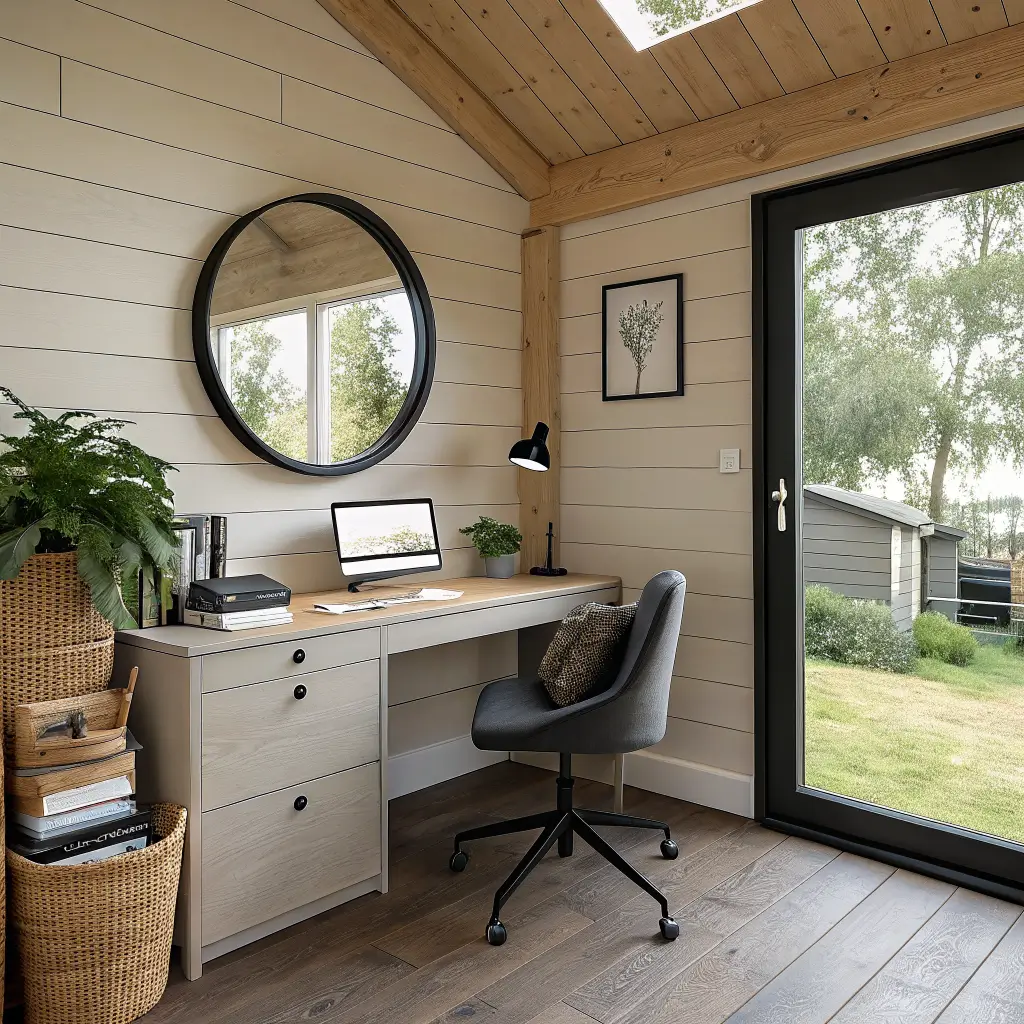
Build it in this order — chair, desk, light, storage, rug, one plant, one piece of art — and stop when it feels done. In a room this small, restraint is the whole game.