What This Style Actually Is (And Who It’s For)
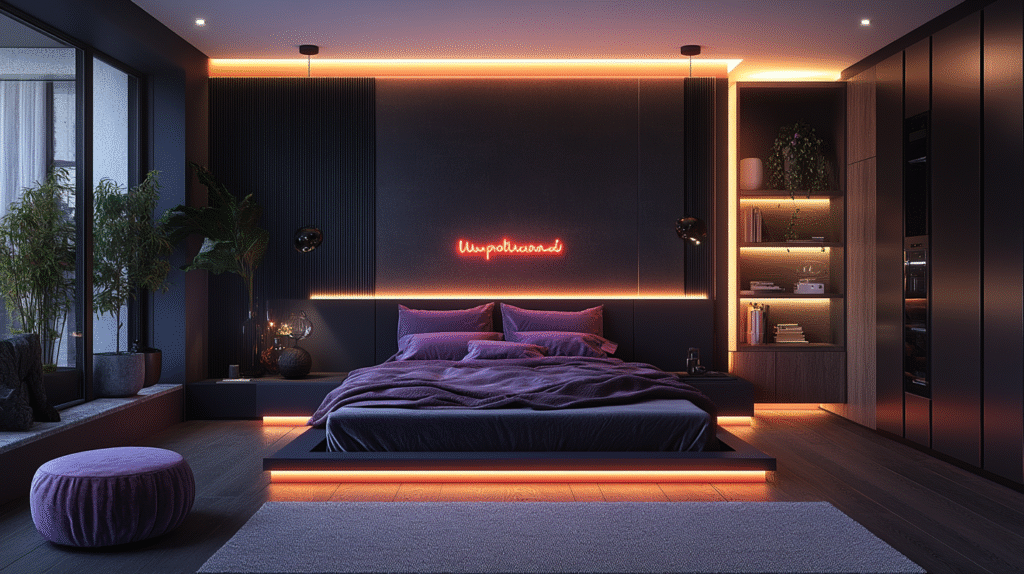
The cozy bedroom aesthetic is the one I chase with light, not stuff. A dim lamp and a heavy blanket made the room feel like a place to disappear.
A cozy bedroom aesthetic isn’t about buying more stuff — it’s about warmth, containment, and soft light hitting soft textures. I learned that the hard way after spending an entire Saturday hanging six pieces of wall art above my bed, only to take four of them down the next morning because the room felt loud instead of restful.
If your bedroom feels “off” and you can’t figure out why, it’s almost always one of three things: the lighting is too cold, the textures are too flat, or there’s too much visible stuff on every surface. Fix those and the room shifts.
Here’s how I’d build it, what I’d spend money on, and what I’d skip.
Cozy bedroom design pulls from a few overlapping ideas: Scandi restraint, hygge layering, and the quieter end of “quiet luxury.” Think light woods, stonewashed linen, wool rugs, warm bulbs, and a color palette that stays in its lane.
It’s for you if:
– You want a room that actively helps you sleep and unwind, not one that photographs well and feels tense.
– You rent, and permanent changes are limited to what you can screw into a wall (or not at all).
– You’d rather have four things you love than twenty things you tolerate.
Room size doesn’t really matter. I’ve made a 9’x10′ bedroom feel more enveloping than a 14’x16′ one, because coziness is about zones and containment, not square footage.
Time and Budget: What You’re Actually Signing Up For
A weekend refresh (4–8 hours): swap bulbs, add a rug, layer bedding, hang curtains, edit clutter.
A full makeover (1–3 days): add paint or an accent wall, install sconces or a headboard, redo the furniture layout.
Rough spends:
– Budget path ($200–$500): warm LED bulbs ($10–$40), 2–4 throw pillows ($15–$40 each), a chunky throw ($25–$70), a 5’x7′ synthetic rug ($60–$150), linen-look curtains ($40–$120).
– Mid-range ($600–$1,500): upholstered headboard ($200–$600), cotton or linen bedding ($120–$300), a pair of wood or rattan nightstands ($150–$400), an 8’x10′ wool or wool-blend rug ($250–$600), a small reading chair ($150–$400).
– Higher end ($1,500+): French flax linen bedding ($200–$500), designer sconces or lamps ($150–$500 each), a solid wood bed frame ($600–$1,200+), a vintage wool rug ($400–$1,000+).
If I could only spend money on two things, it would be bedding and lighting. Everything else can be thrifted or improvised.
The Color Palette Question
The most common mistake I see (and made myself): using stark white walls and cool-toned bulbs, then wondering why the room feels like a rental listing.
Stick to warm undertones. A few palettes that work:
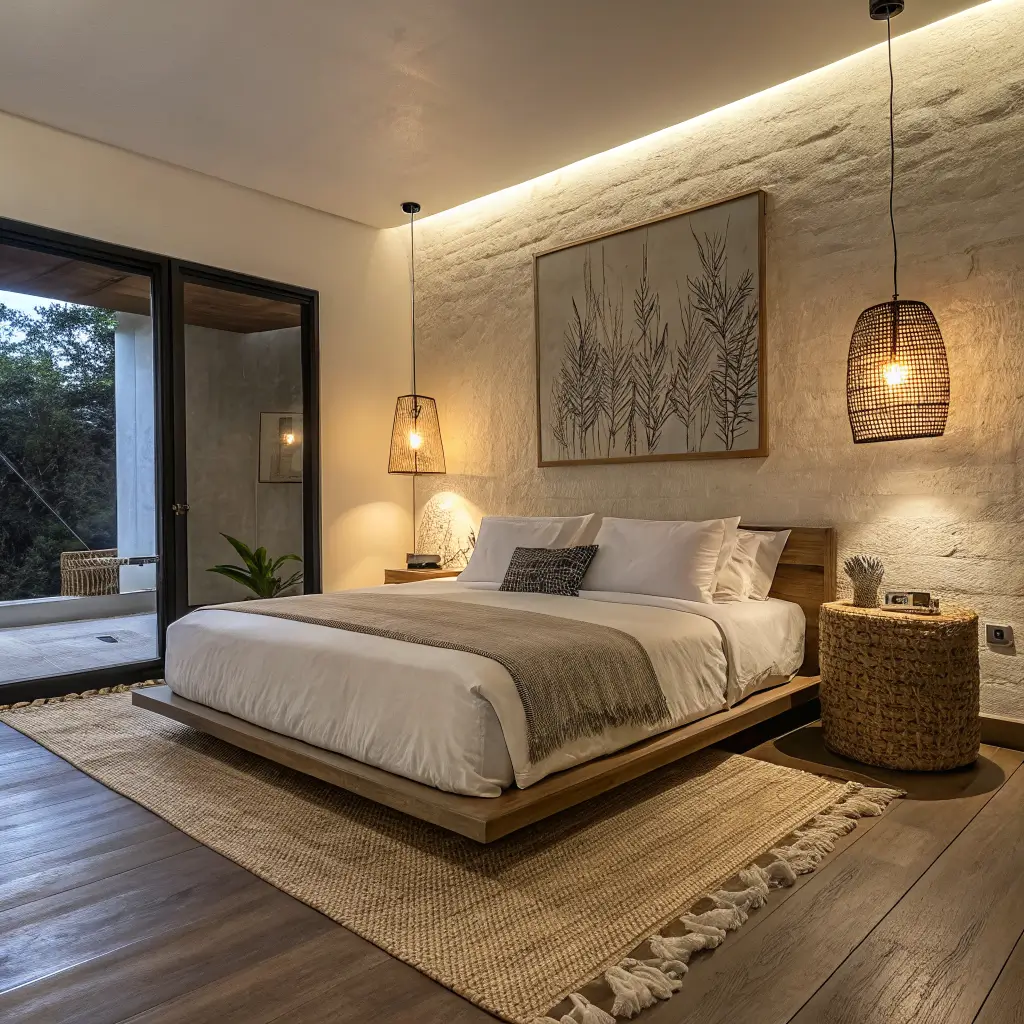
– Cream + warm taupe + light oak — the safest, hardest to mess up.
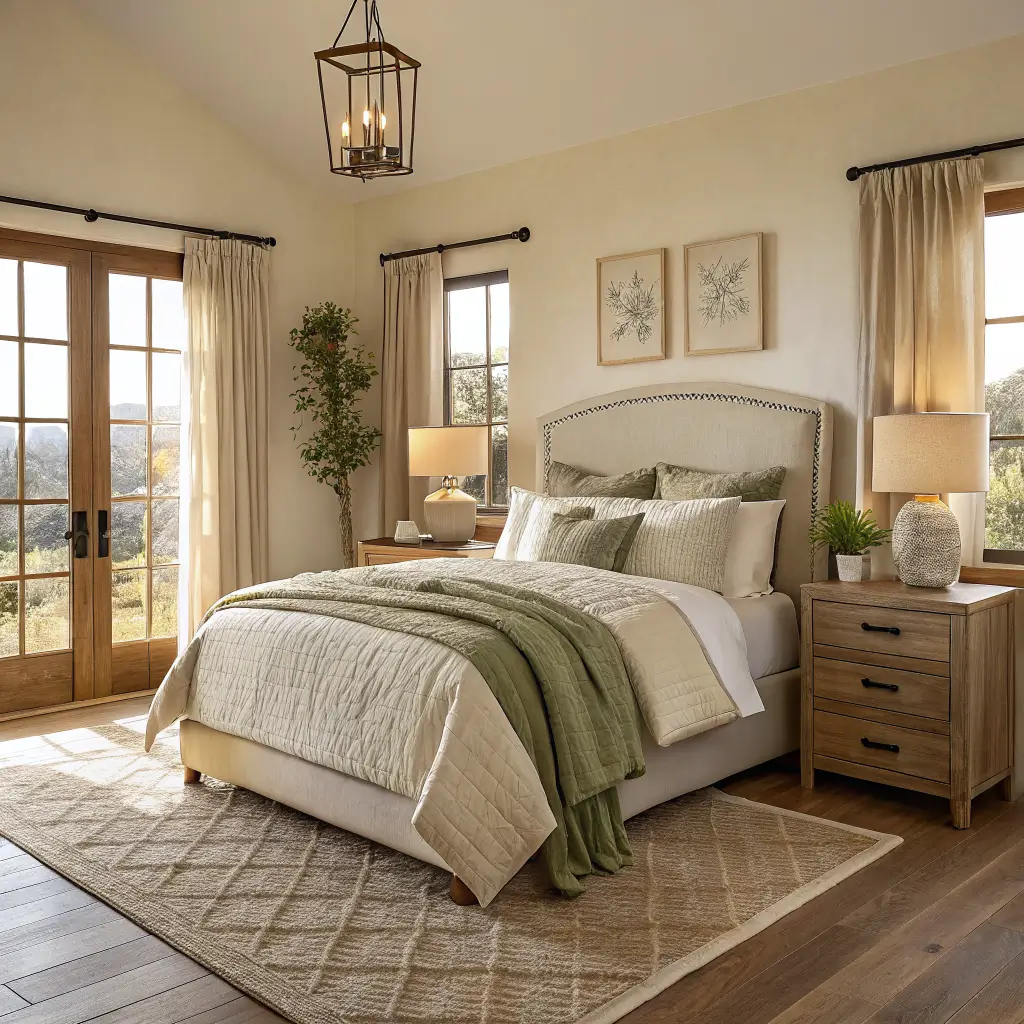
– Warm white + sage green + walnut — a little more grounded, works well with plants.
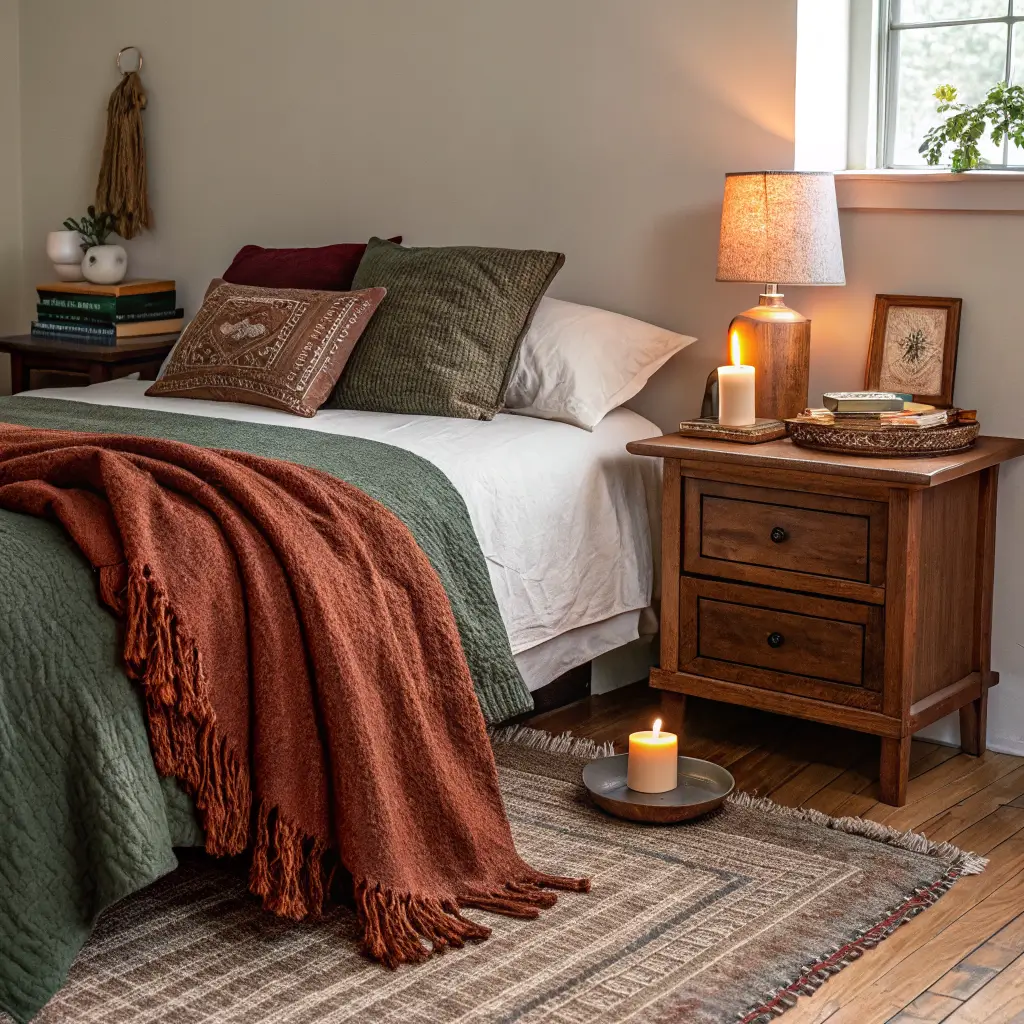
– Greige + rust or terracotta + brass — warmer and more autumnal.
– Deep cocoon palettes: navy, forest green, charcoal, or soft black on one accent wall (usually behind the bed), with lighter bedding and curtains everywhere else.
Cap yourself at 3–4 main colors, wood tone included. Any more and the room starts to buzz.
One specific paint note: if you’re painting, choose a matte or eggshell finish, not satin or semi-gloss. Sheen bounces light and reads cold. Matte absorbs it.
The Hero Pieces That Actually Do the Work
1. Layered bedding
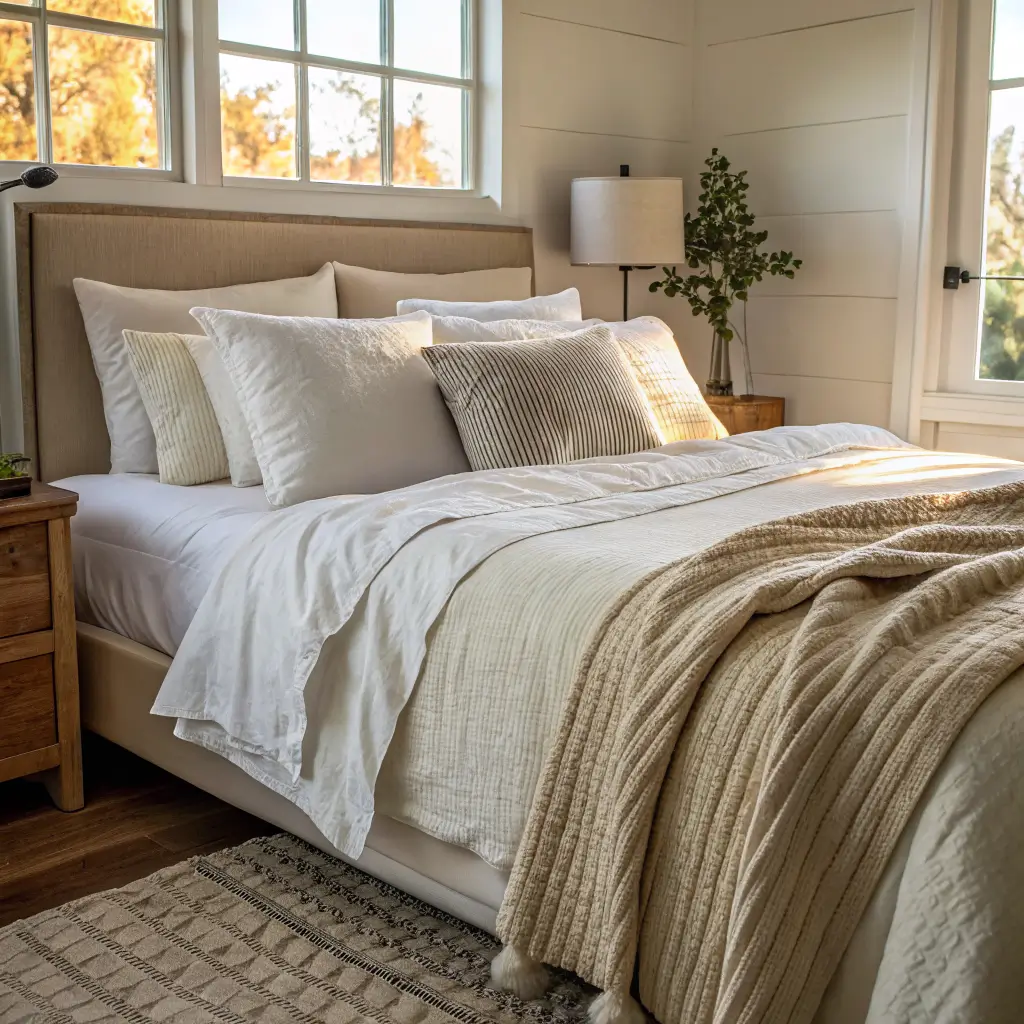
This is the single biggest factor in whether a bedroom looks cozy or not. My working formula:
– Fitted sheet + flat sheet (cotton percale if you sleep hot, linen if you like the lived-in look)
– Duvet with insert
– A lightweight quilt folded across the bottom third of the bed
– A chunky throw draped, not folded, over one corner
– 2 sleep pillows, 2 euro shams behind them, 1–2 decorative pillows in front
Skip the tiny lumbar pillow with a slogan on it. You know the one.
2. A rug you can sink your feet into
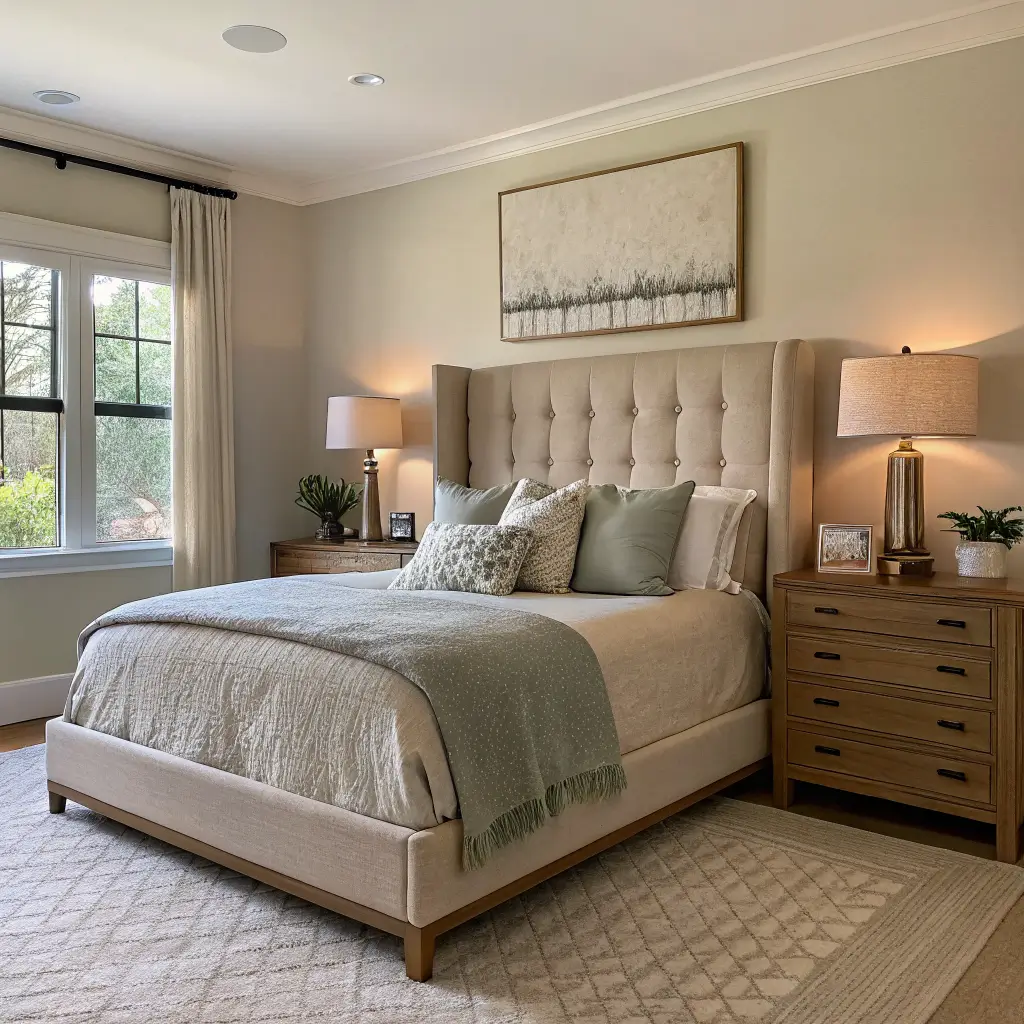
Cold floors kill the mood instantly. In a standard bedroom, get an 8’x10′ rug and put the front two-thirds of the bed on it, so it extends past the sides and foot. A 5’x7′ shoved fully under the bed is the most common rug-sizing mistake — it looks like a bathmat.
Wool is worth the money if you can swing it. Jute is cheaper but scratchy on bare feet, so layer a smaller wool or shag rug on top if you go that route.
3. Warm, layered lighting
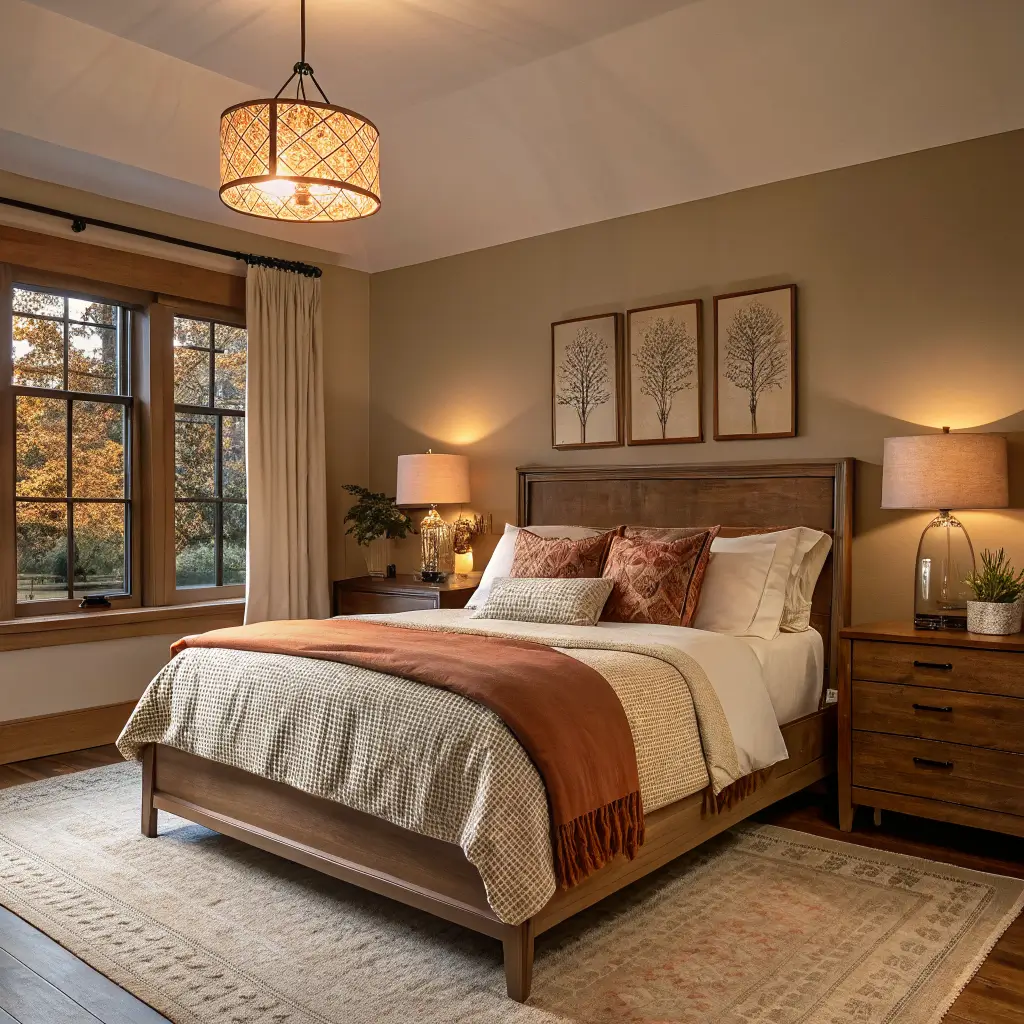
The rule that changed everything for me: overhead light off, three lower light sources on. Bedside lamps, a floor lamp in a corner, and something ambient like fairy lights behind the headboard or a small lamp on a dresser.
Use 2700K bulbs (sometimes labeled “soft white” or “warm white”). Not 3000K, not 4000K, not “daylight.” 2700K. This is non-negotiable. I bought a 12-pack on Amazon for around $25 and replaced every bulb in my apartment.
4. A headboard, even a fake one
An empty wall behind the bed makes the whole room feel unfinished. If you can’t invest in a real headboard, options that work:
– A large piece of art hung low, right where a headboard would sit
– A tapestry or heavy linen curtain hung on a rod
– A row of overlapping pillows propped against the wall
But if you’re going to spend money on furniture, spend it here. An upholstered linen headboard in a warm oatmeal or greige is the piece that shifts a room from dorm to grown-up.
Building It Out, Step by Step
1. Declutter first. Everything off the nightstands, dresser, and floor. Put it in another room. You’ll add back only what earns its place.
2. Swap the bulbs. All of them. 2700K.
3. Lay the rug. Front two-thirds of the bed, extending past the sides.
4. Layer the bed. Sheets, duvet, quilt at the foot, pillows, throw.
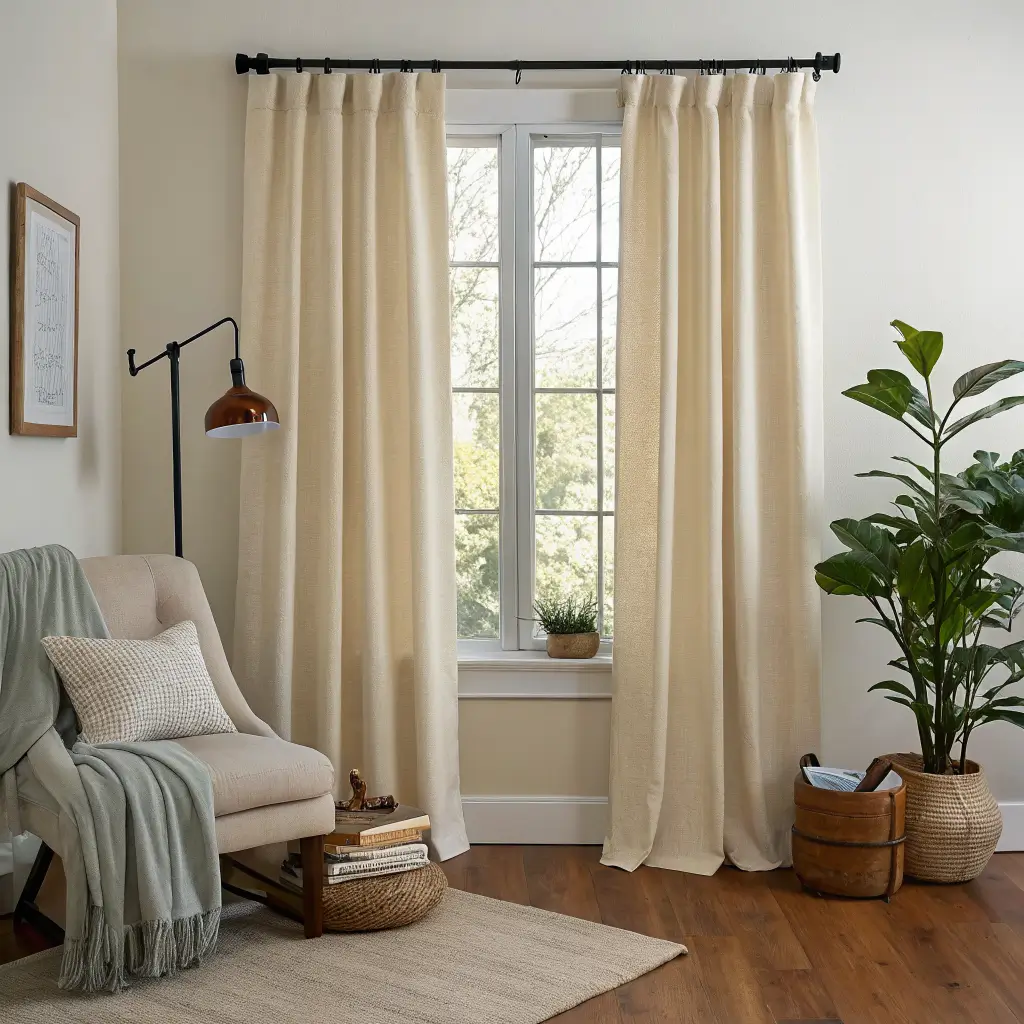
5. Hang curtains high and wide. Rod goes 4–6 inches above the window frame and extends 6–10 inches past each side. Curtains should just kiss the floor. Short curtains are the fastest way to make a room look juvenile.
6. Add lamps. One per nightstand, minimum. Fabric shades, not metal or glass.
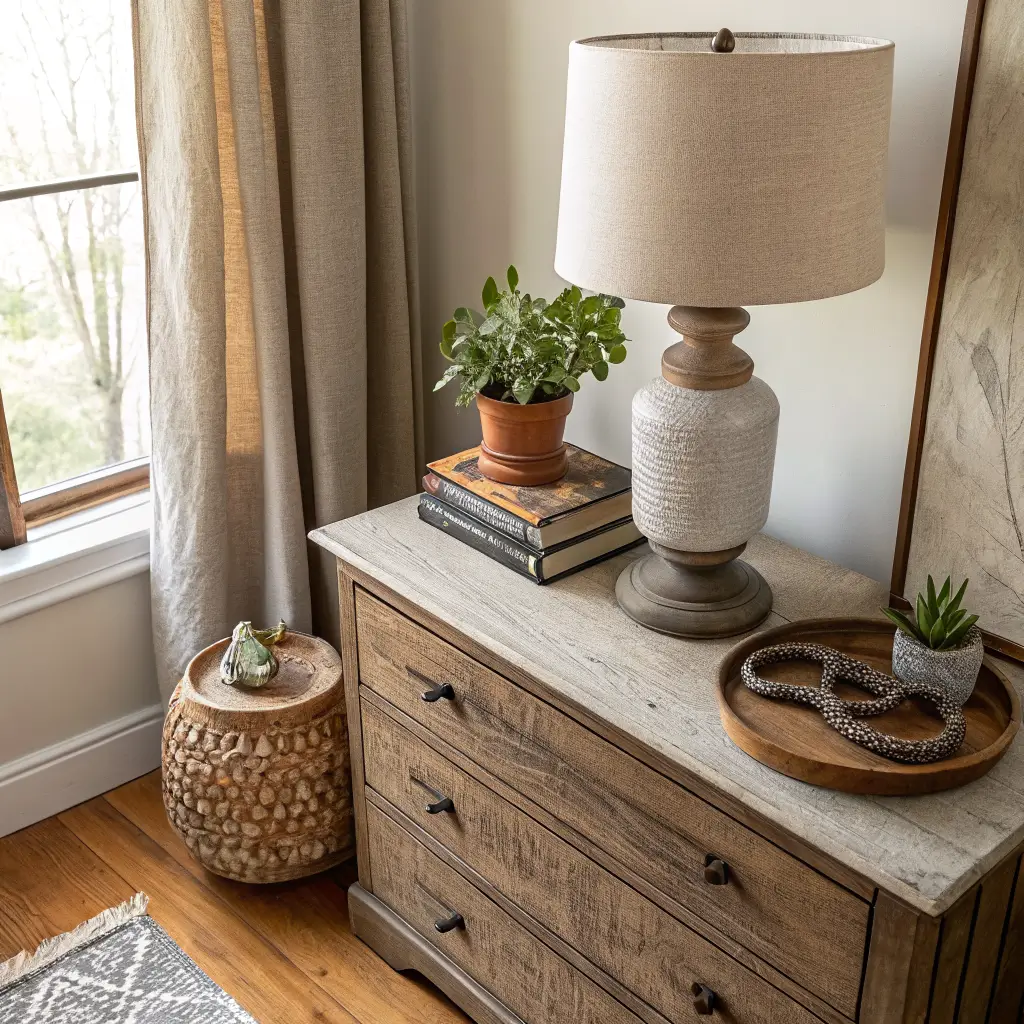
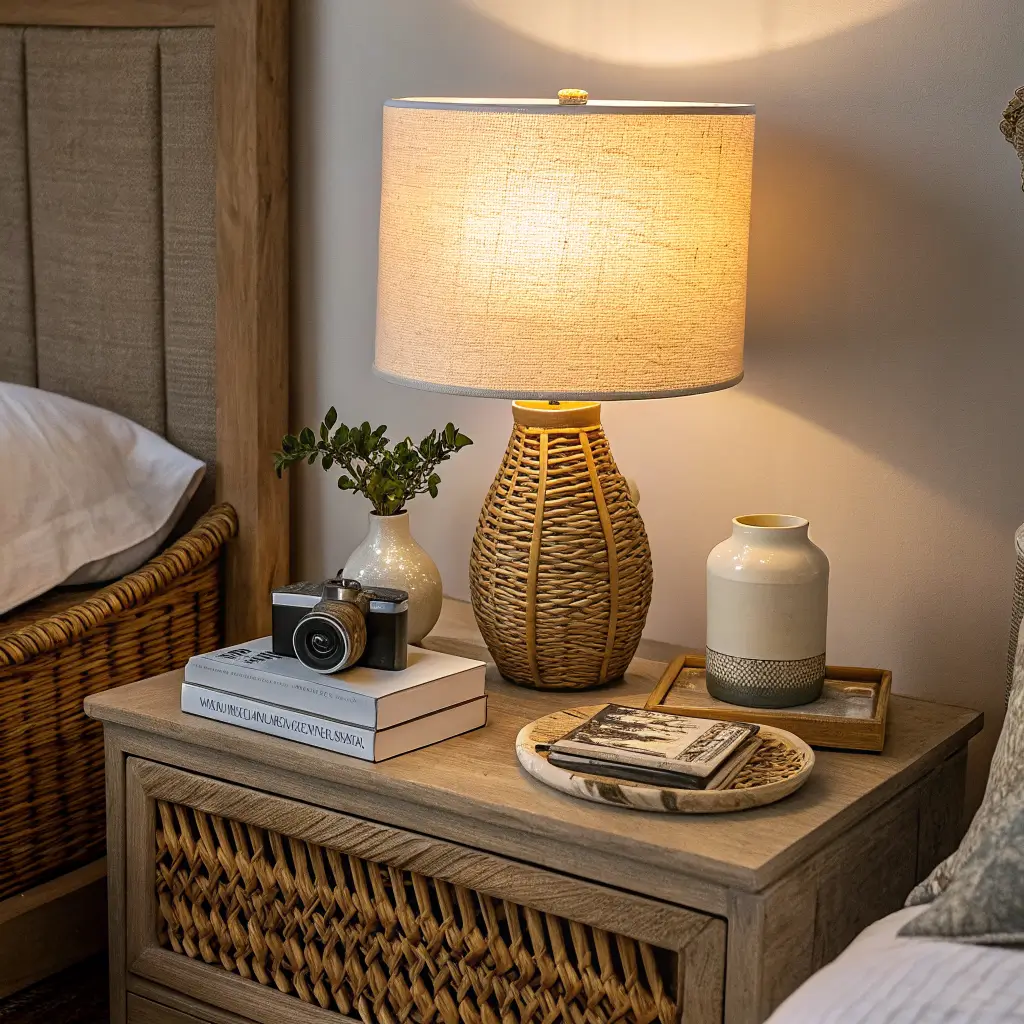
7. Style surfaces sparsely. On each nightstand: lamp, book, small ceramic dish or candle. That’s it.
8. Add one plant. A pothos on the dresser or a 4-foot snake plant in an empty corner. Not seven plants. One or two.
9. Hang art last. One larger piece over the bed, or a pair of smaller pieces at nightstand level. Hang lower than you think — the bottom of the frame should sit 6–10 inches above the headboard.
Mistakes I’ve Made So You Don’t Have To
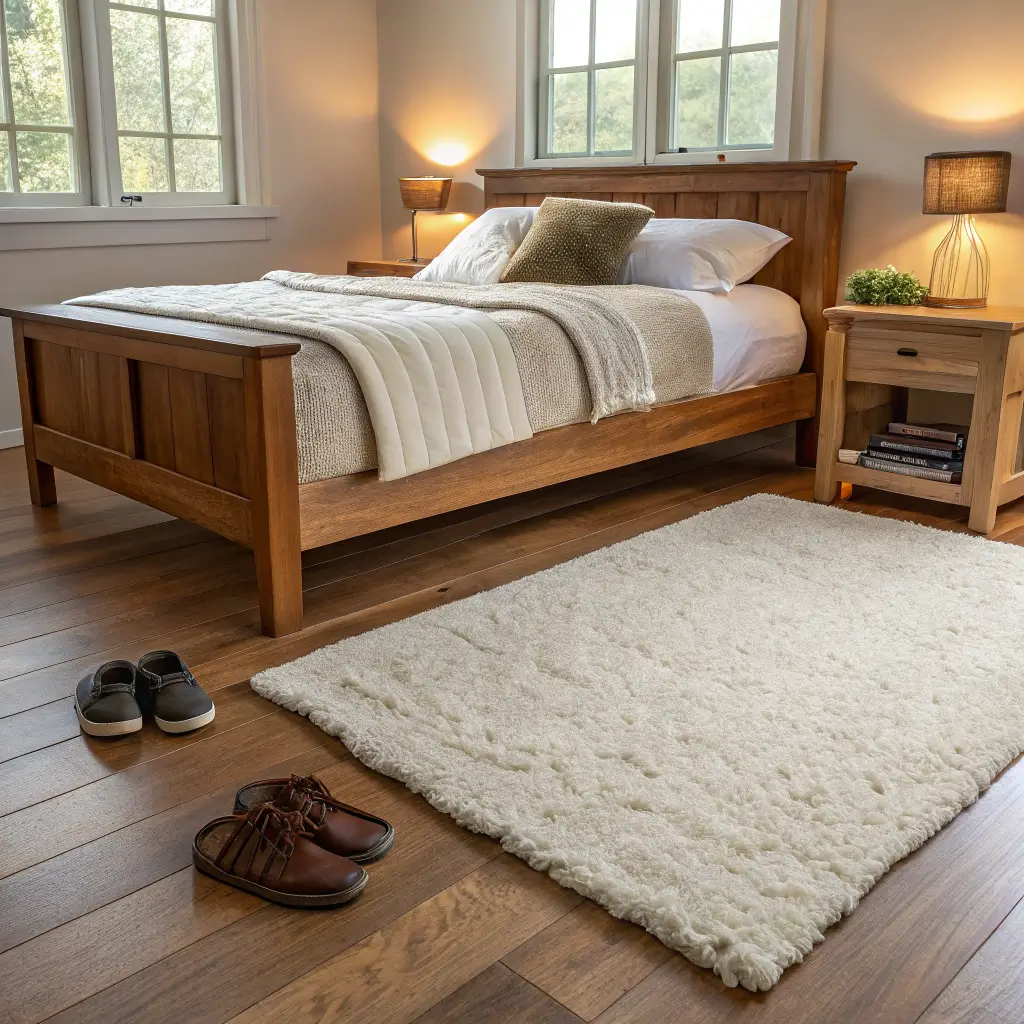
Buying a 5’x7′ rug for a queen bed. I did this twice. Both times I ended up giving the rug to a friend and buying an 8’x10′. Just start there.
Cool-toned “greige” that goes blue in low light. Test paint samples at night with your bedside lamps on, not during the day. That’s when you’ll be looking at the walls most.
Too many patterns at once. Small stripe pillow + micro-check euro sham + botanical print curtain + geometric rug = noise. Pick one pattern to lead and keep everything else solid or textural.
Fake plants in cheap plastic pots. If you’re going faux, invest in one nice-looking one (Pottery Barn and Afloral have decent ones) and re-pot it in a terracotta or ceramic planter. The pot matters more than the plant.
High-gloss anything. Lacquered nightstands, shiny chrome lamp bases, satin-finish paint. All of it reads cold. Choose matte, honed, brushed, or raw finishes instead — brushed brass, honed stone, unlacquered wood.
What to Splurge On vs. Save On
Splurge:
– Bedding (you touch it every day for 8 hours)
– The headboard or bed frame
– One good wool rug
– Lamps with fabric shades
Save:
– Throw pillows — HomeGoods, Target, and thrift stores are fine
– Art — framed prints, DIY canvases, and thrifted paintings all work
– Baskets and small ceramics — thrift these, always
– Curtains — IKEA’s linen-blend ones look far more expensive than they are
The best piece in my bedroom is a $14 stoneware lamp base I found at a Goodwill in Pittsburgh, paired with a $30 linen drum shade from Amazon. It looks like something from a $400 catalog listing. Nobody has ever guessed the price.
Keeping It Fresh Without Redoing the Whole Room
Seasonal swaps are the cheapest way to keep a room feeling considered:
– Fall/winter: heavier wool throw, deeper pillow covers (rust, forest, burgundy), a spiced or woody candle (sandalwood, tobacco, cedar).
– Spring/summer: lighter linen throw, dusty blue or sage covers, brighter scents (bergamot, fig, neroli).
I keep two bins in my closet labeled “warm” and “cool” and swap the contents twice a year. Total refresh time: 20 minutes.
If you want to shift the whole style without starting over:
– Boho lean: add a woven wall hanging, one more plant, mixed earthy patterns. Keep the lighting exactly the same.
– Coastal lean: swap to dusty blue and cream, add lighter woods, but resist the urge to add rope or shells.
– Rustic lean: bring in a vintage quilt, plaid pillow, and swap in a distressed wood nightstand or two.
The Cozy Bedroom Aesthetic: A Real Guide to Making Your Room Feel Like a Retreat
The cozy foundation — warm light, layered textures, restrained palette, uncluttered surfaces — stays the same. Everything else is just accessories on top of it.
The bedroom I’m sitting in right now went through about four full rearrangements before I got it right. I moved the bed to three different walls, tried two different rug sizes, and repainted once from a cool gray to a warm cream. What finally worked wasn’t more stuff. It was less stuff, warmer light, and better textiles. That’s the whole thing.