What This Style Actually Is (and Who It’s For)
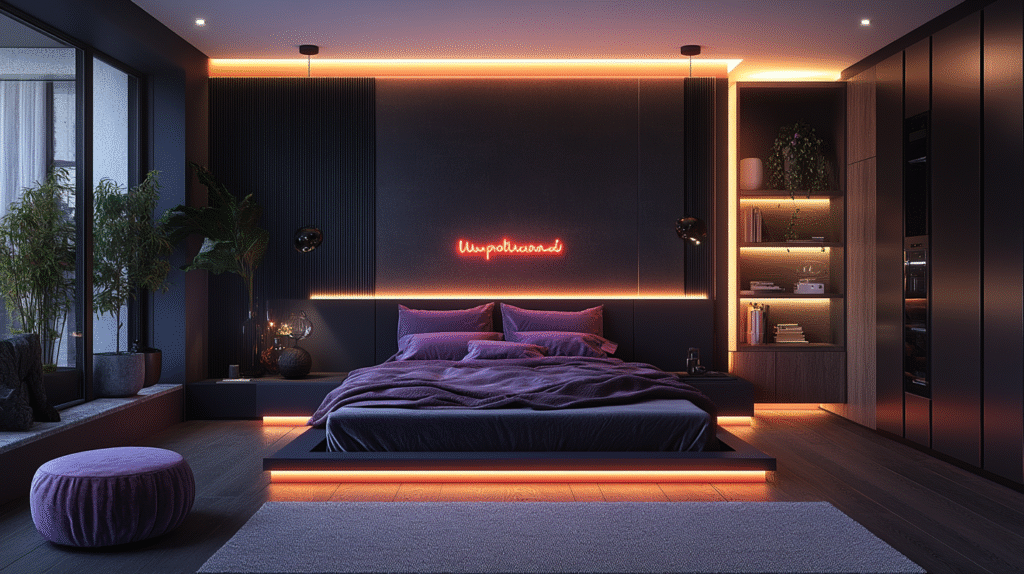
The dark aesthetic decor was the look I feared would feel heavy, then loved for the calm. Deep walls and one warm light made the room quiet in the right way.
At its core, dark aesthetic decor is about deep saturated color plus layered warm lighting plus tactile materials. That’s the whole formula. Everything else is variation.
The main branches worth knowing:
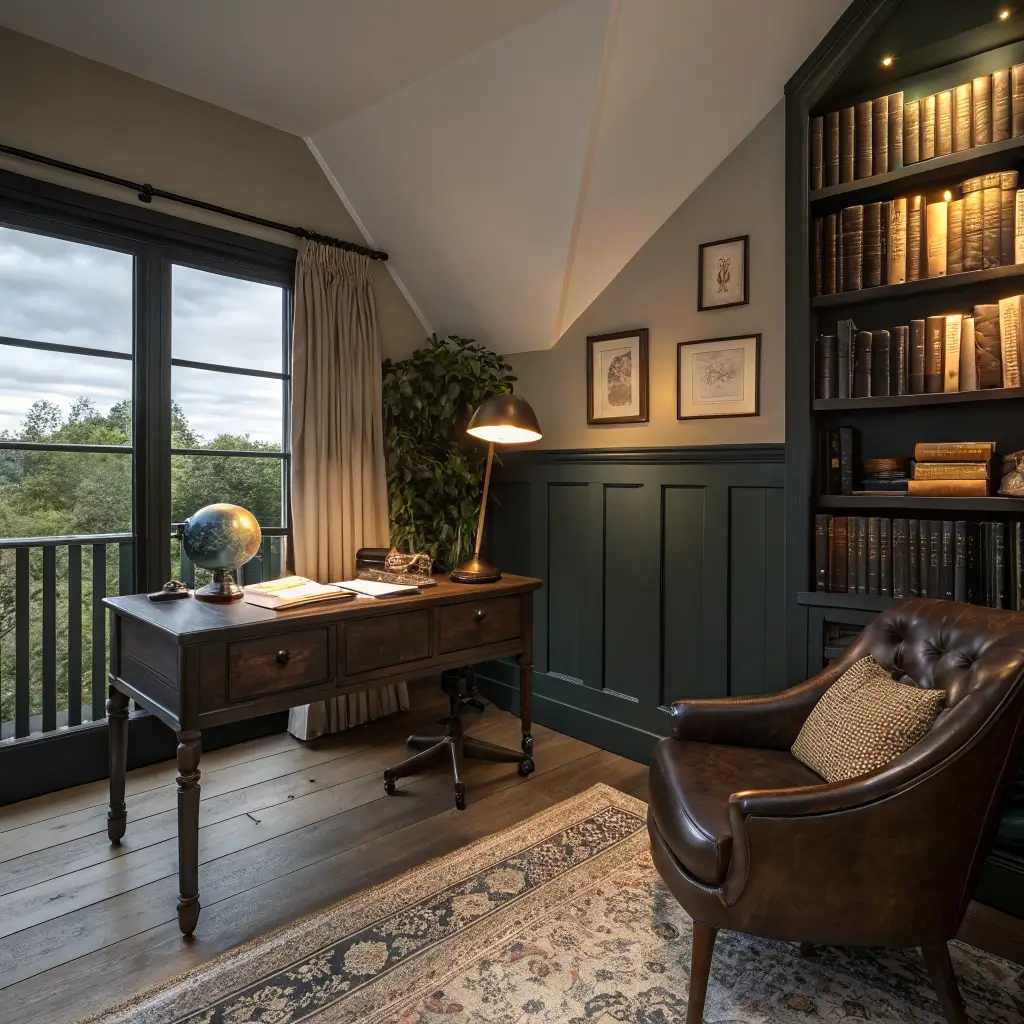
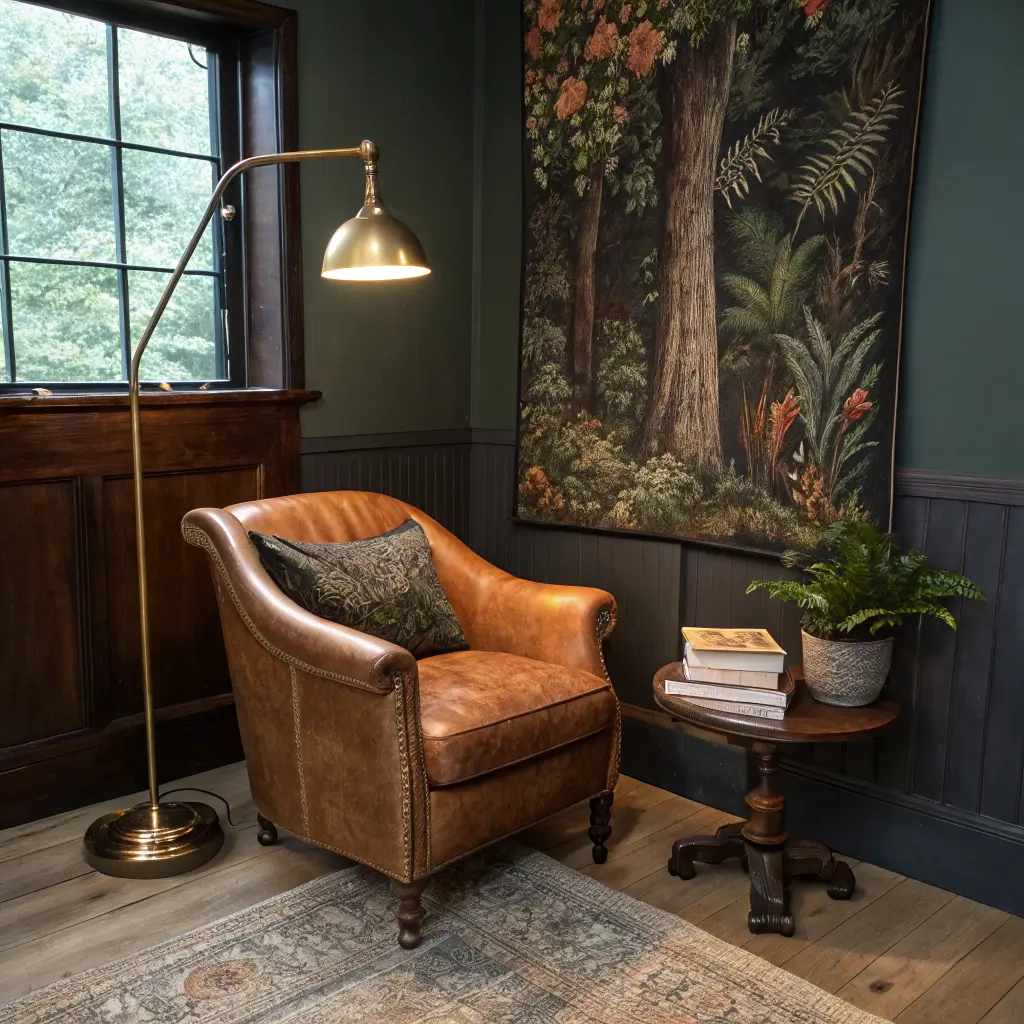
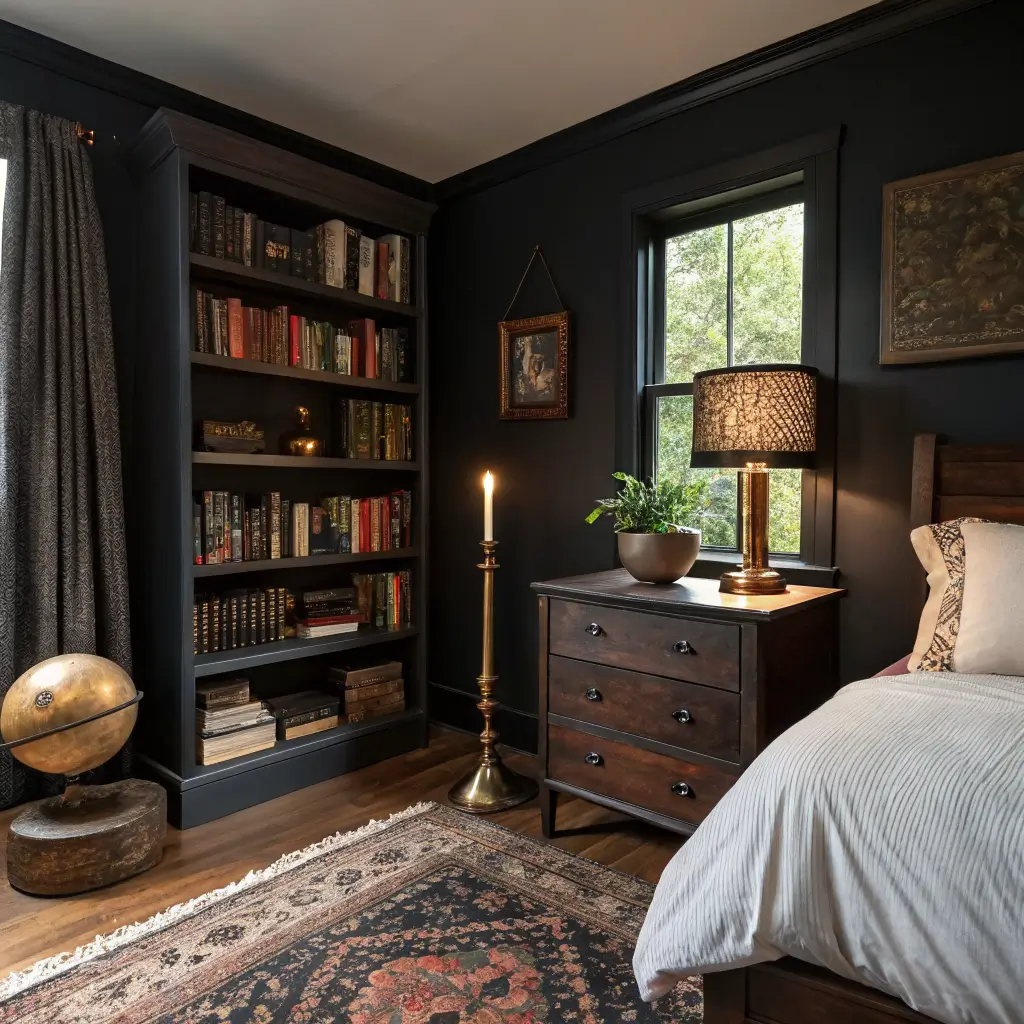
– Dark academia — leather-bound books, brass lamps, dark walnut, tobacco and forest green. Reads like an old university library.
– Modern gothic — off-black walls, blackened iron, stone, spare and architectural. Fewer objects, more silhouette.
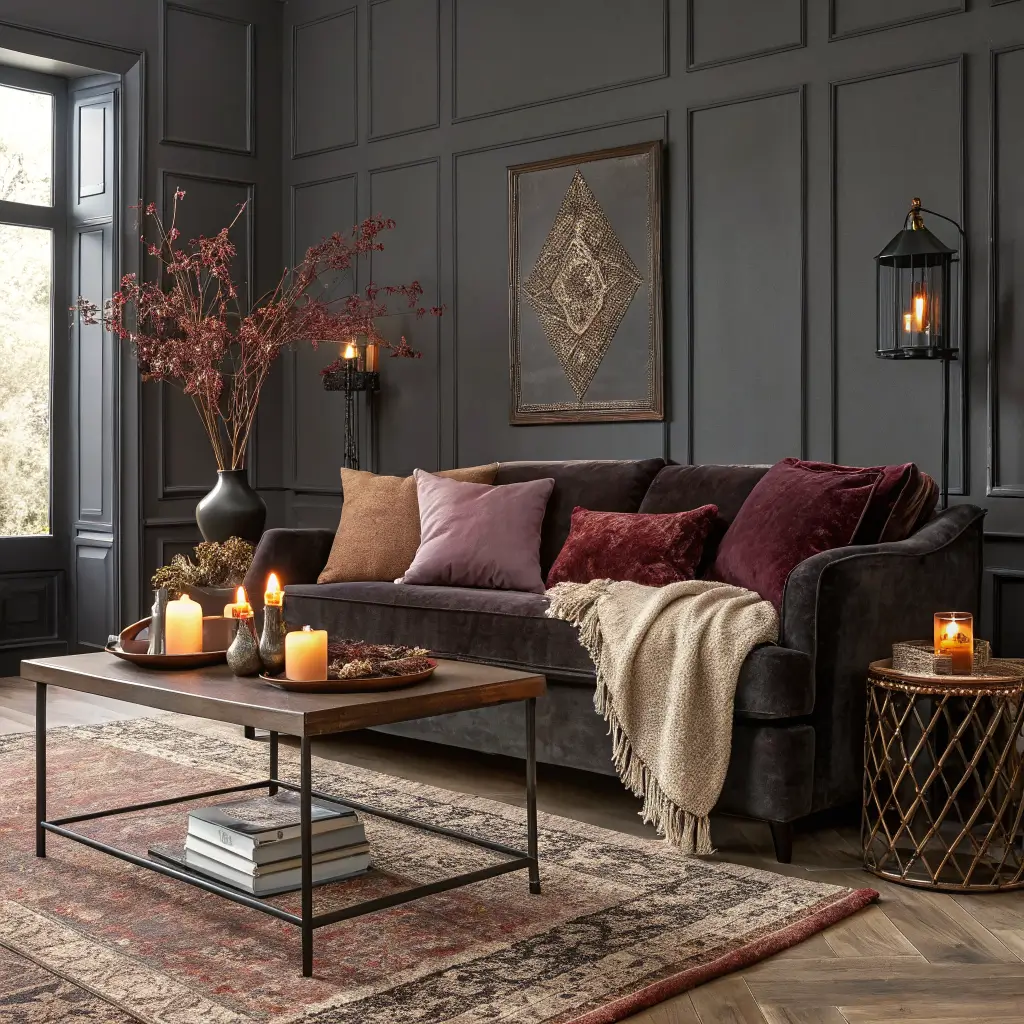
– Luxe moody — velvet in emerald or oxblood, aged brass, lacquered surfaces. The one that photographs like a hotel bar.
This works if you want a room that feels cinematic and personal instead of light and airy. It’s ideal for bedrooms, home offices, media rooms, and dining rooms — anywhere you spend evenings, read, watch things, or want to feel wrapped up. It’s a harder sell for a sun-drenched breakfast nook.
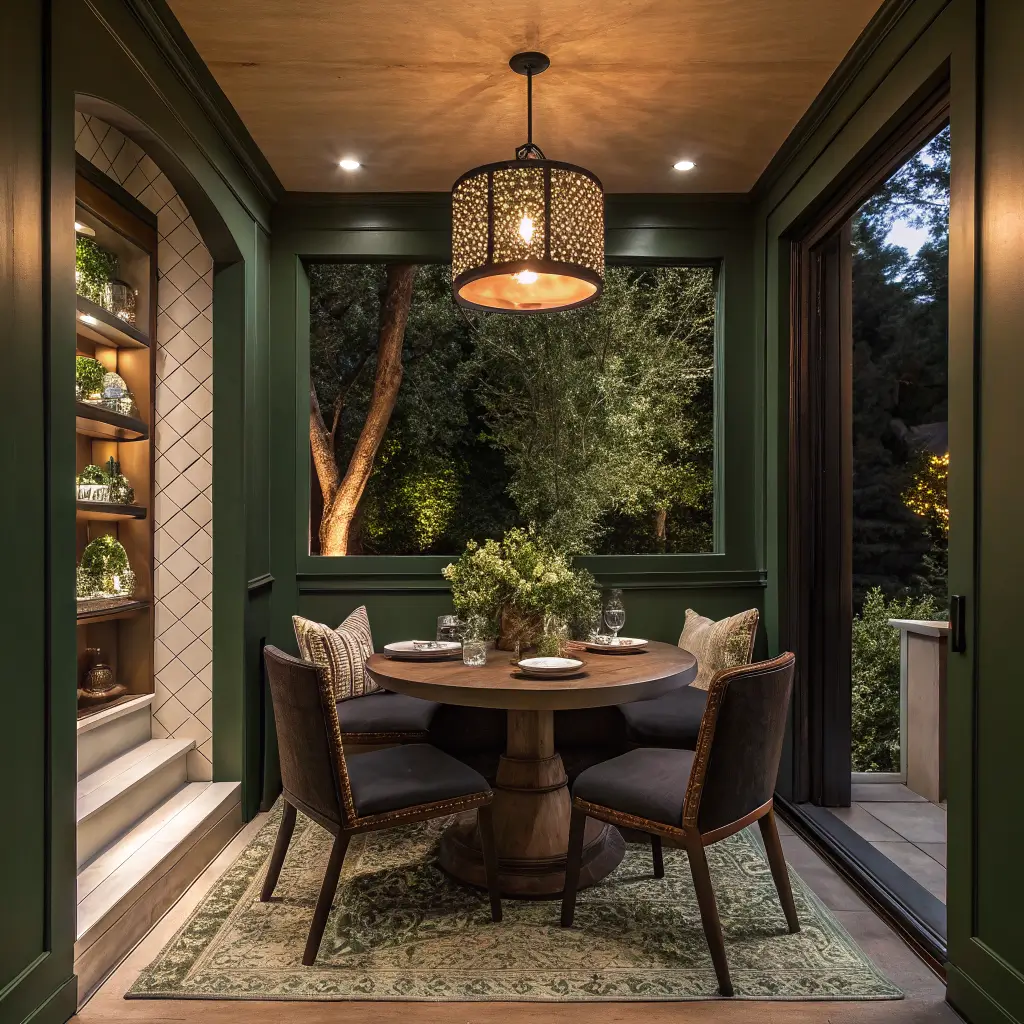
Best in rooms up to about 250 square feet. In big open-plan spaces, don’t try to darken the whole thing. Pick a zone — a reading corner, a media wall, a dining alcove — and let the darkness live there.
Time and Money, Honestly
A weekend gets you a small bedroom or a corner setup: curtains swapped, lamps replaced, pillows and throws changed, maybe one accent wall painted.
Two to three weekends for a full living room, especially if you’re painting and hunting down a vintage piece or two.
Rough budgets from my own spreadsheets:
– Light refresh, no paint: $150–$400. Velvet curtains ($40–$120), two warm-bulb table lamps ($30–$80 each), a couple dark throw pillows and a heavy throw ($60–$120 total).
– Real room transformation: $600–$1,500. Paint for a 12×15 room runs about $90–$210 for two to three gallons of quality matte. Add a dark wood console ($150–$600), a deep-toned 8×10 rug ($150–$400), and one vintage accent chair from Marketplace ($200–$500).
– Design-forward: $2,000+. Brass sconces start around $150 each and go past $600. A velvet sofa in a custom color is $800 and up. Real art on the walls adds another few hundred, easy.
Colors and Materials That Actually Work
For paint and big upholstery, pick from:
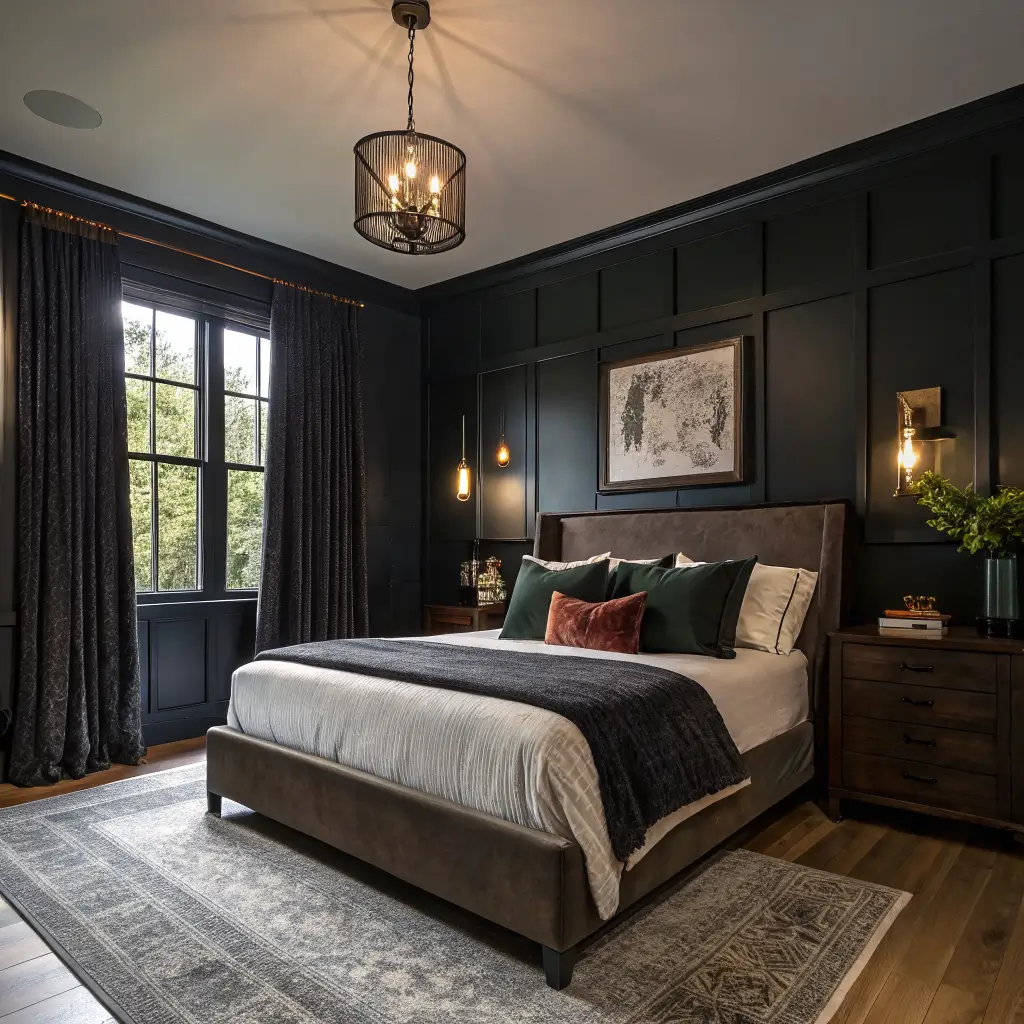
– Charcoal, graphite, off-black — the workhorses
– Deep navy, forest green, oxblood, plum, rust — for walls or a statement sofa
– Espresso, walnut, dark olive — the warm neutrals that keep it from going cold
For materials, mix at least three of these in one room:
– Velvet (pillows, curtains, one upholstered piece)
– Heavy linen or wool (curtains, throws)
– Dark-stained wood or blackened oak (shelving, side tables)
– Brass or aged gold (lamp bases, frames, hardware)
– Stone or ceramic (vases, lamp bases, one heavy object)
The single biggest reason a dark room feels flat is monotexture. All matte, all soft, all one finish — dead. You need something to catch the light.
The Pieces That Make or Break the Room
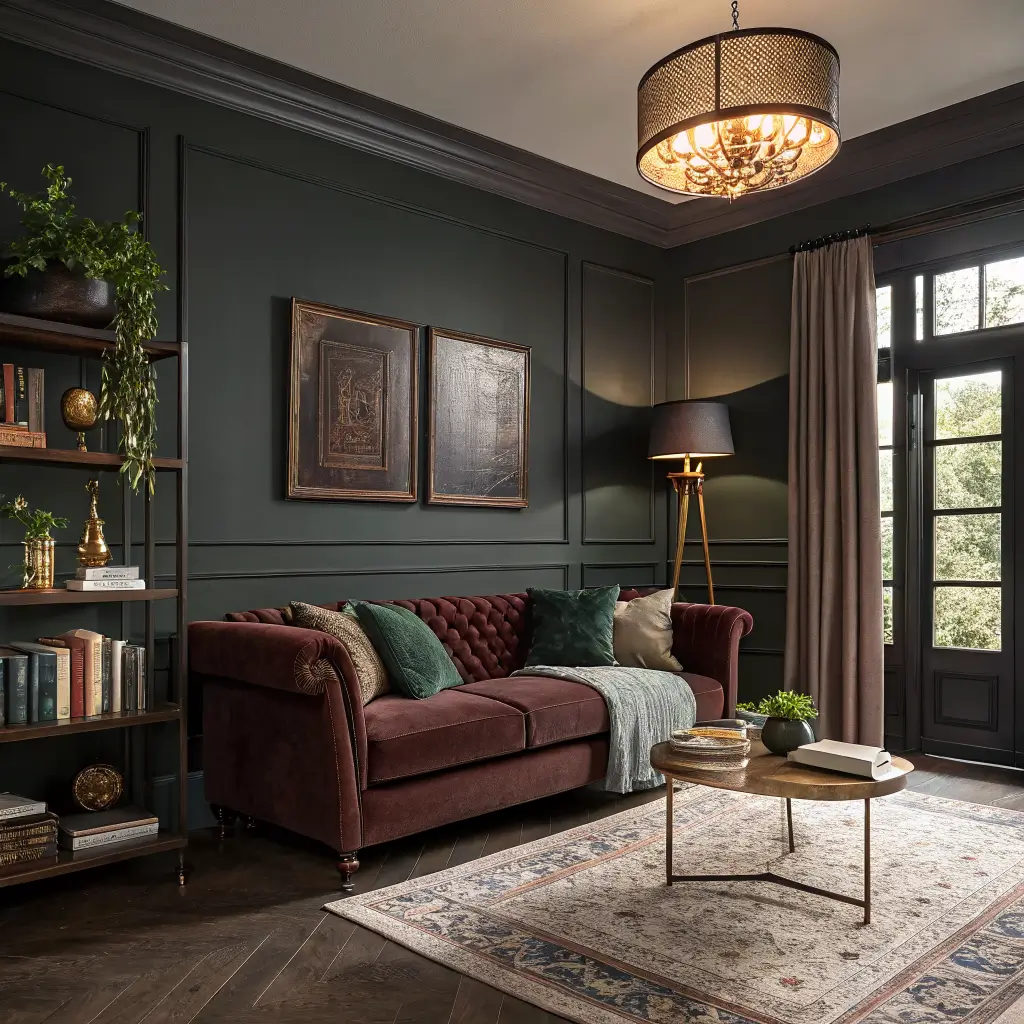
A hero piece. One large, grounded thing that sets the tone. A charcoal velvet sofa. A dark walnut bookshelf. A four-poster bed in blackened wood. This is where I’d spend real money. Everything else styles around it.
Heavy curtains, floor to ceiling. This matters more than people think. Short curtains that stop at the window frame will kill the mood no matter what else you do. Hang the rod 4–6 inches below the ceiling and let the fabric puddle slightly on the floor. Velvet or heavy linen, blackout lining if you can swing it.
A real rug. Dark Persian patterns, deep tonal wool, or a vintage kilim in muted colors. Get it big enough that the front legs of your main furniture sit on it. A too-small rug reads like a bath mat and cheapens everything around it.
Lighting in three layers (more on this below — it’s the thing most people get wrong).
Signature accessories: ornate mirrors in brass or blackened frames, candles in actual metal holders (not glass jars), stacks of used books, one or two heavy ceramic pieces. For dark academia specifically: a globe, brass candlesticks, framed botanical or anatomical prints, a leather desk pad.
How to Actually Put It Together
Start with the envelope
Paint the walls before you do anything else. Use a matte or eggshell finish — never satin or semi-gloss on a dark wall. Shiny finishes on dark paint show every roller mark and reflect light in a way that flattens the color. Farrow & Ball’s Railings, Benjamin Moore’s Black Beauty, and Sherwin-Williams Iron Ore are all reliable if you want a shortcut.
Renting? A 12-foot-wide dark tapestry behind the bed costs about $40 and does 80% of what an accent wall does. Peel-and-stick wallpaper in a moody botanical is the next step up.
Test your color on the wall for at least 48 hours before committing. Dark paint shifts dramatically from morning to lamplight, and half the “I hate my dark walls” posts online are from people who skipped this step.
Anchor the furniture
Push your largest piece — sofa, bed, desk — against or near the darkest wall. It’ll disappear slightly into the background, which is what you want. That creates the cave-like enclosure that makes the room feel intimate instead of demanding attention from every direction.
If your floor is dark too, put a lighter or mid-tone rug underneath. My living room has near-black walls and a dark walnut floor, and without the faded rust-and-cream vintage rug I found on Marketplace for $180, the whole room would collapse into a black hole.
Layer the lighting (this is the whole game)
If you take one thing from this article, take this:
Kill the overhead light. Or at minimum, put it on a dimmer and never use it above 30%.
Then build up:
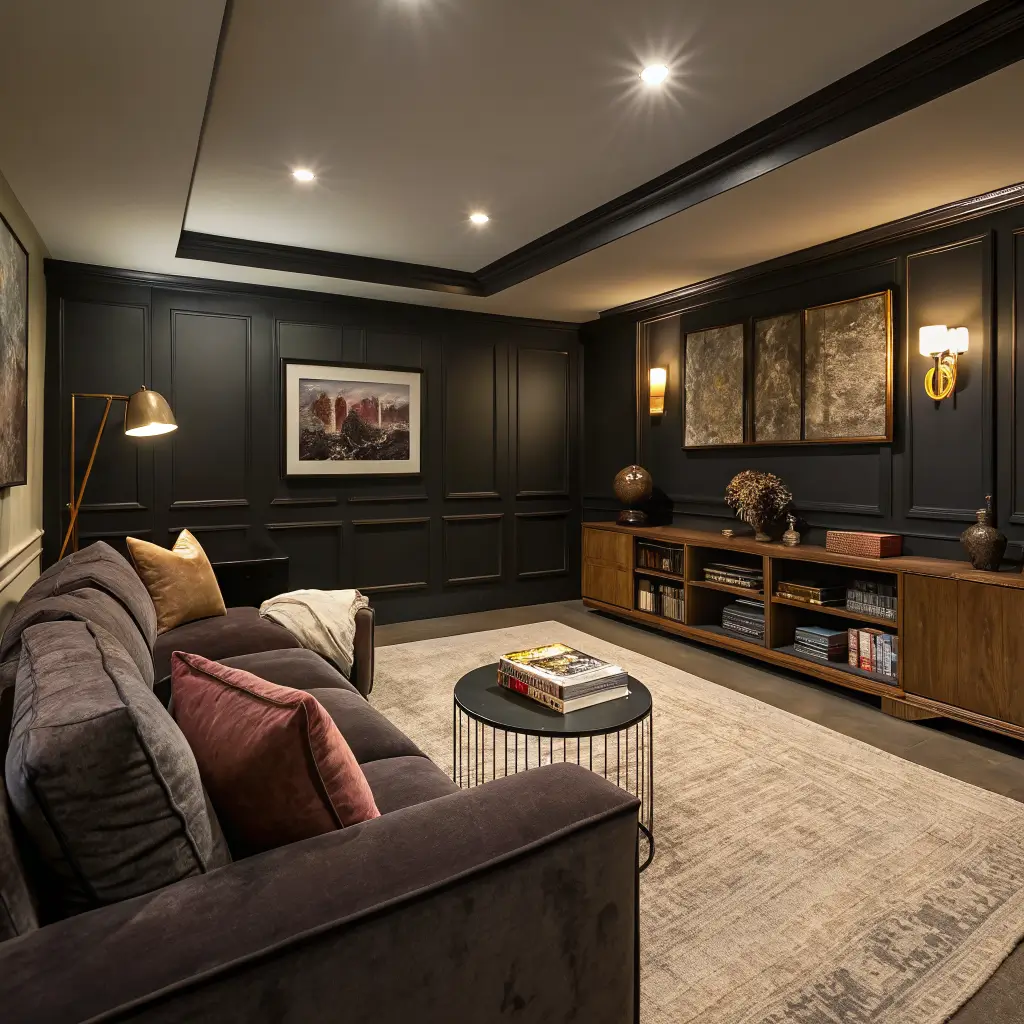
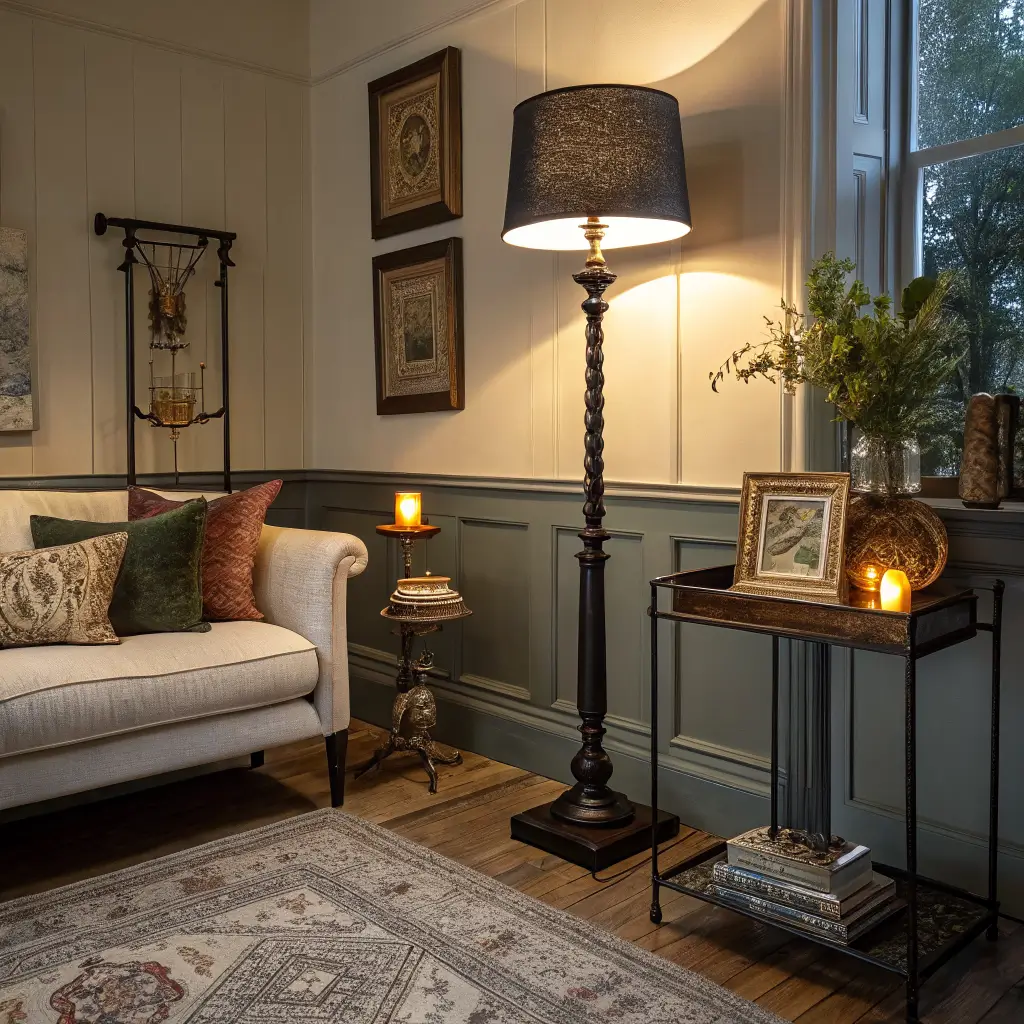
– Ambient: Two or three lamps at different heights around the room. Floor lamp in one corner, table lamp on a side table, sconce or picture light on a wall.
– Task: Reading lamp next to the chair or bed. A desk lamp if the room has a desk.
– Accent: Candles (real, if possible), a small picture light on art, LED strips tucked behind a headboard or under a floating shelf on a warm setting.
Every bulb should be 2700K or lower. I use 2200K in most of my lamps — it’s basically candlelight color. Cool white bulbs in a dark room are the visual equivalent of a fluorescent gas station at 2 a.m.
Add texture, then edit
Once furniture and lighting are in, layer:
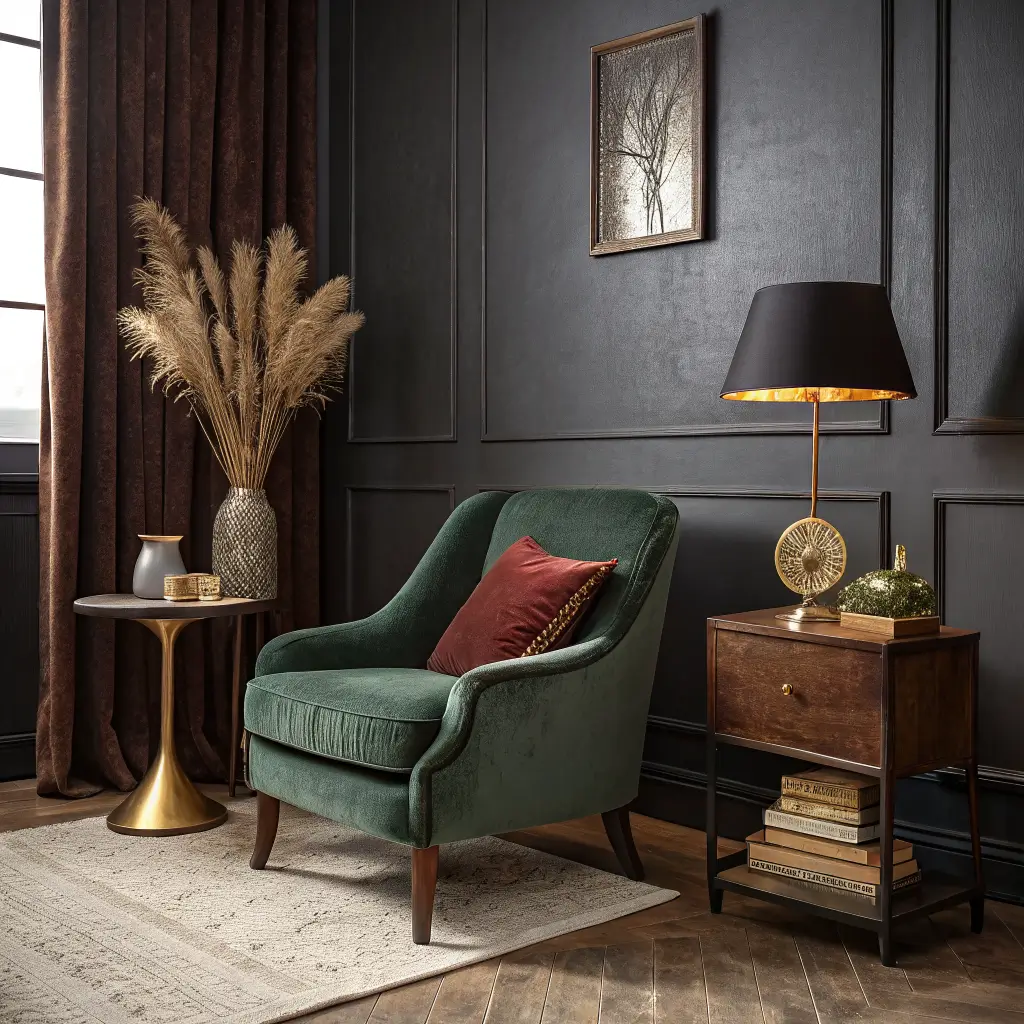
– Two or three pillows in mixed materials on the sofa (velvet + linen + something with texture like corduroy or bouclé)
– One heavy throw, folded or draped, not perfectly arranged
– Curtains, if you haven’t already
– One rug over the existing rug if the space wants more depth
Then walk out of the room, walk back in, and remove one thing. Almost always there’s one thing too many.
Style shelves and surfaces
Group in odd numbers — threes and fives — with varied heights. A stack of books, a brass candlestick, a small ceramic bowl. Leave real empty space between groupings. A shelf packed corner to corner reads as clutter no matter how nice the individual objects are.
My rule: any horizontal surface should be no more than 60% full.
The Mistakes I Made So You Don’t Have To
Painting everything dark, including trim, ceiling, and floor. In a small room, keep one plane lighter. Usually the ceiling. My first dark bedroom had a black ceiling and I lasted three months.
Buying cheap black furniture. Cheap black shows every scratch, every dust particle, and every seam. If you’re going low-budget, go dark wood-tone instead of pure black. Or paint an existing piece in a chalky dark green or navy.
One overhead bulb. Covered above but worth repeating. This is the single most common reason dark rooms feel depressing.
Too many small tchotchkes. Dark rooms punish clutter. The lack of visual contrast means every object competes with every other object. Fewer, larger pieces always win.
Random pops of color. A neon yellow pillow on a forest green velvet sofa doesn’t add interest — it fights the room. Stick to your palette. My working formula: one deep base color, one supporting deep color, brass or gold as the metal, and warm wood. That’s it. Everything I bring in has to fit.
Keeping It Alive (Not Museum-Like)
Plants matter here more than in a bright room, because green against dark walls looks incredible. A large snake plant, rubber tree, or trailing pothos in a matte black or aged brass planter — one substantial plant beats three small ones. If light is a problem, a couple of good faux stems from a decent brand read as real from more than three feet away.
Mirrors placed opposite a window or lamp bounce light without brightening the room. An ornate mirror in a black or brass frame does double duty as art.
Seasonal Swaps Without Redoing Anything
– Fall/winter: Swap in a wool or faux fur throw, oxblood or black candles, a rust or plum pillow cover. Dried florals in a dark ceramic vase.
– Spring/summer: Lighter linen pillow covers in olive or warm taupe, more live greenery, dark blue candles, one lighter piece of art rotated in.
Base furniture and paint stay the same. Only the textiles and small objects change.
Where to Actually Shop
Real answer for dark academia and vintage-leaning pieces: estate sales and Facebook Marketplace beat every retail store. My favorite pieces are a brass banker’s lamp ($22 at an estate sale), a leather club chair I paid $140 for and had cleaned, and a stack of old hardcover books from a library sale at 50 cents each. The globe was $15 at a thrift store. The candelabra was Etsy, $45.
For new pieces: Article and Castlery for dark upholstery, West Elm for lamps when they have sales, HomeGoods for the occasional brass object, Amazon for cheap LED strips and warm bulbs. Skip the mass-market “gothic” decor sections — that stuff photographs okay and looks plastic in person.
The best dark rooms I’ve been in weren’t expensive. They were considered. Fewer objects, better lighting, real materials, and a color palette someone actually thought about instead of buying whatever was dark and on sale.
Start with paint and lighting. The rest follows.