The Look, and Who It’s Actually For
The futuristic bathroom ideas I used were really about clean lines and one smart light. It reads ahead of its time without feeling like a lab.
Futuristic doesn’t mean one thing. There are three sub-styles worth naming, because they need different pieces:
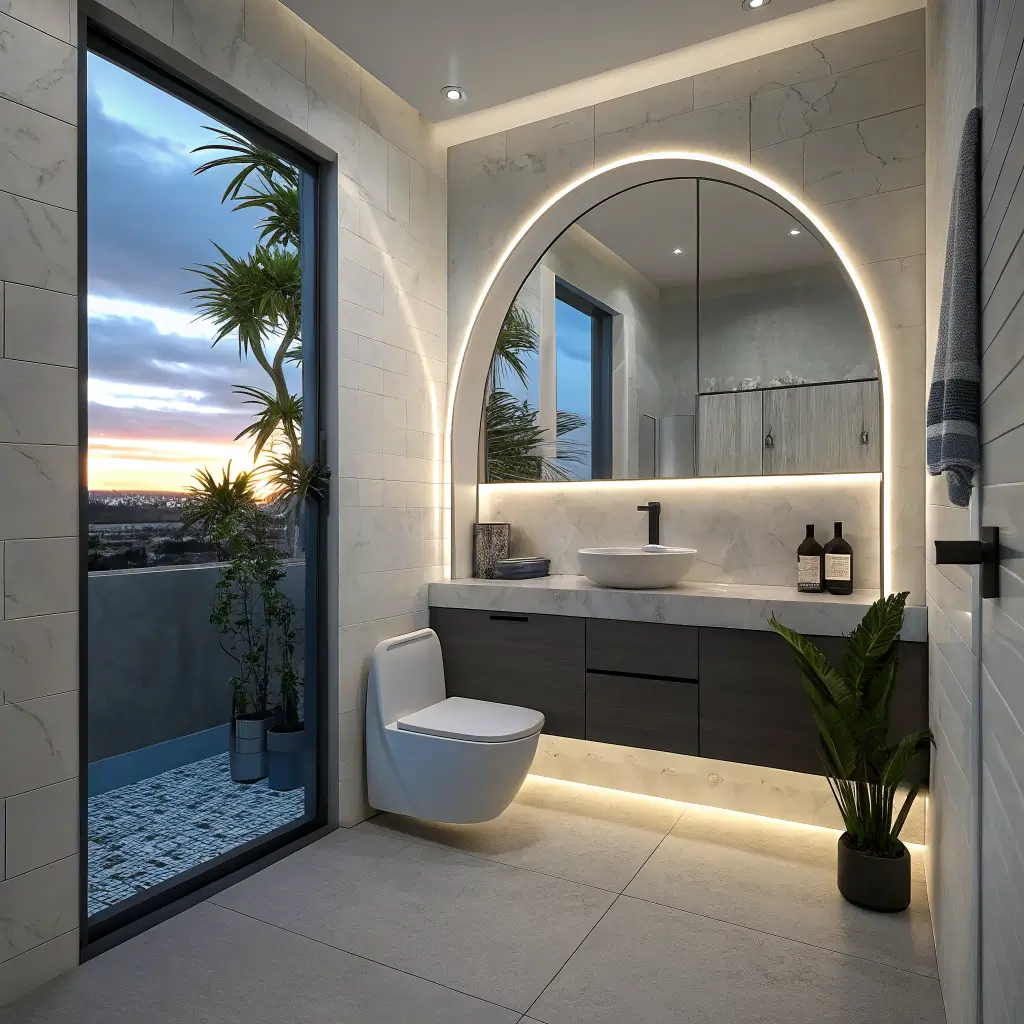
– Sci-fi sanctuary — rounded forms, hidden LED strips, glass, chrome, a bit of neon. Think space-station corridor. Great for powder rooms and guest baths where you want drama.
– Smart wellness spa — chromotherapy (color-changing light therapy) in the shower, heated floors, smart toilet, quiet tech. Best for primary bathrooms.
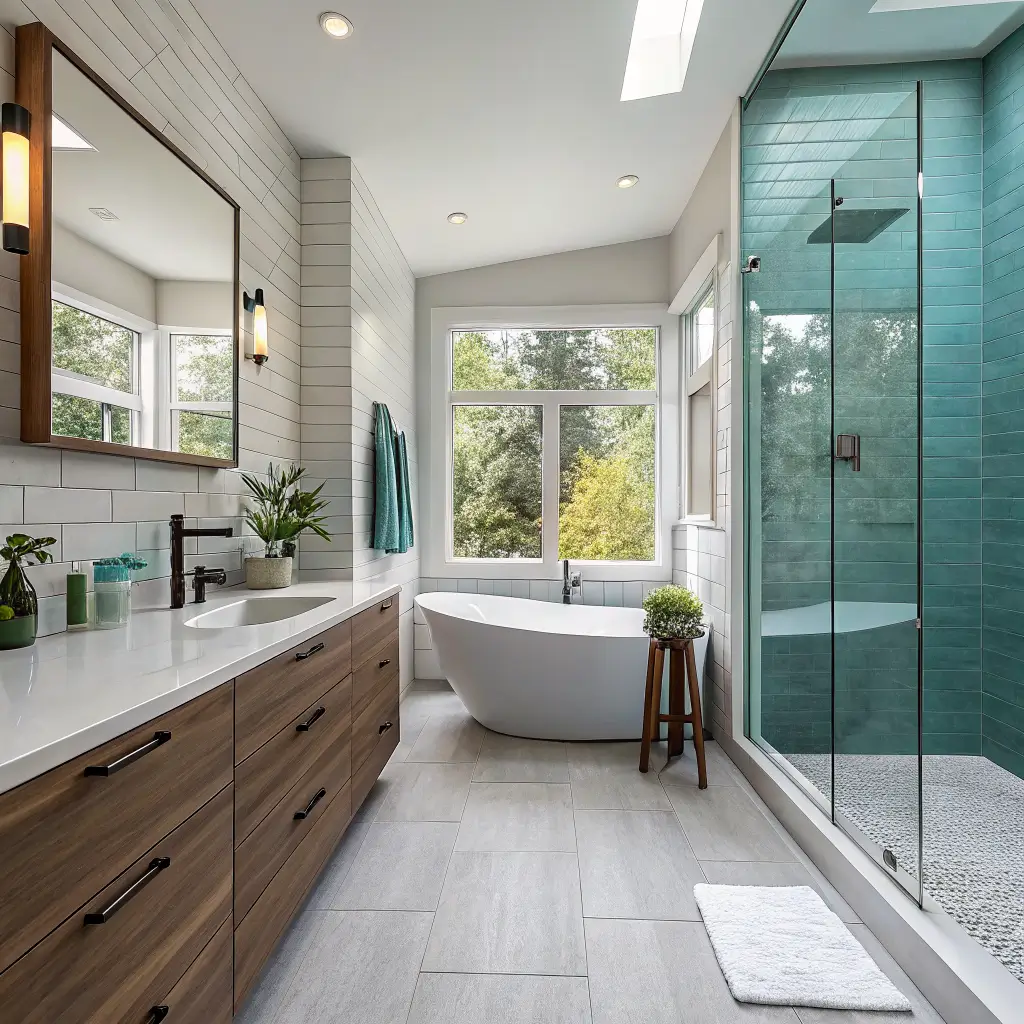
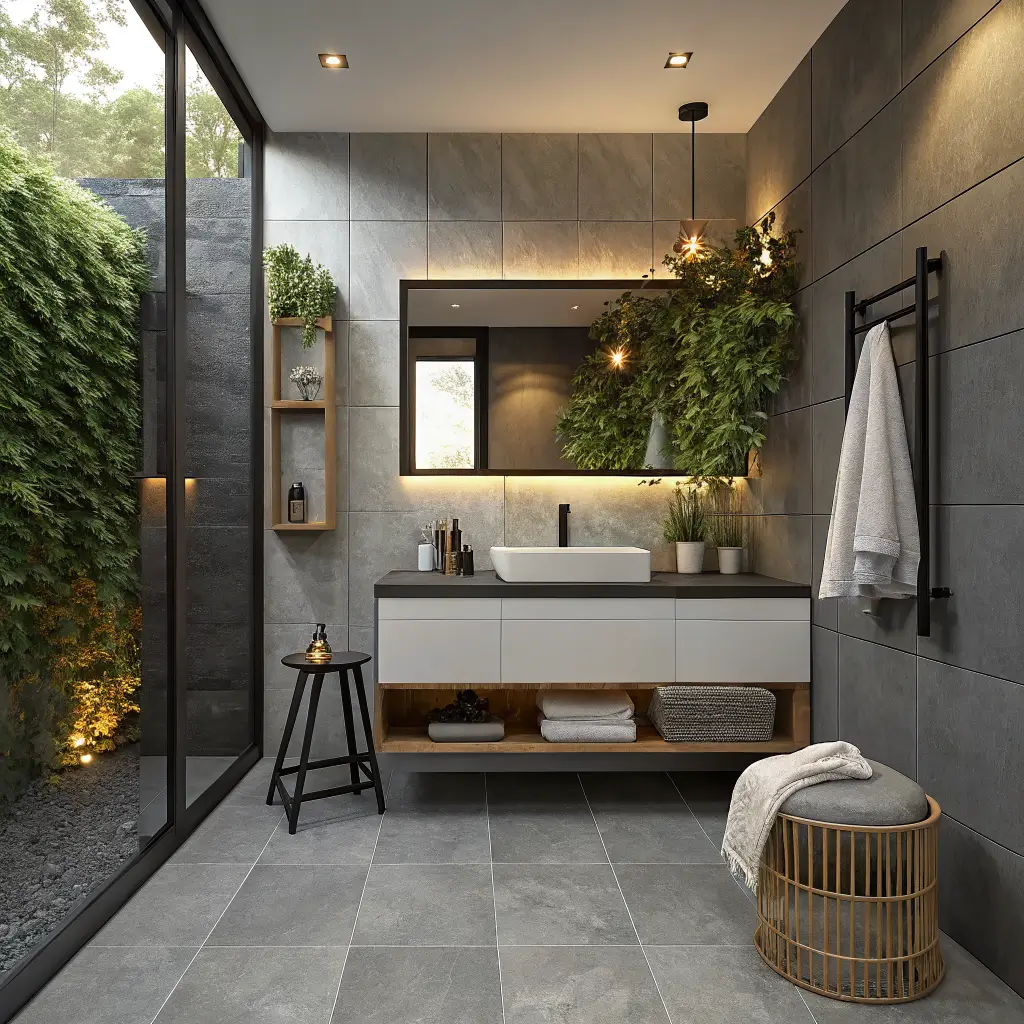
– Biophilic futurism — the one I keep landing on. Clean tech and minimalist fixtures paired with living plants, stone, or wood. It stops the room from feeling like a dentist’s office.
If you’re a heavy Alexa/Google Home user, a wellness person who’s tired of hotel bathrooms being nicer than yours, or you live in a small apartment and need every inch to pull its weight, this style is worth the effort.
What It Costs (No Hand-Waving)
Three tiers, based on what I’ve actually priced out or installed:
Entry-level refresh: $500–$2,500
– Smart LED strips and color-changing bulbs: $25–$150 per fixture
– Backlit LED vanity mirror (non-smart): $150–$400
– Minimalist chrome or matte black faucet: $150–$350
You’re not touching plumbing. One to three days of work, mostly on a Saturday.
Mid-range tech-forward: $5,000–$15,000
– Smart mirror with voice assistant (Kohler Verdera Voice is the one most people land on): $800–$1,500
– Smart toilet with heated seat, bidet, self-cleaning: $1,000–$4,500
– Radiant heated floors: $10–$20 per square foot installed
– Chromotherapy shower system: $1,000–$3,000
High-end remodel: $20,000+
– 3D-printed sculptural faucets, integrated sauna-shower systems ($5,000–$15,000), health-monitoring fixtures. This is the territory of a designer and a contractor, not a weekend.
The single best value on that list, in my opinion? A bidet seat add-on ($200–$600) instead of a full smart toilet. You get 80% of the comfort at 15% of the cost, and if you move, you take it with you.
Space Size and What Fits
– 25–40 sq ft (small urban bath): floating vanity, wall-hung toilet, frameless glass shower, one smart mirror. Skip the tub.
– 50–100 sq ft (standard primary): you can zone it — vanity wall, shower zone, wellness corner with heated towel rack.
– 100+ sq ft: infinity tub, living wall, a proper spa layout. This is where big-ticket features earn their keep.
The Palette That Actually Reads Futuristic (Not Just Modern)
This is where most people go sideways. Modern and futuristic overlap, but futuristic has a cooler bite and more contrast.
Base (70–80% of the room):
– Ice white, cool gray, charcoal black
– Polished chrome, brushed stainless, or matte black hardware — pick one and commit
Accent (the remaining 20–30%, mostly via light and textiles):
– Electric blue, teal, atomic orange, or neon purple through LEDs
– Optional gold or brass if you want the post-modern-meets-space-age angle
Materials:
– Frameless glass everywhere it makes sense
– Seamless acrylic or solid-surface vanities and sinks (no visible seams = future)
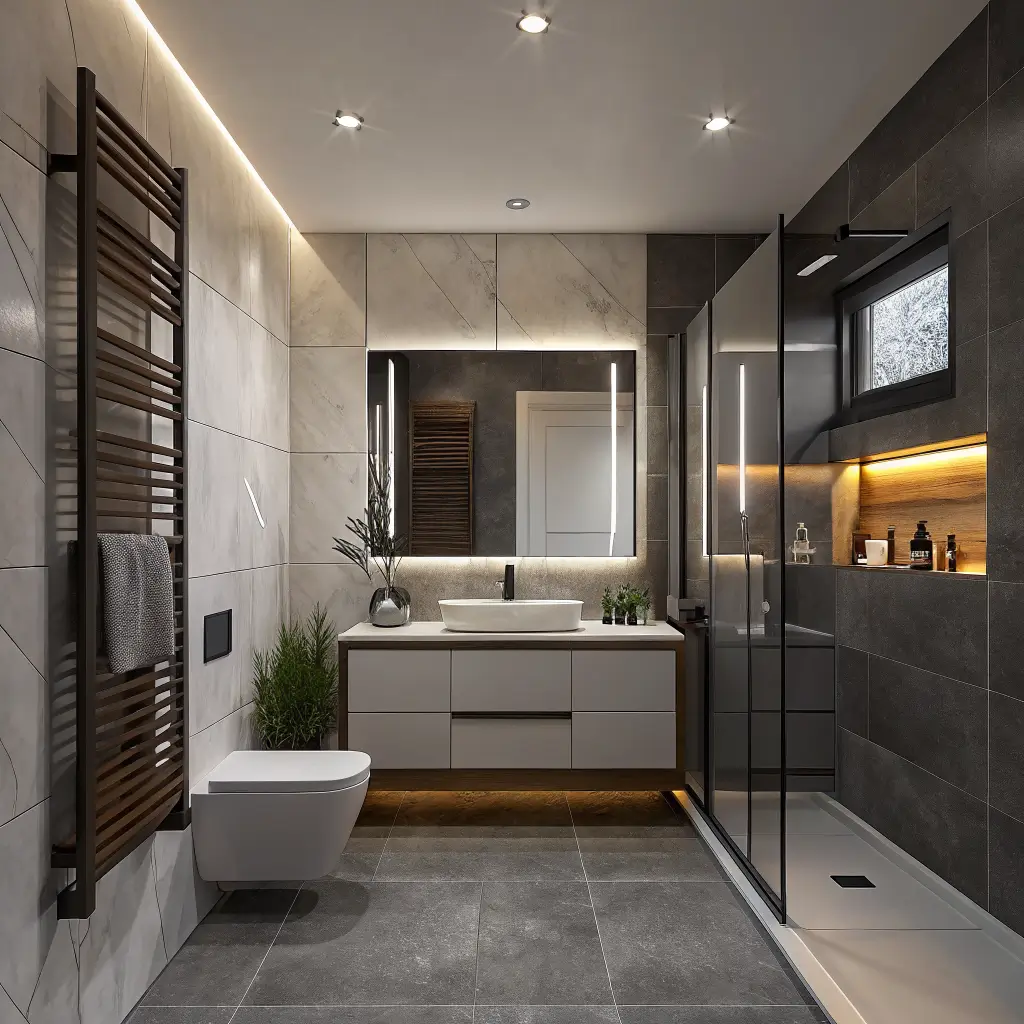
– Large-format tile (24″x48″ or bigger) to kill grout lines
– 3D textured tile on one wall — usually the vanity wall or a shower niche
– Stone or wood used sparingly for warmth
The grout line thing matters more than people realize. A wall of small subway tile with white grout will read modern-farmhouse no matter what mirror you hang. Big tiles with matching grout disappear into a single plane, and suddenly the room feels engineered instead of built.
The Hero Pieces
If I had to pick the five things that make or break the look:
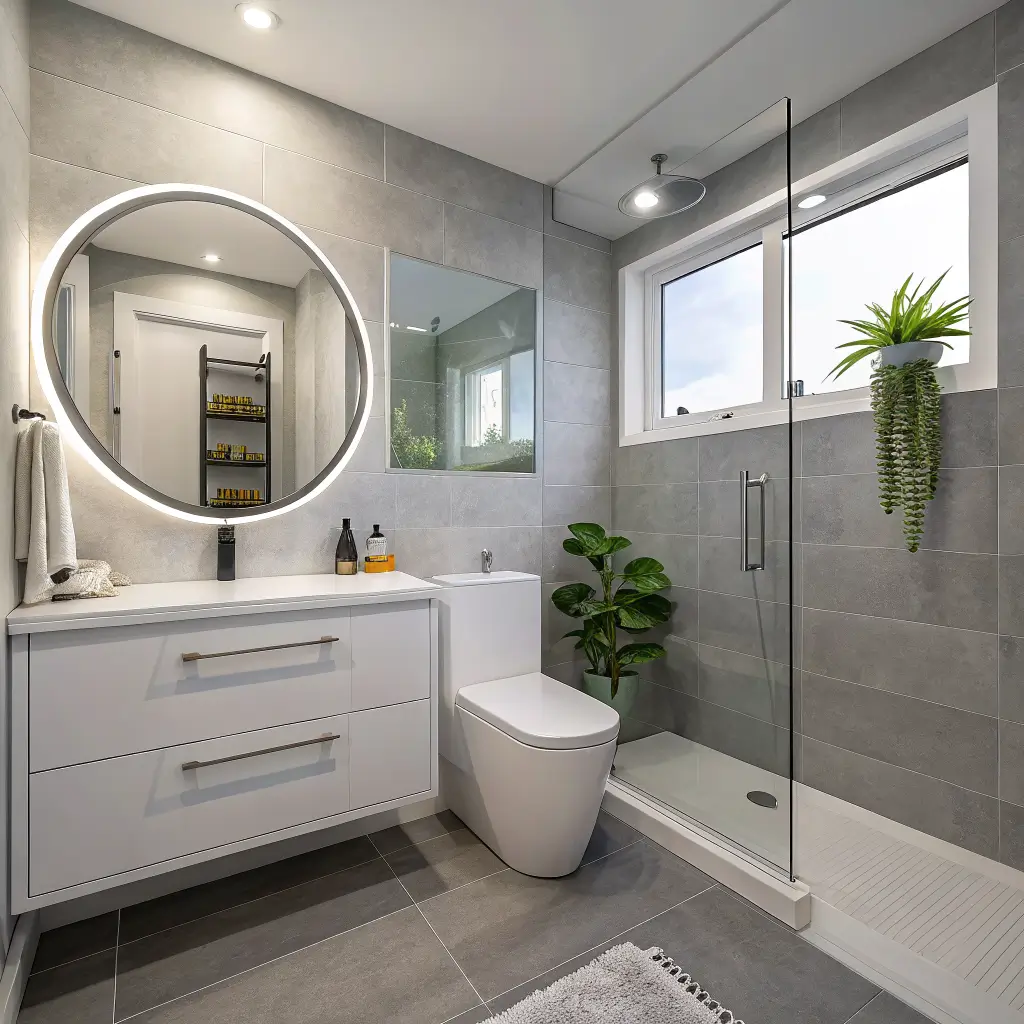
1. Smart mirror — centered over the vanity, wiring completely hidden, mounted so the sightline hits eye level for the primary user (about 60″ to the center for most adults).
2. Smart toilet or bidet-seat combo — wall-hung if your framing allows it. The floor space you gain is dramatic.
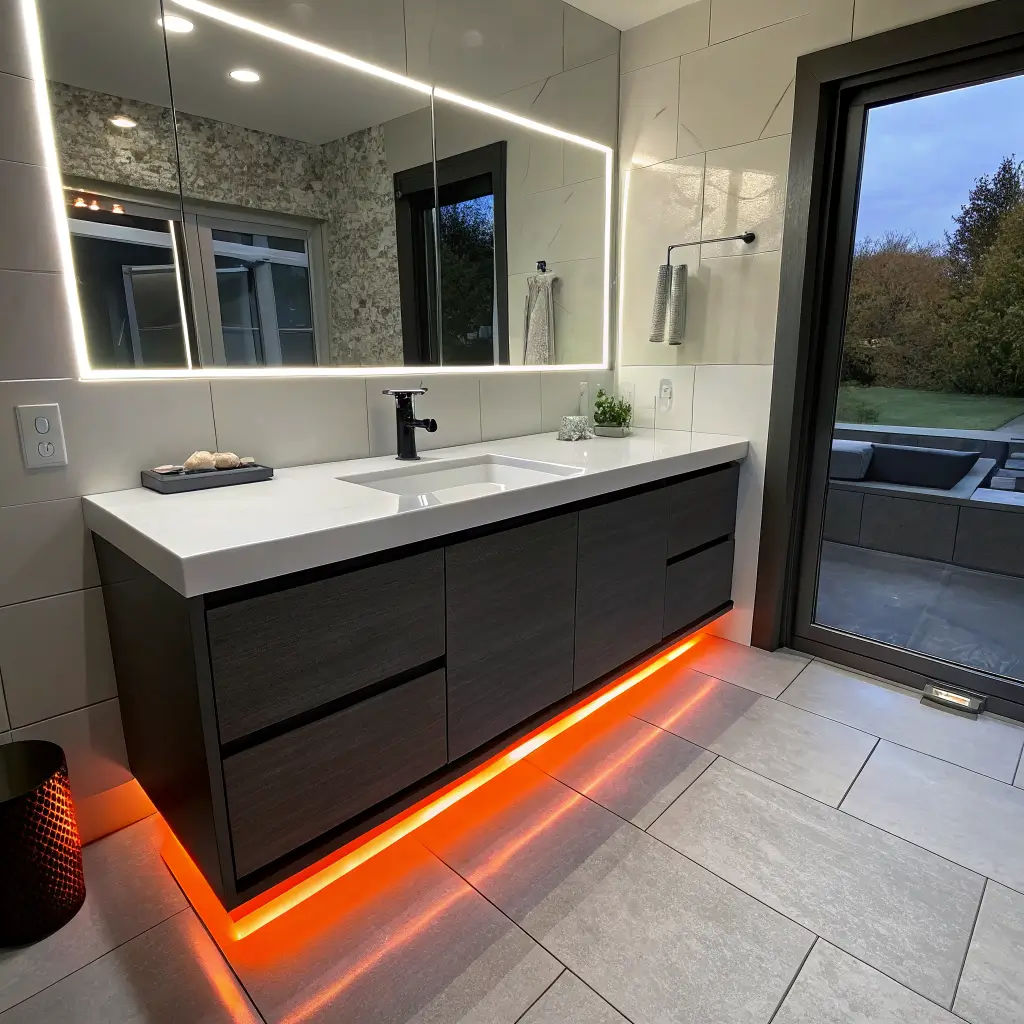
3. Floating vanity with LED under-lighting — the under-glow is what sells the “hovering” effect. Without it, it’s just a wall-mounted cabinet.
4. Frameless glass shower with a linear drain — the curbless entry is the detail that makes it feel like a spa, not a stall.
5. Chromotherapy shower head or panel — the one splurge I’d recommend if you’re already redoing the shower.
Lighting: The Part Everyone Underdoes
Lighting is 80% of this style. You can have a $10,000 vanity and it’ll look flat under a single boob light.
Plan four separate zones:
– Ambient ceiling — recessed LEDs, dimmable, ideally on a smart switch
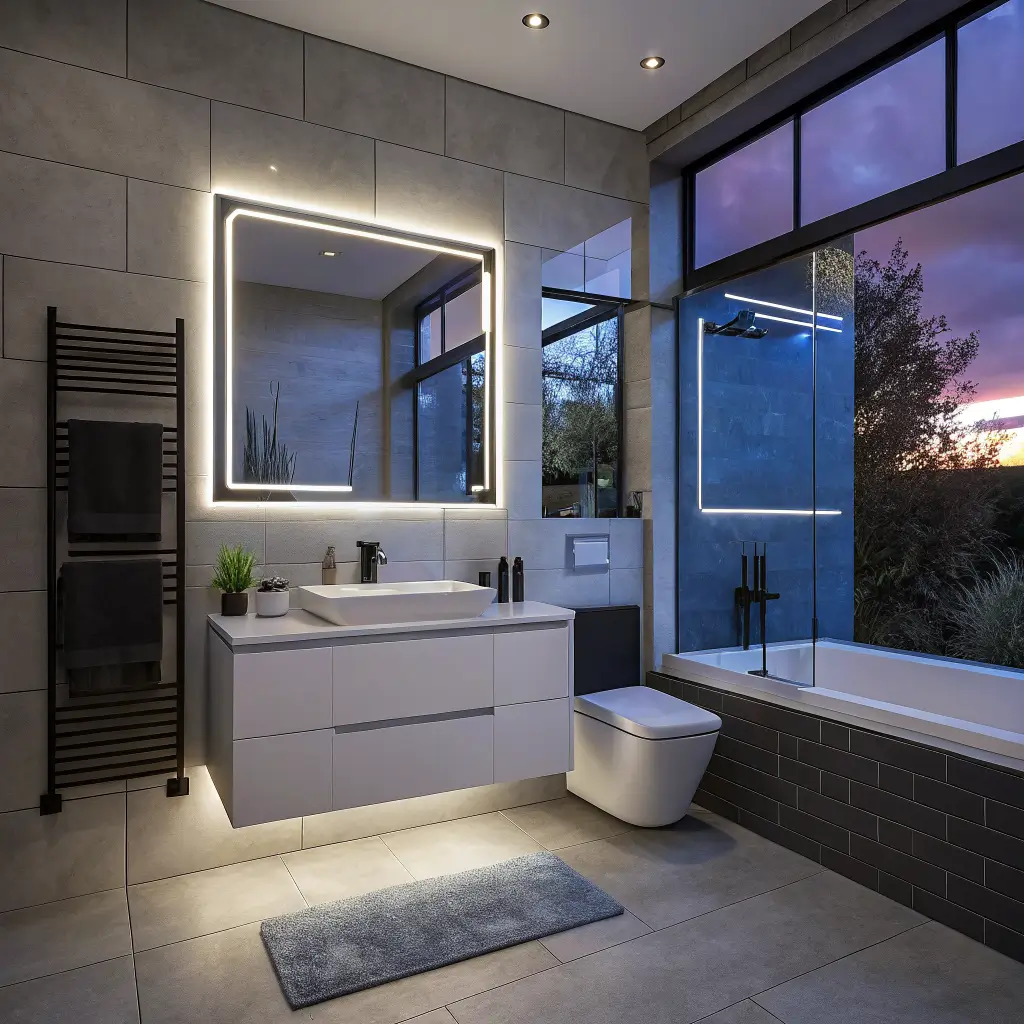
– Task at the vanity — backlit mirror or sconces at eye level, not above (above casts shadow on your face)
– Accent under the vanity and along the toe kick — this is the floating effect
– Shower/tub mood lighting — chromotherapy or a warm LED strip in the niche
Save at least two scenes on whatever system you use: a bright cool-white for morning (“get out the door”) and a warm amber or purple for evening (“wind down”). I use around 5000K in the morning and drop to 2700K after 8pm. The room feels like two different rooms.
Where to Spend, Where to Save
Spend on:
– Tile (you’re not replacing it for a decade)
– The shower system and glass
– Lighting infrastructure — dimmers, drivers, hidden wiring
– The toilet if you’re going smart
Save on:
– The smart mirror — a $250 backlit mirror with a good bulb plan looks 90% as good as a $1,400 voice-activated one, and mirrors date fast as tech evolves
– Faucets — a $180 matte black fixture from a mid-tier brand looks nearly identical to the $600 designer version
– Accessories — acrylic dispensers, geometric trays, planters. Don’t overpay for what’s essentially styling.
Common Mistakes (I’ve Made Most of These)
Mixing three tile patterns. One statement tile, one field tile. That’s the limit. My first bathroom had a chevron floor, a 3D hex accent wall, and mosaic in the shower niche. It looked like a tile showroom exploded.
Two metal finishes. Chrome faucet, matte black towel bar, brushed nickel drain. Pick one and buy everything in it, including the toilet paper holder.
Ignoring ventilation. All this seamless glass and stone gets destroyed by moisture. Get a proper exhaust fan rated for your square footage (1 CFM per sq ft minimum, more if you have a steam shower).
Underplanning power. Smart mirror, heated floor, bidet seat, LED drivers, speakers — that’s a lot of load. Have an electrician map it before you drywall.
Cluttered counters. The whole aesthetic collapses the moment three shampoo bottles and a hairbrush appear. Build in a mirror cabinet or a recessed niche so the counter can stay nearly empty. This is non-negotiable.
Hospital-white syndrome. All-white plus cool light plus chrome equals morgue. Fix it with a plant (pothos and ZZ plants handle bathroom humidity and low light without complaint), a wood stool or slatted bench, and warm evening lighting.
Making a Small Bathroom Feel Futuristic Without a Remodel
If you rent, or you just don’t want to gut anything, here’s the low-lift version I’d do this weekend:
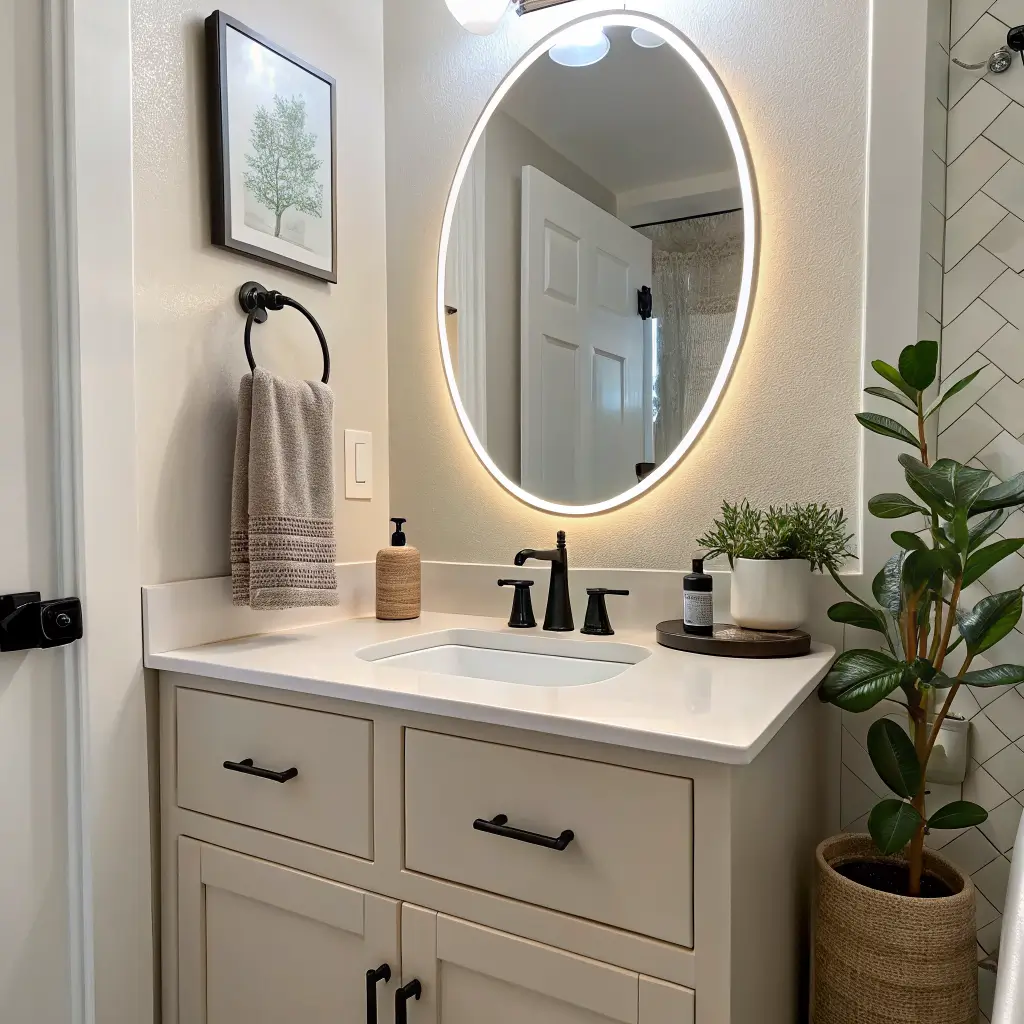
– Swap the vanity light for a linear LED bar or a backlit mirror
– Add a smart bulb in the existing overhead fixture (Philips Hue or a cheaper Wiz equivalent)
– Run a LED strip along the toe kick of the vanity — battery or plug-in, adhesive-backed
– Replace the faucet with a matte black or chrome minimalist one (about a 20-minute job)
– Replace the toilet seat with a bidet seat
– Everything on the counter goes into a drawer; buy two matched acrylic dispensers for hand soap and lotion
– One plant, one geometric tray, one small piece of wall art. That’s it.
Total: under $600, one afternoon, and you can undo all of it before a move-out inspection.
Keeping It Fresh Over Time
Seasonal shifts should happen through towels, bath mats, and lighting presets — not paint. Teal towels and cool 5000K light in summer, plum towels and warm 2700K in winter. The base of the room never changes.
When something wears out, upgrade the material class: plastic soap pump → glass or steel one. Wire shower caddy → recessed niche. Every replacement should push the room slightly more premium and slightly more consistent.
Cross-Style Variations Worth Trying
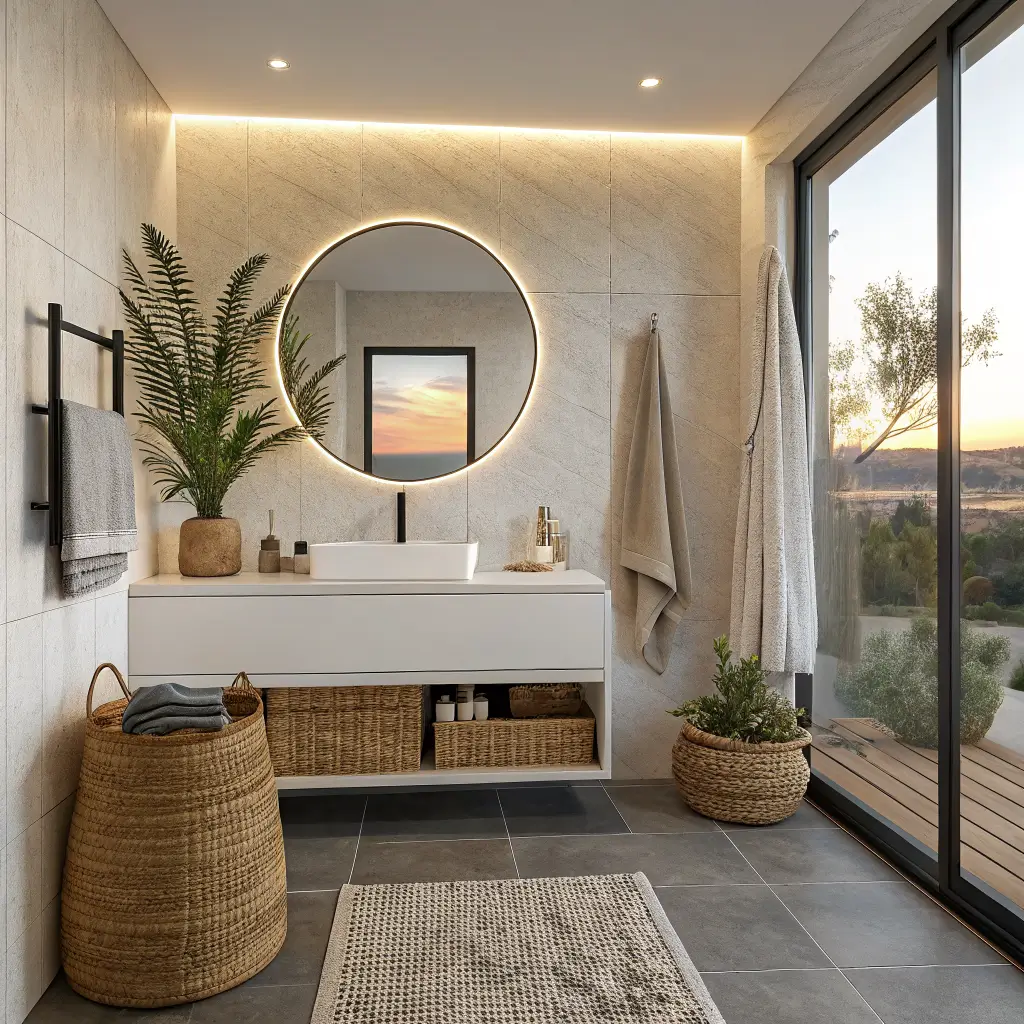
– Boho futuristic: keep the tech and the neutral base, but bring in a woven basket for towels, a linen shower curtain, and terracotta planters. Sounds wrong. Works.
– Coastal futuristic: cool blues and whites, ripple-textured tile that reads like water, chrome everything.
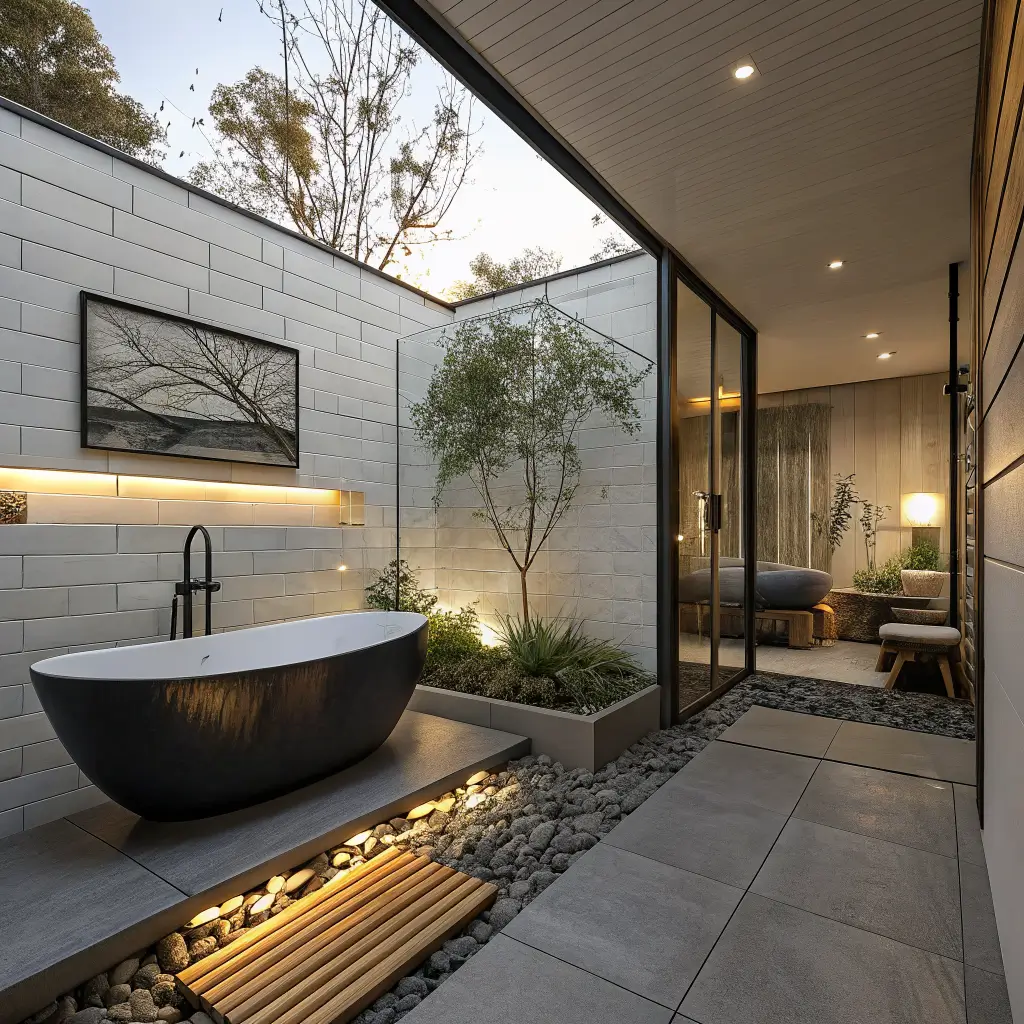
– Zen futuristic: stone floor, bamboo bench, a small waterfall feature over the tub, chromotherapy set to a soft amber. Hide all the tech behind cabinet fronts.
The version I keep coming back to in my own place is biophilic — matte black fixtures, a big-format charcoal tile on the floor, a live pothos trailing off the top of the medicine cabinet, and LEDs under the floating vanity that I leave on all night as a nightlight. It looks like the future. It also feels like somewhere I actually want to brush my teeth.