The Look and Who It’s For
The grey and white interior was the safe palette I learned to warm up with one wood piece. It reads calm now instead of cold.
Grey and white interior design gets a bad rap because most people do it wrong — they pick one cool grey, slap it on the walls, add a white sofa, and wonder why the room feels like a waiting area. I’ve made that mistake. My first apartment living room was Benjamin Moore Stonington Grey with a bright white sectional and zero texture, and it looked like I was staging it to sell, not live there.
The fix isn’t ditching the palette. It’s understanding that grey and white is a foundation, not a finished look. Done right, it reads calm, expensive, and easy to change with the seasons. Done wrong, it reads flat.
Here’s how I approach it now, after redoing my own living room three times and helping my sister redo hers once.
At its core, this palette is a quiet neutral base you build on. It shows up in a few flavors:
Modern minimalist — clean lines, matte finishes, very little on the surfaces
Scandi-inspired — warm whites, soft greys, light oak, wool and linen everywhere
Organic modern — layered greys with wood, stone, and plaster textures
Contemporary luxe — grey and white with brass or gold, marble, velvet
If you rent, this palette is a gift. Landlord-white walls become the plan instead of the problem. If you own, it gives you a base you won’t hate in five years — I’ve repainted accent walls twice but never touched the main whites.
It works in almost any room, but it especially earns its keep in small to medium spaces (roughly 120–250 sq ft). Light whites and pale greys push walls back visually. In bigger rooms, you can go darker — a charcoal living room feels enveloping instead of cavernous.
Budget: What This Actually Costs
For a full living room or bedroom refresh — paint, one anchor furniture piece, rug, lighting, and accessories — expect $1,000–$4,000 depending on how much you reuse.
Rough price points I’ve paid or shopped recently:
Paint: $40–$70 per gallon for something worth using (one gallon covers ~350–400 sq ft)
Grey sofa: $400–$900 budget, $900–$2,000 mid-range in performance fabric or velvet
Area rug (8’×10′): $150–$500 for a decent flatweave or low-pile
Ceiling light or flush mount: $80–$250
Sculptural pendant in brushed nickel or brass: $200–$600
Accent chair or side table: $150–$600 per piece
Accessories (pillows, throws, art, plants): $150–$500 for the whole room
Where I’d spend the money: the sofa and the rug. Those two anchor everything and get touched daily. Where I’d save: art (thrift and print-at-home), side tables (IKEA plus a coat of chalk paint works), and pillow covers (Etsy linen covers are half the price of retail with better fabric).
Timeline-wise, a paint-and-textiles refresh takes me 1–3 days. A full re-style with new furniture is 1–2 weeks, mostly waiting on delivery.
The Hero Pieces That Make It Work
You don’t need many big-ticket items. You need the right ones.
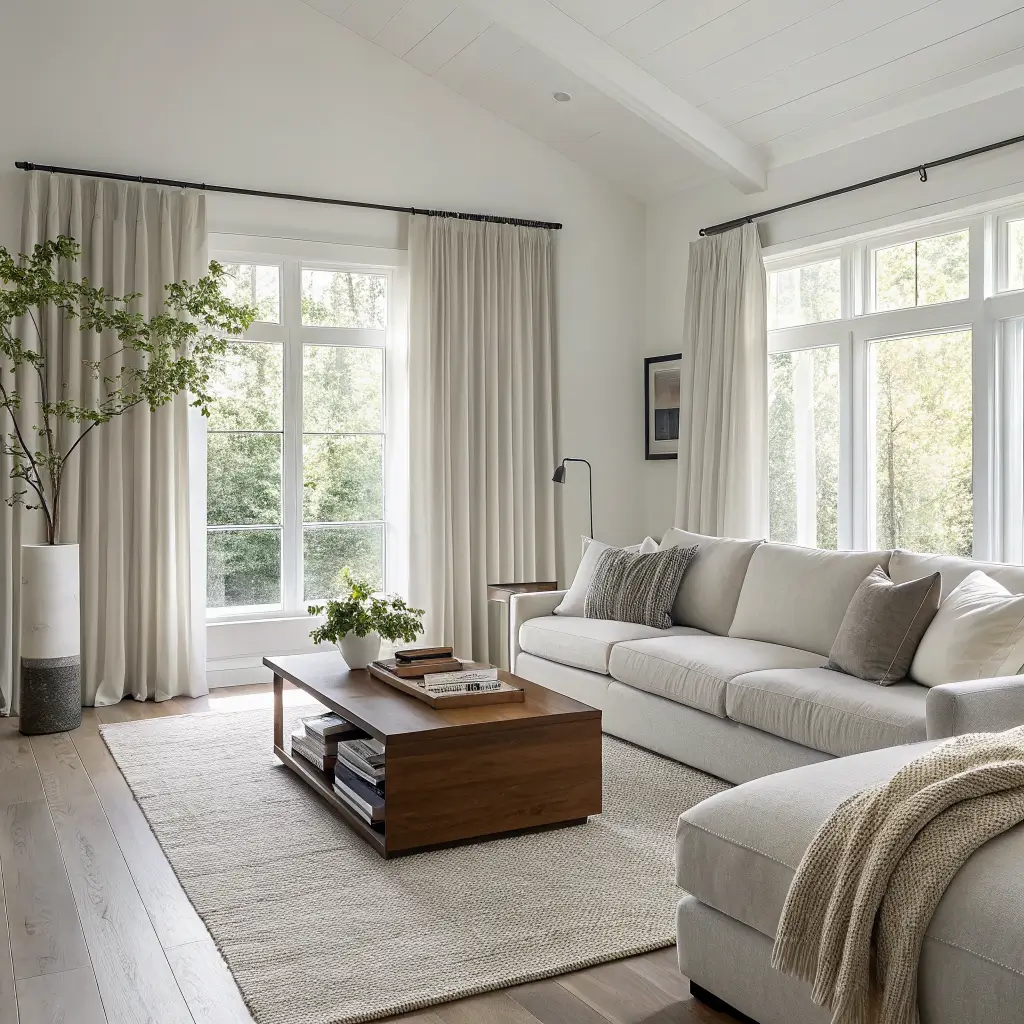
A grey sofa or sectional in a medium tone. Not charcoal (too heavy for most rooms), not pale dove (shows every stain). Something in the middle — think the color of wet slate. Performance fabric if you have pets or kids. Mine is a mid-grey boucle sectional I’ve had for four years and it still looks new because I bought a fabric shaver on Amazon for $12.
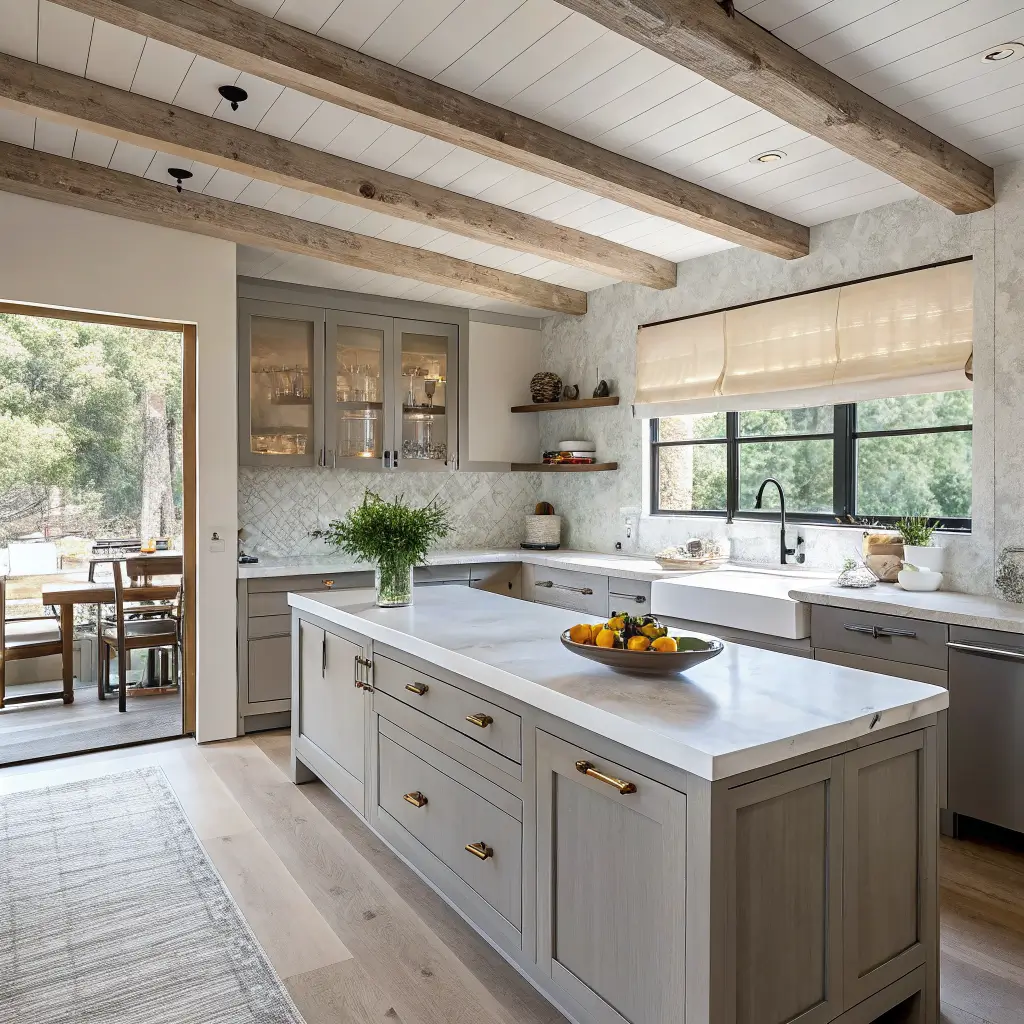
Grey cabinets with white stone counters if you’re doing a kitchen. Standard slab thickness runs 2–3 cm. This combo is not fading — it’s become the new “safe” like white shaker was ten years ago.
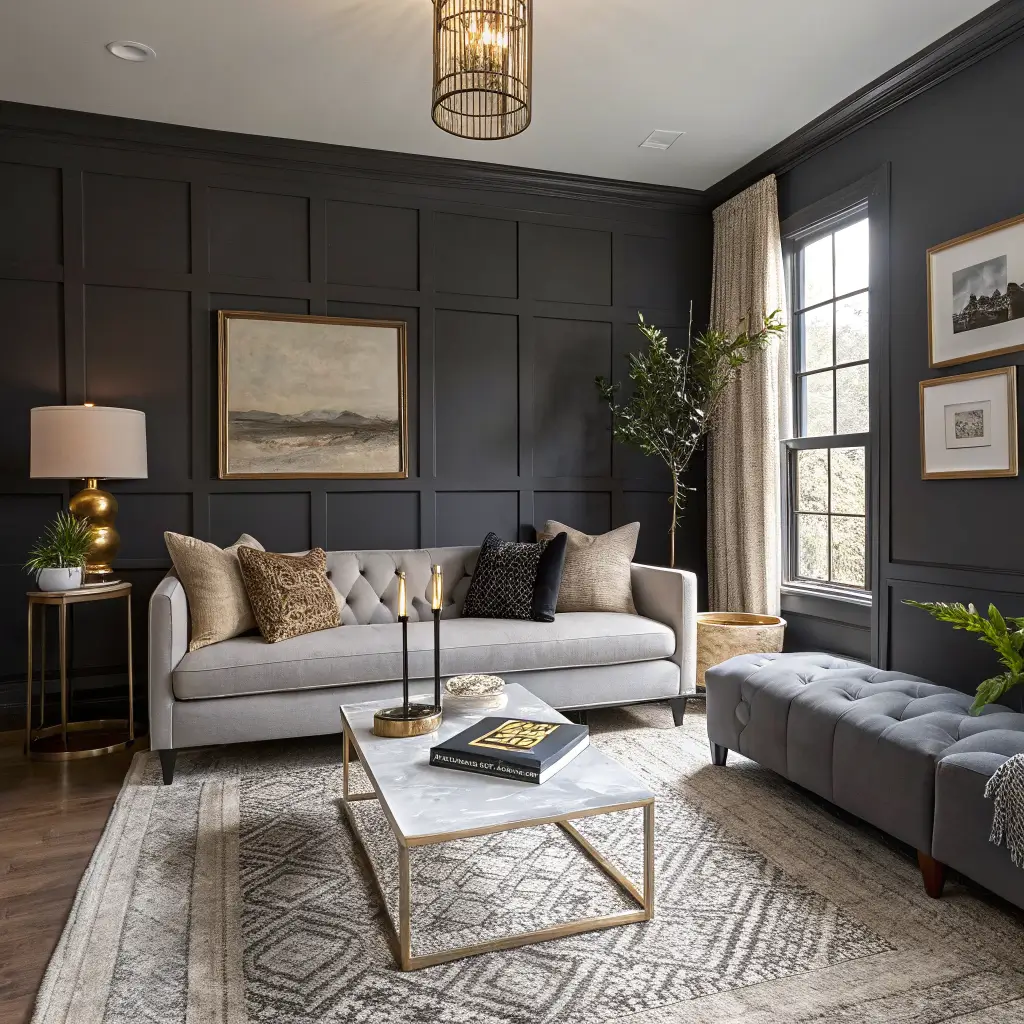
A charcoal accent wall behind the sofa or bed. This is the single change that fixed my flat-looking living room. One wall. Everything else stays white. It gives the eye somewhere to land.
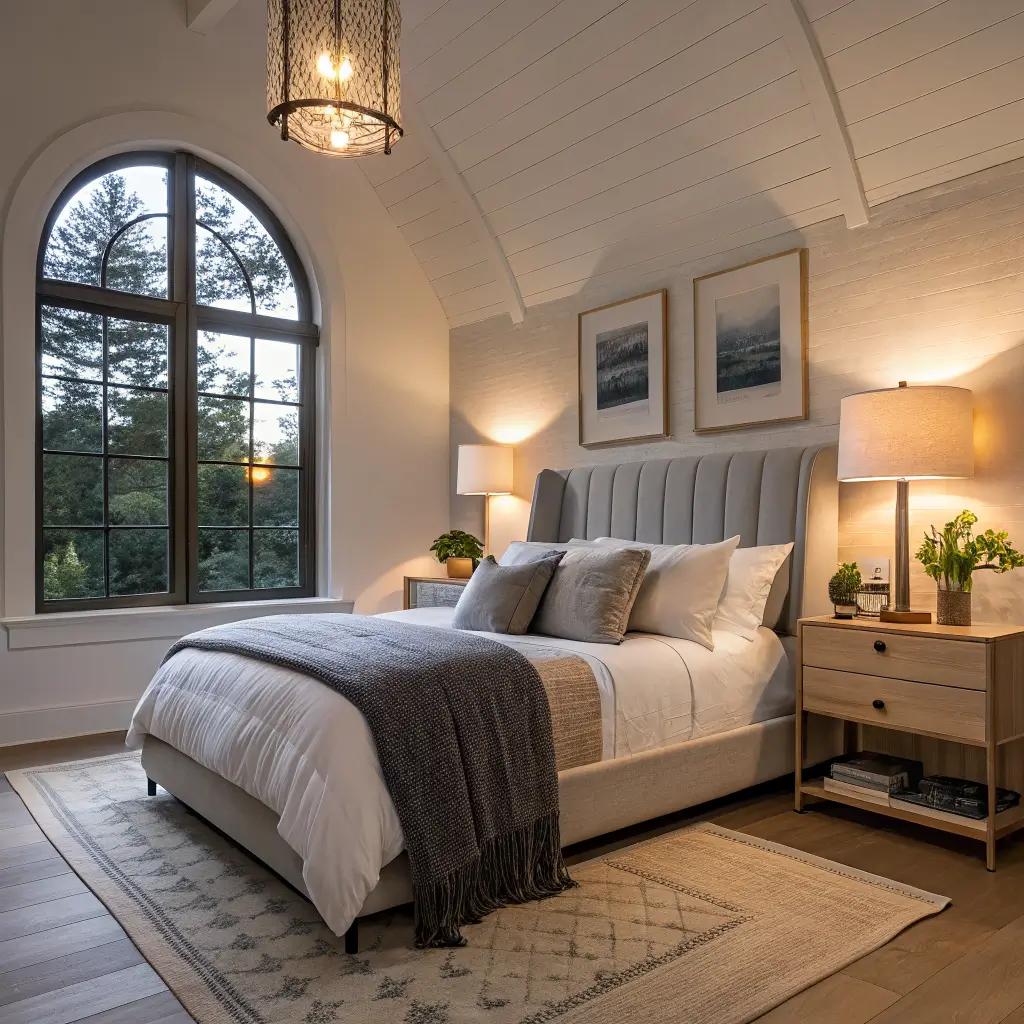
A grey upholstered headboard against a white wall reads hotel-room in the best way.
How to Actually Put It Together
This is where most grey-and-white rooms fall apart. The palette isn’t the problem — the execution is.
Use the 60-30-10 rule
60% dominant color (usually white — walls, ceiling, larger furniture)
30% secondary (grey — sofa, rug, curtains)
10% accent (a warm tone: brass, oak, terracotta, tan leather)
In a small room, push the ratio whiter. In a big room, let grey do more of the heavy lifting.
Layer at least three greys
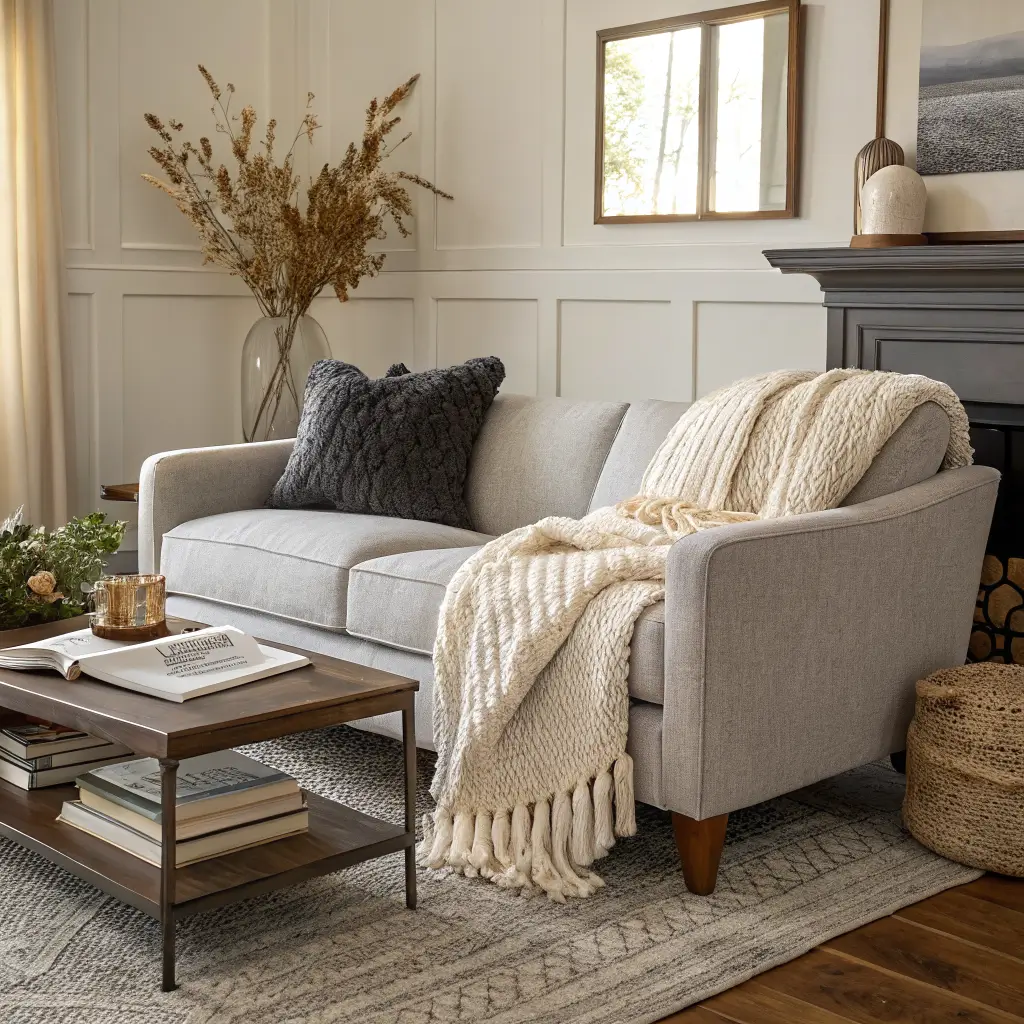
One shade of grey is what makes a room look like a rental listing. I use pale dove on curtains, mid-grey on the sofa, and charcoal on cushions and art. The gradient reads intentional. Flat matching reads lazy.
Match your undertones or the whole thing fights itself
This is the mistake I see most. Warm greys have brown or yellow in them. Cool greys have blue or green. Pick one family and stay in it. A warm grey sofa against a cool white wall looks dirty. A cool grey sofa against a creamy warm white looks muddy.
Test paint samples on multiple walls, at multiple times of day, before you commit. Morning light and evening light are different animals.
Layer texture like your life depends on it
This is the real secret to a warm grey and white room, not accent colors. Combine:
Matte painted walls
A boucle or velvet sofa
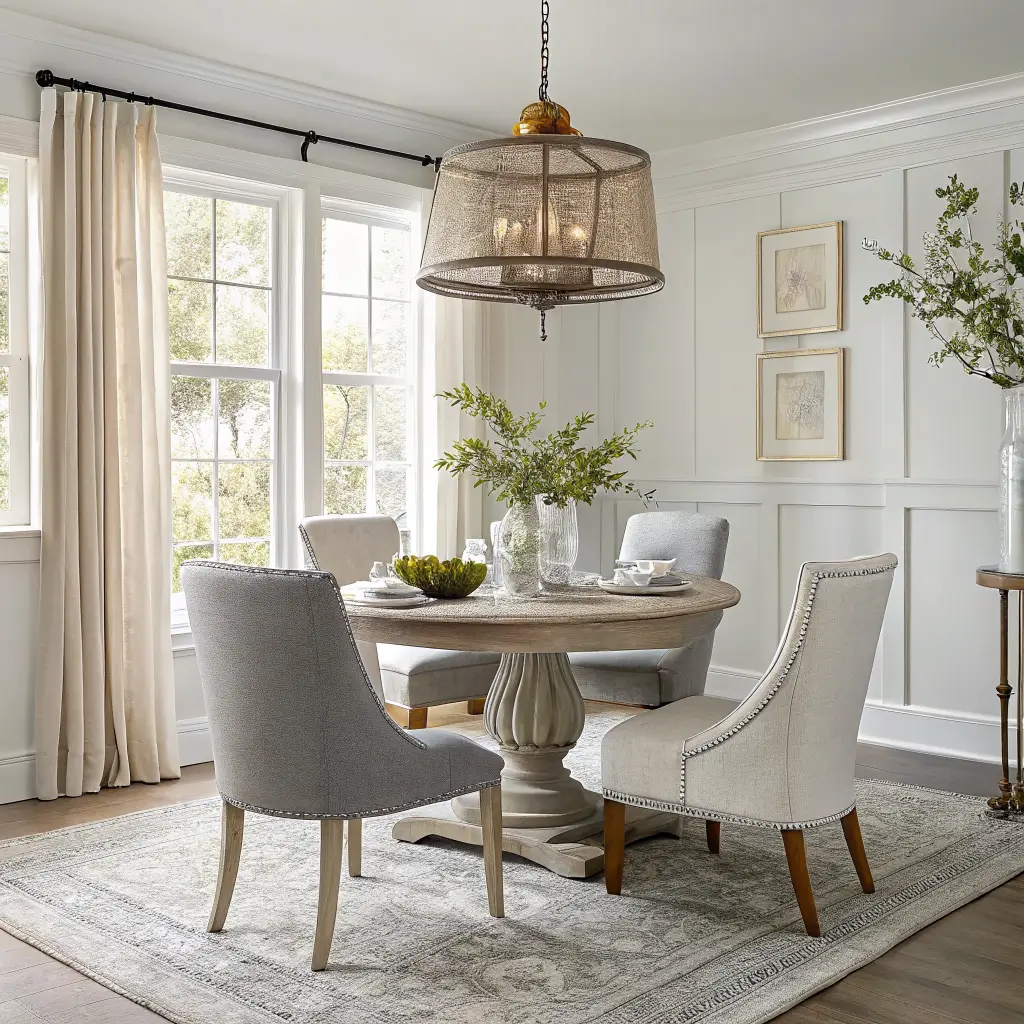
Linen curtains (ceiling-mounted, floor-length — this alone makes rooms feel taller)
A wool or jute rug with some pile
Cable knit or faux fur throws
A wood coffee table (oak or ash for Scandi, walnut for contrast)
If everything is smooth, the room feels sterile. Texture does the work color usually does in a more saturated palette.
Lighting: warm white bulbs, always
2700K–3000K, nothing higher. Daylight bulbs in a grey and white room will kill it dead. I learned this the expensive way after installing 4000K LEDs and wondering why my apartment looked like a morgue for a month.
Layer your lighting: overhead + one floor lamp + one table lamp minimum per room. Grey walls eat light — you need more sources than you think.
Common Mistakes and How to Fix Them
“My room feels cold and sterile.”
You have too much cool grey and not enough texture or wood. Add a light oak coffee table, a jute rug under the existing one, and swap in linen curtains. If it still feels cold, throw a tan leather ottoman or armchair in. Leather kills the coldness of grey walls almost instantly.
“It looks flat and boring.”
You’re using one grey. Layer three. Also check that your whites aren’t all the same finish — matte walls with a satin trim gives more depth than everything matte.
“The dark wall is swallowing the room.”
Keep the ceiling and trim white. Hang art with lots of white in it on the dark wall. If you can, add a floor lamp near it to push light back onto the surface.
“It looks cluttered.”
Limit accents to one or two colors, max. And leave surfaces half-empty. Negative space (the empty area around objects) is what makes minimalist rooms breathe.
“The whites don’t match.”
Cream-white and blue-white next to each other look wrong even when you can’t articulate why. Pick your undertone family and get rid of the outlier.
Seasonal Swaps That Cost Under $100
The whole point of a neutral base is you can shift the mood without repainting.
Spring and summer: swap in white, pale blue, soft green, or citrus yellow pillow covers. Fresh eucalyptus in a stone vase. Lighter throws in cotton or linen.
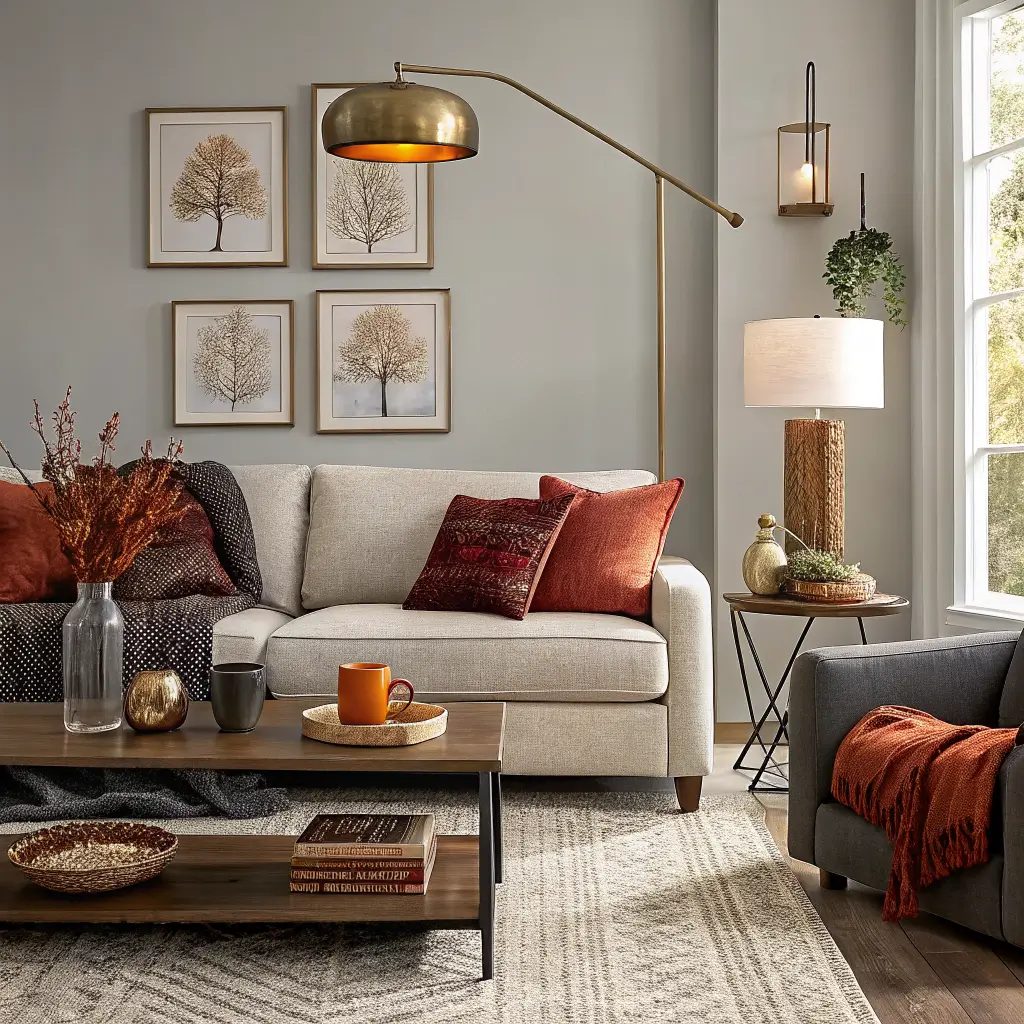
Fall and winter: deepen everything. Rust, plum, deep blue, terracotta. Chunky wool throws. Heavier curtains if you have the storage.
I keep two bins of pillow covers in the closet and rotate them in October and April. Total cost to change the entire feel of my living room: about $60 in covers, plus whatever seasonal greenery I grab.
Cross-Style Variations
If pure minimalism isn’t your thing, grey and white plays nicely with others:
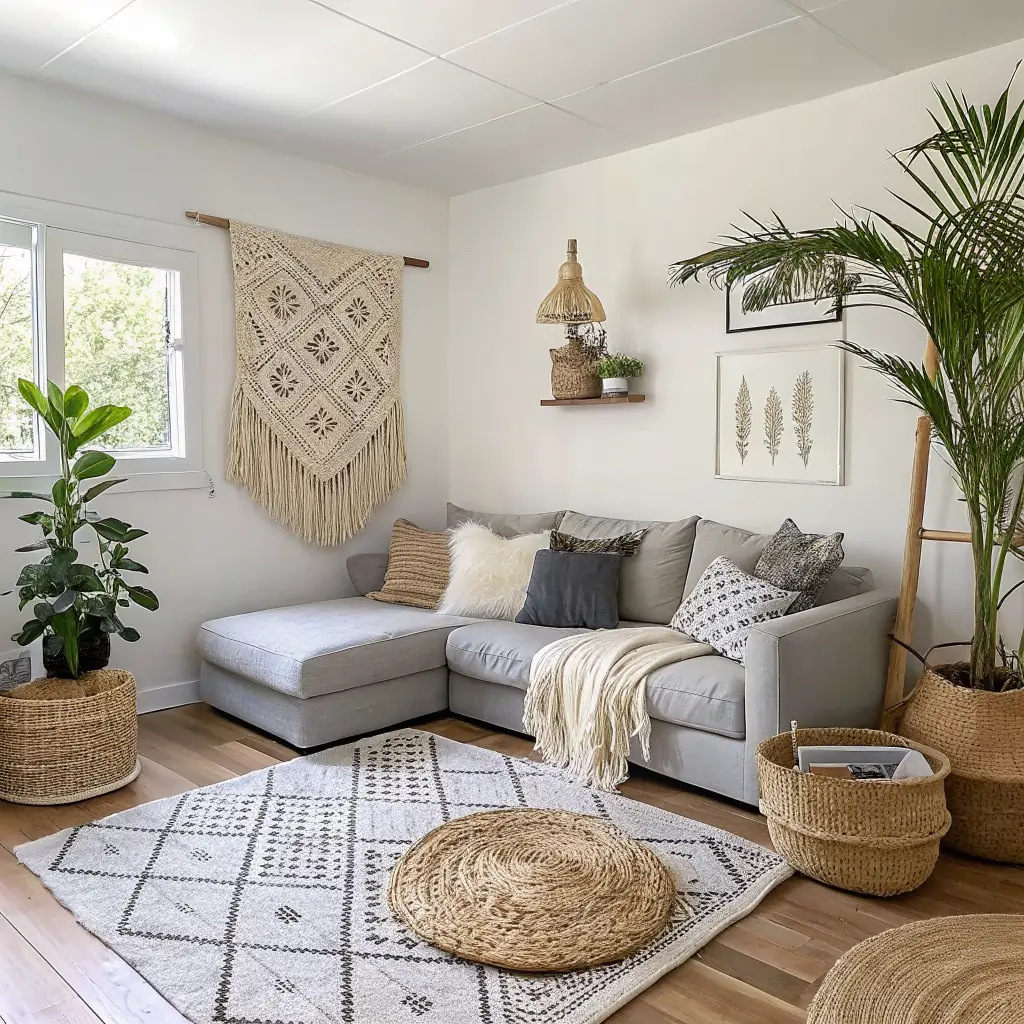
Boho + grey and white: layered rugs, a macrame wall hanging, woven baskets, dried grasses in tall floor vases
Coastal + grey and white: crisp whites, soft grey sofa, light oak, accents in faded blue and sandy beige — skip the anchors and seashells, they date it
Industrial + grey and white: concrete or plaster textures, black metal frames, a leather sling chair, one exposed bulb pendant
A Few Answers to Questions I Get Asked
Grey walls with a white sofa, or white walls with a grey sofa? In a small room, white walls with a grey sofa, every time. It keeps the walls receding and the furniture grounded. Grey walls in a small room can close it in unless you have huge windows.
Best flooring for grey and white? Light to medium oak is my default — it warms everything up. Grey vinyl plank or grey tile can work but risks the sterile problem. If you’re carpeting, go a shade lighter than your sofa so the sofa reads as the anchor.
How do I pick a grey that won’t look too dark? Buy three sample pots one shade apart. Paint big swatches (at least 2’×2′) on the wall you’re considering. Look at them at 8am, 2pm, and 8pm with the lights you actually use. The grey that still looks like the grey you wanted at 8pm is the one.
The rooms I love most in my own place aren’t the ones with the most stuff or the boldest paint.
They’re the ones where the grey and white base is doing quiet work in the background, and one or two warm pieces — a walnut stool I found at an estate sale for $30, a brass floor lamp, an old kilim runner — get to be the personality. That’s the whole trick.
Grey and White Interior Design Ideas That Actually Feel Warm (Not Like a Dentist’s Office)
Grey and white interior design gets a bad rap because most people do it wrong — they pick one cool grey, slap it on the walls, add a white sofa, and wonder why the room feels like a waiting area. I’ve made that mistake. My first apartment living room was Benjamin Moore Stonington Grey with a bright white sectional and zero texture, and it looked like I was staging it to sell, not live there.