Japandi Interiors: A Real-World Guide to Getting the Look Right (Without It Feeling Cold)
The japandi interiors I keep coming back to are about restraint that still feels warm. One low table and a paper light did what a full redo never did.
Japandi interiors sound simple on paper — mix Japanese minimalism with Scandinavian warmth, done — but the first time I tried it in my own living room, I ended up with something closer to a dentist’s waiting room. Grey walls. White sofa. One sad ceramic vase on a coffee table. Technically minimal. Emotionally, nothing.
The fix wasn’t more stuff. It was warmer stuff, better wood, and knowing which 10% of the room actually needed contrast. Here’s what I’ve learned pulling my own space together, and what I’d tell a friend starting from scratch.
What Japandi Actually Is (and Who It’s For)
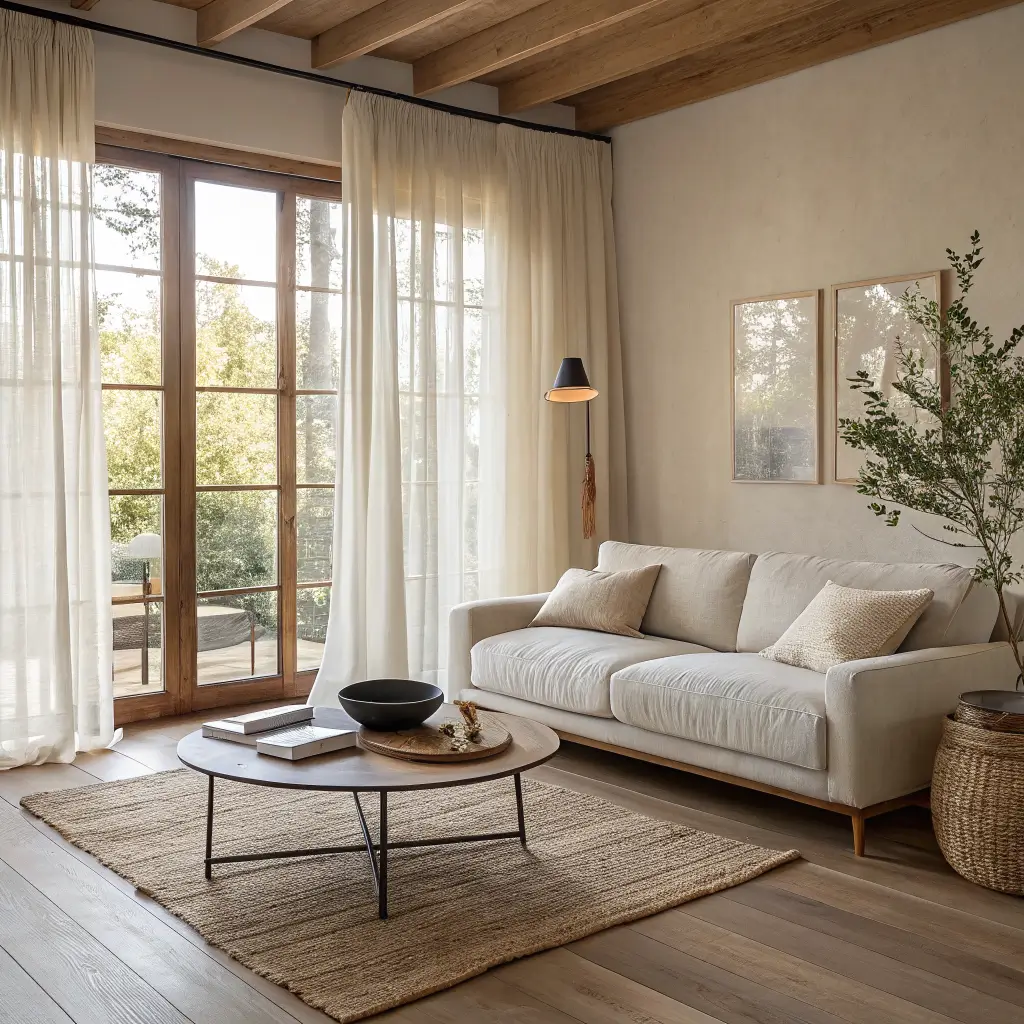
Japandi is the overlap between two design cultures that already agreed on most things: keep it honest, keep it functional, keep it made from materials that age well. Japanese minimalism brings the wabi-sabi side — imperfect ceramics, negative space, restraint. Scandinavian design brings hygge — soft textiles, warm lighting, comfortable seating you actually want to sit in.
Japandi is for you if:
– You want a calm room, not a busy one
– You’d rather own five good things than fifty cheap ones
– You care about how a room feels at 9pm with one lamp on
– You’re tired of trends and want something you won’t hate in three years
It works best in rooms between about 12 and 25 m² (roughly 130–270 sq ft), where the empty space can actually breathe. It also scales up to open-plan living/kitchen zones if you’re disciplined about keeping counters and surfaces mostly clear.
Where I’ve seen it work best:
– Living rooms — low sofa, floor cushions, layered lighting
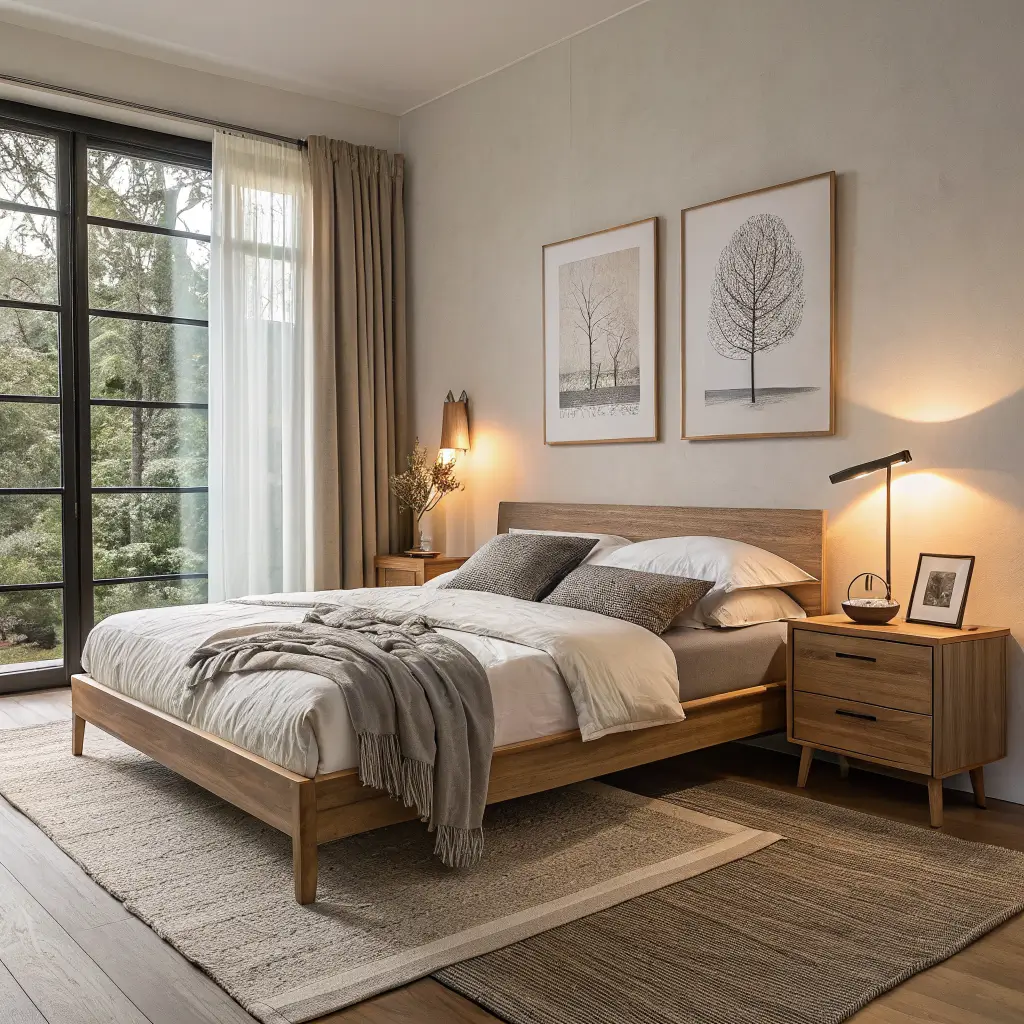
– Bedrooms — platform bed, linen bedding, one lamp
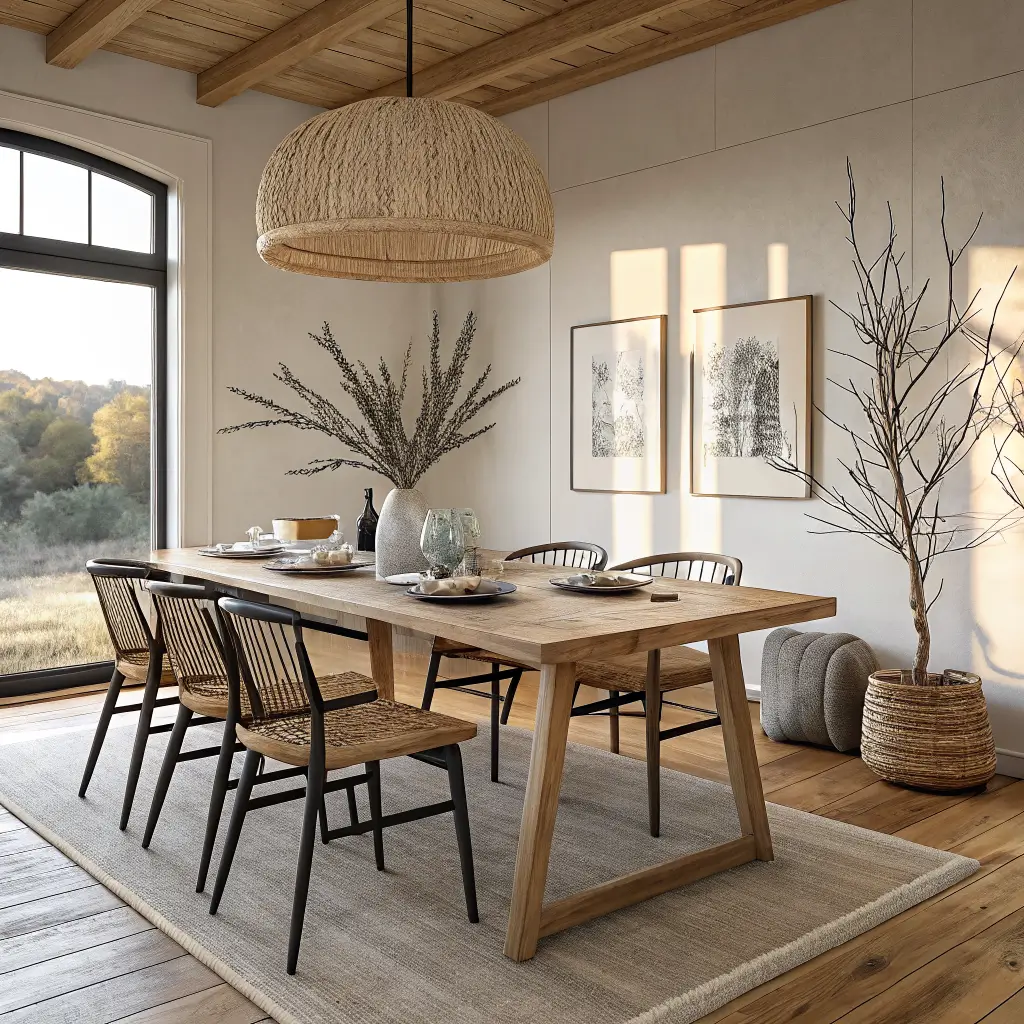
– Dining rooms — solid wood table, paper pendant, plain stoneware
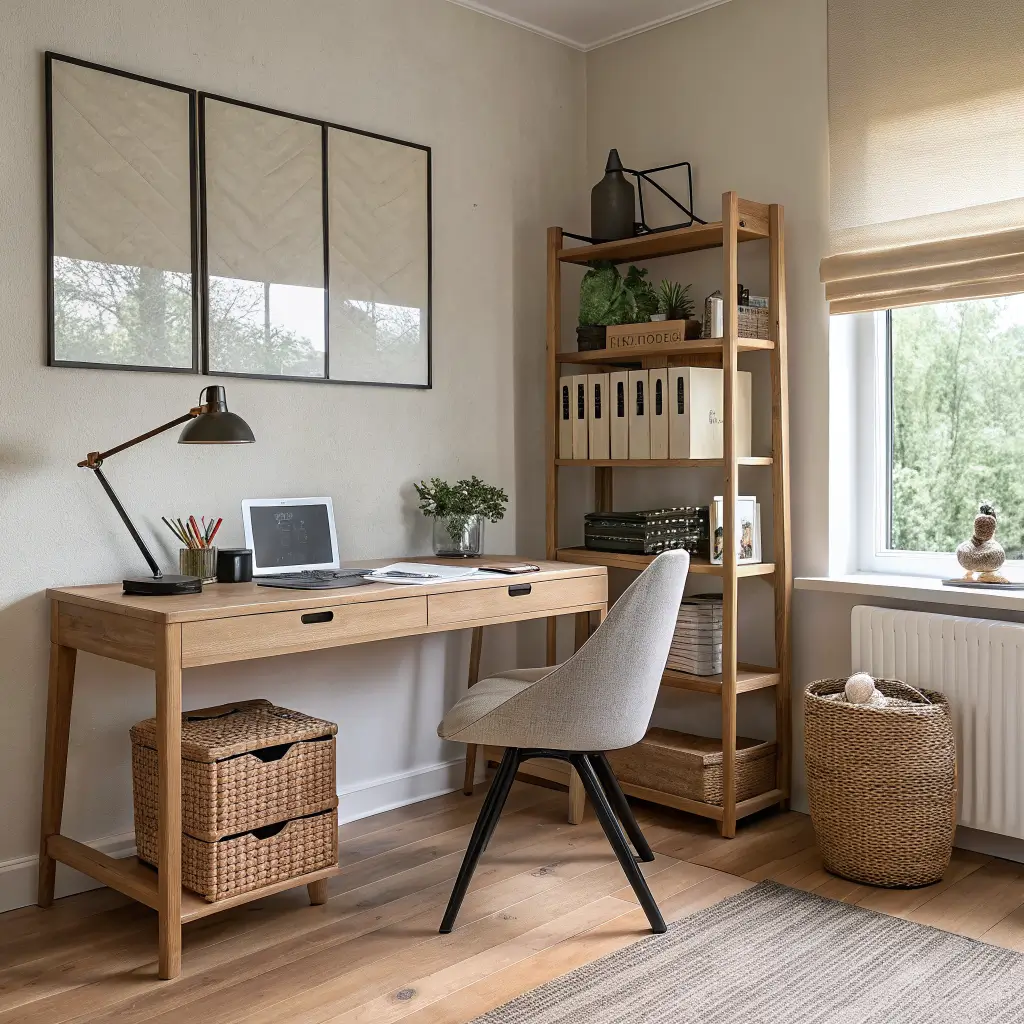
– Home offices — clear desk, closed storage, neutral walls
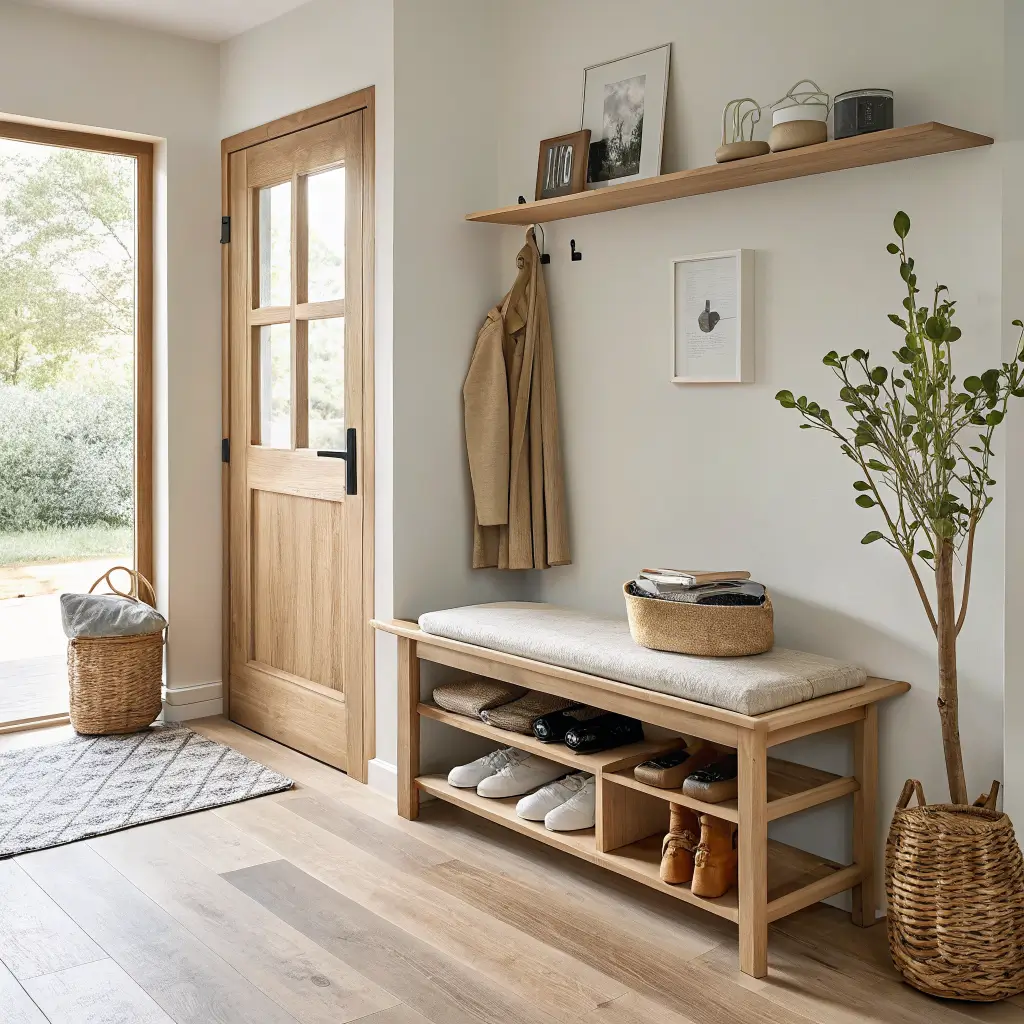
– Entryways — slim bench, shoe storage, one branch in a vase
The Color Palette That Actually Reads as Japandi
This is where most people go wrong. They reach for grey and white because that’s what Pinterest shows in the thumbnail. Skip both.
Base tones (70–80% of the room): warm white, cream, ivory, beige, almond, mushroom, stone, greige. Think of a coffee with a lot of milk.
Mid tones (10–20%): driftwood grey, sand, putty, light oat, muted olive.
Accents (5–10%): charcoal, ink black, ebonized walnut, deep brown, terracotta, muted sage.
The rule I use: swap pure white for cream, and pure black for soft charcoal. Pure white next to pure black is Scandinavian-adjacent but harsh — it kills the Japandi warmth immediately. I repainted my walls from a cool “designer white” to Farrow & Ball School House White equivalent and the whole room stopped feeling clinical overnight.
The Materials That Do the Heavy Lifting
– Wood — oak, ash, beech, birch. Light to mid tones. Keep it mostly one wood tone per room, or one light plus one dark.
– Natural fibers — linen, cotton, wool, jute, sisal
– Organic textures — rattan, bamboo, wicker (used sparingly)
– Stone and ceramics — travertine, honed marble, matte stoneware
– Paper — rice paper or washi-style lamp shades
Skip anything glossy. Skip chrome. Skip printed faux-wood laminate — you’ll see it a mile off, and it doesn’t patina, it just gets scuffed.
The Hero Pieces to Buy First
If you build the room in this order, you won’t waste money.
1. Low-profile sofa in linen or cotton blend
Look for slim arms, visible wooden legs, seat height 40–45 cm, depth 90–100 cm. Budget $400–$1,500. IKEA’s Söderhamn in a natural linen cover is a legitimately good starting point for under $900.
2. Solid wood coffee table
Round or rectangular, 30–40 cm tall. Oak or ash. $150–$600 for something honest, more if you’re going artisan. I’d avoid anything with a hollow core or veneer that chips.
3. Neutral flatweave or low-pile rug
Wool, cotton, or jute. Sizes 160×230 cm for smaller rooms, 200×300 cm for larger. $120–$800. Front legs of the sofa should sit on it — a rug too small is one of the most common mistakes in any style, Japandi included.
4. Layered lighting
Never rely on one overhead light. You want at least three sources: a paper pendant or diffused ceiling light, a floor lamp, and a table lamp. Rice paper pendants run $40–$150. A good floor lamp with a linen shade, $100–$250.
5. A sideboard or credenza with flat fronts
Oak or bamboo, integrated handles or push-to-open. Width 120–200 cm. $300–$1,500. This is where all your clutter goes so the room can stay quiet.
Rough total for a full living-room refresh: $900–$3,000 at the mainstream end, $3,000–$8,000+ if you’re buying from designer or artisan brands.
The Japandi “Tells” — Small Things That Signal the Style
You can get 80% of the way there with the big pieces. The last 20% is these:
– Handmade ceramic vases and bowls — matte, slightly wonky, in off-white, sand, or charcoal. $30–$200 each. Facebook Marketplace and estate sales are goldmines.
– Linen throw blankets in stone or greige, $60–$200
– A single sculptural branch in a tall floor vase — I use olive branches, but bare cherry or magnolia work in winter
– Low floor cushions or a linen pouf for casual seating
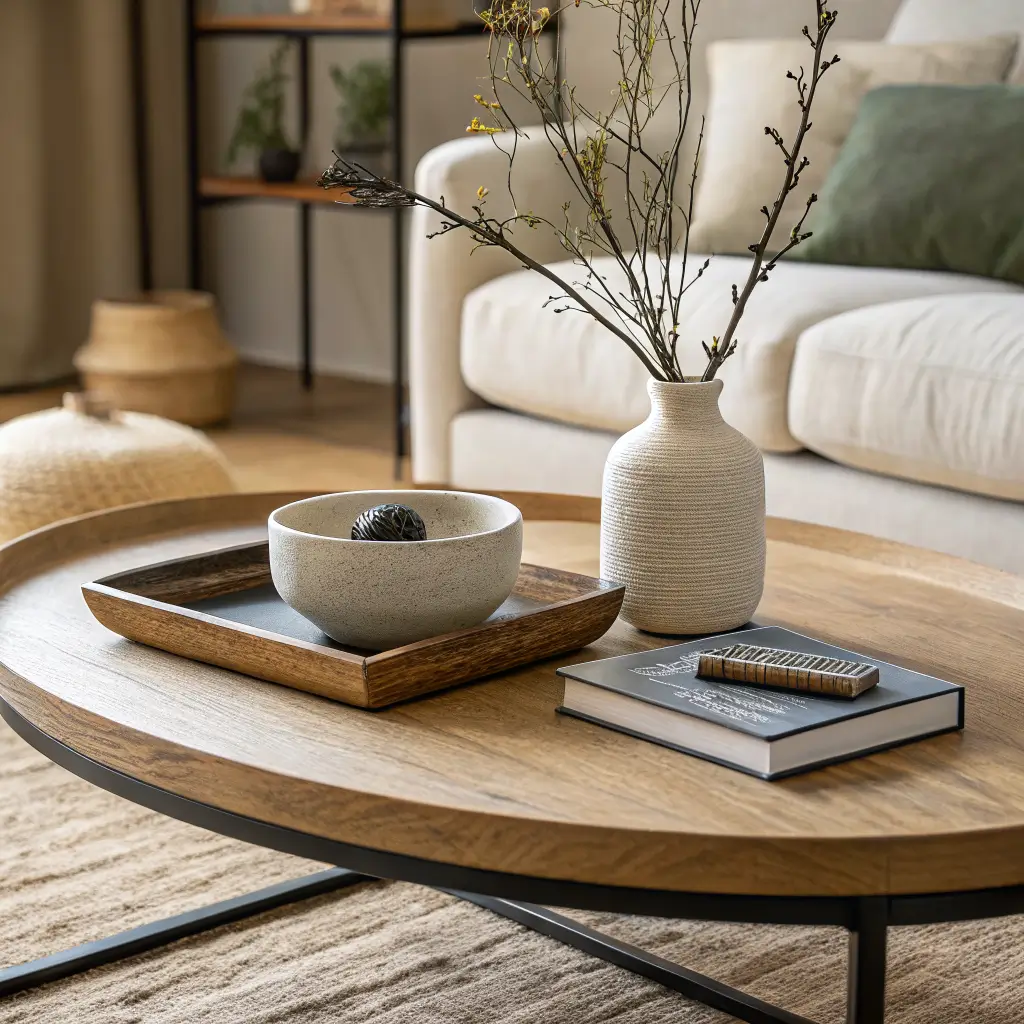
– A wood or stone tray on the coffee table to corral the remote, coasters, whatever
The branch thing sounds precious, I know. But a $4 branch from your yard in a $30 stoneware vase does more visual work than a $200 art print.
How to Layer It Without Going Cold
Minimalism goes wrong when everything is smooth and hard. The trick is contrasting textures within a tight color range.
Pair a smooth plaster wall with a nubby linen sofa. Pair a grainy oak table with matte ceramic. Pair a wool rug with a paper lamp.
Low-contrast pattern is fine — tone-on-tone stripes, subtle checks, a barely-there weave. High-contrast pattern (bold florals, geometrics) breaks the style.
For visual flow: pick one focal point per room. In my living room it’s the sofa and coffee table zone. Around that, I leave actual empty floor and wall space so your eye has somewhere to rest. Furniture sits in clean lines against walls, not floating at diagonals.
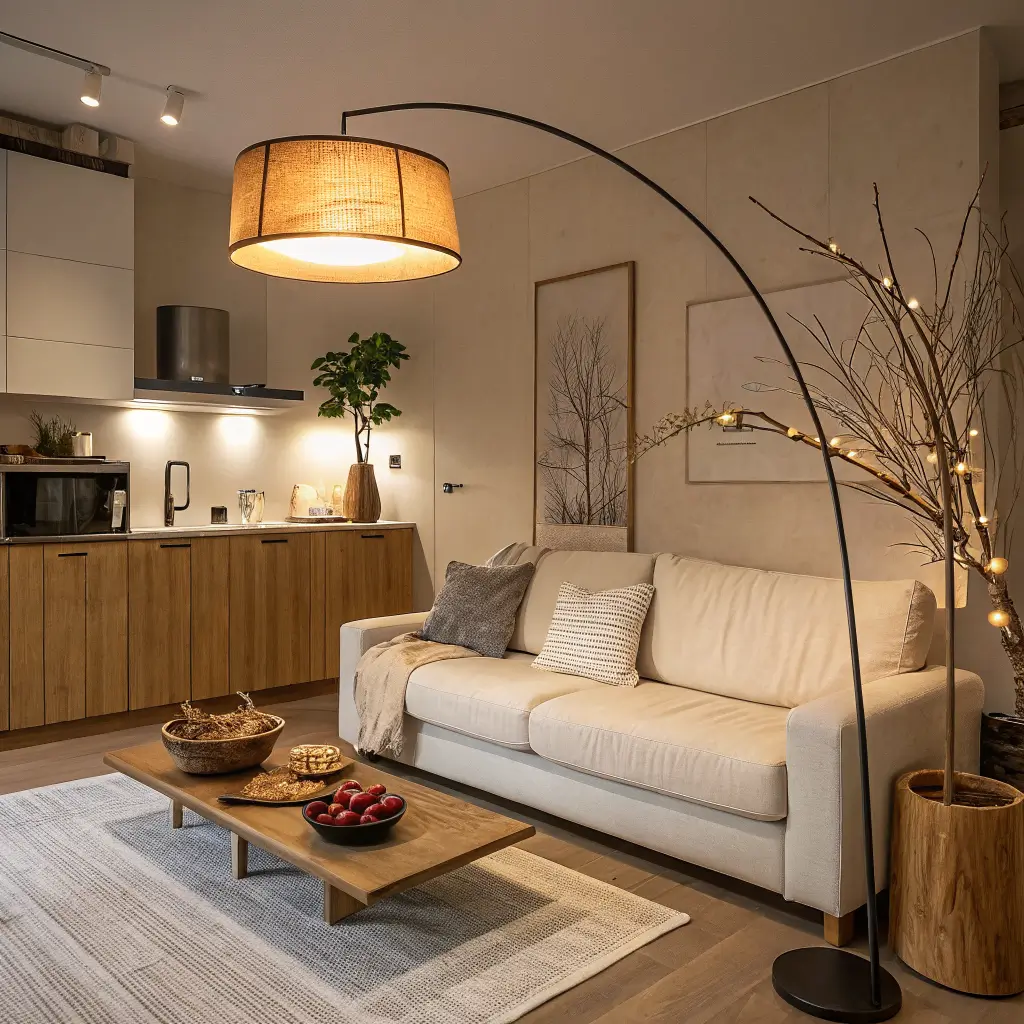
The Setup Order (What to Do First, Second, Third)
Day 1 — Declutter aggressively. Cut the visible objects in the room by at least 30–50%. Everything you don’t want to throw out goes into closed storage or a box in the closet for two weeks. If you don’t miss it, it goes.
Day 1–2 — Paint if needed. Warm white or cream on walls. Matte finish, not eggshell.
Day 2–3 — Place the anchor pieces. Sofa first, then coffee table, then rug. Leave 60–80 cm walkways around everything.
Week 1 — Add lighting layers and textiles. Don’t buy decor yet.
Week 2 — Curate objects. One to three items per surface. Books can go horizontal with an object stacked on top.
Week 2+ — Add greenery last. One tall plant or branch, one small potted plant. Not a jungle.
Mistakes I’ve Made So You Don’t Have To
I over-decorated every surface. My first attempt had a tray, three candles, a book stack, a small ceramic, and a tiny plant on the coffee table. It looked busy. Now it’s a tray, one book, one ceramic. Better.
I bought a white sofa. Looked great for six weeks. Turned grim after. If you want light, get cream or oatmeal linen — it hides life better and reads warmer.
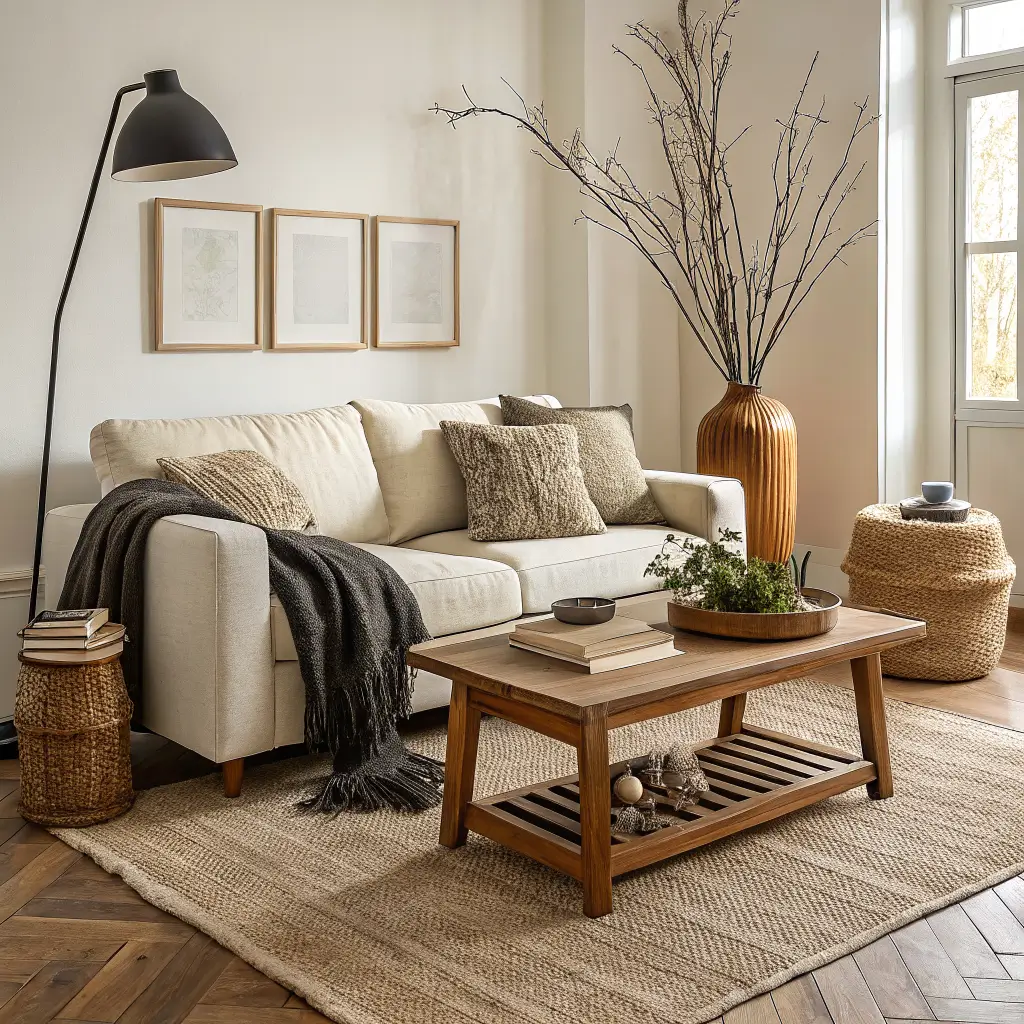
I mixed too many wood tones. Light oak coffee table, walnut side table, birch shelves, teak stool. Chaos. Now: one dominant wood (light oak) plus one supporting dark (ebonized black on the lamp base and a tray).
I ignored comfort. Early on I had a stiff, low sofa and a hard floor cushion and nothing to lean on. Nobody wanted to sit in there, including me. Add proper cushions. Add a throw. Warm lighting after sunset. That’s the Scandi half doing its job.
I bought disposable decor. A whole haul from a fast-decor site that cracked, faded, and wobbled within a year. The Japandi mindset is the opposite of that. Buy fewer things, buy them once.
Seasonal Swaps Without Redecorating
The bones stay the same year-round. What changes:
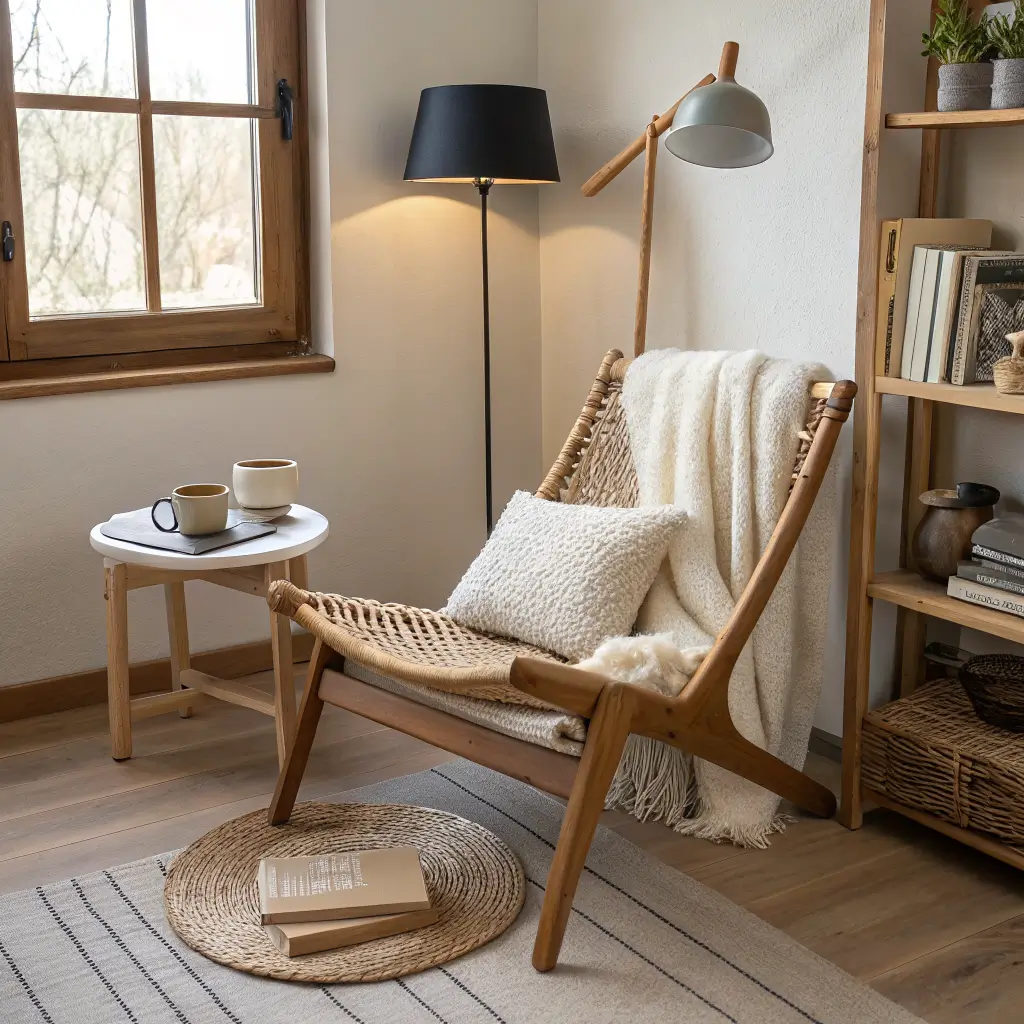
– Spring/summer — lighter linen throws, pale sage or clay cushions, more fresh greenery
– Autumn/winter — wool or bouclé cushions, deeper olive and charcoal accents, a heavier rug layered over the flatweave
Budget for a seasonal refresh: $80–$200. It’s mostly cushion covers and one throw.
When You Want to Change It Up Later
Japandi + boho — one patterned rug in earthy tones, keep the pattern small-scale. Nothing macramé.
Japandi + coastal — muted blues and sandy linens, still low contrast. Skip the rope and the shells.
Japandi + contemporary minimal — go even sparser, but keep the wood and textiles or the room will freeze over.
The Question I Get Asked Most: Is Japandi Just a Trend?
Not really. It’s a hybrid of two design traditions that have been around for a century-plus each, and both prize longevity over novelty. The specific palette we’re calling “Japandi” in 2024–2025 will shift — the mushroom and greige will eventually feel dated the way beige-on-beige from 2010 does now. But the underlying moves (natural materials, low furniture, warm neutrals, negative space, quality over quantity) aren’t going anywhere.
If you buy a solid oak table and a linen sofa and a good wool rug, you can restyle the room five different ways over the next 15 years and none of those pieces will look wrong. That’s the actual point of the style. The Pinterest boards are just the surface.
Start with the sofa and the rug. Get the walls to a warm white. Add one lamp that isn’t the overhead. See how the room feels after a week. Then decide what it still needs — which will almost always be less than you think.