The Look and Who It’s For
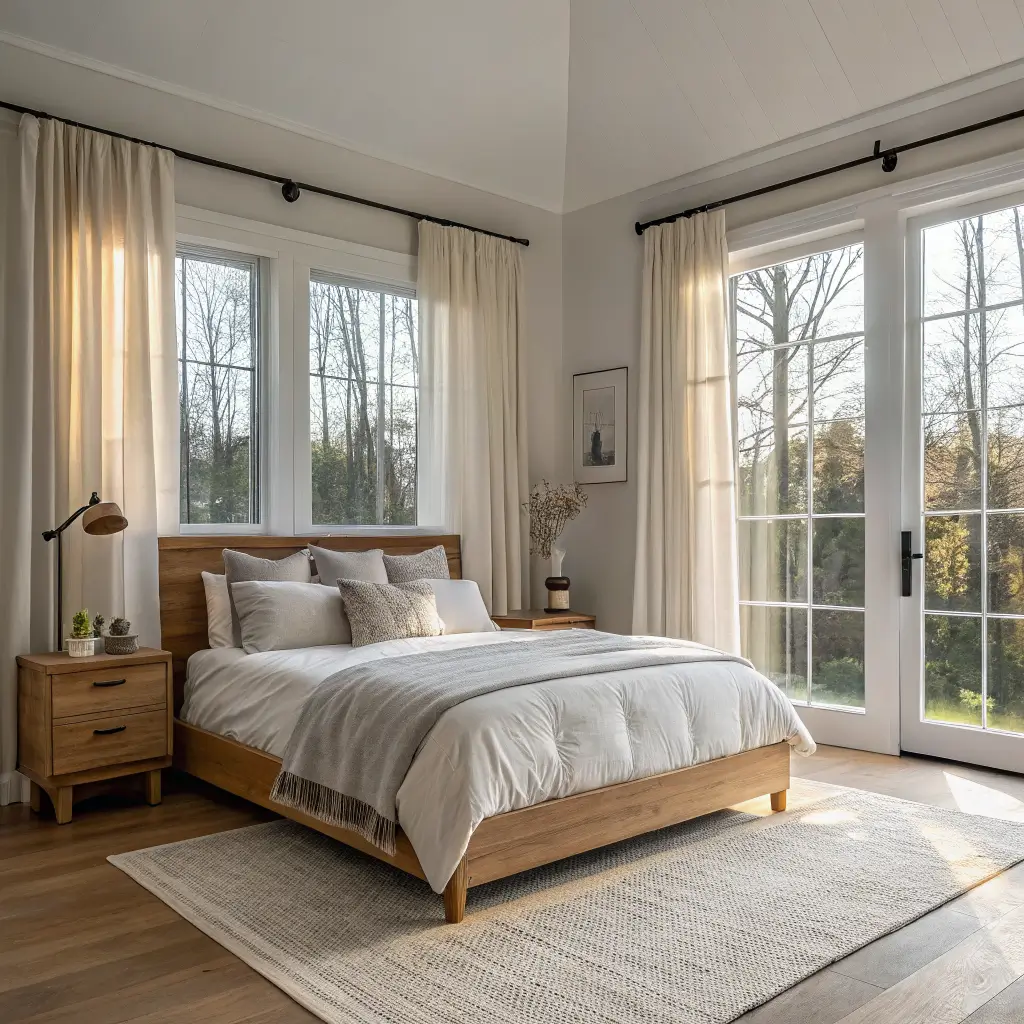
The minimalistic elegant bedroom was the one I built around good light and one good blanket. Less furniture meant the pieces I kept finally showed.
Think Scandinavian bones with a quiet-luxury finish. Clean lines, low-profile furniture, a palette that stays in the neutral family, and texture doing the heavy lifting where pattern would in a busier room.
This works for you if:
– You sleep badly in visually noisy rooms (I do — clutter on the nightstand keeps me up)
– You live in a small apartment and need the bedroom to feel bigger than it is
– You’d rather buy one great bed than five decent things
– You want a grown-up room that doesn’t look like a Pinterest board from 2018
It suits primary bedrooms, guest rooms, studio sleep zones, and teen rooms that need to age up. It doesn’t suit anyone who genuinely loves stuff and collections — force yourself into minimalism and you’ll resent the room within a month.
Time and Budget: What You’re Actually Signing Up For
A weekend gets you a refresh. Six to twelve hours of decluttering, rearranging, and swapping out bedding and lamps. That’s what I’d do first before spending real money.
A full re-style takes two to four days, mostly waiting on furniture deliveries and assembling a bed frame at 9pm because you underestimated the box.
Rough numbers if you keep the existing bed:
– Neutral cotton or linen bedding set: $60–$150 (H&M Home and IKEA are where I’d start)
– 6×9 low-pile neutral rug: $80–$250
– Pair of bedside lamps: $40–$120
– One large piece of art or a leaning mirror: $60–$200
– Plants, a ceramic vase, a tray: $40–$120
That’s $280–$840 total for a room that will look completely different.
Mid-range with a new bed, better lighting, and a proper closet setup runs $1,750–$7,000. High-end with designer beds, custom wardrobes, and fine linen bedding climbs past $15,000 fast, mostly on the millwork.
Room Sizes That Suit This Style
Minimal works in any size, but it really sings in two ranges:
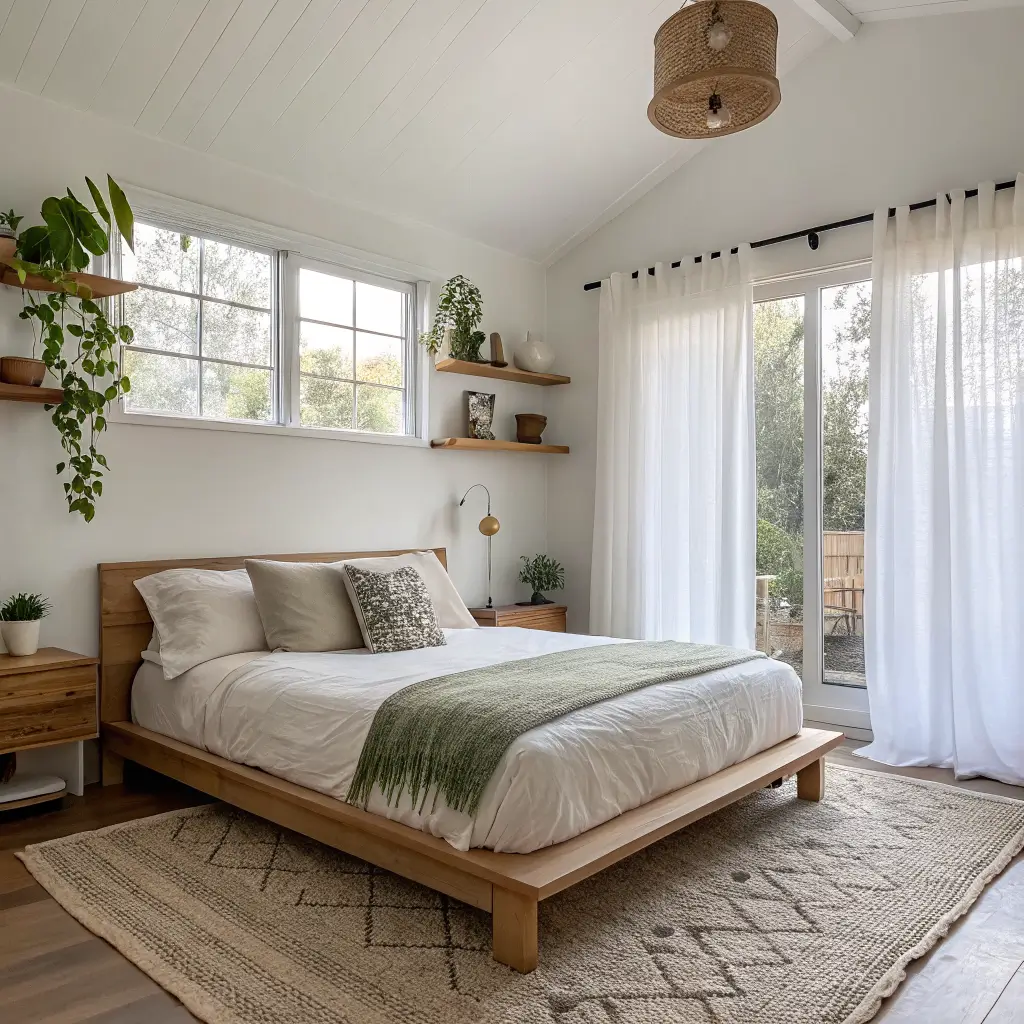
– Small bedrooms (9×10 to 10×12 ft): low beds and pale walls fake extra square footage
– Primary bedrooms (12×14 and up): you can add a bench, a bigger light fixture, and larger art without breaking the calm
The awkward middle — a room barely wider than the bed — is the hardest. In those, drop the nightstands to wall-mounted shelves and skip the bench entirely.
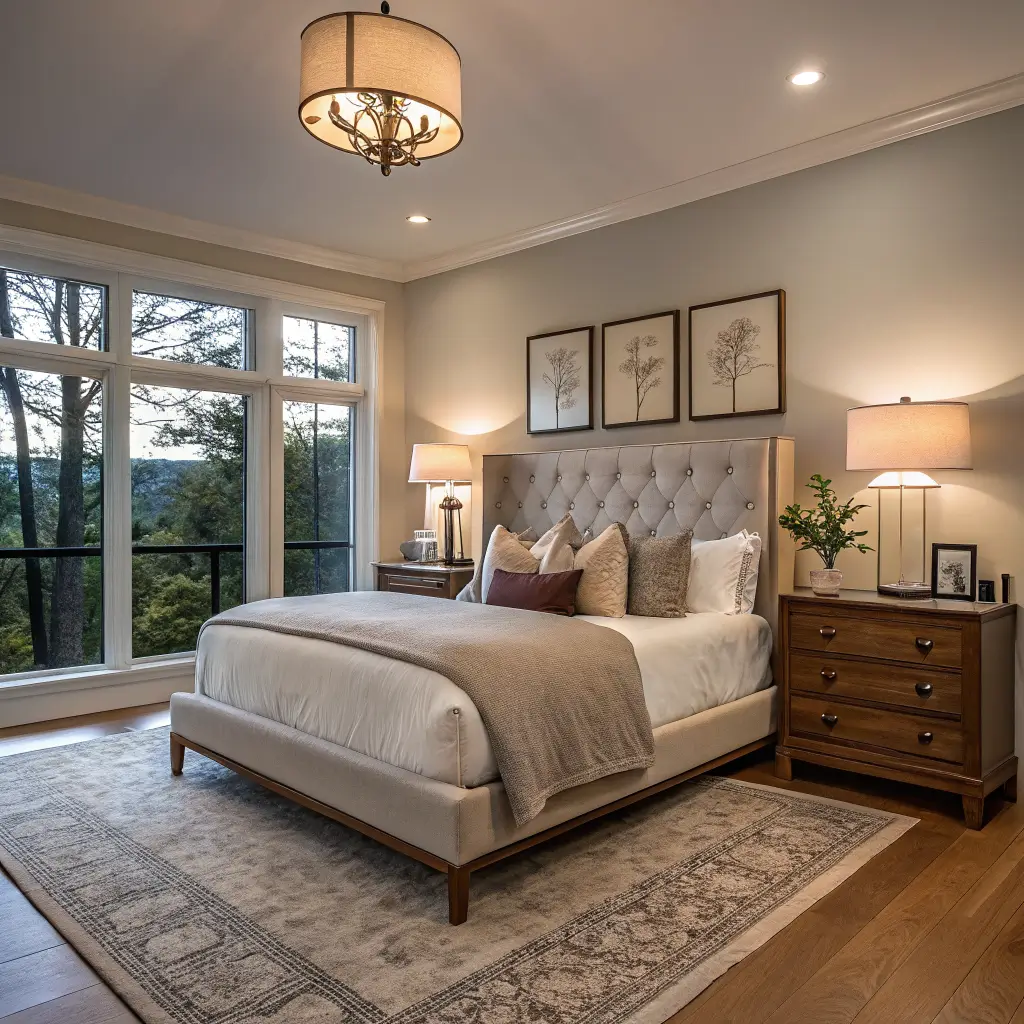
Colors and Materials That Actually Read as Elegant
Kill the pure-white idea unless your room gets a lot of natural light. Chalky white on a north-facing wall goes gray and depressing by 3pm. I learned that the hard way with Chantilly Lace in a room that faced a brick building.
Walls — pick one:
– Chalky white (Benjamin Moore Chantilly Lace, Sherwin-Williams Pure White) — for bright, sunlit rooms
– Soft greige (BM Classic Gray, SW Agreeable Gray) — the safest choice, works in almost any light
– Warm taupe or stone — the current quiet-luxury move, adds warmth without going beige-y
Accent colors, used sparingly:
– Charcoal or soft black for frames, lamp bases, and hardware
– Sage, olive, or eucalyptus, brought in through plants and one cushion
– Clay or pale pink in bedding if you want softness without going full pastel
Materials that carry the room:
– Natural wood — oak, ash, or walnut. Pick one tone and stay in it. A light-oak bed with a walnut nightstand and a mahogany bench looks like a furniture showroom clearance sale.
– Linen and washed cotton for bedding, wool or jute for rugs
– Brushed brass, blackened steel, or matte chrome for lighting and hardware
– Clear glass or acrylic where you want a piece to visually disappear
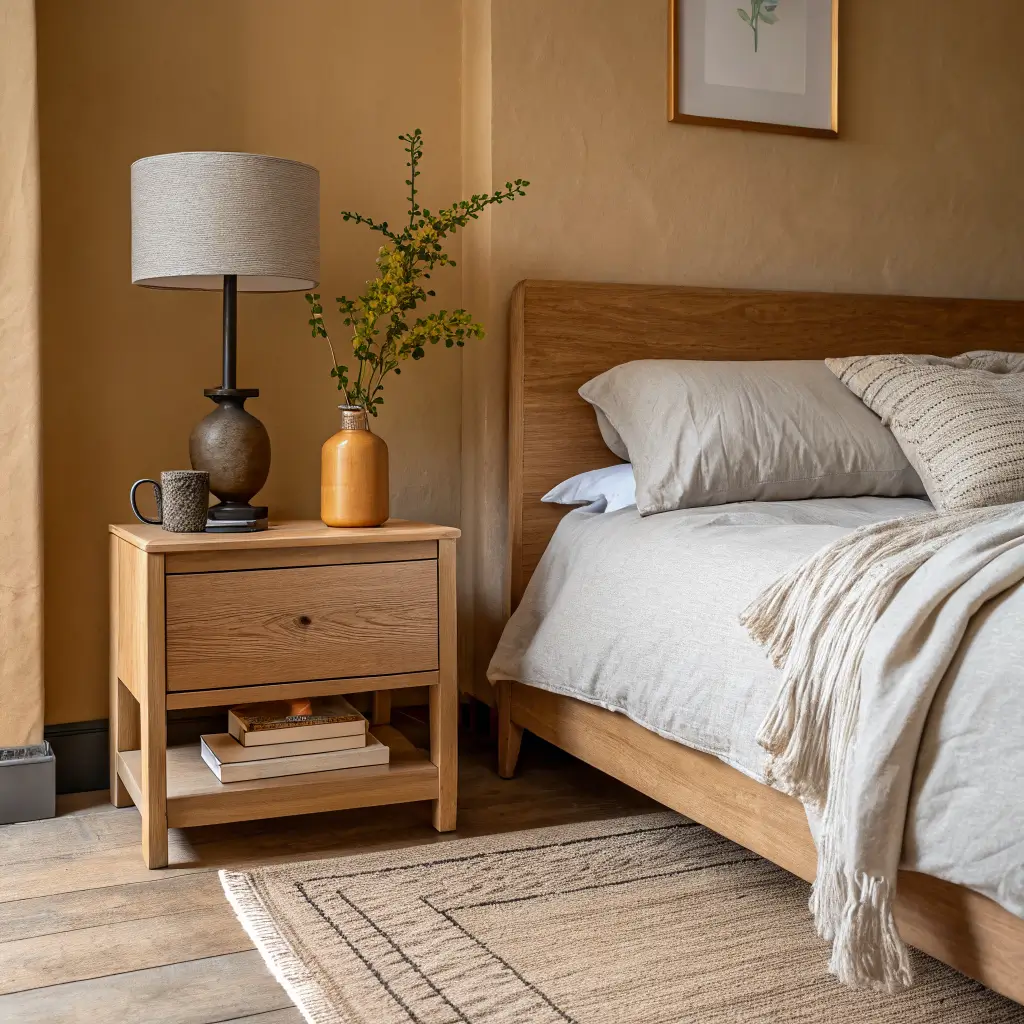
The Hero Pieces
Spend on these. Everything else can be cheap.
1. A low-profile platform bed. This one piece does more for the minimal elegant feeling than anything else. Light oak frames, boxy upholstered beds in oat or stone, or a simple slat platform. Queen is 60×80, king is 76×80. Skip anything with an ornate headboard or nailhead trim.
2. A mattress you actually like. Boring but true. Foam or hybrid, low-profile, $500–$1,500 for a decent queen. A great frame with a sagging mattress ruins everything.
3. A rug big enough to anchor the bed. For a queen, minimum 6×9, ideally 8×10 so it extends 18–24 inches past the sides of the bed. A too-small rug is the single most common mistake I see. It makes the bed look like it’s floating on a bath mat.
4. Bedding in white, oat, stone, or warm gray. Duvet cover, fitted sheet, four pillowcases. That’s it.
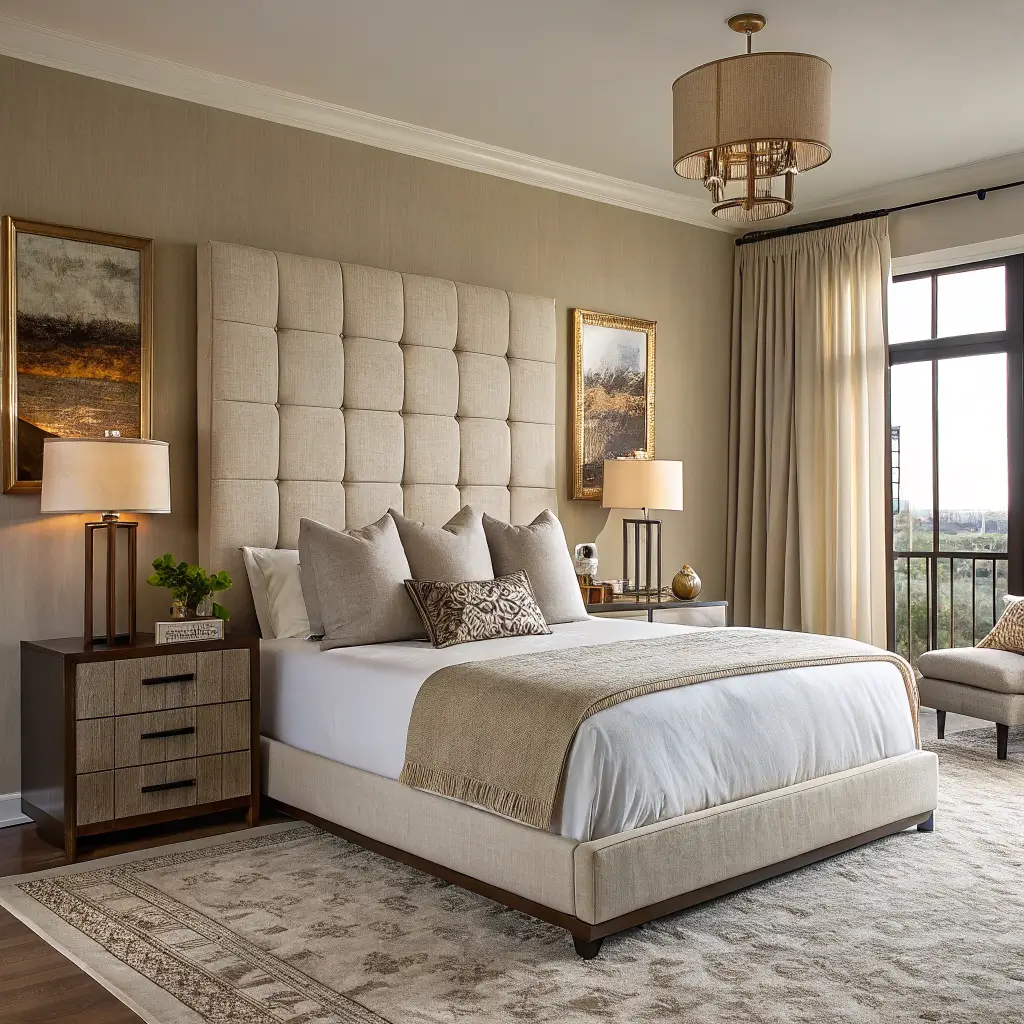
Supporting Cast
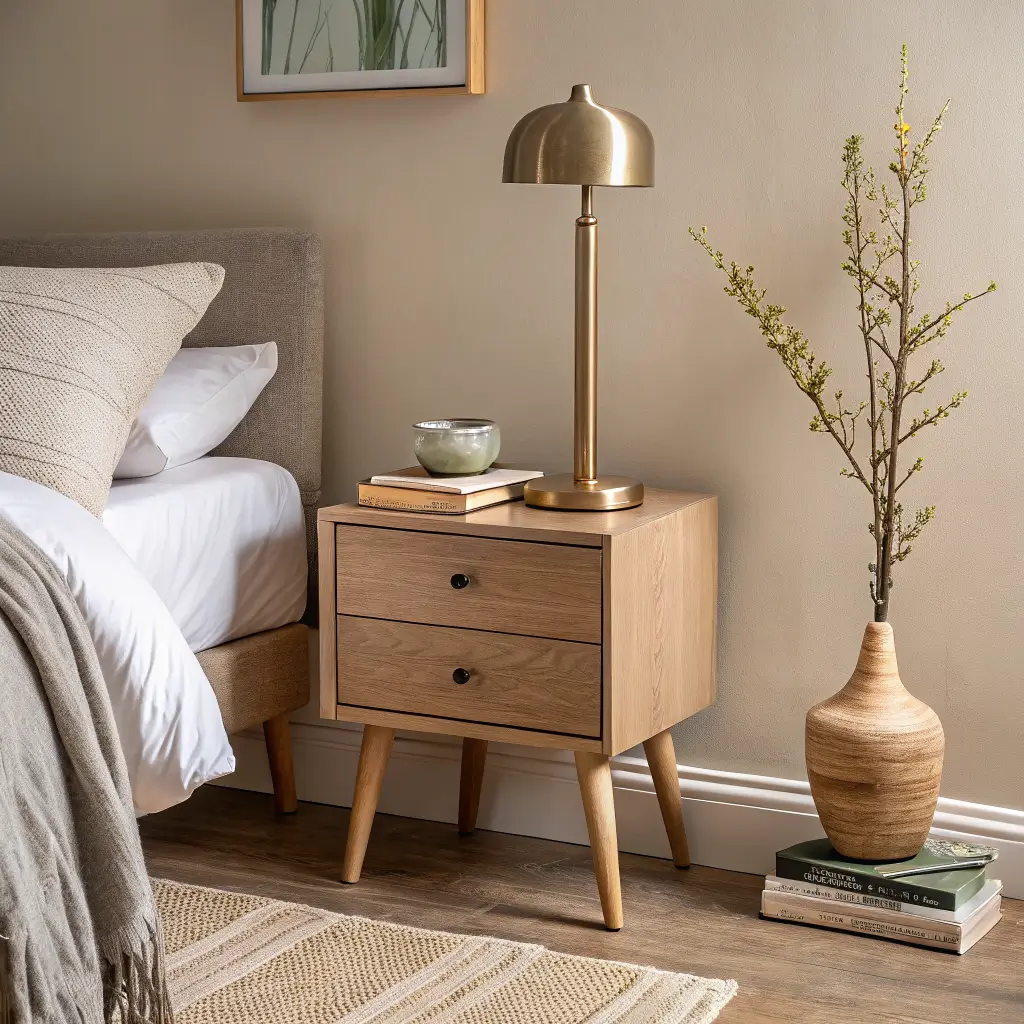
– Slim nightstands with a drawer. Exposed legs keep the floor visible, which keeps the room feeling bigger.
– Layered lighting. One overhead source plus bedside lamps or sconces. Bulbs at 2700K, never higher. Cool white bulbs will undo everything you just built.
– Sheer curtains hung high and wide — 4 to 6 inches above the window frame and extending 8–12 inches past each side. Add a blackout liner behind them if you’re a light sleeper.
– One large piece of art or a leaning floor mirror on the bed wall or opposite it. Not both.
– One or two plants. A snake plant, a small ficus, or a jar of eucalyptus stems. That’s the whole plant conversation.
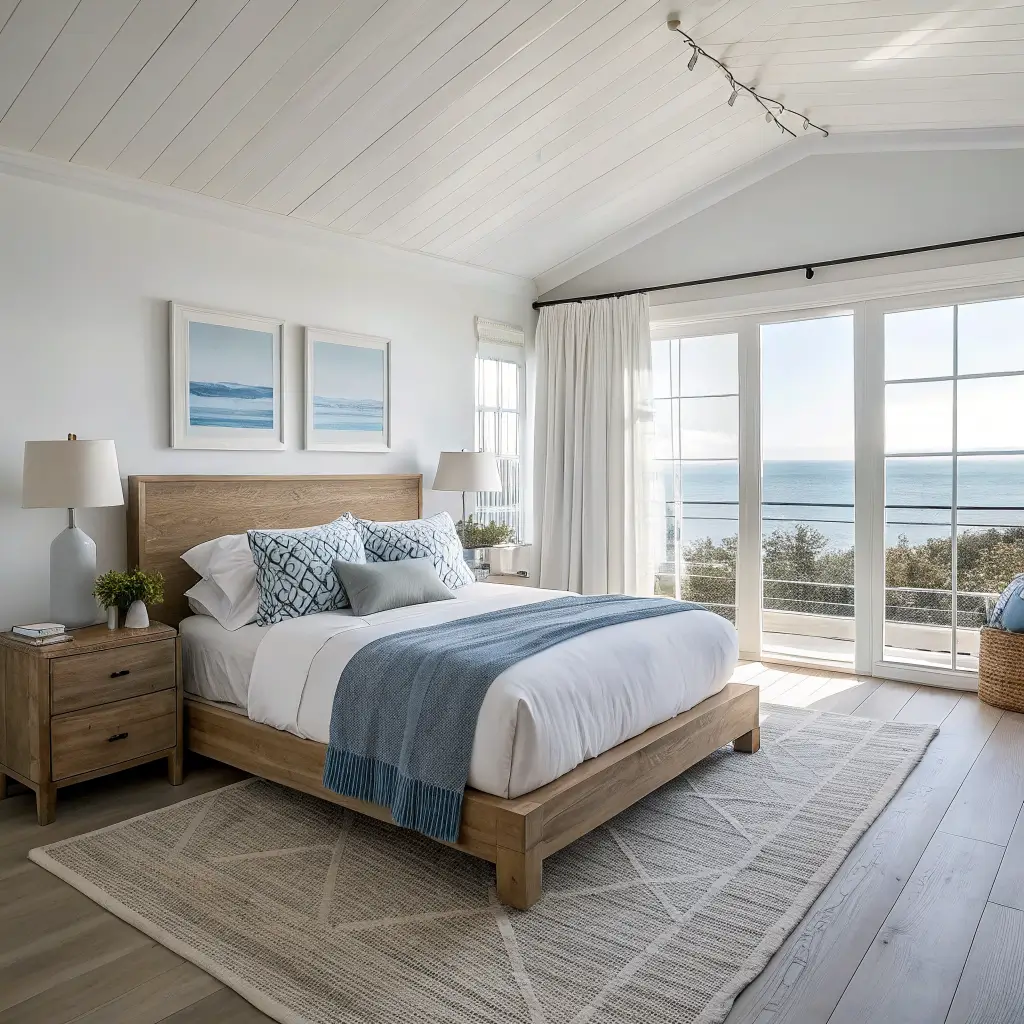
How to Actually Put It Together
Do it in this order. Skipping steps is why rooms end up looking half-finished.
1. Empty the room first. Not tidy — empty. Keep, donate, recycle, bin. If it doesn’t earn its way back in, it doesn’t come back in. I got rid of a dresser I’d had for eight years doing this and never once missed it.
2. Paint or confirm the wall color. Do this with the room empty. It’s a two-hour job and you’ll never have a better chance.
3. Place the bed. It should have a clear view of the door and, if possible, sit on the wall opposite or perpendicular to the main window. Not directly under it — light will wake you.
4. Center the rug. Two-thirds of it should sit under the bed, starting roughly where the nightstands begin, extending well past the foot.
5. Add nightstands. Symmetrical if you have the space. Same height as the top of the mattress, give or take an inch.
6. Install lighting. Overhead, then bedside. Warm bulbs. Dimmer if you can swing it.
7. Dress the bed. Duvet, two sleeping pillows, two euro shams, one lumbar or throw pillow. Maximum four pillows. More than that and you’re doing hotel-lobby cosplay.
8. Style the surfaces last. Each nightstand gets a lamp and one or two objects. A small stack of books, a ceramic vase, a candle. Anything else goes in the drawer.
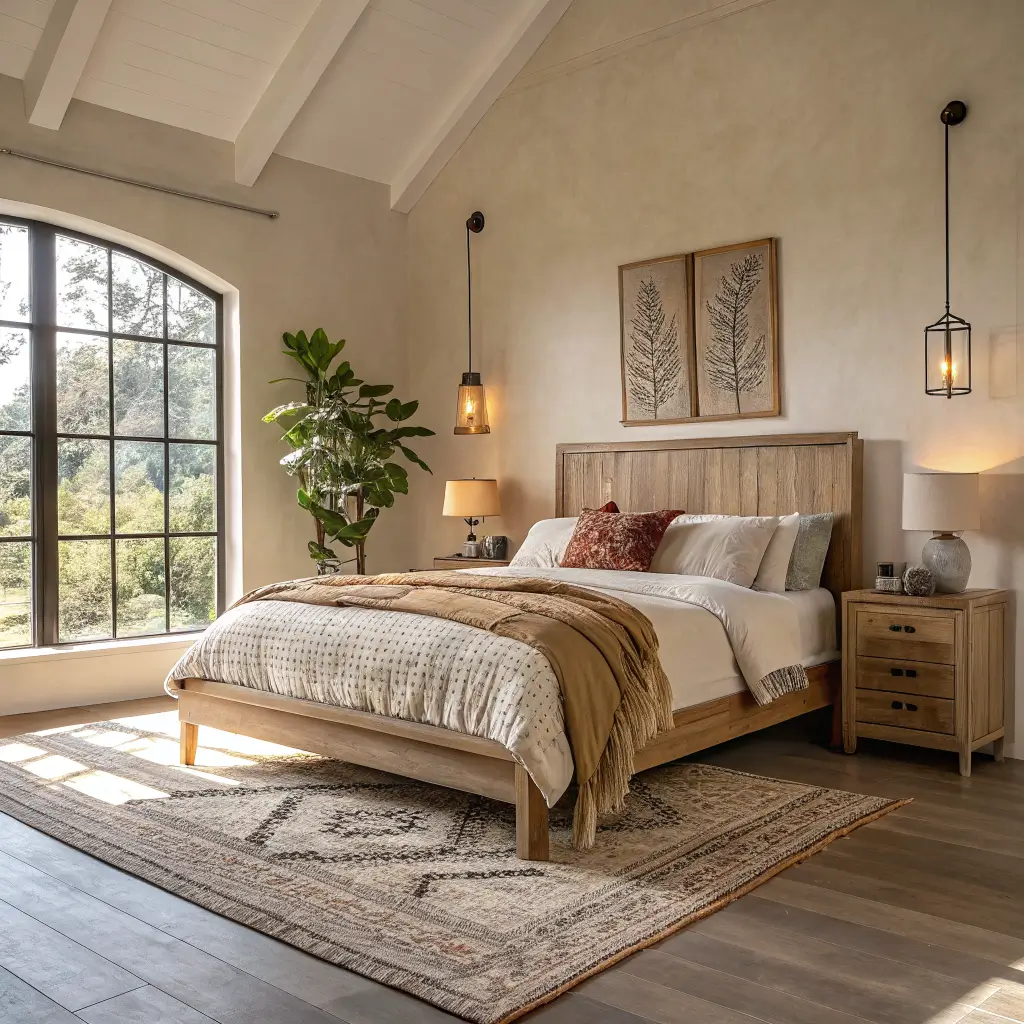
9. Hang one piece of art. Center of the piece at roughly 57–60 inches from the floor. Leave real blank wall around it.
Common Mistakes I See (and Made)
Over-decorating the “minimal” room. Two candles becomes four, four becomes a tray of nine things, and suddenly the nightstand looks like a Homegoods endcap. Edit ruthlessly. Two objects per surface is the ceiling.
Going full cold-white. All-white walls, white bedding, white lamps, no wood, no texture — the room reads as clinical, not calm. Bring in one wood tone and one warm textile before you do anything else.
Ignoring storage. Minimal doesn’t mean nothing has a home. It means everything has a hidden home. Under-bed drawers, a closed nightstand, a lidded basket on a shelf. If your “clean” room requires stashing things on a chair, the system’s broken.
Visible cables and tech. Cords running down the wall from a wall-mounted TV, a blinking router on a shelf, three chargers on the nightstand. A $12 cable channel and a lidded box for chargers fix 90% of this.
Mixing too many wood tones. Pick a lane. Light oak everywhere, or medium walnut everywhere. Two tones can work if they’re clearly different (very light and very dark). Three never does.
Keeping It Feeling Fresh
I do a two-minute reset every night: anything on the nightstand that isn’t the lamp, a book, or a glass of water goes in the drawer. It’s the difference between the room looking like the photos and the room looking like real life.
For seasonal shifts, don’t buy furniture. Swap:
– Summer: linen throw at the foot of the bed, sheer curtains only, a woven basket by the door
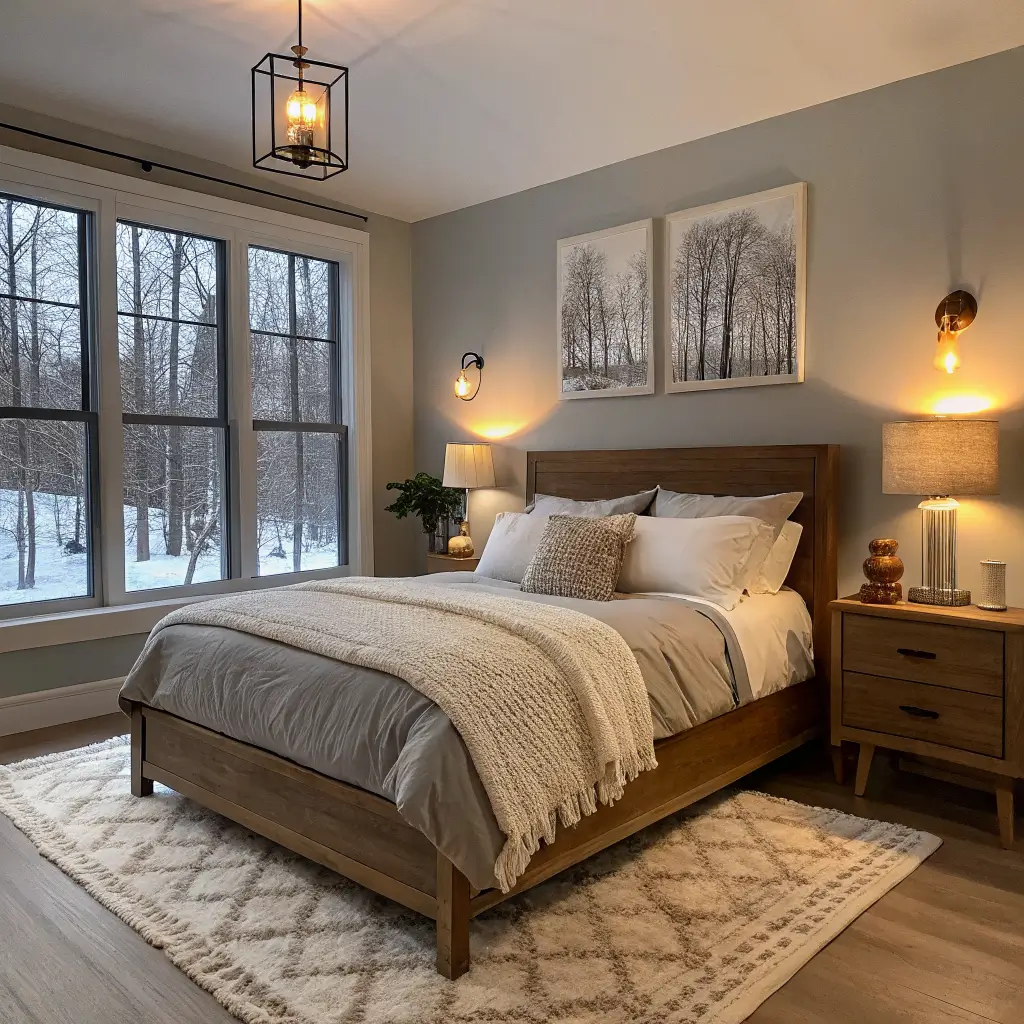
– Winter: chunky knit or wool throw, a faux-sheepskin at the bedside, an amber-glass candle
When you’re tempted to buy something new, three questions:
1. Is it functional?
2. Does it fit the palette and material story?
3. Does it replace something instead of adding to the pile?
If it’s not a yes to all three, put the phone down.
Cross-Style Variations
Boho-minimal: keep the bed, walls, and bedding neutral. Introduce one patterned rug (a faded vintage kilim works well) and a single textured cushion. That’s the entire boho intervention.
Coastal-minimal: soft whites, sandy beige, driftwood or light oak, one blue-gray textile — usually the throw. Skip anything shell-shaped or literal.
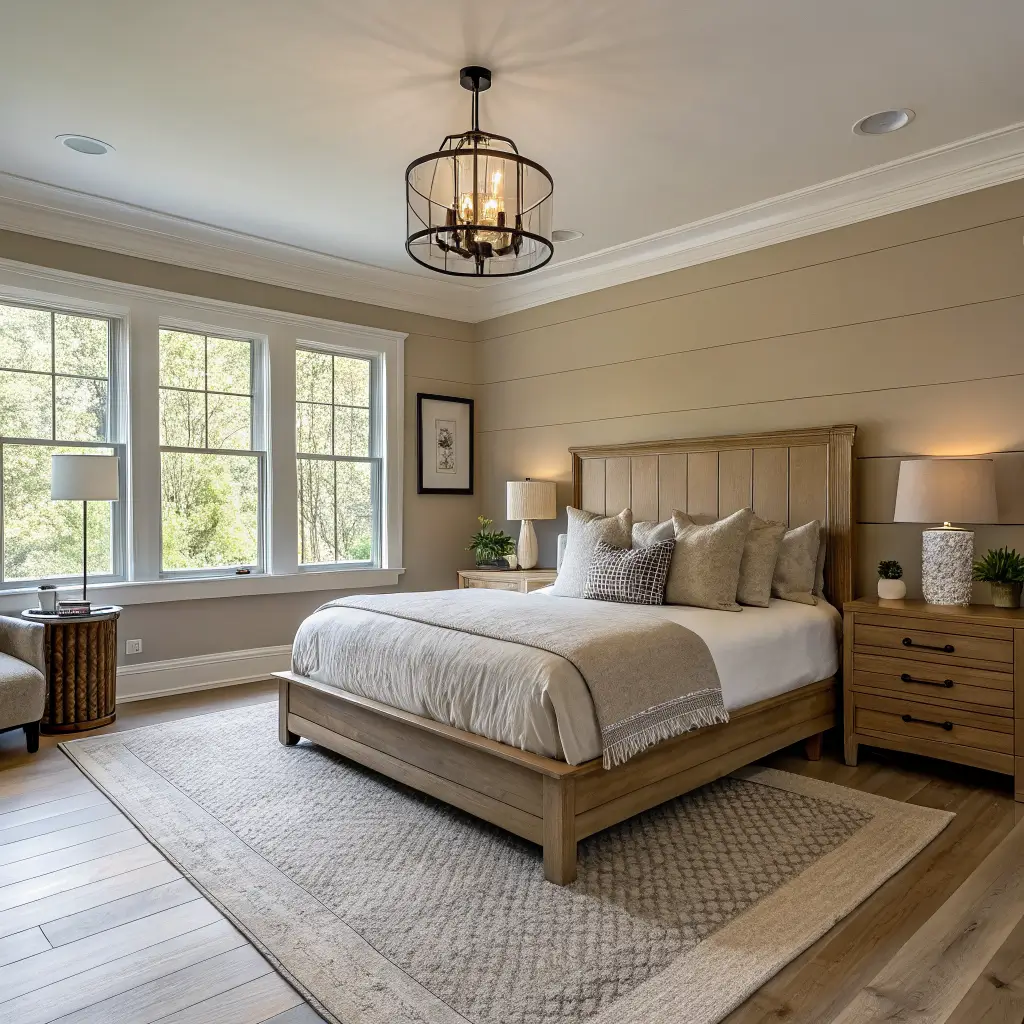
Warm quiet-luxury: bouclé upholstered headboard, brushed brass sconces, taupe walls, fine linen bedding. This is the most expensive direction but also the most forgiving — the textures hide the fact that there are almost no objects in the room.
Quick Answers to the Questions People Ask
How do I make a minimalist bedroom cozy, not cold? Wood tone, warm bulbs (2700K), and one textured throw. Those three moves cover it.
Can a small bedroom look elegant with this style? Yes — arguably it’s the best style for small rooms. Low bed, pale walls, one piece of art, and a floor mirror to bounce light.
What bed is best — platform, low bed, or no headboard? Low platform with a simple upholstered or wood headboard. A headboard-less bed pushed against a wall looks unfinished in most rooms.
How do I add personality without ruining the aesthetic? One personal object per surface. A framed photo, a piece of pottery from a trip, a book that means something. Personality lives in one or two specific things, not scattered across every shelf.
The bedroom I have now started with a $180 IKEA oak bed frame, a rug I found on Facebook Marketplace for $60, and repainting from a builder-beige to Classic Gray over a Saturday. It’s not the expensive version of this look, and it’s still the calmest room in my apartment. That’s the whole point.