Nursery Room Ideas: A Real Guide to Designing a Room That Works From Day One
Nursery room ideas usually fall apart the moment you’re standing in an empty 10×11 bedroom with a crib box, a dresser still in shrink wrap, and no idea where the rocker should go. I’ve set up two nurseries now — one in a cramped Brooklyn second bedroom, one in a slightly-less-cramped house — and both times I overbought, overstyled, and had to redo half of it after the baby actually arrived.
So this is the version I wish someone had written for me: what you actually need, what a real budget looks like, and the mistakes I made so you can skip them.
What You’re Actually Building (and Who It’s For)
A nursery isn’t one room — it’s four small zones squeezed into one: sleep, changing, feeding, and play. Get those zones right and the styling takes care of itself.
The look I recommend for most first-time parents is a warm-neutral base with one clear personality piece — a mural, a wallpapered wall, a bold rug. It ages well (you’re not repainting at 18 months), it photographs beautifully, and it gives you flexibility as your taste and the kid’s taste change.
This works especially well if you’re:
– In an apartment or small bedroom (8×10 ft or so) and need every inch to earn its keep
– Going gender-neutral, either by choice or because you didn’t find out
– Renting and can’t do much structural
– The kind of person who wants the nursery to feel like the rest of your home, not a themed pod bolted onto it
Time and Money: The Honest Numbers
A basic nursery — paint, flat-pack crib, dresser, glider, rug, curtains — takes one weekend of two adults working, roughly 10–15 hours including a trip back to the store for the thing you forgot (in my case: a nightlight, twice). Budget lands around $600–$1,200.
A more styled nursery with wallpaper or a mural, floating shelves, curated art, and better textiles runs 2–3 weekends and $1,400–$3,000.
Designer territory — custom built-ins, premium convertible crib, real art, layered lighting — starts around $3,000 and climbs past $8,000 fast, especially if you hire out.
Where I’d spend:
– The glider. You will sit in it for hundreds of hours in the dark. A $250 rocker from a big-box store will make your lower back hate you by week three. Spend $500–$900 on something upholstered with a high back and, ideally, a swivel and lock recline.
– A convertible crib. Something that goes crib → toddler bed → daybed. $300–$700 gets you real wood and hardware that won’t wobble by month six.
– Blackout window treatments. Cheap sheers ruin naps. Get real blackout roller shades or lined curtains.
Where I’d save:
– The dresser. A used solid-wood dresser off Facebook Marketplace with a changing tray on top ($30 tray) beats a purpose-built changing table every time. I paid $80 for a mid-century six-drawer that’s still in my kid’s room at four years old.
– Art. Free printables, thrifted frames, your own phone photos printed matte. Nobody needs $200 nursery prints.
– Baskets and storage. IKEA, HomeGoods, Target dupes.
Style Directions That Actually Hold Up
Four directions worth considering, all of which age past the baby phase:
– Scandi-minimal. White or cream walls, natural oak or birch furniture, one wool rug, almost nothing on the walls. Feels calm at 3 a.m., which matters.
– Woodland/nature. Sage or forest green accent wall, botanical prints, rattan pendant, wooden animal mobile. My favorite for gender-neutral.
– Boho-neutral. Warm beige base, terracotta and muted pink accents, macramé, jute basket, cotton canopy over the reading corner.
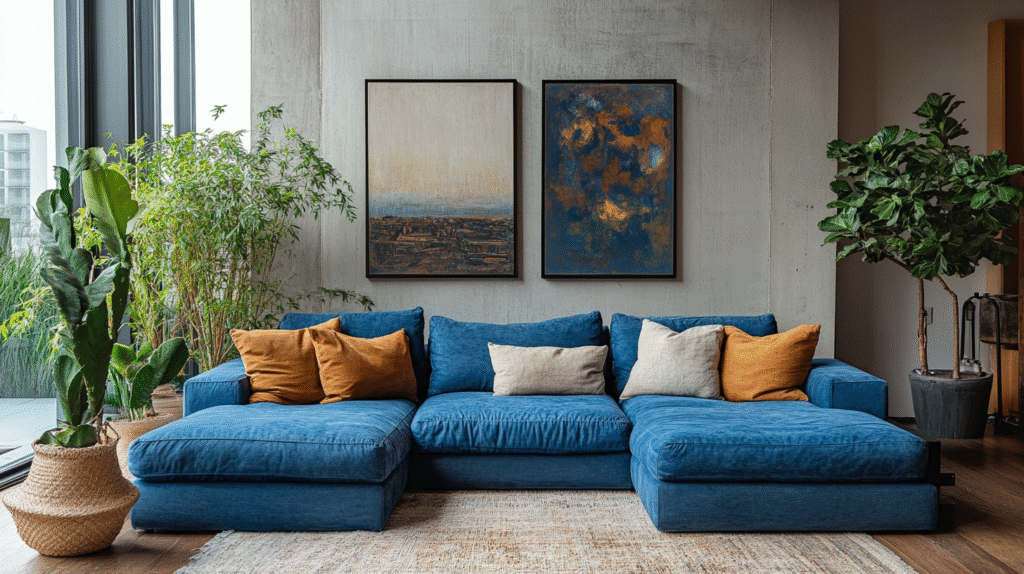
– Cocooning dark. Navy or inky blue walls, brass hardware, light bedding and rug for contrast. Surprisingly good for sleep, and it looks incredible at dusk with a lamp on.
One rule I’d hold to: pick a palette of four colors max and three main materials (say, wool + rattan + oak). Anything more starts to feel like a Pinterest board threw up.
Colors Worth Naming
– Neutrals: warm greige, soft taupe, oat, muted mushroom gray. Skip cool grays — they read cold in a room meant to feel calm.
– Pastels: dusty rose, powder blue, pale sage, soft lavender. Muted, not sherbet.
– Accents: hunter green, navy, mustard, rust, terracotta.
For paint, use matte or eggshell in a low-VOC formula — Benjamin Moore Natura and Sherwin-Williams Harmony are both worth the extra $15 a gallon. You’ll be in there breathing it for a long time.
The Non-Negotiable Pieces
Crib. Standard is about 52″ long by 28″ wide. Convertible is worth it. Natural wood or two-tone (wood + white) is aging better than pure white right now.
Dresser with changing tray on top. Aim for a dresser height of 36″–38″ — your back will thank you. Anchor it to the wall. This is not optional; it takes ten minutes.
Glider or rocker with arm support and a back tall enough to rest your head. Swivel + recline if you can swing it.
Rug. A 5×7 or 6×9 washable flatweave or wool blend. It defines the play zone and swallows sound, which matters more than you’d think in a room with hard walls and no upholstery.
Blackout curtains or roller shades — cordless only. Tan, oatmeal, or soft charcoal are the easiest to live with.
Lighting, three layers:
– A dimmable ceiling fixture or flush mount
– A lamp beside the glider (I use a warm 2700K bulb, not daylight)
– A dim amber nightlight for feeds — anything blue-white will wake both of you up
Storage that a toddler can eventually reach: low cube shelves, baskets on the floor, a picture-ledge for books mounted at kid-height once they’re standing. Under-crib rolling bins for extra sheets and out-of-season clothes.
Layout: Where Everything Actually Goes
This is the part I got wrong twice.
Crib: away from the window (light, drafts, cord risk), away from any radiator or vent, and not directly under a shelf or heavy art. Center it on a wall if you can — it becomes the room’s anchor.
Changing dresser: on a different wall from the crib, near the closet or a basket tower so wipes, diapers, and creams are within one arm’s reach. If you have to take two steps mid-change, you’ll regret it.
Glider: in the quietest corner, near an outlet for your lamp and white noise machine, and ideally with a small side table for water, phone, burp cloth. I put mine facing the crib the first time — bad idea, too stimulating. Angle it toward a wall or window instead.
Play zone: on the rug, low storage nearby. Leave real floor space here. You need room to sit cross-legged with a baby on a mat, and later, room for block towers.
Building the Room, In Order
Do it in this sequence or you’ll be moving furniture around a wet paint smell:
1. Walls first. Paint, wallpaper, or mural. Let it fully cure before anything touches it.
2. Window treatments installed. Test them at nap time before the baby arrives.
3. Hero furniture in. Crib, dresser, glider. Confirm you have at least 24″ of walking space around the crib.
4. Storage. Shelves, baskets, closet system, under-crib bins.
5. Textiles. Rug, curtains, throw for the chair, crib sheets, changing pad cover.
6. Lighting. Overhead, lamp, nightlight.
7. Wall decor last. Art, decals, mobile, name sign. This is when the room finally feels like something.
Mistakes I Made (So You Don’t Have To)
I overbought decor. A bunny garland, three framed prints, a woven wall hanging, a name banner, a mobile, fake ivy on the shelf. It looked frantic. I stripped 60% of it and the room instantly felt calmer. Pick a few larger pieces over lots of small ones.
I picked a theme too hard. First nursery was fully woodland — foxes, mushrooms, the whole thing. By 18 months my kid was into trucks and I was staring at a lot of foxes. Now I pick a palette and vibe, not a subject. Swap-out items (crib sheet, art print, small pillow) carry the theme without committing the walls.
I put the crib under the window. Cords, morning light, cold draft in winter. Moved it within a month.
I used one bright overhead light and nothing else. Feeding at 2 a.m. under a ceiling fixture is brutal. Add the lamp and the amber nightlight before baby comes home.
I forgot to anchor the dresser. Get anti-tip straps on everything taller than it is wide. Non-negotiable once they start pulling up.
Small-Room and Rental Fixes
If you’re working with an 8×10 room or a converted alcove:
– Mini crib (about 38″ long) instead of standard — buys you back almost a foot and a half
– Wall-mounted changing tray that folds down, or use the top of a shorter dresser
– Vertical storage: floating shelves above the dresser, hooks on the back of the door for bags and blankets
– One wall as the feature — peel-and-stick wallpaper ($80–$250 for a small wall) is rental-safe and comes down cleanly if you use a decent brand like Chasing Paper or Tempaper
– Removable decals for anything you’d otherwise paint
– A slim upholstered chair instead of a bulky recliner-style glider
Keeping It Fresh Without Redoing Anything
The whole point of the neutral base is that you can shift the room seasonally and yearly with almost no money.
Seasonal swaps that actually work:
– Linen crib sheet and light throw in summer; knit blanket and heavier curtains liner in winter
– A small garland or wooden bead strand on the shelf for holidays
– Cotton-ball string lights (well away from the crib) November through February for warm evening light
Budget-friendly refreshes:
– Paint a thrifted dresser in a bold color — I did a plain pine one in Farrow & Ball Studio Green and it became the best thing in the room
– Change out drawer pulls to brass or leather (about $30 total)
– Rotate art in existing frames instead of buying new frames
As the kid grows, the crib converts to a toddler bed, the glider moves to your living room or a reading corner, the changing tray comes off the dresser, and you add a low table and chairs on the rug. Same room, five years of use.
That’s the whole trick, really: build the bones neutral and considered, then let the personality live in the parts you can easily change. The nursery I obsessed over for weeks isn’t the one my kid remembers — it’s the version it turned into a year later, quieter and more theirs. Design for that room too.