Country Kitchen Decor: How to Get the Warm, Lived-In Farmhouse Look (Without It Feeling Like a Theme Park)
The country kitchen I cook in most is the one with open shelves and a worn table. The wear is the decor, and it has aged better than anything new.
Most country kitchen ideas online fall into one of two traps: they look like a museum of rooster figurines, or they’re so sanitized they’ve lost the whole point. I’ve been decorating my own kitchen in this style for about six years now — starting with a rental where I couldn’t touch the cabinets, ending in a 1930s semi where I finally got my Belfast sink — and the real trick is knowing which pieces do the heavy lifting and which ones just add noise.
Here’s how I’d actually put one together, whether you’ve got a weekend and £300 or a full renovation budget.
What a Country Kitchen Actually Is (and Who It’s For)
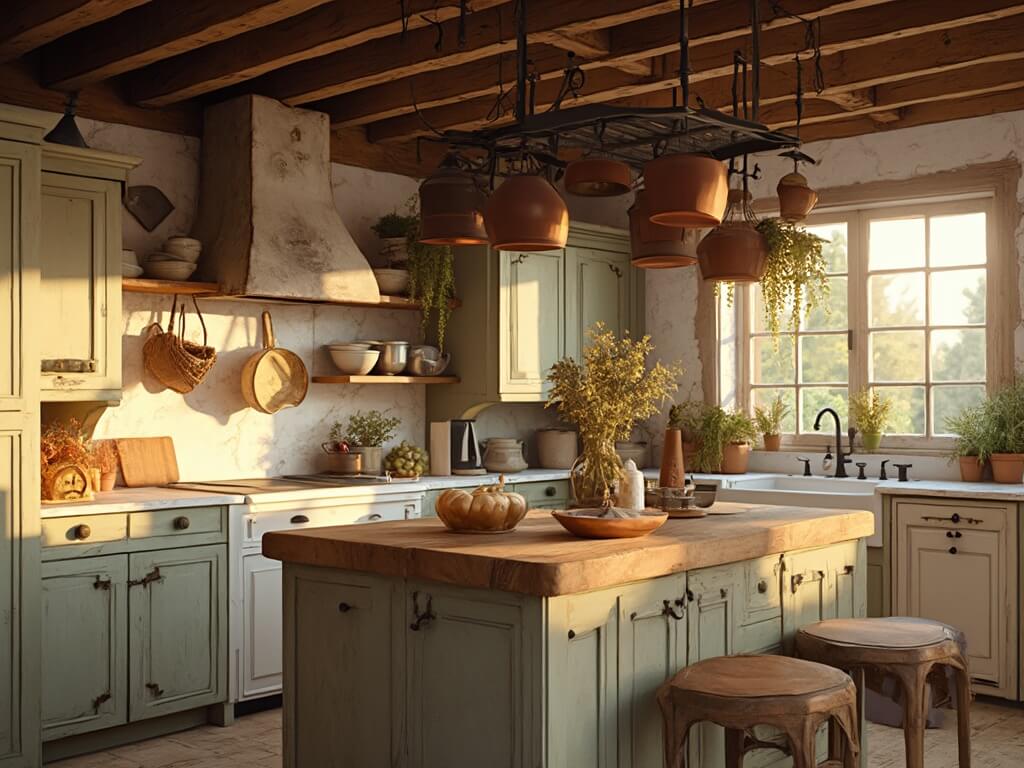
At its core, a country kitchen is a rustic, farmhouse-inspired room built around warm neutrals, natural materials, and the idea that the kitchen is where people gather. Think worn oak, soft painted cabinets, a deep ceramic sink, open shelves stacked with mismatched crockery, and something bubbling on the stove.
There are a few sub-styles worth knowing because they’ll shape your choices:
– English country — cream Shakers, sage green islands, floral fabrics, AGA if you’re lucky.
– French country — copper pots on rails, warm limestone floors, toile, more ornate detailing.
– Modern rustic country — simpler cabinet fronts, matte black taps, chunky oak shelves, less pattern.
– Farmhouse — the American cousin: shiplap, bigger sinks, more contrast between white and black.
This style suits you if you cook a lot, hate closed-off kitchens, and prefer character over showroom sleek. It works best in medium to large rooms, but I’ve seen tiny galleys pull it off — you just have to edit ruthlessly.
Budget: What It Actually Costs
I’ll break this down honestly because “country kitchen” pricing online is all over the place.
Light refresh (1–2 weekends): £250–£800 / $350–$1,000
– Open pine shelving: £60–£150 per wall section
– Metal or dome pendant lights: £40–£120 each
– Gingham, ticking stripe, or floral curtains: £30–£80 per window
– Baskets, enamel jugs, wall art, ceramic crocks: £100–£300 total
Full renovation with range cooker: £20,000–£50,000+
– Bespoke in-frame cabinetry: £8,000–£25,000+
– AGA or range cooker: £5,000–£18,000
– Natural stone worktops in warm tones (not black): £2,000–£6,000+
Where I’d spend, where I’d save: put money into the sink, the tap, and the worktops. These get touched daily and cheap versions show it fast. Save on shelving, textiles, and accessories — a £12 charity-shop transferware platter looks better than a £90 new one, every time.
The Hero Pieces That Do the Work
If you strip a country kitchen down to essentials, five things make it read as country. Everything else is dressing.
1. Shaker cabinets in a warm, muted color. Cream, warm off-white, sage, olive, duck-egg blue, putty grey, or something moodier like a blackberry or midnight blue for a lower island. Avoid stark, blue-toned whites — they read too modern.
2. A Belfast or apron-front sink. Deep, white, ceramic. This single piece does more country signaling than anything else you’ll buy.
3. Wood or warm stone worktops. Solid oak, iroko, walnut, or granite in warm reds, browns, and creams. Not black quartz. Not white quartz with grey veining. It fights the whole mood.
4. A central table or island. Country kitchens are social. You need somewhere to sit down with a mug. Keep at least 1m of walkway on two sides of an island — I learned this the hard way after squeezing in a butcher’s block that turned the room into an obstacle course.
5. A range cooker or freestanding stove. Even a modern range with cast-iron detailing works. Skip the sleek induction hob flush with the counter if you can — it kills the focal point.
Colors That Actually Work
Pick 2–3 core colors and repeat them everywhere. My own kitchen runs on cream (walls and upper cabinets), sage green (lower cabinets and island), and warm oak (worktops and shelves) — with brass hardware tying it together.
Steer clear of cool greys, high-gloss anything, and true black. Softer darks — midnight blue, blackberry, deep olive — carry the same drama without turning your kitchen into a wine bar.
How to Put It Together, Step by Step
1. Sort your surfaces first. Cabinets, walls, worktops, floor. Get these right and you can be sloppy everywhere else. Paint cabinets in your palette; if replacing them isn’t on the cards, sand and repaint the ones you have. Farrow & Ball’s Setting Plaster, Card Room Green, and Pigeon all pull country weight, as do more affordable dupes from Little Greene or Dulux Heritage.
2. Build display zones. Put open shelves at eye level, ideally behind or beside the sink. Stack plates. Line up mugs. Lean a wooden board against the wall. On lower shelves or inside base cupboards, use wicker baskets for onions, potatoes, and tea towels.
3. Style the focal wall. Usually behind the range or sink. Hang a brass rail with copper saucepans and wooden spoons. Add a small framed piece of art — a botanical print, an old market poster, anything not stock-photo generic. Tile the splashback in something with texture: handmade zellige, riven stone, or plain white metro laid in a herringbone pattern.
4. Layer soft textiles. A jute or striped cotton runner along the sink side. Linen curtains or Roman blinds — I like ticking stripe more than gingham because it dates less. Cushions on any bench seating. If you’ve got exposed base units that look ugly, hang a linen skirt from a tension rod. Sounds fussy; looks great.
5. Add the sensory layer last. A big bowl of lemons or apples. Herbs in terracotta pots on the windowsill (rosemary and thyme survive kitchen neglect; basil dies immediately). A candle that smells like something you’d actually cook — fig, tomato leaf, orange peel. Not “vanilla cupcake.”
Mistakes I’ve Made So You Don’t Have To
– I bought a rooster. Ceramic. Painted. About eight inches tall. It sat on my shelf for a month before I admitted to myself the kitchen looked like a gift shop. One or two motif pieces are fine; a themed collection is not. Rustic materials do the country talking. You don’t need barnyard livestock backing them up.
– I mixed too many woods. Pine shelves, oak worktop, walnut stools, and a mango-wood chopping board — all in one small room. It looked like a lumber yard sample sale. Now I stick to two wood tones: one for structural pieces (worktops, shelves) and one warmer or lighter for smaller accents.
– I ignored the lighting. A single ceiling pendant with a cool-white bulb will kill this style stone dead. You need layered warm lighting: pendants over the island (in metal, glass, or a dome shade), under-cabinet strips for task light, and a lamp on the counter if there’s room. Bulbs at 2700K, never above 3000K.
– I over-decanted. Yes, glass jars of pasta and flour look lovely. No, you don’t need eighteen of them. Decant the things you use weekly. Leave the rest in a cupboard.
Small-Space and Rental-Friendly Adjustments
If your kitchen is small or you can’t touch anything structural, you can still get most of the way there:
– Peel-and-stick tongue-and-groove panels on one wall or the side of a peninsula.
– Swap the cabinet handles for brass cup pulls or ceramic knobs. £30 and half an afternoon.
– Replace the tap if your landlord lets you — a bridge tap in brushed brass rewrites the room.
– Add a freestanding piece: a vintage sideboard, a small pine dresser, a butcher’s block on wheels. Instant country, no builder needed.
– Use a fabric skirt on an ugly base unit or open shelving instead of a cabinet door.
I did all of this in a rental in Bristol with cheap 90s beech cabinets and it genuinely worked. The trick was committing to the palette on everything I could control — textiles, ceramics, wall art — so the eye stopped registering the cabinet fronts as the main event.
Seasonal Swaps That Keep It From Getting Stale
Country kitchens age well because they’re built to shift with the seasons. Small changes, big difference:
– Autumn: plaid runner, bowl of gourds and squashes, dried hydrangeas, amber glass on the shelves.
– Winter: eucalyptus or fir garland along a shelf, wool throw on the bench, beeswax candles, a bowl of clementines.
– Spring: tulips or daffodils in an enamel jug, pastel tea towels, a small potted primrose on the windowsill.
– Summer: stone fruit in a wooden bowl, open-weave baskets, thinner cotton curtains, herbs everywhere.
Cross-Style Variations Worth Trying
If straight country feels too traditional, blend it:
– Boho country — layered rugs, macramé plant hangers, more mismatched ceramics, warmer earth tones. Keep the sink and shelving; loosen the textiles.
– Coastal country — swap sage for soft blue, add rope pendant lights, striped runners, paler oak. Works well in south-facing or seaside kitchens.
– Modern rustic — slab or shaker-lite cabinet fronts in olive or clay, matte black taps instead of brass, chunky floating oak shelves, minimal accessories. This is where I’ve landed personally: less pattern, same warmth.
The test I use before buying anything new: would this plausibly have ended up in a farmhouse kitchen over the last hundred years? A stoneware jug, yes. A stainless-steel utensil holder shaped like a cactus, no. It’s a stupid rule and it’s never steered me wrong.