Nursery Themes for Baby Boys: A Real Guide to Choosing, Styling, and Setting Up the Room
The nursery themes for a boy can get loud fast. I picked one quiet palette and let the toys be the color, and the room stayed easy to live in.
Picking a nursery theme for a baby boy is the kind of decision that feels huge at month five of pregnancy and then absurdly small once the baby’s actually here screaming at 3 a.m. I’ve done this twice — once with a woodland room I overdid, once with a calmer neutral-space hybrid I actually still love — and the biggest thing I learned is that the theme matters less than how you execute it. A “boring” nursery styled well beats a Pinterest-y one that fights itself.
Here’s how I’d approach it now, knowing what I know.
What You’re Actually Signing Up For
Time
– Simple themed room (paint, decor, textiles, furniture you’ve already built): one to two weekends. That’s realistic if you’re not chasing perfection.
– Full build-out with a mural or wallpaper, custom shelving, layered accessories: two to four weekends. Wallpaper alone ate a full Saturday for me, and I’d wallpapered before.
Cost, with real numbers
Core furniture runs about what you’d expect from mid-range retailers:
– Crib: $150–$300
– Dresser with changing topper: $150–$400
– Glider or rocker: $250–$700 (I bought a $280 glider from a big-box store and it’s held up through two kids — do not overspend here unless you want to)
Theme decor is where budgets balloon or stay sane:
– Peel-and-stick mural or decal set: $25–$120
– Themed crib sheet + skirt + quilt set: $60–$150 (skip the quilt for safety; buy the set for the sheet and skirt)
– 5′ x 7′ rug: $80–$250
– Mobile: $30–$90
– Themed lamp or projector night light: $25–$80
Total realistic ranges: $300–$800 if you already have furniture; $800–$2,000+ for a full build.
Room size
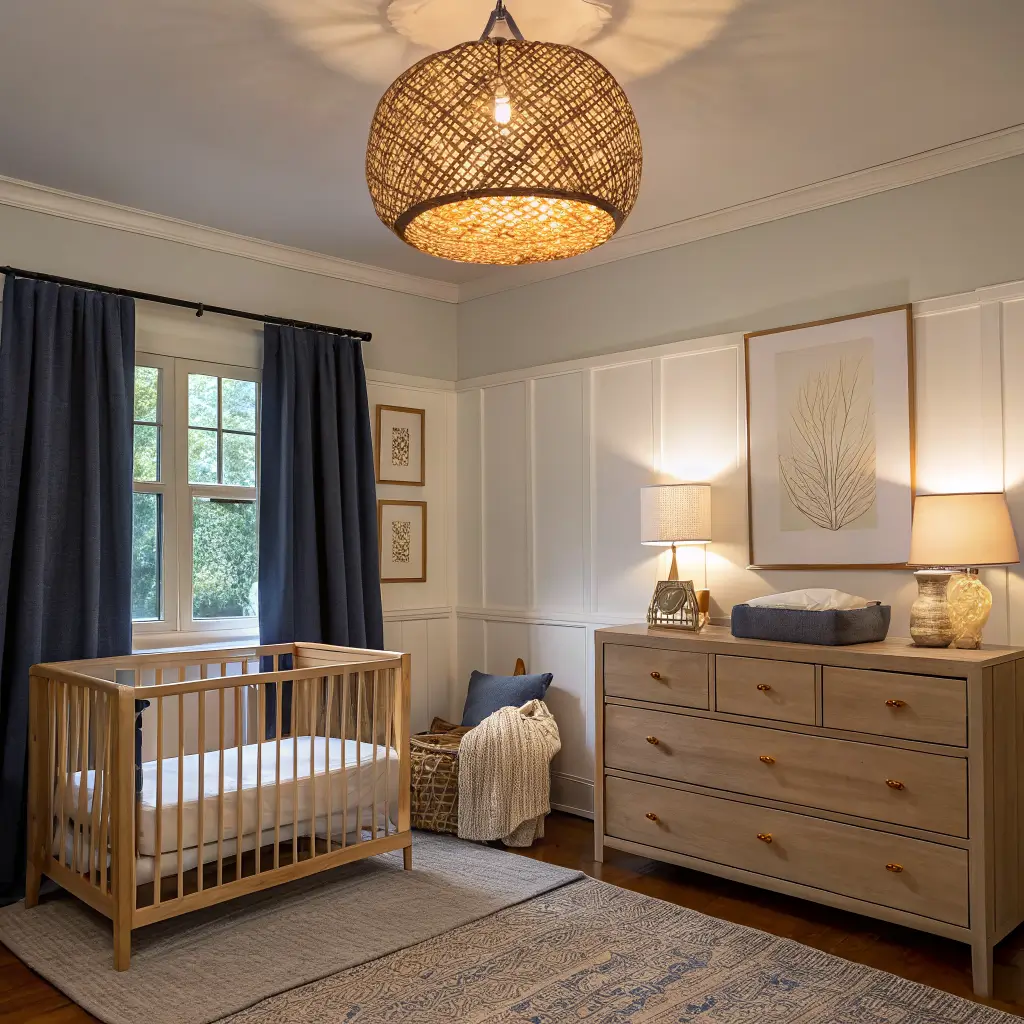
Anything from 8′ x 10′ up to 12′ x 14′ works. Tight rooms want lighter palettes — cream, oat, soft blue, sage. Bigger rooms can handle a navy or forest-green feature wall without feeling like a cave.
DIY skill
– Beginner: peel-and-stick decals, framed prints, painted accent wall, themed textiles.
– Intermediate: full-wall wallpaper, cloud- or mountain-shaped shelves, painted geometric walls, DIY name signs.
– Expert: tongue-and-groove wood paneling, dimensional mountain cutouts, integrated LED “starry” ceilings.
Picking the Right Theme
I’ll be honest: the “obvious boy” themes (sports, dinos, trucks) tend to hit an expiration date around age four. The themes I’d choose again, and the ones I recommend to friends, are the ones that grow with the kid.
My ranked picks for boy nursery themes:
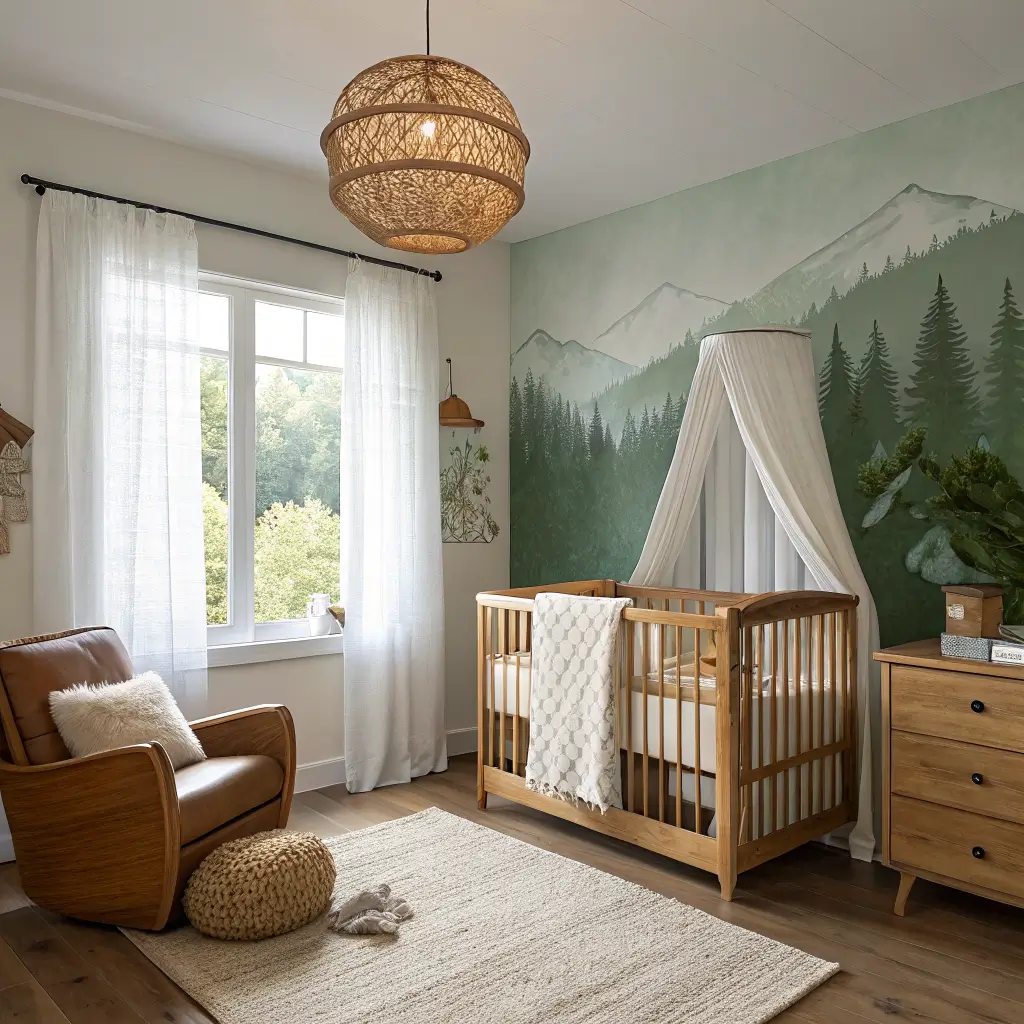
1. Woodland / mountain cabin — forest green, warm brown, cream, moss. Wood, rattan, chunky knits. This is the one I did first, and it aged well into a toddler room by swapping the mobile for a bear night light.
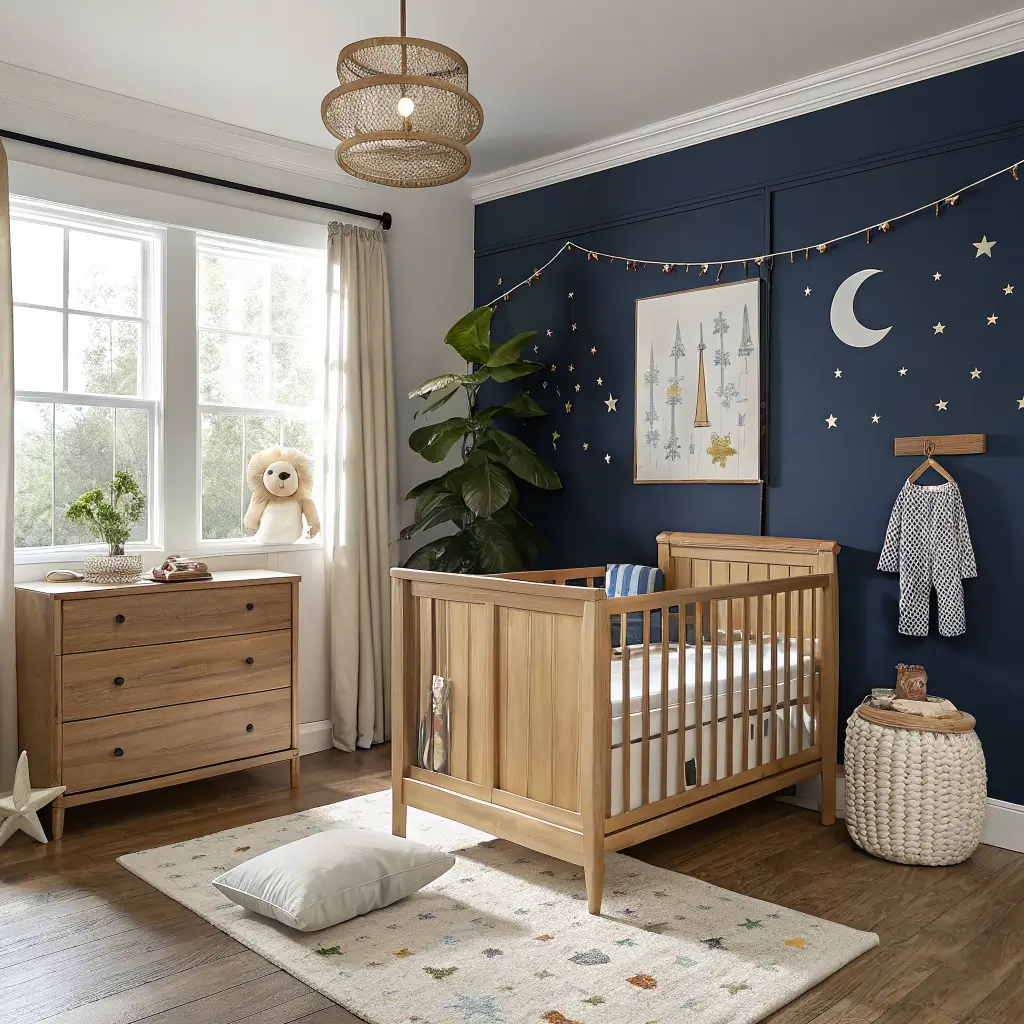
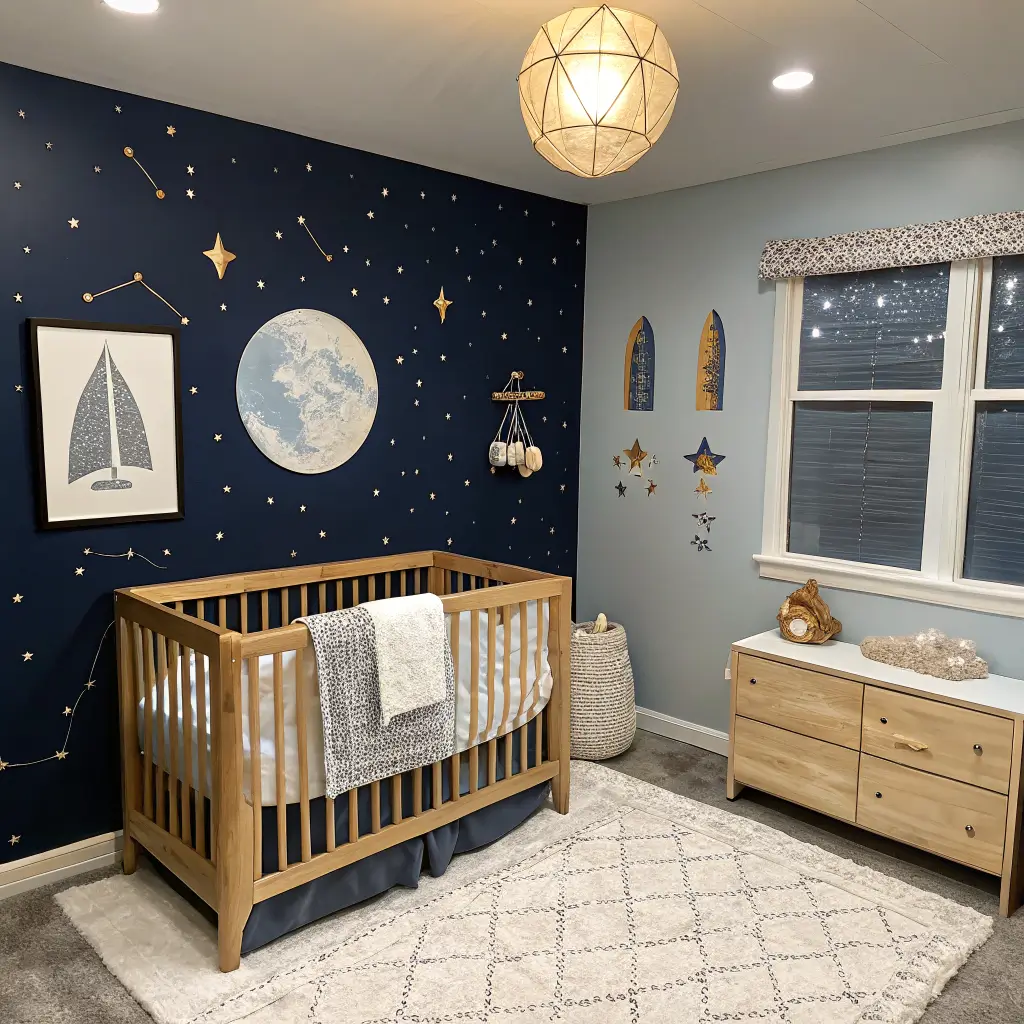
2. Space / starry night — navy, midnight blue, silver, a hit of neon orange or lime for contrast. Modern, quietly educational, easy to keep through elementary school.
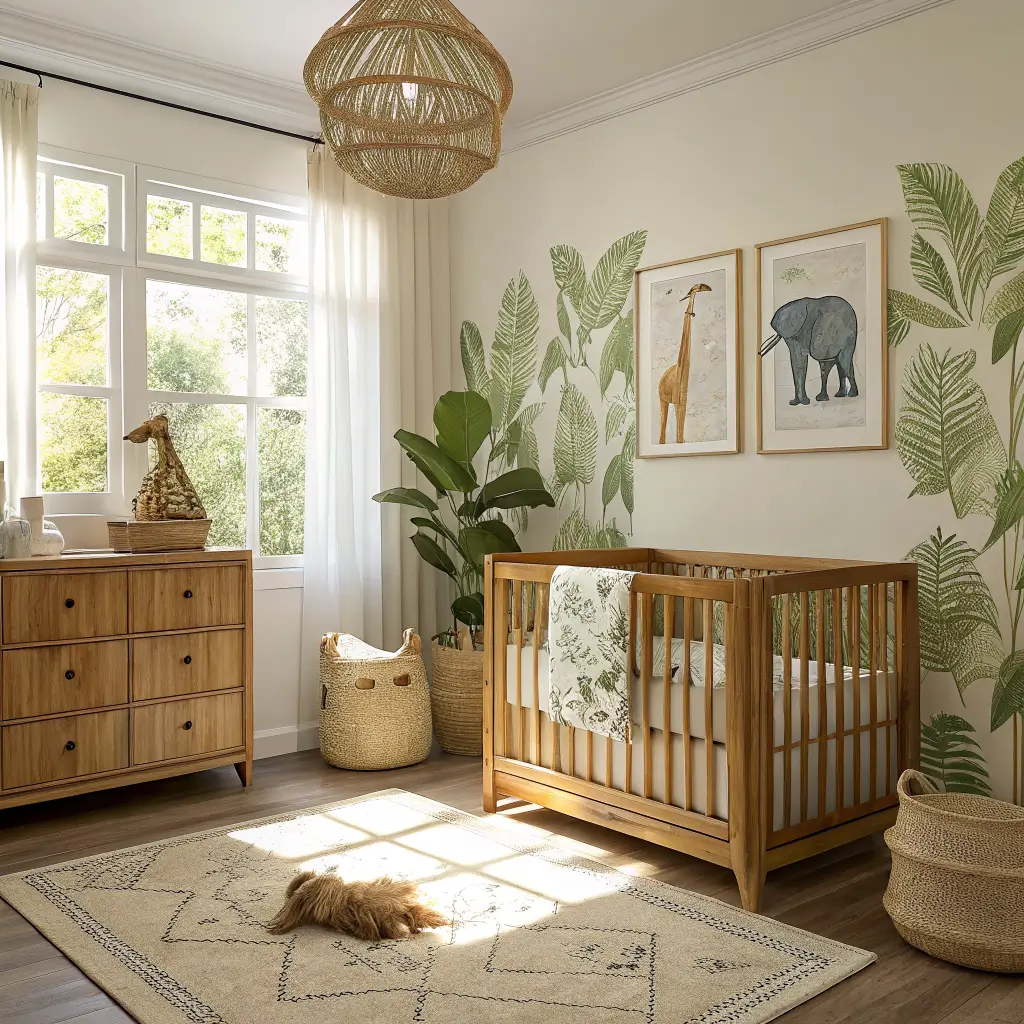
3. Safari / jungle — golden yellow, terracotta, leafy green, chocolate brown. Warm and energetic without being loud.
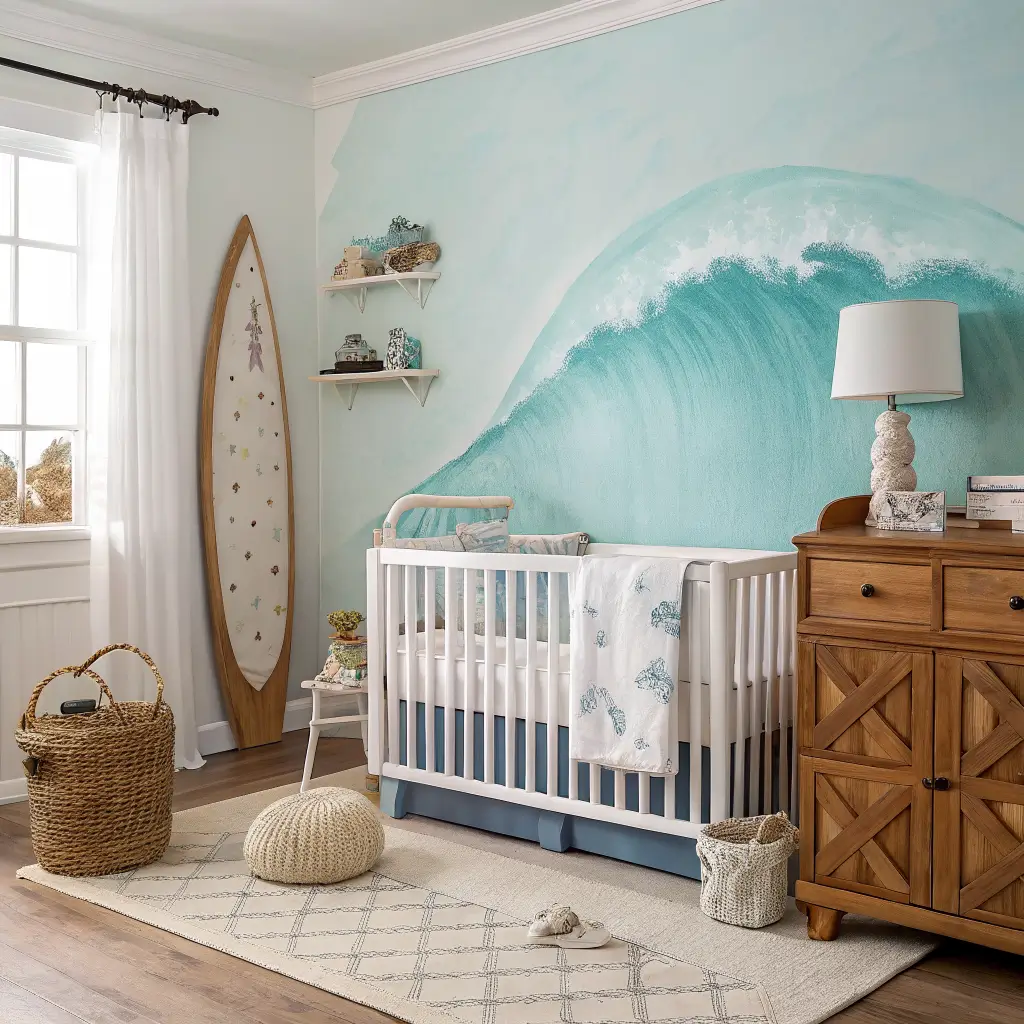
4. Coastal / surfer — aqua, seafoam, sand, white. Calming. Perfect if the house already leans light and airy.
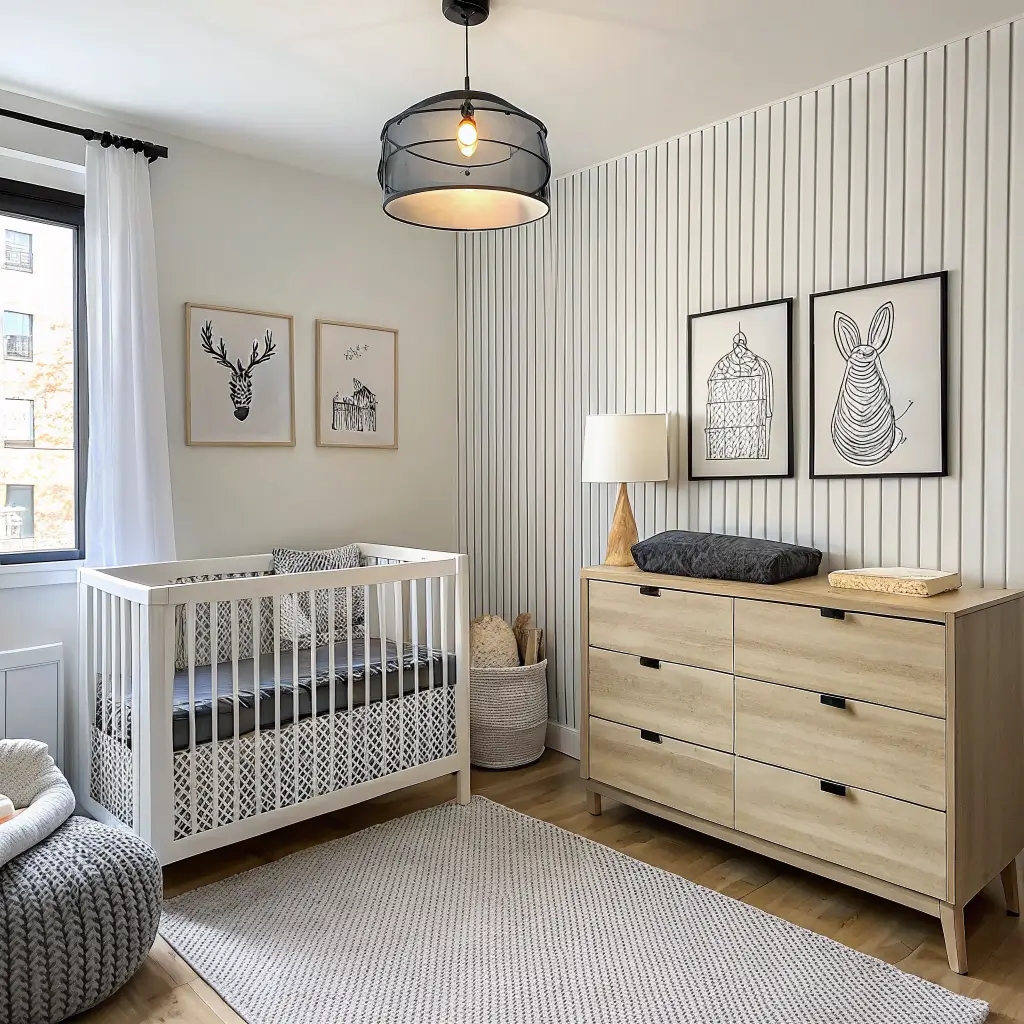
5. Monochrome modern — white, charcoal, camel, greige. Ideal for shared spaces or apartment nurseries carved out of a bedroom corner.
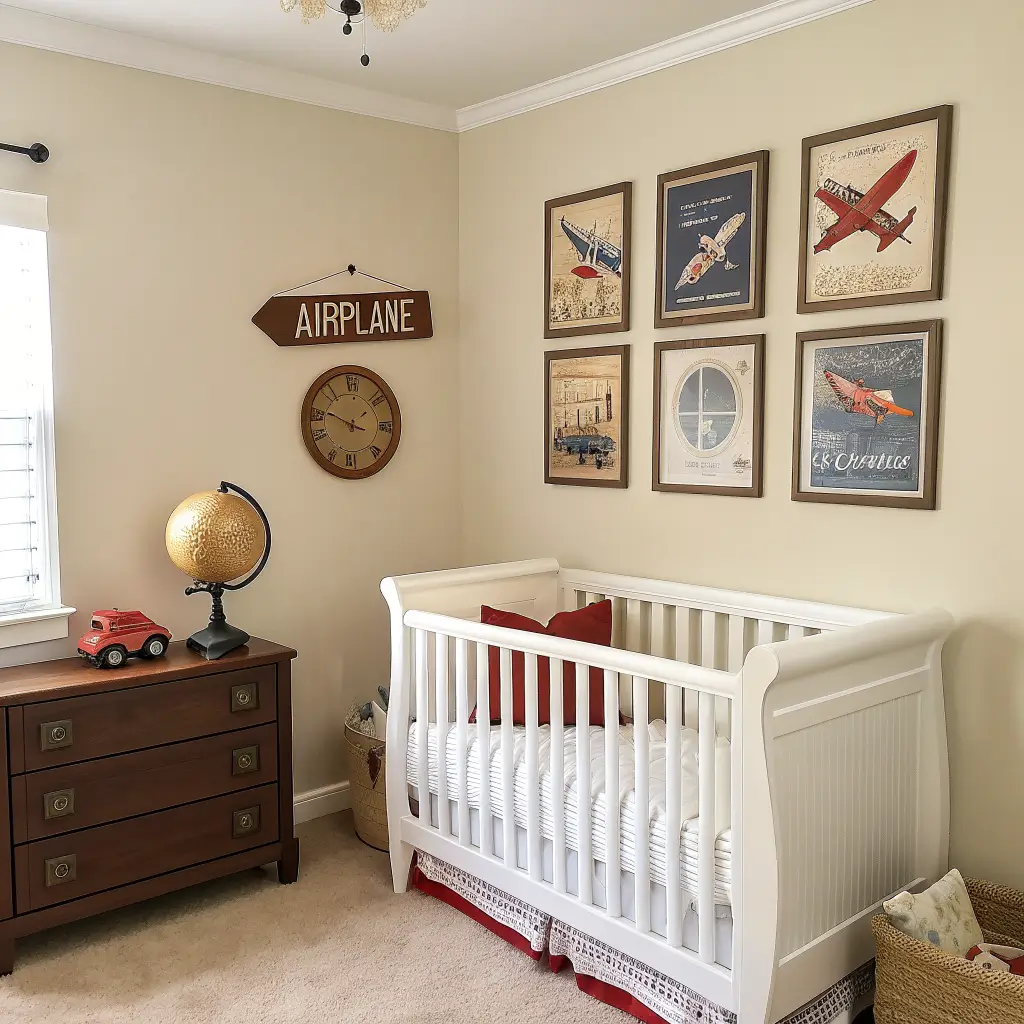
6. Vintage transport / little aviator — nostalgic red/navy/cream with planes, cars, retro travel posters. Charming, but commits harder to the “boy” thing.
7. Sports / western / dinosaur — bolder, more graphic, shorter runway. Fine if you love it, but anchor with neutral furniture.
Who each one suits:
– First-time parents who want calm: woodland, coastal, neutral.
– Parents with strong hobbies: aviation, sports, vehicles.
– Minimalist households: monochrome, Scandi neutral.
– Rooms you’ll reuse for a sibling of any gender later: nature, space, neutral.
Low-light rooms (north-facing, small windows) — go lighter. A dark forest green on all four walls in a room that gets no morning sun will feel like a bunker. I learned this the annoying way.
The Pieces That Actually Define a Theme
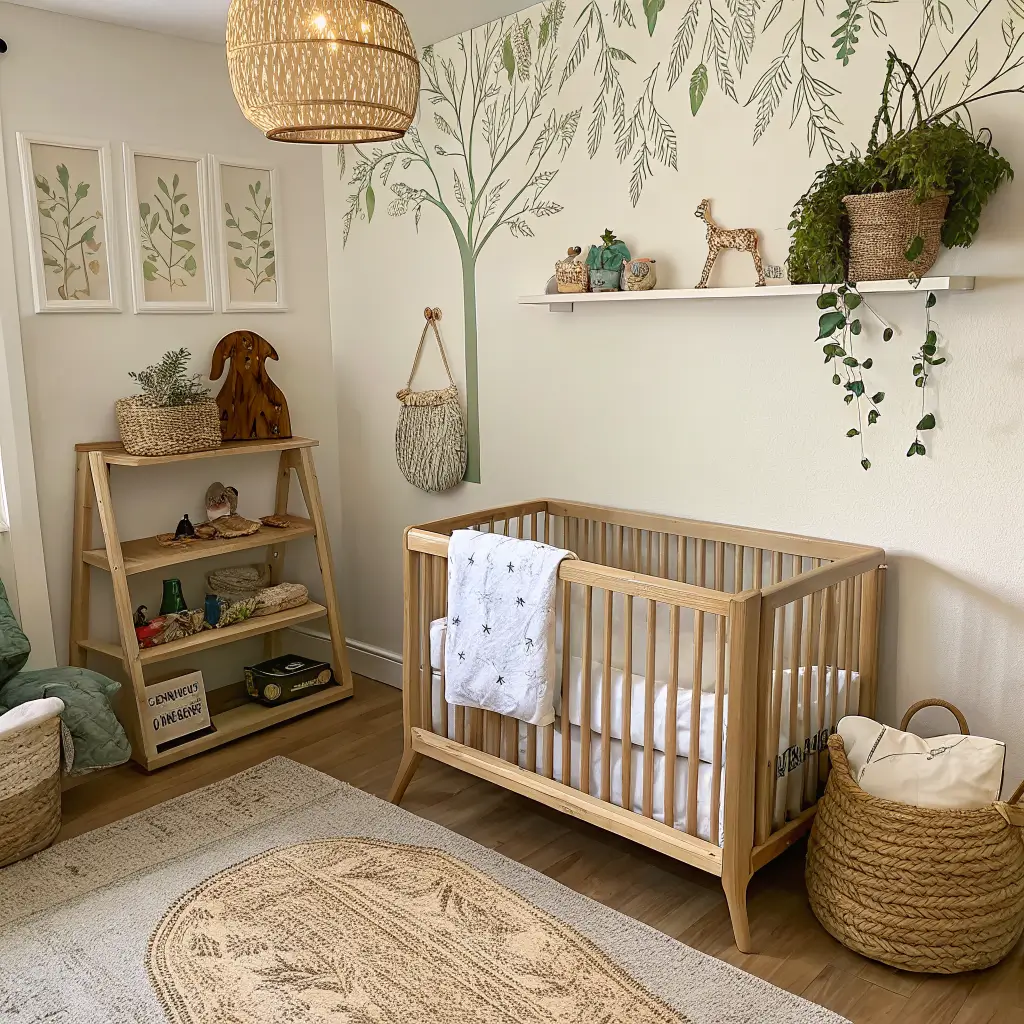
Furniture is furniture. Cribs come in white, natural wood, and occasionally navy or sage — pick one and move on. The theme lives in five things:
– The feature wall (paint, wallpaper, or decals behind the crib)
– The rug
– The mobile
– The textiles (crib sheet, curtains, glider throw)
– The lighting (lamp, night light, or projector)
Nail those five and you’ve got a themed nursery. Everything else is garnish.
Woodland / mountain cabin
– Forest animal decals or a painted mountain range behind the crib
– Wood or rattan wall shelves, 24–36″ wide
– Leaf-print or bear-print crib sheet
– Chunky knit throw on the glider (never in the crib)
– 5′ x 7′ rug in oat or warm gray with subtle pattern
Safari / jungle
– Tropical leaf wallpaper on one wall — Chasing Paper and similar peel-and-stick brands work well in rentals
– Set of 3–6 framed animal prints (lions, giraffes, elephants)
– Warm bedding in mustard, tan, or leafy green
– A tall faux fiddle-leaf or bird-of-paradise in the corner past the glider
– Jute rug for texture underfoot
Space / starry night
– Navy or midnight-blue feature wall in matte finish — matte is non-negotiable here, satin will throw glare and kill the depth
– Glow-in-the-dark constellation stickers on the ceiling (yes, the cheap ones)
– Rocket or planet mobile
– Star projector night light — the $40 ones are as good as the $80 ones
– One framed constellation print or moon-phase poster
Coastal / surfer
– Ombre blue paint or wave wallpaper behind the crib
– Wooden surfboard-shaped shelf, 3–4′ tall
– Rope-wrapped lamp or rope curtain tiebacks
– Striped or wave-print bedding
– Seagrass basket for toys
Vintage transport
– Framed vintage travel posters or airplane prints
– Name sign with a plane or car cutout above the crib
– Floating shelves, 24–36″, to display toy vehicles
– Red-white-and-navy stripe bedding
– Antiqued globe on the dresser
Monochrome modern
– Black-and-white geometric or thin-stripe wallpaper on one wall
– White crib, light wood dresser
– Alphabet print or single-line drawing art
– High-contrast crib sheet (dots, triangles) — babies actually see these better in the first months
– Wool-blend loop rug in gray
Sports / western / dino
– Friendly cartoon-style dino mural or western landscape decals
– Faux-leather pouf in cognac
– Bandana-print or dino-print bedding
– Themed mobile
– Ground everything with a white crib and natural wood dresser or the room will read like a theme park
Where to Spend, Where to Save
Spend on:
– The glider. You’ll sit in it every night for a year. Cheap gliders squeak and sag by month eight.
– The rug. A good rug covers a lot of decor sins and lasts through multiple room versions.
– Blackout curtains. Not glamorous, but they run the whole show once naps start.
Save on:
– The crib. As long as it meets current safety standards, the $200 crib is doing the same job as the $900 one.
– The mobile. Baby stops caring around month five.
– Wall decals. Peel-and-stick means you can redo the theme in two years without patching drywall.
Layering, Color, and the Stuff That Makes It Look Intentional
The rule I keep coming back to: one bold pattern, two quiet ones. A wallpaper feature wall counts as your bold. Then the crib sheet and one pillow can carry small patterns. Everything else — rug, curtains, dresser — stays solid or textured.
Texture matters more than pattern in a nursery. Knit, boucle, jute, faux fur, felt. A room in three shades of oatmeal with five different textures looks richer than a room with five colors and no depth.
On color placement: keep the wall directly behind the crib the calmest surface in the room. Put your loud stuff — the mural, the gallery wall, the big art — on the side wall or opposite the crib. A baby lying down staring up at a busy pattern six inches from their face is not the vibe.
For dark walls (navy, forest, charcoal), you need white curtains, a light rug, and warm lighting on a dimmer. Otherwise the room reads cave, not cocoon. My first nursery had forest-green walls with dark curtains and I hated it for three months before I swapped in white linen panels.
Mistakes I’ve Made So You Don’t Have To
– Buying the matching bedding set. The quilt and bumper you cannot use (safety). You pay for five pieces and use two.
– Hanging heavy art directly above the crib. Just don’t. Once the baby stands, they’ll grab it. Put the name sign or art on the wall the crib faces, not the wall it’s against — or use a lightweight fabric banner.
– Overcommitting to a niche theme. Full pirate ship. Full jungle safari with a mosquito-net canopy. It looks amazing in photos and dates in eighteen months. Anchor with neutral furniture and let the theme live in swappable pieces.
– Skipping the dimmer. Overhead lights at 2 a.m. are cruel. Put the main light on a dimmer, add a warm lamp near the glider, add a small night light near the changing area. Three zones, three brightnesses.
– Forgetting the ceiling. In a small room, the ceiling is the fifth wall. A pale blue ceiling in a woodland room, or matte navy with stars in a space room, adds more than another piece of wall art would.
Setup Order — What to Do When
Do it in this order or you’ll be moving a fully-loaded crib to paint behind it. Ask me how I know.
1. Empty the room. Measure walls, mark outlets, vents, windows.
2. Paint or wallpaper the feature wall first. Let it fully cure — 48 hours minimum before pushing furniture against it.
3. Install the crib on a solid interior wall, away from windows, blinds, and cords. Keep at least 3 feet of clearance around it.
4. Place the dresser near the crib so diaper changes don’t turn into a hike. Chair goes near a lamp and, ideally, a window.
5. Lay the rug — centered under the walking zone between crib and chair, not shoved under the crib alone.
6. Apply decals and hang art. Adult eye level for anything you want to actually look at; nothing heavy above the crib.
7. Hang the mobile and install the night light or projector.
8. Add textiles last. Crib sheet, changing pad cover, curtains, glider throw, floor cushion.
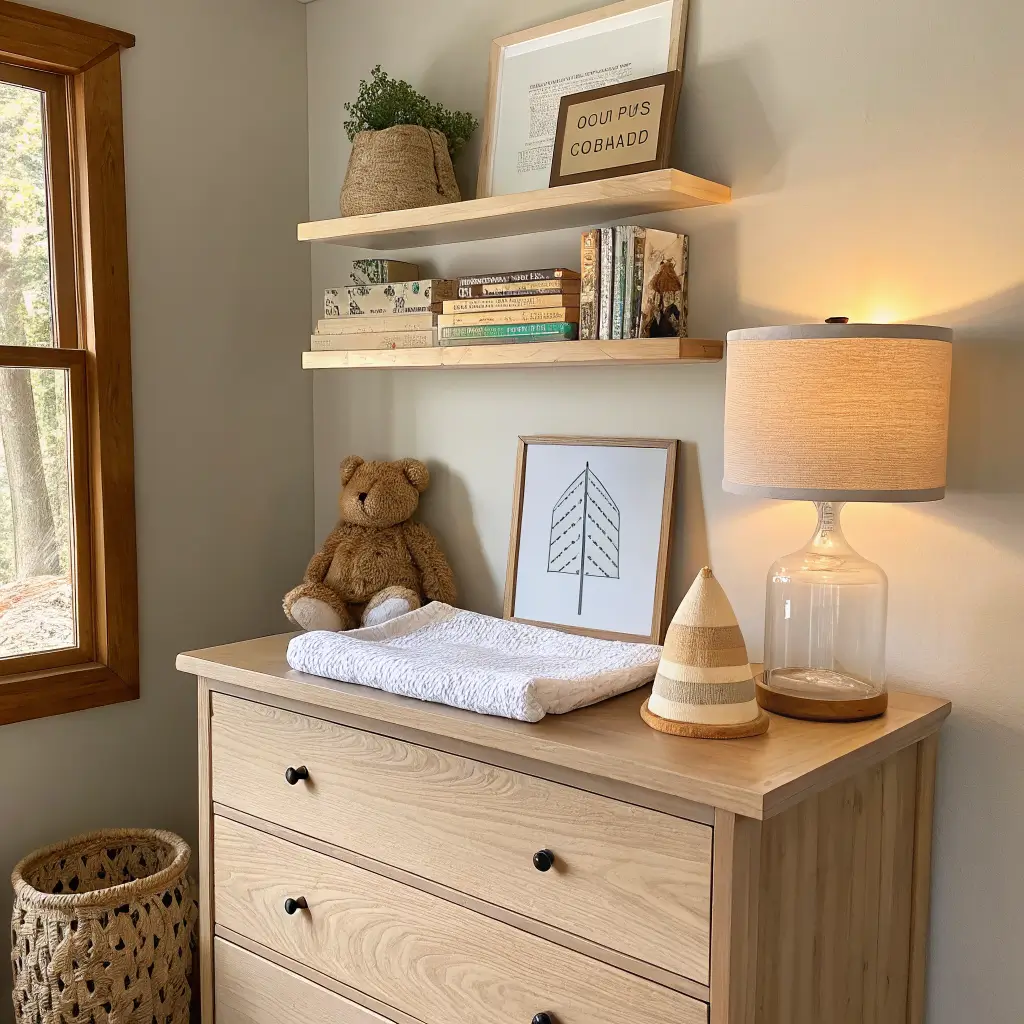
9. Style the shelves with 3–5 small pieces per shelf — a plush animal, a stack of books, a small wood toy, a framed photo. Leave breathing room. Overcrowded shelves are the tell of a first-time nursery.
Easy Swaps as the Baby Grows
The best thing about doing the theme through textiles and decals instead of custom paint jobs is that you can shift the whole room in an afternoon. Swap the crib sheet from stars to trucks. Peel off the woodland decals and put up a solar system. Change the mobile out for a hanging plant when the baby’s too old for it.
The nursery I’m proudest of wasn’t the one I planned hardest. It was the second one, where I picked a navy accent wall, a natural wood crib from a thrift store I refinished with one coat of Rubio Monocoat, an oat wool rug, and let the theme show up in five small things — a rocket mobile, a moon night light, star sheets, a framed print of the phases of the moon, and a single brass sconce over the glider. Took a weekend. Cost under $600 with the used crib. Still standing three years later, minus the mobile.
Pick the five things. Get those right. Don’t overthink the rest.