Vintage Home Decor: How to Build a Room That Feels Collected, Not Cluttered
The vintage home decor habit started with a $12 clock that still runs. The trick is one era per corner, not a flea market in every room.
Vintage home decor is what fixes the “my place looks like everyone else’s” problem — the flat, freshly-unboxed feeling you get when every piece in a room was bought in the same six-month window from three big-box stores. I hit that wall about four years ago in my own living room. Everything matched. Nothing meant anything. So I started swapping things out slowly, one thrifted piece at a time, and I’ve been refining the mix ever since.
Here’s how I’d actually do it if I were starting over tomorrow.
What Vintage Decor Looks Like Right Now
The version of vintage that reads well today isn’t stuffy or grandma-coded. It’s a layered mix, usually pulling from two or three of these:
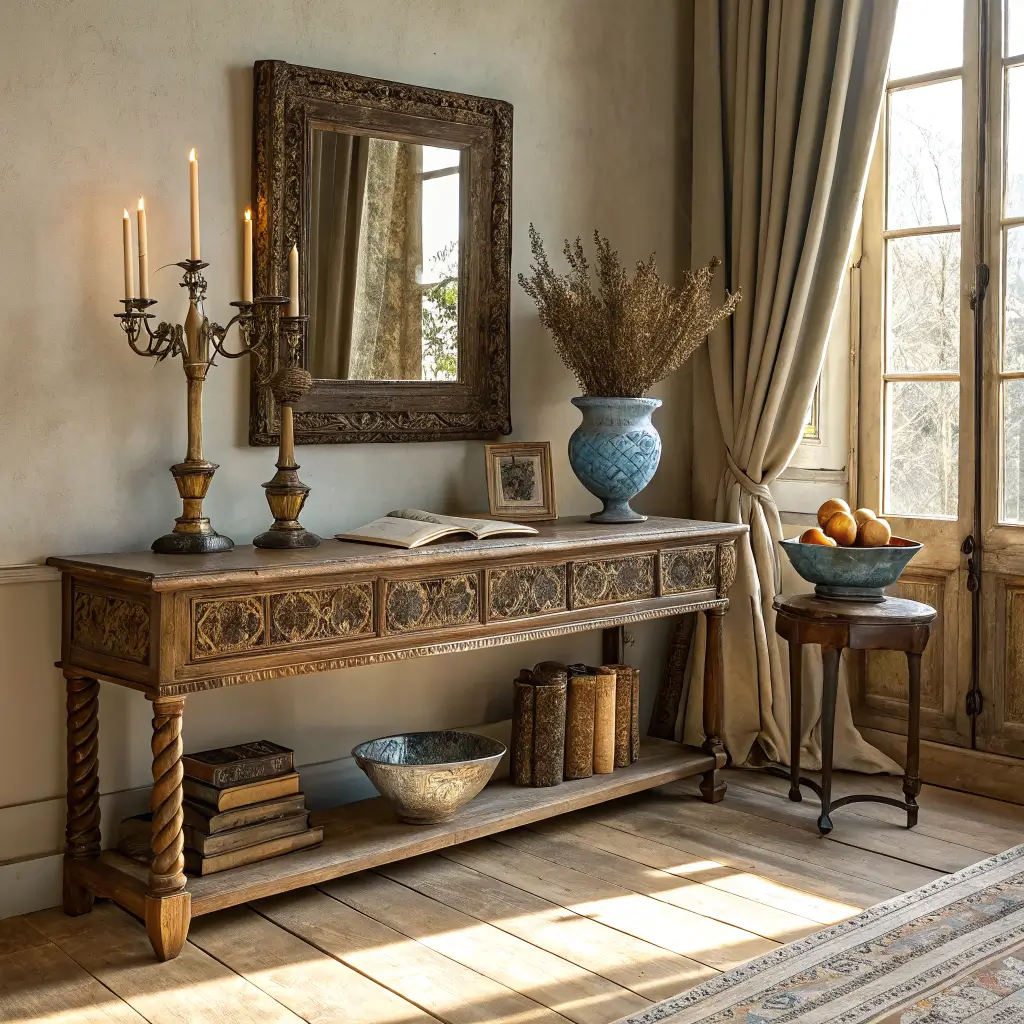
19th to early-20th-century antiques — carved oak, aged brass, foxed mirrors
Mid-century modern and 1960s–70s retro — teak, lucite, gold-rimmed barware
Eclectic “collected over time” interiors where old and new share a shelf
The thread tying it together is patina — the small dents, softened edges, and cloudy silvering on old mirrors that a factory finish can’t fake.
Who this actually works for: renters who can’t touch the paint but can swap out hardware and lamps. Homeowners with new-build houses that feel bland. Anyone tired of buying disposable decor twice a year. And people who care where things came from.
Time and Budget: What You’re Actually Signing Up For
A small vignette — an entry console, a bedroom dresser top, one corner of the living room — is a 4 to 8 hour project, mostly styling and hanging. A whole room takes anywhere from a long weekend to a few weeks if you’re sourcing carefully or waiting on a reupholstery quote.
Rough cost brackets I’ve actually spent within:
Starter vignette (books, small brass, one framed print): $150–$400
Mid-range room with one hero piece plus décor: $600–$1,500
Collector-level with multiple investment pieces: $2,000–$6,000+
For reference: vintage books run $8–$25 each on Etsy. A solid-wood sideboard in usable shape is $300–$900 at estate sales, more at curated dealers. A good vintage accent chair sits around $150–$500 depending on condition, and a proper 19th-century oak mirror can be $150–$600 and up by size.
The Pieces That Actually Do the Work
Not every vintage buy is worth it. After a few years of hits and misses, this is the hierarchy I stick to.
Buy vintage, always
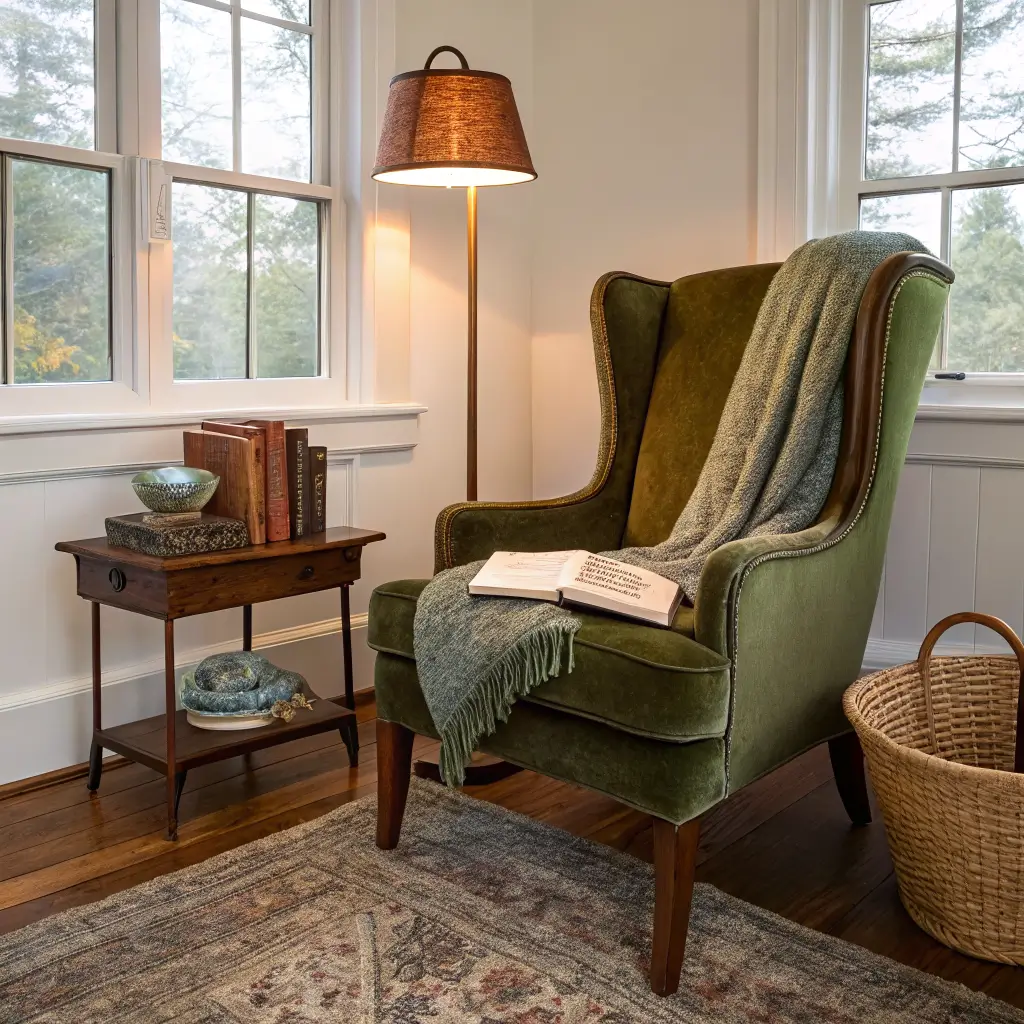
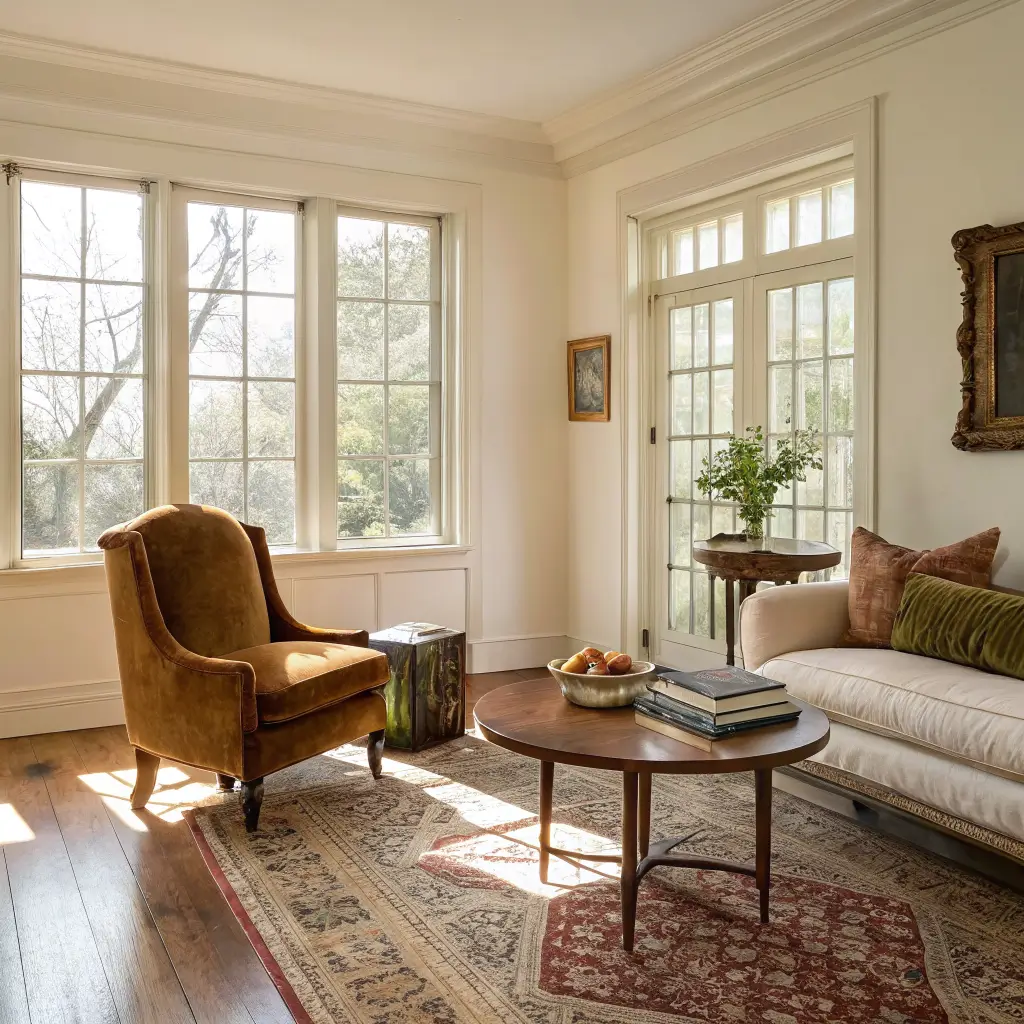
Seating with a solid wood frame. Old chairs were built with proper joinery — dovetails, mortise-and-tenon, finger joints. A $200 vintage armchair will outlive three $600 new ones. Just budget for reupholstery if the fabric’s shot; a decent local reupholsterer runs $400–$900 depending on yardage.
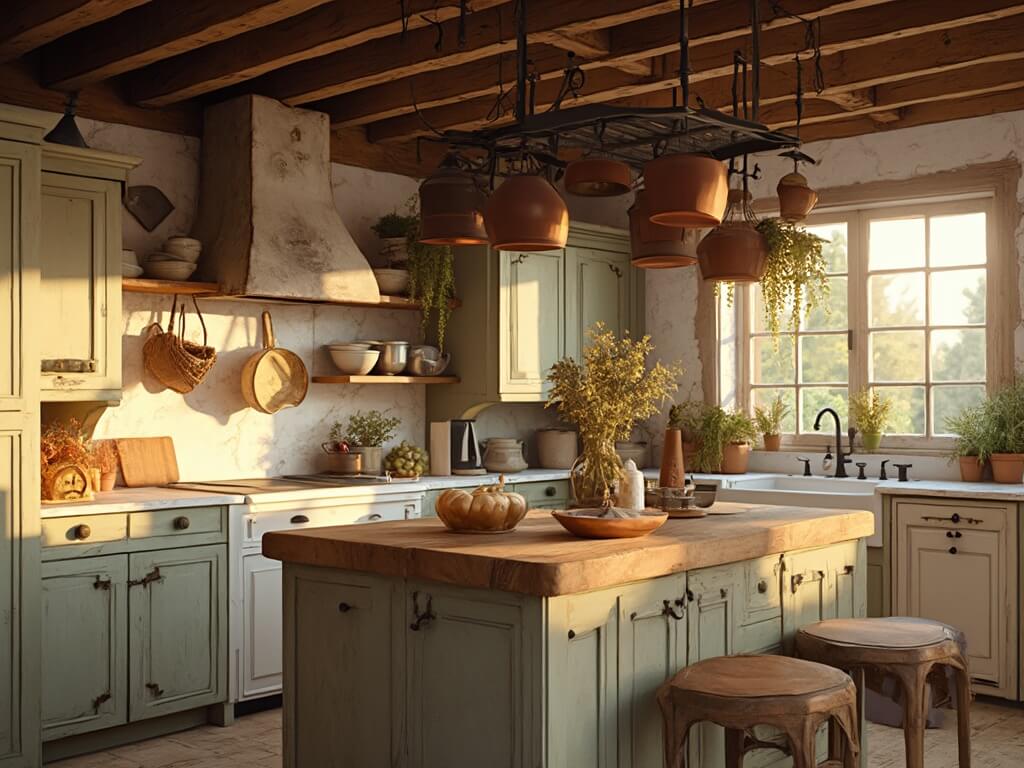
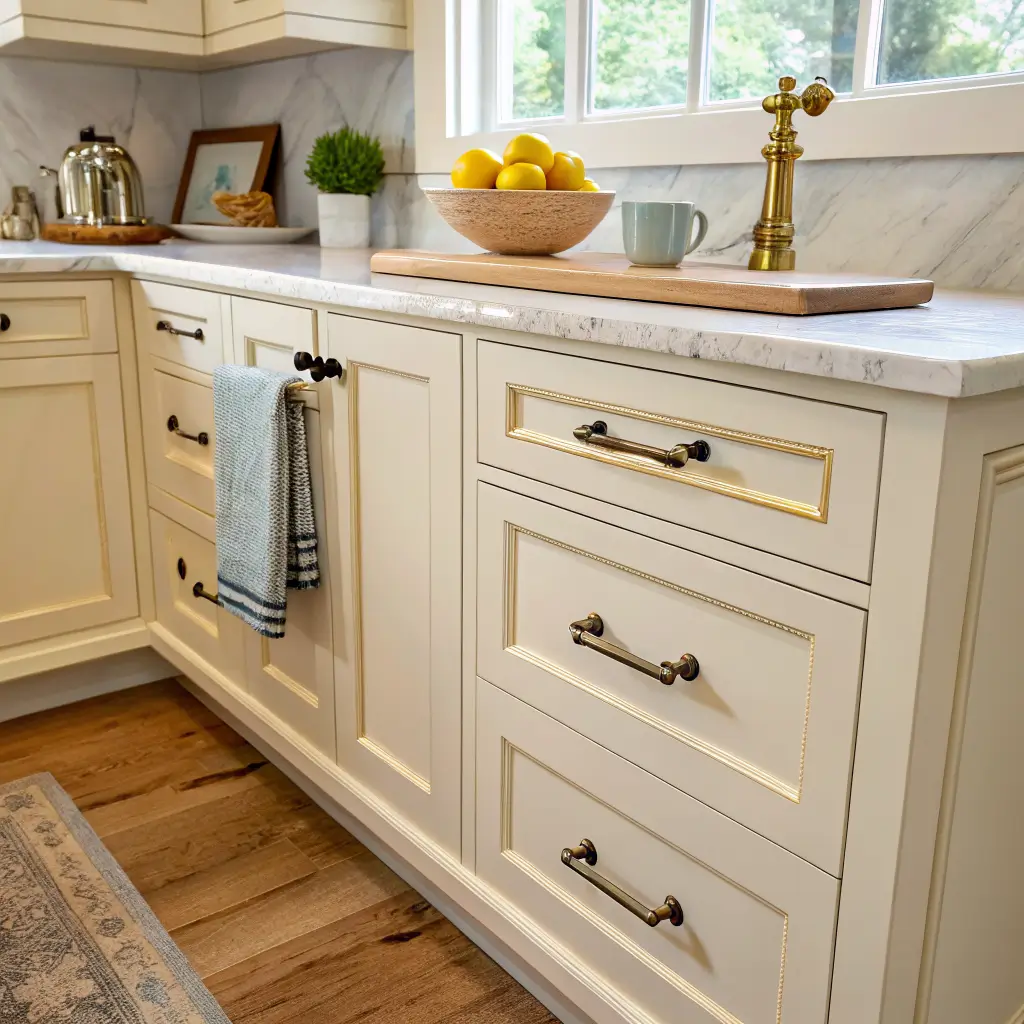
Hardware. This is the sneaky-good upgrade nobody talks about. Swapping builder-grade cabinet pulls for unlacquered brass or oil-rubbed bronze vintage pulls costs $15–$60 a piece and completely changes a kitchen. Unlacquered brass patinas as you touch it, which is the whole point — don’t polish it to a mirror shine.
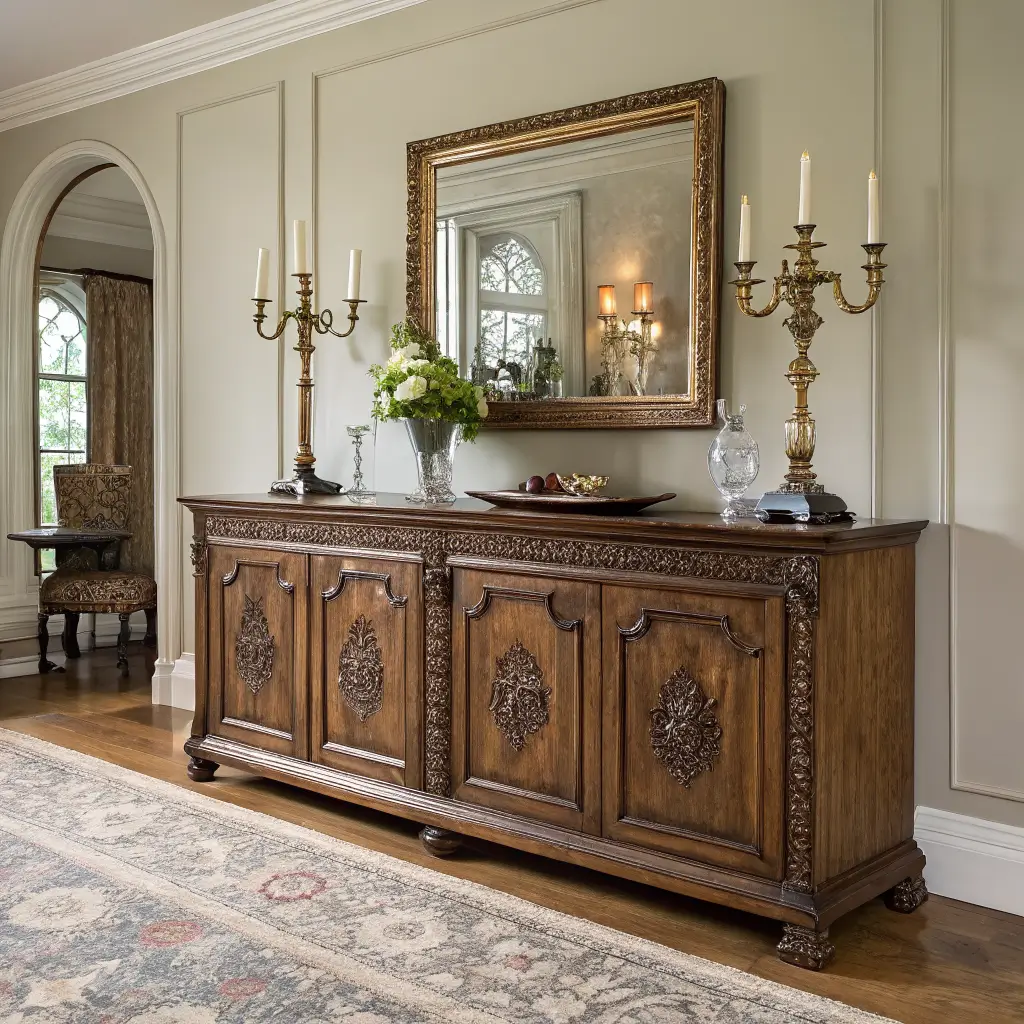
Mirrors. A big, heavy mirror in a carved wood or gilt frame is one of the highest-impact pieces you can buy. New reproductions of the same look cost three times as much and weigh half as much (which you can feel).
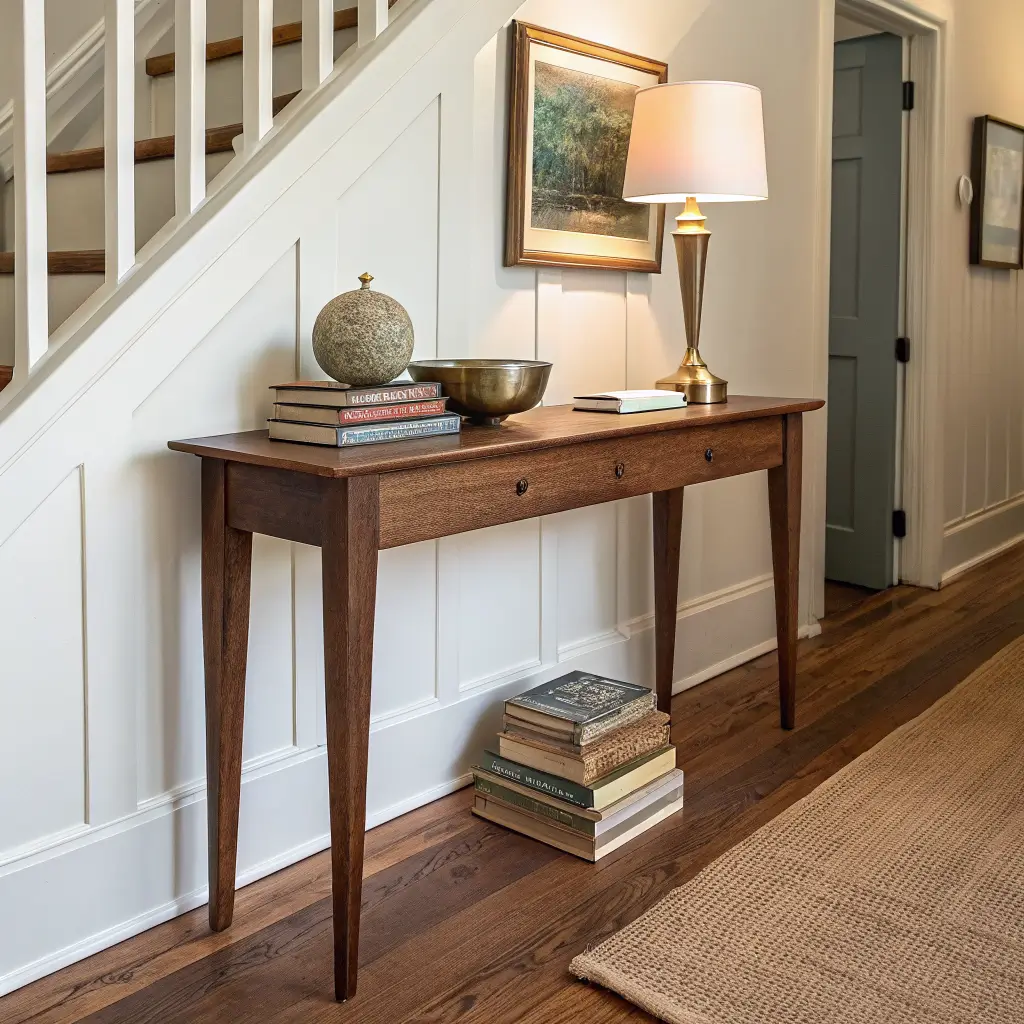
Lighting bases. Skip the shades — those are usually toast or ugly. A $120 brass table lamp with a new $40 linen drum shade looks like a $500 piece.
Be cautious
Upholstered pieces where you can’t see the frame, anything with old wiring you can’t verify, and vintage children’s toys or heavily painted objects — a $15 lead test kit is worth it if a kid’s going to handle it.
Signature accessories that pull weight
Hand-painted plates for wall arrangements — $15–$60 each
Gold- or silver-rimmed coupes and decanters — $40–$120 for a set of glasses
A weird umbrella stand — I keep rolled art and gift wrap in mine, $50–$200
Vintage books — the cloth-bound ones with faded spines in olive, ochre, oxblood
Ceramic bowls — I use one by the door for keys and one on the coffee table for whatever
Color and Materials That Read as Vintage
You want a warm neutral base, not gray. Cream, ecru, greige, warm white. Cool grays fight everything old.
From there, my usual palette:
Wood tones: walnut, chestnut, aged oak — the browns
Accent colors: sage, olive, duck-egg blue, slate
Metals: unlacquered brass, oil-rubbed bronze, antique silver — pick two, not four
For paint, if you want the walls to work as a backdrop, I’d choose an eggshell finish in something like a soft off-white with warm undertones. Flat looks chalky under vintage brass lighting; satin looks plastic.
How to Actually Put It Together
I’ve rearranged my own living room maybe four times, and here’s the order that works.
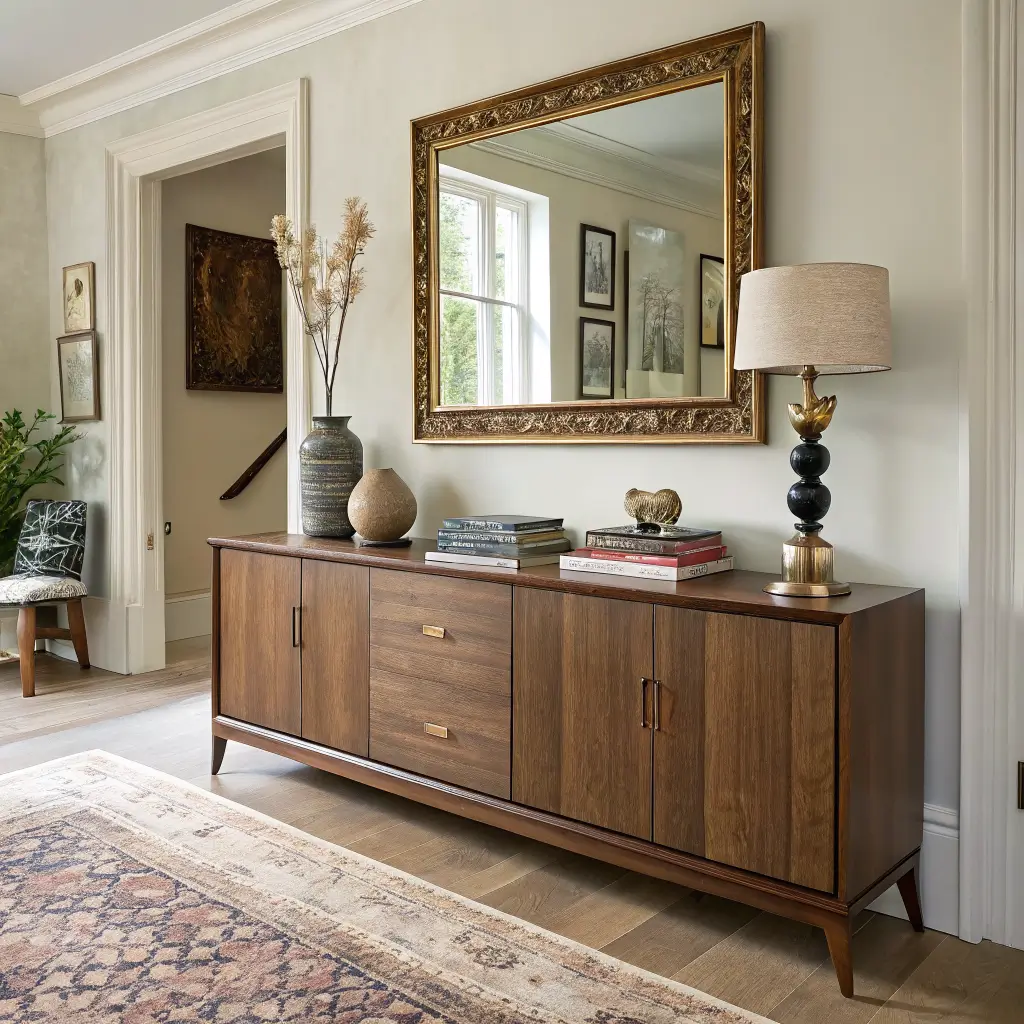
1. Anchor with the biggest piece first. In my case, a walnut sideboard I found on Facebook Marketplace for $220 that the seller thought was junk. Place it. Live with it for a day. Adjust.
2. Hang the wall element next. A big mirror over the sideboard, or a piece of art at least two-thirds the width of the furniture below it. This is the single most-broken rule in vintage rooms — undersized art floating above a chunky console looks lost.
3. Layer surfaces in this order: books and risers first (they set the heights), then ceramics and bowls at mid-height, then small metal accents last as highlights. Work in odd-numbered groupings — threes and fives sit better than pairs.
4. Leave breathing room. Even if you’re going maximalist, every shelf needs an inch or two of empty space somewhere. Otherwise it reads as a shelf full of stuff, not a styled shelf.
5. Lighting is doing more than you think. Two lamps at different heights beat one overhead every time. Point them so they graze wood and brass — patina looks best in raking light.
The Mistakes I’ve Made So You Don’t Have To
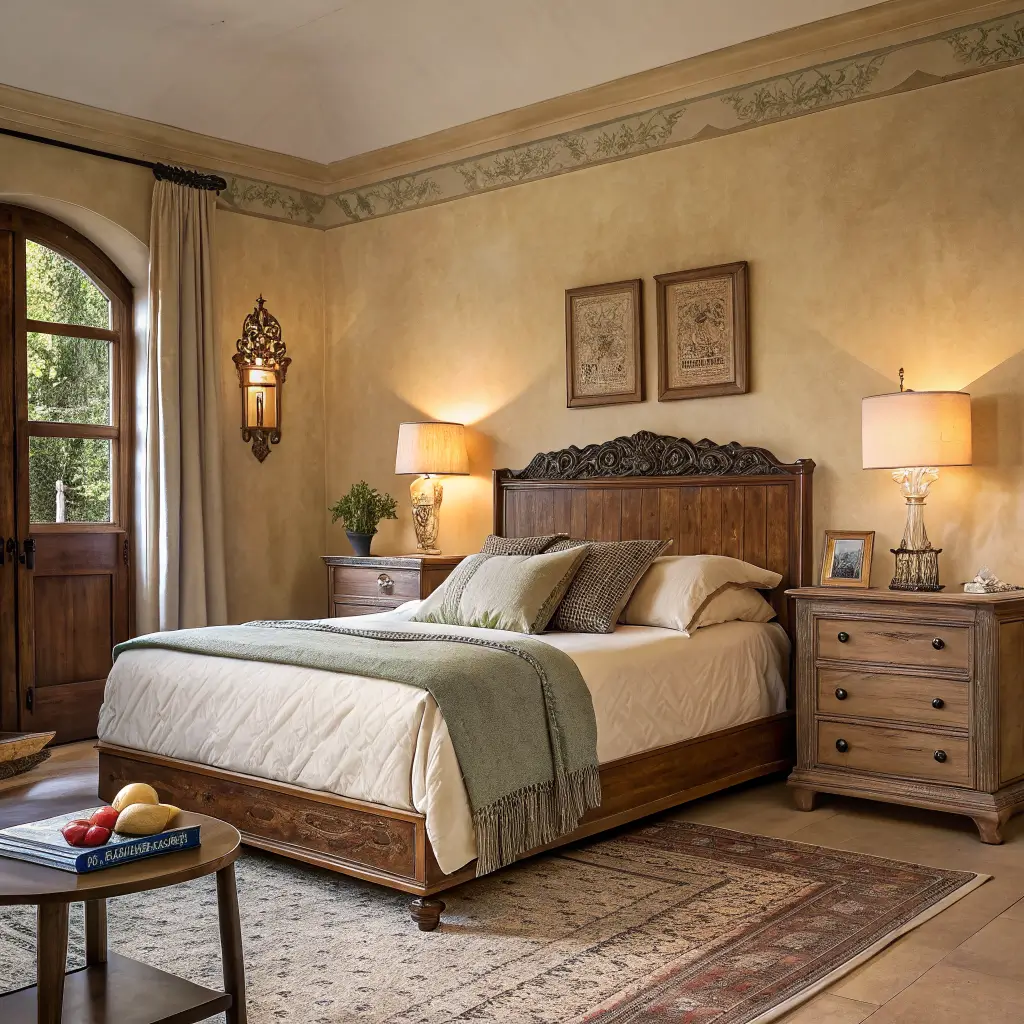
Buying a “great deal” without checking the joinery. I bought a $90 dresser at an estate sale that looked fine. The drawers were held together with staples and wood glue. It fell apart in a month. Now I pull every drawer out and look at the corners — dovetail or finger joints, or walk away.
Mixing four eras with no thread. My first attempt had Victorian, mid-century, industrial, and farmhouse pieces in one room. It looked like a consignment shop. Pick one or two dominant eras and let everything else be supporting cast.
Undersized rugs. A vintage room with a 5×7 rug floating in the middle of the seating area collapses. Front legs of the sofa and chairs need to be on the rug, minimum.
Polishing the life out of brass. New homeowners do this constantly. That soft, uneven glow is why you bought the piece. Wipe it clean, don’t Brasso it.
Ignoring how vintage lamps are wired. Old cloth cord is beautiful and often unsafe. A rewire from a lamp shop is $40–$80 and worth every dollar.
Where to Actually Buy This Stuff
Estate sales are the best price-to-quality ratio, hands down — go on the last day when everything’s half off. Facebook Marketplace for larger furniture (search “MCM,” “walnut,” “solid wood” — sellers who don’t know what they have price low). Etsy for small pieces, books, and ceramics from curated shops. Local antique malls for hardware and mirrors. Auction houses for anything above $500 — often cheaper than dealers.
Skip the “vintage-style” reproductions at chain home stores. You’re paying new-furniture prices for none of the craftsmanship.
Cross-Style Directions
Not everyone wants a full antique look. A few mixes that work:
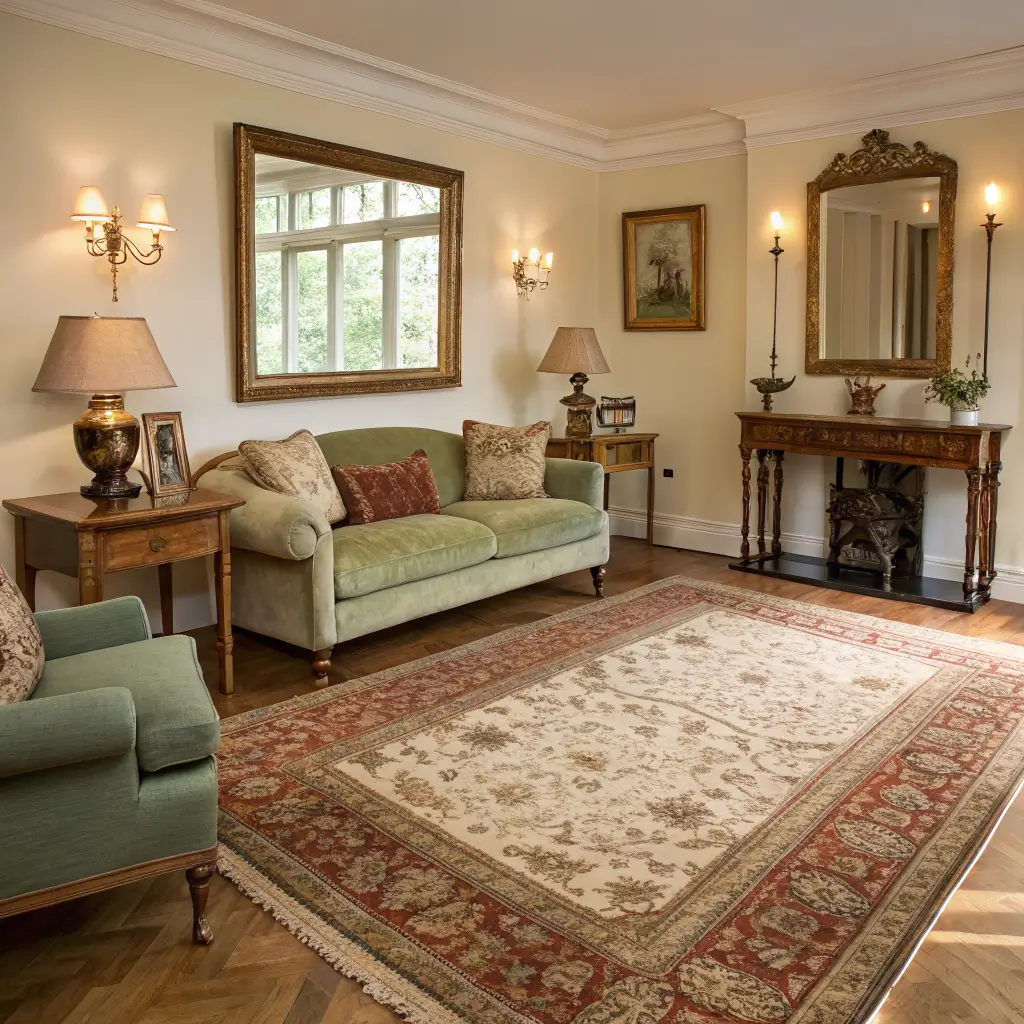
Vintage + minimalist: one hero chair, one large mirror, one lamp — against clean warm-white walls. Fewer things, better things.
Vintage + boho: layer woven baskets, an old kilim, and mixed brass with a mid-century wood frame chair.
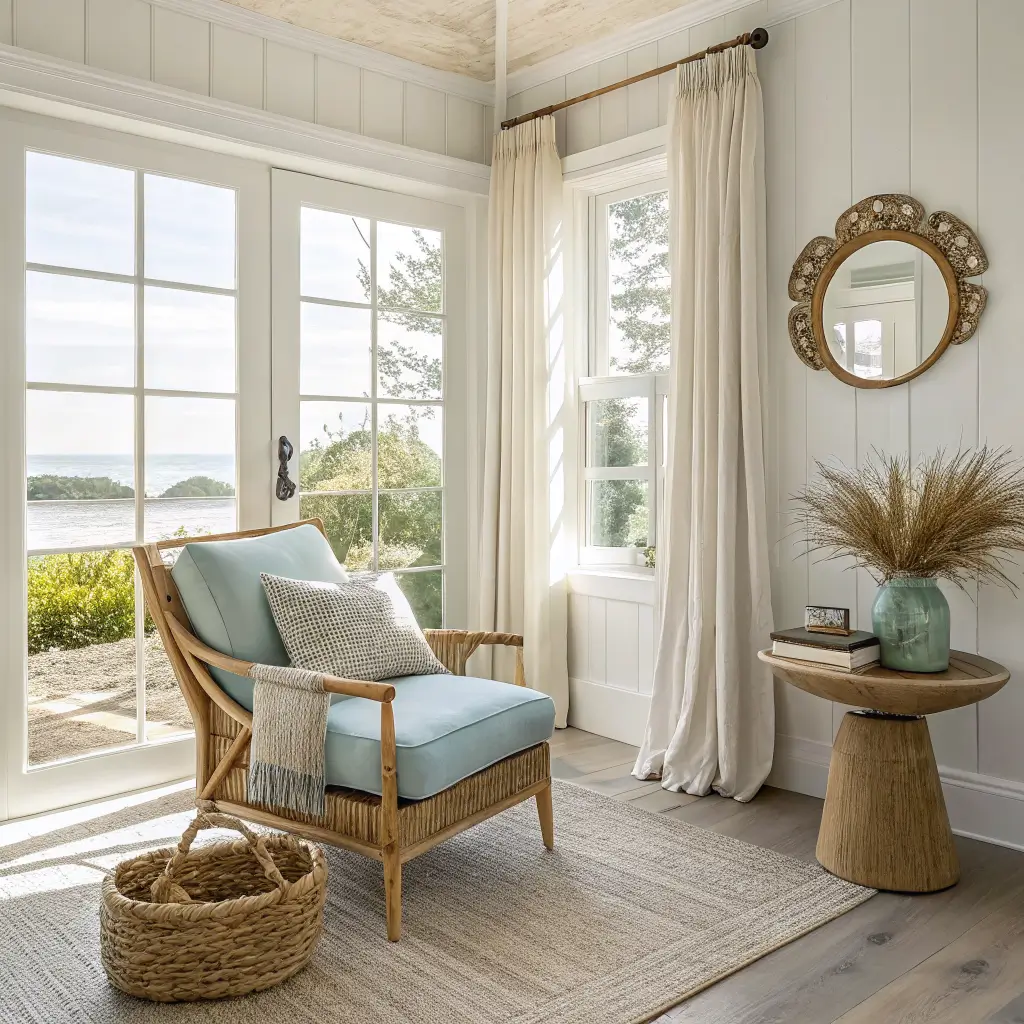
Vintage + coastal: duck-egg blue, whitewashed oak, unlacquered brass hardware, ceramic vessels with organic shapes.
Keeping It From Getting Stale
Every couple of months, I edit. Take everything off a shelf, put back only what earns its spot, and box up the rest for later rotation. Swap textiles seasonally — a heavy wool throw and velvet cushions in winter, washed linen in summer. Add one new piece a year that surprises you and forces the rest of the room to adjust.
The rooms I like best in other people’s homes are always the ones that look like they took a decade to build. That’s because they did. Buy slower, buy fewer things, and buy the piece you’ll still want in ten years.