The Look and Who It’s For
The small apartment entrance is the first thing you see and the last thing you plan. A narrow console and one hook row fixed mine more than any full redo would have.
The style I keep coming back to is minimal and storage-first, with Scandinavian bones and a little warmth from wood and brass. Streamlined shapes. Two or three colors max. Every piece earns its keep because there’s no room for anything decorative-only.
This works if you’re:
– Renting and can’t drill much
– Living in a studio or one-bedroom where the door opens straight into the main space
– Working with a narrow hallway or a tiny alcove
– Tired of tripping over shoes the second you walk in
Time to pull it together: 1–3 hours for a refresh with pieces you already own, or half a day to a full day if you’re assembling a console, mounting hooks, and hanging a mirror.
Budget: I’ve done versions of this for around $80 (thrifted mirror, adhesive hooks, a $12 rug from a discount store) and versions closer to $450 (new slim console, framed round mirror, brass peg rail, woven basket, small lamp). Both looked intentional. The cheaper one just took more patience at Goodwill.
The Pieces That Actually Do the Work
If I had to rebuild my entryway from scratch tomorrow, I’d buy these in this order:
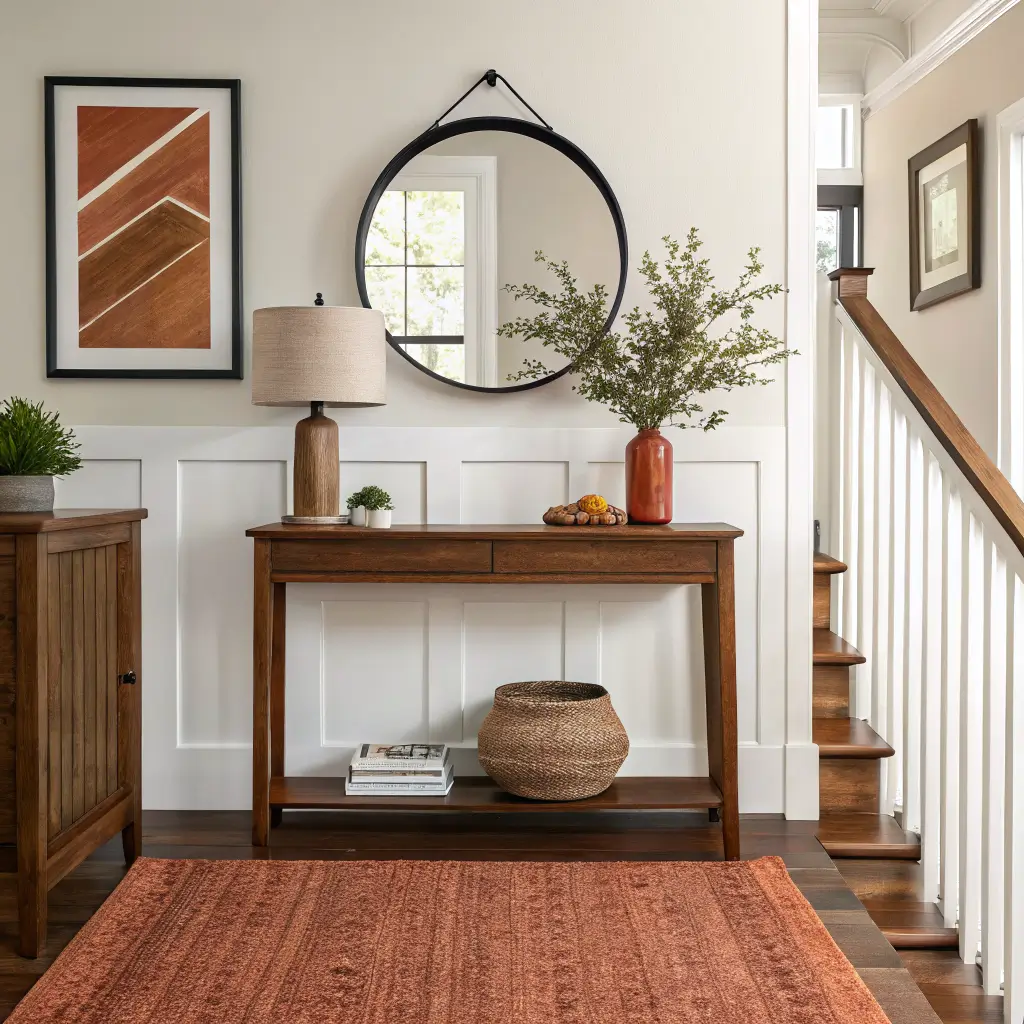
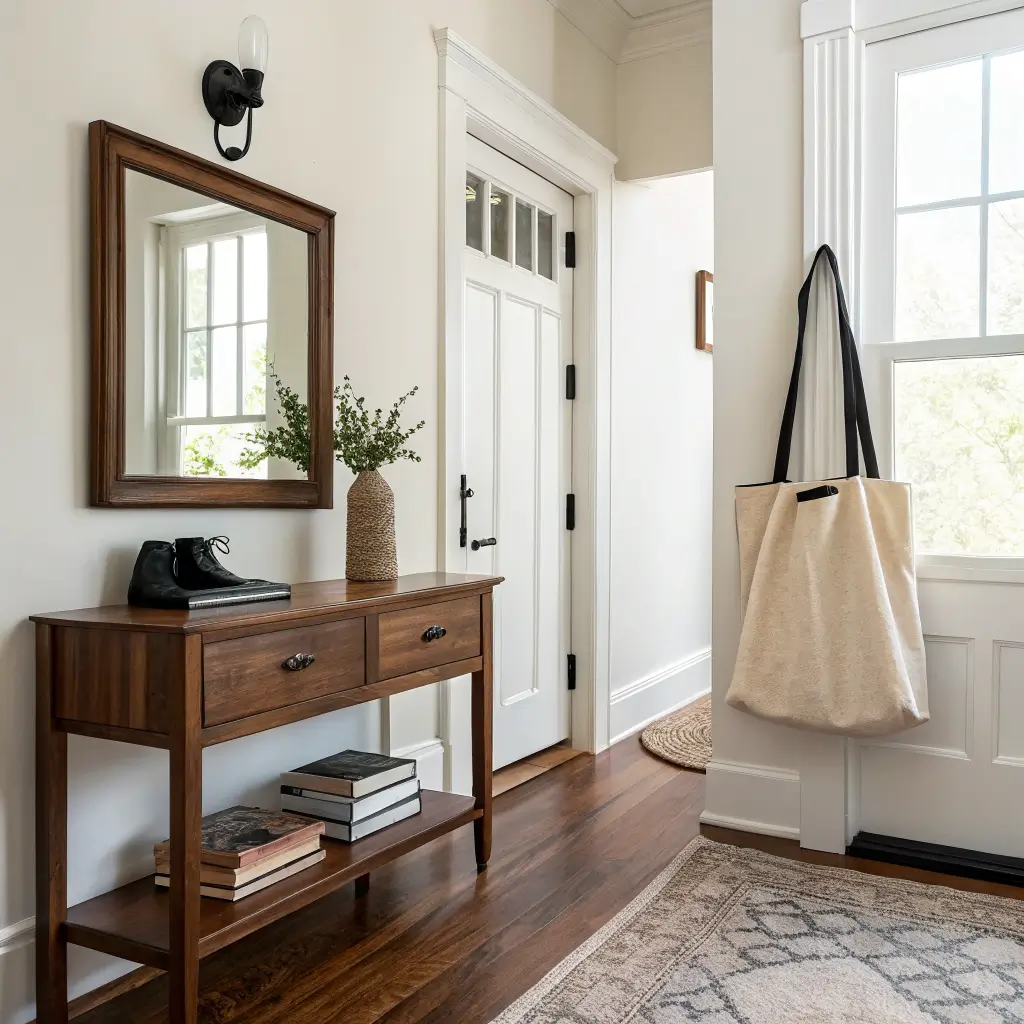
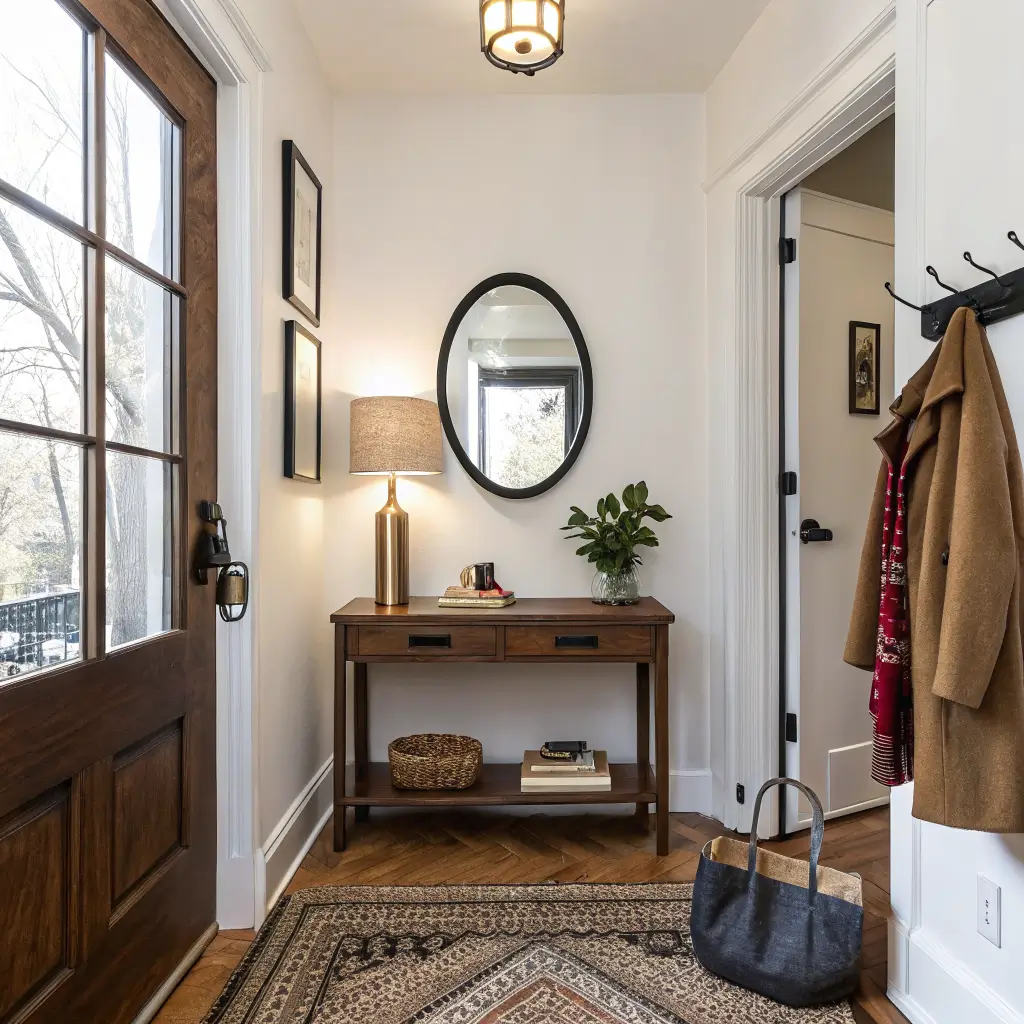
1. A mirror, and a big one. This is the single item that made the biggest difference in my space. I have a 30" round black-framed mirror hung directly across from the only window in my living room, and it doubles the light in the entry. If you can only afford one thing, buy the mirror. Full-length works if you have the vertical wall; round or arched works if you’re hanging above a console.
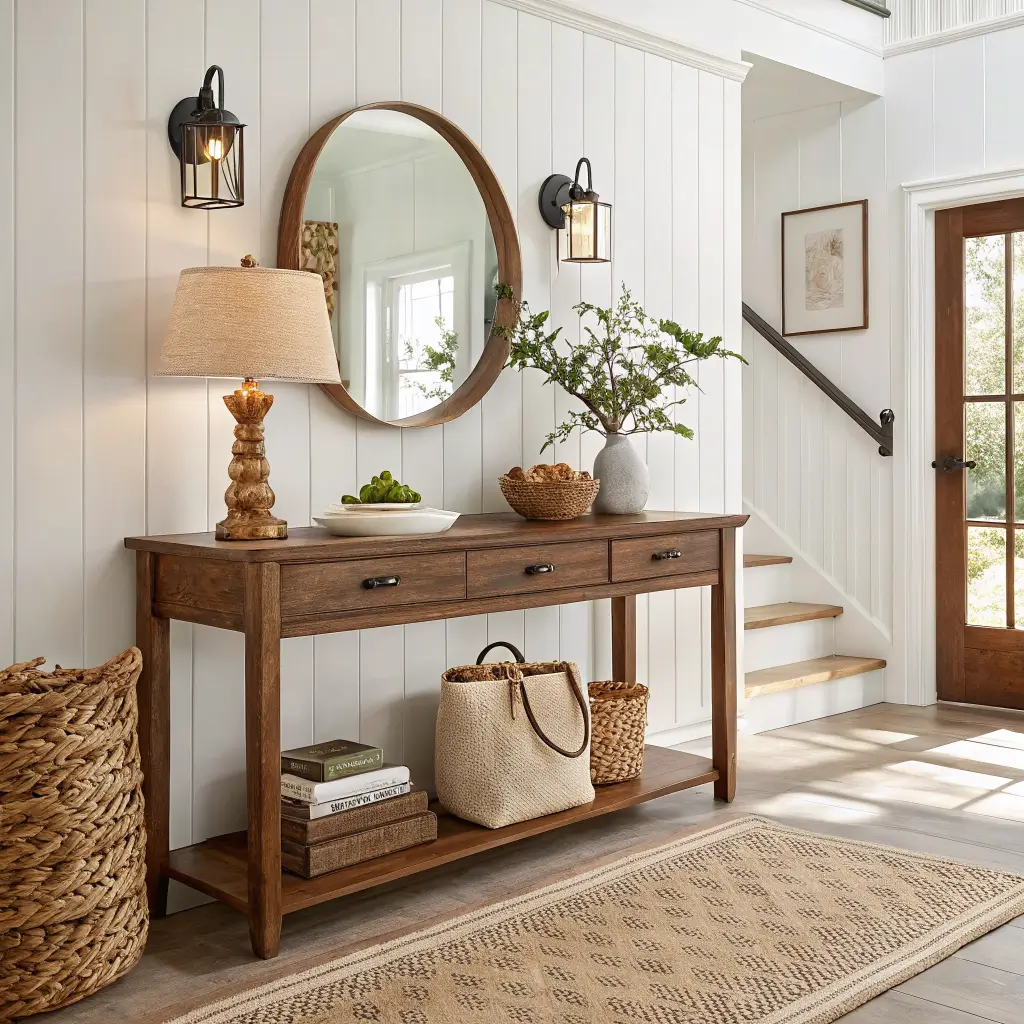
2. A slim console OR a wall-mounted shelf. Not both. I made the mistake of buying a 32"-deep console first — it stuck out so far I clipped my hip on it every time I came in. I returned it and got a 10-inch-deep console instead. If your entry is under 3 feet wide, skip the console entirely and mount a floating shelf at around 52" high.
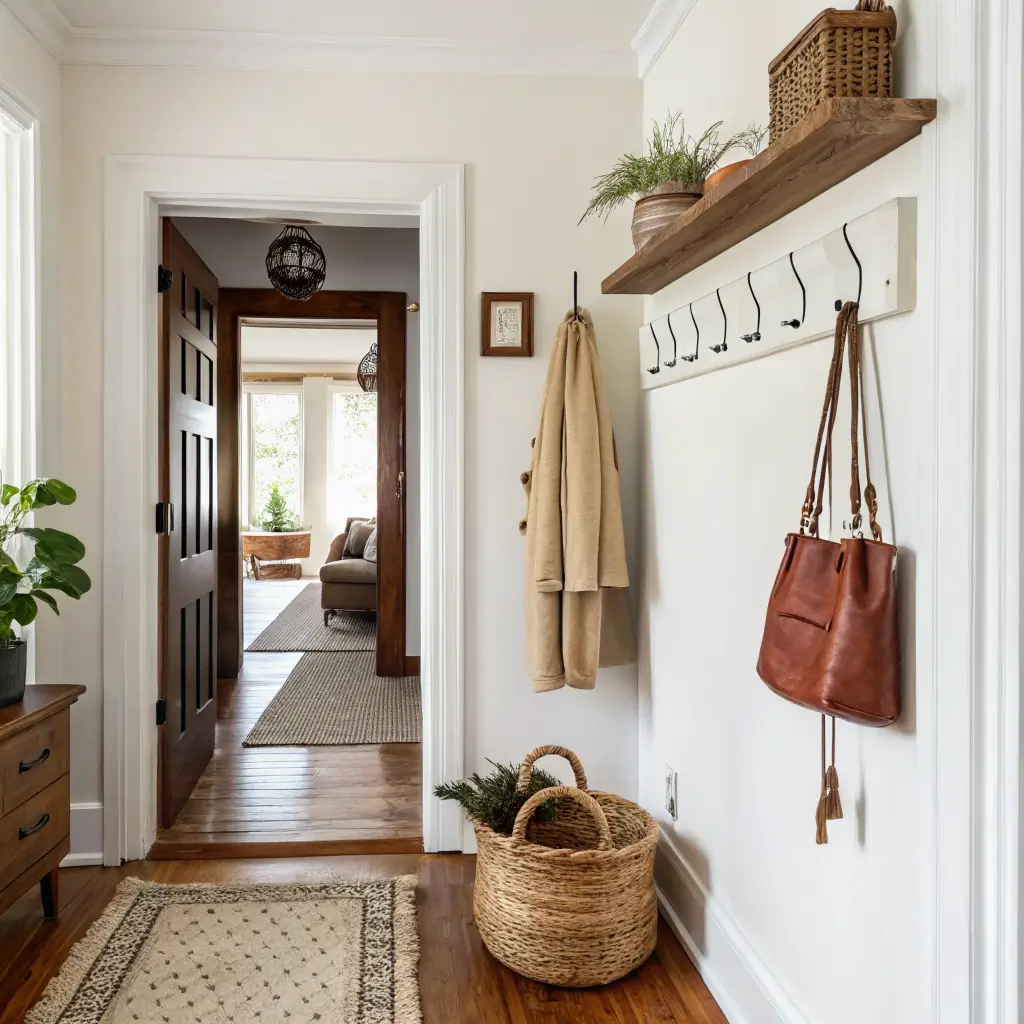
3. Hooks or a peg rail. Four to six hooks mounted at about 65 inches from the floor. That’s high enough that coats don’t drag but low enough to grab without reaching. I use a Shaker-style peg rail in walnut — cost me $28 and holds two coats, a tote, and a dog leash.
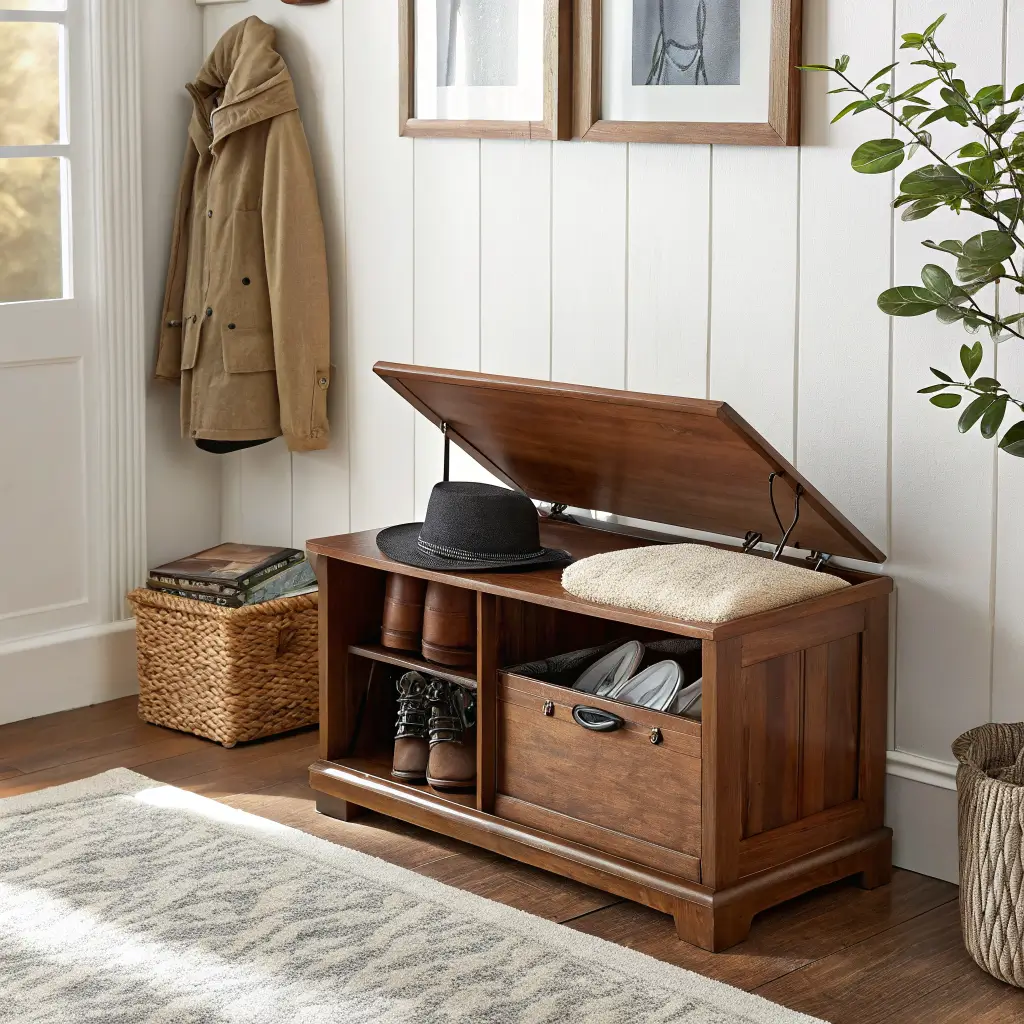
4. A bench with hidden storage, if you have the floor space. Mine is 30" wide, 14" deep, and the seat lifts to hold shoes. If you can’t fit a bench, use a boot tray on the floor and a small woven basket for slippers or seasonal shoes.
5. A rug or runner. This is what defines the entry when there’s no actual foyer. I use a 2×3 flatweave in a warm oatmeal color. Skip anything shaggy — it traps grit and looks tired within a month.
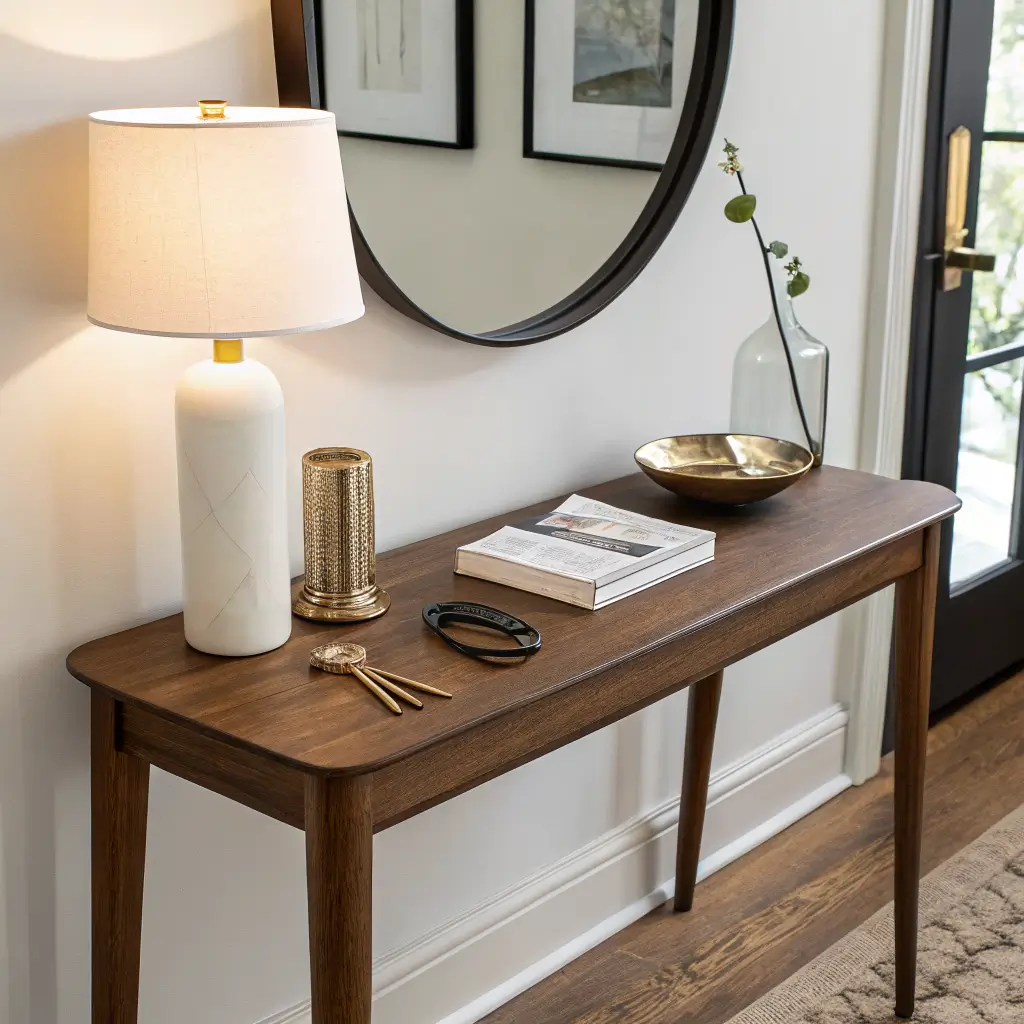
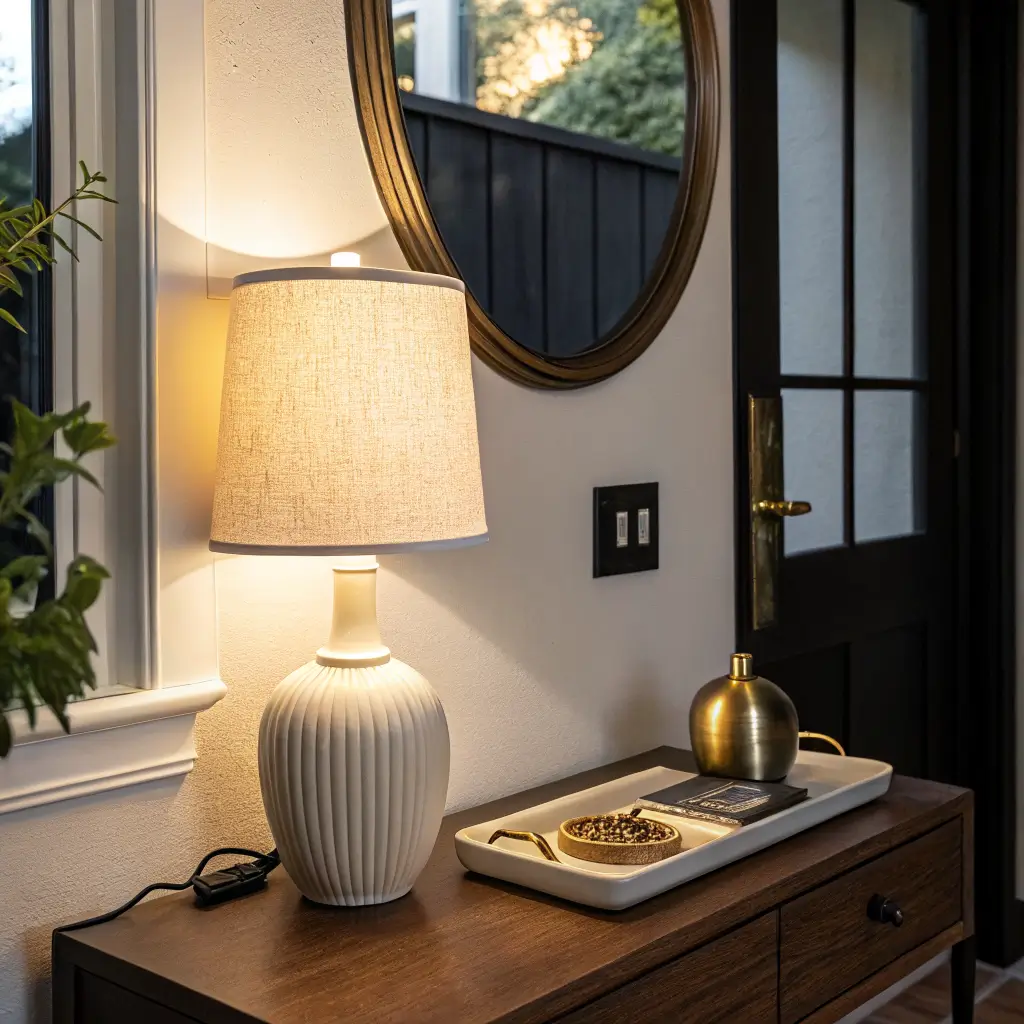
6. One tray for the small stuff. Keys, wallet, sunglasses, that random receipt you’ll deal with later. One tray. Not three little dishes.
How to Put It Together
The pattern I follow every time:
– Anchor piece first (mirror or console)
– Vertical storage next (hooks, shelf)
– Floor layer (rug, bench, basket)
– One soft thing (plant, lamp, art)
– One tray for daily grab-and-go
Layer vertically, not horizontally. In a small entrance, your walls are the real estate. Stack visual weight: rug on the floor, bench or console at knee height, hooks at shoulder height, mirror or art above that. When your eye travels up, the space feels taller.
Stick to two or three tones. Mine is warm white walls, walnut wood, and matte black metal. That’s it. The rug picks up the wood, the hooks match the mirror frame, and the whole thing reads intentional instead of thrown together. If everything is a slightly different beige, it’ll look muddy — commit to your neutrals.
Give it one accent. For me, that’s a small brass lamp on the console. For you it might be a dark painted wall, a piece of art with real color, or a patterned runner. Pick one thing to be loud. Everything else quiet.
Lighting Is the Part Most People Skip
An overhead fixture alone makes a small entry feel like a hallway in an office building. I plug in a small ceramic lamp on my console and leave it on a smart plug that turns on at sunset. Coming home to a warm 40-watt glow instead of walking into darkness completely changes how the space feels.
If you don’t have surface space for a lamp, a plug-in wall sconce is the move — most rentals allow the small hole from a single anchor, and there are cord covers if you want to hide the trail down the wall.
Warm bulbs only. 2700K or lower. Cool white in an entryway looks like a dentist’s waiting room.
Where to Spend and Where to Save
Spend on:
– The mirror (a cheap plastic frame is obvious from across the room)
– Hooks or peg rail (the flimsy ones bend and pull out of the wall)
– Lighting (a good lamp lasts a decade)
Save on:
– The rug (a $40 flatweave looks nearly identical to a $200 one at this size)
– The tray (a thrifted brass one is better than anything new for $30)
– Baskets (target, Ikea, HomeGoods — all fine)
– Art (a printed poster in a nice frame is enough)
My thrifted find that made the whole thing come together: a small brass ring dish I paid $3 for at an estate sale. It sits on the console next to the lamp and holds my keys. Nothing I could have bought new felt as right.
Mistakes I Made So You Don’t Have To
Buying furniture before measuring. The returned console taught me: measure the depth of the piece against the width of your walkway. You need at least 30 inches of clear pass-through from the door swing.
Too many baskets. I went through a phase where I had a basket for shoes, a basket for scarves, a basket for the dog’s stuff, and a basket for mail. It looked like a craft fair. Now I have one bench with a lid and one small basket for slippers.
No drop zone. For months I told myself I’d "just put my keys away when I got home." I did not. The tray fixed that in one day.
Ignoring the ceiling and upper walls. My entry felt cramped until I hung the mirror at 60" from the floor instead of 48". Higher placement pulled my eye up and the whole space grew.
Overcrowding the console. If your surface has more than three items on it (lamp, tray, one small object), it starts to look like a junk drawer. Edit.
Easy Swaps for Seasons and Moods
I don’t redecorate this space seasonally, but I do rotate three things:
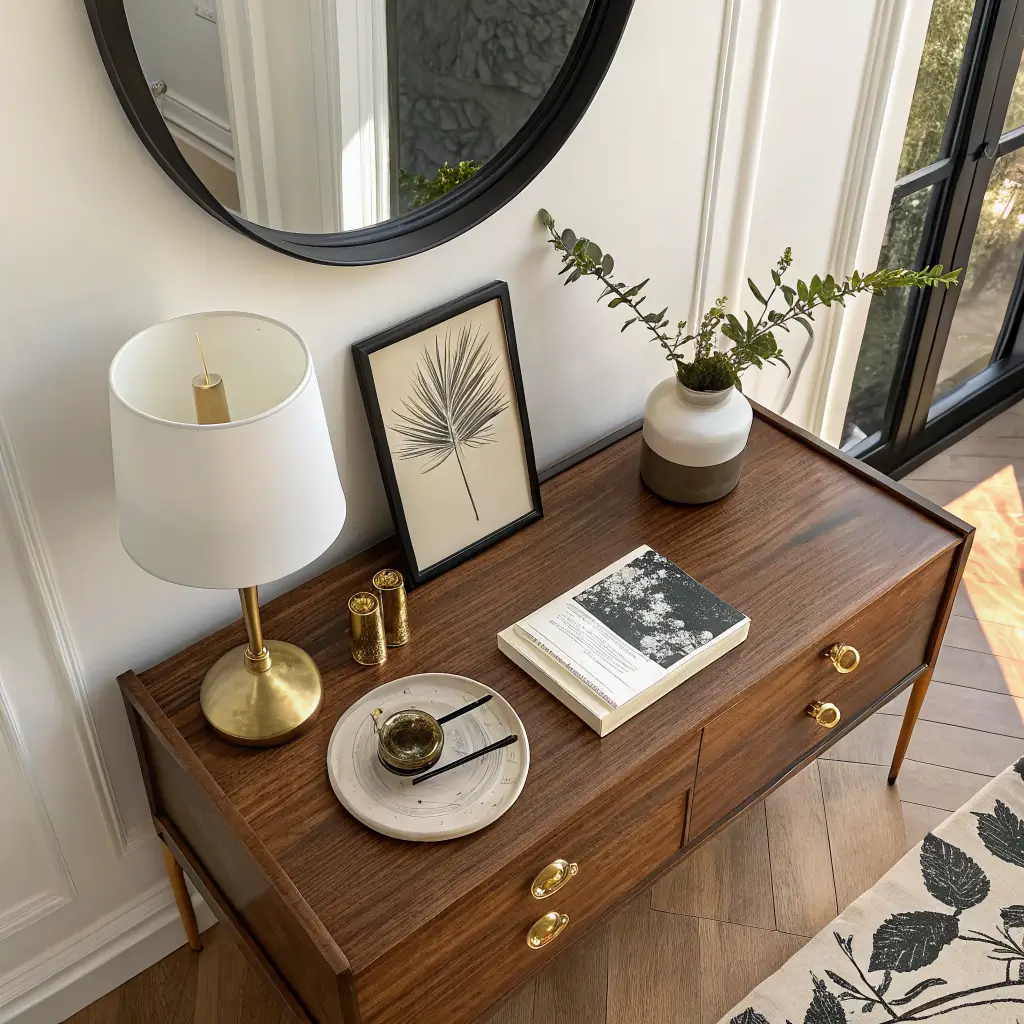
– The art print above the console (I swap between two framed prints — one warm, one cooler)
– The runner (I use a darker rust-toned one in fall/winter, the oatmeal one in spring/summer)
– The tray contents (a small dried eucalyptus bundle in winter, a tiny propagated pothos cutting in summer)
That’s it. Furniture stays, hooks stay, mirror stays. Fifteen dollars and ten minutes gets me a new-looking entry twice a year.
If you want to shift the style entirely: swap the black hooks for aged brass and add a jute runner for a more coastal-boho feel, or trade the walnut console for a black lacquered one and add a graphic print for something moodier and more modern. The bones are the same. The mood is a $60 change.
If Your Front Door Opens Straight Into the Living Room
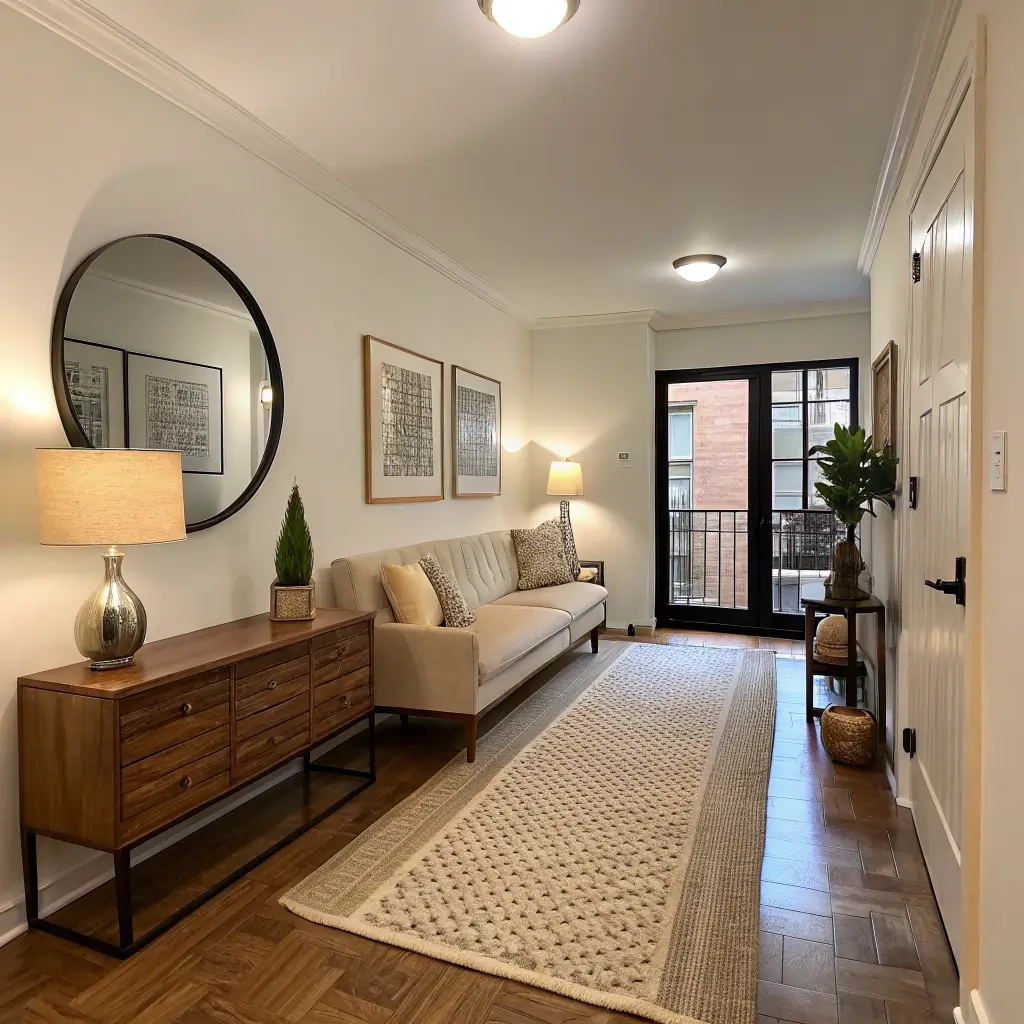
This is the setup I have, and the rug is what saves it. Without a physical wall separating the entry from the rest of the room, the runner creates a visual "you are here" moment. Furniture backs up to define the edge: my console sits perpendicular to the sofa, and the back of the sofa becomes the invisible line between "entry" and "living room."
Aim for about 3 feet of dedicated entry zone if you can. Any less and it just feels like the corner of the living room. Any more and you’re wasting square footage.
One last thing: leave some empty wall. The instinct in a small space is to fill every inch, but the calm of the entry comes from what you didn’t put there. My wall opposite the console is completely bare except for a single hook where I hang my everyday tote. That empty space is doing work too.