Small Bedroom Decoration Inspiration: What Actually Works in Under 120 Square Feet
The small bedroom decoration question is really about what you will look at from the pillow. I kept one print and painted the rest, and the room finally felt calm.
Small bedroom decoration inspiration usually shows up as a wish list of impossible photos — a king bed floating in a sunlit loft, three vintage rugs stacked on wide-plank floors, a reading nook by the window. My bedroom is 9×10. There is no reading nook. There is a radiator.
If you’re working with a box room, a narrow rental, or an attic slice with a slanted ceiling, this is the version that actually helps. I’ve rearranged mine four times in two years, made every mistake below, and finally landed somewhere I like walking into at night.
The Look, and Who It’s For
There isn’t one style that owns small bedrooms right now. Two approaches are pulling ahead:
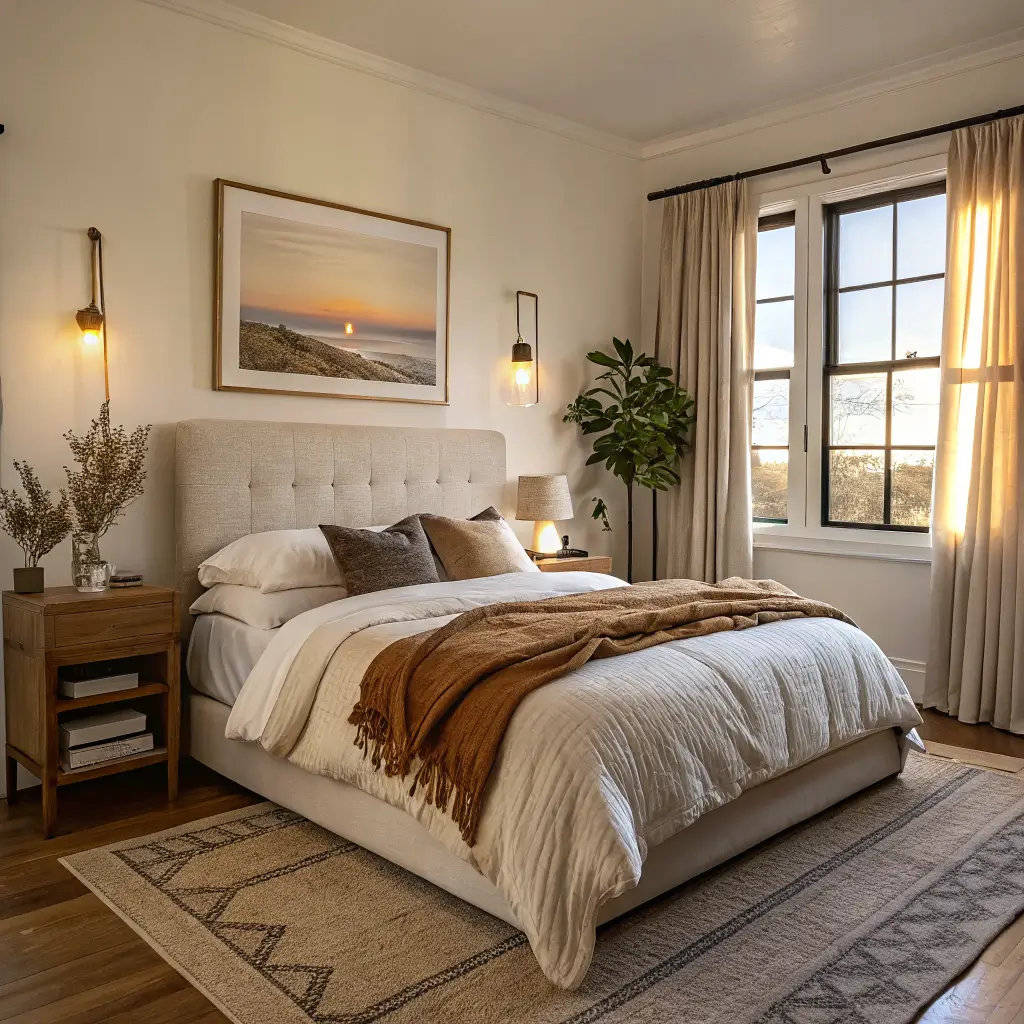
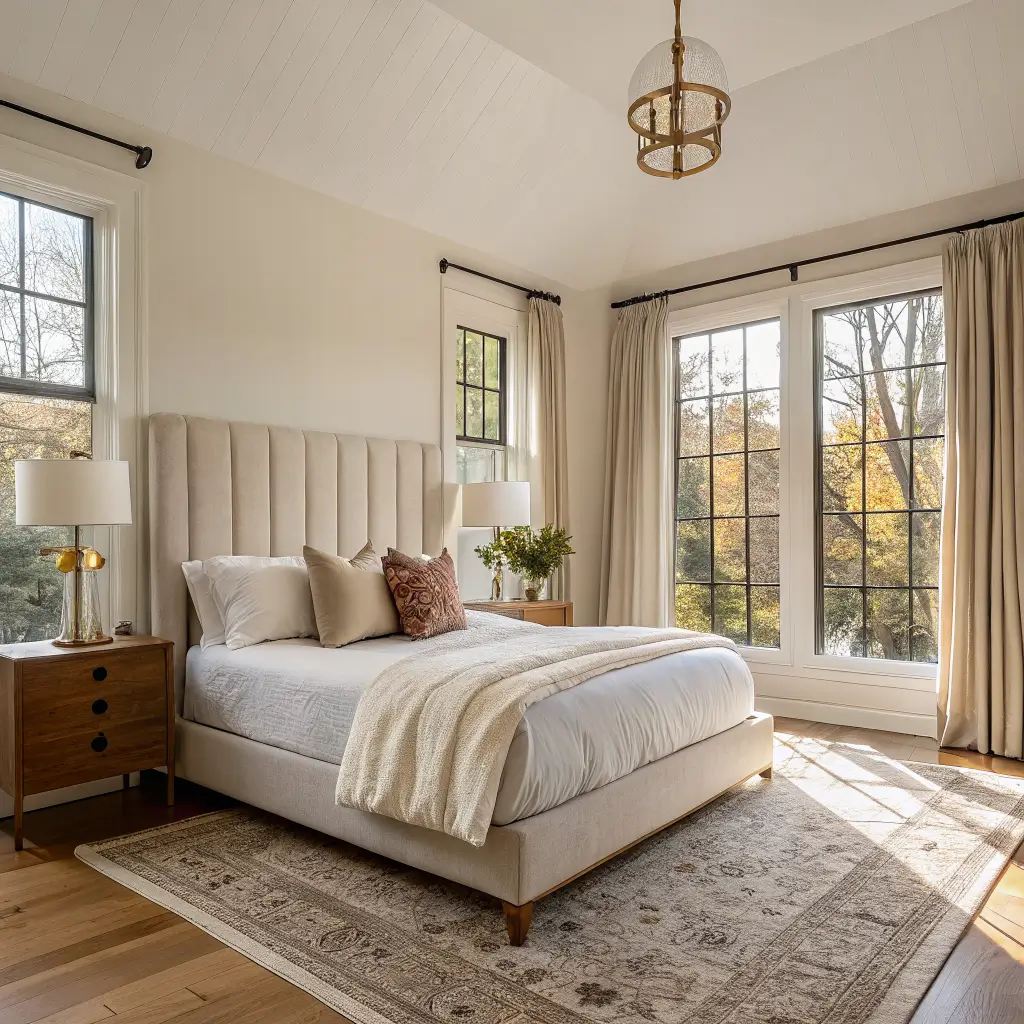
Layered light and airy — pale walls, linen bedding, one big mirror, restrained accessories.
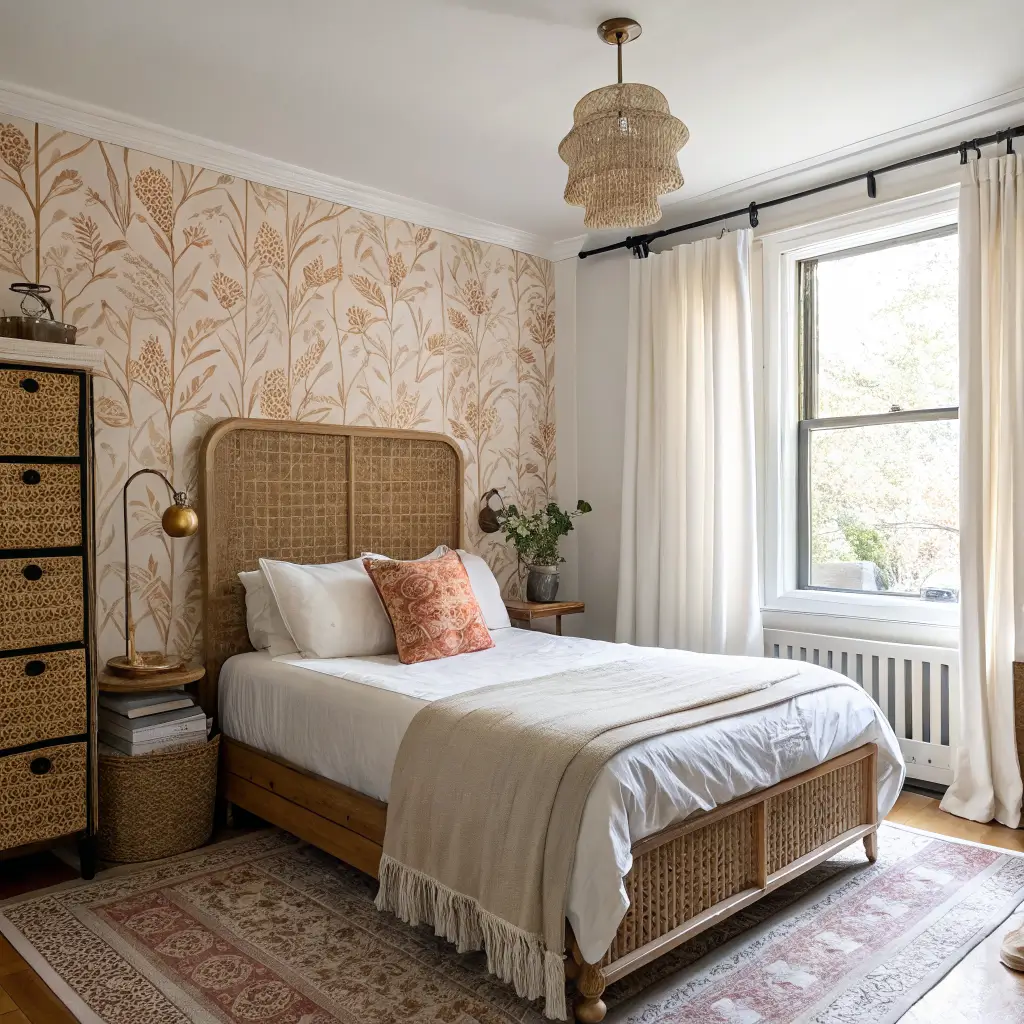
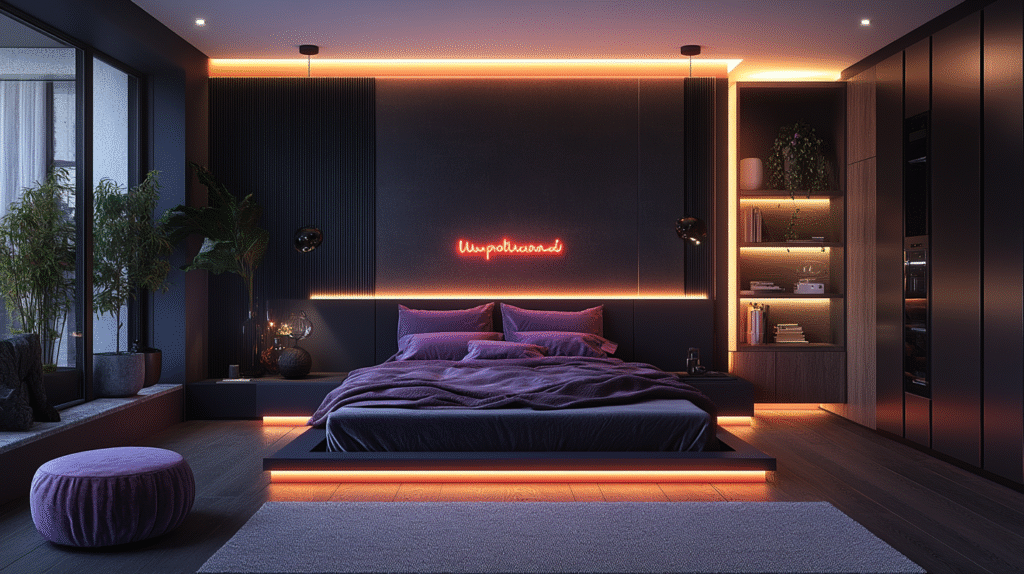
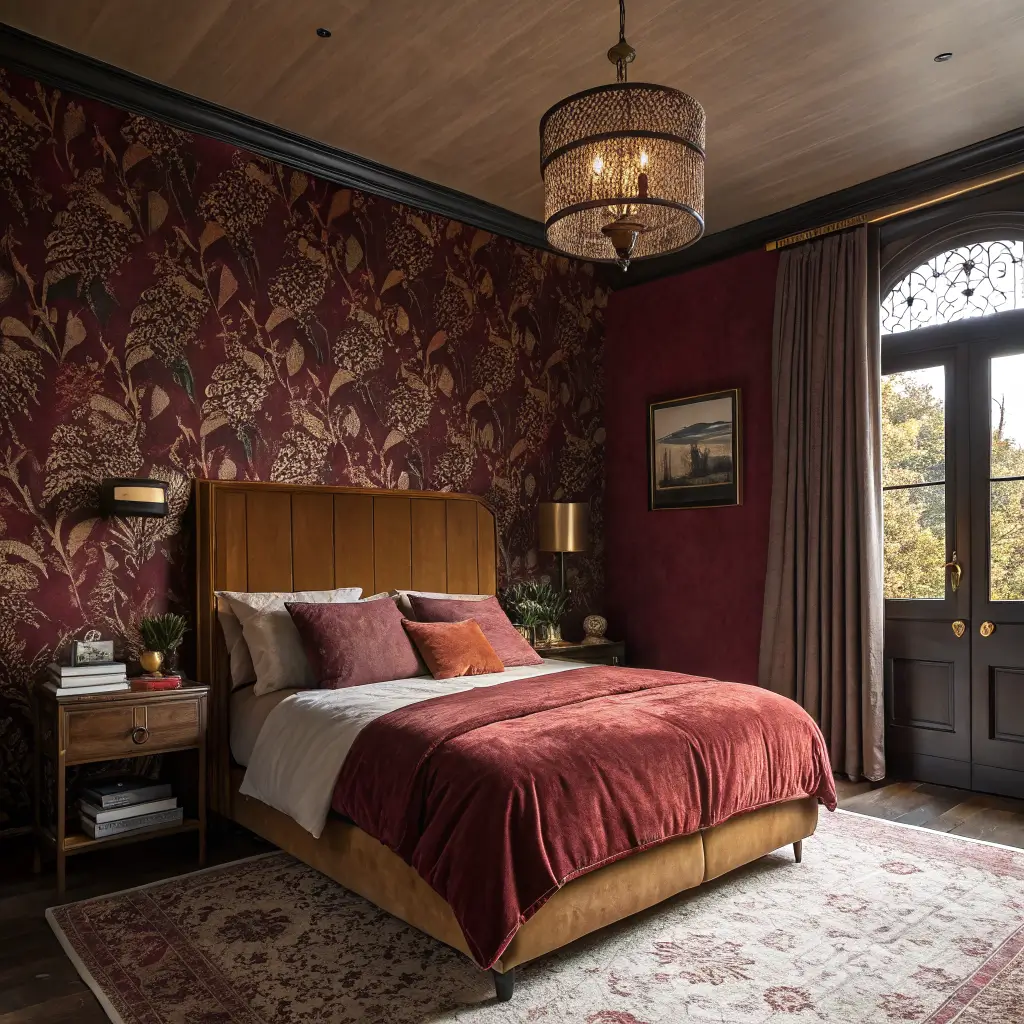
Pattern-drenched and cocooning — bold wallpaper on every wall (yes, including the ceiling sometimes), deep color, immersive rather than “expanding.”
Both work. The mistake is trying to do half of each. Pick a direction.
This applies to bedrooms under about 120 square feet — think 8×10, 9×10, 10×10, and the classic UK “box room” that barely fits a double bed. It’s especially useful if you’re renting, sharing walls, or working around a radiator, a weird alcove, or a pitched ceiling.
Skill level: Beginner for styling and paint. Intermediate if you’re doing wallpaper. You need a friend and a level for wallpaper. I learned that the hard way with a strip of peel-and-stick chinoiserie that hung crooked for six months because I was too proud to redo it.
Timeline: A styling refresh takes a weekend. Add paint or wallpaper and you’re looking at a week. Built-ins or a custom headboard push it to two weeks or more.
What a Realistic Budget Looks Like
Numbers based on what I’ve actually spent and priced out recently:
Budget refresh ($150–$600): New bedding, curtains, a rug, a mirror, a couple of thrifted accessories. This is the “one paycheck, one weekend” tier and it does a lot.
Mid-range ($600–$2,500): Add a storage bed, two wall sconces, a roll of proper wallpaper, and decent window treatments.
Higher-end ($2,500+): Built-in wardrobes, bespoke headboards, custom joinery around the bed. Worth it if you own the place and the room is truly awkward.
Where I’d spend: the bed and the lighting. Where I’d save: art (thrift, print at home, frame cheaply), throws, and small accessories.
The Pieces That Actually Earn Their Spot
A small bedroom can only carry so many objects before it turns into a storage unit. This is my non-negotiable list.
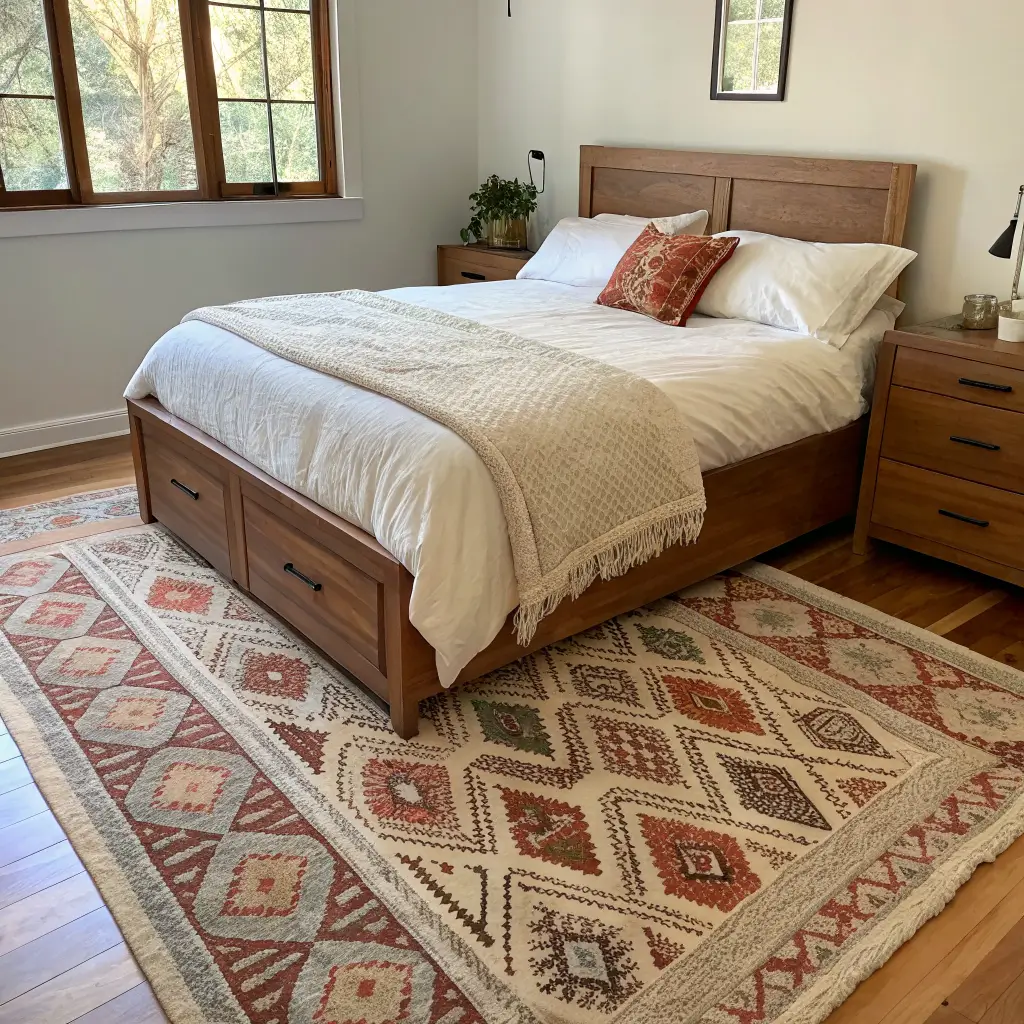
A storage bed or divan with drawers. This is the single biggest change I made. My bed swallowed two suitcases, a duvet, and off-season sweaters. That’s a whole dresser I no longer need on the floor.
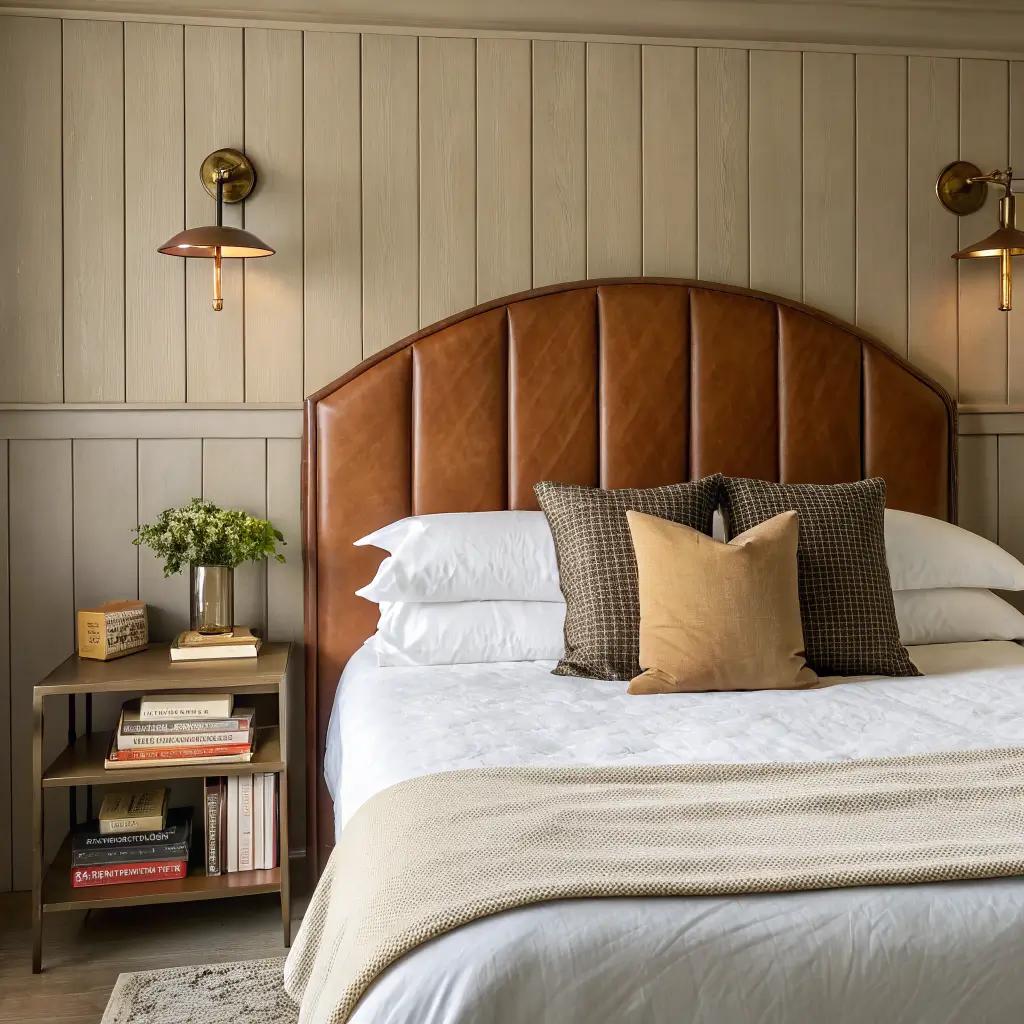
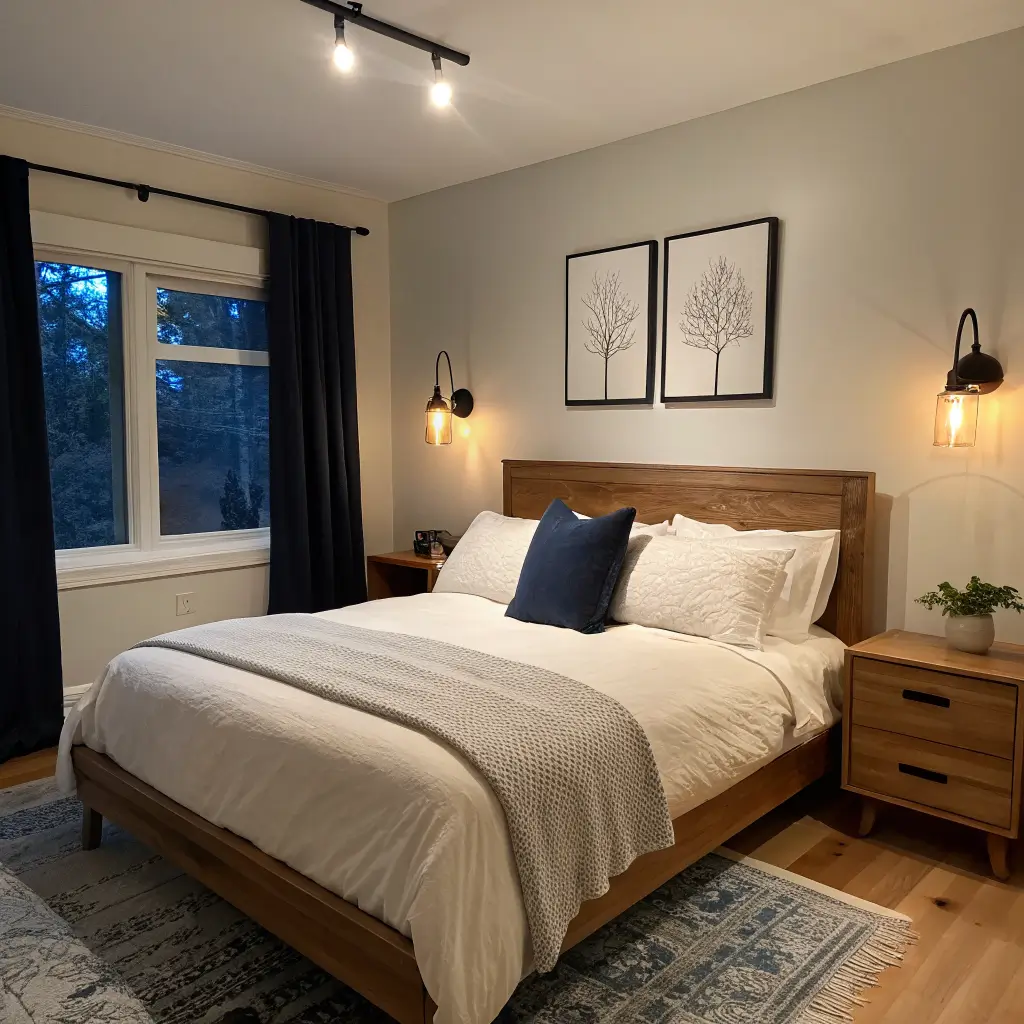
Wall-mounted lighting. Sconces or hardwired pendants beside the bed, not lamps on a table. This is the difference between a nightstand that fits a book and a nightstand fighting a lamp base for space. Plug-in sconces exist for renters — I use a pair with cloth cords tucked along the wall behind the headboard.
One large mirror. Not three small ones. A single tall mirror leaning opposite the window bounces light and doubles the sightline. I use a 60-inch floor mirror; the room reads noticeably longer.
A compact or wall-mounted nightstand. Anything over 18 inches wide is stealing floor space. A floating shelf at mattress height works if you don’t need a drawer.
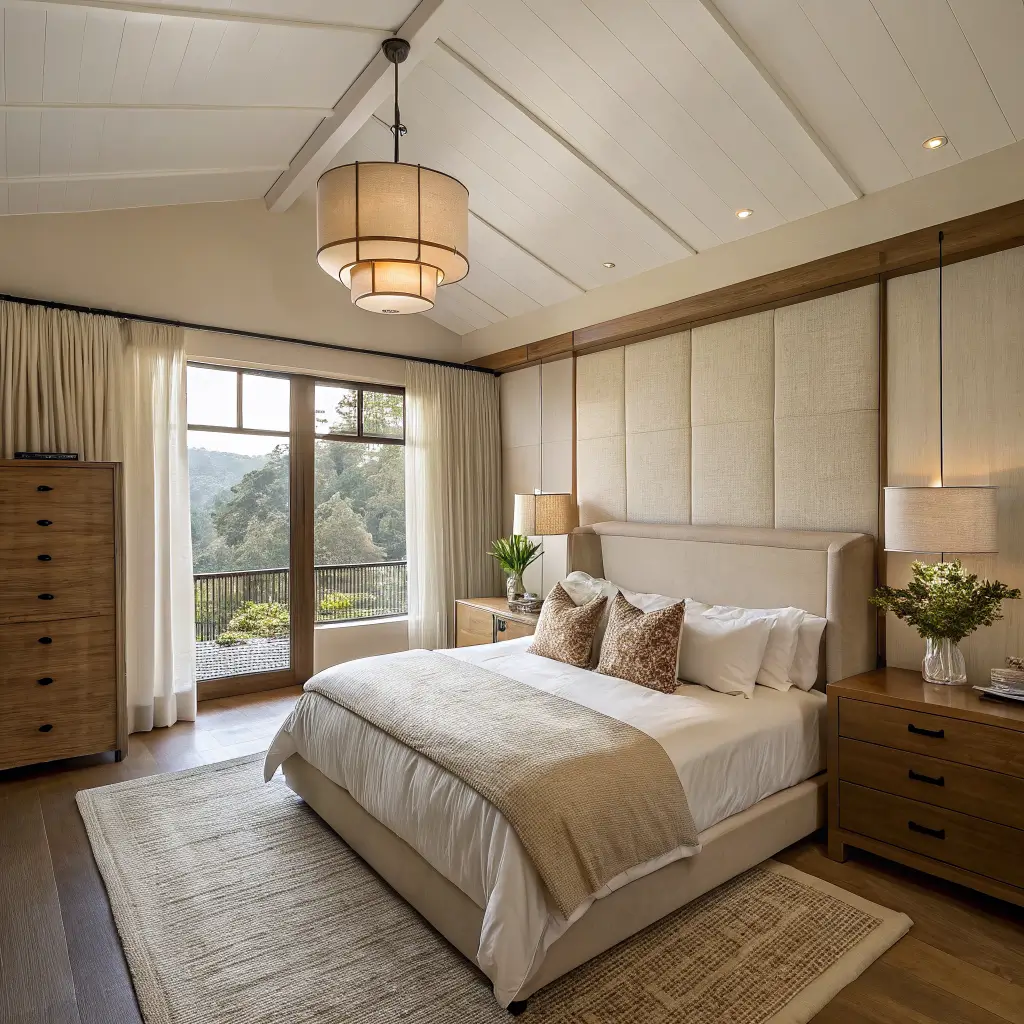
A defined bed wall. Tall headboard, wallpaper strip, paneling, or a hung textile behind the bed. This is your focal point. Without it, the room feels unfinished no matter how much else you add.
Long curtains, hung high. Mount the rod close to the ceiling and let panels drop to the floor. This one trick makes the ceiling feel a foot taller. Skip the short café curtains — they cut the wall in half.
A rug that fits under the bed. At minimum, two-thirds of the rug should sit under the bed with about 18 inches extending on the sides. A rug floating in a corner makes the room feel smaller, not bigger.
Closed storage. Whatever form it takes — dresser, wardrobe, under-bed bins — get things behind a door or a lid. Open shelving in a small bedroom turns into visual noise fast.
How to Put It Together
The order matters. I’ve done this out of sequence and ended up returning a rug because it clashed with wallpaper I hadn’t picked yet.
1. Clear the room completely. Take everything out. You’ll see the bones and the pathways. Note where the natural clearance is — you want at least 24 inches on the side of the bed you get in and out of.
2. Decide storage before decor. Storage bed vs. dresser vs. built-in wardrobe. This dictates layout.
3. Place the bed. In narrow rooms, push it against the long wall. In squarer rooms, centering it on the main wall usually reads best. Don’t block the window unless you absolutely have to — and if you do, use a low headboard.
4. Do the wall treatment first. Paint, wallpaper, paneling, or the headboard mount. Everything else layers on top.
5. Install lighting. Sconces or pendants beside the bed. Overhead lighting alone is brutal in a small room; you need a second, softer layer.
6. Add the mirror. Opposite or adjacent to the window is best. Behind the door is wasted.
7. Layer bedding in a tight palette. Duvet, two sleeping pillows, one or two accent pillows, one throw. Stop there. I know it’s tempting to keep going. Stop.
8. Finish with a few chosen objects. A stack of books, one plant, one piece of art you actually like. Not a curated tablescape.
Color, Contrast, and the Dark Paint Question
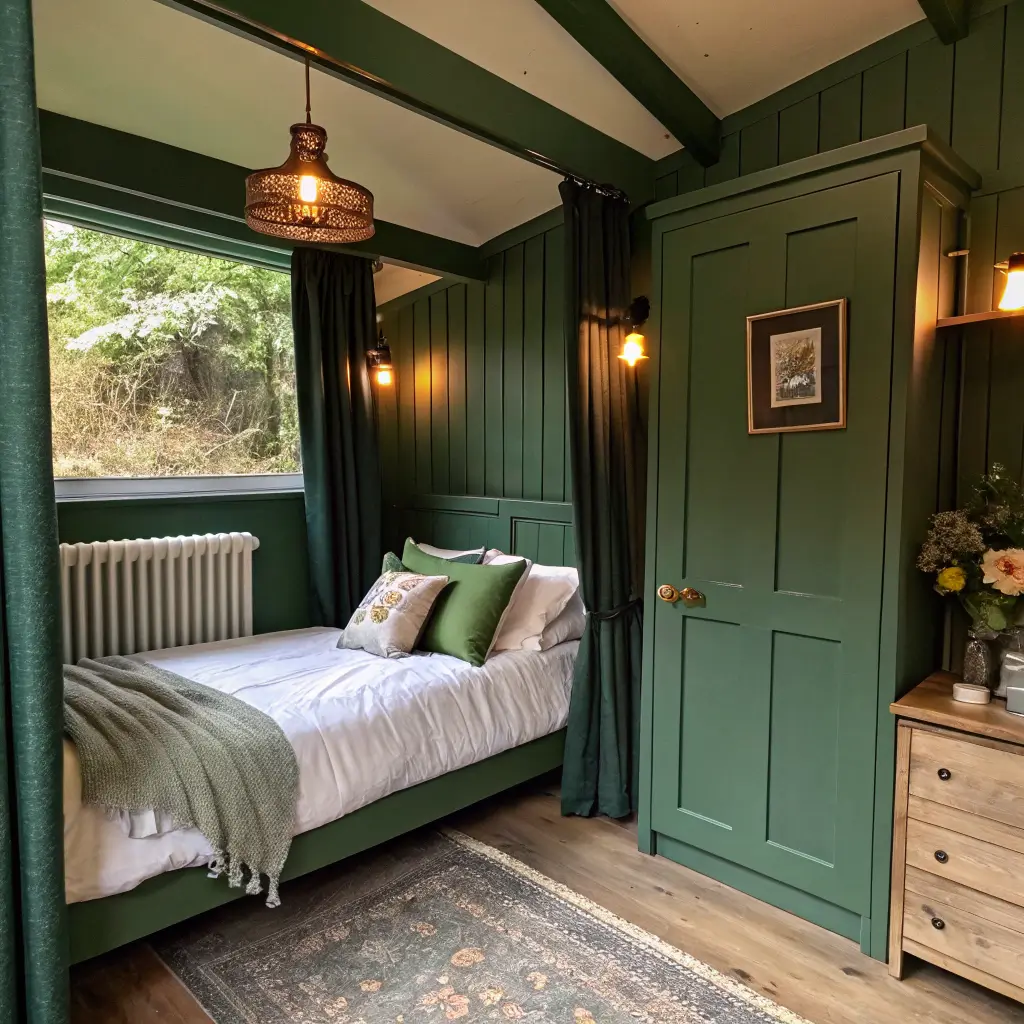
Can you use dark paint in a small bedroom? Yes, and it often looks better than white. White walls in a small room with poor light look grey and sad. A saturated color — deep green, oxblood, indigo, warm brown — commits to the smallness and makes the room feel intentional. This is what color-drenching does: paint walls, trim, and sometimes ceiling the same shade so the eye has no hard edges to catch on. The room reads as one continuous space instead of a box with lines.
Colors that genuinely help a small room feel larger: soft white with a warm undertone (not stark cool white), pale blue, mushroom, oat, warm ivory. Avoid gigh-contrast trim in white if the walls are pale — it cuts the room into panels.
A tight palette matters more than the color choice. Three finishes, repeated: wood, linen, brass. Or: black metal, cream textiles, oak. Pick your three and stop adding.
Common Mistakes I’ve Made So You Don’t Have To
Buying an oversized nightstand. I had a 24-inch chest beside the bed for a year. It blocked the door from opening fully. I replaced it with a 14-inch wall-mounted shelf and gained a walkway.
Filling every wall. I did a gallery wall on the wall opposite the bed. It looked like a Pinterest board threw up. One larger piece, centered, did more.
Ignoring the vertical space. Everything I owned was between the floor and 4 feet up. Adding a picture rail near the ceiling and hanging one long print stretched the whole room upward.
Cheap, short curtains on a narrow rod. They made the window look like a porthole. Wider rod, floor-length panels, mounted high — completely different room.
Skipping the rug. A bare floor under the bed makes everything echo and feel temporary.
Renter-Friendly Swaps
If you can’t paint or drill:
Peel-and-stick wallpaper on the bed wall only. Behind the headboard, one wall, no ceiling. Removable brands have gotten genuinely good in the last few years.
Plug-in sconces with cloth cords. Run the cord down the wall behind the headboard. Tuck it under the mattress edge.
Leaning mirrors instead of hung. A 60-inch floor mirror does the same job with no anchors.
Tension rods for curtains. Mount at the ceiling, floor-length panels, and no landlord conversations.
Under-bed storage bins on wheels. If a storage bed isn’t in the budget, this is the workaround. Bed risers add another six inches of clearance if you need it.
Seasonal Updates Without Rebuying Everything
Small rooms are actually easier to refresh because you don’t need much:
Fall/winter: Swap cotton bedding for flannel or brushed linen, add a wool throw, change accent pillows to something with more texture.
Spring/summer: Lighter duvet cover, waffle-weave throw, swap a dark art print for something with more air in it.
Any time you’re bored: Move the mirror. Change the pillow arrangement. Rotate art between rooms.
I keep a small stash of two or three throw pillow covers and one alternate duvet cover. That’s it. Every three months the room feels different for maybe forty dollars total.
Style Combinations That Actually Hold Up
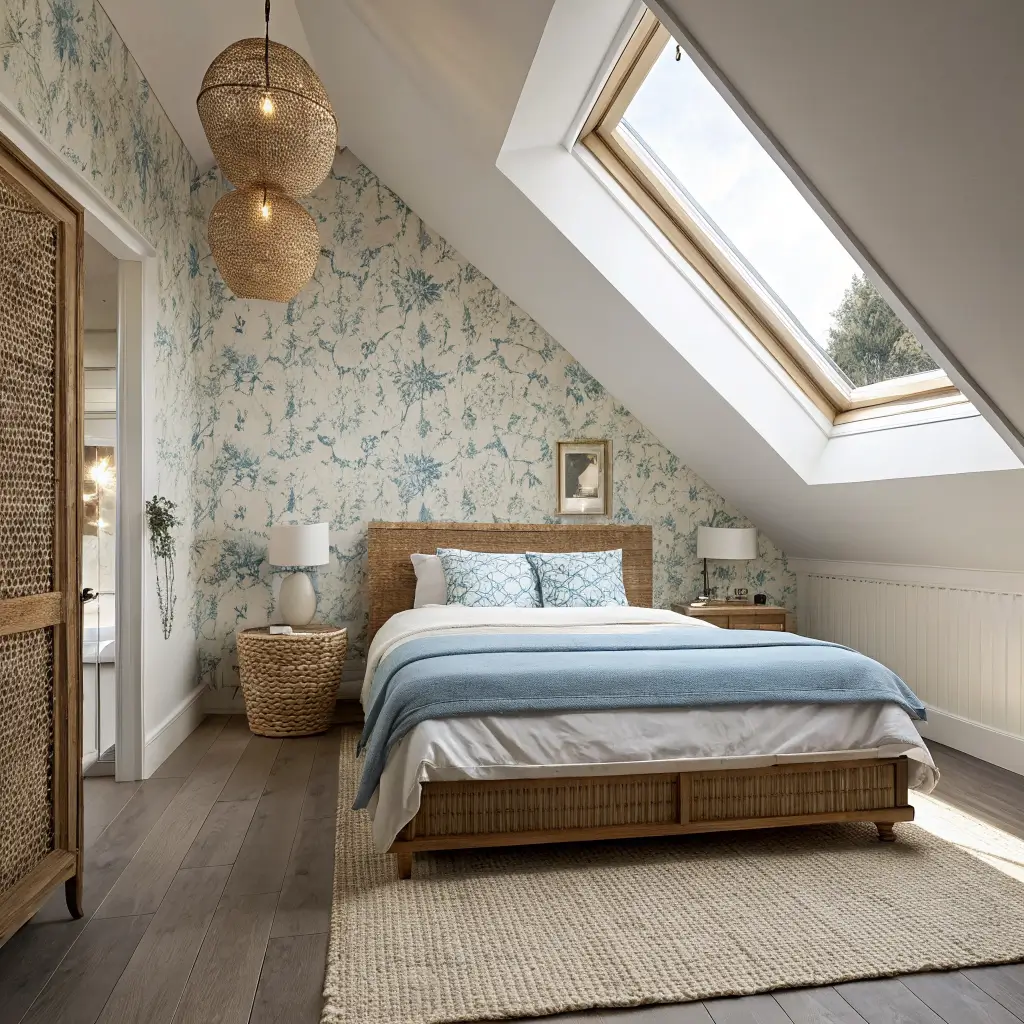
Boho + coastal: Linen bedding in cream, light oak nightstand, one woven wall piece, pale blue accent pillow. No shells. Please, no shells.
Minimalist + cozy: Ivory base, one deep-toned accent wall behind the bed, chunky knit throw, matte black sconces.
Modern + traditional: Simple platform bed, patterned wallpaper (small-scale floral or geometric), an upholstered headboard, brass hardware.
The through-line: repeat two or three materials, keep the palette tight, and give the bed wall the main job. A small bedroom doesn’t need more — it needs less, chosen better.