How to Design a Vintage Modern Nursery That Feels Calm, Collected, and Actually Works for a Baby
The vintage modern nursery was the room I worried about most before the baby came. A refinished dresser and soft print did the work a theme set never would.
A vintage modern nursery is what I landed on after three attempts at decorating my daughter’s room — one that felt like a Pottery Barn catalog, one that leaned so hard into flea-market finds it looked like a dusty attic, and finally the version that stuck. If you want a baby’s room that looks personal and grown-up but still functions as a place where you’ll be changing diapers at 3 a.m., this is the style to steal.
Here’s exactly how I’d build it, what I’d spend money on, and where I messed up so you don’t have to.
What Vintage Modern Nursery Actually Means
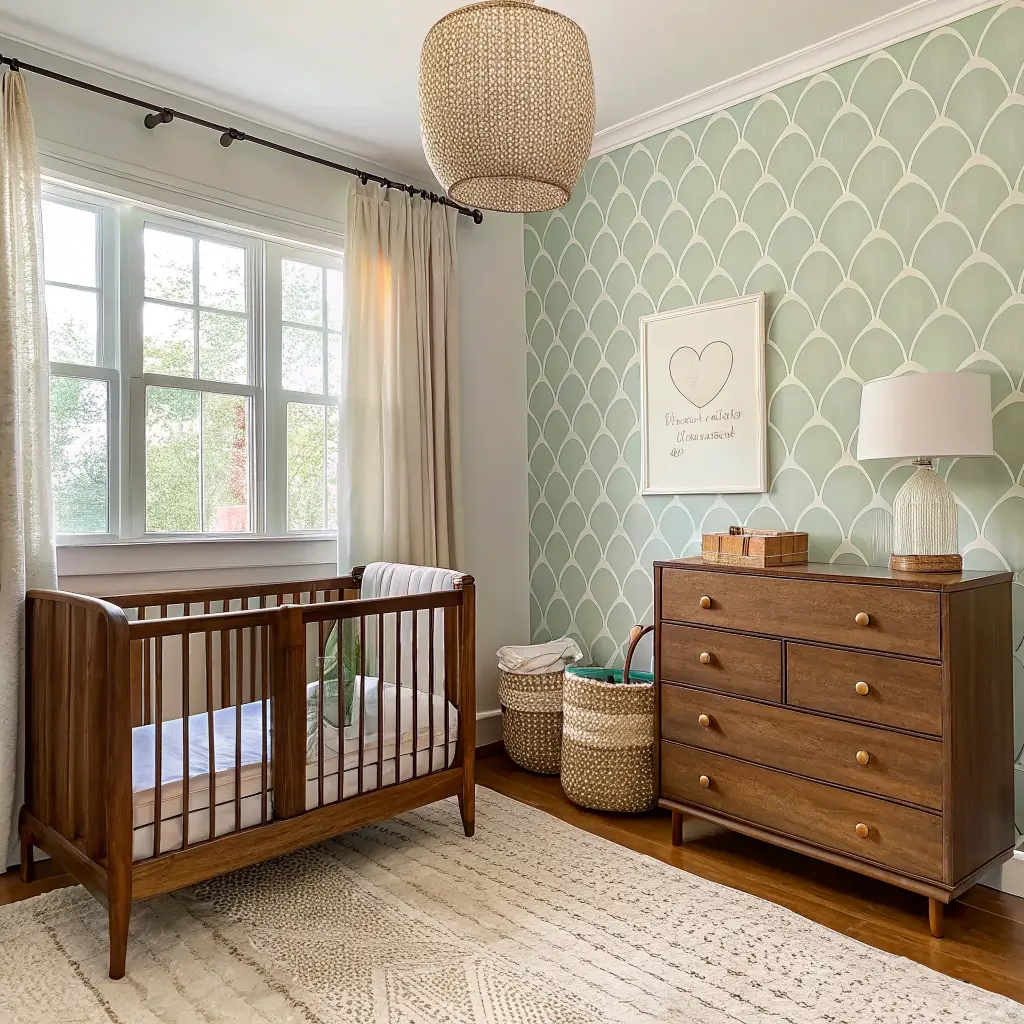
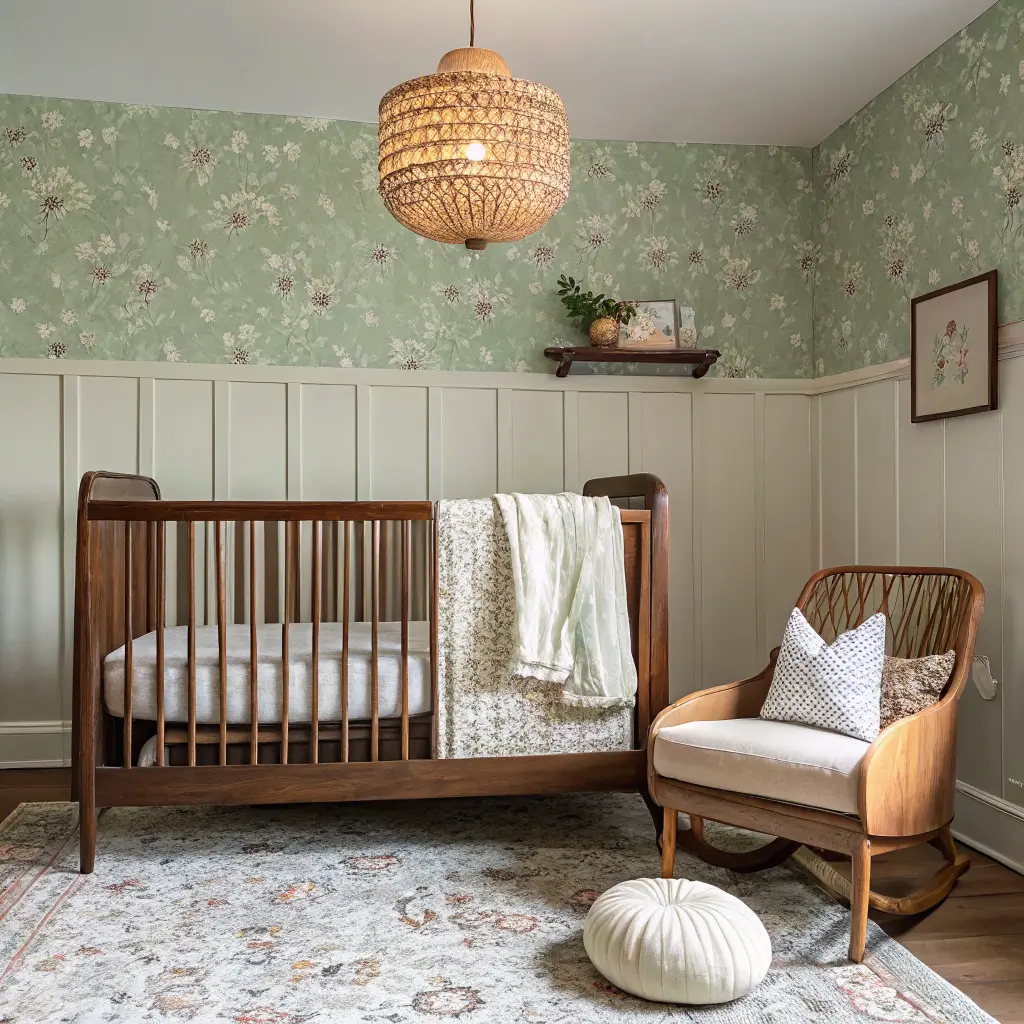
Think clean-lined modern furniture (especially the crib and dresser) softened with older, warmer, more personal decor: cane and wicker, a faded rug, brass lamp, gallery wall of framed keepsakes, maybe a little scalloped wallpaper behind the crib.
The modern half keeps it safe and functional. The vintage half keeps it from looking like every other nursery on Instagram.
Who this style is for: parents who want a room that doesn’t scream “baby,” that can grow into a toddler space without a full redo, and who like the idea of an heirloom quilt and their grandmother’s rocking chair mixed in with a new dresser.
Where it works: small nurseries (80–140 sq. ft. is the sweet spot), shared nursery/guest rooms, gender-neutral setups, and older homes with picture molding or alcoves you can lean into.
Time, Budget, and Skill Level
– Setup time: 1–3 weekends for a full room, 1–2 days if you already have the big furniture and just want to layer decor.
– Skill level: beginner for styling; intermediate if you’re wallpapering, refinishing a dresser, or hanging a balanced gallery wall.
– Realistic budget: $900–$4,500+ total.
Here’s how that breaks down in real numbers based on what I paid and what current pricing looks like:
– Crib: $200–$800 (buy new — more on this below)
– Dresser or dresser-changer: $180–$900
– Glider or accent chair: $250–$1,200
– Rug: $120–$500
– Wallpaper or paint treatment: $50–$600 in materials
– Lighting, textiles, art, vintage accents: $100–$500
You can absolutely land on the low end if you thrift the chair, dresser, art, and rug — the crib is the only line item I’d protect.
The Color Palette That Keeps It From Looking Like a Thrift Store
The single biggest mistake I made the first time was chasing every vintage-looking thing I liked, in every color it happened to come in. The room looked chaotic.
Pick three to five colors, max, and let texture do the rest of the work.
Combinations that work:
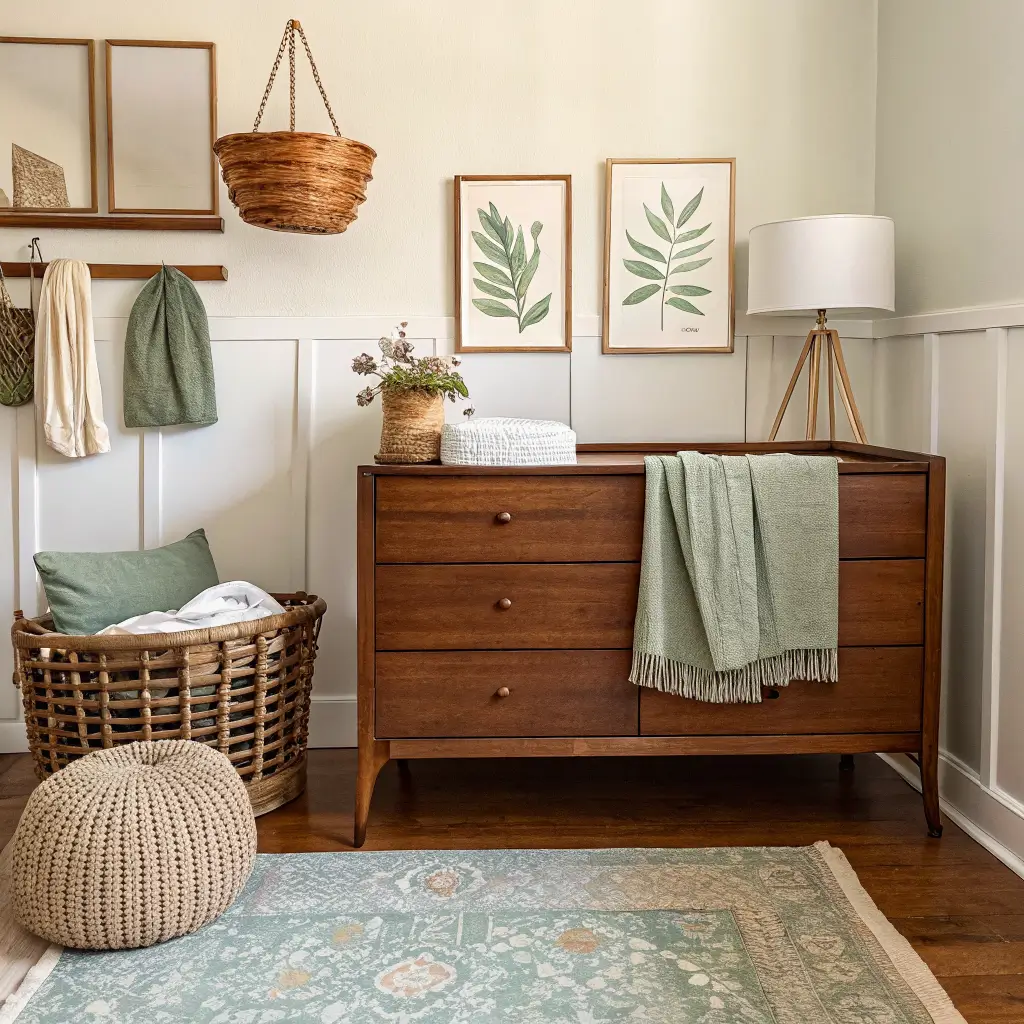
– Cream + walnut + sage green
– Antique white + black + warm oak
– Dusty blue + cream + brass
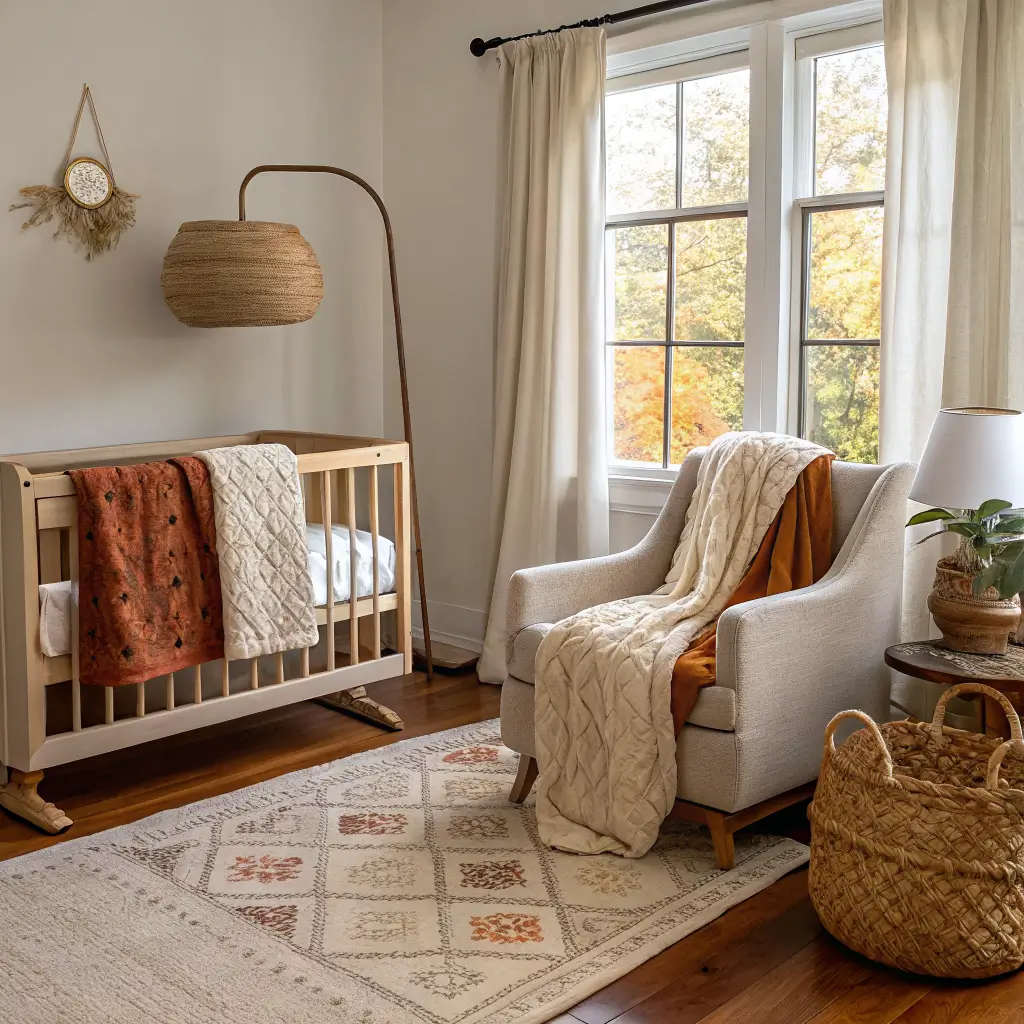
– Rust + sand + soft ivory
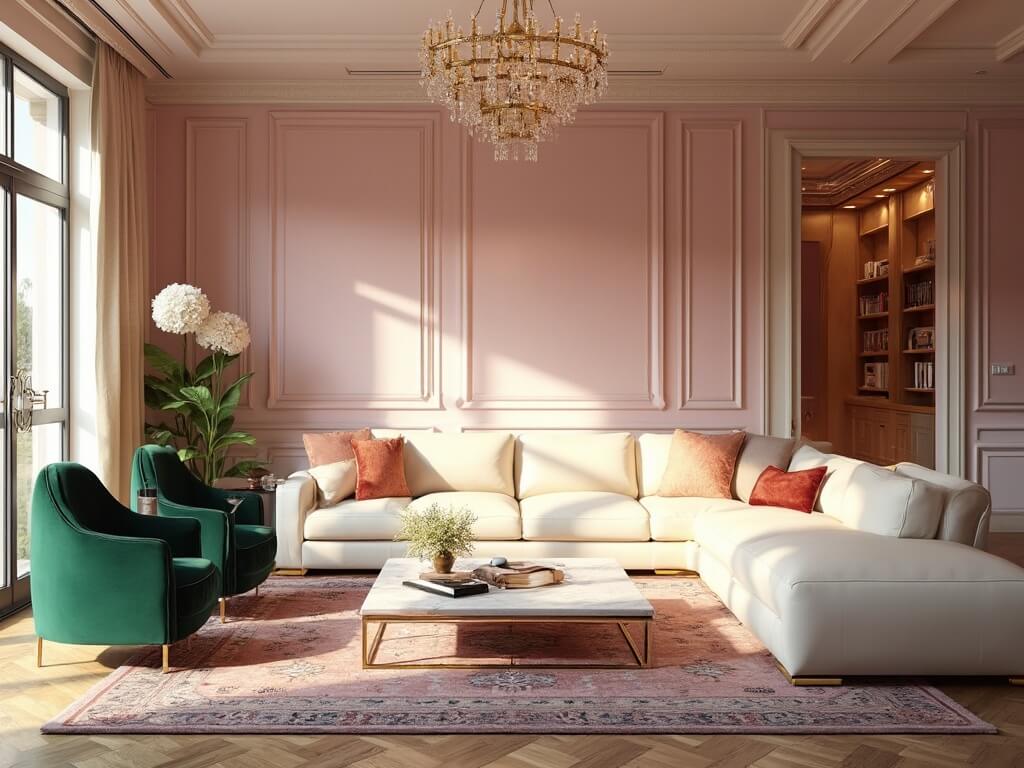
– Muted mauve + cream + aged wood
Materials to repeat across the room: natural wood (walnut, oak, ash), cane, rattan, linen, cotton muslin, brass, and one or two aged metal accents.
Rule of thumb I use: if I’m about to add a fourth color, I swap it in as a textile instead — a linen curtain, a nubby throw, a woven basket — not another paint color or wall accent.
The Pieces That Actually Make the Look Work
1. A safe, new crib with vintage-inspired lines
This is non-negotiable. Antique cribs don’t meet current safety standards — slat spacing, drop-side hardware, lead paint risk, all of it. Buy new, but buy one with spindles, curves, or a slightly heritage silhouette. Namesake, Million Dollar Baby, and Babyletto all have models that read vintage.
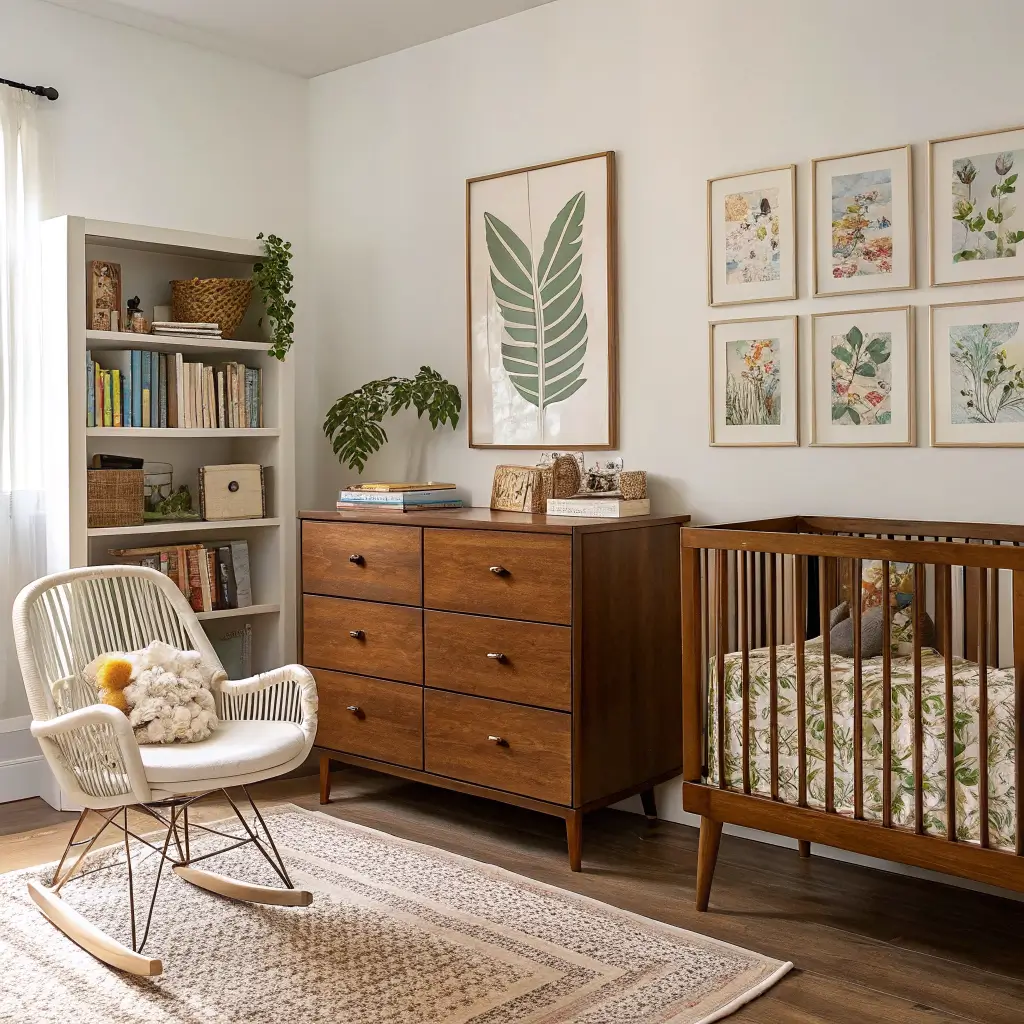
2. A mid-century-style dresser that doubles as a changing table
Walnut, oak, or painted in a soft neutral. Tapered legs. This is the anchor piece and it’s what I’d spend the most on after the crib, because it stays with the kid until college.
I found ours secondhand for $220, replaced the knobs with small brass pulls ($4 each), and screwed a changing pad tray to the top. It looks like a $900 piece.
3. Statement lighting
Overhead lighting is the single fastest way to add vintage character. Skip the flush-mount builder light. Options:
– A petite chandelier (skip crystal, look for milk glass or brass)
– A scalloped fabric pendant
– A globe pendant in opal glass
– A small brass sconce next to the glider for feeding
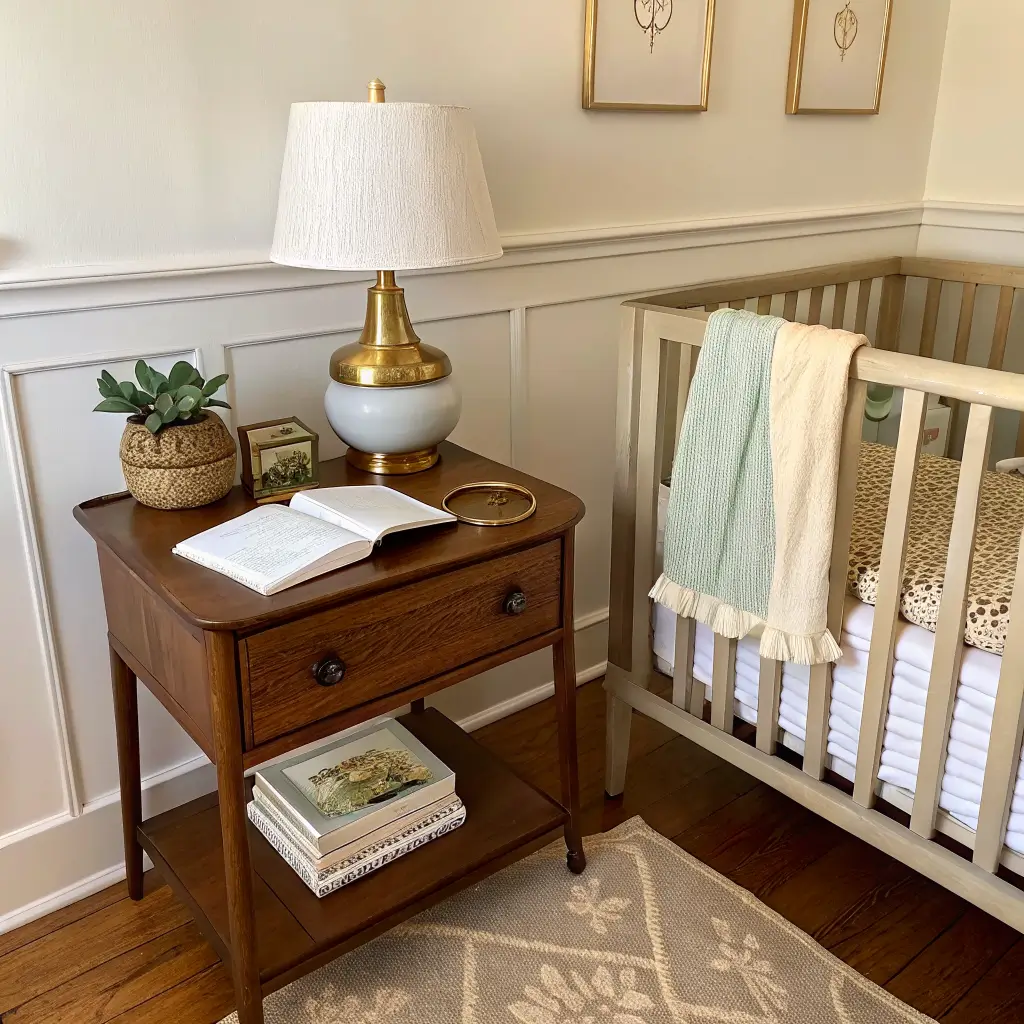
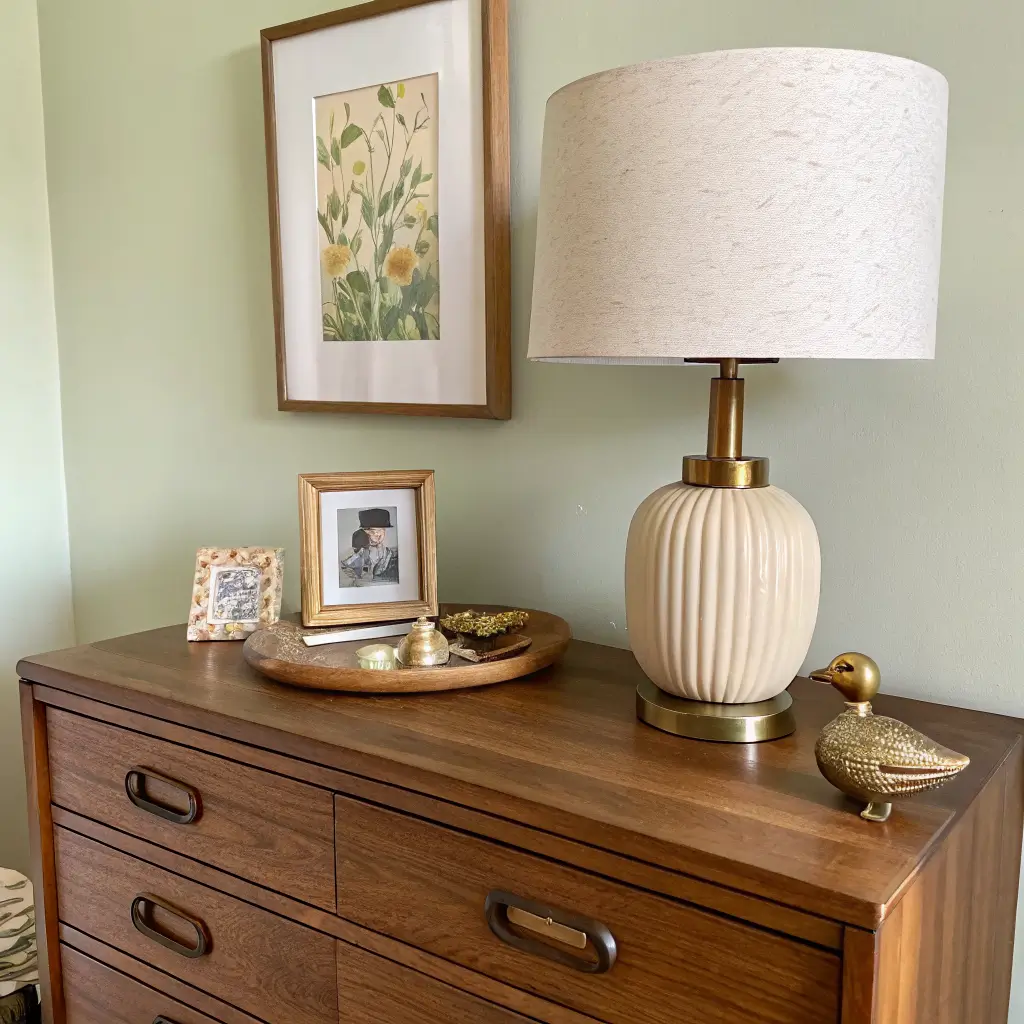
– A ceramic or brass table lamp on the dresser
I put a scalloped linen pendant over the crib and a warm-bulb brass lamp on the dresser. Together they do more for the room than the wallpaper did.
4. A vintage-style rug
Faded, low-contrast, muted pattern. A washed-out Turkish or a soft medallion in cream and rust. Machine-washable versions from Ruggable or Lorena Canals run $150–$400 and hide spit-up beautifully.
5. A gallery wall
This is where the room becomes yours. Mix:
– One or two family photos in older frames
– A small vintage children’s book cover, framed
– An alphabet print or hand-lettered art
– A pressed flower or needlepoint
– One larger piece as an anchor
Frame tip: mix wood tones and thin metal, but keep the mats consistent (all off-white or all cream) so it reads intentional.
6. One or two real vintage pieces
Not five. One wicker toy chest, or a small caned chair, or a weathered wooden step stool. These carry the whole vintage feeling of the room without turning it into an antique shop.
My favorite piece in the room is a $12 wicker doll’s crib I found at an estate sale. It holds stuffed animals. That’s it. But it’s the thing everyone comments on.
Layout: Where Everything Goes
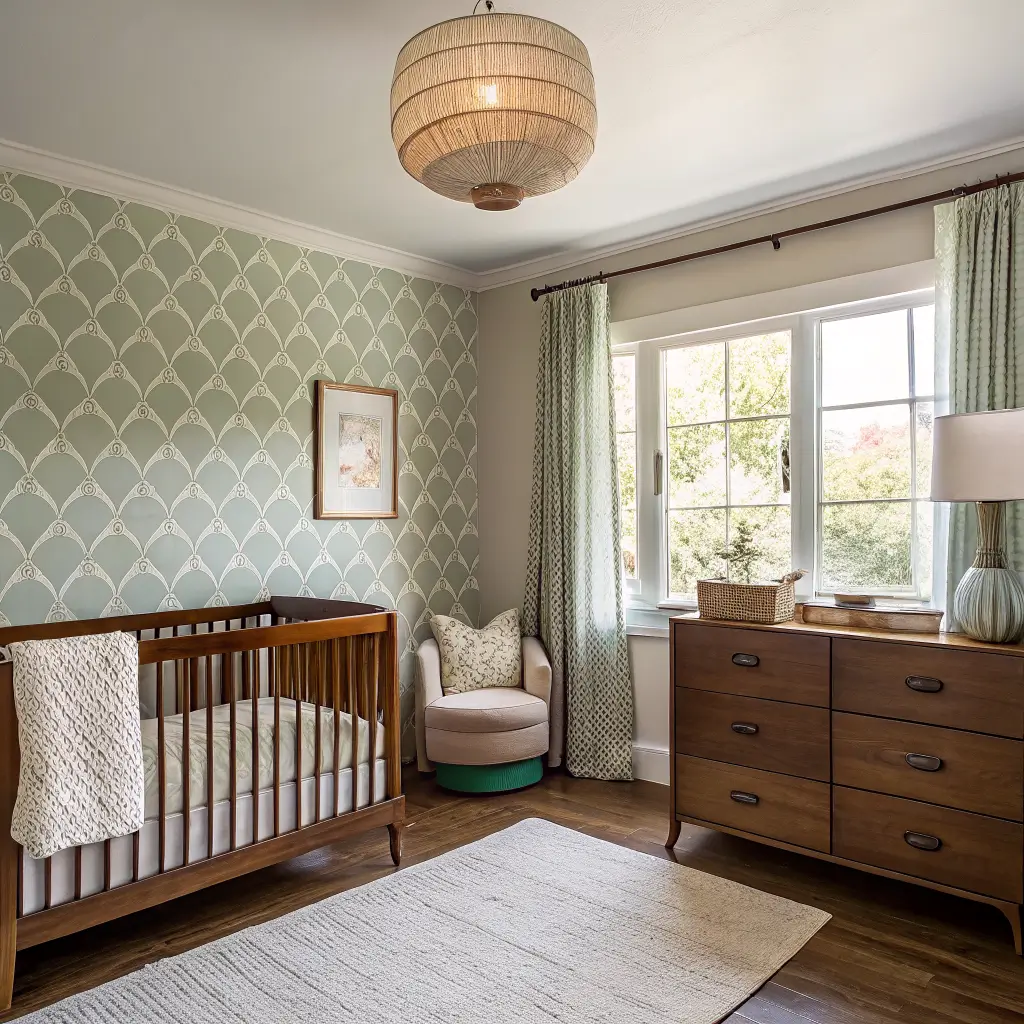
Start with the crib as your anchor. Put it on the wall opposite the door or on the feature wall so it’s the first thing you see when you walk in.
– Dresser/changing station on an adjacent wall, within a few steps of the crib
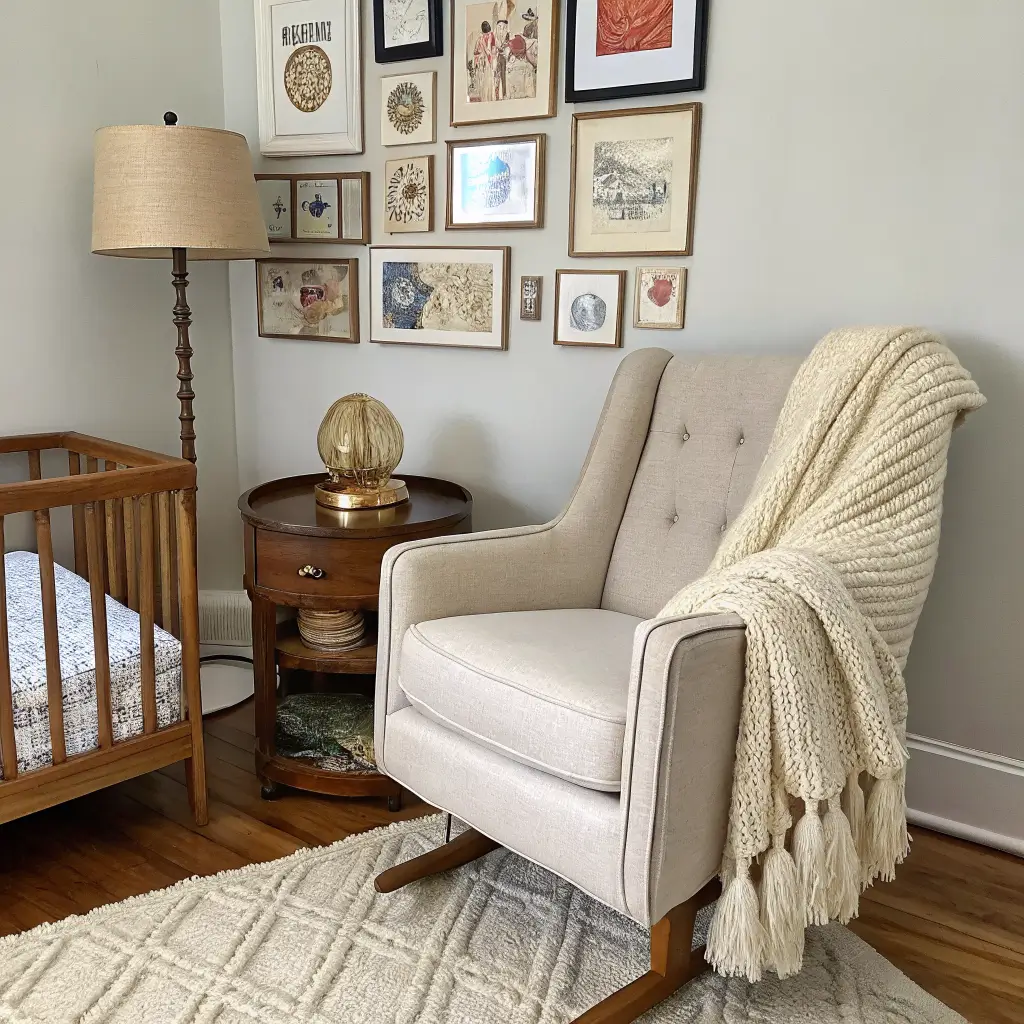
– Glider under a window or in the corner catty-corner from the crib, with a small side table and lamp
– Rug centered under the crib or floating between the crib and glider (at least a 5×8 for a small room, 8×10 if you have space)
– Gallery wall above the dresser or above the glider — never above the crib itself (things fall)
Measurement worth remembering: hang art so the center sits about 57 inches from the floor. For a gallery wall, treat the whole grouping as one piece and center that at 57 inches.
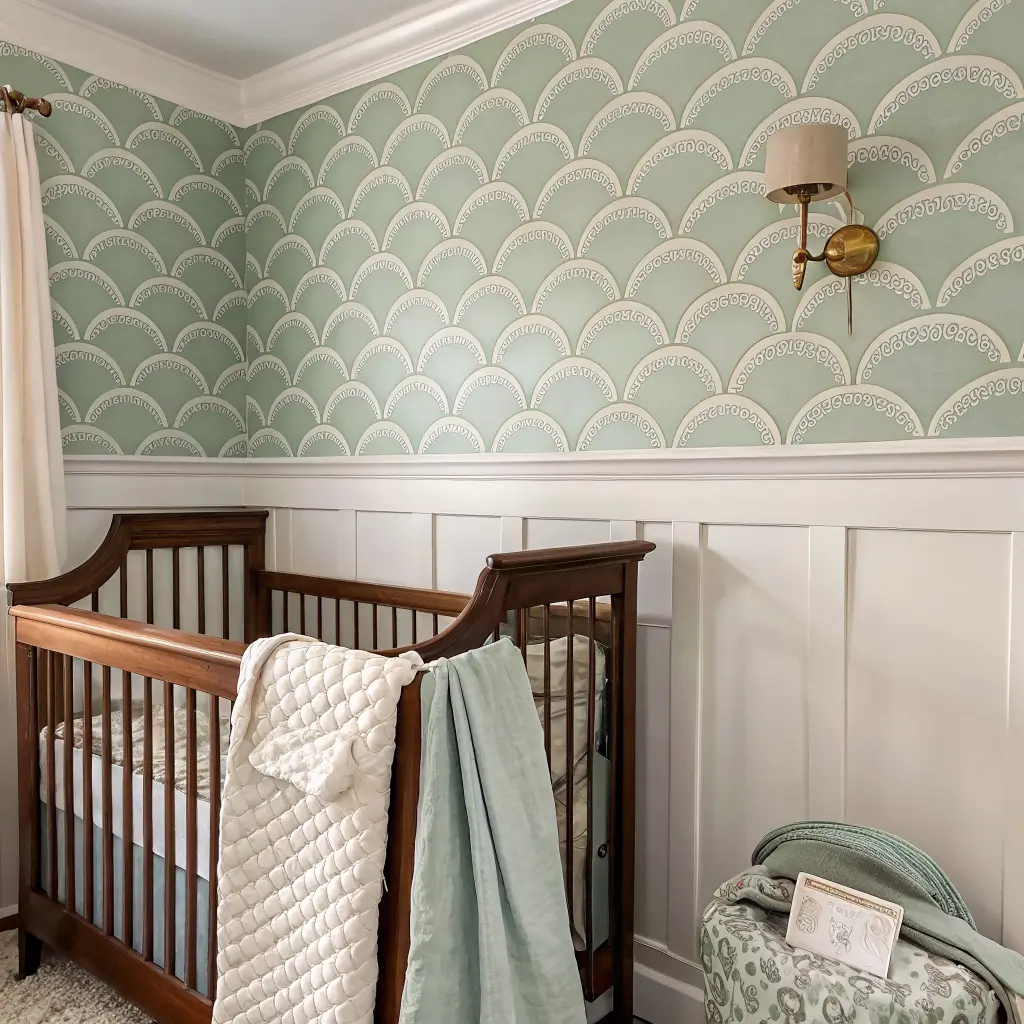
Wallpaper, Paint, and Wall Treatments
If you want one wall to do heavy lifting, wallpaper behind the crib is the move. Small-scale patterns work best:
– A tiny floral (think Rifle Paper Co. or a soft toile)
– Scalloped or arch motifs
– Petite geometrics in muted tones
– A subtle stripe in cream and clay
Peel-and-stick is genuinely fine for a nursery and runs about $50–$150 for a single accent wall. I used a scalloped peel-and-stick behind the crib for $89 and it took two hours.
If wallpaper feels like too much, try limewash paint on one wall, or paint the lower two-thirds of the walls in a soft color with picture rail molding at the break. Both add architectural warmth for under $100.
Where to Spend and Where to Save
Spend on:
– The crib (new, always)
– The dresser (it lasts 18 years)
– The glider (your back will thank you at 2 a.m.)
– Good overhead lighting
Save on:
– Rug (washable synthetic, no one will know)
– Art and frames (thrifted, HomeGoods, Etsy digital downloads)
– Baskets and storage (IKEA, Target)
– Vintage accents (estate sales, Facebook Marketplace, your grandmother’s basement)
– Wallpaper (peel-and-stick, single accent wall)
Common Mistakes I See (and Made)
Using an actual antique crib. Beautiful, unsafe, don’t do it. Use vintage pieces for storage, seating, or decor — not for sleep furniture.
Mixing too many eras. Pick one main era (usually mid-century) and one supporting influence (Art Deco lighting, or French provincial textiles, or boho baskets). Not all four.
Too dark, too heavy. Vintage tones + low light + lots of wood = a room that feels closed in. Keep at least one large surface (walls, rug, or curtains) in a light neutral, and use warm-bulb lighting, not just one overhead.
Pattern overload. One large-scale print, one small-scale print, and the rest solids. If your wallpaper is busy, your rug is quiet. If your rug is patterned, your walls stay calm.
Forgetting function. Cute is not enough. You need: a place to keep 60+ diapers within arm’s reach, a covered hamper, drawers that actually open with one hand, and a light you can turn on without waking the baby. Design around those first.
Cluttered surfaces. On the dresser, I keep exactly four things: a lamp, a small framed photo, a ceramic dish for pacifiers, and one heirloom object (a wooden duck that was my dad’s). Everything else lives in drawers or lidded baskets.
Easy Seasonal Swaps
Change the textiles, not the furniture:
– Spring/summer: muslin curtains, a lightweight cotton crib skirt, a woven cotton throw on the glider
– Fall/winter: heavier linen or wool curtains, a chunky knit throw, a quilted blanket layered on the chair
– Holiday: one small wreath on the door, a single garland along the picture rail — nothing else
For a budget refresh, swap out lampshades, add a new small print to the gallery wall, or repaint the dresser hardware. A $20 pack of brass knobs changed the whole feeling of mine.
Making It Gender-Neutral
The vintage modern palette is already doing most of the work here. Stick to warm neutrals, sage, dusty blue, rust, cream, and walnut. Skip anything cartoon-branded. Choose art with animals, botanicals, alphabets, or abstract shapes rather than gendered themes. A caned chair, a brass lamp, and a faded rug don’t code as anything except nice room.
Growing the Room With Your Kid
Because none of the anchor pieces are baby-specific, the room ages up easily. When the crib comes out, the dresser, glider, rug, lighting, and gallery wall all stay. Swap the crib for a low twin bed with a simple wooden frame, add a small desk, and you’ve got a toddler room without buying anything new except the bed.
That’s the whole reason I chose this style. Three years in, my daughter’s room has changed maybe 15%, and it still looks like the room I set up before she was born. Just with more books on the shelves and a stuffed rabbit permanently living in the wicker chair.