Wabi-Sabi Interior Design: How to Build a Calm, Imperfect, Lived-In Home
The wabi sabi interior is less about style than about leaving the wear where it lands. I stopped hiding the scuffed table and the room finally relaxed.
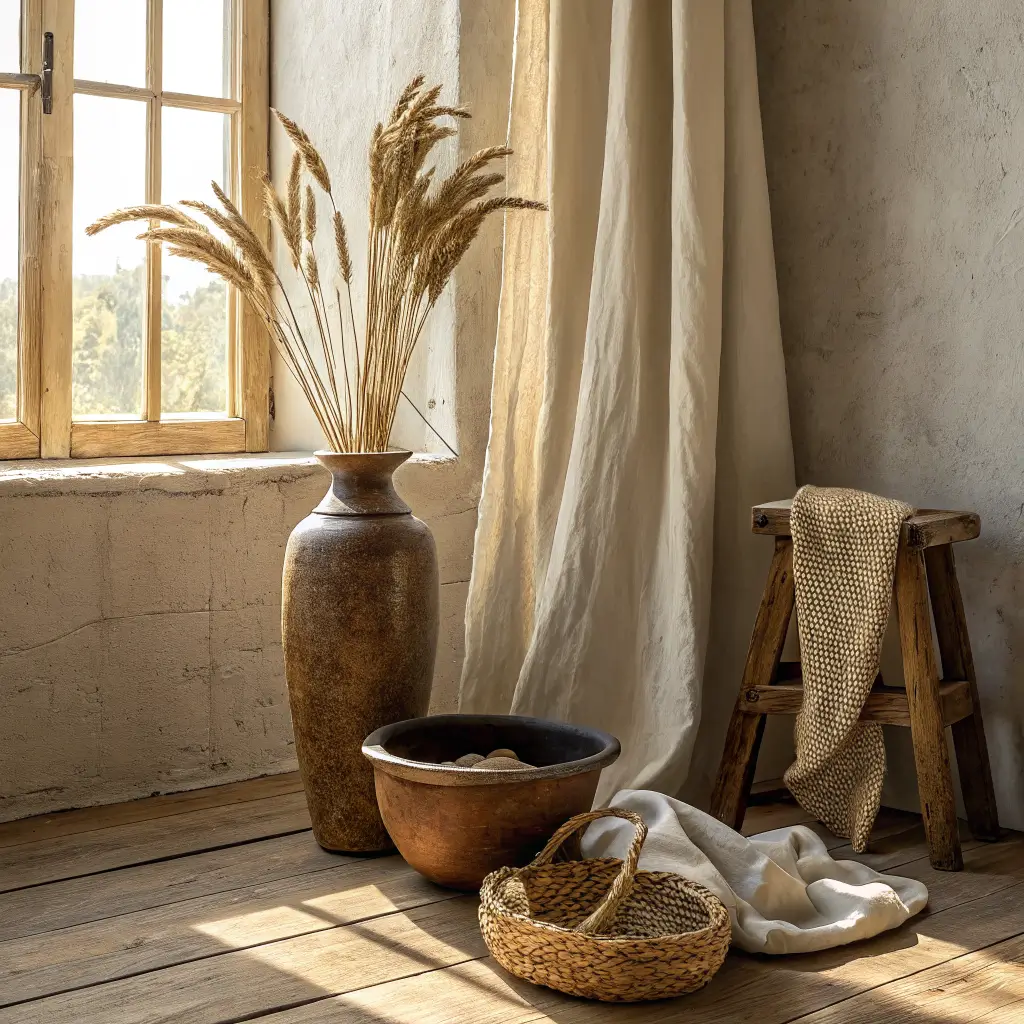
Wabi-sabi interior design is what I reach for when a room feels too new, too matched, too staged — and I want it to breathe. It’s the Japanese-rooted idea that beauty lives in imperfect, aged, handmade things: the chipped rim of a mug, a plaster wall that isn’t quite flat, a linen curtain that wrinkles the second you hang it. Done right, it feels like a room that has always been there. Done wrong, it looks like a sad minimalist showroom with one dead branch in a vase.
Here’s how I actually put it together.
What Wabi-Sabi Looks Like (and Who It’s For)
At its core, this is Japanese-inspired natural minimalism — quiet, tactile, uncluttered, and built around raw materials. It shares DNA with Japandi (wabi-sabi warmth + Scandinavian clean lines) and rustic minimalism, but it leans more earthy and hand-touched than either.
It suits you if:
– You’re tired of matching furniture sets and glossy finishes.
– You’d rather own five things you love than fifty things you tolerate.
– You like the idea of a room that ages better, not worse.
– You don’t need every surface styled to within an inch of its life.
Where it shines: living rooms, bedrooms, bathrooms, dining nooks, and small reading corners. Because the whole aesthetic rests on restraint, small and mid-sized rooms often photograph and feel better than sprawling open plans.
Time and cost, roughly:
– Styling refresh with textiles, ceramics, lighting: 1–3 days, $250–$800
– Mid-range room redo with a wood table, linen upholstery, textured walls: 1–3 weeks, $1,500–$5,000
– Full plaster, custom furniture, artisan pieces: $8,000–$20,000+
Skill level runs beginner to intermediate for styling. If you’re doing your own limewash or refinishing a wood piece, bump that to intermediate-plus.
The Color Palette I Keep Coming Back To
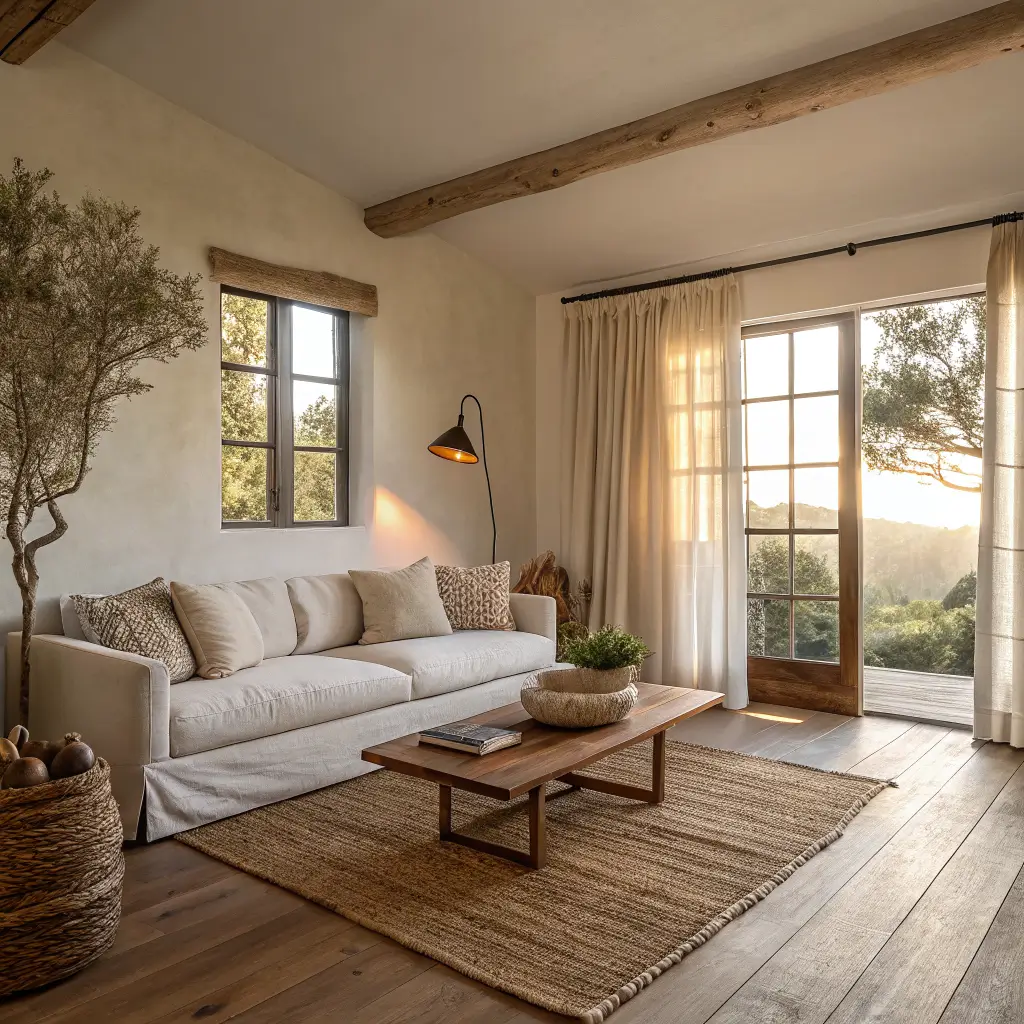
Wabi-sabi colors are muted, warm, and pulled straight from soil, stone, and sky on an overcast day. My working palette:
– Warm whites (never bright cool white — think unbleached linen)
– Sand, oat, taupe, mushroom
– Stone gray and warm greige
– Muted brown, clay, terracotta
– Olive, sage, smoky blue
– Dusty pink as an occasional accent
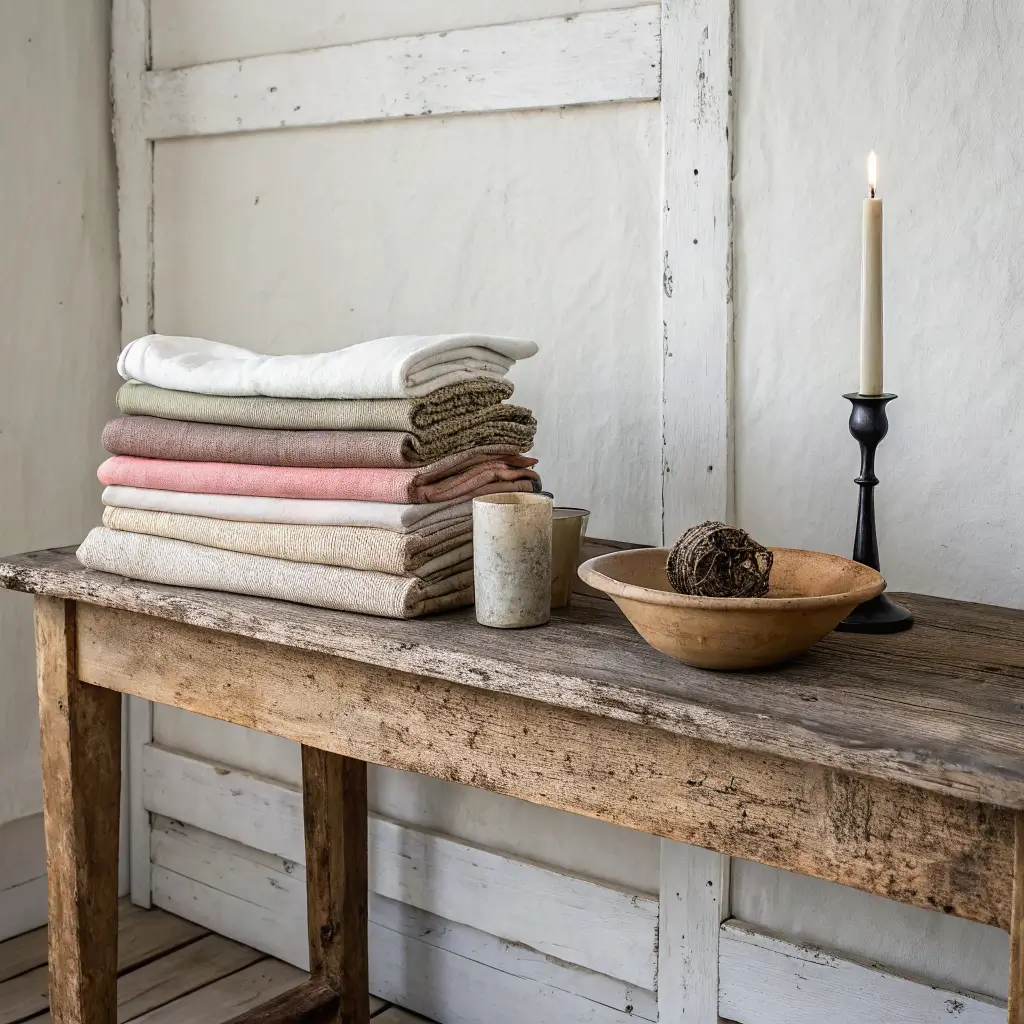
Charcoal, deep espresso, or ink black shows up only as a grounding note — the base of a lamp, an iron candlestick, a single dark ceramic. Never as a main color story.
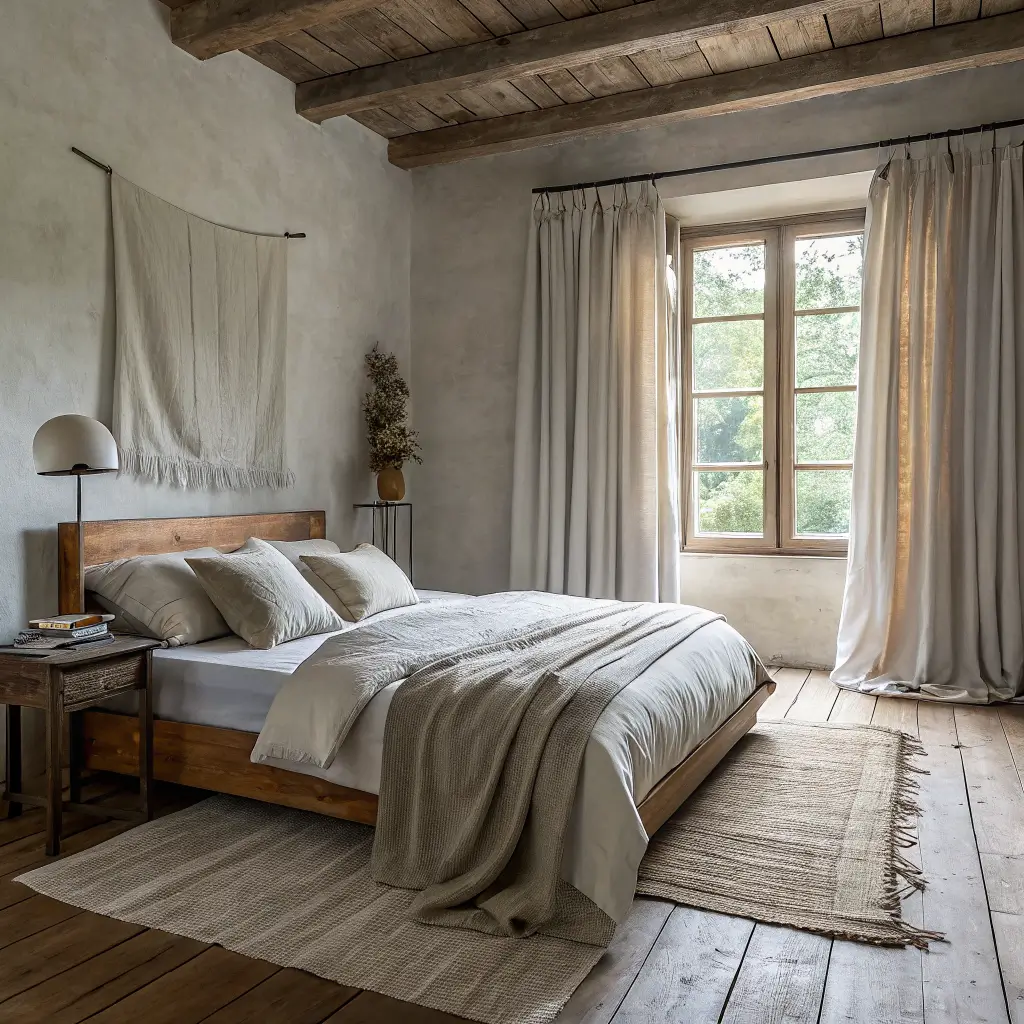
The paint call that matters most: use a dead-flat or matte finish. Eggshell reads too plastic for this style. If you can swing it, limewash on at least one wall — I did the wall behind my bed in a warm off-white limewash and the shifting, cloudy texture does more work than any piece of art would have.
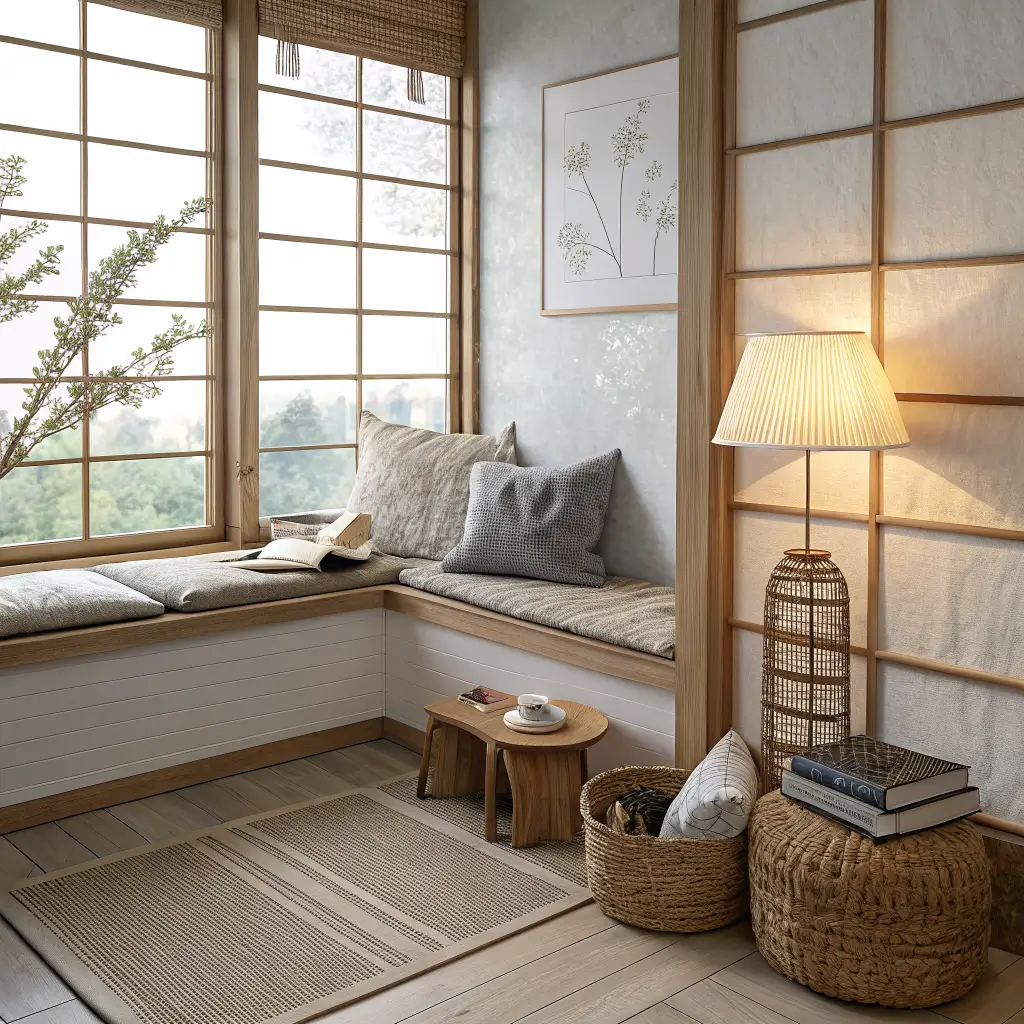
The Pieces That Actually Build the Look
Hero furniture
Start with one or two big anchors in raw or lightly finished wood with visible grain, knots, or a live edge:
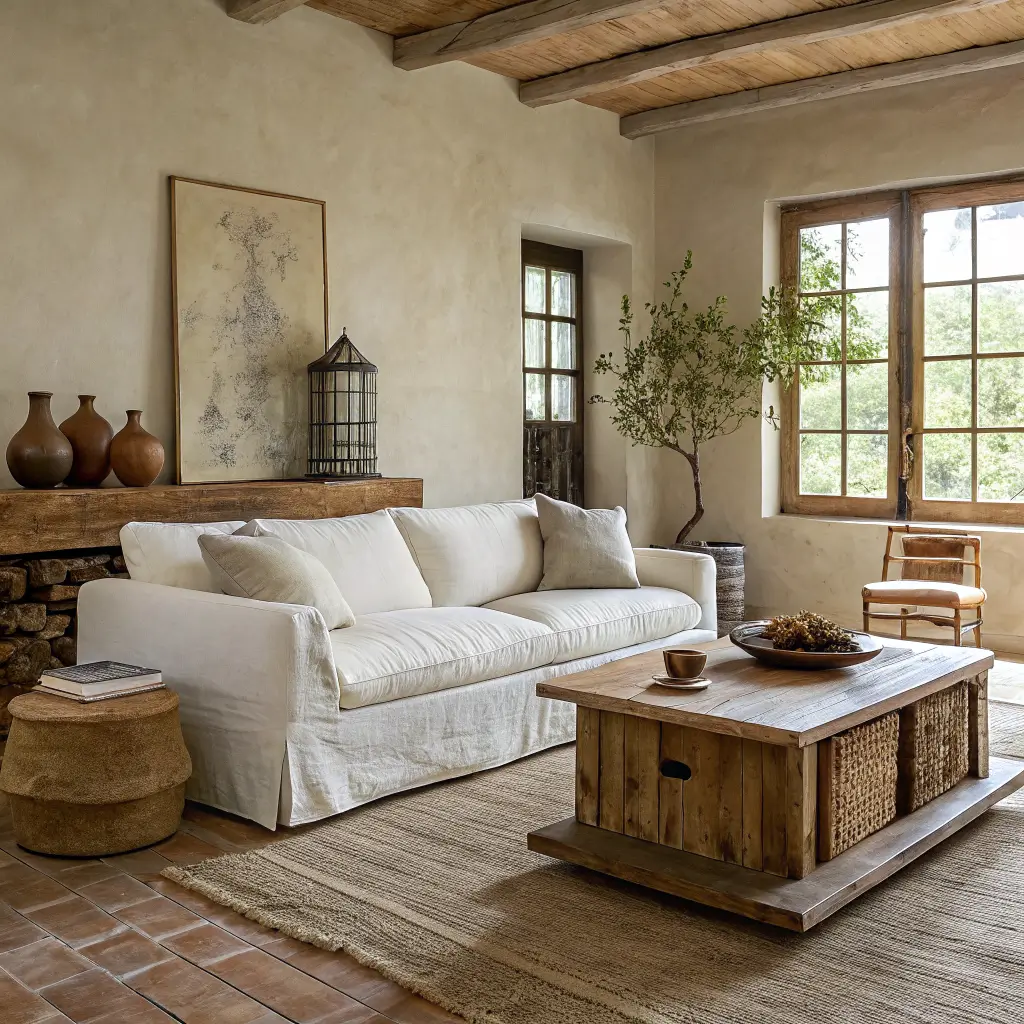
– A low-profile sofa in oatmeal or flax linen (I have a slipcovered one and I wash the covers twice a year — it looks better every time)
– A live-edge coffee table or a chunky oak block
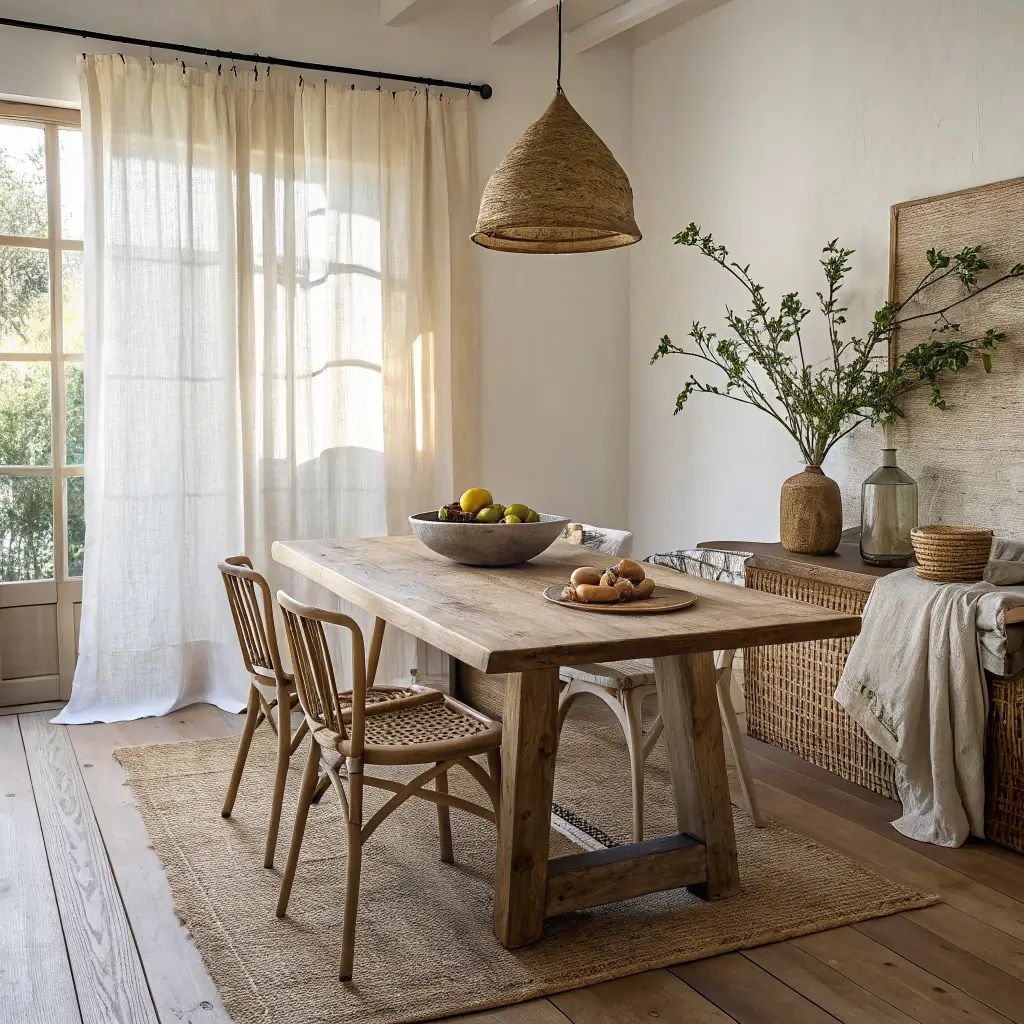
– A simple ash or oak dining table with a soap or oil finish, not lacquer
– A weathered sideboard or slatted bench
Skip anything with high-gloss veneer, chrome legs, or hardware that screams for attention.
Complementary decor
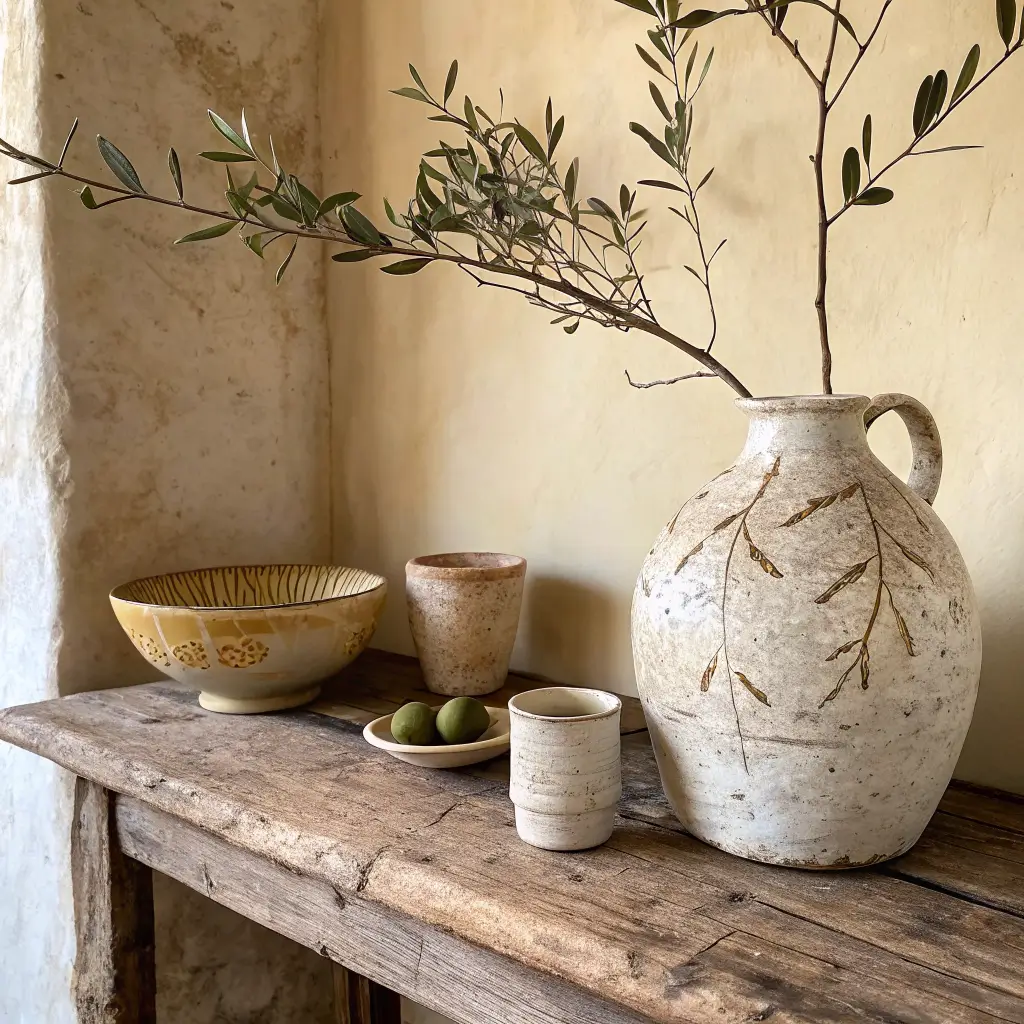
– Hand-thrown ceramic vases (uneven shoulders, thumbprints in the clay — good)
– Stone or wood bowls
– Woven baskets in seagrass, jute, or rattan
– Linen slipcovers, washed cotton bedding, nubby throws
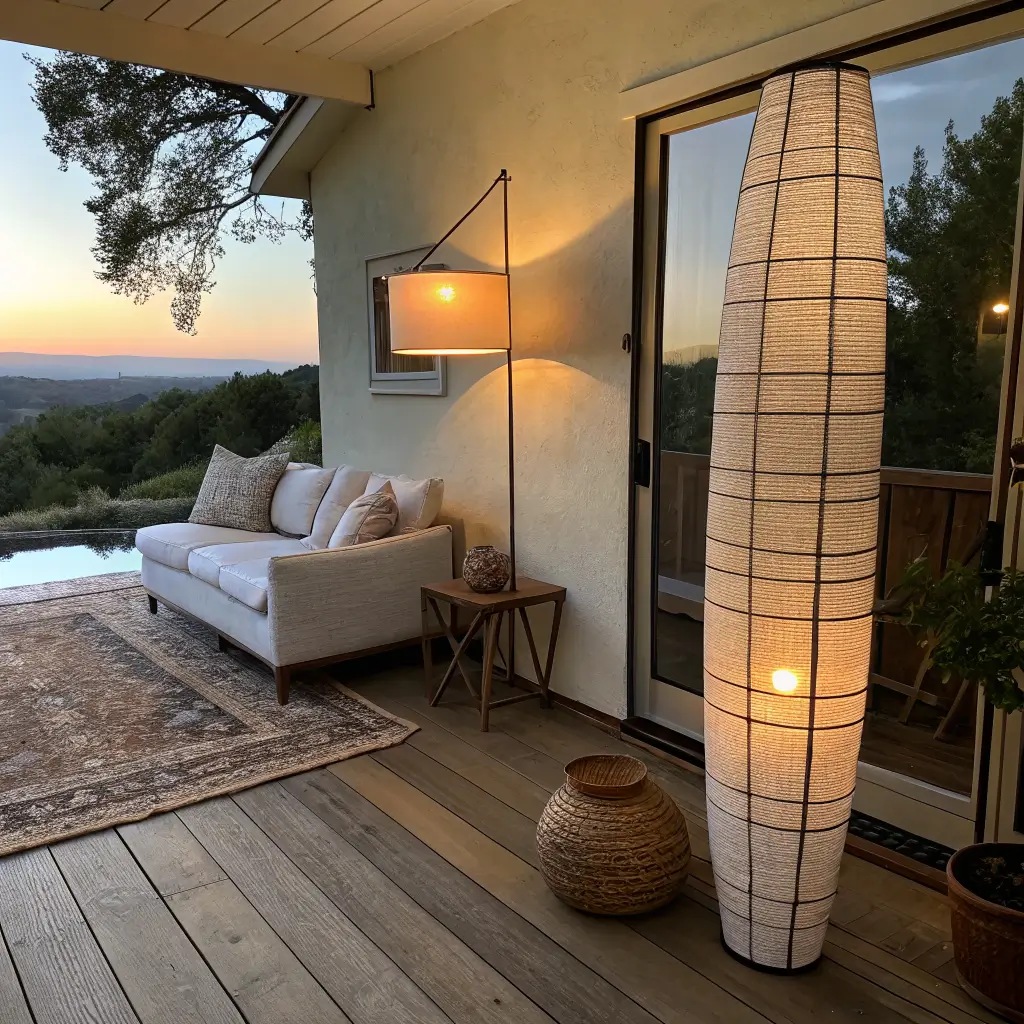
– Paper lanterns (Noguchi-style if budget allows, IKEA Regolit if not — the $5 one genuinely works here)
– Framed neutral prints or a single raw-edge canvas
Signature accessories
This is where wabi-sabi separates itself from generic beige minimalism:
– Kintsugi-style ceramics — pieces mended with gold-colored seams
– Crackled-glaze pottery
– Slightly wonky stoneware cups you’d actually drink from
– A branch arrangement (olive, magnolia, curly willow) in a heavy vessel
– Dried grasses — pampas is played out; try wheat, oat, or bunny tail
– One sculptural object given real space around it
Rule of thumb I use: if I can’t imagine the object breaking and being more beautiful for it, it doesn’t belong here.
How to Actually Put a Room Together
Build from the floor up, in this order:
1. Rug — a low-pile wool, jute, or vintage Turkish flatweave in cream, oat, or faded clay
2. Furniture — the wood and upholstery anchors
3. Lighting — paper, linen, ceramic, or aged brass; warm bulbs only (2700K or lower)
4. Wall treatment — limewash, plaster, or matte paint
5. Textiles — curtains, throws, cushions
6. Small objects, last and sparingly
A few working principles I’ve learned by getting them wrong first:
Layer textures, not stuff. Linen against wood against clay against wool reads as rich even with very few objects in the room. My first attempt at this style had the right palette but everything was smooth cotton and painted MDF — it looked flat and cheap. Swapping in a slubby linen throw and one raw wood stool fixed more than any additional decor would have.
Use asymmetry on purpose. No matching lamp pairs flanking the sofa. No perfectly centered vignettes. Offset one object, let another sit alone.
Keep contrast soft. The eye should drift, not snap between hot spots.
One quiet focal point per room. A textured wall. A live-edge table. A single 24-inch ceramic vessel on the floor. Not all three.
Let empty surfaces stay empty. A bare console isn’t unfinished. It’s the point.
Lighting: The Detail Most People Skip
Wabi-sabi dies under harsh overhead light. What works:
– Paper pendant lamps (rice paper, washi)
– Linen drum shades on floor and table lamps
– Ceramic table lamps with visible throwing lines
– Aged brass or blackened iron sconces
– Warm bulbs — 2200K to 2700K, dimmable if possible
I have three lamps in my living room and one overhead pendant I almost never turn on. That’s the ratio.
Where to Spend and Where to Save
Spend on:
– The sofa (linen upholstery is worth it; scratchy synthetics ruin the whole thing)
– One good wood piece with real character
– Wall treatment if you’re doing plaster or limewash
– One or two artisan ceramics you’ll keep forever
Save on:
– Baskets (thrift, HomeGoods, IKEA)
– Dried stems and branches (forage them)
– Paper lanterns
– Smaller ceramics — estate sales and Goodwill are full of them
– Rugs, if you’re patient with Facebook Marketplace
My favorite piece in my house cost $4: a squat, off-round stoneware bowl from a church rummage sale with a hairline crack along the rim. It sits on my dining table and holds seasonal branches. A West Elm version would run $80 and look worse.
Common Mistakes (I’ve Made Most of Them)
– Over-minimalizing. Empty and cold is not the same as calm and lived-in. If a room feels like a dentist’s waiting area, add wood, wool, and something handmade.
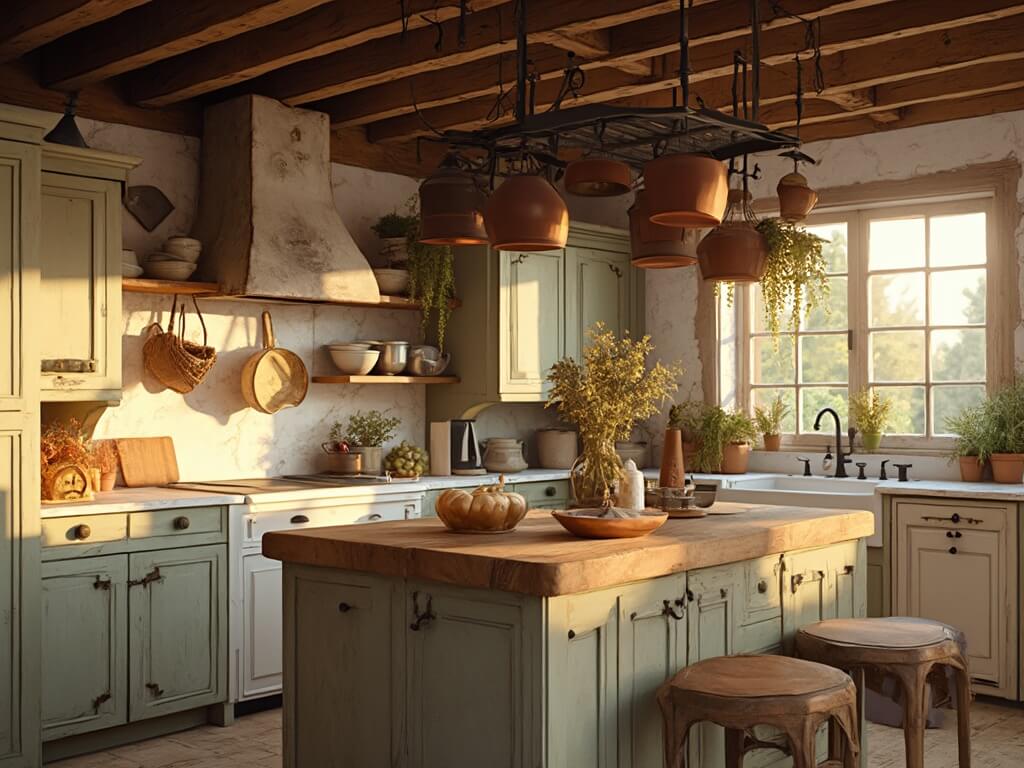
– Piling on distressed pieces. Ten “rustic” items in one room reads as staged farmhouse, not wabi-sabi. Edit ruthlessly.
– Glossy finishes anywhere. Satin paint, lacquered wood, polished chrome — all wrong. Matte, oiled, brushed, raw.
– Too many colors. If you’re reaching for a fifth tone, stop. Layer more of what’s already there.
– Forcing symmetry. Matching nightstands with matching lamps and matching art above them will fight this style every time. Break the pair.
– Fake imperfection. Mass-produced “distressed” furniture with sprayed-on wear looks worse than a clean modern piece. Real age or nothing.
Seasonal Tweaks Without Redoing the Room
The whole point of this style is that it doesn’t chase trends, so seasonal updates should be tiny:
– Spring/summer: olive or cherry branches in water, fresh reeds, lighter linen bedding, a single stem of something wild
– Fall/winter: heavier wool throws, darker ceramics on display, umber and clay accents, dried wheat or oat stems
– Any time: rotate one or two objects in and out; store the rest
Wabi-Sabi in Different Rooms
Living room: low sofa, live-edge or block coffee table, one large floor vessel, paper floor lamp, wool rug, linen curtains puddled slightly.
Bedroom: low platform bed in oak or walnut, washed linen bedding in oat or clay, one piece of art (or none — try a limewash wall instead), ceramic lamp with a warm bulb.
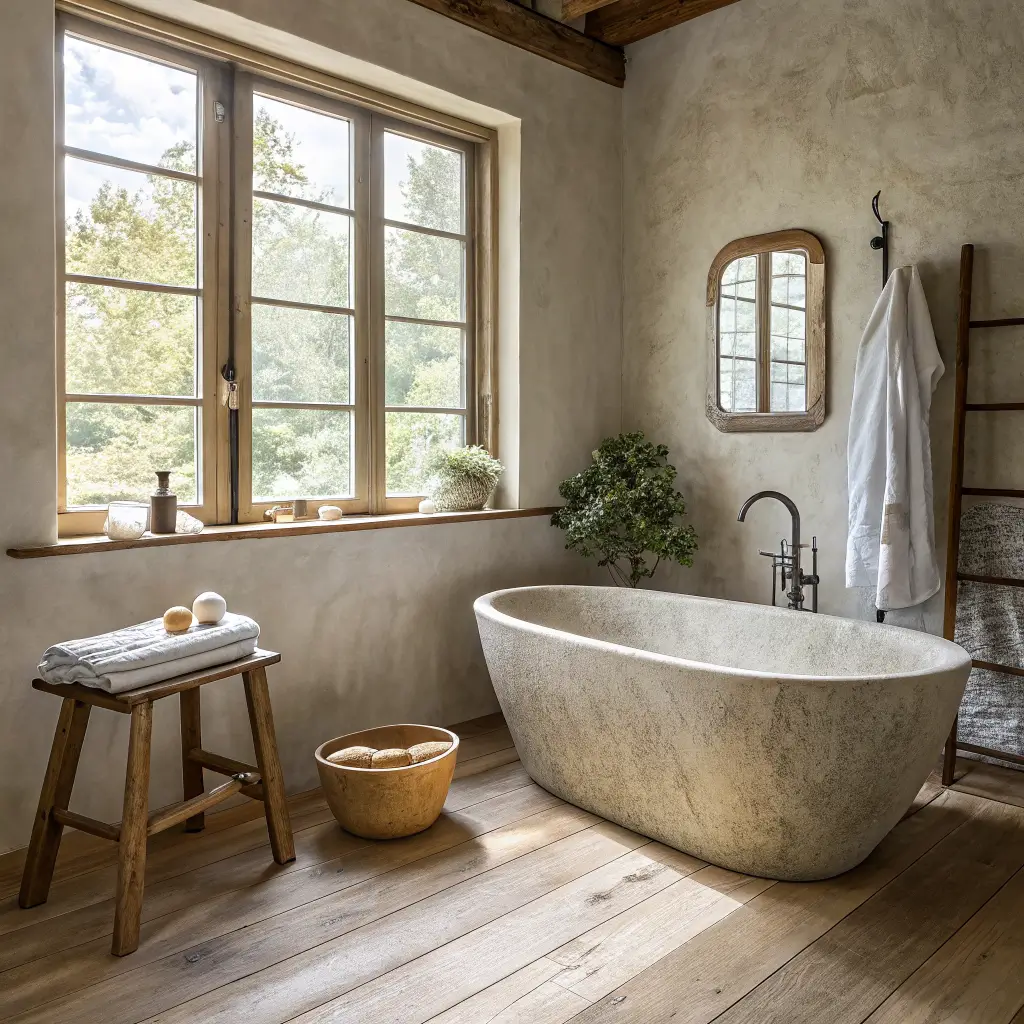
Bathroom: matte black or aged brass fixtures, a wood stool beside the tub, stone soap dish, waffle linen towels in mushroom or sand, a single trailing plant.
Dining: simple wood table, mismatched wood or rush-seat chairs, one long low centerpiece — a wood board with a stoneware bowl and a couple of pears works.
Blending Wabi-Sabi With What You Already Have
You don’t need to gut your house. Some low-effort moves that shift a room toward wabi-sabi without a full redo:
– Swap out throw pillows for washed linen covers in oat and clay
– Replace one overhead bulb with a warm-toned dimmable one
– Add a single hand-thrown ceramic to a shelf and remove three other objects
– Drape a nubby wool throw over a modern sofa
– Put a wood cutting board or stone bowl on your kitchen counter and hide the appliances
– Bring in one big branch in a heavy vase on the floor
If your existing style leans modern or Scandinavian, you’re basically doing Japandi already — just add more texture, more clay, and let a few edges stay rough. If it leans coastal, bleach some woods, keep the sandy neutrals, and drop the nautical accents.
The test I use before adding anything new: would this object look better in five years than it does today? If yes, it belongs. If it’ll just look tired, skip it. That single question has saved me from more bad purchases than any style guide ever did.