The Look and Who It’s For
The oak kitchen cabinets I almost painted are the ones I am glad I kept. A light scrub and new pulls made them read current without losing the grain.
Oak works if you want a kitchen that feels warm without going full farmhouse. The grain does most of the heavy lifting, which means you can keep everything else quiet and the room still has texture and interest.
It fits three main styles well:
– Modern organic, Scandi, and Japandi — usually white oak, slab or clean shaker doors, minimal hardware
– Modern farmhouse and rustic — natural oak with visible knots, shaker profiles, brass or black pulls
– Traditional and transitional — medium-tone oak, raised panel or detailed shaker, more layered accessorizing
Who should choose oak? People who like real wood and don’t want to repaint every five years when trends shift. Oak is dense, resists dents better than maple, and takes finish well. If you’re the type who’s going to fuss over a hairline scratch on a painted white cabinet, oak is a much more forgiving surface.
White Oak vs. Red Oak (This Matters More Than You Think)
This is the first decision, and it shapes everything else.
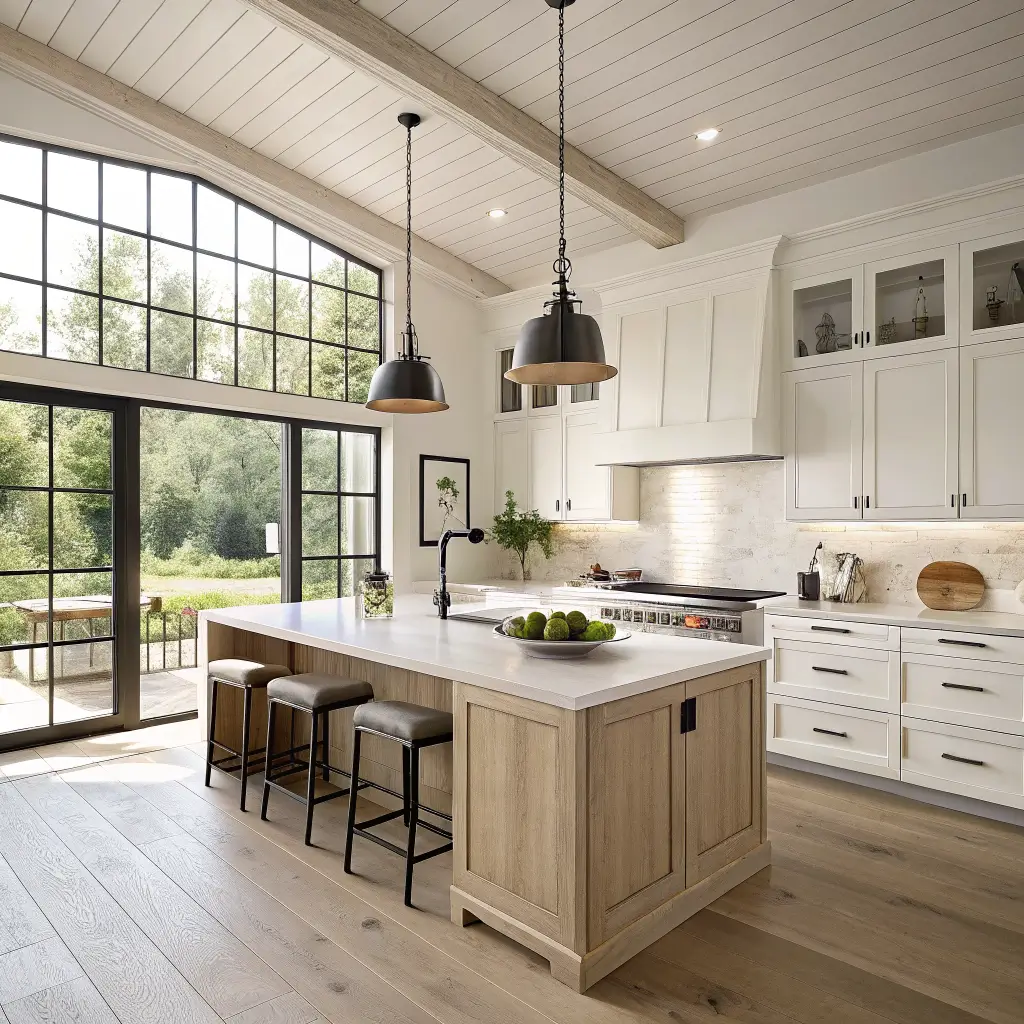
White oak is light tan to soft medium brown with a straighter, tighter grain. It photographs the way you want a kitchen to photograph — cool-neutral, calm, expensive-looking. Common finishes: Natural, Sand, Wheat, Natural White Oak. It ages to a soft gold, not orange.
Red oak has pink-orange undertones and a wilder, more pronounced grain. It’s what most 90s cabinets were made from. Red oak isn’t bad — it’s just been finished badly for thirty years. With a desaturated stain or a whitewash, red oak can look great. Left with a builder-grade honey varnish, it will always read dated.
If you’re buying new, white oak is worth the small upcharge. If you already have red oak, you don’t need to replace it — you need to refinish it.
What It Costs
Real numbers for a standard 10×10 kitchen:
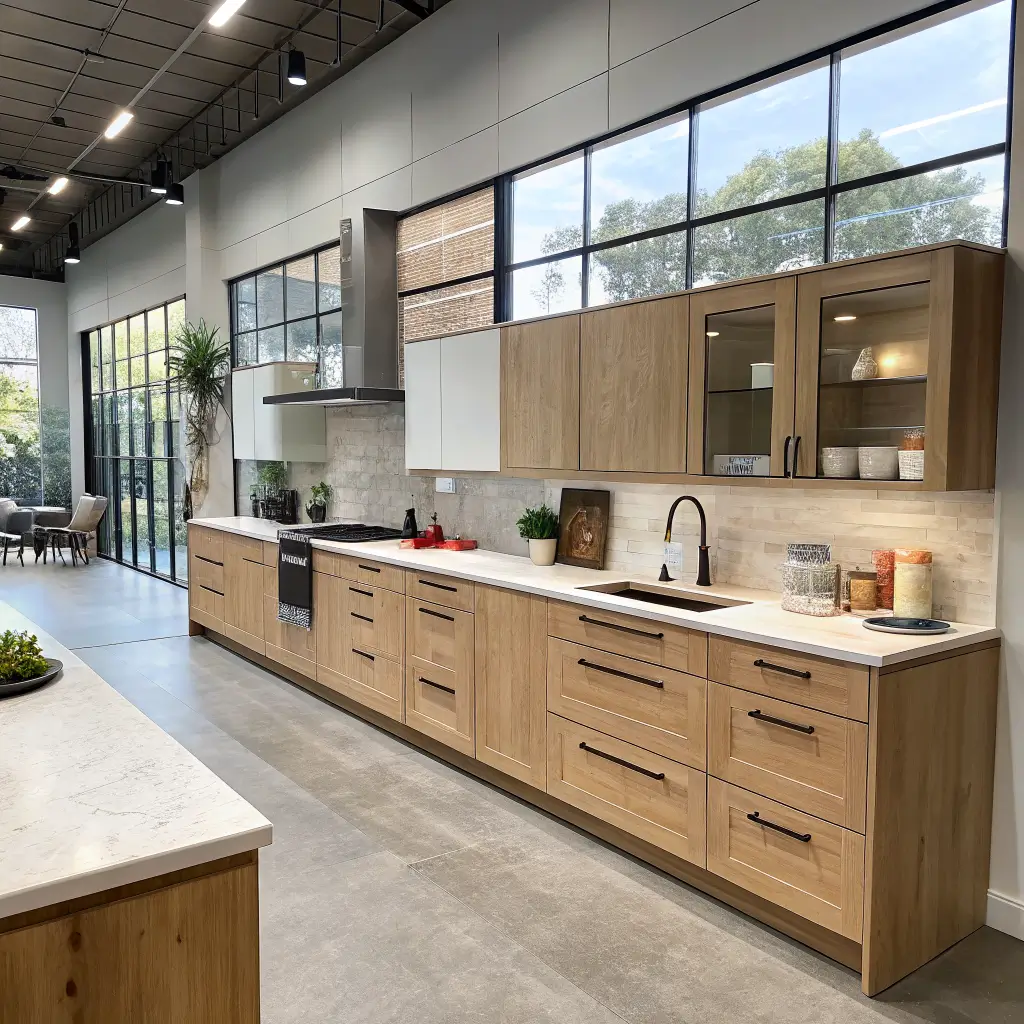
– Stock/ready-to-assemble oak: $1,500–$1,800
– Semi-custom oak (better finishes, more sizes, real organizers): $2,500–$7,000+
– Per linear foot: roughly $150–$400
– Oak vs. maple or cherry: oak runs about 20% less for a similar look
Add-ons that are worth it:
– Soft-close hinges and slides: $150–$400 for the whole kitchen. Non-negotiable in my book.
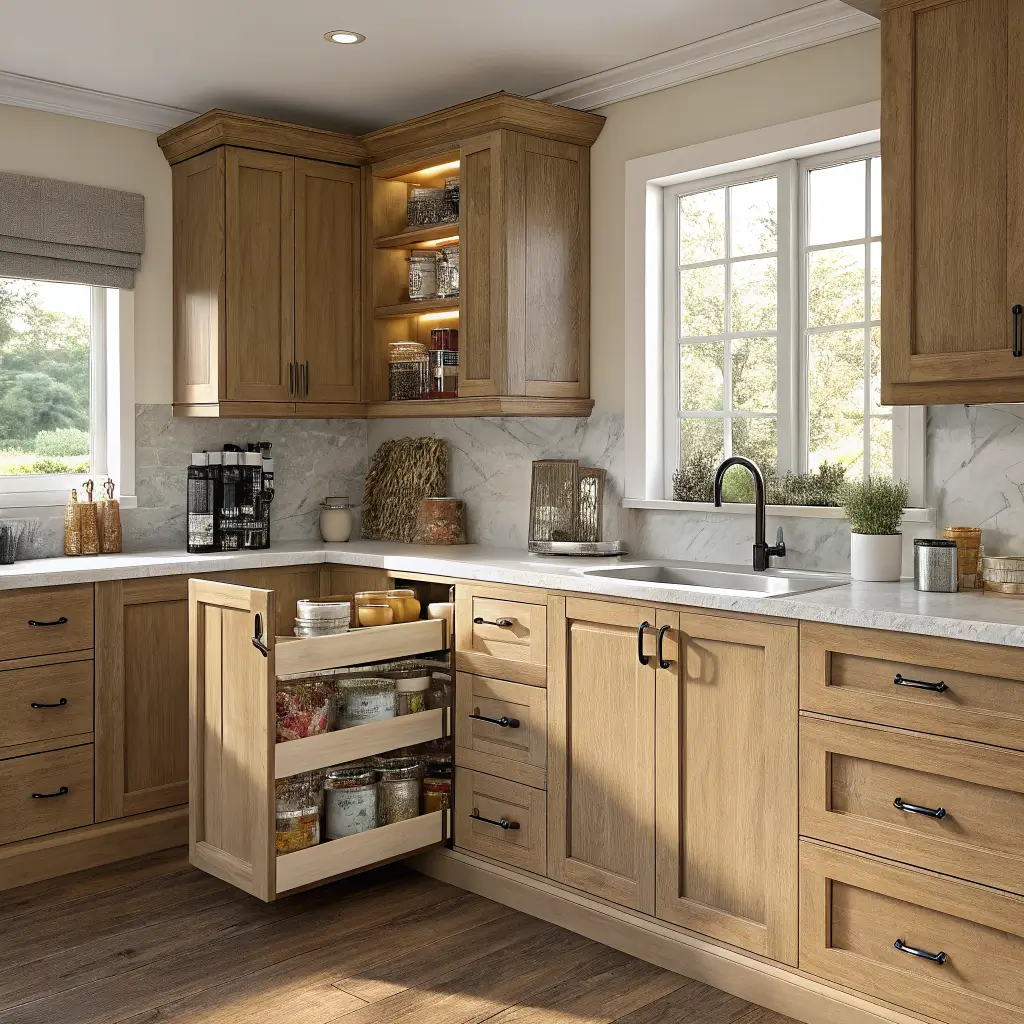
– Pull-out organizers: $100–$300 each. Do this for your trash/recycle cabinet and the deep corner if nothing else.
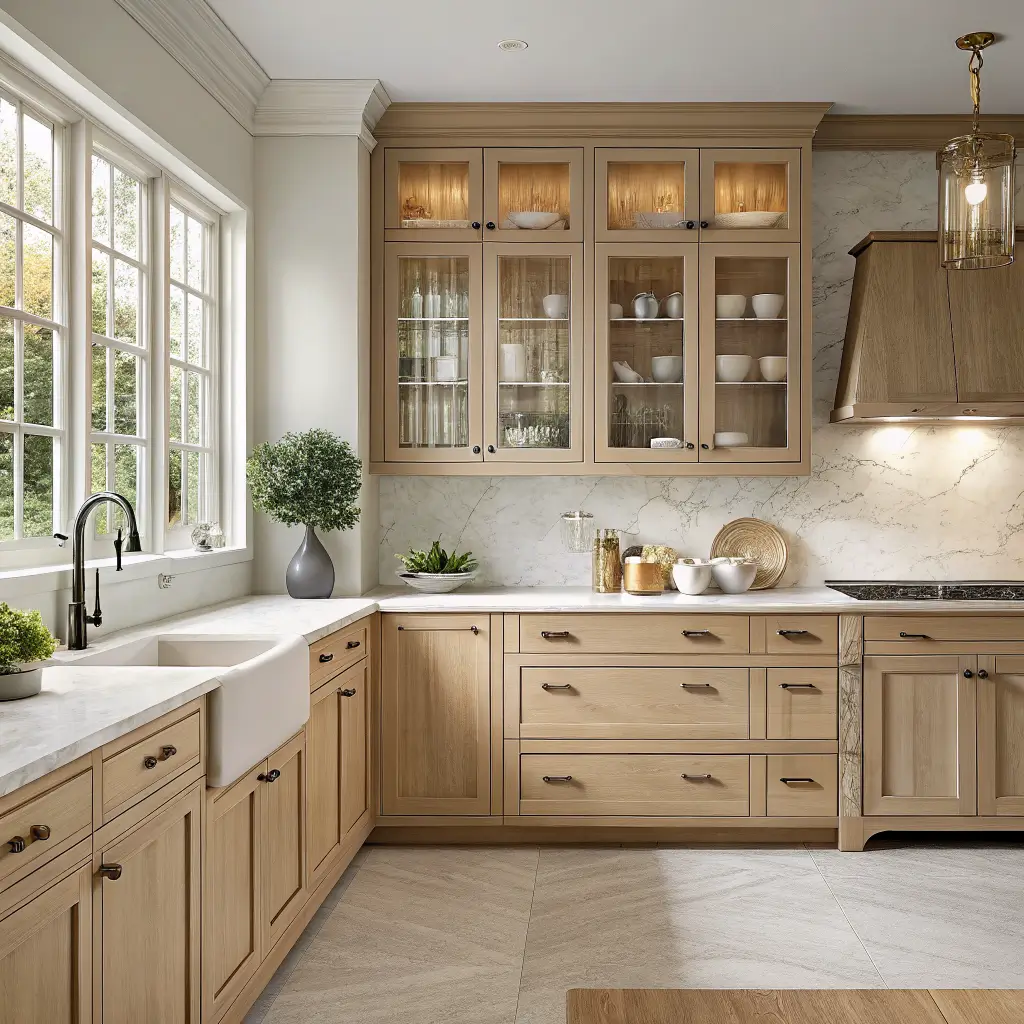
– Glass-front doors: $150–$300 per door. Use sparingly — one or two, not a whole wall.
If you’re not replacing cabinets, a refresh runs closer to $200–$800 depending on hardware, paint, and whether you’re refinishing or just restyling. I spent about $340 on my own refresh: new brass bar pulls, a quart of wall paint, and under-cabinet LED strips.
Ideal Space Size
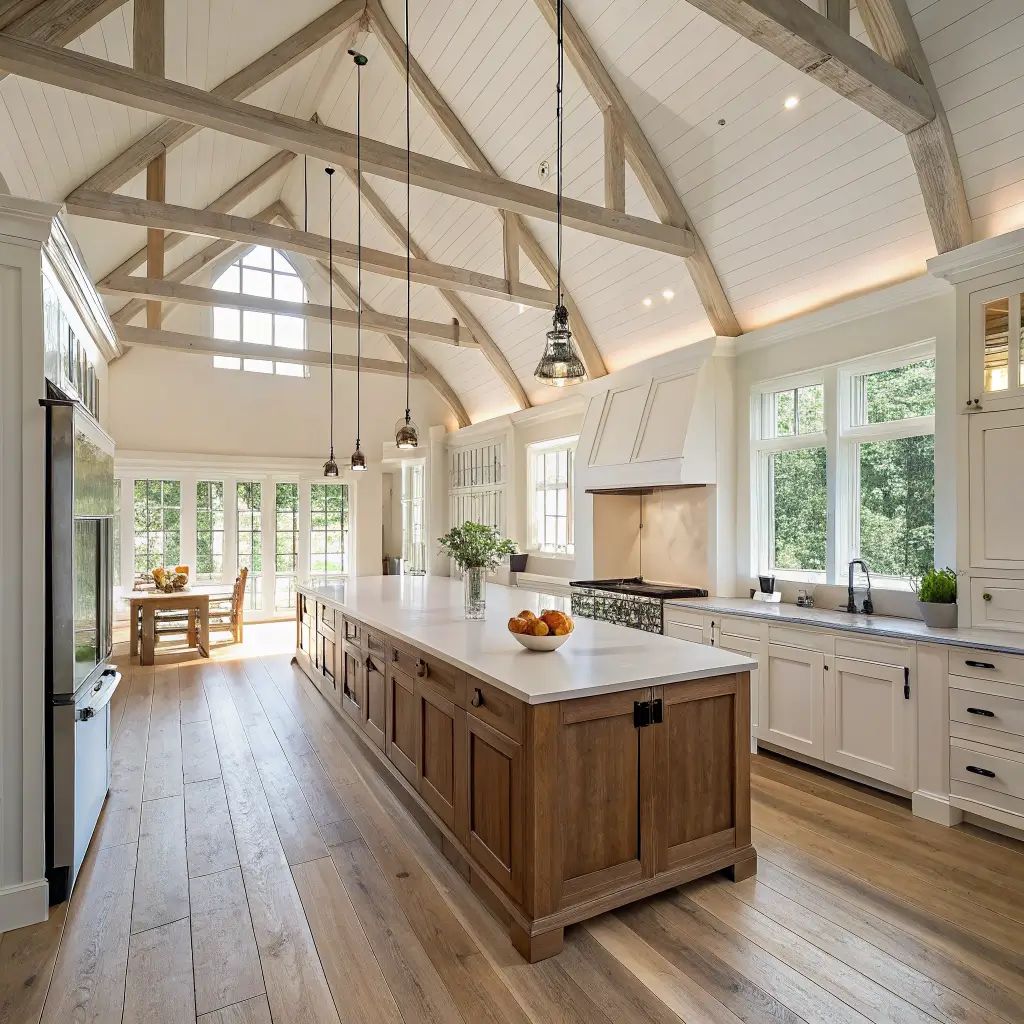
Oak works from an 8×10 galley to a big open-plan kitchen. The grain adds warmth in small spaces where painted cabinets can feel flat, and it keeps huge kitchens from feeling like an appliance showroom. Where it really shines is medium-to-large kitchens with a full wall of cabinetry or a big island — you get to see the grain repeat, and that’s where oak stops looking like “wood cabinets” and starts looking intentional.
The Pieces That Actually Make It Work
Cabinet fronts
– Natural shaker in white oak — the safest, most flexible choice. Reads modern-rustic, works with almost every countertop.
– Slab or rift-cut oak — for a cleaner, more contemporary kitchen. Rift-cut means the grain runs straight and vertical, which looks incredible on tall pantry doors.
– Tall pantry cabinets and paneled appliance fronts — if your budget allows, running oak up to the ceiling and hiding the fridge behind a matching panel is what separates a nice kitchen from a great one.
Countertops
Keep them quiet. Oak grain is the star.
– White quartz with subtle grey or warm veining (Calacatta-style) — my top pick
– Honed black stone — for contrast, especially with light oak
– Butcher block — only for full-rustic or farmhouse; don’t mix with white oak unless you want it to read cabin
– Skip: heavily veined marble-look quartz, busy granite, anything with a lot of movement
Hardware
This is where you tell the room what era it’s from.
– Brushed brass or champagne bronze bar pulls — warm on warm; feels current and layered
– Matte black pulls and knobs — sharpens red oak specifically and pulls it out of the 90s
– Brushed nickel — safe, coastal-leaning, less trendy but ages well
I put 5-inch brushed brass bar pulls on my red oak lowers and 1.25-inch matching knobs on the uppers. Total cost for 22 pieces: about $180 from a hardware shop online. It’s the single change with the biggest visual payoff.
Lighting
– Black or brass pendants over the island — 10–16″ diameter, hung in pairs for islands under 7 feet, trios for longer
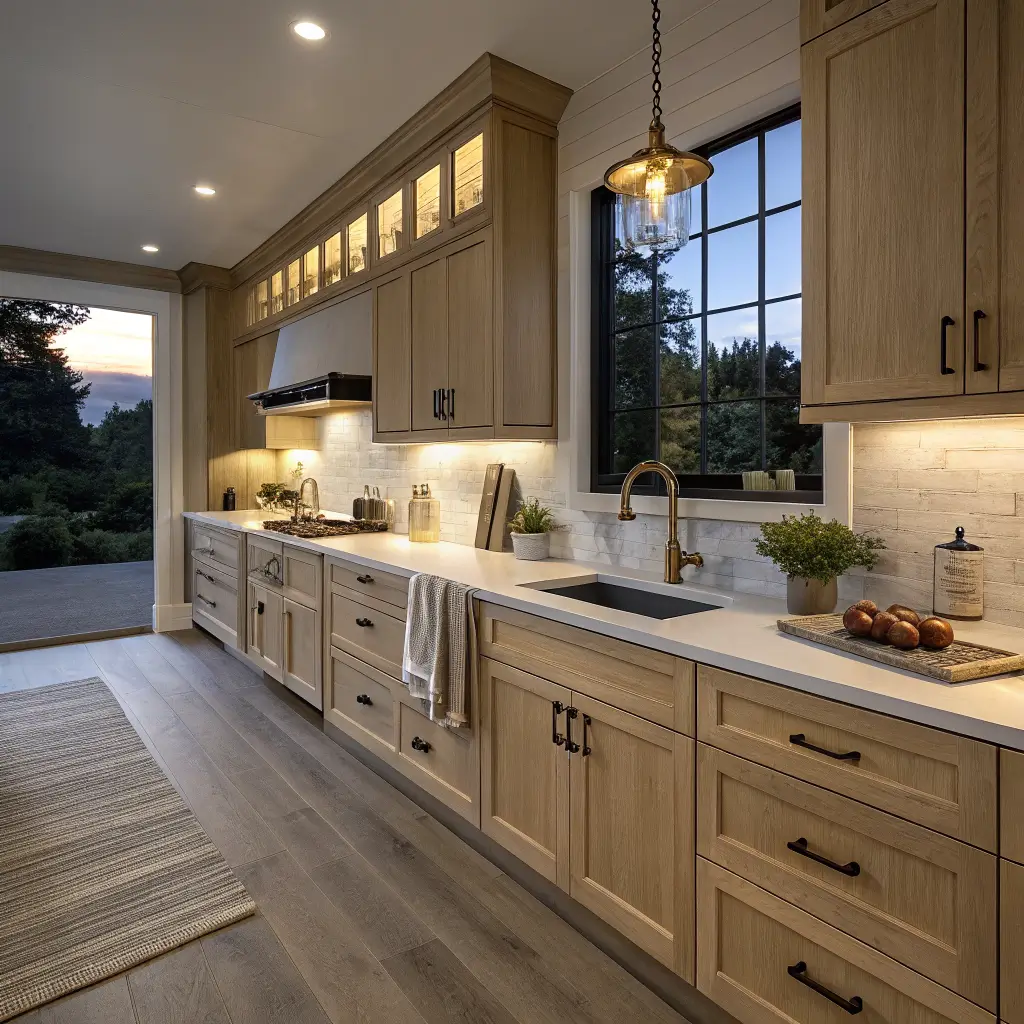
– Under-cabinet LED strips — critical. Oak grain looks flat under overhead light alone; under-cabinet lighting makes it glow.
– Dimmers on everything — cool morning light, warm evening light, same room
Wall Colors That Work With Oak
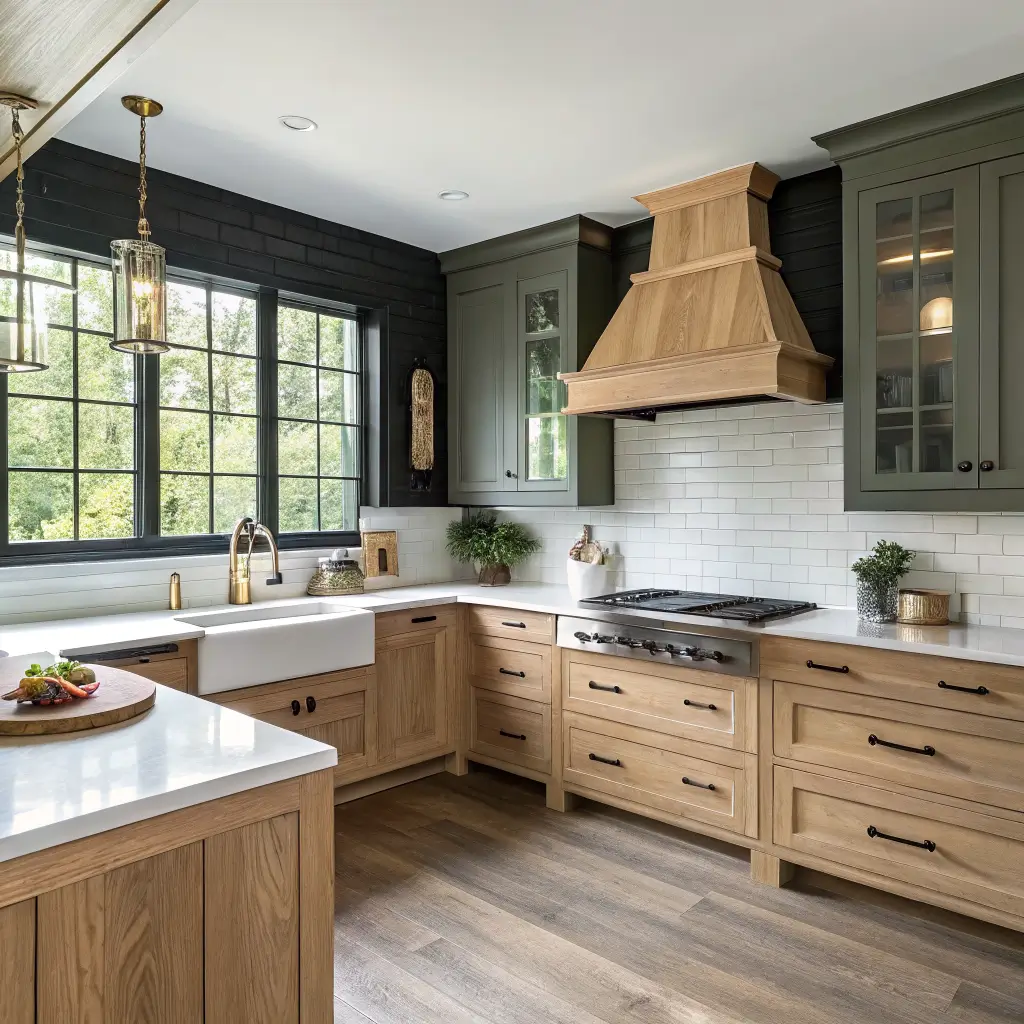
The old rule of “beige walls with oak” is exactly what makes oak look dated. What actually works:
– Warm whites with a soft undertone (Benjamin Moore White Dove, Sherwin Williams Alabaster) for light white oak
– Cool-leaning greiges for red or medium oak — this tones down the orange without fighting the wood
– Soft sage or muted olive for a more design-forward look, especially with brass hardware
– Deep charcoal or near-black on one wall or the range hood surround for drama
Avoid: cream, buttery yellow, peachy beige, terracotta. Anything with yellow amplifies oak’s warm undertones and pushes the whole room orange.
How to Modernize 1990s Golden Oak Without Replacing It
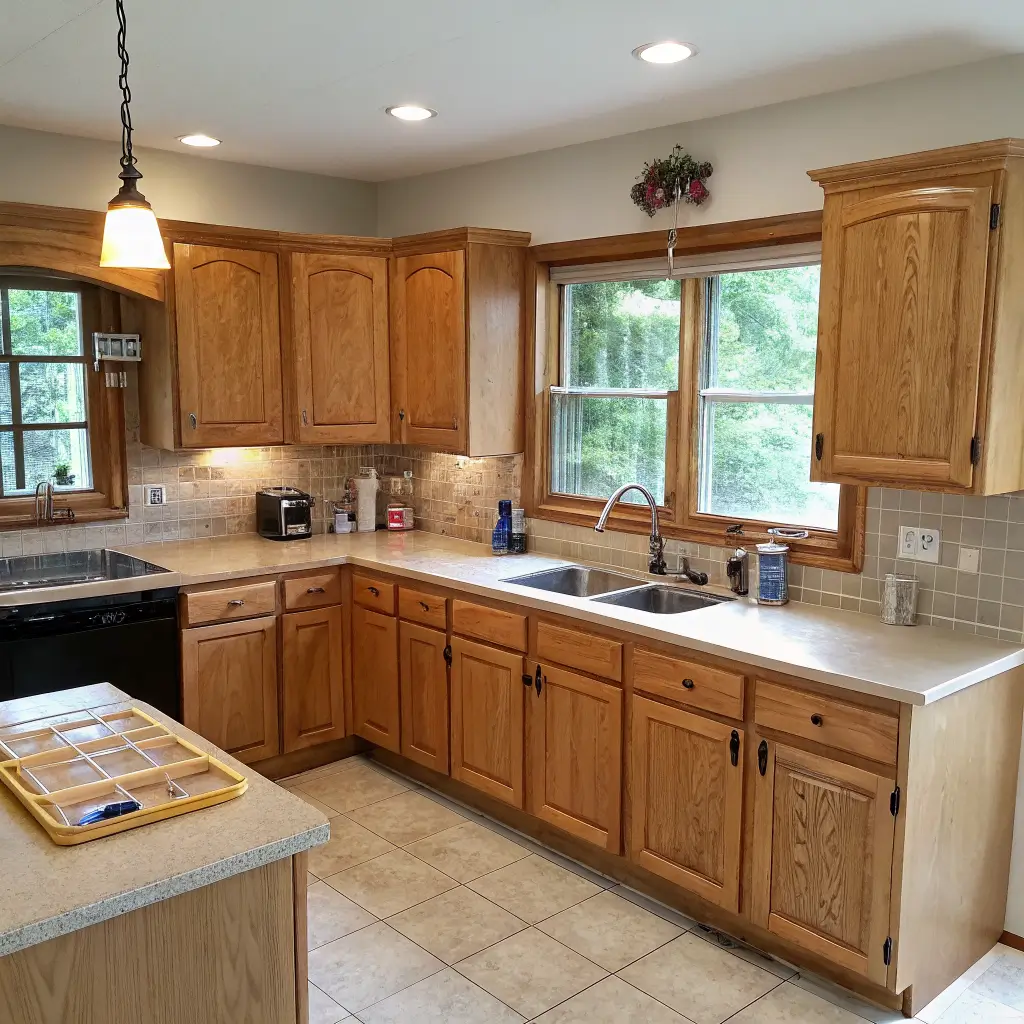
This is the question I get asked most. You have three paths.
Path 1: Refresh only (1–3 days, ~$300–$800)
Keep the cabinets as-is. Change the hardware to matte black or brushed brass. Paint walls a cool white or greige. Swap warm-white bulbs for 3000K LEDs. Add under-cabinet lighting. This works better than you’d think if the wood is in good shape.
Path 2: Lighten with bleach or stain (1–2 weeks, ~$400–$900)
Remove doors, sand thoroughly, apply wood bleach to knock down the orange, then seal with a matte clear or apply a desaturated stain in a wheat or sand tone. Reinstall with new hardware. This is intermediate DIY — you need patience, a real sander, and a dust-free space to finish in.
Path 3: Paint (1–2 weeks, ~$500–$1,200)
If the grain is too aggressive or the wood is veneer, paint is the answer. The critical step people skip: use a stain-blocking primer (BIN shellac-based is the gold standard) or oak’s tannins will bleed through white paint within weeks. Then 2–3 coats of a real cabinet paint like Benjamin Moore Advance. Grain will still show slightly through paint on oak — some people love that, some hate it. Test one door first.
Mistakes I’ve Made or Watched Others Make
– Warm bulbs plus warm walls plus warm oak. My kitchen looked like a Werther’s Original wrapper for about six months before I figured this out. Neutral bulbs (3000K), cooler-leaning walls, warm cabinets — that’s the balance.
– Too many wood tones. I had oak cabinets, a walnut cutting board display, a live-edge shelf, and oak floors in a different tone. Cap it at 2–3 wood tones with a shared undertone.
– Busy countertops with busy oak grain. I almost picked a heavily-veined marble-look quartz. Saved myself by putting samples on the actual cabinets and stepping back. It looked like static on a TV.
– Upper cabinets that stop 14 inches below the ceiling. That gap collects dust and dates the whole kitchen. If you’re replacing, run cabinets to the ceiling or add a decorative bulkhead. If you’re not, put baskets or greenery up there and commit to it.
– Skipping the topcoat when refinishing. Oak is water-resistant, not waterproof. Two coats of a matte polyurethane around the sink and dishwasher will save you a lot of grief.
Small Details That Make a Big Difference
– Keep countertops 70–80% clear. Oak cabinets are already doing visual work. Cluttered counters make the whole room read chaotic.
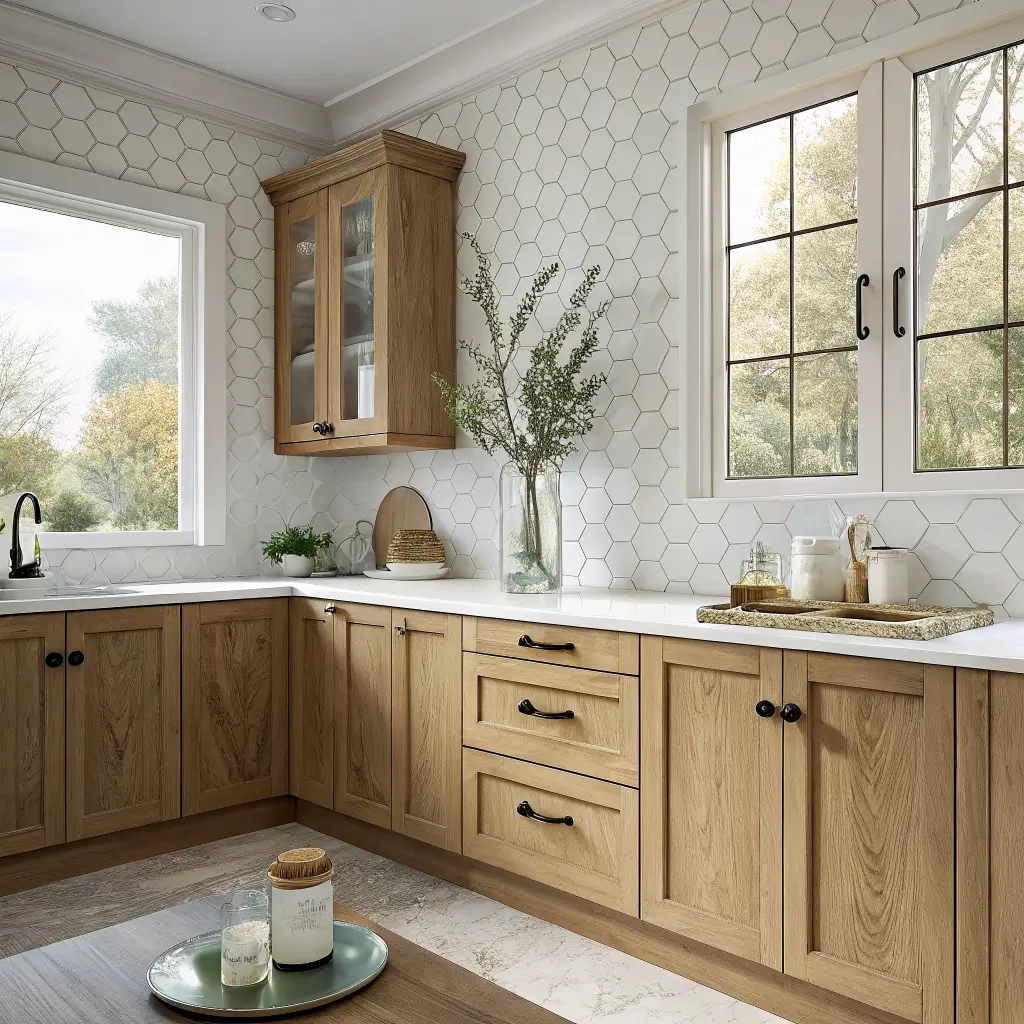
– One patterned element per kitchen. A runner, a roman shade, or a zellige backsplash. Not all three.
– Match sheen levels. Matte-to-satin cabinets, eggshell walls, brushed (not polished) hardware. High-gloss anything on oak looks like a rental flip.
– Pick a focal point and commit. The range wall, the island, or the sink window — one of them gets the drama (tile, hood, pendants). The other two stay quiet.
Seasonal and Style Shifts Without Renovating
The permanent stuff stays neutral. The mood changes with textiles and small objects.
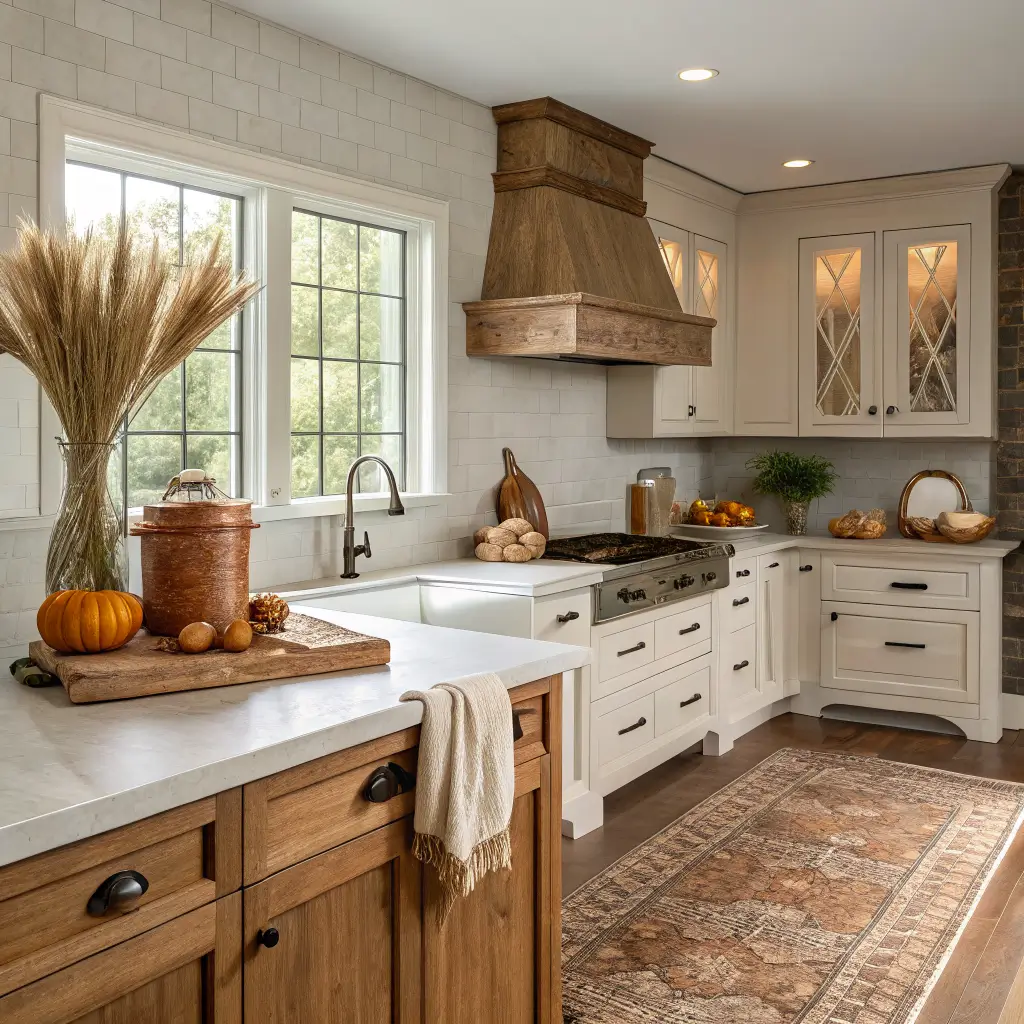
– Fall: mustard or rust dish towels, a wood board with a squash on it, copper pot on display
– Winter: darker linen runner, candles, evergreen in a stoneware vase
– Spring/summer: citrus in a shallow bowl, woven baskets, lighter linen everything
For cross-style variations on the same oak base:
– Boho + oak: patterned runner, open shelves with mixed pottery, trailing plants
– Coastal + oak: soft blues, white beadboard backsplash, brushed nickel
– Industrial + oak: black metal open shelving, concrete-look counters, exposed-bulb pendants
Are Oak Cabinets Outdated?
No — but the way most people had them installed twenty years ago is. Light oak, white oak, and desaturated red oak are in the middle of a genuine comeback, and unlike white shaker cabinets (which peaked around 2019), oak has real staying power because it’s a natural material with actual character. It doesn’t chip like painted MDF, doesn’t yellow like white lacquer, and gets better looking as it ages.
If you already have oak, you’re closer to a great kitchen than you think. If you’re choosing new cabinets, white oak in a natural or matte finish will still look good in fifteen years — which is more than I can say for most of what’s trending right now.