Coastal Room Decor: A Real-World Guide to Getting the Light, Beachy Look Right (Without the Kitsch)
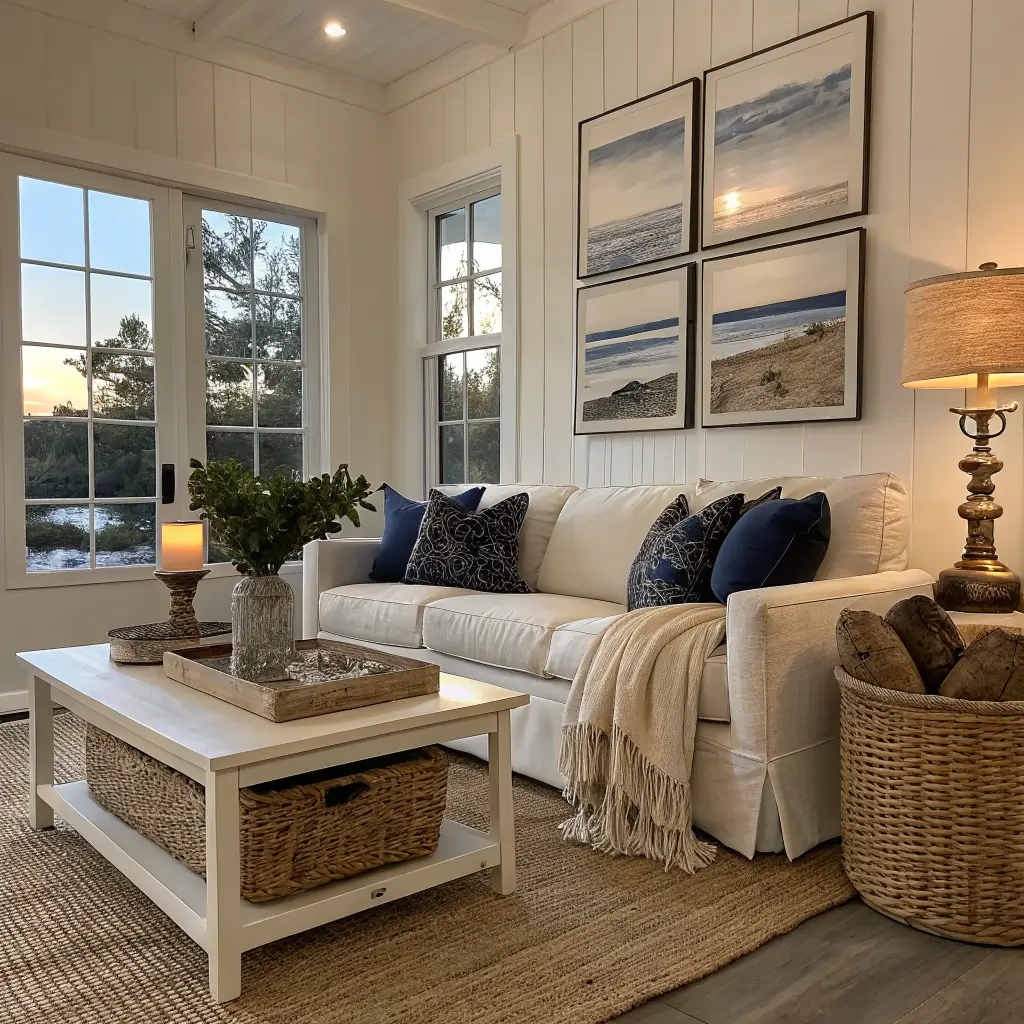
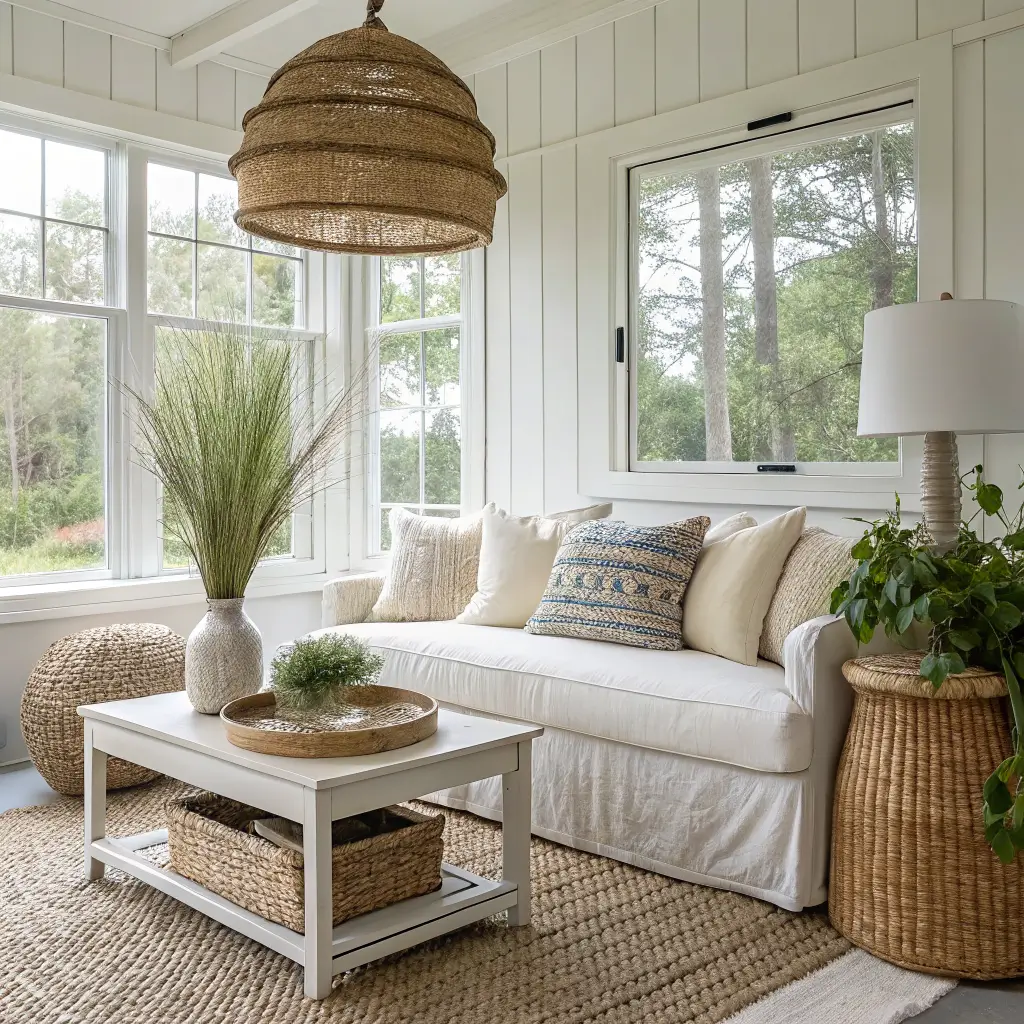
The coastal room decor is the one I keep from getting precious. Linen and a weathered table read seaside without a single anchor on the wall.
Most coastal room decor goes wrong the same way: too many starfish, one flat shade of blue on everything, and a driftwood sign that says “BEACH → .” I’ve made those mistakes. My first attempt at a coastal living room in a rental looked like a gift shop threw up on a slipcover. What actually works is quieter — light, textured, and only hinting at the ocean.
Here’s how I’d do it now, whether you’re refreshing a corner for $300 or redoing a whole room.
The Look and Who It’s For
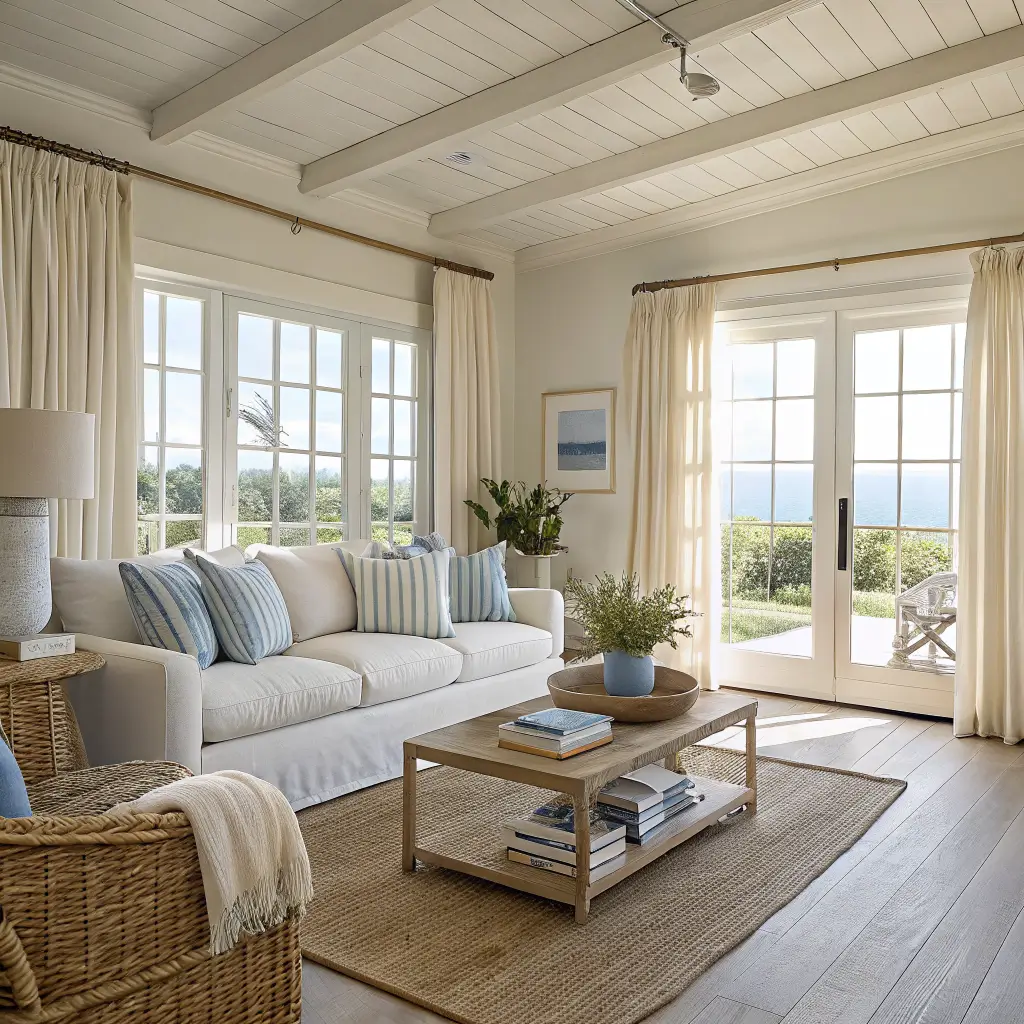
Modern coastal isn’t nautical theme-park. It’s a light, airy room built on warm whites, sandy neutrals, woven textures, and a controlled dose of blue or sea-glass green. Think of it as the feeling of a beach house at 8 a.m. — sun, salt air, linen — not a souvenir shop.
It’s the right style for you if:
– You want a calm, vacation-adjacent room without gutting anything.
– You rent, and most changes need to be reversible.
– You like nature-inspired rooms (sea, sand, plants) more than bold urban ones.
– You have kids or pets and need forgiving fabrics — jute hides sand, slipcovers wash, and a beige linen sofa is weirdly bulletproof.
It works in a 100 sq ft bedroom, a 400 sq ft open-plan living/dining, and everything between.
Skill level: beginner for textiles, art, and accessories. Intermediate if you’re installing shiplap, hanging a heavy rattan pendant, or painting a whole room.
Budget: What This Actually Costs
I’ve done this at three price points. Here’s the honest math.
Weekend refresh — $250 to $800
– Jute rug, 5′ x 7′: $120–$250
– 4–6 pillow covers in linen or stripe: $15–$40 each
– Sheer linen curtain panels (pair): $40–$120
– A few driftwood, sea-glass, or ceramic accents: $15–$60 per piece
– One framed ocean print: $60–$150
Mid-range makeover — $800 to $2,500
– Sandy beige or soft gray sofa: $700–$1,500
– Rattan or seagrass accent chair: $250–$600
– Larger 8′ x 10′ jute or sisal rug: $200–$450
– Rattan, rope, or capiz pendant: $150–$500
Full redesign — $2,500+
– Custom slipcovered sofa: $1,500–$3,000
– Designer coastal lighting, shiplap, antique nautical pieces: $500–$2,000+ per element
Where I’d spend: the sofa and the rug. A cheap coastal sofa in the wrong beige will haunt you. A great one carries the whole room.
Where I’d save: pillow covers (HomeGoods, Etsy, Amazon), art (printable downloads framed in $20 IKEA Ribba frames), and decorative objects (thrift stores are absurdly good for this — I found a giant glass apothecary jar for $6 that anchors my whole console).
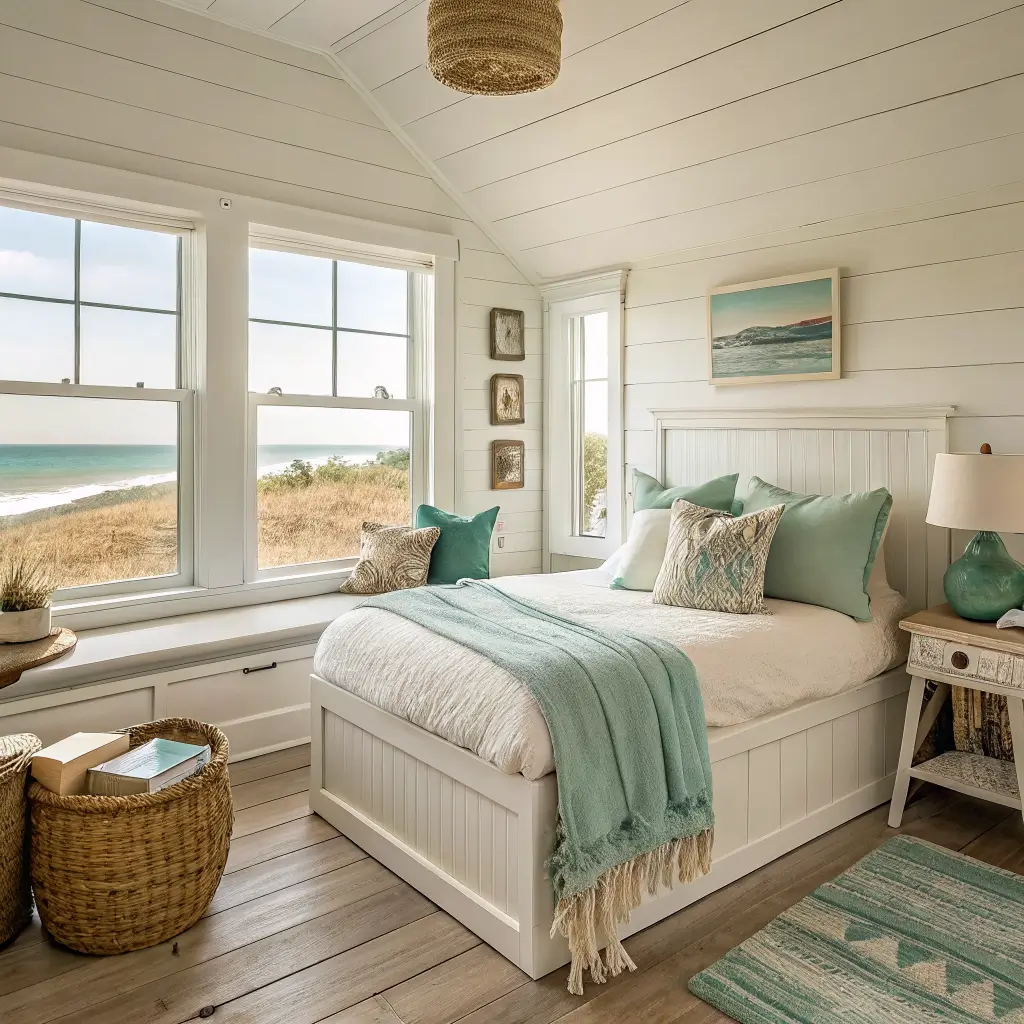
The Palette: Get This Right and the Rest Is Easy
The single biggest coastal mistake is one flat blue everywhere. Rooms end up looking themed instead of coastal.
Build the palette in layers:
– Base (70%): warm white, cream, soft beige, sand. Walls, sofa, big rug.
– Secondary (20%): greens and natural greenery — sage, dune grass, dusty aqua, live plants.
– Accents (10%): the spectrum of blues plus warm pops. Pale sky, dusty aqua, sea-glass green, denim, navy — plus small hits of coral, soft peach, or sun-bleached yellow.
If you’re painting walls, I’d point you at something like Benjamin Moore White Dove, Sherwin-Williams Sea Salt, or Farrow & Ball Skylight depending on how much color you want. Use a matte or eggshell finish on walls — coastal light gets weird on anything glossier.
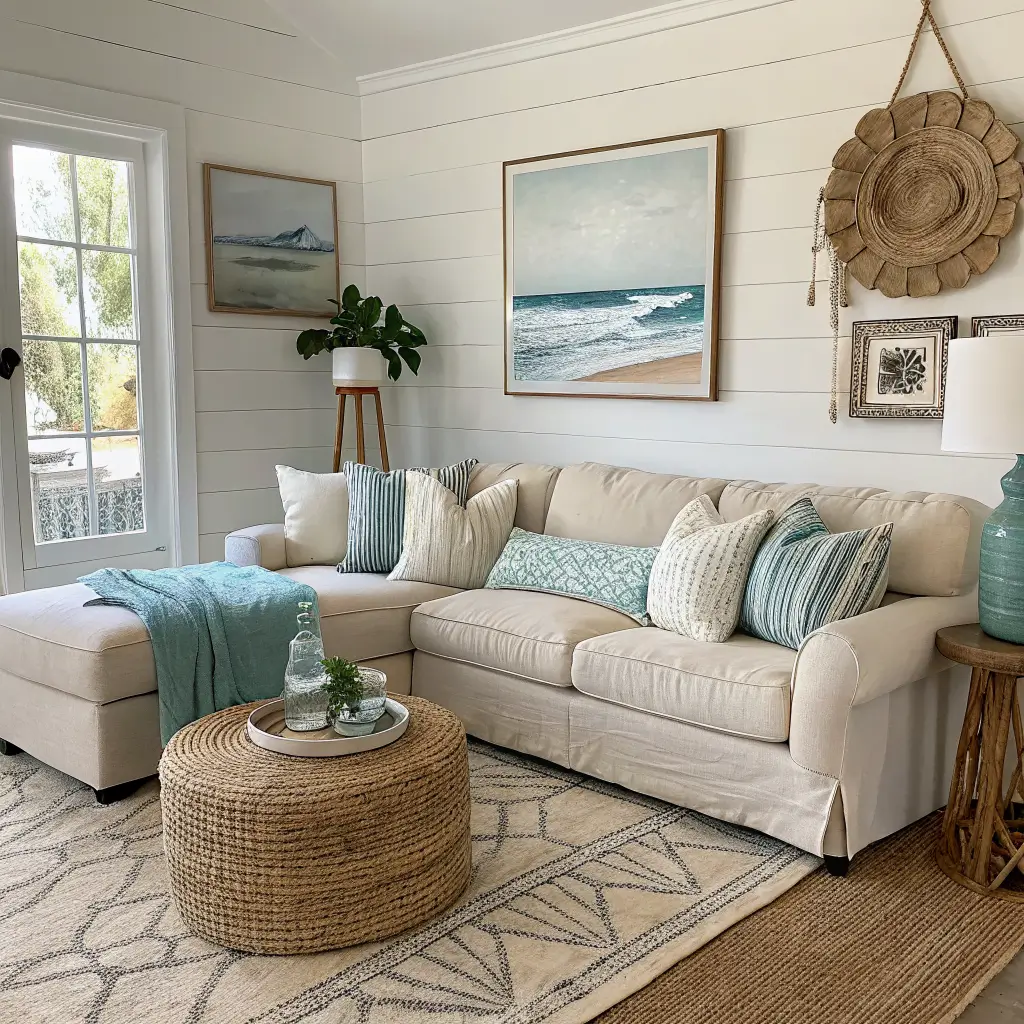
The Pieces That Actually Make the Room
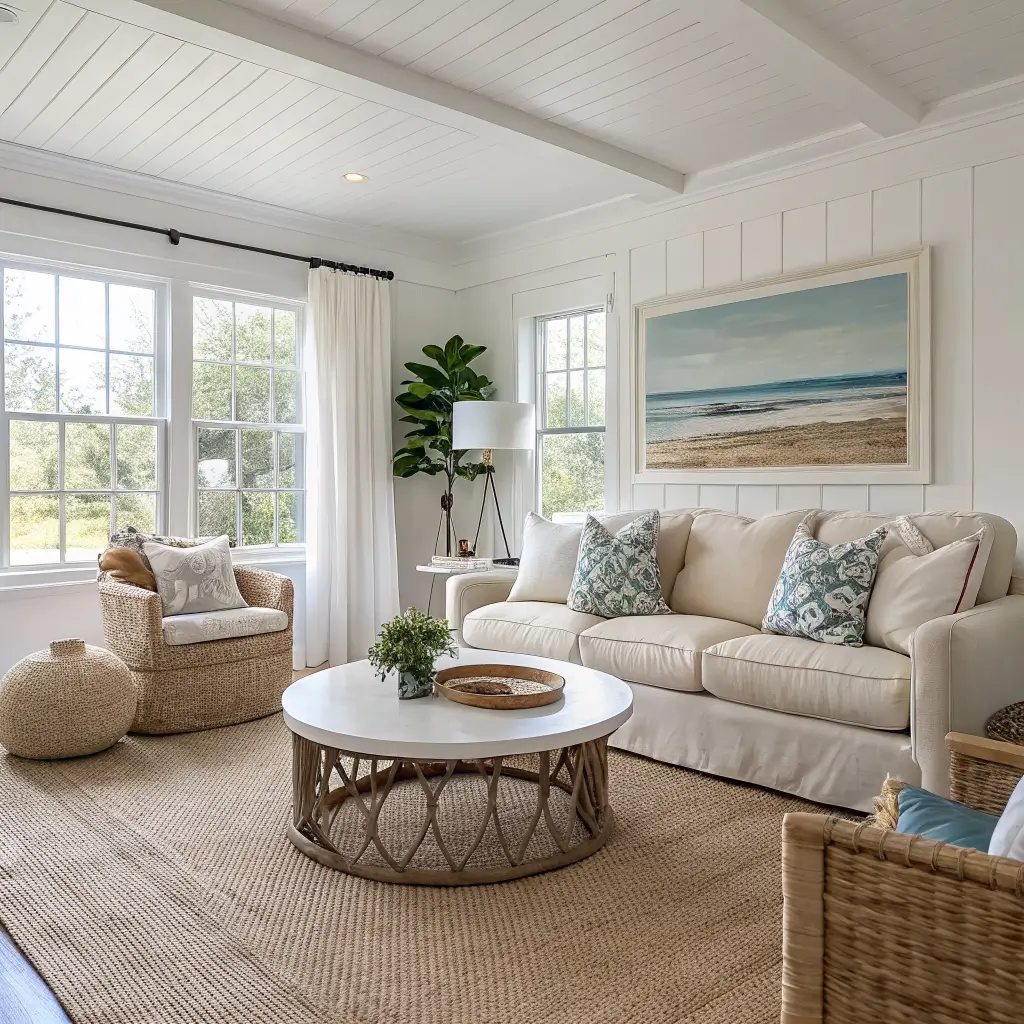
Sofa. Slipcovered or clean-lined, in linen-blend or performance fabric. Sandy beige or soft gray. Standard 3-seater runs 80″–90″; sectionals 95″–120″. Avoid anything with heavy skirt detailing or tufted leather — it fights the whole vibe.
Rug. Jute, sisal, or seagrass, flatweave or low pile. Sizes to know: 5′ x 7′ for small rooms, 8′ x 10′ for most living rooms, 9′ x 12′ if furniture floats in a bigger space. Rule of thumb: the front legs of every seat should sit on the rug. Anything smaller looks like a bathmat under your furniture.
Pro tip from experience: jute sheds for the first month. Vacuum weekly and it stops. If you have a dog that eats rugs, get flatweave sisal instead.
Coffee table. Whitewashed wood, driftwood-look, light oak, or rattan base. Rectangles 48″–52″ long, rounds 32″–40″ across. Round tables read softer and are better in small rooms.
Curtains. Linen or cotton voile in white, cream, or oatmeal. Hang the rod wider and 4–6 inches above the window frame — this is the single easiest way to make a room feel taller and brighter. Curtains should barely graze the floor, not puddle.
Accent chair. One rattan or wicker piece is worth its weight in gold. It adds texture without adding visual weight.
Art. One larger focal piece — 24″ x 36″ or bigger over a sofa — beats a wall of small prints. Ocean photography, abstract seascape, or a simple line drawing of a shell. I bought a $12 print of a foggy Maine coastline on Etsy, framed it in a $30 oak frame, and it looks like it cost $400.
Lighting. Ceramic lamp with a soft blue or sand glaze, or a rope-wrapped base with a natural linen shade. For overhead, rattan or bamboo pendants. Skip the capiz shell chandelier unless the rest of the room is very restrained — it can push things toward theme-y fast.
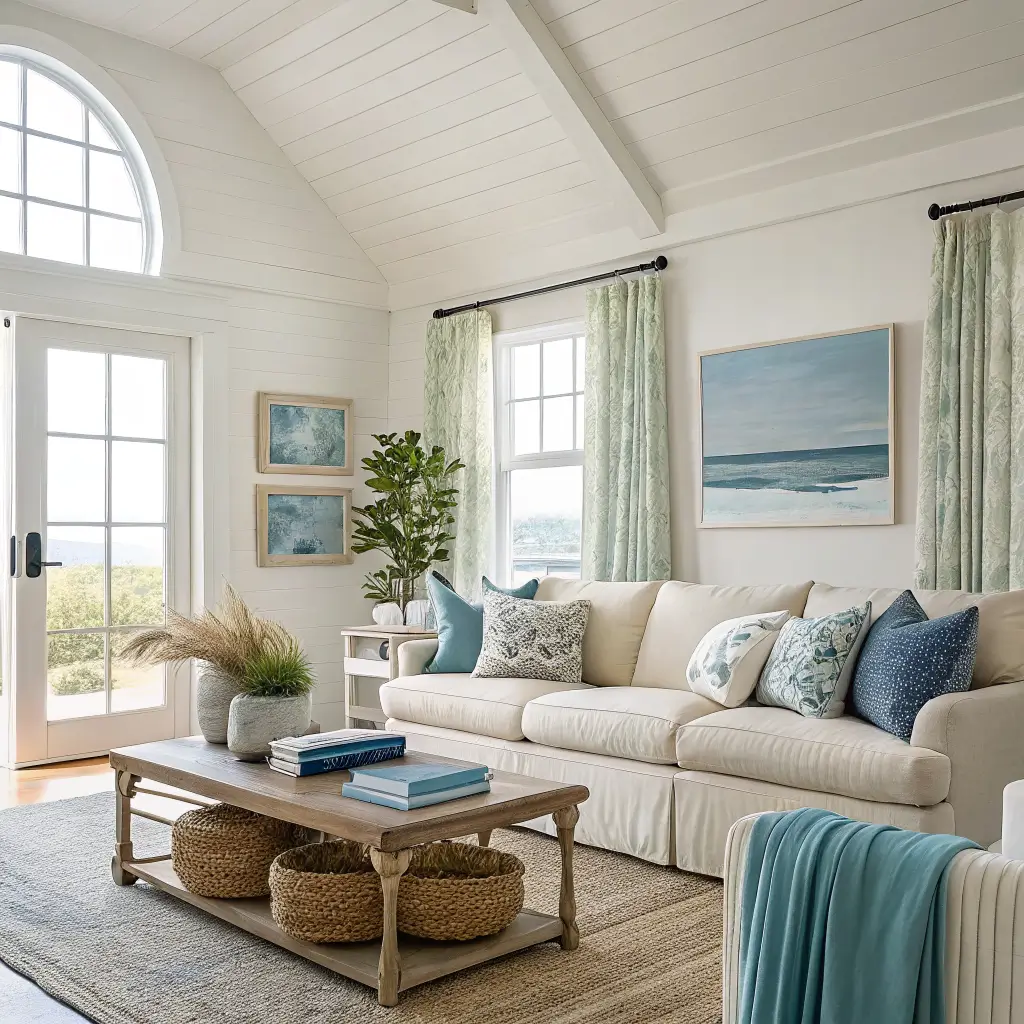
Layering Texture So It Doesn’t Look Flat
Coastal fails when it’s all smooth or all rough. You want both.
– Smooth linen pillows next to a chunky jute rug.
– A whitewashed wood table with a woven seagrass basket underneath.
– A ceramic lamp on a rattan console.
Mix patterns in the same palette: one stripe (ticking or navy/white), one small geometric, one organic (leaf, coral, or batik). Three patterns max. More than that and it starts looking busy.
Repeat one material in 3–5 places to tie the room together. In my living room, rattan shows up in the pendant, the accent chair, one basket, and a mirror frame. That repetition is what makes a room read intentional instead of collected-from-a-yard-sale.
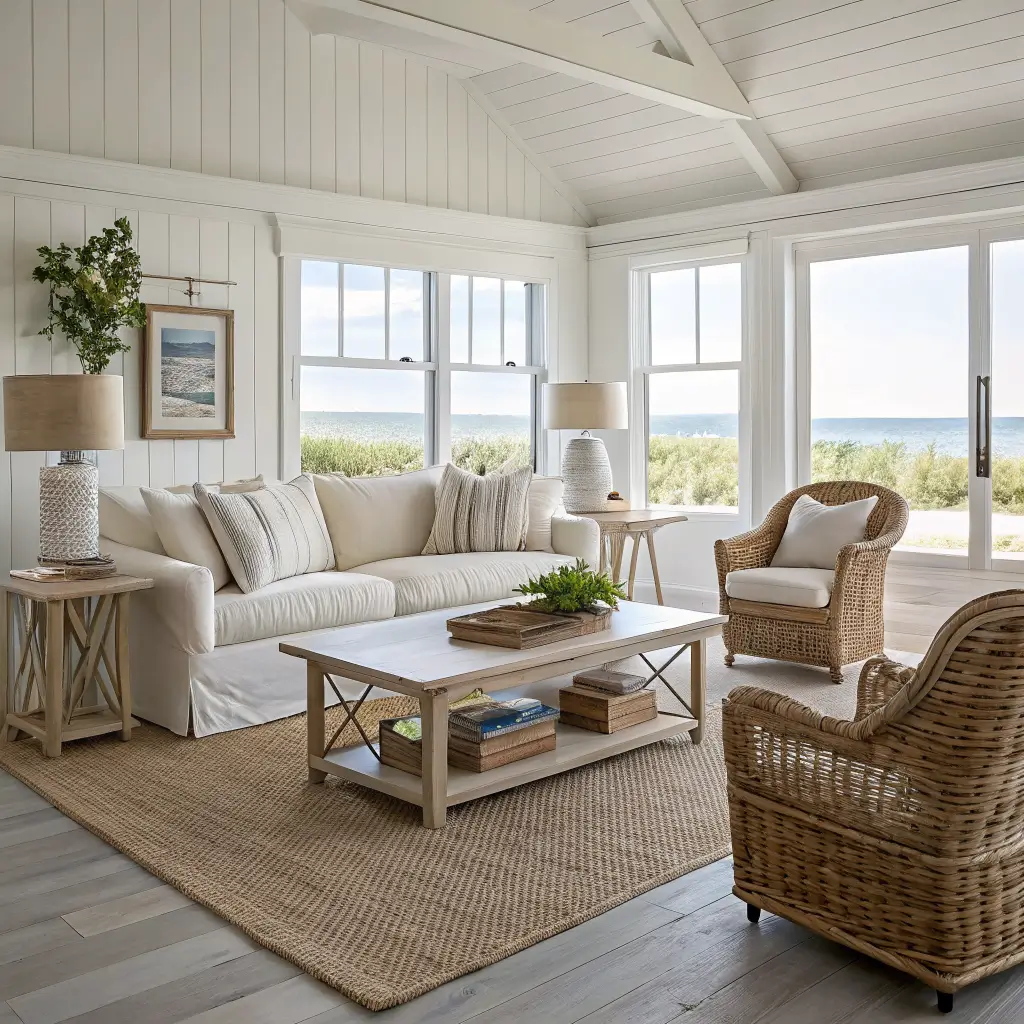
Setup: The Order I’d Actually Do It
1. Clear and declutter first. Pull out heavy dark curtains, ornate dark wood, cluttered tchotchkes. Coastal rooms are visually light — every extra small object dilutes the effect.
2. Paint or wallpaper. Any wall work happens now. If you’re doing a shiplap accent wall, peel-and-stick shiplap is legit rental-friendly and looks fine from three feet away.
3. Lay the rug. It defines the seating zone.
4. Place the sofa facing either the window or the focal art. Keep pathways open — coastal is about breeze, not maze.
5. Add coffee table, side tables, accent chair.
6. Hang curtains, then lighting.
7. Style last. Pillows, throws, art, accessories.
For art placement, mock it up with painter’s tape first. Center the main piece around 57″–60″ from the floor to the center of the artwork, or roughly 6–10 inches above the back of the sofa.
Styling the Small Stuff
Two vignettes are enough for a living room.
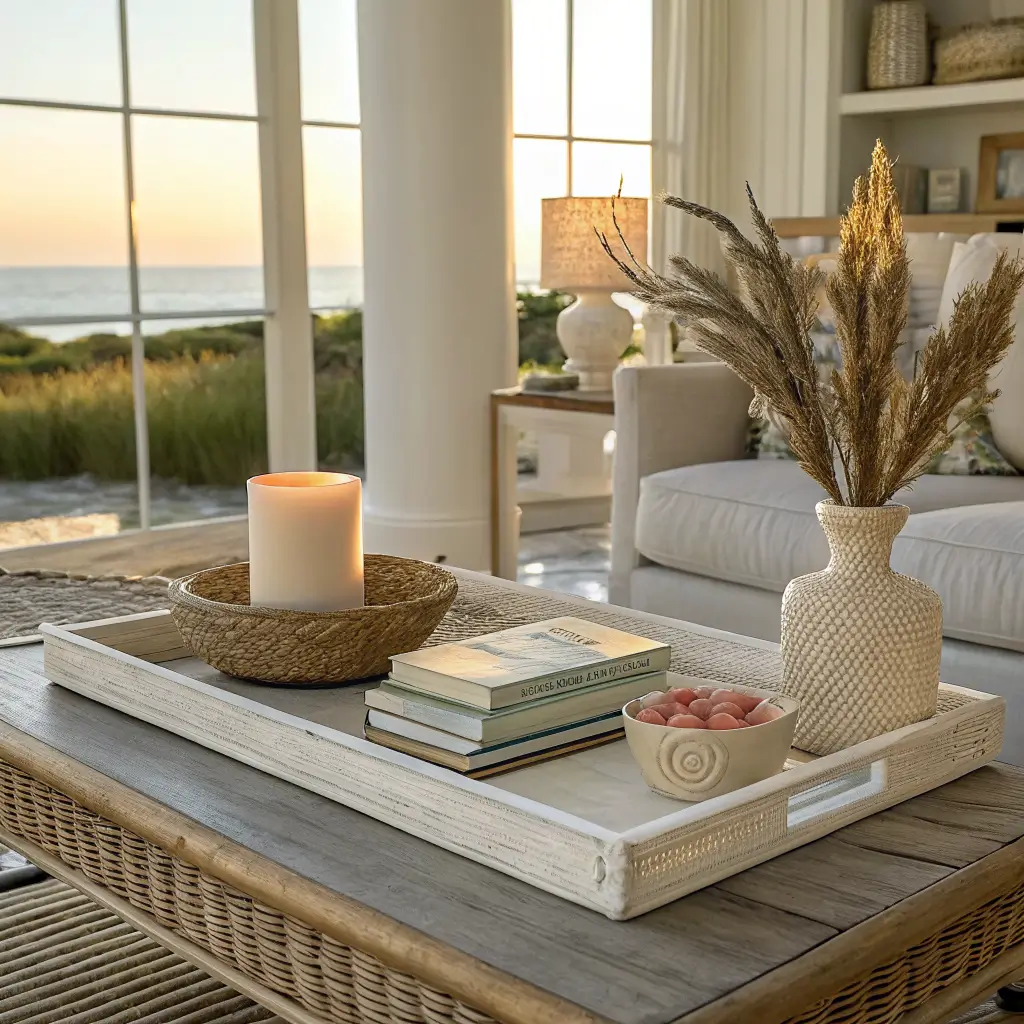
Coffee table tray: stack two coastal-toned books, add a small ceramic vase with a few dune grass stems, and a shallow bowl of sea glass or a single piece of coral (real or resin — I use resin, it looks identical). Three objects. Done.
Console or mantel: driftwood sculpture or a chunky candle, framed art leaning against the wall (not hung — the leaned look is softer), and a woven basket on the floor below.
Group objects in threes, at varied heights. Leave real empty space between groupings. A shelf that’s 60% empty looks intentional. A shelf that’s 100% full looks anxious.
For plants: a 4-foot kentia palm or a fiddle-leaf in a woven basket planter in an empty corner does more for the room than any $200 accessory. Ferns and monsteras work too. Skip fake palms unless they’re the expensive kind — cheap fake plants read plastic instantly.
The Mistakes I’ve Actually Made
Kitsch overload. My first coastal room had two anchor decorations, a rope mirror, and a “Life’s Better at the Beach” sign. It looked like a beach rental in Panama City. Now I limit obvious motifs to one, maybe two pieces in the whole room, and let texture do the coastal work.
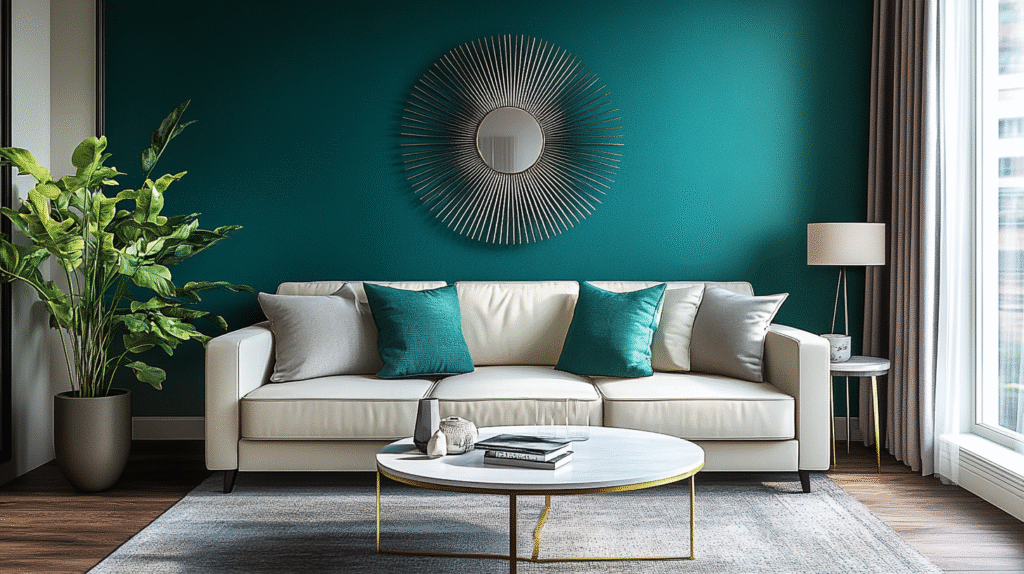
One-note blue. I painted a wall in a strong turquoise and then bought turquoise pillows, turquoise art, and turquoise vases. It was like being trapped inside a swimming pool. Fix: use the full blue spectrum — pale, medium, and navy — plus neutrals.
Dark furniture fighting the palette. If you’re keeping an existing dark leather sofa or espresso coffee table, coastal will fight you. Slipcovers are your friend. So is chalk paint on wood, if you own the piece.
Cluttered surfaces. I used to think “styled” meant “covered in stuff.” It doesn’t. Pull half the objects off any surface and the room instantly reads more expensive.
Keeping It Fresh Without Redoing Everything
Coastal is one of the easiest styles to update seasonally because the base is neutral.
Summer: brighter coral and turquoise pillow covers, tropical leaf print somewhere, more shells and greenery.
Fall/winter: swap in wool throws in oat and cream, deeper navy pillows, more driftwood and brass, and moody black-and-white coastal photography instead of bright prints. Store off-season pillow covers flat in a labeled basket — I keep mine under the guest bed.
Every time you add something new, ask one question: does it match the palette, texture, or mood of the room? If it’s not doing at least one of those, it belongs somewhere else in the house.
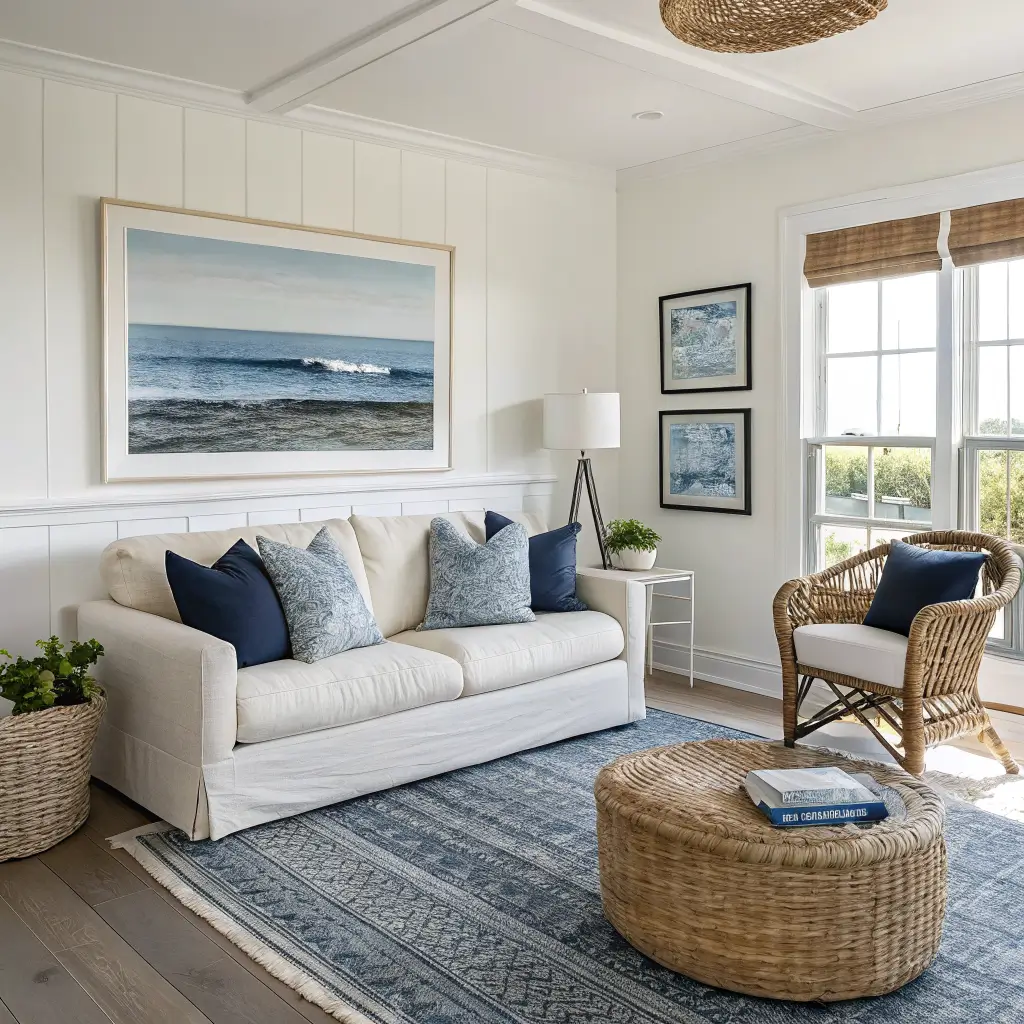
That’s the whole game. Light base, layered textures, one strong focal point, and just enough ocean reference that a guest feels it before they see it.